
SMIC(00981)

Search documents
国家集成电路产业投资基金股份有限公司减持中芯国际840万股 每股作价74.93港元
Zhi Tong Cai Jing· 2026-01-12 11:33
智通财经APP获悉,香港联交所最新资料显示,1月7日,国家集成电路产业投资基金股份有限公司减持 中芯国际(00981)840万股,每股作价74.93港元,总金额约为6.29亿港元。减持后最新持股数目约为7.17 亿股,最新持股比例为8.96%。 ...

国家集成电路产业投资基金股份有限公司减持中芯国际(00981)840万股 每股作价74.93港元
智通财经网· 2026-01-12 11:28
智通财经APP获悉,香港联交所最新资料显示,1月7日,国家集成电路产业投资基金股份有限公司减持 中芯国际(00981)840万股,每股作价74.93港元,总金额约为6.29亿港元。减持后最新持股数目约为7.17 亿股,最新持股比例为8.96%。 ...
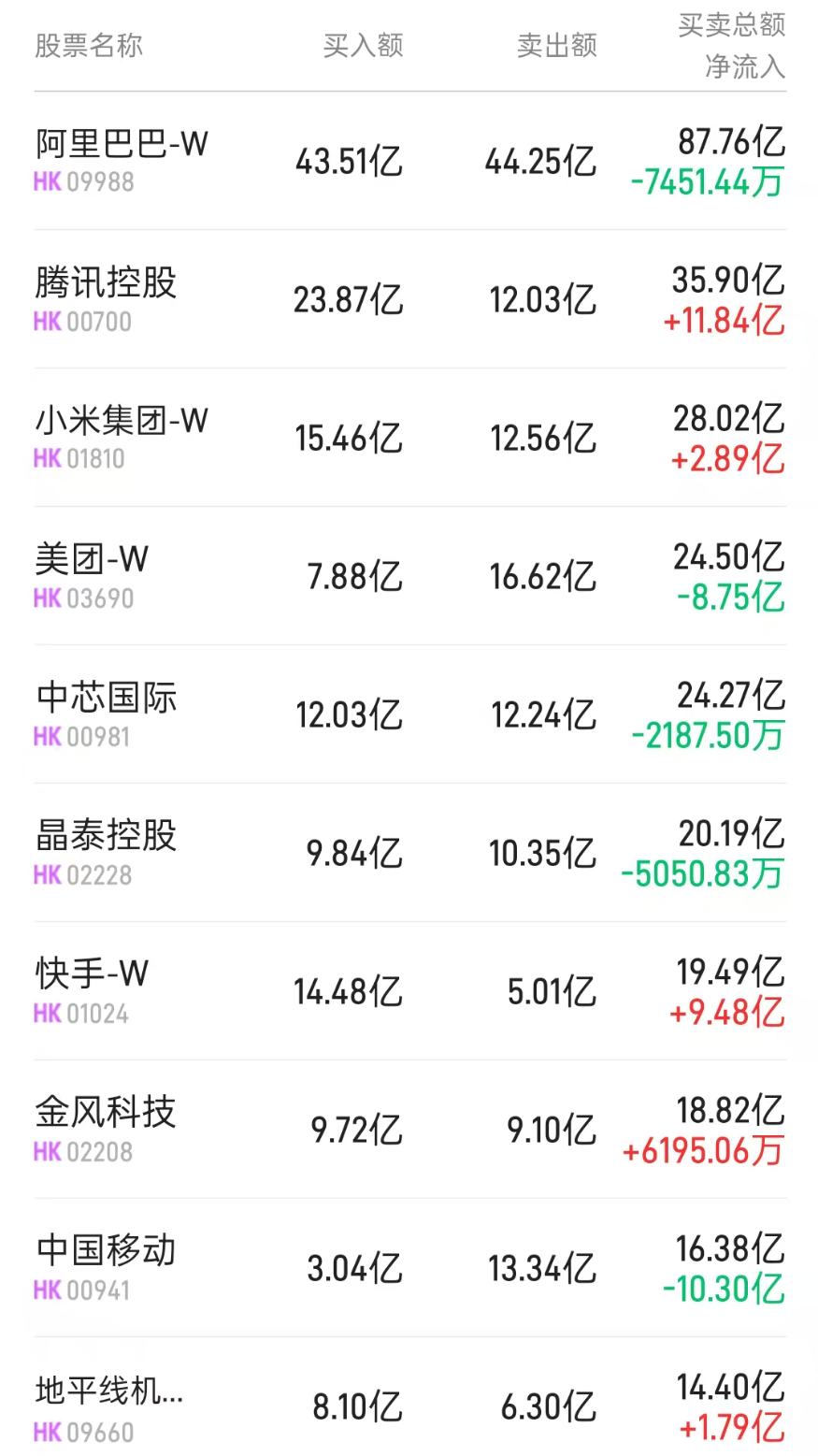
智通港股通活跃成交|1月12日
智通财经网· 2026-01-12 11:01
Core Insights - On January 12, 2026, Alibaba-W (09988), Tencent Holdings (00700), and Xiaomi Group-W (01810) were the top three companies by trading volume in the Southbound Stock Connect, with trading amounts of 8.776 billion, 3.590 billion, and 2.802 billion respectively [1] - In the Shenzhen-Hong Kong Stock Connect, Alibaba-W (09988), Tencent Holdings (00700), and Meituan-W (03690) also led the trading volume, with amounts of 6.830 billion, 3.416 billion, and 2.100 billion respectively [1] Southbound Stock Connect Trading Activity - **Top Active Companies in Southbound Stock Connect:** - Alibaba-W (09988): Trading amount of 8.776 billion, net buy of -74.5144 million [2] - Tencent Holdings (00700): Trading amount of 3.590 billion, net buy of 1.184 billion [2] - Xiaomi Group-W (01810): Trading amount of 2.802 billion, net buy of 289 million [2] - Meituan-W (03690): Trading amount of 2.450 billion, net buy of -875 million [2] - SMIC (00981): Trading amount of 2.427 billion, net buy of -21.875 million [2] - Other notable companies include Kuaishou-W (01024) with a trading amount of 1.949 billion and a net buy of 948 million [2] Shenzhen-Hong Kong Stock Connect Trading Activity - **Top Active Companies in Shenzhen-Hong Kong Stock Connect:** - Alibaba-W (09988): Trading amount of 6.830 billion, net buy of 278 million [2] - Tencent Holdings (00700): Trading amount of 3.416 billion, net buy of 828 million [2] - Meituan-W (03690): Trading amount of 2.100 billion, net buy of 393 million [2] - Kuaishou-W (01024): Trading amount of 1.990 billion, net buy of 1.298 billion [2] - Xiaomi Group-W (01810): Trading amount of 1.869 billion, net buy of 484 million [2]





北水动向|北水成交净买入73.06亿 AI概念股受追捧 快手(01024)获北水加仓超22亿港元
智通财经网· 2026-01-12 09:57
Core Viewpoint - The Hong Kong stock market experienced significant net inflows from northbound trading, with a total net buy of HKD 73.06 billion on January 12, 2023, indicating strong investor interest in certain stocks [1]. Group 1: Northbound Trading Activity - Northbound trading through Stock Connect saw a net buy of HKD 15.46 billion from Shanghai and HKD 57.6 billion from Shenzhen [1]. - The stocks with the highest net buy included Kuaishou-W (01024), Tencent (00700), and Southern Hang Seng Technology (03033) [1]. - The stocks with the highest net sell included China Mobile (00941) and Goldwind Technology (02208) [1]. Group 2: Individual Stock Performance - Kuaishou-W (01024) received a net buy of HKD 22.45 billion, driven by its AI capabilities gaining popularity globally, with a reported 102% increase in daily revenue from December 2025 to January 2026 [4]. - Tencent (00700) saw a net buy of HKD 20.11 billion, with a positive outlook from Zhongtai Securities, highlighting its potential in the AI sector [5]. - Xiaomi Group-W (01810) had a net buy of HKD 7.73 billion, with plans for a significant increase in R&D investment over the next five years [5]. - Alibaba-W (09988) experienced a net buy of HKD 2.03 billion amid ongoing regulatory scrutiny in the food delivery sector [5]. - Horizon Robotics-W (09660) received a net buy of HKD 1.79 billion, with optimistic growth expectations due to advancements in smart driving technology [6]. - Jingtai Holdings (02228) had a net buy of HKD 42.04 million, with a focus on its AI and robotics platform [7]. - Southern Hang Seng Technology (03033) and SMIC (00981) received net buys of HKD 8.57 billion and HKD 2.334 million, respectively [7].


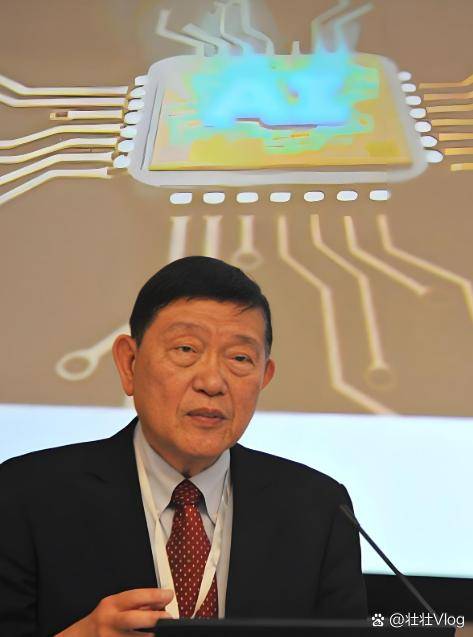
中芯国际创始人张汝京曾说,他在自己离开台积电时,台积电董事长告诉他,你敢去大陆,那在台积电的这么多股票就不能拿了!2025 年,满头华发的张汝京现身讲台,面对台下朝气蓬勃的年轻面庞,他身形瘦削却身姿挺拔,尽显风骨。外界给这位半导体老兵算过一笔账,怎么算,他这辈子都是在做“亏本买卖”...
Sou Hu Cai Jing· 2026-01-12 09:11
Core Viewpoint - The article highlights the life and contributions of Zhang Rujing, the founder of SMIC, emphasizing his sacrifices and relentless pursuit of advancing China's semiconductor industry despite facing numerous challenges and setbacks throughout his career [1][16]. Group 1: Early Career and Sacrifices - Zhang Rujing faced a difficult choice when leaving TSMC, where he had significant stock options, which he forfeited to pursue his dream of establishing a semiconductor company in mainland China [2][3]. - His decision was driven by personal motivations, including his father's wish to return to the homeland and his mother's desire to spend her later years in China, which he valued more than financial wealth [3]. Group 2: Challenges in Establishing SMIC - Upon arriving in Shanghai, Zhang encountered significant obstacles, including a lack of advanced equipment due to international embargoes, forcing him to source second-hand parts and assemble them into functional production lines [4][5]. - Despite the challenging environment, he and his team successfully established an 8-inch wafer production line within thirteen months, achieving technology nodes from 0.25 microns down to 90 nanometers [5]. Group 3: Legal and Competitive Struggles - As SMIC began to gain traction, it faced aggressive legal challenges from competitors, which were perceived as targeted attacks against China's semiconductor ambitions [6][8]. - In 2009, SMIC was forced to pay $200 million in damages and relinquish 10% of its shares, along with a non-compete clause that required Zhang to leave the company he founded [9]. Group 4: Resilience and Continued Contributions - After a three-year non-compete period, Zhang returned to the semiconductor industry, focusing on upstream materials, particularly domestic production of 300mm silicon wafers, which had been heavily reliant on imports [12]. - He successfully led a new venture, achieving breakthroughs in technology that addressed long-standing gaps in the domestic semiconductor supply chain [13]. Group 5: Ongoing Impact and Legacy - Zhang continued to innovate and support the semiconductor industry by founding multiple companies aimed at reducing costs for small design firms and addressing challenges in automotive chips [15]. - His philanthropic efforts included establishing numerous schools and promoting semiconductor education, reflecting his commitment to nurturing talent in the industry [15][16].

资本市场丨跻身市值榜上市企业 须从规模优势转向质量优势
Sou Hu Cai Jing· 2026-01-12 05:45
Core Insights - The latest "Top 500 Listed Companies in China" list for 2025 showcases leading enterprises in finance, energy, technology, consumption, and intelligent manufacturing, with major players like Tencent and ICBC demonstrating their industry leadership through trillion-level market capitalizations [1][10] - The presence of companies like Industrial Fulian, SMIC, and Cambricon in the rankings reflects the deep structural transformation of China's economy, indicating these firms are both stabilizers and pioneers in industrial upgrades [1][10] Group 1: Market Capitalization Rankings - The companies ranked from 21 to 30 include Sinopec (700.7 billion), Zhongji Xuchuang (677.8 billion), Yangtze Power (665.3 billion), Postal Savings Bank (641.7 billion), SMIC (632.9 billion), NetEase (614.0 billion), Midea Group (592.9 billion), Bank of Communications (590.8 billion), Cambricon (571.6 billion), and Meituan (570.2 billion) [3][10] Group 2: Economic Structural Transformation - The success of these companies is attributed to multiple factors, including industry scarcity, technological barriers, and stable business models, which create competitive advantages [4][11] - Companies like Zhongji Xuchuang and SMIC exemplify the dual drivers of technological innovation and market opportunities, with Zhongji Xuchuang capitalizing on the AI infrastructure wave [4][11] Group 3: Challenges and Opportunities - Companies face the challenge of transitioning from scale advantages to quality advantages, with risks related to technological iteration and high valuation sustainability [6][12] - The need for technological independence and improved profitability models is highlighted, particularly for firms like Zhongji Xuchuang and Cambricon, which must navigate rapid technological changes [6][12] Group 4: Future Trends - Future market leaders are expected to emerge from sectors such as high-end manufacturing, green energy, and innovative pharmaceuticals, with a focus on hard technology like semiconductors and AI [8][9] - The anticipated market structure will feature a three-tier system, with traditional giants at the base, tech newcomers leading, and niche champions filling in [8][9] Group 5: Investment Opportunities - The average market capitalization of the top 500 companies reached 185.6 billion, reflecting a significant increase, particularly in information technology, finance, and consumer discretionary sectors [23] - Companies are expected to enhance their value and market capitalization through innovation, digital transformation, and sustainable practices, aligning with national policies and market demands [21][24]


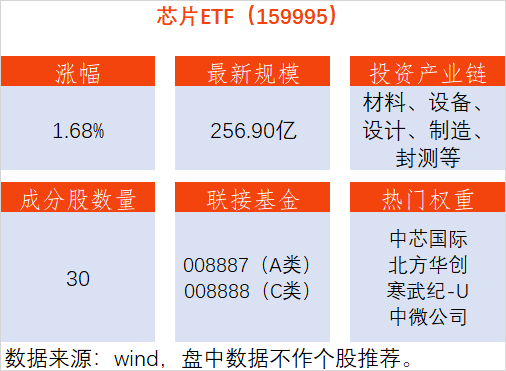
英伟达六大芯片协同升级!芯片ETF(159995)上涨1.68%,龙芯中科涨9.52%
Mei Ri Jing Ji Xin Wen· 2026-01-12 03:30
Group 1 - The A-share market showed mixed performance on January 12, with the Shanghai Composite Index rising by 0.25%, driven by gains in sectors such as internet, cultural media, and software, while motorcycle and energy equipment sectors faced declines [1] - The chip technology sector demonstrated strong fluctuations, with the chip ETF (159995) increasing by 1.68%. Notable individual stock performances included Longxin Technology rising by 9.52%, Changdian Technology by 7.09%, and Zhongwei Company by 6.77% [1] Group 2 - NVIDIA's founder and CEO Jensen Huang announced the launch of the Rubin platform at CES 2026, which consists of six new chips designed for building extraordinary AI supercomputers. These include Vera CPU, Rubin GPU, NVLink 6 switch, ConnectX-9 SuperNIC, BlueField-4 DPU, and NVIDIA Spectrum-6 Ethernet switch [3] - The Rubin platform is expected to significantly reduce training time and lower inference token costs, marking a new era in AI computing power. The collaborative design of these chips is anticipated to enhance performance and increase the value across multiple segments of the industry [3] - The chip ETF (159995) tracks the National Chip Index, comprising 30 leading companies in the A-share chip industry, including SMIC, Cambricon, Changdian Technology, and Northern Huachuang, indicating a robust investment landscape in the semiconductor sector [3]


267只科创板股融资余额环比增加
Zheng Quan Shi Bao Wang· 2026-01-12 01:45
Core Viewpoint - The financing balance of the Sci-Tech Innovation Board decreased by 1.06 billion yuan, while the margin trading balance increased by 18.93 million yuan, indicating a mixed sentiment among investors [1]. Financing Balance Summary - As of January 9, the total margin trading balance on the Sci-Tech Innovation Board was 282.61 billion yuan, a decrease of 1.05 billion yuan from the previous trading day [1]. - The highest financing balance was held by Cambrian, with a balance of 15.35 billion yuan, followed by SMIC and Haiguang Information with balances of 13.03 billion yuan and 7.30 billion yuan, respectively [1]. - A total of 267 stocks saw an increase in financing balance, while 327 stocks experienced a decrease [1]. - Notable increases in financing balance were observed in Hotgen Biotech (56.65%), Yuyuan Pharmaceutical (54.61%), and Chipone Technology (39.46%) [1]. Margin Trading Balance Summary - Cambrian also had the highest margin trading balance at 41 million yuan, followed by Haiguang Information and SMIC with balances of 36 million yuan and 32 million yuan, respectively [2]. - A total of 264 stocks saw an increase in margin trading balance, while 148 stocks experienced a decrease [2]. - Significant increases in margin trading balance were noted for Huitong Co. (3360.47%), Yaxin Security (1268.15%), and Jinchengzi (805.25%) [2].



智通港股通持股解析|1月12日
智通财经网· 2026-01-12 00:34
| 公司名称 | 持股数量 | 最新持股比例 | | --- | --- | --- | | 中国电信(00728) | 99.37亿股 | 71.60% | | 绿色动力环保(01330) | 2.82亿股 | 69.76% | | 凯盛新能(01108) | 1.70亿股 | 67.96% | | 天津创业环保股份(01065) | 2.29亿股 | 67.38% | | 大眾公用(01635) | 3.58亿股 | 67.11% | | 中国神华(01088) | 22.37亿股 | 66.22% | | 南方恆生科技(03033) | 90.76亿股 | 65.31% | | 昊天国际建投(01341) | 69.01亿股 | 62.19% | | 广汽集团(02238) | 17.50亿股 | 62.18% | | 中远海能(01138) | 7.91亿股 | 61.05% | | 弘业期货(03678) | 1.52亿股 | 60.80% | | 广发証券(01776) | 10.16亿股 | 59.70% | | 万科企业(02202) | 13.12亿股 | 59.45% | | 昭衍新药(0 ...


计算机行业研究:国内算力斜率陡峭
SINOLINK SECURITIES· 2026-01-11 09:14
Investment Rating - The report does not explicitly state an investment rating for the industry Core Insights - The competition in AI entry points is intensifying, with major companies increasing their investments. China's AI presence globally has significantly improved, with domestic large models continuously iterating. Despite GPT-5.2 and Gemini 3 Pro leading, Chinese models have effectively altered the North American dominance in the competitive landscape. In the global Top 10, three positions are held by Chinese models, and in the Top 15, there are six Chinese companies. By 2025, China's open-source AI model usage is expected to account for over 70% of the global market [2][11][19] - The demand for inference has surged, with the emergence of o1 class inference models unlocking approximately 10 times the potential of traditional models in terms of inference-time compute. The demand for computing power has shifted from being solely "training-driven" to a dual focus on "training + inference" [2][5][37] - The battle for entry points has evolved beyond mobile devices to OS-level intelligent agents and super apps. By December 24, 2025, ByteDance's AI application Doubao announced daily active users (DAU) exceeding 100 million, while Qianwen App reached over 30 million monthly active users within 23 days of public testing, becoming the fastest-growing AI application globally. Doubao bypasses traditional interfaces, creating an "AI operating system" that directly interacts with super apps like WeChat and Alipay, challenging the rules of the traditional app era [2][44][45] Summary by Sections AI Entry Point Competition - China's AI global presence has significantly improved, with domestic large models continuously iterating. In the global Top 10, three positions are held by Chinese models, and in the Top 15, there are six Chinese companies. By 2025, China's open-source AI model usage is expected to account for over 70% of the global market [2][11][19] - The competition for entry points has evolved beyond mobile devices to OS-level intelligent agents and super apps, with significant user engagement reported for new AI applications [2][44][45] Domestic Chip Breakthroughs - The smart computing center in China is expanding, with a projected compound annual growth rate (CAGR) of 57% from 2020 to 2028, reaching 2,781.9 EFLOPS by 2028. Domestic chip technology is steadily improving, with local cloud service providers accelerating the construction of heterogeneous environments [5][50] - Domestic general-purpose GPUs are upgrading from "usable" to "good," with performance metrics approaching those of leading international models. The production capacity of domestic chip manufacturers like SMIC is continuously increasing, providing solid support for domestic AI chip production [5][53][54] Supply and Demand Dynamics - The demand side is characterized by a surge in inference demand as AI applications become more prevalent, while the supply side sees continuous improvements in domestic GPU performance and accelerated adaptation by cloud service providers [5][59] - The AI server market is expected to see a shift towards inference servers becoming the mainstream, with a projected market size of approximately $39.3 billion in 2024, reflecting a year-on-year growth of 49.7% [5][64]
