
SMIC(00981)

Search documents
南向资金今日净买入68.15亿港元 腾讯控股净买入14.12亿港元
Zheng Quan Shi Bao Wang· 2026-01-09 14:35
Core Viewpoint - On January 9, the Hang Seng Index rose by 0.32%, with southbound funds totaling HKD 111.39 billion in trading volume, resulting in a net inflow of HKD 6.81 billion [1] Group 1: Southbound Trading Activity - The total trading volume for southbound funds was HKD 111.39 billion, with buy transactions amounting to HKD 59.10 billion and sell transactions at HKD 52.29 billion, leading to a net buy of HKD 6.81 billion [1] - The Hong Kong Stock Connect (Shenzhen) recorded a total trading volume of HKD 44.30 billion, with net buying of HKD 5.15 billion, while the Hong Kong Stock Connect (Shanghai) had a trading volume of HKD 67.08 billion and a net buy of HKD 1.66 billion [1] Group 2: Active Stocks - Alibaba-W had the highest trading volume among southbound funds at HKD 99.89 billion, but experienced a net sell of HKD 26.22 billion, despite a closing price increase of 2.73% [1] - Tencent Holdings saw a net buy of HKD 14.12 billion, with a closing price decrease of 0.81%, while Xiaomi Group-W had a net buy of HKD 8.70 billion [1] - Kuaishou-W recorded a net buy of HKD 7.76 billion, and Meituan-W and China Mobile faced net sells of HKD 3.67 billion and HKD 3.11 billion, respectively [1] Group 3: Continuous Net Buying - Xiaomi Group-W and Tencent Holdings were the only two stocks with continuous net buying for more than three days, with Xiaomi Group-W having a total net buy of HKD 55.53 billion over seven days, and Tencent Holdings with HKD 42.31 billion over three days [2]
港股通(深)净买入51.55亿港元
Zheng Quan Shi Bao Wang· 2026-01-09 14:34
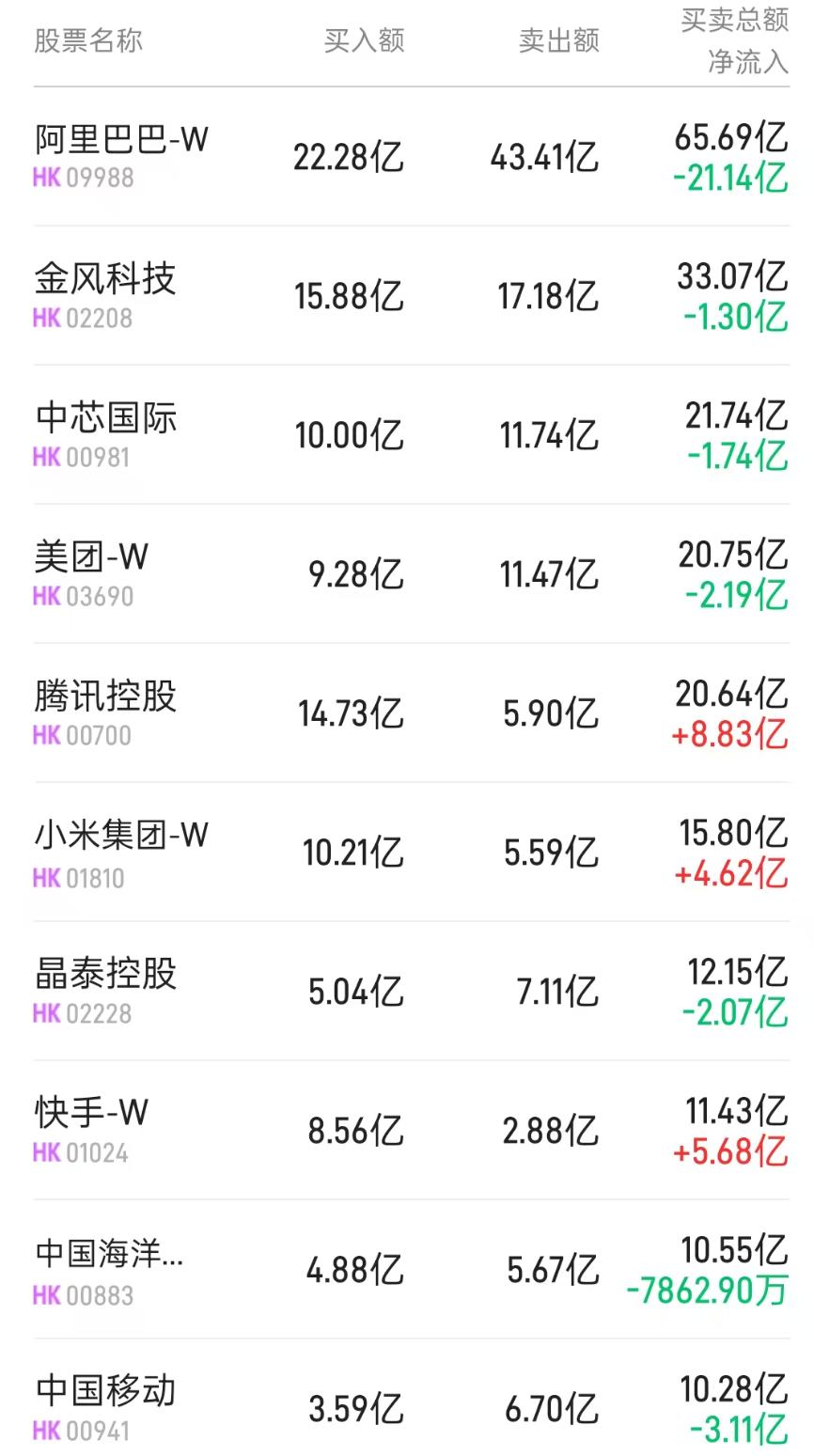
Core Viewpoint - On January 9, the Hang Seng Index rose by 0.32% to close at 26,231.79 points, with a net inflow of HKD 6.815 billion through the southbound trading channel [1] Group 1: Market Activity - The total trading volume for southbound trading on January 9 was HKD 111.389 billion, with a net buying amount of HKD 6.815 billion [1] - The Shanghai Stock Exchange's southbound trading amounted to HKD 67.084 billion, with a net buying of HKD 1.660 billion, while the Shenzhen Stock Exchange recorded HKD 44.305 billion in trading with a net buying of HKD 5.155 billion [1] Group 2: Active Stocks - In the Shanghai Stock Exchange's southbound trading, Alibaba-W had the highest trading volume at HKD 65.69 billion, followed by Goldwind Technology at HKD 33.07 billion and SMIC at HKD 21.74 billion [1] - Tencent Holdings had the highest net buying amount of HKD 0.883 billion, despite a closing price drop of 0.81% [1] - Alibaba-W recorded the highest net selling amount of HKD 2.114 billion, while its closing price increased by 2.73% [1] Group 3: Detailed Stock Data - The top active stocks in the southbound trading on January 9 included: - Alibaba-W: Trading amount of HKD 656.911 million with a net selling of HKD 211.364 million, closing up by 2.73% [3] - Goldwind Technology: Trading amount of HKD 330.673 million with a net selling of HKD 13.003 million, closing up by 3.41% [3] - SMIC: Trading amount of HKD 217.368 million with a net selling of HKD 17.406 million, closing down by 0.73% [3] - Tencent Holdings: Trading amount of HKD 209.478 million with a net buying of HKD 52.898 million, closing down by 0.81% [3]
智通港股通活跃成交|1月9日





智通财经网· 2026-01-09 11:22
Group 1 - On January 9, 2026, Alibaba-W (09988), Goldwind Technology (02208), and SMIC (00981) were the top three companies by trading volume in the Southbound Stock Connect, with transaction amounts of 6.569 billion, 3.307 billion, and 2.174 billion respectively [1] - In the Southbound Stock Connect for the Shenzhen-Hong Kong Stock Connect, Alibaba-W (09988), Tencent Holdings (00700), and SMIC (00981) also ranked as the top three, with transaction amounts of 3.420 billion, 2.095 billion, and 1.749 billion respectively [1] Group 2 - The top active companies in the Southbound Stock Connect included Alibaba-W (09988) with a net buy amount of -2.114 billion, Goldwind Technology (02208) with -0.130 billion, and SMIC (00981) with -0.174 billion [2] - In the Shenzhen-Hong Kong Stock Connect, Alibaba-W (09988) had a net buy amount of -0.508 billion, Tencent Holdings (00700) had +0.529 billion, and SMIC (00981) had +0.866 billion [2]
北水动向|北水成交净买入68.15亿 阿里(09988)拟加大淘宝闪购投入 北水全天抛售阿里超26亿港元
智通财经网· 2026-01-09 10:02
Group 1 - The Hong Kong stock market saw a net inflow of 68.15 billion HKD from northbound trading, with 16.6 billion HKD from Shanghai and 51.55 billion HKD from Shenzhen [1] - The most bought stocks included Tencent (00700), Xiaomi Group-W (01810), and Kuaishou-W (01024), while the most sold stocks were Alibaba-W (09988), China Mobile (00941), and Goldwind Technology (02208) [1][2] Group 2 - Alibaba-W (09988) had a net outflow of 26.21 billion HKD, with a total trading volume of 65.69 billion HKD, indicating significant selling pressure [2][7] - Tencent (00700) received a net inflow of 14.11 billion HKD, supported by a report from Morgan Stanley highlighting its AI strategy and high potential for monetization [4][5] - Xiaomi Group-W (01810) attracted a net inflow of 8.69 billion HKD, with plans for 200 billion HKD in R&D investment over the next five years [5] - Kuaishou-W (01024) saw a net inflow of 7.76 billion HKD, driven by strong performance in AI-generated content [5] - Semiconductor company SMIC (00981) had a net inflow of 6.92 billion HKD, following a strategic acquisition that is expected to positively impact earnings [6] - Goldwind Technology (02208) faced a net outflow of 1.94 billion HKD, despite potential positive catalysts from its stake in Blue Arrow Aerospace [7]

电子行业资金流出榜:信维通信、中芯国际等净流出资金居前
Zheng Quan Shi Bao Wang· 2026-01-09 09:33
Market Overview - The Shanghai Composite Index rose by 0.92% on January 9, with 29 out of the 31 sectors experiencing gains, led by the media and comprehensive sectors, which increased by 5.31% and 3.60% respectively [1] - The electronic sector also saw a rise of 0.91%, while the banking and non-bank financial sectors faced declines of 0.44% and 0.20% respectively [1] Capital Flow Analysis - The net outflow of capital from the two markets reached 24.126 billion yuan, with 8 sectors experiencing net inflows [1] - The media sector led the net inflow with 9.703 billion yuan, followed by the non-ferrous metals sector, which saw a net inflow of 4.552 billion yuan [1] - In contrast, 23 sectors experienced net outflows, with the electronic sector facing the largest outflow of 9.149 billion yuan, followed by the power equipment sector with an outflow of 8.936 billion yuan [1] Electronic Sector Performance - Within the electronic sector, 476 stocks were tracked, with 319 stocks rising and 147 stocks declining [2] - Notably, 3 stocks hit the daily limit up, while 24 stocks had net inflows exceeding 100 million yuan, with Lens Technology leading at 603 million yuan [2] - Other significant net inflows were observed in Changdian Technology and Haiguang Information, with inflows of 513 million yuan and 457 million yuan respectively [2] Electronic Sector Outflow Analysis - The electronic sector also had significant outflows, with 38 stocks experiencing net outflows exceeding 100 million yuan [3] - The stocks with the largest outflows included Xinwei Communication, with an outflow of 1.541 billion yuan, followed by SMIC and Shenghong Technology with outflows of 862 million yuan and 615 million yuan respectively [3]



中芯国际跌0.98%,成交额65.82亿元,近5日主力净流入-2.90亿
Xin Lang Cai Jing· 2026-01-09 07:33
Core Viewpoint - SMIC (Semiconductor Manufacturing International Corporation) is experiencing a decline in stock price and trading volume, with significant investments from the National Integrated Circuit Industry Investment Fund, indicating potential growth in the semiconductor sector [1][2]. Company Overview - SMIC is the largest and most advanced integrated circuit manufacturing enterprise in mainland China, providing a range of services including wafer foundry, design services, and IP support [2]. - The company specializes in various technology nodes from 0.35 microns to 14 nanometers, with wafer foundry services accounting for 93.83% of its revenue [5]. - As of September 30, 2025, SMIC reported a revenue of 49.51 billion yuan, representing a year-on-year growth of 18.22%, and a net profit of 3.82 billion yuan, up 41.09% year-on-year [5]. Investment and Shareholding - The National Integrated Circuit Industry Investment Fund holds a 1.61% stake in SMIC, reflecting government support for the semiconductor industry [2]. - As of September 30, 2025, the number of shareholders increased to 336,200, with an average of 6,134 shares held per shareholder, a decrease of 25.41% from the previous period [5]. Market Activity - On January 9, SMIC's stock price fell by 0.98%, with a trading volume of 6.582 billion yuan and a market capitalization of 1,031.093 billion yuan [1]. - The stock has seen a net outflow of 783 million yuan from major investors, indicating a trend of reduced investment in the company [3][4]. Technical Analysis - The average trading cost of SMIC shares is 123.11 yuan, with the stock price approaching a support level of 125.50 yuan, suggesting potential volatility if this support is breached [4].
1月8日【港股Podcast】恆指、美團、嗶哩嗶哩、舜宇光學、中芯、比亞迪
Ge Long Hui· 2026-01-09 04:52
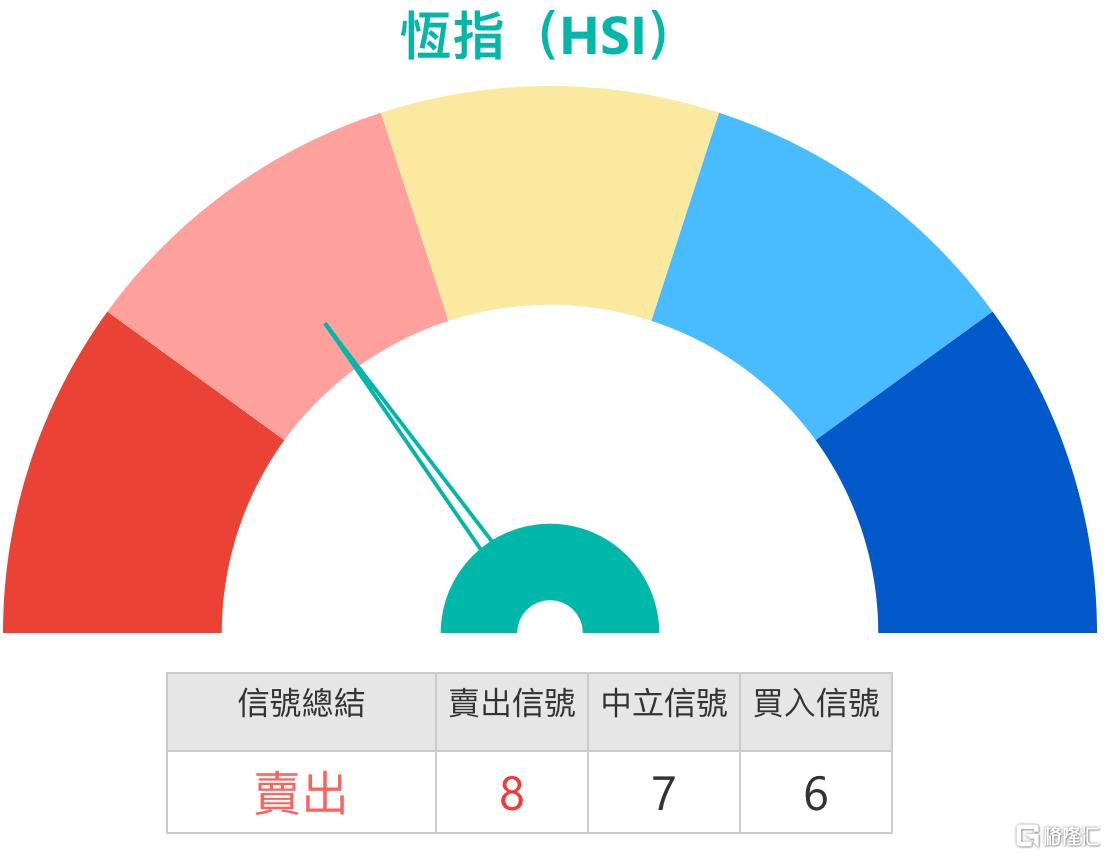
Group 1: Hang Seng Index and Market Overview - The Hang Seng Index (HSI) closed at 26,149 points, continuing its downward trend, although it showed slight recovery towards the end of the trading day [1] - Investors are divided, with some anticipating a small rebound while others are holding bearish certificates, expecting the index to drop back to 25,900 points [1] - Technical analysis indicates a predominance of "sell" signals, with 8 sell signals compared to 6 buy signals, suggesting caution in the current market [2] Group 2: Meituan (03690.HK) - Meituan's stock price closed at 101 HKD, with concerns about potential declines to 96 HKD if it breaks the support level of 97.1 HKD [8] - The stock is currently showing a neutral signal with no clear upward or downward trend, as buy and sell signals are roughly equal [8][11] Group 3: Bilibili (09626.HK) - Bilibili's stock price closed at 216.6 HKD, showing resilience by rising slightly despite the overall market decline [13] - Technical signals indicate a majority of sell signals (9) compared to buy signals (4), with a support level around 202 HKD [13] Group 4: Sunny Optical Technology (02382.HK) - Sunny Optical's stock closed at 63.85 HKD, nearing the lower boundary of the Bollinger Bands, with increasing volume during the decline [16] - The technical summary shows a majority of buy signals (10) against 3 sell signals, suggesting potential for a rebound [20] Group 5: SMIC (00981.HK) - SMIC's stock price closed at 74.95 HKD, with a neutral technical signal indicating no clear direction [22] - Support is around 70 HKD, while resistance is at approximately 79.5 HKD, suggesting a wait-and-see approach for investors [22] Group 6: BYD (01211.HK) - BYD's stock continued to decline, closing lower but with reduced trading volume compared to the previous day, indicating a potential stabilization [31] - The short-term trading range is estimated between 91.5 HKD and 97.8 HKD, providing a reference for investors [31]


中芯国际1月8日获融资买入14.24亿元,融资余额134.64亿元
Xin Lang Cai Jing· 2026-01-09 01:25
Group 1 - On January 8, SMIC's stock increased by 0.13% with a trading volume of 8.145 billion yuan, while the net financing buy was -55.56 million yuan, indicating a high level of financing activity [1] - The financing balance for SMIC reached 13.499 billion yuan, accounting for 5.17% of its market capitalization, which is above the 80th percentile of the past year [1] - In terms of securities lending, SMIC had a lending balance of 35.286 million yuan, also exceeding the 80th percentile of the past year, indicating a high level of short selling activity [1] Group 2 - As of September 30, SMIC had 336,200 shareholders, an increase of 33.27% from the previous period, while the average number of shares held per shareholder decreased by 25.41% [2] - For the first nine months of 2025, SMIC reported a revenue of 49.51 billion yuan, a year-on-year increase of 18.22%, and a net profit attributable to shareholders of 3.818 billion yuan, up 41.09% year-on-year [2] - Among the top ten shareholders, several ETFs reduced their holdings, with E Fund's STAR 50 ETF decreasing by 16.5036 million shares, while new shareholders included the Jiashi STAR Chip ETF and E Fund's CSI 300 ETF [2]
智通港股通持股解析|1月9日
智通财经网· 2026-01-09 00:33
Core Insights - The top three companies by Hong Kong Stock Connect shareholding ratios are China Telecom (71.61%), Gree Power (69.82%), and Kaisa New Energy (67.97%) [1] - The largest increases in shareholding over the last five trading days were seen in the Tracker Fund of Hong Kong (+4.898 billion), Xiaomi Group-W (+2.104 billion), and Hang Seng China Enterprises (+2.034 billion) [1] - The largest decreases in shareholding over the last five trading days were recorded for Tencent Holdings (-3.674 billion), China Mobile (-2.390 billion), and Zijin Mining (-792 million) [1] Group 1: Hong Kong Stock Connect Shareholding Ratios - China Telecom (00728) holds 9.938 billion shares with a shareholding ratio of 71.61% [1] - Gree Power (01330) holds 0.282 billion shares with a shareholding ratio of 69.82% [1] - Kaisa New Energy (01108) holds 0.170 billion shares with a shareholding ratio of 67.97% [1] - Tianjin Chuangye Environmental Protection (01065) holds 0.229 billion shares with a shareholding ratio of 67.36% [1] - Other notable companies include China Shenhua (66.29%) and Southern Hang Seng Technology (65.38%) [1] Group 2: Recent Increases in Shareholding - Tracker Fund of Hong Kong (02800) saw an increase of +4.898 billion with a change of +18.6086 million shares [1] - Xiaomi Group-W (01810) increased by +2.104 billion with a change of +5.53495 million shares [1] - Hang Seng China Enterprises (02828) increased by +2.034 billion with a change of +2.19962 million shares [1] - Other companies with significant increases include Ping An Insurance (+2.027 billion) and Kuaishou-W (+1.709 billion) [1] Group 3: Recent Decreases in Shareholding - Tencent Holdings (00700) experienced a decrease of -3.674 billion with a change of -5.9645 million shares [3] - China Mobile (00941) decreased by -2.390 billion with a change of -2.9561 million shares [3] - Zijin Mining (02899) saw a decrease of -792 million with a change of -2.1294 million shares [3] - Other companies with notable decreases include China Unicom (-764 million) and Xinda Biopharmaceuticals (-596 million) [3]



1月8日港股通净卖出49.01亿港元


Zheng Quan Shi Bao Wang· 2026-01-08 15:16
Market Overview - On January 8, the Hang Seng Index fell by 1.17%, closing at 26,149.31 points, with a total net sell of HKD 4.901 billion through the southbound trading channel [1][3] - The total trading volume for the southbound trading was HKD 117.906 billion, with a net sell of HKD 4.901 billion [1] Trading Activity - In the Shanghai-Hong Kong Stock Connect, the trading volume was HKD 70.891 billion, with a net sell of HKD 3.968 billion; in the Shenzhen-Hong Kong Stock Connect, the trading volume was HKD 47.015 billion, with a net sell of HKD 0.933 billion [1] - The most actively traded stock in the Shanghai-Hong Kong Stock Connect was Alibaba-W, with a trading volume of HKD 57.22 billion, followed by the Tracker Fund of Hong Kong and SMIC, with trading volumes of HKD 48.64 billion and HKD 33.52 billion, respectively [1] Net Buy/Sell Analysis - Tencent Holdings had the highest net buy amount of HKD 0.585 billion, despite a closing price drop of 1.36% [1] - The Tracker Fund of Hong Kong recorded the highest net sell amount of HKD 4.631 billion, closing down by 1.28% [1] - In the Shenzhen-Hong Kong Stock Connect, Alibaba-W also led in trading volume with HKD 37.64 billion, while Xiaomi Group-W had the highest net buy of HKD 0.494 billion, closing down by 0.37% [2]