LENOVO GROUP(00992)

Search documents
股价飙升站稳12港元! 联想集团稳坐APC领头羊迎价值重估
Ge Long Hui· 2025-09-17 07:11
Core Viewpoint - Lenovo's stock price has risen to HKD 12.08, with a market capitalization of HKD 149 billion, driven by strong demand for AI solutions and a positive outlook from domestic and international institutions, suggesting continued price increases and a new valuation phase [1] Group 1: AI Market and Product Development - Lenovo's global PC market share reached a record high of 24.6% in Q2 CY25, with AI PCs having a market penetration rate of approximately 30% and user engagement for AI applications at around 40%, indicating strong growth potential [1] - The company has launched the "Tianxi" personal super-intelligent agent and "Lexiang" enterprise super-intelligent agent, achieving seamless collaboration across devices, enhancing user efficiency and personalization [3] - Lenovo's AI infrastructure business saw a remarkable revenue growth of 155% year-on-year in FY2026 Q1, capitalizing on the rapid increase in global AI infrastructure demand [4] Group 2: Global Manufacturing and Strategic Investments - Lenovo's "China + N" global manufacturing strategy has shown significant advantages in the current trade environment, with over 30 manufacturing bases worldwide, including 11 owned factories, allowing for resilient and agile operations [2] - The company has completed a USD 2 billion zero-interest convertible bond investment with Saudi Arabia's Public Investment Fund, establishing a production base in Saudi Arabia expected to commence operations in 2026, aligning with the country's Vision 2030 strategy [2] Group 3: Market Position and Financial Performance - HSBC maintains a "buy" rating, highlighting Lenovo's strong performance in both consumer and commercial PC segments, with robust demand for gaming PCs, particularly in China [4] - Lenovo's management is optimistic about the commercial PC upgrade cycle, with approximately 250 million devices still running Windows 10, which is expected to drive future growth [5] - The company has successfully transferred PC production capacity to Vietnam to mitigate tariff impacts on its US market sales, demonstrating flexibility in its global production layout [5]

联想(00992)股价飙升站稳12港元!机构:充分把握AI红利期 看多至16港元
智通财经网· 2025-09-17 07:11
Core Viewpoint - Lenovo Group's stock price has risen to HKD 12.08, with a market capitalization of HKD 149 billion, driven by strong demand for AI solutions, indicating a potential upward trend in valuation as global hybrid AI development accelerates [1] Group 1: AI Market and Product Development - Lenovo's global PC market share reached a record high of 24.6% in Q2 CY25, with AI PC market penetration at approximately 30% and user engagement for AI applications at around 40%, suggesting a strong growth trajectory for AI-related products [1] - The company has launched personal and enterprise super intelligent systems, enhancing seamless collaboration across devices, which improves user efficiency and personalization [3] - Lenovo's AI infrastructure business saw a remarkable revenue increase of 155% year-on-year in FY2026 Q1, capitalizing on the rapid growth of global AI infrastructure demand [4] Group 2: Global Manufacturing and Strategic Investments - Lenovo's "China + N" global manufacturing strategy has proven advantageous in the current trade environment, with over 30 manufacturing bases worldwide, including 11 owned factories, allowing for resilient and agile operations [2] - The company has completed a USD 2 billion zero-interest convertible bond investment with Saudi Arabia's Public Investment Fund, establishing a production base in Saudi Arabia expected to commence operations in 2026, aligning with the country's Vision 2030 strategy [2] Group 3: Market Position and Financial Performance - HSBC maintains a bullish outlook on Lenovo's PC business, viewing it as a cash cow, with strong momentum in both consumer and commercial PC segments, particularly in gaming PCs in China [4] - Lenovo's management is optimistic about the commercial PC upgrade cycle, with approximately 250 million devices still running Windows 10, which is expected to drive future growth [5] - The company has mitigated tariff impacts by relocating PC production for the U.S. market to Vietnam, enhancing its flexibility in response to market dynamics [5]
全球新“灯塔工厂”名单揭晓,中国8席领跑!
中国能源报· 2025-09-17 07:06
Core Viewpoint - The recent announcement by the World Economic Forum highlights that 8 out of 12 selected "Lighthouse Factories" are Chinese companies, showcasing China's leading position in the digital and intelligent transformation of manufacturing [1][4]. Group 1: Lighthouse Factories Selection - The new list of "Lighthouse Factories" includes 12 companies globally, with 8 being from China, indicating a significant breakthrough in China's manufacturing sector [1]. - The selected Chinese companies include Tongwei Solar, Eaton Electric, Mettler Toledo, Yunnan Baiyao, Hisense Hitachi, and two subsidiaries of Haier, reflecting the advancements in smart manufacturing [1][2]. Group 2: Technological Advancements - Tongwei Solar's factory utilizes automated production lines and big data analysis to achieve precise control in key processes, reducing energy and material waste [2]. - Eaton Electric's facility in Changzhou has implemented 10 Industry 4.0 solutions, resulting in a 26% increase in production efficiency, a 33% reduction in delivery time, and a 55% increase in capacity since its digital transformation began in 2022 [2]. - Mettler Toledo's Changzhou factory has integrated digital technologies deeply into its operations, achieving a 98.4% on-time delivery rate and a 22% reduction in delivery cycles through 49 Industry 4.0 applications [2]. Group 3: Other Notable Chinese Factories - Yunnan Baiyao has applied digital technology for raw material traceability, process optimization, and quality control [3]. - Hisense Hitachi has improved labor efficiency by 63% and reduced defect rates by 57% through over 70 innovative technology applications in welding and logistics [3]. - Haier's factories have achieved mass customization and rapid delivery through modular design and flexible production techniques [3]. Group 4: International Presence - Lenovo's Monterrey manufacturing base in Mexico and Midea's Racha factory in Thailand are also recognized as "Lighthouse Factories," showcasing China's global manufacturing capabilities [3]. - Lenovo's facility has been upgraded continuously over nearly 20 years, while Midea's factory has implemented 72 digital and AI solutions, reducing order delivery times by 43% and customer complaints by 32% [3]. Group 5: Significance of Lighthouse Factories - The "Lighthouse Factory" initiative, a collaboration between the World Economic Forum and McKinsey, represents the pinnacle of digital manufacturing and serves as a model for global manufacturing excellence [4]. - Since the initiative's inception in 2018, the number of Chinese companies selected has been increasing, reflecting the country's proactive approach in the competitive landscape of intelligent manufacturing [4].





联想在上海投资成立管理咨询中心,出资额1510万
Sou Hu Cai Jing· 2025-09-17 04:06
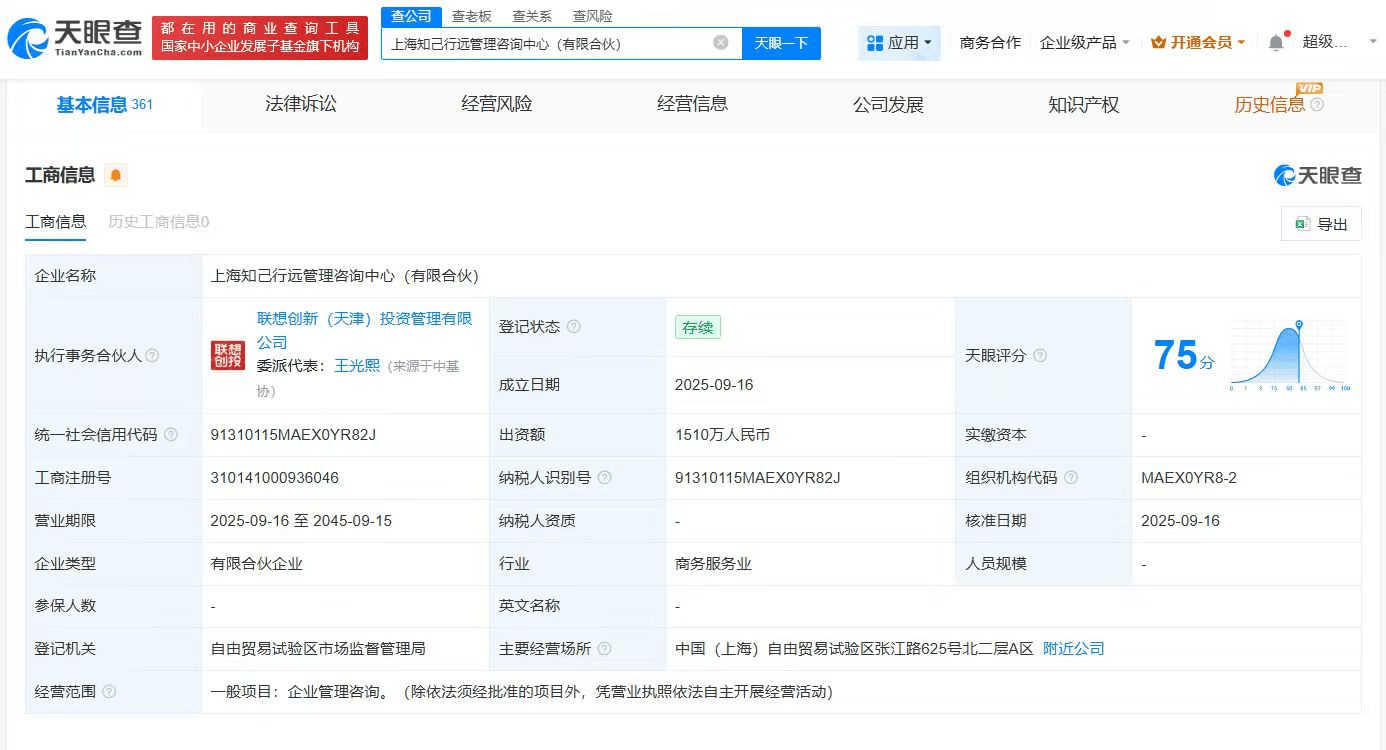
Core Points - Shanghai Zhijixingyuan Management Consulting Center (Limited Partnership) has been established with a registered capital of 15.1 million RMB, focusing on enterprise management consulting [1][2] - The executing partner is Lenovo Innovation (Tianjin) Investment Management Co., Ltd., which is part of a consortium that includes Nayuan Mingzhi (Hainan) Venture Capital Co., Ltd. and Songhe Changqing (Tianjin) Management Consulting Center (Limited Partnership) [1][2] Company Information - The company was registered on September 16, 2025, and is classified as a limited partnership in the business services industry [2] - The business scope includes general projects related to enterprise management consulting, operating independently under its business license [2] - The company is located in the China (Shanghai) Free Trade Pilot Zone, specifically at Zhangjiang Road 625, North Second Floor, Area A [2]
南京市与质量领军企业高质量发展对话会举行
Nan Jing Ri Bao· 2025-09-17 02:43
Core Viewpoint - The "Nanjing City and Quality Leading Enterprises High-Quality Development Dialogue Conference" aims to enhance quality-driven industrial upgrades and innovation-led development through collaboration among government, enterprises, and research institutions [1][2] Group 1: Event Overview - The conference was held on September 16, focusing on the theme "Quality Leads the Future, Co-creation and Win-win" [1] - Key representatives from various sectors participated to discuss quality as a driver for economic and social development [1] Group 2: Government Initiatives - Nanjing's government emphasizes quality as the "lifeline" of economic and social development, transitioning from "Nanjing Manufacturing" to "Nanjing Intelligent Manufacturing" [1] - The city aims to build a strong quality city, relying on the support of leading quality enterprises [1] Group 3: Investment Promotion - The Nanjing Investment Promotion Bureau showcased the city's investment potential, inviting global quality leading enterprises to invest in Nanjing [2] - Several agreements focusing on high-quality development cooperation were signed during the event [2]
最新一批"灯塔工厂"名单公布,联想集团墨西哥制造基地等7家中企入选
Ge Long Hui A P P· 2025-09-16 09:37
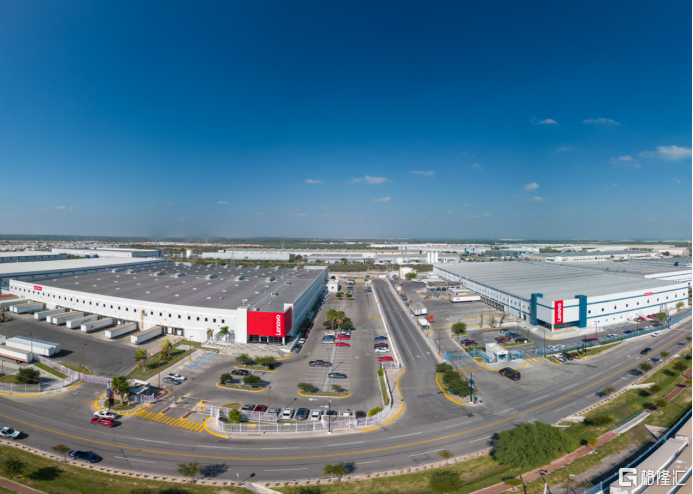
Core Insights - Lenovo's Monterrey manufacturing facility has been recognized as a "Lighthouse Factory" by the World Economic Forum and McKinsey, marking the first time a Chinese company has achieved this status in the Americas, showcasing Lenovo's strong capabilities in smart manufacturing and global supply chain management [1][2][9] Manufacturing and Supply Chain - The Monterrey facility, established in 2008, spans approximately 40,000 square meters and produces over 52,000 product categories, including desktops, laptops, and servers, serving more than 80 global markets [2] - Lenovo has implemented over 60 digital solutions at the Monterrey plant, with more than half utilizing artificial intelligence (AI), particularly generative AI, leading to significant improvements in performance metrics: delivery cycles reduced by 85%, logistics costs lowered by 42%, quality losses decreased by 56%, carbon emissions cut by 30%, and production efficiency increased by 58% [2][3][8] Digital Transformation - The facility employs AI-driven supply chain planning modules to enhance collaboration with over 2,000 primary and 20,000 secondary suppliers, achieving a 43% reduction in inventory and significantly improving supply chain efficiency [6] - An AI transportation engine has been deployed to optimize logistics, resulting in an 85% reduction in delivery times and a decrease in logistics costs through route and container planning optimization [6][8] Workforce Development - Over the past three years, the Monterrey facility has trained more than 800 digital talents, enhancing the skill set of its workforce and enabling non-IT personnel to create digital twin tools [7][12] - The plant has established partnerships with local universities to cultivate high-quality, skilled manufacturing talent, further integrating local resources into its operations [10][12] Sustainability Efforts - The facility has implemented a comprehensive ESG and digital system that utilizes IoT devices for real-time energy and water resource management, achieving a 30% reduction in energy intensity, water intensity, and carbon intensity [8] Global Strategy and Collaboration - Lenovo's success in Monterrey exemplifies a model for other Chinese companies looking to expand internationally, combining local management with global resources to address challenges effectively [10][12] - The collaboration between Lenovo and its partner, Guangda Tongchuang, highlights the importance of shared expertise and cultural integration in overcoming operational challenges [14] Future Outlook - Lenovo aims to leverage its "Lighthouse Factories" to drive digital transformation globally, enhancing supply chain advantages and ensuring that AI benefits all enterprises and customers [19]
中国智造再下一城!联想集团(00992)点亮中企在美洲首座“灯塔工厂”
智通财经网· 2025-09-16 09:31
Core Insights - Lenovo Group's Monterrey manufacturing base has been recognized as a "Lighthouse Factory" by the World Economic Forum and McKinsey, marking the first such recognition for a Chinese company in the Americas [1][3] - This achievement highlights Lenovo's strong capabilities in smart manufacturing and global supply chain management, setting a benchmark for Chinese enterprises in overseas digital transformation and intelligent upgrades [1][3] Manufacturing and Supply Chain Innovations - The Monterrey facility, established in 2008, spans approximately 40,000 square meters and produces over 52,000 product categories, exporting to more than 80 markets globally [3] - Lenovo has implemented over 60 digital solutions at the factory, with more than half utilizing artificial intelligence, significantly improving performance metrics: delivery cycles reduced by 85%, logistics costs lowered by 42%, quality losses decreased by 56%, carbon emissions cut by 30%, and production efficiency increased by 58% [3][6] AI and Digital Solutions - The factory employs AI-driven supply chain planning modules to enhance collaboration with over 2,000 suppliers, achieving a 43% reduction in inventory and drastically shortening decision-making time from 2-3 days to under 1 hour [6] - An AI transportation engine has been deployed to optimize logistics, resulting in an 85% reduction in delivery times and lower logistics costs through route and container planning optimization [6][7] Workforce Development and Sustainability - Over the past three years, the factory has trained more than 800 digital talents, enhancing the skill set of its workforce and promoting a culture of digital transformation [7][8] - The facility has implemented a comprehensive ESG and digital system, achieving a 30% reduction in energy, water, and carbon intensity through advanced IoT devices and AI algorithms [8] Local Integration and Global Strategy - The Monterrey base has created over 2,000 jobs and has been operational for nearly 20 years, exemplifying Lenovo's successful localization strategy and corporate social responsibility [11][14] - Lenovo's global strategy includes a "China + N" model, integrating domestic manufacturing with overseas operations to enhance supply chain resilience and operational efficiency [17][19] Future Outlook - Lenovo aims to leverage its Lighthouse factories to drive global industrial digital transformation, enhancing supply chain advantages and ensuring AI benefits reach every enterprise [20]
企业需求复苏+AI PC带动!联想以超19%增速领跑第二季度印度PC市场
Zhi Tong Cai Jing· 2025-09-15 08:33
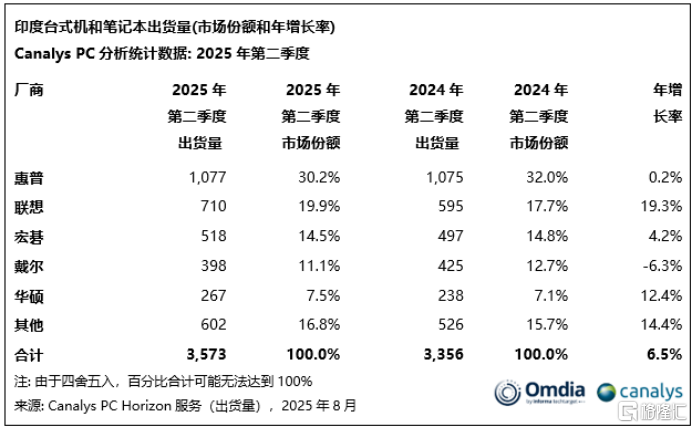
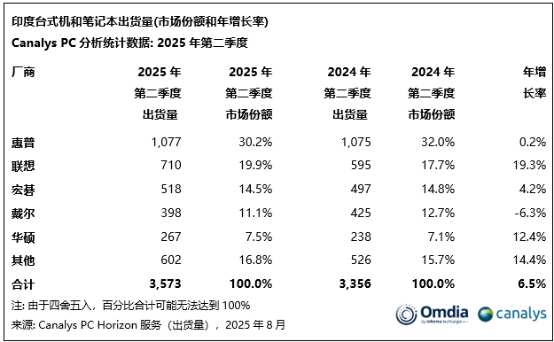
Core Insights - The Indian PC market (excluding tablets) experienced a 6% year-on-year growth in Q2 2025, with shipments reaching 3.6 million units, driven by strong demand from enterprises and steady consumer market growth [1][3] - Lenovo emerged as the market leader with a 19.3% year-on-year growth rate, capturing a 19.9% market share, significantly outperforming its competitors [1][2] Market Performance - HP maintained the highest market share at 30.2% but showed minimal growth of only 0.2% year-on-year [1][2] - Dell's performance declined, with a year-on-year shipment drop of 12.2%, indicating a weakening competitive position [2] - Acer and Asus recorded growth rates of 4.2% and 12.4% respectively, but did not achieve double-digit growth [2] Demand Drivers - The growth in the PC market is attributed to a strong recovery in enterprise demand, particularly for AI-enabled laptops, which saw a nearly threefold increase in shipments [3] - The upgrade demand for Windows 11 also contributed to a more than 11% year-on-year increase in enterprise PC shipments [3] - Workstation category shipments surged by 41%, reflecting high demand in engineering, design, and content creation sectors [3] Future Outlook - The Indian PC market is projected to grow by 7% in 2025, reaching 15.1 million units, with sustained growth expected in 2026 due to ongoing device upgrades and AI application adoption [3] - Key factors influencing future growth include the proliferation of AI, educational tenders, and local manufacturing [3] - Companies that adapt to the changing demands of enterprise AI transformation and consumer market trends are likely to be the biggest beneficiaries of this growth cycle [3]
企业需求复苏+AI PC带动!联想(00992)以超19%增速领跑第二季度印度PC市场
智通财经网· 2025-09-15 08:32
Core Insights - The Indian PC market (excluding tablets) experienced a 6% year-on-year growth in Q2 2025, with shipments reaching 3.6 million units, driven by strong enterprise demand and steady consumer market improvement [1][3] - Lenovo emerged as the market leader with a 19.3% year-on-year growth rate, capturing a 19.9% market share, significantly outperforming its competitors [1][2] Market Performance - HP maintained the highest market share at 30.2% but showed minimal growth of only 0.2% year-on-year [1][2] - Dell's performance declined, with a year-on-year shipment drop of 12.2%, indicating a weakening competitive position [2] - Acer and Asus recorded growth rates of 4.2% and 12.4% respectively, but did not achieve double-digit growth [2] Demand Drivers - The growth in the PC market is attributed to a strong recovery in enterprise demand, particularly for AI-enabled laptops, which saw a nearly threefold increase in shipments [3] - The demand for workstations surged by 41% year-on-year, reflecting a robust need for high-performance computing in engineering, design, and content creation sectors [3] Future Outlook - The Indian PC market is projected to grow by 7% in 2025, reaching 15.1 million units, with sustained growth expected in 2026 due to ongoing device upgrades and AI application proliferation [3] - Key factors influencing future growth include the adoption of AI, educational tenders, and local manufacturing initiatives [3]
2025年第二季度联想以两位数增速领跑印度PC市场成最大赢家
Ge Long Hui· 2025-09-15 08:30
Core Insights - The Indian PC market (excluding tablets) experienced a 6% year-on-year growth in Q2 2025, with shipments reaching 3.6 million units, driven by strong demand from enterprises and steady consumer market improvements [1][3] Company Performance - Lenovo led the market with a 19.3% year-on-year growth rate, achieving a market share of 19.9%, significantly outperforming its competitors [1][2] - HP maintained the highest market share at 30.2%, but its year-on-year growth was only 0.2%, indicating stagnation [1][2] - Acer and Asus showed growth, but their rates did not reach double digits, failing to challenge the top two brands effectively [2] - Dell's performance declined, with a year-on-year shipment drop of 12.2%, reflecting a weakening competitive position [2] Market Trends - The growth in the PC market is attributed to a strong recovery in enterprise demand, particularly for AI-enabled laptops, which saw a nearly threefold increase in shipments [3] - The demand for workstations surged by 41% year-on-year, highlighting the need for high-performance computing in engineering, design, and content creation sectors [3] - The overall PC market in India is projected to grow by 7% in 2025, reaching 15.1 million units, with sustained growth expected in 2026 due to ongoing device upgrades and AI application adoption [3] Future Outlook - The Indian PC market is entering a critical development phase, with AI adoption, educational tenders, and local manufacturing being key factors influencing growth trajectories [3] - Companies that effectively leverage the shift towards enterprise AI transformation and changing consumer demands are likely to be the biggest beneficiaries of this growth wave [3]