BYD(01211)

Search documents
交银国际:维持比亚迪股份买入评级,技术突破缓解用户续航焦虑
Ge Long Hui· 2026-03-10 05:19
Core Viewpoint - The report from CMB International maintains a "Buy" rating for BYD Company (1211.HK) with a target price of HKD 133, highlighting significant advancements in battery technology and overseas expansion plans [1] Group 1: Technology Advancements - BYD has launched its second-generation blade battery and the MW Flash Charge 2.0 technology, which significantly enhance charging efficiency and range [1] - These technological breakthroughs are expected to alleviate consumer concerns regarding range anxiety [1] Group 2: Market Expansion - The company is accelerating its overseas expansion, with projections indicating that by February 2026, overseas sales will exceed 50% of total sales for the first time [1] - The introduction of multiple new vehicle models is anticipated to support profitability growth expectations [1]

比亚迪新技术引领续航及补能革命,商用车电动化迎来新突破口?| 头条
第一商用车网· 2026-03-10 05:15
Core Viewpoint - BYD's launch of the second-generation blade battery and flash charging technology represents a significant technological breakthrough, particularly beneficial for the commercial vehicle sector, addressing critical pain points such as charging efficiency, range, and low-temperature performance [1][5][9]. Group 1: Charging Efficiency - The second-generation blade battery enables unprecedented charging speeds: "5 minutes to charge enough for 400 kilometers" and "9 minutes to charge from 10% to 97%" [5][11]. - The flash charging technology, with a charging power of 1500 kW, allows for rapid charging comparable to refueling, which is crucial for logistics and transportation industries [5][9]. Group 2: Addressing Pain Points - Current users of electric commercial vehicles express dissatisfaction with charging times, which can hinder operational efficiency. BYD's new technology aims to resolve this issue by significantly reducing charging durations [3][5]. - The energy density of the second-generation blade battery has increased to 190-210 Wh/kg, allowing for a CLTC range exceeding 1000 kilometers with a 120 kWh battery pack, alleviating range anxiety for long-distance logistics [7]. Group 3: Low-Temperature Performance - The second-generation blade battery maintains over 85% capacity at -20°C, and charging from 20% to 97% at -30°C takes only about 12 minutes, addressing the challenges of operating in cold climates [8][9]. - This performance is expected to enhance the adoption of electric commercial vehicles in northern regions, where low temperatures have previously limited market penetration [8]. Group 4: Infrastructure Development - BYD plans to establish 20,000 flash charging stations by the end of 2026, with 18,000 in urban areas and 2,000 along major highways, providing essential infrastructure for long-haul transportation [9][11]. - The rapid deployment of charging stations is already underway, with users actively visiting newly established locations, indicating strong market interest and support for the initiative [9]. Group 5: Industry Impact - The integration of the second-generation blade battery and flash charging technology into commercial vehicles is expected to revolutionize the logistics sector, allowing for more flexible scheduling and increased operational efficiency [11]. - BYD's advancements are not only beneficial for its own vehicles but are likely to influence the entire automotive industry, as many brands are reportedly in discussions to collaborate on battery technology [11].


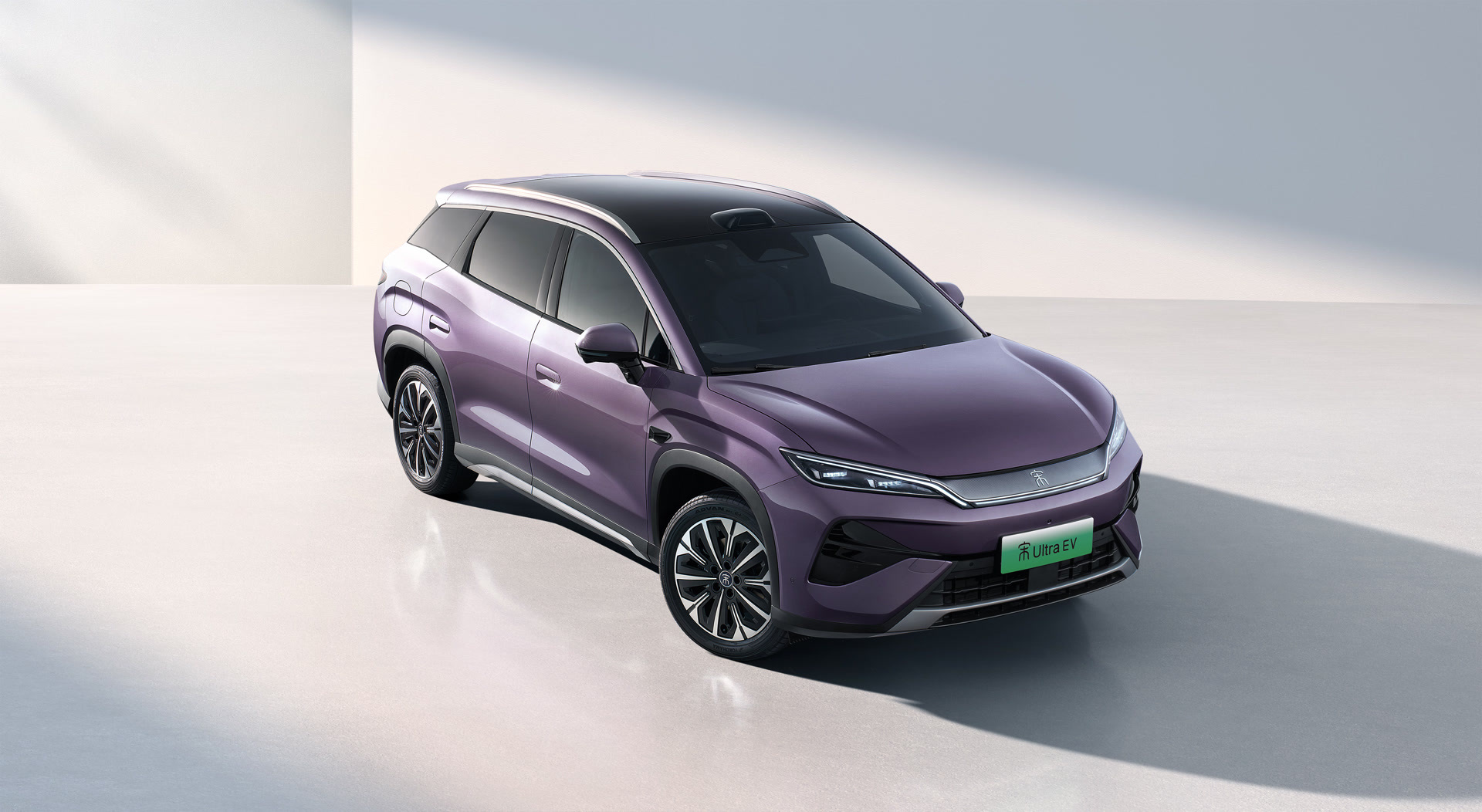
比亚迪宋Ultra EV开启预售 全系搭载第二代刀片电池及闪充技术
Bei Jing Ri Bao Ke Hu Duan· 2026-03-10 05:01
Core Viewpoint - BYD's Song Ultra EV, a B-class fast-charging SUV, has officially started pre-sales with a price range of 155,000 to 185,000 yuan, offering 18 months of free fast-charging for pre-order customers, and is expected to be officially launched by the end of March [1] Group 1 - The Song Ultra EV features BYD's second-generation blade battery and fast-charging technology, allowing it to charge from 10% to 70% in just 5 minutes and from 10% to 97% in 9 minutes, even in temperatures as low as -30 degrees Celsius, with only a 3-minute increase in charging time [6] - The vehicle boasts a pure electric range of 710 kilometers and can reach a maximum speed of 210 kilometers per hour, powered by a 270 kW motor [6] - The Song Ultra EV is available in six exterior colors and two interior colors, featuring a stylish and luxurious design with over 20 core configurations, including a 15.6-inch central control screen and multi-zone voice interaction [8] Group 2 - The vehicle is equipped with the Yunlian-C intelligent damping body control system and features a front MacPherson and rear five-link independent suspension, along with a TBC high-speed blowout stability system that maintains vehicle stability even at speeds of 140 kilometers per hour during a blowout [8]
从追赶到领跑!比亚迪五年出海“狂飙” | 封面故事:汽车出海系统升级
Xin Lang Cai Jing· 2026-03-10 04:42
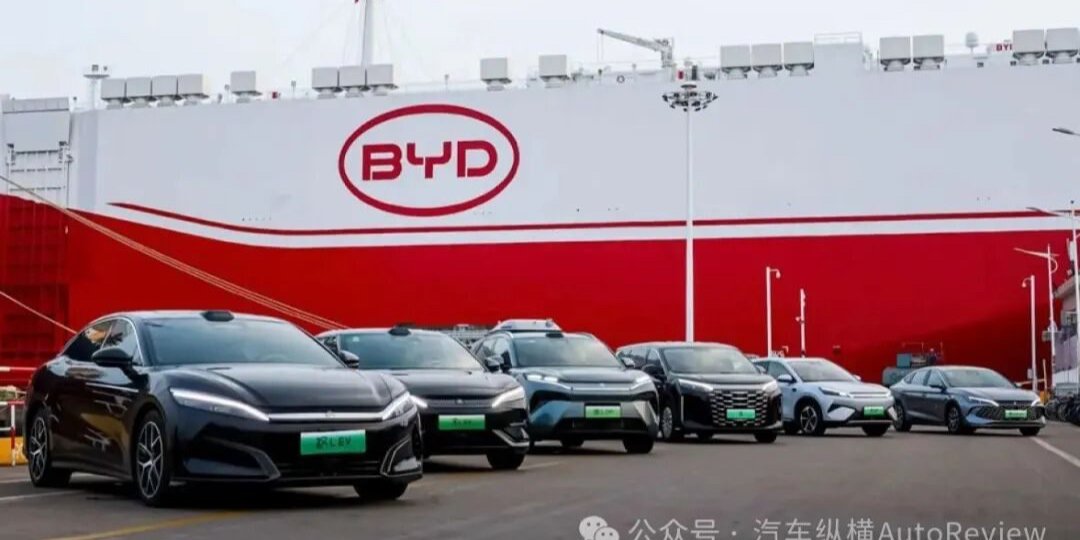
Core Viewpoint - Chinese automotive companies are entering a new phase of globalization, evolving from product export to ecosystem co-construction, establishing a competitive advantage in electrification and intelligence across the entire industry chain [2] Group 1: BYD's Global Expansion - BYD has transformed from a newcomer to a global leader in the electric vehicle market within five years, achieving overseas sales of 1.0496 million units by 2025, a staggering increase of 145% year-on-year [3][4] - In 2023, BYD's overseas sales reached 242,800 units, a year-on-year surge of 334%, and is projected to reach 417,200 units in 2024, marking a 72% increase [4] - BYD's global footprint now spans 119 countries and regions, with key markets in Europe, Southeast Asia, and Latin America [4] Group 2: Market Performance - In Europe, BYD's sales reached 187,700 units in 2025, a year-on-year increase of 268.6%, with Germany and the UK showing growth rates exceeding 500% [5] - BYD dominates the Brazilian electric vehicle market with a 92.16% share and has a 35.8% market share for hybrid models [5] - The company has established a strong presence in Southeast Asia, with the Yuan PLUS model leading sales in Thailand for 18 consecutive months [5] Group 3: Manufacturing and Localization - BYD is transitioning from product export to a full industry chain approach, with nine overseas factories planned or operational to enhance local production capabilities [6][7] - The factories in Uzbekistan, Thailand, Brazil, Hungary, and Indonesia are strategically located to reduce logistics costs and tariffs, ensuring efficient production and delivery [7] - BYD's localization strategy includes hiring local talent, with an average of 80% local employee ratio in overseas factories, enhancing market responsiveness [15] Group 4: Technological Innovation - BYD's core competitiveness lies in its self-developed technologies, with over 220 billion yuan invested in R&D over five years, leading to significant advancements in battery and intelligent systems [9][10] - The blade battery technology has become a key selling point in Europe due to its safety features, while the DM-i hybrid system addresses the needs of emerging markets [9][10] - BYD's self-developed chips and systems ensure supply chain stability and adaptability to local market demands [10][12] Group 5: Strategic Approach - BYD's globalization strategy emphasizes long-term planning over rapid expansion, focusing on quality and sustainable growth [17][18] - The company prioritizes emerging markets for initial expansion, gradually moving into mature markets, thereby avoiding risks associated with premature entry [18] - BYD's approach includes a dual focus on commercial and passenger vehicles, leveraging its experience in electric buses to build a robust service network before entering the passenger car market [18] Group 6: Policy and Market Support - The supportive domestic policies during the "14th Five-Year Plan" period have significantly reduced export costs for BYD, facilitating its global expansion [20][21] - The global shift towards electric vehicles, with the penetration rate expected to rise from 10% in 2021 to 30% by 2025, presents a substantial market opportunity for BYD [20] - BYD's success is attributed to its ability to align with both domestic and international market trends, positioning itself as a leader in the global automotive industry [21]
秦汉新城比亚迪动力电池西咸基地入选比亚迪第二代刀片电池首批生产基地
Xin Lang Cai Jing· 2026-03-10 03:42
Core Insights - BYD has launched its second-generation blade battery and fast-charging technology, marking a significant advancement in the electric vehicle industry with charging times of 5 minutes to reach 70% and 9 minutes to reach 97% [1][3] Group 1: Battery Technology - The second-generation blade battery achieves the fastest mass production charging speed globally, with a 5% increase in energy density compared to the first generation [3] - The new battery technology allows for efficient heat dissipation, ensuring that fast charging has minimal impact on battery lifespan [6] Group 2: Production and Manufacturing - The Xi'an base for BYD's second-generation blade battery is fully equipped for the entire production process, from electrode preparation to system testing, utilizing a smart manufacturing system for real-time data tracking [2] - The first battery cells from the Xi'an base were successfully produced within 10 months of project initiation, showcasing BYD's strong resource integration and project execution capabilities [2] Group 3: Market Impact - The new battery technology is expected to enhance user experience significantly, with models like the Tengshi Z9GT achieving a range of 1,036 kilometers [3] - The Xi'an base is positioned to foster innovation and development within the smart connected vehicle ecosystem, attracting various high-quality enterprises in the electric vehicle and AI sectors [2]

比亚迪发布第二代刀片电池及闪充技术,引领新能源汽车闪充时代
Qi Lu Wan Bao· 2026-03-10 02:30
Core Viewpoint - BYD has officially launched its second-generation blade battery and flash charging technology, achieving a new record for the fastest mass production charging speed globally, addressing significant challenges in electric vehicle charging [1] Group 1: Product Launch - The second-generation blade battery can charge from 10% to 70% in just 5 minutes and from 10% to 97% in 9 minutes [1] - At temperatures as low as -30 degrees Celsius, the battery can charge from 20% to 97% with only an additional 3 minutes compared to normal temperatures [1] Group 2: Strategic Initiatives - BYD has introduced the "Flash Charging China" strategy, aiming to build 20,000 flash charging stations across the country by the end of the year [1] - This initiative is designed to enhance user convenience and freedom in charging electric vehicles, marking a significant advancement in the electric vehicle charging landscape [1]
丰田、本田、日产2月在华销量均下滑
日经中文网· 2026-03-10 02:19
Group 1 - Toyota's sales in China for February were 82,500 units, a year-on-year decline of 13.9% [4] - Honda's sales in China for February were 28,780 units, down 15% year-on-year, with significant declines in its joint ventures [4] - Nissan experienced the largest drop among the three Japanese automakers, with a 20% decline in February sales [2][5] Group 2 - The reduction in government subsidies for electric vehicles (EVs) has negatively impacted sales for Chinese automakers, with BYD's new car sales in February down 40% year-on-year [5] - Cumulatively, from January to February, Toyota's sales in China decreased by 1.9% to 227,900 units, while Honda's sales fell by 16% to 86,269 units, and Nissan's sales declined by 2% to 75,415 units [5] - The Chinese government's reduction of the vehicle purchase tax exemption for EVs starting in January has affected sales across the industry [4]



QuestMobile2025中国移动互联网年度大报告:大变局,AI 原生APP 总时长增 177%,吞噬垂类APP用户时长;腾讯、抖音、阿里企业流量均超12亿
QuestMobile· 2026-03-10 01:55
Core Viewpoint - The article emphasizes the significant growth and transformation of the mobile internet landscape in China by 2025, driven by advancements in AI technology and changing user demographics, leading to new competitive dynamics among major internet companies. Group 1: Mobile Internet Growth - By December 2025, the monthly active user (MAU) count for mobile internet reached 1.276 billion, with average daily usage time increasing to 7.96 hours, reflecting a year-on-year growth of 6% [4][18] - The user engagement metrics, including daily usage frequency of 112.9 times, also saw a year-on-year increase of 2.1% [4][18] - The growth is attributed to improved user quality, with 73.3% of users coming from tier-three cities and above, and significant increases in specific sectors like AIGC and audiobooks, which saw usage time growth of 176.7% and 64.4% respectively [4][5] Group 2: User Demographics and Spending Power - The user base is segmented into three age groups: 21.2% under 24 years, 51% between 25 to 50 years, and 27.8% over 51 years, indicating a strong consumer potential among the 25 to 50 age group [5] - The proportion of users with a spending capacity of over 1,000 yuan reached 72.4%, while those in the mid-to-high price segment (over 2,000 yuan) accounted for 70.2% [5] - The aging population trend is leading to an increase in the "silver economy," with older users becoming a significant consumer group [5] Group 3: Competitive Landscape - The competition among major internet companies has intensified, with Tencent, Douyin, and Alibaba leading the user base, each exceeding 1.2 billion MAUs [7][27] - Tencent remains the largest player with 1.275 billion users, while Douyin and Alibaba are rapidly closing the gap with growth rates of 11.9% and 3.7% respectively [7] - The competition has shifted from merely acquiring users to leveraging AI technologies for deeper user engagement and ecosystem development [27][30] Group 4: AI Integration and Application - By December 2025, the overall scale of AI on mobile platforms reached 722 million, with AI-native apps showing a significant increase in user engagement, averaging 143.2 minutes per user [6][30] - AI applications are increasingly replacing traditional apps, with user time on AI-native apps growing by 22.3% from January to December 2025 [6] - Major companies are investing heavily in AI-native applications, with the top 50 AI apps dominated by Alibaba, Baidu, Douyin, and Tencent, which collectively account for 64% of the user base [6][30] Group 5: Marketing and Advertising Trends - The internet advertising market in China reached 793.08 billion yuan in 2025, growing by 4.6% year-on-year, driven by AI marketing and emotional marketing strategies [50] - The advertising strategies are evolving, with a focus on emotional and experiential marketing, particularly in sectors like tourism and lifestyle [50][61] - The integration of online and offline marketing channels is becoming increasingly important, with brands leveraging local consumption scenarios to enhance engagement [75][79]




颠覆认知!比亚迪9分钟极速充电电池震撼登场,电动车加油般体验来了
QYResearch· 2026-03-10 01:23
Core Viewpoint - The article highlights the significant advancements in electric vehicle (EV) battery technology, particularly focusing on BYD's new generation of blade batteries that enable rapid charging, which is crucial for the widespread adoption of electric vehicles [2][3]. Group 1: Battery Technology Advancements - BYD's new blade battery can charge from 10% to 97% in approximately 9 minutes and from 10% to 70% in just 5 minutes, closely mimicking the refueling experience of traditional gasoline vehicles [2]. - The second-generation blade battery maintains high safety standards while achieving a more compact design, leading to lighter weight and improved space utilization, thus enhancing both range and charging efficiency for electric vehicles [2]. Group 2: Market Dynamics and Projections - The cost structure of electric vehicles indicates that the power battery typically accounts for 30%-40% of the total vehicle cost, making it a critical component in the new energy vehicle industry [3]. - Global power battery shipments are projected to reach approximately 1.2-1.4 TWh by 2025, with a market size exceeding $150 billion, and demand is expected to surpass 3 TWh by 2030 as EV penetration continues to rise [3]. Group 3: Battery Technology Landscape - The main battery technology routes include: - Lithium Iron Phosphate (LFP): Low cost and high safety, primarily used in mass-market vehicles - Nickel Cobalt Manganese (NCM/NCA): High energy density, used in premium electric vehicles - Solid-state batteries: High safety and energy density, considered next-generation technology - Sodium-ion batteries: Not reliant on lithium resources, suitable for energy storage and low-end vehicles - LFP batteries have rapidly gained market share in China, exceeding 60% [4]. Group 4: Global Market Structure - The global power battery market is dominated by Chinese companies, with projections for 2025 showing BYD expected to generate approximately $105 billion in revenue, while Contemporary Amperex Technology Co. Limited (CATL) is projected to generate around $65 billion [5][6]. - Chinese companies leverage cost advantages, complete supply chains, and large-scale manufacturing capabilities to maintain a leading position in the global power battery market [6]. Group 5: Industry Trends and Challenges - The battery industry is experiencing significant technological innovations, focusing on solid-state batteries, sodium-ion batteries, and structural innovations like Cell to Pack (CTP) and Cell to Chassis (CTC) [12][13][14]. - The average battery cost is expected to decrease from approximately $120/kWh in 2024 to around $60/kWh by 2030, which will further promote the adoption of electric vehicles [15]. - The industry faces challenges such as resource price volatility, safety concerns regarding battery thermal runaway, and the impending need for battery recycling as a large number of batteries are expected to retire by 2030 [17].


龙虾又又更新了:OpenClaw 3.8来袭;苹果首款折叠屏iPhone CAD图曝光,或今年9月登场;腾讯版“小龙虾”WorkBuddy正式上线丨邦早报
创业邦· 2026-03-10 00:08
Group 1 - Apple's first foldable iPhone, iPhone Fold, is expected to be released in September, featuring a book-style fold design and improved A20 Pro chip with a 15% performance increase and 30% energy efficiency improvement compared to A19 [2] - Ningde Times announced a projected net profit of 72.2 billion yuan for 2025, a 42.28% year-on-year increase, with lithium-ion battery sales expected to reach 661 GWh, a 39.16% increase [5] - The Chinese film market continues to lead globally, with a total box office nearing 11 billion yuan in 2026, capturing over 28% of the global market share [19] Group 2 - Nscale, a data center company backed by Nvidia, completed a $2 billion Series C funding round, achieving a valuation of $14.6 billion [15] - The AI glasses market is projected to see a shipment of 8.7 million units globally by 2025, with China becoming the fastest-growing market, accounting for 10.9% of the global share [19] - Xiaomi's former wearable business head is reportedly starting a new venture in the vehicle-mounted photovoltaic sector, although he has denied the claims [11]