BYD(01211)

Search documents
小摩:升比亚迪股份目标价至120港元 油价波动下电车销售或更强
Zhi Tong Cai Jing· 2026-03-30 06:16
摩根大通指比亚迪推动正面动能的因素包括:(1)比亚迪近期在国内市场推出的超快充策略; (2)全球工厂 自2026年第二季起陆续投产,例如匈牙利、印尼、马来西亚及巴西。 智通财经APP获悉,摩根大通发布研报称,比亚迪股份(01211)H股年初至今上升8%,跑赢MSCI中国指 数及同业,部分因市场预期若今年油价维持在每桶80美元或以上,国内及全球的新能源汽车需求将较预 期强劲。该行分析亦显示,在过往油价波动期间,比亚迪不仅跑赢MSCI中国汽车股,更跑赢整体市 场,尤其当油价高于每桶80美元时。基本面方面,该行上调比亚迪国内及出口的销量预测,将比亚迪H 股目标价由110港元升至120港元,比亚迪(002594.SZ)A股目标价由95元升至120元人民币,维持"增 持"评级。 ...

比亚迪:关注国内闪充平权及海外销量高增-20260330
HTSC· 2026-03-30 05:50
Investment Rating - The report maintains a "Buy" rating for the company with a target price of RMB 115.17, adjusted from the previous RMB 130.63 [7][12]. Core Insights - The company reported a revenue of RMB 804 billion for 2025, a year-on-year increase of 3%, but a decline in net profit attributable to shareholders to RMB 32.6 billion, down 19% year-on-year, primarily due to intensified industry competition affecting gross margins [1][2]. - The company is expected to benefit from advancements in fast-charging and intelligent driving technologies, which are anticipated to enhance domestic market share. Additionally, European carbon emission policies are expected to create opportunities for new installations, and localized production is projected to unlock profit potential [1][2]. - The company plans to launch a comprehensive new vehicle lineup in 2026, featuring the second-generation blade battery and fast-charging technology, which significantly reduces charging times [3]. - The company's overseas revenue reached RMB 310.7 billion in 2025, increasing its revenue share from 29% to 39%. The outlook for 2026 is optimistic, with expectations of a 49% year-on-year increase in export volume, driven by demand in Europe and localized production in various regions [4]. Financial Performance Summary - The automotive gross margin for 2025 was 20.5%, a decrease of 1.8 percentage points year-on-year. The average selling price (ASP) per vehicle and net profit per vehicle (excluding BYD Electronics) were RMB 141,000 and RMB 6,000, respectively, both showing declines of 2% and 25% year-on-year [2]. - Research and development expenses for 2025 were RMB 63.4 billion, a 17% increase year-on-year, reflecting the company's commitment to maintaining a leading position in battery technology [2]. - The company expects revenues of RMB 922.5 billion and RMB 1,075.4 billion for 2026 and 2027, respectively, with net profits projected at RMB 40 billion and RMB 52.4 billion [5][11]. Valuation and Estimates - The report employs a segmented valuation approach, estimating a price-to-earnings (P/E) ratio of 26 times for the automotive business in 2026, reflecting a 30% premium over comparable companies due to anticipated acceleration in overseas expansion [5][12]. - The estimated total market capitalization for the company is projected at RMB 1,050 billion, with the automotive segment valued at RMB 910 billion and the mobile components and assembly business at RMB 140 billion [12][13].
大行评级丨小摩:上调比亚迪AH股目标价,油价波动下电车销售或更强
Ge Long Hui· 2026-03-30 05:28
摩根大通发表研报指,比亚迪H股年初至今表现跑赢MSCI中国指数及同业,部分因市场预期若今年油 价维持在每桶80美元或以上,国内及全球的新能源汽车需求将较预期强劲。该行分析亦显示,在过往油 价波动期间,比亚迪不仅跑赢MSCI中国汽车股,更跑赢整体市场,尤其当油价高于每桶80美元时。 基本面方面,该行上调比亚迪国内及出口的销量预测,将比亚迪H股目标价由110港元上调至120港元, A股目标价由95元升至120元,维持"增持"评级。该行指,比亚迪推动正面动能的因素包括:(1)比亚迪 近期在国内市场推出的超快充策略;(2)全球工厂自2026年第二季起陆续投产,例如匈牙利、印尼、马 来西亚及巴西。 ...
全球汽车- 能源冲击下电气化复兴:高盛电动车情绪图谱发布-Global Automobiles_ The Resurgence of Electrification Amidst Energy Shocks; Introducing GS Electric Vehicle Sentiment Map
Goldman Sachs· 2026-03-30 05:15
Investment Rating - The report maintains a bullish investment rating on BYD, Toyota, Kia, and GM, while holding a bearish stance on Mitsubishi Motors [4][12][20]. Core Insights - The report highlights a resurgence in interest for Battery Electric Vehicles (BEVs) driven by rising crude oil prices and energy security concerns, particularly in emerging markets [1]. - Chinese BEV manufacturers are leveraging their cost advantages to command price premiums in overseas markets, with retail prices stabilizing while maintaining a significant margin buffer [2][15]. - The GS Electric Vehicle Sentiment Map is introduced to monitor key metrics across eight global regions, aiming to identify shifts in pricing power and market dynamics [3][38]. Summary by Sections Electric Vehicle Sentiment Map - The GS Electric Vehicle Sentiment Map will track BEV pricing, tariffs, market share, and the number of active Chinese brands to detect shifts in subsidy policies and competitive momentum [3][38]. Market Dynamics - The report notes that the market share of Chinese manufacturers is increasing, with retail prices in overseas markets generally higher than domestic prices, indicating strong profitability potential [15][27]. - In Thailand, demand is observed to be strong ahead of the EV3.5 policy, while overall demand in Indonesia remains sluggish [10][40]. Regional Insights - In the U.S., BEV growth is slowing due to subsidy cuts, while in Canada, tariff reductions on Chinese-made BEVs are expected to impact market dynamics positively [20][42]. - The report emphasizes that traditional automakers are increasingly adopting Chinese-sourced components to remain competitive against the backdrop of rising Chinese BEV market share [28][49]. Pricing Strategies - Chinese manufacturers have room for aggressive pricing strategies, with adjusted prices in overseas markets remaining higher than domestic prices, allowing for potential market share expansion [15][27]. - Recent price increases by Chinese manufacturers in Thailand raise questions about sustainability amid sluggish overall demand [16][51]. Tariff Policies - The report discusses the impact of changing tariff policies, particularly in Canada, where a significant reduction in tariffs for Chinese BEVs is noted, enhancing their competitive position [58][62].


比亚迪-第四季度初步解读:营业利润符合高盛预期,净利润因汇兑损失及补贴减少而不及预期
Goldman Sachs· 2026-03-30 05:15
Investment Rating - The report assigns a "Buy" rating for BYD Co. with a 12-month price target of Rmb137 for A-shares and HK$134 for H-shares, indicating an upside potential of 30.1% and 25.8% respectively [7][9]. Core Insights - BYD is positioned as a leading NEV maker both in China and globally, capturing mass-market demand while building premium brands domestically. The company is expected to see significant growth from overseas markets, contributing 92% of incremental vehicle sales volume from 2024 to 2028E and increasing overseas profit contribution from 21% in 2024 to 76% by 2028E [6]. - The total vehicle sales volume is projected to grow from 4.3 million in 2024 to 7.1 million by 2030E, supported by a comprehensive product portfolio and strong in-house capabilities for vehicle technology innovation [6]. - The report highlights that BYD's A/H shares are trading below their historical average 12-month forward P/Es, which is viewed as attractive for investors [6]. Financial Performance Summary - In 4Q25, BYD reported revenue of Rmb237.7 billion, which was 6% lower than expected, primarily due to higher dealer rebates and lower revenue from external battery sales [1]. - Gross profit increased by 7% to Rmb41.4 billion, with a gross profit margin of 17.4%, exceeding expectations due to better cost control and increased premium brand contributions [1][5]. - Net profit fell by 20% to Rmb9.3 billion, missing expectations mainly due to foreign exchange losses of Rmb1.66 billion and lower government subsidies of Rmb3.3 billion [1][5].
比亚迪- 第四季度业绩不及预期,融资成本上升;运营保持稳健
2026-03-30 05:15
Summary of BYD Company Limited 4Q Earnings Call Company Overview - **Company**: BYD Company Limited - **Industry**: China Autos & Shared Mobility - **Date of Earnings Call**: March 27, 2026 Key Financial Results - **4Q Earnings**: Rmb9.3 billion, representing a 19% increase quarter-over-quarter (QoQ) but a 38% decrease year-over-year (YoY) [2] - **Market Expectations**: Earnings fell slightly short of market expectations of Rmb10-11 billion [2] - **Full-Year Earnings**: Total earnings for the year decreased by 19% YoY to Rmb32.6 billion, with net profit per car (excluding BYDE) down 25% YoY to Rmb6.6k [2] - **Financial Expenses**: Increased to Rmb2.3 billion in 4Q from Rmb0.3 billion in 3Q, impacting overall earnings [2] Revenue and Profitability - **Revenue Growth**: Revenue grew by 22% QoQ in 4Q to Rmb238 billion, with a 20% QoQ volume growth indicating mild average selling price (ASP) growth [3] - **Gross Profit Margin (GPM)**: Fell by 0.2 percentage points QoQ to 17.4%, attributed to higher dealer rebates and a greater proportion of premium models and overseas sales [3] - **Operating Expenses**: Operating expense ratio decreased by 1.1 percentage points QoQ to 13.3%, with SG&A expenses rising by 26% QoQ while R&D remained flat [3] Future Outlook and Guidance - **Key Focus Areas for 2026**: 1. Volume outlook for China and overseas markets 2. Unit profit trajectory 3. New model launch schedule 4. Margin pressures due to cost inflation 5. Global expansion plans [4] Analyst Insights - **Market Reaction**: Analysts expect investors to focus on management's guidance regarding the 2026 volume outlook and profit trajectory despite the 4Q results [9] - **Stock Performance Drivers**: Future stock performance will depend on the sell-through of new models featuring second-generation blade batteries, overseas expansion, and a resurgence in unit profits [9] - **Operating Cash Flow (OCF)**: Expected to improve in 2026 as new model cycles begin, following a 56% YoY drop in 2025 due to higher capital expenditures and aggressive cuts in payables [9] Valuation and Market Position - **Current Stock Rating**: Overweight with a price target of HK$126.00, indicating an 18% upside from the current price of HK$106.50 [6] - **Market Capitalization**: Approximately Rmb869.6 billion [6] - **Earnings Per Share (EPS) Estimates**: Projected EPS for the next fiscal years are Rmb4.61 for 2024, Rmb4.13 for 2025, Rmb5.16 for 2026, and Rmb6.57 for 2027 [6] Risks and Considerations - **Upside Risks**: Faster-than-expected overseas expansion, stronger demand for new energy vehicles (NEVs), and better contributions from the consumer electronics business [14] - **Downside Risks**: Lack of progress in overseas expansion, weaker-than-expected demand for NEVs, and potential declines in gross margins [14] This summary encapsulates the key points from BYD's earnings call, highlighting financial performance, future outlook, and market positioning.
MPV市场没有永恒的王者,只有时代的答卷
第一财经· 2026-03-30 04:38
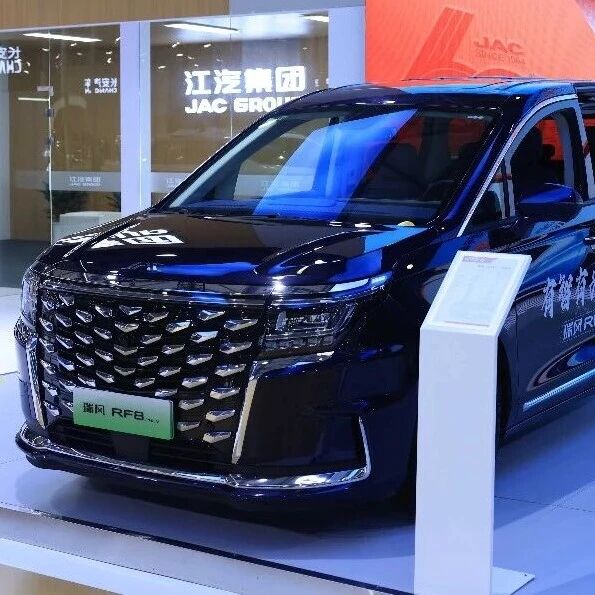
Core Viewpoint - The article discusses the competitive landscape of the MPV market in China, highlighting the challenges faced by traditional players like Jianghuai Ruifeng and the emergence of new contenders like Tengshi D9, emphasizing the shift in consumer preferences and market dynamics [3][5][9]. Group 1: Jianghuai Ruifeng's History and Challenges - Jianghuai Ruifeng, once a dominant player in the MPV market, celebrated its 25th anniversary and launched the RF8 series, aiming to regain market share [3][7]. - The MPV market was initially dominated by foreign brands until the early 2000s, when domestic brands began to emerge, with Jianghuai Ruifeng capturing 62% of the market share in its launch year [3][4]. - Post-2015, the MPV market saw increased competition and a shift in consumer demands towards more advanced and user-friendly features, leading to Jianghuai Ruifeng's decline [3][8]. Group 2: Tengshi D9's Rise and Current Position - Tengshi D9 capitalized on the transition to new energy vehicles, achieving nearly 120,000 sales in 2023, surpassing the Buick GL8 to become the top-selling MPV [5][6]. - Despite its initial success, Tengshi D9 has faced a significant decline in sales, with February 2026 figures showing a 57.32% year-on-year drop, indicating a loss of market position [6][8]. - The introduction of the second-generation Tengshi D9, featuring new battery technology, aims to revitalize its sales and compete effectively in the market [6][7]. Group 3: Market Dynamics and Competition - The MPV market is characterized by intense competition, with over 40 models vying for consumer attention, leading to fluctuating sales rankings among various brands [8][9]. - In early 2026, the sales distribution between fuel and new energy MPVs showed a shift, with new energy vehicles capturing a larger share of the top-selling models [8]. - The market is witnessing a clear trend where no single brand can maintain a dominant position, as consumer preferences evolve and competition intensifies [9].


比亚迪年报点评
数说新能源· 2026-03-30 03:02
Core Viewpoint - The company reported a decline in revenue and net profit for Q4 2025, but showed signs of recovery in terms of sales volume and average selling price (ASP) due to new product launches and improved sales structure [1][2]. Group 1: Financial Performance - In Q4 2025, the company achieved revenue of 237.7 billion yuan, a year-on-year decrease of 14% but a quarter-on-quarter increase of 22% [1]. - The net profit attributable to shareholders for Q4 2025 was 9.3 billion yuan, down 38% year-on-year but up 19% quarter-on-quarter [1]. - For the full year 2025, total revenue reached 804 billion yuan, reflecting a 3% year-on-year increase, while net profit decreased by 19% to 32.6 billion yuan [1]. Group 2: Revenue Breakdown - The automotive business revenue in Q4 2025 was 181.5 billion yuan, down 17% year-on-year but up 19% quarter-on-quarter [2]. - The company sold 1.33 million passenger vehicles in Q4 2025, with year-on-year and quarter-on-quarter changes of -12% and +20%, respectively [2]. - The ASP for vehicles in Q4 2025 was 137,000 yuan, showing a slight year-on-year decrease of 800 yuan but a quarter-on-quarter increase of 200 yuan [2]. Group 3: Profitability Analysis - The gross margin for the automotive business in Q4 2025 was 21.6%, down 1.5 percentage points year-on-year but up 1.0 percentage point quarter-on-quarter [2]. - The company’s domestic and overseas ASPs were 130,000 yuan and 180,000 yuan, with corresponding gross margins of 17% and 28% [2]. - R&D expenses in Q4 2025 were 14.2 billion yuan, remaining flat year-on-year, while financial expenses were 2.3 billion yuan, impacted by foreign exchange losses [2][3]. Group 4: Cash Flow and Future Outlook - The net cash flow from operating activities for 2025 was 59.1 billion yuan, a 56% year-on-year decrease, influenced by overseas expansion and shortened payment terms with suppliers [3]. - The company anticipates benefiting from rising oil prices, with significant growth in both domestic and export orders, and aims to exceed its sales target of 1.5 million vehicles [4].