AGRICULTURAL BANK OF CHINA(01288)

Search documents
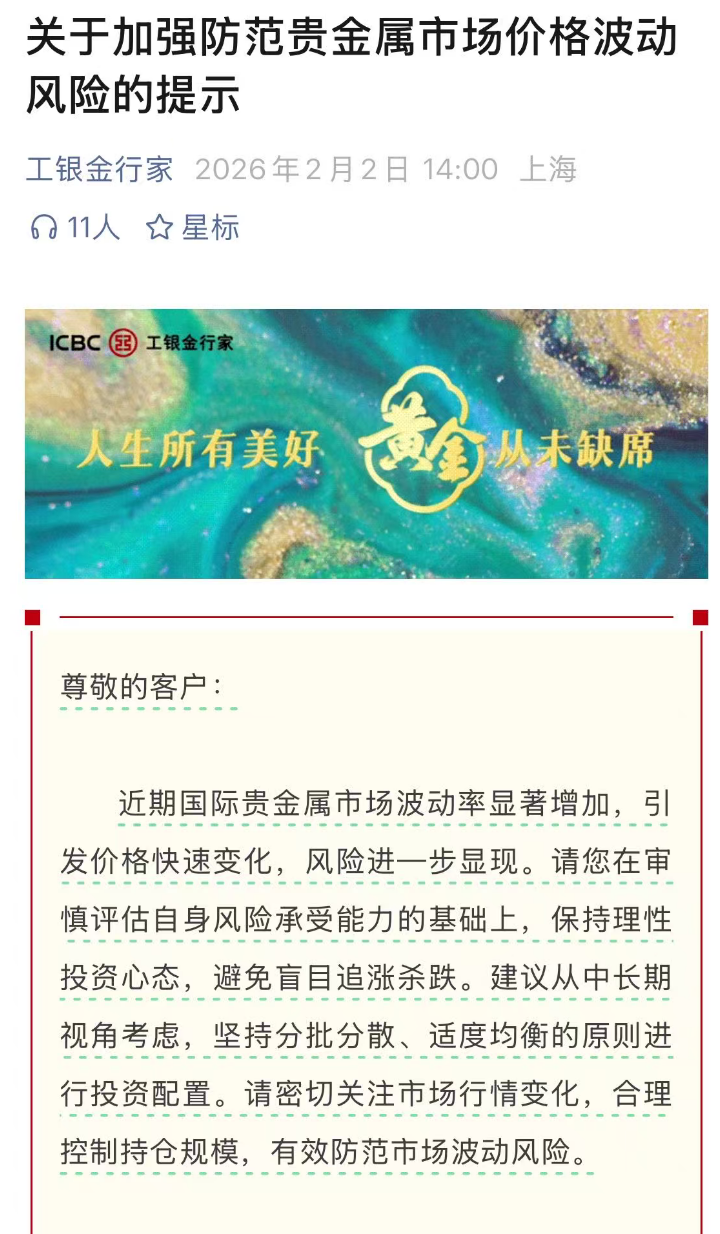
国有六大行密集强化黄金投资业务风险管控
Zheng Quan Ri Bao· 2026-02-02 16:43
Core Viewpoint - The recent volatility in gold prices has prompted major state-owned banks in China to adjust their gold-related business practices, enhancing risk management and guiding investors towards rational participation in the market [1][2][4]. Group 1: Adjustments by State-Owned Banks - Major state-owned banks, including ICBC, ABC, BOC, CCB, and others, have implemented changes to their gold-related business, including increasing entry thresholds, transaction limits, and risk assessment requirements [2][4]. - ICBC announced on February 1 that due to significant fluctuations in domestic and international precious metal prices, investors should maintain a rational investment mindset and avoid impulsive trading [2]. - CCB raised the minimum amount for personal gold accumulation to 1,500 yuan starting February 2, citing increased market risks [3]. Group 2: Market Analysis and Long-Term Value - Despite short-term price fluctuations, experts believe that gold and other precious metals still hold long-term investment value due to global risk aversion and changes in asset allocation logic [1][5]. - The precious metals market has shown an upward trend since 2026, with gold and silver performing particularly well, although recent price volatility has raised concerns about future market behavior [5]. - Analysts suggest that while short-term pressures may exist, long-term factors such as declining real interest rates and persistent inflation will continue to support gold prices [5][6]. Group 3: Investor Guidance - Investors are advised to focus on risk management, including understanding market volatility, monetary policy changes, and liquidity risks associated with investment products [6]. - It is emphasized that investors should assess their risk tolerance and avoid excessive leverage, choosing investment tools that align with their financial situations [6].



金银价格巨震,多家银行出手
Zhong Guo Zheng Quan Bao - Zhong Zheng Wang· 2026-02-02 15:20
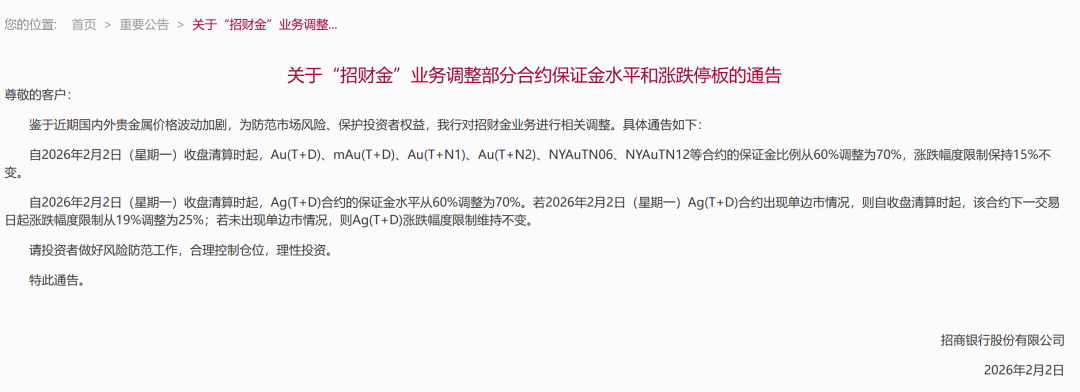
Core Viewpoint - Recent adjustments by major banks in China, including China Agricultural Bank, China Merchants Bank, and Bank of China, are aimed at mitigating risks associated with significant fluctuations in precious metal prices, emphasizing the need for investors to manage their positions and invest rationally [1][2][5]. Group 1: Bank Adjustments - China Merchants Bank announced an increase in margin requirements for various gold contracts from 60% to 70% due to heightened volatility in precious metal prices, while maintaining a 15% limit on price fluctuations [1]. - Bank of China adjusted the margin for silver deferred contracts from 50.80% to 66.04% and increased the fluctuation limit from 19% to 25% if a unilateral market condition occurs [5]. - Agricultural Bank of China also indicated adjustments to the fluctuation limits for silver contracts, aligning with the Shanghai Gold Exchange's risk management guidelines [7]. Group 2: Market Implications - Industry experts suggest that these measures are intended to tighten risk controls, reduce trading leverage, and increase capital costs for investors, thereby curbing speculative behavior in the market [2][7]. - The adjustments are expected to enhance liquidity during extreme market conditions and reduce the probability of defaults, with other banks likely to follow suit in implementing similar risk management strategies [7]. - Banks are advising investors to carefully assess their risk tolerance and financial situation, urging a rational investment approach and close monitoring of market conditions to mitigate potential losses from price volatility [9][10].


最新!多家银行,紧急调整!
券商中国· 2026-02-02 14:43
Core Viewpoint - Recent fluctuations in international gold and silver prices have led to significant adjustments in banking operations and risk management strategies to protect investors amid heightened market volatility [1][9]. Group 1: Market Fluctuations - On February 2, gold futures dropped below $4,500 per ounce, with silver prices experiencing a cumulative decline of approximately 40% from the peak on January 29, while gold prices fell by about 20% [1]. - The current market environment reflects a high volatility phase influenced by macroeconomic expectations, technical overbought conditions, and profit-taking by investors [9]. Group 2: Banking Responses - China Merchants Bank announced adjustments to its "Zhaocai Gold" business, increasing margin requirements for various gold and silver contracts from 60% to 70% to mitigate market risks [2]. - The Agricultural Bank of China implemented a risk assessment requirement for clients engaging in gold accumulation services, mandating a cautious risk tolerance rating [7]. - The Bank of China adjusted margin requirements for silver contracts, increasing the margin from 50.80% to 66.04% in case of a one-sided market [7]. Group 3: Investor Guidance - Banks are advising investors to enhance their risk awareness, control their positions, and avoid impulsive trading behaviors in light of the current market uncertainties [3][8]. - Financial institutions are promoting a strategy of maintaining a rational investment mindset, suggesting that investors should consider long-term perspectives and diversify their asset allocations [9].


事关黄金,工行、农行、邮储、招行最新提示
Di Yi Cai Jing Zi Xun· 2026-02-02 14:32
Core Viewpoint - The recent volatility in gold and silver prices has prompted banks to increase their risk warnings and adjust risk control measures significantly [2][3][4]. Group 1: Price Volatility - On February 2, international gold prices fell to $4403.64 per ounce, with a maximum daily drop exceeding 9%, while silver prices hit a low of $71.33 per ounce, with a drop close to 15% [2]. - Banks are advising clients to assess their risk tolerance carefully and maintain a rational investment mindset to avoid impulsive trading behaviors [2][3]. Group 2: Risk Warnings from Banks - Industrial and Commercial Bank of China (ICBC) issued a warning on February 2 regarding the significant increase in volatility in the international precious metals market, urging clients to control their positions effectively [2]. - Agricultural Bank of China also highlighted the heightened uncertainty in the precious metals market and advised clients to evaluate their financial situations before engaging in trading [3]. Group 3: Margin Adjustments - ICBC announced an increase in the standard trading margin for personal clients' silver contracts from 60% to 66% effective February 2, following a previous increase from 43% to 60% for gold contracts [4]. - Other banks, including Agricultural Bank and China Merchants Bank, have also adjusted margin requirements and trading limits for gold and silver contracts in response to market conditions [5].


事关黄金,工行、农行、邮储、招行最新提示
第一财经· 2026-02-02 14:24
Core Viewpoint - The article discusses the significant volatility in the gold and silver markets, leading banks to increase risk warnings and adjust their risk management measures in response to the sharp price fluctuations [2][3]. Group 1: Market Volatility - On February 2, international gold prices fell to $4,403.64 per ounce, with a maximum daily drop exceeding 9%, while silver prices hit a low of $71.33 per ounce, with a drop close to 15% [2]. - Banks, including Industrial and Agricultural Banks, issued warnings about the increased volatility in the precious metals market, urging clients to assess their risk tolerance and maintain a rational investment approach [2][3]. Group 2: Risk Management Adjustments - Several banks announced adjustments to the margin requirements for gold and silver futures contracts in response to the volatility. For instance, Industrial Bank raised the margin for silver contracts from 60% to 66% on February 2 [4]. - Prior to this, on January 28, Industrial Bank had already increased the margin for various gold contracts from 43% to 60% and for silver contracts from 47% to 60% [4]. - Agricultural Bank also adjusted the price fluctuation limits for silver contracts, increasing the limit from 19% to 25% if a one-sided market condition occurs [5]. Group 3: Client Advisory - Banks emphasized the importance of clients maintaining awareness of market changes and controlling their positions to mitigate risks associated with price fluctuations in precious metals [3][5]. - Postal Savings Bank similarly advised clients to strengthen their risk awareness and rationally allocate investments based on their financial situations and risk tolerance [3].

多家银行提示!理性投资贵金属
Xin Lang Cai Jing· 2026-02-02 11:41
Core Viewpoint - Recent volatility in domestic and international precious metal markets has significantly increased uncertainty, prompting banks to issue warnings and adjust trading parameters to protect investors [1][3][4]. Group 1: Agricultural Bank - Agricultural Bank has issued a warning regarding the severe fluctuations in precious metal prices, urging clients to assess their risk tolerance and financial situation before engaging in trading [1][4]. - The bank announced adjustments to the trading limits for silver contracts under its Gold Market Access service, increasing the price fluctuation limit from 19% to 25% if a one-sided market condition occurs starting February 2, 2026 [1][5]. - Clients are advised to monitor market changes closely and manage their positions effectively to mitigate risks associated with market volatility [1][5]. Group 2: Postal Savings Bank - Postal Savings Bank has also highlighted the increased volatility in precious metal markets, advising clients to enhance their risk awareness and make rational investment decisions [1][5]. - The bank emphasizes the importance of avoiding impulsive trading behaviors and maintaining a balanced portfolio in light of the current market conditions [1][5]. Group 3: China Merchants Bank - China Merchants Bank has announced adjustments to its "Zhaocai Gold" business, increasing the margin requirement for various gold contracts from 60% to 70% due to heightened market volatility [3][7]. - The fluctuation limit for the Ag (T+D) contract will be raised to 25% if a one-sided market condition is observed, while it remains unchanged at 15% if not [3][7]. - These measures are aimed at safeguarding investor interests and mitigating market risks [3][7].

农业银行:进一步做好贵金属市场风险防范
Cai Jing Wang· 2026-02-02 11:35
Core Viewpoint - Agricultural Bank of China (601288) has issued a warning regarding the heightened risks in the precious metals market due to significant price volatility and increased uncertainty factors [1] Group 1: Market Conditions - Recent fluctuations in domestic and international precious metals prices have been severe, leading to a notable increase in uncertainty [1] - The bank emphasizes the importance of clients assessing their risk tolerance in light of these market conditions [1] Group 2: Client Advisory - Clients are advised to consider their financial situation comprehensively before engaging in precious metals trading [1] - The bank encourages maintaining a rational investment mindset and closely monitoring market changes [1] - It is recommended that clients effectively control their position sizes to mitigate risks associated with market volatility [1]
金价震荡下,国有大行密集调整积存金业务并发布风险提示
Jin Rong Jie· 2026-02-02 11:03
Core Viewpoint - Recent significant fluctuations in gold prices have prompted major state-owned banks in China to adjust their precious metals business rules and issue market risk warnings to enhance investor risk management [1] Group 1: Bank Adjustments - Industrial and Commercial Bank of China (ICBC) has raised the minimum purchase amount for gold accumulation from 1,000 yuan to 1,100 yuan and restricted the accumulation business to C3 balanced clients and above starting from January 12 [2] - China Construction Bank has increased the minimum investment amount for its gold accumulation products to 1,500 yuan, effective from February 2, with plans for future adjustments based on market conditions [3] - Agricultural Bank of China has introduced a requirement for clients to complete a unified risk assessment before engaging in gold accumulation operations, effective from January 30 [6] Group 2: Risk Management Measures - ICBC has advised investors to rationally invest based on their risk tolerance and to control their positions to mitigate volatility risks [2] - China Bank has issued a risk warning regarding all types of precious metal businesses, urging clients to manage their holdings according to their financial situation and risk tolerance [4] - Bank of Communications has tightened client risk level requirements, allowing only clients with growth, aggressive, or balanced risk profiles to access full functionalities of their precious metals wallet [5] Group 3: Investor Guidance - Agricultural Bank of China has recommended that investors participate in business activities rationally and enhance their risk awareness [7]
农业银行:客户应合理控制贵金属持仓规模,有效防范市场波动风险
Bei Jing Shang Bao· 2026-02-02 10:29
Core Viewpoint - Agricultural Bank of China has issued a warning regarding the significant volatility in domestic and international precious metal markets, urging clients to assess their risk tolerance and maintain a rational investment mindset [1]. Group 1: Market Conditions - The recent fluctuations in precious metal prices have increased uncertainty, prompting the bank to advise clients to closely monitor market changes and manage their positions effectively [1]. - The bank has highlighted the importance of understanding one's financial situation before engaging in precious metal trading [1]. Group 2: Regulatory Adjustments - Agricultural Bank announced adjustments to the price fluctuation limits for silver contracts under its Gold Market Access (Gold Exchange Agency) business, in accordance with the Shanghai Gold Exchange's risk control management regulations [1]. - Starting February 2, 2026, if the Ag(T+D) contract experiences a one-sided market condition, the price fluctuation limit will be increased from 19% to 25% [1]. - The bank will provide further notifications regarding any subsequent adjustments to the fluctuation limits [1].
工行、农行同日再次紧急提示贵金属投资风险
2 1 Shi Ji Jing Ji Bao Dao· 2026-02-02 09:31
Core Viewpoint - Major Chinese banks, including Industrial and Agricultural Banks, have issued risk warnings regarding precious metal investments due to significant market volatility and price fluctuations, urging investors to assess their risk tolerance and invest rationally [1][4]. Group 1: Risk Warnings and Recommendations - Industrial Bank and Agricultural Bank have reiterated the need for investors to evaluate their financial situations before engaging in precious metal trading, advising against impulsive trading behaviors and emphasizing the importance of monitoring market changes while managing position sizes effectively [4]. - Following a previous warning on February 1, Industrial Bank issued another risk alert shortly after, highlighting the ongoing concerns in the precious metals market [4]. - Other banks, including Bank of Communications, Bank of China, and China Construction Bank, also released similar risk advisories between January 29 and January 30, encouraging rational and reasonable investment practices [6]. Group 2: Risk Management Measures - Several major state-owned banks have implemented stricter risk management measures for precious metal accumulation products, including raising risk ratings and minimum investment amounts to strengthen risk defenses [7]. - Agricultural Bank introduced a new risk assessment mechanism for individual clients starting January 30, requiring a "cautious" rating or above for engaging in gold accumulation services, while existing clients are exempt from these new conditions for certain operations [7]. - Industrial Bank has set even stricter entry standards, requiring clients to achieve a "balanced" rating or above on a unified risk assessment questionnaire and sign a risk disclosure agreement for gold accumulation services [7]. - Since 2025, Industrial Bank has raised the minimum investment threshold for its gold accumulation business multiple times, with the latest increase from 1,000 yuan to 1,100 yuan effective January 8, 2026, compared to an initial threshold of 650 yuan in early 2025 [7]. Group 3: Business Rule Adjustments - Industrial Bank announced adjustments to its business rules, implementing dynamic limit management for gold accumulation services starting February 7, which will affect daily accumulation/redemption limits and total transaction limits for individual clients on non-trading days [8].