PICC(01339)

Search documents
“保险系”私募基金扎堆设立,钱都会投向哪里?
Di Yi Cai Jing· 2025-06-17 12:40
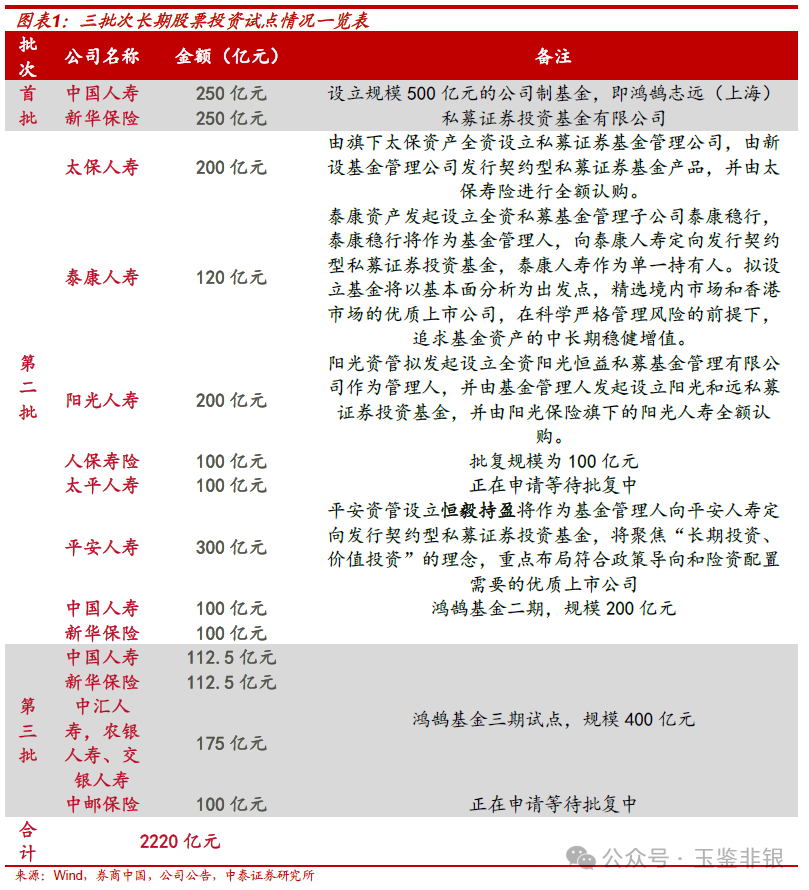
Core Viewpoint - The establishment of "insurance系" private equity funds is driven by regulatory guidance for long-term capital market entry and the actual needs of insurance companies to adapt to a low-interest-rate environment [1][2]. Group 1: Fund Establishment and Scale - Xinhua Insurance plans to invest up to 15 billion yuan in the Honghu III private equity fund, co-established by Xinhua Asset and China Life Asset [2][3]. - Since May, at least seven "insurance系" private equity funds or products have been established, indicating a surge in activity among insurance companies [3][4]. - The Honghu III fund has a total scale of 22.5 billion yuan, with Xinhua Insurance and China Life each contributing 11.25 billion yuan [3]. Group 2: Long-term Investment Strategy - The establishment of these private equity funds reflects the results of the insurance capital's "long money long investment" strategy, driven by policy support and the need for better asset allocation in a declining interest rate environment [5]. - The long-term investment pilot program initiated in 2023 allows insurance companies to set up private equity funds primarily targeting the secondary market stocks for long-term holding [5][6]. Group 3: Investment Focus and Trends - The investment focus of these funds is expected to be on high-dividend, low-volatility stable assets, with an emphasis on companies with strong governance and good business models [10][11]. - The first phase of the Honghu fund primarily invested in key industries related to national interests, while the second phase is set to focus on large-cap A+H shares [10][11]. - Other insurance companies are also expected to follow similar investment strategies, focusing on stable, high-quality listed companies [11][12]. Group 4: Regulatory and Market Context - The pilot program for long-term investment is expected to expand by 2025, with several insurance companies already approved to participate [6][7]. - The total approved scale for the three batches of long-term investment reform trials is estimated to reach 222 billion yuan, with expectations for further increases in approved scales [7].




保险行业估值驱动主要来自资产端
Xiangcai Securities· 2025-06-16 06:42
Investment Rating - The report maintains an "Overweight" rating for the insurance industry, indicating a positive outlook for investment opportunities in the sector [82]. Core Insights - The adjustment of predetermined interest rates is expected to enhance the value of new business, with a projected decrease in the rate to 2% in the third quarter, which will lower the rigid cost of liabilities and improve product profitability [8][12]. - The expansion of long-term stock investment trials is anticipated to increase the flexibility of the asset side, with insurance companies actively seeking higher-yield risk assets to mitigate the pressure from interest rate spreads [20][27]. - There is a need for further optimization in asset-liability matching, as mismatches in duration can lead to fluctuations in net assets, particularly under the IFRS 17 standards [42][50]. - The valuation of insurance companies is primarily driven by improvements in the asset side, with the current PEV valuation level at 0.70, indicating that market valuations are below the intrinsic value of the companies [59][67]. Summary by Sections 1. Adjustment of Predetermined Interest Rates - The upper limit for the predetermined interest rate for ordinary life insurance is currently set at 2.5%, with a projected decrease to 2% in the upcoming quarter, which is expected to enhance the new business value [8][12]. - The insurance premium income for life insurance is showing signs of recovery, with a cumulative growth of 1.3% as of April 2025, marking a positive shift in the market [12][14]. 2. Expansion of Long-term Stock Investment Trials - The total scale of long-term stock investment trials has reached 222 billion, with several major insurance companies participating [25]. - The demand for high-yield risk assets is increasing as insurance companies seek to cover the rigid costs associated with liabilities [27][33]. 3. Need for Optimization in Asset-Liability Matching - The mismatch in asset and liability durations is causing volatility in net assets, necessitating better alignment to mitigate risks associated with interest rate changes [42][50]. - The average net investment yield for listed insurance companies remains around 4%, which poses challenges for long-term asset yield stabilization [50][56]. 4. Valuation Driven by Asset Side Improvements - The contribution of insurance contract services to profits is significant, with new business value expected to enhance overall performance [59][61]. - The current average PB valuation for five A-share insurance companies is 1.6, indicating a moderate valuation level compared to historical data [67][71].


抵御用工风险 保障用工无忧——济南人保财险“雇主责任保险”守护企业前行
Qi Lu Wan Bao· 2025-06-14 10:09
Core Insights - The article emphasizes the importance of employer liability insurance as a crucial support for businesses in managing workplace risks and ensuring steady development [1][10]. Group 1: Risks in the Workplace - Workplace risks are prevalent across various environments, from construction sites to offices, and can lead to significant financial burdens for companies due to medical expenses, compensation for lost work, and legal fees [2][4]. - Even with robust safety management systems, accidents can still occur, making employer liability insurance essential for risk transfer and crisis management [2][4]. Group 2: Comprehensive Coverage - Employer liability insurance focuses on the legal compensation responsibilities of businesses, providing extensive and practical coverage [4]. - The insurance covers medical expenses and compensation for employees injured at work or suffering from occupational diseases, alleviating financial pressure on companies [4]. - It also supports legal costs incurred from lawsuits related to workplace injuries, allowing businesses to navigate legal disputes without excessive burden [4]. Group 3: Benefits of Employer Liability Insurance - For companies, this insurance transforms unpredictable high compensation risks into stable insurance expenditures, reducing financial volatility and enhancing risk management capabilities [7]. - Employees benefit from prompt financial support and medical assistance in case of accidents, fostering a sense of care and belonging, which can enhance their motivation and loyalty [7]. - The insurance contributes to stable labor relations and promotes healthy employment market development, supporting social harmony [7]. Group 4: Professional Services - Jinan People's Insurance Company offers a comprehensive range of services, including risk assessment, customized plans, and claims support, ensuring a worry-free experience for businesses [9]. - The company leverages its industry experience and efficient service processes to provide quick responses and professional claims handling after incidents [9].

济南人保财险“货运险”,一路顺达保障全
Qi Lu Wan Bao· 2025-06-13 11:15
Core Insights - The importance of cargo transportation insurance as a reliable safeguard against unforeseen risks in the supply chain [1][2][3] Group 1: Industry Overview - Cargo transportation is essential for connecting supply and demand, but it faces various risks such as accidents, adverse weather, and unexpected losses [1] - The safety of cargo is crucial for maintaining business reputation and operational continuity, as losses can lead to economic damage and disrupted client relationships [3] Group 2: Company Offerings - Jinan PICC provides diverse cargo transportation insurance solutions tailored to various needs, including long-distance transport of bulk goods and high-value items [5] - The insurance covers a wide range of risks, from basic cargo loss to specialized risks like theft, strikes, and war [5] Group 3: Competitive Advantages - Jinan PICC boasts a professional team offering personalized service, from policy customization to claims guidance and risk assessment [6] - The company promises a streamlined claims process, ensuring quick response and timely compensation to minimize business impact [6] - As a state-owned enterprise, Jinan PICC has strong financial backing and a broad service network, providing reliable coverage for both domestic and international transport [6]

以高质量发展实际成效服务中国式现代化 访中国人保集团党委委员、副总裁兼中国人民财产保险股份有限公司党委书记、总裁于泽
Jin Rong Shi Bao· 2025-06-13 06:33
Core Viewpoint - The company aims to enhance its role as a leading insurance provider by aligning with national strategies and focusing on high-quality development to support China's modernization efforts [1][11]. Group 1: Economic Strategy and Insurance Services - The company emphasizes the importance of deepening supply-side structural reforms and enhancing the functional construction of the insurance industry to align with national economic strategies [2]. - The company plans to expand domestic demand by increasing insurance coverage in various sectors, particularly in social security and new employment forms, to stabilize public expectations and boost consumption [3]. Group 2: Technological and Green Insurance Development - The company prioritizes technology insurance to support the development of new productive forces, aiming to cover the entire lifecycle of technology activities and promote innovation [4]. - The company is committed to developing green insurance, with a reported risk coverage of 161.9 trillion yuan in 2024, reflecting a 10.5% year-on-year increase, and aims to support sustainable development initiatives [5]. Group 3: Disaster Risk Management and Rural Development - The company is enhancing its disaster risk management capabilities, expanding coverage to include various natural disasters and aiming to protect over 4.1 billion people through comprehensive disaster insurance [6]. - The company is focused on rural revitalization by providing agricultural insurance to over 55 million households, with a total risk coverage of 2.1 trillion yuan [7]. Group 4: International Expansion and Risk Management - The company is actively participating in the "Belt and Road" initiative, providing risk coverage of 1.9 trillion yuan across 143 countries and regions, and aims to strengthen its international service network [8]. - The company is committed to maintaining financial stability by enhancing risk management practices and ensuring compliance with regulatory standards [10]. Group 5: Governance and Leadership - The company emphasizes the importance of strong party leadership and governance to ensure effective implementation of national policies and high-quality development [9]. - The company aims to enhance its operational efficiency and international competitiveness by focusing on structural reforms and innovative practices [10].
港股保险股再度走强,中国太平(00966.HK)涨近7%,中国人寿(02628.HK)涨近5%,中国人民保险集团(01339.HK)涨超4%,中国太保(02601.HK)、新华保险(01336.HK)均涨3%,中国平安(02318.HK)涨1.5%。
news flash· 2025-06-12 02:47
港股保险股再度走强,中国太平(00966.HK)涨近7%,中国人寿(02628.HK)涨近5%,中国人民保险集团 (01339.HK)涨超4%,中国太保(02601.HK)、新华保险(01336.HK)均涨3%,中国平安(02318.HK)涨 1.5%。 ...


申万宏源:新增负债成本显著下降 保险板块兼具基本面及资金面催化
智通财经网· 2025-06-11 06:27
Core Viewpoint - The report from Shenwan Hongyuan indicates that the performance pressure in Q2 is limited, with expectations for improved new business performance and further reductions in the cost of new liabilities due to anticipated interest rate cuts in Q3 [1] Group 1: Market Conditions and Fund Flows - A-share listed insurance companies are significantly underrepresented compared to the CSI 300 index, with public fund regulations expected to drive incremental capital inflows [1] - As of the end of Q1, the allocation of equity funds in the non-bank sector is underweight by 9.68% compared to the CSI 300 index, second only to banks [1] Group 2: New Liability Costs and Product Transformation - The cost of new liabilities has decreased significantly, with some insurance companies optimizing their existing liability costs [2] - The NBV (New Business Value) and VIF (Value of In-Force) yield performances for major insurers show a year-on-year decline, indicating effective risk management of interest spread losses [2] - The transformation of participating insurance products has exceeded expectations, with major insurers elevating this strategy to a strategic level [3] Group 3: Insurance Capital Market Participation - The implementation plan for promoting long-term capital market participation highlights the role of insurance capital as a key player, with sustainable growth in insurance fund utilization expected [4] - The upper limit for equity allocation for insurance capital has been unexpectedly relaxed, allowing for a total equity allocation scale of 9.29 trillion yuan, an increase of 505.5 billion yuan from previous regulations [4] - The reduction of investment risk factors for stock investments further opens up the equity allocation limits for insurance capital [4]

转型未果,人保换帅
Hu Xiu· 2025-06-10 09:16
Core Viewpoint - China People's Insurance Company (CPIC) is facing challenges in transforming its business model despite being a leader in the property insurance sector, with slowing premium income growth and declining underwriting profits [1][2][8]. Group 1: Company Overview - CPIC is a state-owned insurance enterprise controlled by the Ministry of Finance, recognized for its strong brand influence and market leadership in property insurance [1][2]. - The company has struggled to regain its previous top position in the insurance industry, currently ranking third behind China Life Insurance and Ping An Insurance [1][2]. Group 2: Leadership Changes - The appointment of Ding Xiangqun as the new chairman in December 2024 has garnered significant attention, being the first central committee member to lead CPIC [3][4][6]. - Ding's background spans banking, insurance, and government, which may provide valuable insights for the company's future direction [6][7]. Group 3: Business Challenges - CPIC's property insurance segment contributes approximately 84% of its revenue, but the growth rate has slowed, with premium income increasing by 8.3%, 6.3%, and 4.3% from 2022 to 2024 [10][12]. - The underwriting profit for property insurance has decreased from 142.14 billion yuan in 2022 to 70.85 billion yuan in 2024, indicating a significant decline in profitability [12][14]. Group 4: Strategic Focus - Ding has emphasized a shift from merely expanding premium volume to improving efficiency and profitability, addressing the current challenges in both property and life insurance segments [8][10]. - The company aims to enhance its service quality and competitive edge in life insurance, which currently contributes about 15% to its revenue [19][21]. Group 5: Future Outlook - CPIC plans to focus on high-quality, long-term products in the life insurance sector, particularly in the aging population market, but faces stiff competition from other insurers with established models [22][23]. - The company is also looking to strengthen its agricultural insurance offerings, which may help mitigate losses in other non-auto insurance lines, although the overall impact on profitability remains limited [17][18].
沪深300保险(二级行业)指数报882.84点,前十大权重包含中国人保等
Jin Rong Jie· 2025-06-10 08:19
Group 1 - The Shanghai Composite Index opened high but closed lower, with the CSI 300 Insurance Index reported at 882.84 points [1] - The CSI 300 Insurance Index has increased by 5.29% over the past month, 6.15% over the past three months, and 2.05% year-to-date [1] - The CSI 300 Index categorizes its 300 sample stocks into 11 primary industries, 35 secondary industries, over 90 tertiary industries, and more than 200 quaternary industries, with the index base date set at December 31, 2007, and a base point of 1000.0 [1] Group 2 - The index samples are adjusted biannually, with adjustments occurring on the next trading day after the second Friday of June and December [2] - Weight factors are generally fixed until the next scheduled adjustment, but can change with temporary adjustments due to sample changes in the CSI 300 Index [2] - Special events affecting a sample company's industry classification will lead to corresponding adjustments in the CSI 300 Industry Index [2]
银行渠道的过去和未来(一):银保渠道不同发展阶段的行业年度保费
13个精算师· 2025-06-10 06:33
Core Viewpoint - The article discusses the evolution and future of the bancassurance channel in China, highlighting its historical development, current trends, and anticipated changes due to regulatory shifts and market dynamics. Group 1: Historical Development of Bancassurance - The bancassurance business in China began in 1996, with significant growth observed from 2001 onwards, where total premiums reached 47 billion, accounting for about 2% of total life insurance premiums [6][8]. - By 2007, new premiums from bancassurance surpassed those from all other channels combined, and from 2013 to 2016, bancassurance accounted for approximately 50% of the total life insurance premium market [6][8]. - The article outlines six stages of development for bancassurance, with a new phase starting in 2024 characterized by "reporting and operation integration" [5][20]. Group 2: Key Growth Phases - The initial phase (before 2004) saw bancassurance primarily offering five-year single premium products, with total premiums reaching 388 billion in 2002, representing 17% of the life insurance market [8][9]. - From 2005 to 2012, the industry experienced normal growth, with total premiums increasing from 952 billion in 2005 to 3,897 billion in 2012, while the period saw a significant rise in single premium products [9][10]. - The investment-driven era from 2013 to 2016 was marked by regulatory changes that allowed for higher investment returns, leading to a surge in single premium sales, with some companies reporting over 200% growth in 2013 [11][12]. Group 3: Recent Trends and Future Outlook - From 2020 to 2023, the market shifted towards traditional increasing death benefit products, with long-term premiums growing significantly, accounting for 84% of total premiums by 2021 [14][19]. - The bancassurance channel is expected to see its new business value (NBV) surpass that of individual insurance channels by 2026, driven by lower fixed costs and increased competition [20][21]. - The article predicts that by 2024, the market will witness a resurgence of short-term products, with a projected 10% share of total premiums, as companies adapt to regulatory changes and market demands [20][24]. Group 4: Market Dynamics and Competitive Landscape - The article categorizes life insurance companies into six groups, including the "Bancassurance Seven Heroes" and "Eight Kings," which dominate the market with a combined market share of 60% to 72% [16][43]. - In 2023, the bancassurance channel's competition intensified, with significant growth reported among leading companies, while smaller firms faced declines [25][30]. - The shift towards long-term participating insurance products is evident, with major players like Taiping Life and several foreign companies leading the charge in this segment [26][30].