PSBC(01658)

Search documents
邮储银行关停信用卡App 此前信用卡中心被罚款300万元
Xi Niu Cai Jing· 2025-12-30 05:41
Group 1 - Postal Savings Bank of China announced adjustments to its credit card online channel services, integrating credit card functions into the "Postal Savings Bank App" [2] - The "Postal Savings Credit Card App" will no longer be in use after the integration, but customers can continue to access credit card services through mobile banking and other channels [2] - The bank had previously indicated this integration plan, halting new customer registrations and activations for the Postal Savings Credit Card App as of November 15 [2] Group 2 - The Beijing Financial Regulatory Bureau issued a significant administrative penalty against the Postal Savings Bank's credit card center for multiple violations, including charging full fees for early repayments [3] - The credit card center was fined 3 million yuan for six violations, and three responsible individuals received warnings and fines of 50,000 yuan each [3] - Violations included improper management of credit issuance and inaccurate data reporting [3]



银行金融投资如何摆布记账?
GF SECURITIES· 2025-12-30 05:34
Investment Rating - The report provides a "Buy" rating for all listed banks analyzed, indicating a positive outlook for their stock performance [6]. Core Insights - The report focuses on the classification of financial investments, the current allocation of listed banks, and how related revenues are accounted for under new accounting standards [5]. - As of Q3 2025, the financial investments of 42 listed banks total approximately 101.5 trillion CNY, with 87% allocated to the configuration portfolio and 13% to the trading portfolio [5][23]. - The bond market is the primary investment direction for listed banks, accounting for 87.6% of their financial investments, with government bonds making up 59.5% of this total [5]. Summary by Sections 1. Classification of Financial Investments - Financial assets are classified into three categories under the new accounting standards: FVTPL (fair value through profit or loss), AC (amortized cost), and FVOCI (fair value through other comprehensive income) [12][13]. - The classification is based on the business model for managing financial assets and the cash flow characteristics of the financial assets [14]. 2. Accounting for Market Revenues - FVTPL assets reflect market fluctuations through "fair value changes" in profit or loss, while AC assets do not reflect fair value changes and primarily generate income from interest [5]. - FVOCI assets account for market fluctuations in other comprehensive income, with interest income recognized in profit or loss [5]. 3. Financial Investment Structure - The configuration portfolio is dominant, with state-owned banks showing the highest allocation to AC, while joint-stock banks and city commercial banks have a higher proportion of trading assets [23][24][25]. - The report notes a structural shift where FVOCI is becoming the main growth area, as banks seek flexibility in their investment strategies [5][23].




回归本源,服务实体——盘点2025年银行业全貌
Xin Hua Cai Jing· 2025-12-30 04:00
Core Viewpoint - The banking industry in 2025 is characterized by "breaking the situation and establishing new value," focusing on "stabilizing capital, managing risks, promoting transformation, and strengthening governance," achieving resilient growth supported by policy backing, deepening reforms, and innovation [1] Group 1: Special Bonds and Capital Support - In March, the government proposed to issue special bonds worth 500 billion yuan to support state-owned commercial banks in capital replenishment [2] - Major banks collectively announced plans to raise 520 billion yuan through targeted issuance, with the Ministry of Finance investing 500 billion yuan to acquire new shares [2] Group 2: Consumer Loan Subsidies - In July, the State Council introduced personal consumption loan interest subsidies, with implementation details released in August [3] - By December, several regional banks began accepting applications for these subsidies, marking their entry into the previously restricted "national subsidy" program [3] Group 3: Innovation Bonds - In May, the People's Bank of China and the China Securities Regulatory Commission announced the launch of a "technology board" for innovation bonds, expanding issuance to financial institutions and tech companies [4] - By December, the issuance scale of innovation bonds exceeded 1.5 trillion yuan within seven months [4] Group 4: Corporate Governance Transformation - In April, several major banks announced the abolition of supervisory boards, transitioning to a "one-tier" governance model with employee directors representing grassroots voices [5] - By December, 42 A-share listed banks had announced the removal or non-establishment of supervisory boards, indicating a significant shift in corporate governance [5] Group 5: Interest Margin and Competition - Early in the year, consumer loan rates dropped to around 2.6%, with a subsequent rise to above 3% by April [6] - By July, net interest margins narrowed to a historical low of 1.43%, highlighting intensified competition and "involution" within the banking sector [6] Group 6: Gold Investment Thresholds - As international gold prices rose, domestic financial institutions increased the minimum investment thresholds for gold accumulation products, with some banks raising the minimum to 1,500 yuan by November [7][8] Group 7: Restructuring of Small and Medium Banks - In 2025, a significant number of small and medium banks, including village and rural banks, are undergoing mergers and closures, with 368 banks having been dissolved or merged by December [9] Group 8: Record Dividends from Listed Banks - By December 9, 2025, 26 A-share listed banks announced dividend plans totaling over 260 billion yuan, with an average dividend payout ratio of 24.9%, marking a 2.55% increase from 2024 [10] Group 9: Stock Performance of Listed Banks - As of December 29, 2025, A-share listed banks saw an average stock price increase of 9.94%, with 35 out of 42 banks experiencing price rises, and Agricultural Bank leading with a 51.59% increase [11]

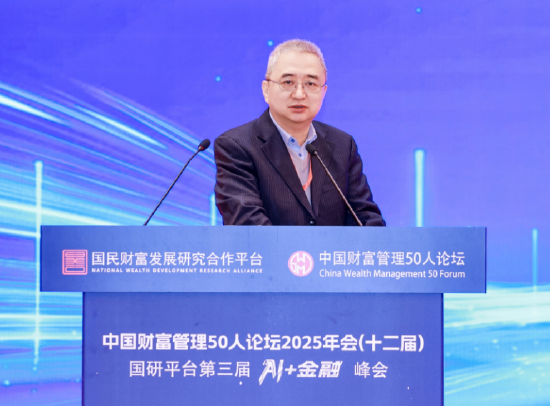
邮储银行徐朝辉:应对AI风险需实施全链路管控 明确模型为谁工作谁负责
Xin Lang Cai Jing· 2025-12-30 01:45
Group 1 - The core theme of the conference is "Moving Towards a Financial Power during the 14th Five-Year Plan" [1] - Artificial intelligence is identified as a key support for national self-reliance and the construction of a financial power, providing critical opportunities for bank transformation [3] - Postal Savings Bank has completed a comprehensive reconstruction of four core systems: personal, corporate, credit card, and fund business, to facilitate the implementation of AI scenarios [3] Group 2 - The bank upgraded its data governance committee to a data and model governance committee, aiming to promote data assetization with goals of "data as a service, data as value, and visibility equals accessibility" [3] - Challenges in building high-quality datasets are highlighted, including the issue that "big data is not actually big," with insufficient data for large models and efficiency challenges due to large data scale [3] - The bank emphasizes risk control in AI applications, adhering to the principle that "the model is responsible to whoever uses it," ensuring that AI assistant results are accountable to users [3]
“适度宽松”基调下 国内银行价值重估未结束(附概念股)
Zhi Tong Cai Jing· 2025-12-30 00:25
Core Viewpoint - Ping An Life increased its stake in Agricultural Bank of China (ABC) by acquiring 44.05 million H-shares, raising its total holdings to 5.842 billion shares, which now represents over 19% of ABC's total H-shares [1] Group 1: Market Conditions - The banking sector's "high dividend, low valuation" characteristic has re-emerged, with average dividend yields for A-shares and H-shares at 4.3% and 5% respectively as of December 19 [1] - The People's Bank of China is expected to maintain a moderately loose monetary policy, with potential for interest rate cuts and reserve requirement ratio reductions in 2026 [1][2] Group 2: Investment Outlook - Long-term demand for capital allocation in the banking sector is anticipated to continue, driven by the "high dividend, low valuation" logic [2] - The recent appreciation of the RMB is favorable for the performance of RMB-denominated equity assets, with expectations for stable macro-financial conditions leading to improved bank operating environments [2] Group 3: Banking Sector Overview - The Hong Kong-listed banks include Agricultural Bank of China, China Merchants Bank, Industrial and Commercial Bank of China, China Construction Bank, Minsheng Bank, Postal Savings Bank of China, and Citic Bank [3]

国有大行以立体式养老金融体系破题国民养老难题
Shang Hai Zheng Quan Bao· 2025-12-29 23:05
Core Viewpoint - The forum hosted by Postal Savings Bank focused on activating the silver economy and empowering the high-quality development of pension finance through financial means [1] Group 1: Pension Financial Services - Postal Savings Bank is actively supporting the construction of a multi-tiered pension insurance system, having issued over 130 million financial social security cards and opened over 10 million personal pension accounts [2] - The bank enhances its "financial + social security" one-stop service capabilities, offering features like card replacement and electronic social security card issuance [2] - It provides comprehensive lifecycle management for personal pension accounts, covering all channels and products, including deposits, funds, insurance, and wealth management [3] Group 2: Silver Economy Product Rights - The bank launched the "Warm Post Autumn Festival" event, creating a "financial + pension" ecosystem and introducing the "Vitality Life Card" series, which includes 12 pension rights across six categories [4] - Collaborations with various institutions aim to enhance the quality of services for the elderly, focusing on health management and cultural engagement [4] Group 3: Elderly Financial Services - Postal Savings Bank is improving its elderly-friendly financial services by enhancing the accessibility of its physical branches and digital platforms [5] - The bank has established over 3,000 health management stations for elderly clients and created community spaces to support their well-being [5][6] Group 4: Pension Industry Financing - The bank has developed a "523" service system targeting five core areas and implementing a dual-drive strategy to provide tailored financial solutions for the pension industry [7] - It has successfully launched significant projects, such as a 4.972 billion yuan health and wellness syndicate project in Wenzhou, leveraging innovative financial service models [7] - The bank is enhancing its support systems for the pension industry through optimized credit policies and collaborative mechanisms with government and enterprises [8] Group 5: Future Directions - The bank officially launched its "U Enjoy Future" pension finance brand and released a national pension demand trend report, reinforcing its commitment to supporting the silver economy [8] - Future strategies will focus on safeguarding pension assets, warming the elderly clientele, and deepening engagement in the pension industry [8]

银发经济升温 这家国有大行如何以金融力量重塑养老服务生态?
21世纪经济报道· 2025-12-29 10:30
Core Viewpoint - The article emphasizes the importance of developing a comprehensive pension finance system to address the challenges posed by an aging population, highlighting the role of Postal Savings Bank in promoting high-quality development in pension finance [1][6]. Group 1: Pension Financial Services - Postal Savings Bank has served over 130 million urban and rural basic pension insurance customers and has issued a significant number of financial social security cards, ranking among the industry leaders [2]. - The bank has established a comprehensive personal pension service system covering the entire process from account opening to withdrawal, offering a wide range of investment products [3]. - Innovative features such as retirement benefit calculators, automatic contributions, and family pension accounts are being introduced to enhance personal pension planning [3]. Group 2: Elderly Customer Services - The bank has launched various initiatives to improve services for elderly customers, including the "Postal Warm Double Ninth Festival" and the "Vitality Life Card" series, which provide a range of benefits in health and wellness [4]. - Efforts to bridge the digital divide for elderly clients include optimizing physical branches and enhancing online banking accessibility [5]. Group 3: Pension Industry Financing - Postal Savings Bank has developed a "5-2-3" service system focusing on five core areas and implementing a dual-drive strategy to provide tailored financial solutions for the pension industry [6]. - The bank has successfully initiated significant projects, such as a 4.972 billion yuan health care syndicate project in Wenzhou, demonstrating its commitment to innovative financial services in the pension sector [6][7]. - The establishment of a collaborative mechanism among government, banks, and enterprises aims to enhance the local pension service system and promote high-quality pension service supply [7]. Group 4: Future Directions - The bank plans to continue enhancing its pension financial service capabilities and has launched the "U Enjoy Future" pension finance brand, further solidifying its commitment to protecting pension assets and serving the elderly population [7].

储户千万资金被商丘邮储银行理财经理挪用
Di Yi Cai Jing Zi Xun· 2025-12-29 10:22
Core Viewpoint - The tragic suicides of bank wealth manager Wang and her husband have brought attention to a significant financial scandal involving the misappropriation of funds from elderly bank customers, raising questions about regulatory oversight and the potential for civil litigation against the bank involved [2][3]. Group 1: Incident Overview - Wang, a wealth manager at Postal Savings Bank, manipulated customer accounts to transfer funds to accounts she controlled, affecting over 10 customers and totaling more than 10 million yuan [2]. - The funds misappropriated included over 1.6 million yuan from one elderly customer, leading to severe emotional distress and subsequent death of the victim upon learning of the situation [2]. - Following the suicides, the police decided to close the case due to the death of the suspects, advising victims to pursue civil lawsuits for recovery of their funds [3]. Group 2: Regulatory Response - The China Banking and Insurance Regulatory Commission (CBIRC) stated that, based on current investigations, it could not confirm any violations of banking regulations by Postal Savings Bank [4]. - A previous case involving a wealth manager at Postal Savings Bank in Tai'an highlighted systemic issues, where the bank was found liable for 70% of the losses incurred by victims due to internal control failures [6][7]. - The disparity between the Tai'an case and the current situation in Shangqiu raises concerns about the consistency of regulatory oversight and accountability within the banking sector [7]. Group 3: Legal Proceedings - Victims have initiated civil litigation processes, although they have been advised to wait for the conclusion of the criminal investigation before proceeding [7][8]. - The victims' legal representatives are actively seeking to expedite the civil lawsuit in light of the police's decision to close the criminal case [8].
银发经济升温 这家国有大行如何以金融力量重塑养老服务生态?
2 1 Shi Ji Jing Ji Bao Dao· 2025-12-29 10:15
Core Viewpoint - The forum hosted by Postal Savings Bank focuses on the development of pension finance to address the aging population and enhance the quality of pension services in China [1] Group 1: Pension Financial Services - Postal Savings Bank has served over 130 million urban and rural basic pension insurance customers and has issued a significant number of financial social security cards [2] - The bank has established a comprehensive personal pension service system covering the entire process from account opening to withdrawal, with over 10 million personal pension accounts opened [3] - The bank's innovative features such as retirement benefit calculators and automatic contributions are aimed at improving personal pension planning [3] Group 2: Elderly Customer Product Rights - The bank launched the "Vitality Life Card" series in collaboration with China UnionPay, offering 12 types of pension rights across six categories [4] - The bank has organized activities like the "Postal Warm Double Ninth Festival" to enhance the financial and social engagement of elderly customers [4] Group 3: Elderly Service Financial Enhancement - Postal Savings Bank is improving services for elderly clients through both offline and online channels, including the establishment of over 3,000 health management stations [5] - The bank is creating a comprehensive ecosystem for elderly services, integrating financial and cultural offerings [5][6] Group 4: Strengthening Pension Industry Finance - The bank has developed a "523" service system targeting five core areas and implementing a dual-drive strategy to provide tailored financial solutions for the pension industry [7] - The bank has successfully launched significant projects, such as a 4.972 billion yuan health and wellness syndicate project in Wenzhou, demonstrating its commitment to supporting local pension service systems [7] - The bank is continuously enhancing its support mechanisms for the pension industry, including optimizing credit policies and developing specialized financial products [7] Group 5: Future Directions - Postal Savings Bank has introduced the "U Enjoy Future" pension finance brand and released a report on national pension demand trends, reinforcing its commitment to enhancing pension financial services [8] - The bank aims to protect pension assets, warm the elderly customer base, and deepen its involvement in the pension industry [8]
储户千万资金被商丘邮储银行理财经理挪用
第一财经· 2025-12-29 09:47
Core Viewpoint - The article discusses a financial scandal involving a bank wealth manager, Wang Mingshan, who manipulated customer accounts, leading to significant financial losses for elderly clients and subsequent tragic events, including suicides of the involved parties [3][4]. Group 1: Incident Overview - Wang Mingshan, a wealth manager at Postal Savings Bank, misappropriated over 1 million yuan from more than 10 clients, primarily elderly individuals [4]. - Following the discovery of the fraud, Wang committed suicide in April 2025, and her husband also took his life in August 2025 [4][5]. - The police have since closed the case due to the suspects' deaths, advising victims to pursue civil litigation for their losses [4][9]. Group 2: Regulatory Response - The China Banking and Insurance Regulatory Commission (CBIRC) stated that it could not confirm any violations of banking regulations by Postal Savings Bank regarding the incident [5][8]. - In a similar past case, a wealth manager at Postal Savings Bank was found guilty of fraud, with the court ruling that the bank bore 70% of the financial losses incurred by the victims due to its internal control failures [7][8]. Group 3: Legal Proceedings - Victims have initiated civil litigation against the bank, although the case has not yet reached the court due to the need for the completion of the criminal investigation [8][9]. - The victims' lawyer is working to expedite the civil lawsuit process following the police's decision to close the criminal case [9].