PSBC(01658)

Search documents
邮储银行临颍县支行为乡村经济发展注入金融暖流
Huan Qiu Wang· 2025-12-19 09:03
Core Viewpoint - The article highlights the proactive measures taken by Postal Savings Bank in response to the severe flooding in Lingying County, Henan Province, focusing on the launch of the "Yunongdan - Disaster Relief Loan" to support local agricultural recovery efforts [1][2]. Group 1: Financial Product Overview - The "Yunongdan - Disaster Relief Loan" is designed for new agricultural entities affected by natural disasters, including family farms, large-scale farmers, cooperatives, and small agricultural enterprises [1]. - Since the product's launch in November, the bank has issued 1.5 million yuan in disaster relief loans, with an additional 5 million yuan in loans expected to be disbursed [2]. Group 2: Service Implementation - The bank has implemented three precise service measures to ensure the loan meets local needs, including on-site visits to assess the situation of affected farmers and cooperatives [1]. - The bank has streamlined the loan approval process and simplified application materials to enhance lending efficiency, addressing the urgent financial needs of the affected parties [1]. Group 3: Future Plans - The bank plans to deepen collaboration with local agricultural and financial authorities to expand the coverage of the disaster relief loan in rural areas and ensure continued support for winter agricultural production [2].

邮储银行南雄市支行:打造金融与红色文化融合新标杆
Nan Fang Nong Cun Bao· 2025-12-19 09:02
Core Viewpoint - Postal Savings Bank of China (PSBC) Nanhsiung Branch is launching a plan to integrate financial services with red culture, aiming to establish a benchmark project for financial and cultural innovation in Nanhsiung City [2][3][10]. Group 1: Project Overview - The Nanhsiung Branch's plan is based on the rich red cultural resources of Guangdong Province's only central Soviet area county, focusing on deep integration of financial services and cultural heritage [2][3][5]. - The branch is positioned in a prime location near museums and large communities, providing a solid foundation for its unique development [8]. Group 2: Key Objectives - The branch has set three core construction goals: 1. To create an immersive red cultural experience and establish a significant cultural brand in the region [11]. 2. To enhance business quality, targeting an annual compound growth rate of 8% in average daily deposits over the next three years and aiming for a customer satisfaction rate of 100% [12]. 3. To strengthen social impact, with plans to reach over 300 individuals through cultural dissemination and provide accessible services to over 500 special groups annually [13][14]. Group 3: Financial Products and Services - The branch will introduce specialized financial products and services, such as "Red Loan" and "Soviet Area Loan," to support the development of red tourism projects [16][17]. - It will also issue red culture-themed bank cards and commemorative coins to promote red culture through financial means [18]. Group 4: Community Engagement - The branch plans to provide various services for elderly and special groups, including accessibility facilities and home services, aiming to serve over 500 individuals annually [19]. - Regular events such as red story sharing sessions and financial education workshops will be held to enhance community engagement and financial literacy [26]. Group 5: Strategic Importance - The establishment of the red culture characteristic branch is seen as an innovative attempt at branch transformation and a practical effort to pass on red genes and empower the development of the Soviet area [27][28]. - The branch aims to inject financial vitality into the red cultural tourism industry, striving to become a model for the integration of finance and culture in the northern Guangdong region [29].


东江环保:公司将继续向邮储银行履行担保代偿责任人民币137.32万元
Zheng Quan Ri Bao· 2025-12-19 08:08
Core Viewpoint - Dongjiang Environmental announced that it will continue to fulfill its guarantee compensation responsibility of 1.3732 million RMB (approximately 0.13732 million) to Postal Savings Bank due to Mianyang Dongjiang's inability to repay the loan [1] Group 1 - Dongjiang Environmental is facing financial difficulties as Mianyang Dongjiang is unable to repay its loans [1] - The company will incur a liability of 1.3732 million RMB for loan interest payments [1]

26家A股银行分红预案已出,总额突破2600亿元
Chang Sha Wan Bao· 2025-12-19 06:56
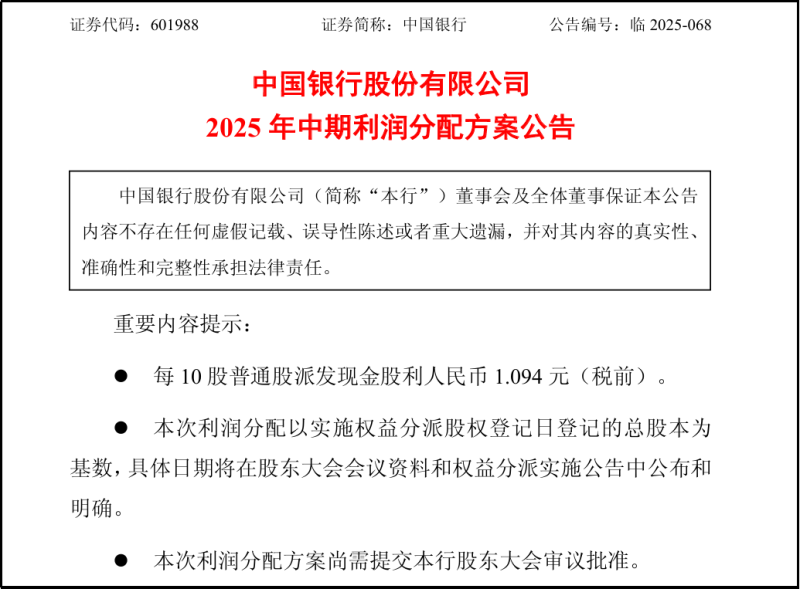
Group 1 - The core viewpoint of the news is that A-share listed banks are expected to distribute significant cash dividends, with a total expected amount exceeding 260 billion yuan, indicating a trend towards increased shareholder returns [1][2] - As of December 17, 2025, 26 A-share listed banks have disclosed their mid-term or quarterly dividend plans, surpassing the 24 banks that did so for 2024 [1][2] - The six major state-owned banks are the main contributors to this dividend distribution, with a total cash dividend expected to exceed 200 billion yuan, accounting for over 70% of the total dividends from all listed banks [2] Group 2 - The Industrial and Commercial Bank of China leads the dividend distribution with 50.396 billion yuan, followed by other major banks such as China Construction Bank and Agricultural Bank of China [2] - Several banks, including China Merchants Bank and Changsha Bank, are initiating mid-term dividends for the first time, with a total dividend amount of approximately 23 billion yuan [2] - The trend of high-frequency dividends aligns with national policy directives aimed at enhancing the quality of capital market development and protecting investor rights [3][4] Group 3 - The increase in dividend frequency is seen as a positive response to policy guidance, providing a model for other listed companies to improve their dividend mechanisms [4] - High-frequency dividends not only enhance shareholder satisfaction but also meet the investment needs of long-term funds such as social security and pension funds [4][5] - The banking sector's move towards mid-term dividends is expected to positively impact stock prices and the overall banking sector, signaling strong profitability and ample cash flow [6]



邮储银行宿迁市分行开展反电信网络诈骗及反洗钱专项宣传活动
Jiang Nan Shi Bao· 2025-12-19 06:54
Core Viewpoint - Postal Savings Bank of China Suqian Branch is actively enhancing public awareness of anti-fraud and anti-money laundering measures through a comprehensive promotional campaign aimed at maintaining financial order stability [1][2] Group 1: Promotional Activities - The bank has organized a special campaign focusing on anti-telecom network fraud and anti-money laundering, utilizing various promotional measures to strengthen financial security [1] - In-branch promotional efforts include the use of televisions, posters, and banners to disseminate information about common fraud types, money laundering methods, and payment security knowledge [1] - A consultation desk has been established where professional staff provide answers to customer inquiries and explain the core content of the new Anti-Money Laundering Law [1] Group 2: Media Outreach - The bank is expanding its outreach through WeChat, official websites, and SMS platforms to regularly share policy interpretations, case analyses, and fraud prevention tips [1] - Employees are encouraged to share this information in social media groups to raise public awareness and ensure comprehensive coverage of anti-fraud and anti-money laundering knowledge [1] Group 3: Employee Training and Community Engagement - The bank is conducting multi-level training for employees to enhance their skills in identifying fraud and money laundering behaviors, thereby improving their professional service capabilities [2] - Employees are also actively promoting anti-fraud and anti-money laundering knowledge during customer interactions, emphasizing the societal dangers of participating in money laundering activities [2] - The promotional team is engaging with various community groups, including schools and businesses, through the distribution of informational materials and on-site explanations to ensure widespread financial safety knowledge [2] Group 4: Future Plans - The bank plans to continue reinforcing the effectiveness of its promotional efforts by innovating and diversifying its outreach methods, aiming for regular financial safety campaigns [2] - The ultimate goal is to protect public assets and contribute to maintaining financial order and a secure financial environment [2]
沭阳县交通运输局与邮储银行沭阳县支行签署战略合作协议
Jiang Nan Shi Bao· 2025-12-19 06:47
Core Viewpoint - The strategic cooperation agreement between the Shuyang County Transportation Bureau and Postal Savings Bank aims to enhance practical collaboration and support the high-quality economic and social development of Shuyang [1] Group 1: Strategic Cooperation - The signing of the agreement marks an important step in deepening cooperation between the two parties, focusing on serving the local economy [1] - The Postal Savings Bank emphasizes the role of transportation as a vital artery for economic development and a bridge for improving people's livelihoods [1] Group 2: Financial Services and Infrastructure - The cooperation will leverage significant infrastructure projects, rural road upgrades, and smart transportation construction to provide a broad market for financial services [1] - The Postal Savings Bank plans to actively engage and provide financial support to every aspect of the transportation sector in Shuyang [1] Group 3: Implementation and Future Plans - The Shuyang County Transportation Bureau will establish a regular working mechanism to facilitate ongoing collaboration [1] - The focus will be on integrating port, shipping, and transportation industries, recommending quality projects, and developing financing service plans aligned with the "14th Five-Year Plan" [1]
筑牢全民“心防” 守住百姓“钱袋”:邮储银行宿迁市分行开展防范电信诈骗宣传活动
Jiang Nan Shi Bao· 2025-12-19 06:47
Core Viewpoint - The Postal Savings Bank of China is actively responding to the national call to combat telecom network fraud by enhancing public financial security awareness and risk identification capabilities through a comprehensive anti-fraud publicity campaign [1][2] Group 1: Campaign Objectives - The campaign aims to shift the focus from "post-event interception" to "pre-event prevention" by building a financial safety "firewall" in collaboration with customers and the public [1] - The initiative includes a multi-channel and multi-form approach to education, ensuring full coverage of the community [1] Group 2: Targeted Outreach - The campaign specifically targets high-risk groups, implementing tiered and precise publicity strategies [2] - For elderly clients, the focus is on principles of "do not trust, do not disclose, do not transfer," along with safe mobile banking practices [2] - For corporate finance personnel, specialized training is provided to prevent scams involving impersonation and forged payment instructions [2] - For students, the campaign promotes rational consumption and warns against the legal risks of lending personal banking information [2] Group 3: Future Commitment - The bank plans to continue fulfilling its social responsibility by promoting regular anti-fraud education and expanding the "Five In" outreach activities [2] - There is a commitment to innovate educational models to institutionalize anti-fraud publicity, thereby contributing to the stability of the financial order and protecting public property [2]
警银联动闪电出击,邮储银行沭阳县七雄镇营业所成功拦截电信诈骗,守护市民“钱袋子”
Jiang Nan Shi Bao· 2025-12-19 06:47
Core Viewpoint - Postal Savings Bank of China (PSBC) has successfully identified and intercepted a telecom fraud attempt, demonstrating its commitment to protecting customers' financial safety and enhancing fraud prevention measures [1][2] Group 1: Incident Details - A senior customer attempted to make a cross-bank transfer at PSBC's Shuqian County Qixiong Town branch, raising suspicions due to unclear explanations about the transfer purpose and unfamiliarity with the recipient [1] - The bank staff, trained to recognize fraud patterns, identified the situation as a typical telecom scam involving a supposed lawyer promising guaranteed legal success for a fee of 3,000 yuan [1] - The local police were promptly notified, and upon investigation, it was confirmed that the lawyer's credentials were fraudulent, leading to the successful interception of the scam [1] Group 2: Ongoing Efforts - PSBC's Suqian branch emphasizes the importance of preventing telecom fraud and prioritizes the safety of citizens' financial assets [2] - The bank plans to enhance its anti-fraud publicity efforts through multi-faceted campaigns and improve training for staff to increase their sensitivity and insight into potential fraud cases [2] - The goal is to effectively safeguard customer funds and protect the public's financial interests [2]
答好“数字金融”大文章,邮储银行走出新路子
Jing Ji Guan Cha Wang· 2025-12-19 06:10
Core Viewpoint - Postal Savings Bank of China (PSBC) is leveraging technology and innovation to drive high-quality development in the banking sector, with the launch of its "AI2ALL" digital ecosystem as a key initiative [1][18]. Group 1: Technological Advancements - PSBC has initiated a comprehensive upgrade of its core banking systems, focusing on self-research and development to enhance stability and security, which are critical for banking operations [2]. - The bank's third-generation core system has achieved a tenfold increase in peak load capacity, a 97% reduction in single transaction approval time, and a 90% decrease in end-of-day batch processing time [3]. - PSBC is implementing artificial intelligence (AI) as a fundamental pillar of its development strategy, enhancing internal processes and customer interactions [4]. Group 2: AI and Model Development - The bank is pursuing a dual-track approach in algorithm development, combining external partnerships with self-cultivation, including collaborations with Baidu and Tsinghua University [5]. - PSBC has established a comprehensive model management system to ensure the safe application of AI models throughout their lifecycle [7]. - The bank's AI trading robot, "You Xiao Bao," has improved bond trading efficiency by over 95%, showcasing the effectiveness of AI in financial markets [8]. Group 3: Digital Banking Innovations - The latest version of PSBC's mobile banking app, version 11.0, features an AI assistant that enhances user experience through natural language processing [12]. - The app includes a dual protection mechanism for high-risk transactions, marking a significant upgrade in security measures [13]. - PSBC has integrated non-financial services into its mobile banking platform, enhancing customer engagement and satisfaction [14]. Group 4: Financial Inclusion and Green Finance - PSBC is extending its financial services through innovative models like the "Cloud Cabinet," which enhances service delivery in remote areas [11]. - The bank has developed specialized financial products to support green projects, contributing over 5.185 billion yuan to renewable energy initiatives [16]. - As of September 2025, PSBC's green loan balance reached 999.284 billion yuan, significantly contributing to carbon emission reductions [16]. Group 5: Future Outlook - The bank is preparing for the "15th Five-Year Plan," focusing on further developing its digital ecosystem and enhancing its AI capabilities [18]. - PSBC aims to integrate its financial services more deeply into China's modernization efforts, positioning itself as a leader in the digital transformation of the banking industry [19].
利率1.65%-2.07%!银行科创债破3000亿元,城商行成新主力
Xin Lang Cai Jing· 2025-12-19 05:29
Core Viewpoint - The issuance of technology innovation bonds (科创债) by banks has significantly increased, with a total issuance scale reaching 301.4 billion yuan as of December 18, indicating a strong market response to the regulatory support initiated in May 2023 [3][14]. Issuance Scale - A total of 67 banks have issued 75 technology innovation bonds, with the largest share coming from state-owned banks, which account for 38.16% of the total issuance [3][15]. - The six major state-owned banks have collectively issued bonds worth 115 billion yuan, while city commercial banks and rural commercial banks have also become significant players, with issuance scales of 74.9 billion yuan and 15 billion yuan respectively [4][17]. Interest Rates - The interest rates for technology innovation bonds vary, with state-owned banks offering rates between 1.65% and 1.81%, while city and rural commercial banks have higher rates ranging from 1.67% to 2.07% [7][21]. - Notably, some city and rural commercial banks have rates exceeding 1.8%, indicating a competitive pricing environment [3][18]. Maturity Periods - The majority of the issued bonds have a maturity period concentrated around 5 years, which accounts for over 70% of the total, followed by 3-year bonds at over 20% [11][22]. - This maturity structure is designed to meet the medium to long-term funding needs of technology enterprises for research and development, as well as for project implementation [22]. Funding Allocation - The funds raised through these bonds are primarily directed towards technology innovation sectors, including the issuance of loans for technology projects and investments in innovative enterprises [6][17].