CRRC(01766)

Search documents
中国中车(601766.SH):在欧洲拥有子公司
Ge Long Hui· 2026-02-11 09:48
Group 1 - The core viewpoint of the article is that China CNR Corporation (601766.SH) has been actively exporting products and services to the European market in recent years, primarily through direct customer exports [1] - The company has established subsidiaries in Europe to conduct overseas business [1]

中国中车(601766.SH):公司目前在航天领域没有业务拓展
Ge Long Hui· 2026-02-11 09:34
Group 1 - The company, CRRC Corporation Limited (601766.SH), has stated that it currently has no business expansion in the aerospace sector [1]
熊征宇会见中国中车集团董事长孙永才
Chang Jiang Ri Bao· 2026-02-11 00:52
Group 1 - The meeting between Wuhan's Mayor Xiong Zhengyu and China CRRC Group's Chairman Sun Yongcai highlights the importance of collaboration for economic development in Wuhan [1][2] - Wuhan is recognized as a key city for China CRRC's strategic layout due to its advantageous location, solid industrial foundation, and rich innovation resources [2] - China CRRC Group aims to deepen comprehensive cooperation with Wuhan, focusing on R&D investment, industrial layout, and market expansion to support the construction of a modernized Wuhan [2] Group 2 - Mayor Xiong emphasized the need for high-quality development in Wuhan, aligning with national strategies and enhancing the city's role as a national central city [1] - The collaboration will focus on high-end rail transit equipment manufacturing, joint efforts in core technologies, and the development of clean energy and cultural tourism [1] - The city government is committed to creating a first-class business environment to facilitate the growth of enterprises in Wuhan [1]
44列!中国中车开始建造圣保罗地铁列车
Xin Lang Cai Jing· 2026-02-10 12:45
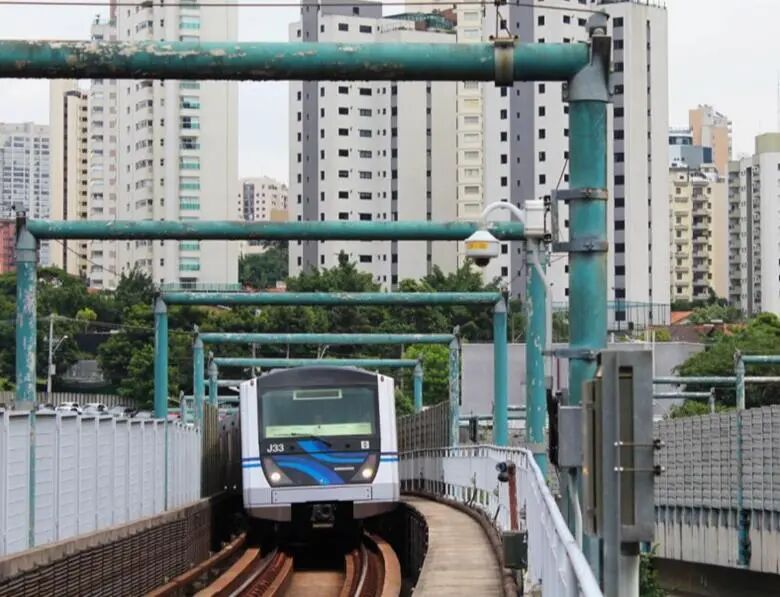
Core Insights - The São Paulo Metro operator announced that CRRC Qingdao Sifang has begun production of 44 six-car metro trains for the São Paulo Metro [2][5] - These trains are intended for the northeastern extension of Line 2 (between Vila Prudente and Penha, covering 8.3 kilometers), as well as for Lines 1 and 3 [2][5] - The Metropolitan Transportation Authority of São Paulo signed a vehicle manufacturing contract in July 2025, with the first train scheduled for delivery in April 2027 and all 44 trains expected to be delivered by July 2030 [2][5] - Following the confirmation of the deal, CRRC Qingdao Sifang announced plans to establish a production facility in São Paulo state [2][5]

趋势研判!2026年中国深海科技行业政策、产业链、市场规模、竞争企业及发展策略:应用价值持续凸显,将在全球深海事业发展中占据关键地位[图]
Chan Ye Xin Xi Wang· 2026-02-10 01:17
Core Viewpoint - Deep-sea technology is crucial for transforming potential resource advantages into real productivity, playing a significant role in economic development and ensuring national resource security [1][5]. Group 1: Definition and System of Deep-Sea Technology - Deep-sea technology refers to a series of scientific technologies and equipment systems used for exploring, researching, and developing deep-sea resources, typically below 200 meters [1]. - The essence of deep-sea technology lies in systematic technological innovation, transforming the deep sea from a cognitive blank area into a sustainable development space [2]. - The internal system of deep-sea technology includes three core dimensions: scientific cognition, engineering technology, and industrial application, which support and develop together with policy evolution [2]. Group 2: Current Development Status of Deep-Sea Technology - The deep sea is increasingly recognized as a strategic space for ensuring national resource security as land resources deplete [4]. - China's marine economy has shown strong growth, with an estimated marine economic output of approximately 5.1 trillion yuan in the first half of 2025, reflecting a year-on-year increase of about 5.8% [4]. - The rapid development of deep-sea technology in China over the past decade is unprecedented domestically and considered a miracle in international technological history [5]. Group 3: Market Size and Growth Projections - The market size of China's deep-sea technology is projected to be approximately 2.7 trillion yuan by 2025, with an expected increase to about 2.92 trillion yuan by 2026 [5]. Group 4: Industry Chain of Deep-Sea Technology - The deep-sea technology industry chain consists of a complete structure from upstream raw materials and components to midstream equipment manufacturing and downstream diverse applications [6]. - Upstream includes key raw materials like titanium alloys and special steel, while midstream focuses on deep-sea detection and operational equipment manufacturing [6]. Group 5: Development Environment and Policies - The deep-sea technology sector is receiving significant attention and support from the government, with multiple policies encouraging its development and innovation [6]. - The 2025 Government Work Report explicitly mentions promoting deep-sea technology as a new emerging industry [6]. Group 6: Competitive Landscape - Major companies in the deep-sea technology sector include China CRRC, China Shipbuilding, and Zhenhua Heavy Industries, focusing on deep-sea detection, resource development, and comprehensive systems [7]. - China CRRC has established a presence in the deep-sea robotics sector and reported revenues of approximately 183.87 billion yuan in the first three quarters of 2025 [8]. - Zhenhua Heavy Industries has made significant advancements in intelligent marine engineering equipment, achieving revenues of about 34.46 billion yuan in 2024, with a year-on-year growth of 4.62% [9]. Group 7: Development Strategies - The development of deep-sea technology is a strategic choice for China to overcome resource constraints and expand development space, contributing to the goal of building a marine power and sustainable development [10]. - The industry is expected to evolve towards interdisciplinary integration, collaborative efficiency across the entire chain, and participation in global governance [10].


逐步淘汰日系车厢,印尼青睐中国造
Xin Lang Cai Jing· 2026-02-09 05:52
Core Insights - The Indonesian National Railway Company (KAI) is shifting from using primarily Japanese second-hand trains to introducing new trains from China and local manufacturers [1][2] - KAI has already put into operation 11 train sets manufactured by China and has ordered 16 new train sets from domestic suppliers [1] - The Jakarta commuter train network serves approximately 1 million passengers daily, making it the largest railway network in Indonesia [1] Group 1 - KAI's plan includes procuring 30 new train sets for commuter rail by 2027, reflecting a policy shift by the Indonesian government towards local production [2] - The Indonesian government has been restricting the import of second-hand trains since around 2020, with a complete ban implemented in 2023 [2] - Currently, over 800 Japanese second-hand train cars are still in operation, but their numbers are expected to decrease as new trains are introduced [2]

逐步淘汰日系车厢,印尼青睐中国制造
Huan Qiu Shi Bao· 2026-02-08 22:37
Core Viewpoint - The Indonesian National Railway Company (KAI) is shifting from using primarily Japanese second-hand trains to introducing new trains manufactured in China and locally in Indonesia, reflecting a significant change in the country's railway operations [1][2]. Group 1: Train Procurement and Operations - KAI has already put into operation 11 train sets manufactured in China and has ordered an additional 16 new train sets from local manufacturers [1]. - The Jakarta commuter train network serves approximately 1 million passengers daily, making it the largest railway network in Indonesia, crucial for daily commuting and education [1]. - Currently, over 800 Japanese second-hand train cars (approximately 67 sets) are still in operation, many of which date back to the 1970s and 1980s, featuring original Japanese signage and design elements [1]. Group 2: Government Policy and Future Plans - The Indonesian government has initiated a policy shift to promote local manufacturing by restricting the import of second-hand trains, which began around 2020, culminating in a complete ban in 2023 [2]. - KAI plans to procure 30 new train sets for the commuter railway by 2027, indicating a strong commitment to modernizing the fleet and reducing reliance on older Japanese trains [2]. - Despite the ongoing presence of Japanese second-hand trains, their numbers are expected to decline as new trains are introduced [2].
中国高铁驶向世界舞台
Zheng Quan Ri Bao Zhi Sheng· 2026-02-06 16:37
Core Viewpoint - The rapid development of China's high-speed rail (HSR) network has significantly enhanced its capacity to handle passenger flow, especially during peak travel periods like the Spring Festival, with a total operational mileage exceeding 50,000 kilometers, marking a 32% increase since the end of 2020 [2][3]. Group 1: High-Speed Rail Network Expansion - As of December 2025, the operational mileage of China's high-speed rail surpassed 50,000 kilometers, with the completion of 12,000 kilometers of new high-speed rail during the 14th Five-Year Plan [2]. - The "Eight Vertical and Eight Horizontal" high-speed rail network has improved connectivity, covering 97% of cities with populations over 500,000, and surpassing the total operational mileage of all other countries combined [2][3]. - High-speed rail has become the primary mode of transportation for medium to long-distance travel, handling 80% of passenger volume and 69% of passenger turnover in China [3]. Group 2: Technological Advancements - The development of a fully autonomous and efficient industrial chain has been crucial for the rapid growth of high-speed rail, particularly the domestically developed CTCS-3 level train control system, which has achieved 100% localization [4][5][6]. - The CR400 train model, introduced in 2017, marked the beginning of China's independent standard era, with the upcoming CR450 model set to establish a top-level index system for trains operating at 400 km/h [7]. - China's high-speed rail technology has reached international advanced levels in operational mileage, technical standards, and safety guarantees, supported by a complete industrial chain and strong manufacturing capabilities [7][8]. Group 3: Investment and Private Sector Involvement - The Chinese government encourages private capital participation in railway construction and operation, with the first privately funded high-speed rail, the Hangzhou-Taipei line, opening in January 2022 [8]. - The second privately funded high-speed rail, the Hangzhou-Wenzhou line, is set to open in September 2024, contributing to regional economic development [8]. Group 4: International Expansion - China's high-speed rail is transitioning from equipment export to the overall output of technology systems, engineering experience, and standard solutions, enhancing its international presence [9][10]. - The Jakarta-Bandung high-speed rail project in Indonesia, a flagship of the Belt and Road Initiative, has significantly reduced travel time and stimulated economic growth in the region [10]. - The China Railway Group is actively promoting the standardization of railway technology, with 1,219 enterprise technical standards established, enhancing China's influence in international railway development [9].
中国中车获Ping An Asset Management Co., Ltd.增持560.3万股 每股作价约5.8港元
Xin Lang Cai Jing· 2026-02-05 00:09
Group 1 - Ping An Asset Management Co., Ltd. increased its stake in China CNR Corporation Limited (stock code: 01766) by 5.603 million shares at a price of HKD 5.7971 per share, totaling approximately HKD 32.4812 million [1][3] - After the increase, Ping An's total shareholding in China CNR reached approximately 354 million shares, representing a holding percentage of 8.1% [1][3]
中国中车集团培育“第二曲线” 高铁技术助风电装备崭露头角
Ren Min Ri Bao· 2026-02-04 22:03
Core Insights - China CRRC is focusing on two major products: the CR450 high-speed train and the 20 MW floating offshore wind turbine "Qihang," which represent advancements in rail transportation and clean energy sectors respectively [2] Group 1: Product Development - The CR450 train is set to undergo comprehensive operational testing and design optimization, aiming to be the fastest high-speed train globally [2] - The "Qihang" wind turbine is the world's largest floating offshore wind turbine, expected to complete various tests and finalization [2] Group 2: Strategic Direction - The State-owned Assets Supervision and Administration Commission emphasizes the need for state-owned enterprises to pursue a "second curve" for growth, focusing on new business development while maintaining stability in core operations [2] - China CRRC has developed a "second curve" cultivation path characterized by capability transfer and system synergy, which includes keywords like technology homology and industrial co-chain [2] Group 3: Technology and Innovation - Technology homology serves as a foundation for new business development, allowing for reduced R&D uncertainty and industrialization risks, thus ensuring high technical maturity and engineering feasibility from the start [3] - The wind turbine can be viewed as a "vertical high-speed train," as the principles of wind power generation are similar to those of high-speed train electric braking [3] Group 4: Market Position and Growth - China CRRC has developed "invisible champions" in the wind power sector, such as the wind power IGBT module and ring groove rivets, achieving over 80% market share in wind turbine nacelles and towers globally, with a 100% domestic market share [4] - The company is leveraging its reliability design systems, engineering experience, precision manufacturing technology, and quality assurance capabilities from the rail sector to enhance its wind power equipment offerings [4] - By 2025, revenue from new industry segments is projected to exceed 86.3 billion yuan, accounting for over 35% of total revenue, indicating robust growth of the "second curve" [4]