INNOVENT BIO(01801)

Search documents
南方恒生科技近一个月首次上榜港股通成交活跃榜
Zheng Quan Shi Bao Wang· 2025-10-14 13:49
Core Insights - On October 14, Southern Hang Seng Technology made its debut on the active trading list for the first time in a month, with a trading volume of 13.24 billion HKD and a net buying amount of 11.47 billion HKD, despite a closing drop of 3.33% [1][2]. Trading Activity Summary - The total trading volume of active stocks on the Hong Kong Stock Connect on October 14 was 699.46 billion HKD, accounting for 38.59% of the day's total trading amount, with a net selling amount of 2.09 billion HKD [1]. - Alibaba-W led the trading volume with 210.24 billion HKD, followed by SMIC and Tencent Holdings with trading amounts of 129.81 billion HKD and 74.05 billion HKD, respectively [1][2]. - The most frequently listed stocks in the past month were Alibaba-W and Tencent Holdings, each appearing 16 times, indicating strong interest from Hong Kong Stock Connect funds [1]. Individual Stock Performance - The trading details of notable stocks on October 14 include: - Tencent Holdings: Trading amount of 74.05 billion HKD, net buying of 6.63 billion HKD, closing price of 621.00 HKD, with a daily drop of 2.82% [2]. - SMIC: Trading amount of 129.81 billion HKD, net selling of 9.58 billion HKD, closing price of 73.35 HKD, with a daily drop of 8.48% [2]. - Alibaba-W: Trading amount of 210.24 billion HKD, net selling of 7.95 billion HKD, closing price of 155.60 HKD, with a daily drop of 4.31% [2]. - Southern Hang Seng Technology: Trading amount of 13.24 billion HKD, net buying of 11.47 billion HKD, closing price of 5.805 HKD, with a daily drop of 3.33% [2].





10月14日南向资金净买入86.03亿港元
Zheng Quan Shi Bao Wang· 2025-10-14 13:49
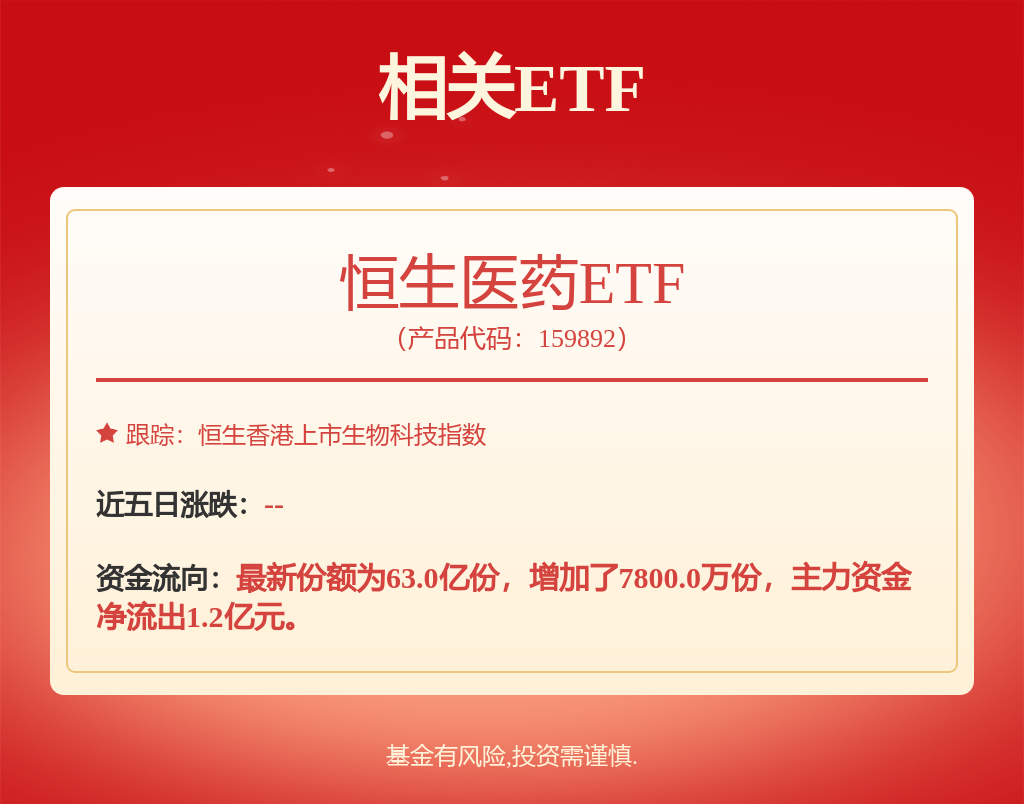
Market Overview - On October 14, the Hang Seng Index fell by 1.73%, closing at 25,441.35 points, while southbound funds through the Stock Connect recorded a net inflow of HKD 8.603 billion [1] - The total trading volume for the Stock Connect on the same day was HKD 181.245 billion, with a net buy of HKD 8.603 billion [1] Stock Performance - In the Shanghai Stock Connect, the top traded stock was Alibaba-W with a trading volume of HKD 13.144 billion, followed by SMIC and Tencent Holdings with HKD 8.015 billion and HKD 4.340 billion respectively [1] - In terms of net buy amounts, Xiaomi Group-W led with a net inflow of HKD 0.723 billion, despite a closing price drop of 0.94% [1] - Conversely, Alibaba-W experienced the highest net sell amount of HKD 0.736 billion, closing down by 4.31% [1] Shenzhen Stock Connect Highlights - In the Shenzhen Stock Connect, Alibaba-W also topped the trading volume with HKD 7.881 billion, followed by SMIC and Tencent Holdings with HKD 4.966 billion and HKD 3.065 billion respectively [2] - The stock with the highest net buy was Southern Hang Seng Technology, with a net inflow of HKD 1.147 billion, although it closed down by 3.33% [2] - The stock with the largest net sell was Innovent Biologics, with a net outflow of HKD 0.767 billion, closing down by 6.89% [2] ETF and Fund Information - The Hang Seng Medical ETF, which tracks the Hang Seng Hong Kong-listed Biotechnology Index, has seen a recent increase in shares, with the latest total at 6.3 billion shares, up by 78 million shares, although there was a net outflow of HKD 120 million in principal funds [5]
智通港股通活跃成交|10月14日
智通财经网· 2025-10-14 11:03
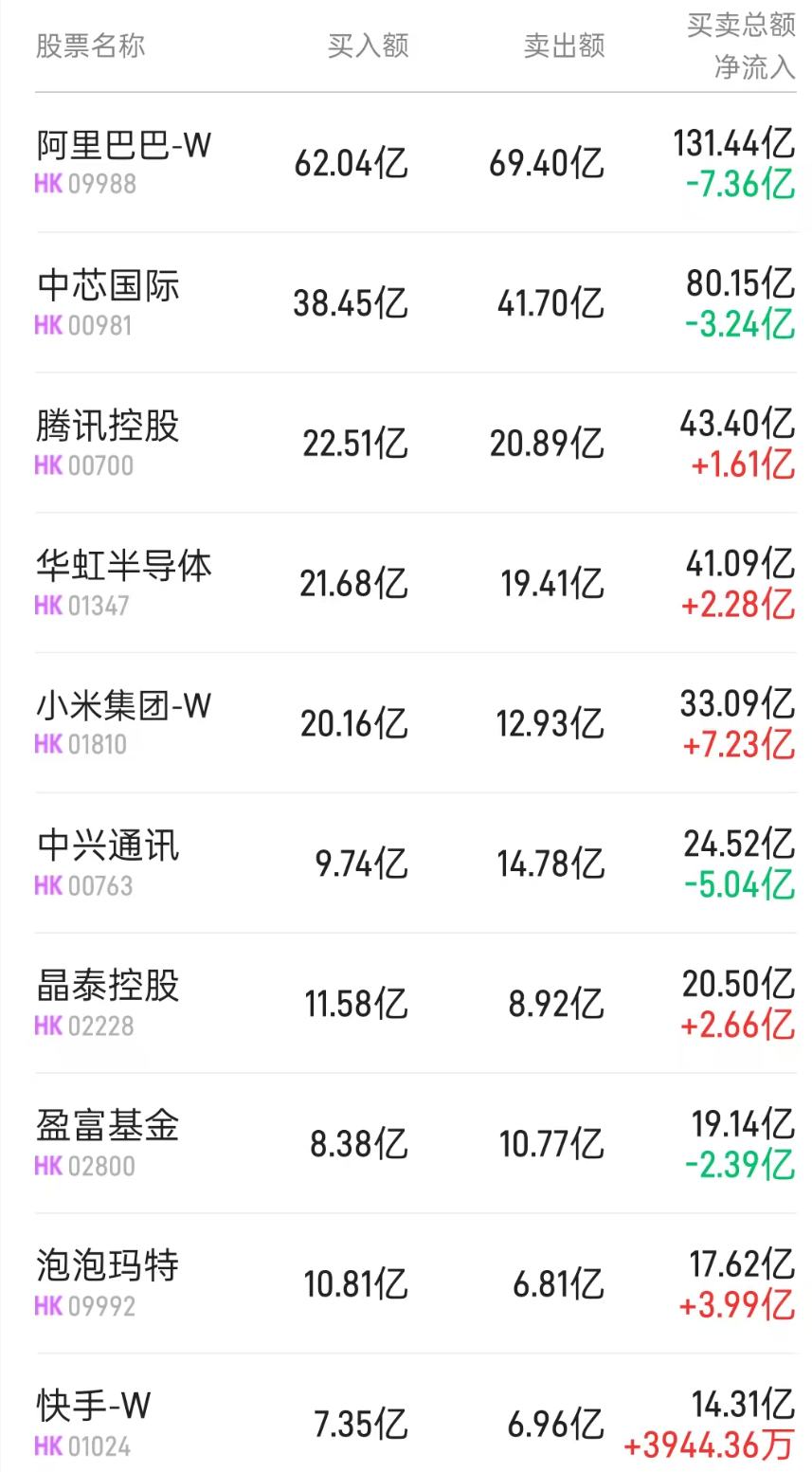
Core Insights - On October 14, 2025, Alibaba-W (09988), SMIC (00981), and Tencent Holdings (00700) were the top three companies by trading volume in the southbound trading of the Stock Connect, with trading amounts of 131.44 billion, 80.15 billion, and 43.40 billion respectively [1][2] - In the southbound trading of the Shenzhen-Hong Kong Stock Connect, Alibaba-W (09988), SMIC (00981), and Tencent Holdings (00700) also ranked as the top three, with trading amounts of 78.81 billion, 49.66 billion, and 30.65 billion respectively [1][2] Southbound Trading Highlights - The top three active companies in the southbound trading of the Shanghai-Hong Kong Stock Connect were: - Alibaba-W (09988): 131.44 billion with a net buy of -7.36 billion - SMIC (00981): 80.15 billion with a net buy of -3.24 billion - Tencent Holdings (00700): 43.40 billion with a net buy of +1.61 billion [2] - The top three active companies in the southbound trading of the Shenzhen-Hong Kong Stock Connect were: - Alibaba-W (09988): 78.81 billion with a net buy of -596.46 million - SMIC (00981): 49.66 billion with a net buy of -6.33 billion - Tencent Holdings (00700): 30.65 billion with a net buy of +5.01 billion [2]
北水动向|北水成交净买入86.03亿 北水继续抛售芯片股 逢低抢筹小米(01810)超9亿港元
智通财经网· 2025-10-14 09:57
Summary of Key Points Core Viewpoint - The Hong Kong stock market experienced significant net inflows from northbound trading, with a total net buy of 86.03 billion HKD on October 14, 2023, indicating strong investor interest in certain stocks while others faced selling pressure [1]. Group 1: Stock Performance - The top net bought stocks included Southern Hang Seng Technology (03033), Xiaomi Group-W (01810), and Tencent (00700) [1]. - The most sold stocks were Semiconductor Manufacturing International Corporation (00981), Alibaba Group-W (09988), and Innovent Biologics (01347) [1]. - Alibaba Group-W had a net outflow of 7.36 billion HKD, while Semiconductor Manufacturing International Corporation saw a net outflow of 3.24 billion HKD [2]. Group 2: Trading Activity - Northbound trading through the Shanghai Stock Connect accounted for a net buy of 49.73 billion HKD, while the Shenzhen Stock Connect recorded a net buy of 36.31 billion HKD [1]. - Notable net inflows included 11.47 billion HKD for Southern Hang Seng Technology and 6.62 billion HKD for Tencent, while Alibaba faced a net sell of 7.95 billion HKD [4]. Group 3: Company-Specific News - Xiaomi Group-W faced scrutiny after a fire incident involving its vehicle, leading to a net buy of 9.23 billion HKD, while the company also repurchased 400 million shares for 1.97 billion HKD [5]. - Crystal Technology Holdings (02228) received a net buy of 4.26 billion HKD, with analysts highlighting its potential in robotics and AI pharmaceuticals [5]. - Semiconductor stocks, including Hua Hong Semiconductor (01347) and Semiconductor Manufacturing International Corporation (00981), faced significant selling pressure, with net outflows of 1.1 billion HKD and 9.57 billion HKD, respectively [6][8].
10月13日港股通净买入198.04亿港元
Zheng Quan Shi Bao Wang· 2025-10-13 14:12
Core Points - The Hang Seng Index fell by 1.52% on October 13, closing at 25,889.48 points, while southbound funds through the Stock Connect recorded a net inflow of HKD 19.804 billion [1] - The total trading volume for the Stock Connect on October 13 was HKD 227.017 billion, with a net buy of HKD 19.804 billion [1] - Active stocks in the Shanghai Stock Connect included Alibaba-W, which had the highest trading volume at HKD 22.610 billion, followed by SMIC and Xiaomi Group with HKD 12.670 billion and HKD 9.133 billion respectively [1] - The top net buy stock was the Tracker Fund of Hong Kong, with a net inflow of HKD 5.208 billion, despite its closing price dropping by 1.56% [1] - Tencent Holdings had the highest net sell amount at HKD 3.308 billion, with a closing price decrease of 1.92% [1] Trading Activity Summary - In the Shenzhen Stock Connect, Alibaba-W led with a trading volume of HKD 9.688 billion, followed by Xiaomi Group and SMIC at HKD 6.189 billion and HKD 5.050 billion respectively [2] - The Tracker Fund of Hong Kong recorded a net buy of HKD 2.075 billion, while the highest net sell was for Innovent Biologics at HKD 0.515 billion, with a closing price drop of 4.20% [2] - The trading data for the top active stocks included significant fluctuations in net buy and sell amounts, indicating varied investor sentiment [2]
港股通10月13日成交活跃股名单
Zheng Quan Shi Bao Wang· 2025-10-13 14:09
Group 1 - The Hang Seng Index fell by 1.52% on October 13, with a total southbound trading volume of HKD 227.017 billion, including HKD 123.411 billion in buying and HKD 103.606 billion in selling, resulting in a net buying amount of HKD 19.804 billion [1] - The southbound trading through Stock Connect (Shenzhen) had a total trading volume of HKD 78.738 billion, with net buying of HKD 12.206 billion, while the trading through Stock Connect (Shanghai) had a total volume of HKD 148.279 billion and net buying of HKD 7.598 billion [1] - Alibaba-W had the highest trading volume among southbound stocks, totaling HKD 32.298 billion, followed by SMIC and Xiaomi Group-W with HKD 17.721 billion and HKD 15.323 billion respectively [1] Group 2 - Among the active stocks, the top net buying stock was the Tracker Fund of Hong Kong with a net buying amount of HKD 7.282 billion, despite a closing price drop of 1.56% [2] - Xiaomi Group-W and ZTE Corporation had the longest consecutive net buying days, with 6 and 3 days respectively, and the highest net buying amounts of HKD 4.709 billion and HKD 1.673 billion [2] - The stocks with the highest net selling amounts included Tencent Holdings with HKD 2.445 billion, Alibaba-W with HKD 1.624 billion, and SMIC with HKD 0.524 billion [2]

智通港股通活跃成交|10月13日
智通财经网· 2025-10-13 11:05
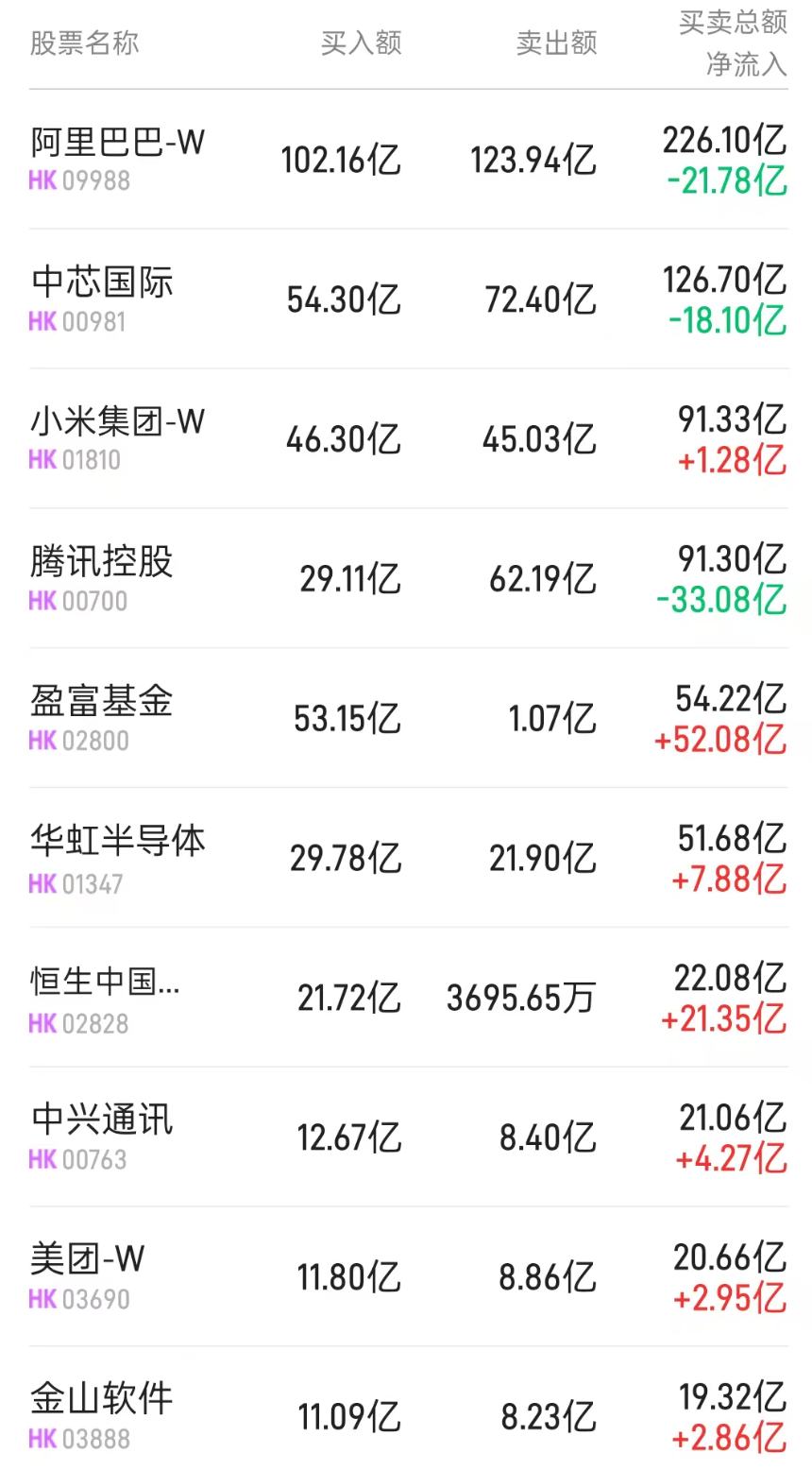
Core Insights - On October 13, 2025, Alibaba-W (09988), SMIC (00981), and Xiaomi Group-W (01810) were the top three stocks by trading volume in the Southbound trading of the Stock Connect, with trading amounts of 22.61 billion, 12.67 billion, and 9.13 billion respectively [1] - In the Southbound trading of the Shenzhen-Hong Kong Stock Connect, Alibaba-W (09988), Xiaomi Group-W (01810), and SMIC (00981) also ranked as the top three, with trading amounts of 9.69 billion, 6.19 billion, and 5.05 billion respectively [1] Shanghai-Hong Kong Stock Connect Top Active Companies - Alibaba-W (09988) had a trading amount of 22.61 billion with a net buy of -2.18 billion [1] - SMIC (00981) recorded a trading amount of 12.67 billion with a net buy of -1.81 billion [1] - Xiaomi Group-W (01810) had a trading amount of 9.13 billion with a net buy of +0.13 billion [1] - Tencent Holdings (00700) had a trading amount of 9.13 billion with a net buy of -3.31 billion [1] - The Yingfu Fund (02800) saw a trading amount of 5.42 billion with a net buy of +5.21 billion [1] - Hua Hong Semiconductor (01347) had a trading amount of 5.17 billion with a net buy of +0.79 billion [1] - Other notable companies included Hang Seng China Enterprises (02828), ZTE Corporation (00763), Meituan-W (03690), and Kingsoft Corporation (03888) with varying trading amounts and net buys [1] Shenzhen-Hong Kong Stock Connect Top Active Companies - Alibaba-W (09988) had a trading amount of 9.69 billion with a net buy of +0.55 billion [1] - Xiaomi Group-W (01810) recorded a trading amount of 6.19 billion with a net buy of +0.76 billion [1] - SMIC (00981) had a trading amount of 5.05 billion with a net buy of +1.29 billion [1] - Tencent Holdings (00700) had a trading amount of 4.47 billion with a net buy of +0.86 billion [1] - Hua Hong Semiconductor (01347) saw a trading amount of 3.04 billion with a net buy of +0.56 billion [1] - Other companies such as Yingfu Fund (02800), Meituan-W (03690), ZTE Corporation (00763), WuXi Biologics (02269), and Innovent Biologics (01801) also participated with varying trading amounts and net buys [1]

北水动向|北水成交净买入198.04亿 灰犀牛冲击市场情绪 内资逢低抢筹盈富基金(02800)近73亿港元
智通财经网· 2025-10-13 09:58
Core Insights - The Hong Kong stock market saw a net inflow of 198.04 billion HKD from northbound trading on October 13, with 75.98 billion HKD from the Shanghai Stock Connect and 122.06 billion HKD from the Shenzhen Stock Connect [1] Group 1: Stock Performance - The most bought stocks included the Tracker Fund of Hong Kong (02800), Hang Seng China Enterprises (02828), and Hua Hong Semiconductor (01347) [1] - The most sold stocks were Tencent (00700), Alibaba-W (09988), and SMIC (00981) [1] - Alibaba-W had a buy amount of 102.16 billion HKD and a sell amount of 123.94 billion HKD, resulting in a net outflow of 21.78 billion HKD [2] - SMIC had a buy amount of 54.30 billion HKD and a sell amount of 72.40 billion HKD, leading to a net outflow of 18.10 billion HKD [2] - Tencent had a buy amount of 29.11 billion HKD and a sell amount of 62.19 billion HKD, resulting in a net outflow of 33.08 billion HKD [2] Group 2: Market Trends - The market is experiencing a decline in investor risk appetite due to escalating US-China trade tensions, which has led to a valuation correction in Hong Kong stocks [4] - Despite the current market challenges, there are expectations for stabilization in investor sentiment due to domestic growth-supporting policies and long-term measures to stabilize the stock market [4] - The semiconductor sector is showing divergence, with Hua Hong Semiconductor receiving a net inflow of 13.47 billion HKD, while SMIC faced a net outflow of 5.23 billion HKD [5] Group 3: Company-Specific News - Xiaomi Group-W (01810) saw a net inflow of 8.88 billion HKD despite a nearly 9% drop in its stock price due to safety concerns following a fire incident involving one of its vehicles [5] - Kingsoft (03888) received a net inflow of 2.86 billion HKD amid discussions on export controls related to rare earth materials [5] - Northbound trading sold off tech stocks, with Alibaba-W and Tencent facing significant net outflows of 24.45 billion HKD and 16.23 billion HKD, respectively [6]
信达生物-亚洲医疗行业考察要点
2025-10-13 01:00
Summary of Innovent Biologics Conference Call Company Overview - **Company**: Innovent Biologics - **Industry**: Biotechnology - **Focus**: Development and commercialization of innovative therapies, particularly in oncology and metabolic diseases Key Takeaways 1. Product Differentiation and Market Positioning - **Mazdutide**: Launched for obesity in July and recently approved for diabetes, it is positioned as a differentiated GLP-1 dual agonist targeting both GLP-1 and GIP pathways, significantly reducing liver fat, which is crucial for Chinese patients with high hepatic fat despite lower BMI [2][18] - **Pricing Strategy**: The 4mg and 6mg doses are priced approximately 30% below tirzepatide and 30% above semaglutide, aiming to balance affordability with premium positioning [2][18] 2. Market Potential and Commercialization Strategy - **Addressable Market**: There are approximately 300 million overweight and 160 million obese adults in China, presenting a significant market opportunity [3][20] - **Multi-Channel Distribution**: Innovent is utilizing a broad distribution strategy that includes public hospitals, private hospitals, retail pharmacies, and online platforms, with non-hospital channels expected to drive incremental growth [3][18] 3. Financial Projections - **Revenue Targets**: Innovent aims for Mazdutide to contribute at least 25% of its RMB 20 billion revenue target by 2027, with an expected RMB 1 billion in the first 12 months [2][21] - **Financial Forecasts**: Projected revenues for FY 2024, 2025, 2026, and 2027 are RMB 9.42 billion, RMB 12.62 billion, RMB 15.46 billion, and RMB 20.03 billion respectively, with net profits expected to turn positive by 2025 [6] 4. Competitive Landscape - **Increasing Competition**: The GLP-1 market in China is becoming more competitive with generics and multinational entrants. Innovent's strategy focuses on brand equity and differentiated mechanisms to maintain market share [5][19] - **Regulatory Environment**: Inclusion in the National Reimbursement Drug List (NRDL) is critical for diabetes treatments, while obesity and specialty indications may rely on cash-pay models and emerging commercial insurance [5][27] 5. Pipeline and Future Developments - **Oncology and Autoimmune Pipeline**: Innovent is advancing a broad pipeline including next-generation immuno-oncology therapies and autoimmune treatments, with key assets like IBI363 and L23 progressing toward pivotal trials [4][28] - **Oral GLP-1 Development**: An oral GLP-1 candidate is in early-stage development, with FDA IND clearance expected and enrollment in China anticipated in the second half of 2025 [4][24] 6. Sustainability and Corporate Governance - **Sustainability Goals**: Innovent has set targets to reduce water and energy consumption and greenhouse gas emissions by 5% and 10% respectively by 2030, aiming for zero waste landfill by 2030 [17] 7. Investment Recommendation - **Rating**: Innovent is rated as a "Buy" with a price target of HK$105.00, reflecting a potential upside of 13% from the current price [7][31] 8. Risks and Challenges - **Market Risks**: Potential risks include fierce competition, pipeline delays, and regulatory challenges that could impact the achievement of financial targets [31][15] Conclusion Innovent Biologics is positioned strongly within the biotechnology sector, particularly with its innovative product Mazdutide. The company is leveraging a multi-channel commercialization strategy to tap into a vast market while navigating competitive dynamics and regulatory landscapes. The robust pipeline and sustainability initiatives further enhance its investment appeal, although risks remain that could affect future performance.
德邦快递开通中东6国物流专线;Temu与电商服务平台Base达成合作|36氪出海·要闻回顾
36氪· 2025-10-12 13:34
Group 1 - Debon Logistics has launched a logistics line connecting China to six Middle Eastern countries, including the UAE and Saudi Arabia, with tailored customs and delivery solutions for various product categories [5][6] - Temu has partnered with e-commerce platform Base.com to enhance operational efficiency for cross-border sellers in markets like the UK and the US, offering streamlined order fulfillment and inventory management [5][6] - SHEIN plans to open its first physical stores in France in November, marking its first foray into brick-and-mortar retail after focusing primarily on online sales [6] Group 2 - TikTok is testing a self-operated e-commerce feature called "Trendy Beat" in the UK, aiming to sell products directly sourced by TikTok, enhancing its e-commerce strategy [6] - Xiaomi is accelerating its European expansion by opening flagship stores in Germany and Spain, with plans to sell electric vehicles by 2027 [7] - BYD has officially rolled out its 14 millionth new energy vehicle in Brazil, with the Brazilian president becoming a car owner, highlighting BYD's dominance in the Brazilian market [8] Group 3 - Hesai Technology has become the first company globally to produce over one million lidar units annually, maintaining a leading market share in the ADAS sector [8] - Natural堂 has completed a new financing round, raising 300 million RMB, with a valuation exceeding 7 billion RMB, and plans for an IPO in Hong Kong [9] - Anlan Power has secured angel funding to develop electric smart jet skis, targeting markets in North America, Europe, and emerging regions [9] Group 4 - Dap Bio has completed a Series B financing round to accelerate the global commercialization of its high-end life science instruments, focusing on drug discovery and synthetic biology [9] - Saudi Arabia will implement new freight regulations requiring advance declaration of cargo through the FASAH platform, effective October 29, 2025, to enhance logistics efficiency [11] - The trend of Chinese innovative drugs going global continues, with notable partnerships and licensing agreements, reflecting the global recognition of China's R&D capabilities [12]