
WUXI BIO(02269)

Search documents
药明生物:利润同比增长45.3%至57.33亿元,欧洲生产基地产能爬坡
Cai Jing Wang· 2026-02-11 06:36
2月11日,药明生物发布公告,公司截至2025年12月31日止全年度收益将增长约16.7%至人民币217.90亿 元;毛利率将提升约5个百分点至46.0%;经调整毛利将增长至约人民币106.38亿元,同比增长约 25.5%;公司截至2025年12月31日止全年度的利润及归属于公司权益股东的利润将分别增长约45.3%至 人民币57.33亿元及约46.3%至人民币49.08亿元; 以及经调整以股份为基础的薪酬开支、外汇损益、以及股权投资、资产出售、重组损益及相关一次性成 本后,公司非国际财务报告准则经调整纯利将增长约22.0%至人民币65.86亿元。 公告表示,该等增长主要归因于(其中包括)以下因素: (iii) 集团对现有及新增产能的利用,包括欧洲生产基地的产能爬坡; (iv) 集团通过药明生物精益运营管理系统(WBS)及数字化方案实现成本节约与效率改善; (v) (vi)公司通过投资投资组合而获得的投资收益。 (药明生物公告) (编辑:杨燕 林辰) (i) "跟随并赢得分子"战略的成功执行,以及领先的技术平台、行业最佳的项目交付时间及优秀的项目 执行过往记录,推动集团收益增长; (ii) 基于双特异性抗体和A ...
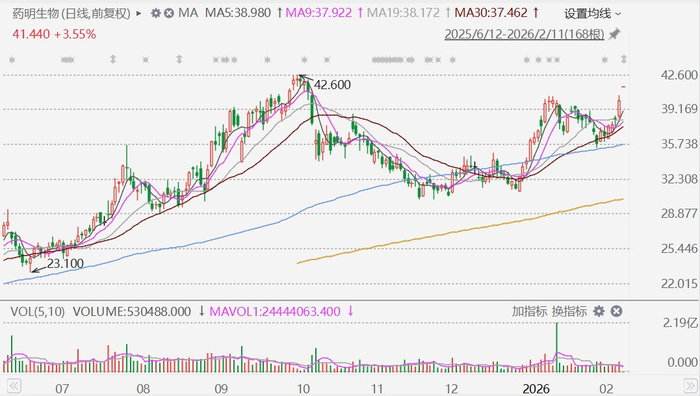
港股异动丨药明生物高开3.55%,料去年多赚46%
Ge Long Hui A P P· 2026-02-11 01:47
药明生物称,该等增长主要因素包括"跟随并赢得分子"战略的成功执行,以及领先的技术平台、行业最 佳的项目交付时间及优秀的项目执行过往记录,推动集团收益增长;基于双特异性抗体和ADC(抗体偶 联药物)等快速发展的技术平台,集团扩大了对生物药行业提供包括研究和发现服务、IND前开发服务 及临床和商业化生产服务等在内的服务范围;集团多个先进技术所产生的研究服务收益增长;集团对现 有及新增产能的利用,包括欧洲生产基地的产能爬坡;集团通过药明生物精益运营管理系统(WBS)及数 字化方案实现成本节约与效率改善;及通过投资投资组合而获得的投资收益。 格隆汇2月11日|药明生物(2269.HK)高开3.55%报41.44港元。消息面上,公司发盈喜,预期截至2025年 12月底止年度,股东应占利润将增长46.3%至49.08亿元;非国际财务报告准则经调整纯利将增长22%至 65.86亿元,收益将增长约16.7%至217.9亿元。 ...

药明生物高开3.55%,料去年多赚46%
Ge Long Hui· 2026-02-11 01:41
港股频道更多独家策划、专家专栏,免费查阅>> 2月11日,药明生物(2269.HK)高开3.55%报41.44港元。消息面上,公司发盈喜,预期截至2025年12月底止年度,股东应占利 润将增长46.3%至49.08亿元;非国际财务报告准则经调整纯利将增长22%至65.86亿元,收益将增长约16.7%至217.9亿元。 药明生物称,该等增长主要因素包括"跟随并赢得分子"战略的成功执行,以及领先的技术平台、行业最佳的项目交付时间 及优秀的项目执行过往记录,推动集团收益增长;基于双特异性抗体和ADC(抗体偶联药物)等快速发展的技术平台,集团扩 大了对生物药行业提供包括研究和发现服务、IND前开发服务及临床和商业化生产服务等在内的服务范围;集团多个先进技 术所产生的研究服务收益增长;集团对现有及新增产能的利用,包括欧洲生产基地的产能爬坡;集团通过药明生物精益运 营管理系统(WBS)及数字化方案实现成本节约与效率改善;及通过投资投资组合而获得的投资收益。 责任编辑:栎树 ...
药明生物盈喜后高开逾3% 预期2025年净利润49.08亿元 同比增长46.3%
Zhi Tong Cai Jing· 2026-02-11 01:35
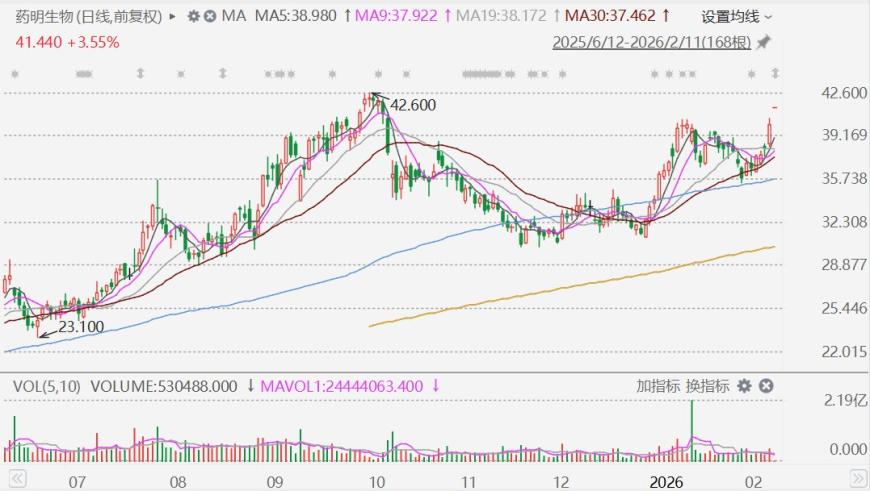
公告称,药明生物取得收入的增长源于"跟随并赢得分子"战略的成功执行,以及领先的技术平台、行业 最佳的项目交付时间及优秀的项目执行过往记录等共同推动。其他原因还包括:集团多个先进技术所产 生的研究服务收益增长;对现有及新增产能的利用,包括欧洲生产基地的产能爬坡;精益运营管理系统 及数字化方案实现成本节约与效率改善,以及通过投资组合而获得的投资收益。 药明生物(02269)盈喜后高开逾3%,截至发稿,涨3.55%,报41.44港元,成交额2184.22万港元。 消息面上,药明生物发布公告称,预期该集团于2025年度收益将增长约16.7%,至人民币217.9亿元;毛 利率将同比提升约5个百分点至46%;经调整毛利将同比增长25.5%,至约人民币106.38亿元。利润及归 属于公司权益股东的利润,预计将分别同比增长约45.3%至人民币57.33亿元和约46.3%至人民币49.08亿 元;经调整净利润将同比增长约22%至人民币65.86亿元。 ...
港股异动 | 药明生物(02269)盈喜后高开逾3% 预期2025年净利润49.08亿元 同比增长46.3%
智通财经网· 2026-02-11 01:32
公告称,药明生物取得收入的增长源于"跟随并赢得分子"战略的成功执行,以及领先的技术平台、行业 最佳的项目交付时间及优秀的项目执行过往记录等共同推动。其他原因还包括:集团多个先进技术所产 生的研究服务收益增长;对现有及新增产能的利用,包括欧洲生产基地的产能爬坡;精益运营管理系统 及数字化方案实现成本节约与效率改善,以及通过投资组合而获得的投资收益。 消息面上,药明生物发布公告称,预期该集团于2025年度收益将增长约16.7%,至人民币217.9亿元;毛 利率将同比提升约5个百分点至46%;经调整毛利将同比增长25.5%,至约人民币106.38亿元。利润及归 属于公司权益股东的利润,预计将分别同比增长约45.3%至人民币57.33亿元和约46.3%至人民币49.08亿 元;经调整净利润将同比增长约22%至人民币65.86亿元。 智通财经APP获悉,药明生物(02269)盈喜后高开逾3%,截至发稿,涨3.55%,报41.44港元,成交额 2184.22万港元。 ...
港股公告掘金 | 药明生物预计2025年度归属于公司权益股东的利润同比增长约46.3%至49.08亿元
Zhi Tong Cai Jing· 2026-02-11 01:30
Major Events - Xian Dao Intelligent (00470) received a subscription rate of 79.54 times for its public offering in Hong Kong, with a final issue price of HKD 45.8 per share [1] - Shishi Pharmaceutical Group (02005) is expected to win bids for 45 products in the national centralized procurement [1] - Gilead Sciences-B (01672) has selected the oral amylin receptor agonist peptide ASC36 for clinical development [1] - China Railway Construction (01186) recently won major projects totaling CNY 451.42 billion [1] - Shoucheng Holdings (00697) invested in Qimiao Labi through its subsidiary fund, focusing on expanding its product matrix around core intellectual property [1] - Minshi Group (00425) plans to establish a joint venture to produce aluminum body frame components [1] - Fubo Group (03738) has reached a strategic cooperation with Xinglu Technology [1] - Jin Xun Resources (03636) plans to increase capital by a total of USD 44 million for its overseas subsidiaries [1] - Changfei Optical Fiber and Cable (06869) experienced abnormal fluctuations in A-share trading, clarifying that it does not engage in CPO-related businesses [1] Operating Performance - SMIC (00981) reported Q4 revenue of USD 2.489 billion, a quarter-on-quarter increase of 4.5%, with a gross margin of 19.2% [1] - PCCW (00008) reported a loss attributable to shareholders of HKD 253 million for the fiscal year 2025, narrowing by 16% year-on-year [1] - WuXi Biologics (02269) issued a positive profit alert, expecting a year-on-year profit increase of approximately 46.3% to CNY 4.908 billion for the fiscal year 2025 [1] - Dongyue Group (00189) issued a positive profit alert, anticipating over 100% year-on-year growth in profit attributable to owners for 2025 [1] - Elephant Future Group (02309) issued a positive profit alert, expecting a mid-term profit attributable to owners of approximately HKD 178 million, reversing from a loss [1] - Sihuan Pharmaceutical (00460) issued a positive profit alert, expecting revenue of no less than CNY 2.5 billion for 2025, with a growth rate exceeding 30% compared to the previous year [1] - Beijing Automotive (01958) expects a net profit attributable to the parent company of approximately CNY 110 million to CNY 130 million for 2025, a year-on-year decrease of about 86.4% to 88.5% [1] - COFCO Joycome (01610) issued a profit warning, expecting a loss attributable to shareholders of approximately CNY 230 million to CNY 350 million, reversing from profit year-on-year [1] - New Town Development (01030) achieved a contract sales amount of approximately CNY 714 million in January, a year-on-year decrease of 29.79% [1] - Yue Yuen Industrial (00551) reported a net operating income of approximately USD 705 million in January, a year-on-year decrease of 12.5% [1] - Baoshan International (03813) reported a cumulative net operating income of CNY 1.748 billion in January, a year-on-year decline of 32.5% [1]

药明生物盈喜:2025年股东应占利润同比增46.3%
Zhi Tong Cai Jing· 2026-02-11 00:23
Core Viewpoint - WuXi Biologics (02269) expects a revenue growth of approximately 16.7% to RMB 21.79 billion for the fiscal year 2025, driven by successful execution of its "Follow and Win Molecules" strategy and advanced technology platforms [1] Group 1: Financial Projections - Gross margin is anticipated to increase by about 5 percentage points to 46% [1] - Adjusted gross profit is projected to grow by 25.5% to approximately RMB 10.638 billion [1] - Profit attributable to equity shareholders is expected to rise by approximately 45.3% to RMB 5.733 billion [1] - Adjusted net profit is forecasted to increase by about 22% to RMB 6.586 billion [1] Group 2: Growth Drivers - Revenue growth is attributed to the successful execution of the "Follow and Win Molecules" strategy, leading technology platforms, industry-best project delivery times, and a strong track record in project execution [1] - The integrated CRDMO platform is set to add 209 new comprehensive projects in 2025, bringing the total to a record high of 945 projects [1] - The expansion of services in the biopharmaceutical industry includes research discovery, pre-IND development, clinical, and commercial production, leveraging rapidly developing technologies such as bispecific antibodies and ADCs [1] Group 3: Additional Performance Factors - Performance growth is also driven by increased research service revenue from multiple advanced technologies [2] - Utilization of existing and new production capacities, including ramp-up at European production facilities [2] - Cost savings and efficiency improvements achieved through lean operational management systems and digital solutions, along with investment income from the portfolio [2]
药明生物(02269)盈喜:2025年股东应占利润同比增46.3%
智通财经网· 2026-02-11 00:20
公告称,药明生物取得收入的增长源于"跟随并赢得分子"战略的成功执行,以及领先的技术平台、行业 最佳的项目交付时间及优秀的项目执行过往记录等共同推动。 智通财经APP讯,药明生物(02269)公告,预期该集团于2025年度收益将增长约16.7%,至人民币 217.9亿元;毛利率将同比提升约5个百分点至46%;经调整毛利将同比增长25.5%,至约人民币106.38亿 元。 利润及归属于公司权益股东的利润,预计将分别同比增长约45.3%至人民币57.33亿元和约46.3%至人民 币49.08亿元;经调整净利润将同比增长约22%至人民币65.86亿元。 2025年药明生物一体化CRDMO平台全年新增209个综合项目,综合项目总数达945个创下新高。 本次药明生物在公告提及,基于双特异性抗体和ADC(抗体偶联药物)等快速发展的技术平台,其扩 大了对生物药行业提供包括研究发现、IND前开发及临床和商业化生产等在内的服务范围。 根据公告,药明生物业绩增长的其他原因还包括:集团多个先进技术所产生的研究服务收益增长;对现 有及新增产能的利用,包括欧洲生产基地的产能爬坡;精益运营管理系统及数字化方案实现成本节约与 效率改善,以及 ...
药明生物发盈喜 预计2025年度归属于公司权益股东的利润同比增长约46.3%至49.08亿元
Zhi Tong Cai Jing· 2026-02-11 00:00
以及经调整以股份为基础的薪酬开支、外汇损益、以及股权投资、资产出售、重组损益及相关一次性成 本后,公司非国际财务报告准则经调整纯利将增长约22.0%至人民币65.86亿元。 该等增长主要归因于(其中包括)以下因素﹕(i)"跟随并赢得分子"战略的成功执行,以及领先的技术平 台、行业最佳的项目交付时间及优秀的项目执行过往记录,推动集团收益增长;(ii)基于双特异性抗体和 ADC(抗体偶联药物)等快速发展的技术平台,集团扩大了对生物药行业提供包括研究和发现服务、IND 前开发服务及临床和商业化生产服务等在内的服务范围;(iii)集团多个先进技术所产生的研究服务收益增 长;(iv)集团对现有及新增产能的利用,包括欧洲生产基地的产能爬坡;(v)集团通过药明生物精益运营管 理系统(WBS)及数字化方案实现成本节约与效率改善;(vi)公司通过投资投资组合而获得的投资收益。 药明生物(02269)发布公告,预期与去年同期比较,公司截至2025年12月31日止全年度收益将增长约 16.7%至人民币217.90亿元;毛利率将提升约5个百分点至46.0%;经调整毛利将增长至约人民币106.38亿 元,同比增长约25.5%;公司截至 ...