KNOWLEDGE ATLAS(02513)

Search documents
AI周报 | 智谱、MiniMax港股上市大涨;商务部回应审查Meta收购Manus
Di Yi Cai Jing· 2026-01-11 02:58
Group 1 - Google's market capitalization surpassed Apple's for the first time since 2019, closing at $3.89 trillion compared to Apple's $3.85 trillion, marking a significant shift in the tech sector [4] - Nvidia's market cap stands at $4.6 trillion, establishing a new ranking of Nvidia, Google, and Apple as the top three companies by market value [4] - The market perceives the shift in rankings as a reflection of differing AI strategies between Google and Apple, with a focus on AI technology reshaping industry dynamics [4] Group 2 - MiniMax and Zhizhu, two AI model companies, saw significant stock price increases upon their Hong Kong listings, with MiniMax rising nearly 110% to a market cap of over HKD 105 billion, while Zhizhu increased over 20% to a market cap of HKD 69.8 billion [2] - The contrasting stock performances suggest differing investor sentiments towards their business models, indicating a preference for consumer-facing (C-end) companies over business-facing (B-end) ones [2] Group 3 - Meta's $2 billion acquisition of Chinese AI startup Manus is under scrutiny by China's Ministry of Commerce to ensure compliance with local laws and regulations regarding technology exports [3] - Manus, founded by Chinese entrepreneur Xiao Hong, gained rapid valuation growth, reaching $500 million after a $75 million funding round, before being targeted for acquisition by Meta [3] Group 4 - xAI, led by Elon Musk, completed a Series E funding round raising $20 billion, doubling its valuation to $230 billion, with participation from top global investors including Nvidia and Cisco [5] - The funding round reflects the ongoing trend of substantial capital inflows into AI startups, with xAI now among the top three highest-valued AI companies [5] Group 5 - Nvidia unveiled its new Rubin platform featuring six new chips, including the Rubin GPU, which boasts performance metrics significantly surpassing previous models, indicating a leap in computational capabilities [7] - The Rubin GPU's performance is five times that of its predecessor, highlighting Nvidia's focus on enhancing AI processing power [7] Group 6 - AMD's CEO emphasized the need for a 100-fold increase in global computing power to meet the growing demand for AI, projecting that active AI users will reach 5 billion by 2030 [8] - The conversation around computational capacity at CES reflects the industry's urgent need to optimize performance to keep pace with AI model growth [8] Group 7 - Lenovo's chairman stated that the AI era will not see a "winner-takes-all" scenario, emphasizing the importance of collaboration across hardware, chip, and AI model companies [9] - Lenovo introduced its personal superintelligent device, Lenovo Qira, and announced a partnership with Nvidia to create an AI cloud super factory [9] Group 8 - OpenAI launched ChatGPT Health, targeting the healthcare market, which is projected to grow significantly, with the global AI healthcare market expected to reach approximately $505.59 billion by 2033 [10] - The integration of health-related functionalities into ChatGPT highlights the increasing demand for AI applications in healthcare [10] Group 9 - TianShu ZhiXin, a domestic AI chip manufacturer, went public in Hong Kong, raising approximately HKD 3.7 billion, with plans to invest in GPU chip development and AI solutions [12] - Despite revenue growth, TianShu ZhiXin has not yet achieved profitability, indicating challenges in the competitive GPU market [12] Group 10 - Arm announced the establishment of a physical AI department, merging its automotive and robotics divisions, aiming to enhance labor efficiency and economic impact through physical AI solutions [14] - The focus on physical AI at CES underscores the growing interest in hardware solutions that interact with the real world [14]


智谱AI登陆港交所,最新市值688.96亿港元;强脑科技融资近20亿人民币丨全球投融资周报1.03-01.09
创业邦· 2026-01-11 01:07
Core Insights - The article provides an overview of the latest trends in investment and financing activities in the domestic market, highlighting key sectors and significant funding events [5]. Group 1: Investment Overview - This week, there were 99 disclosed financing events in the domestic primary market, a decrease of 8 from the previous week. The total disclosed financing amount reached 76.11 billion RMB, with an average financing amount of 1.81 billion RMB [7]. - The most active sectors in terms of financing events were intelligent manufacturing (30 events), artificial intelligence (17 events), and healthcare (9 events) [9]. Group 2: Sector Analysis - In terms of disclosed financing amounts, artificial intelligence led with a total financing scale of approximately 34.13 billion RMB. Notably, BrainCo, a developer of non-invasive brain-computer interface technology, secured nearly 2 billion RMB in Series B financing [11]. - The hardware sector followed with a disclosed financing total of 8.07 billion RMB, where XREAL, a consumer-grade AR glasses developer, raised 100 million USD in Series D financing [11]. Group 3: Regional Distribution - The majority of disclosed investment events were concentrated in Guangdong (22 events), Beijing (16 events), and Jiangsu (12 events) [15]. - The regional distribution of financing events indicates a strong presence in these provinces, with Guangdong alone accounting for significant financing amounts [18]. Group 4: Stage Distribution - The stage distribution of the disclosed investment events showed that 71 were early-stage, 20 were growth-stage, and 8 were late-stage [18]. Group 5: Major Financing Events - The article highlights significant financing events, including a 635.1793 billion RMB acquisition of Hongtu Industrial by Hongchuang Holdings, focusing on non-ferrous metal manufacturing [35][37]. - Other notable acquisitions include New Asia Strong's acquisition for 19.6 billion RMB and Ningbo Jiaogong Group's acquisition for 15.272 billion RMB [39][40].


2026年开门红,年内首家过会丨IPO一周要闻
Sou Hu Cai Jing· 2026-01-11 00:10
Group 1: IPO Activities - The first trading week of 2026 saw significant IPO activities in both domestic and international capital markets, marking an active start to the year [2] - The Beijing Stock Exchange approved its first IPO of the year, with Zhoushan Chenguang Electric Motor Co., Ltd. successfully passing the review [2] - Hong Kong's stock market experienced a surge of hard-tech company listings, with companies like Zhipu, Tensu Zhixin, and Jingfeng Medical showing strong performance despite market adjustments [2][5] Group 2: Company Highlights - Zhoushan Chenguang Electric Motor Co., Ltd. plans to raise 399 million yuan, down from an initially proposed 520 million yuan, with funds allocated for high-speed motors and R&D center construction [3] - Guangdong Banzai Chuangke Electric Co., Ltd. aims to raise approximately 400 million yuan, showing significant revenue growth from 10.71 billion yuan in 2022 to an expected 15.1 billion yuan in 2025 [4] - Zhipu, listed on the Hong Kong Stock Exchange, had an opening price of 116.2 HKD, closing at 131.5 HKD, with a total market value of 57.89 billion HKD and a fundraising total of about 4.348 billion HKD [5] - Tensu Zhixin, another new listing, opened at 190.2 HKD, closing at 156.8 HKD, with a total market value of 39.877 billion HKD and raising approximately 3.677 billion HKD [5] - Jingfeng Medical-B, a leader in surgical robotics, saw its stock rise to 56.6 HKD from an initial price of 43.24 HKD, achieving a market value of 21.945 billion HKD and raising about 1.199 billion HKD [6] Group 3: Upcoming IPOs and Filings - Stand Robot and Wanbang Digital Energy have submitted their IPO applications, with Stand Robot being a leader in industrial mobile robot solutions and Wanbang being the largest smart charging equipment supplier globally [8] - Other companies like Tianxiaxiu and Zhong'an Xinke are also in the process of filing for IPOs, focusing on digital marketing and customized AI solutions respectively [9][10] - Chipmaker Xinmai Semiconductor updated its prospectus for a second time, focusing on power management ICs and reporting a revenue increase of 24.3% for the first three quarters of 2025 [10]
智谱与MiniMax接连上市,国产大模型将迎来什么?
Sou Hu Cai Jing· 2026-01-10 14:29
2026年1月8日,成立六年的智谱AI(HK02513)正式登陆港交所,成为全球首家以通用大模型为核心业务的上市公司。发行价为每股116.20港元,开盘120 港元,首日市值为528.28亿港元,其公开发售部分获约1164倍超额认购,募资超43亿港元。 仅隔一天,1月9日,成立仅4年的MiniMax(HK00100)接力挂牌,发行价165港元,开盘即大涨,盘中涨幅一度超109%,市值突破1000亿港元。公开发售 部分获1837倍超额认购,募资约55.4亿港元,刷新近年港股AI新股热度纪录。 短短两天,两家中国大模型头部企业接连上市,累计募资近百亿港元,市值总和逼近1700亿港元。这场资本盛宴背后,两家头部公司迥异的商业路径与尚未 盈利的现实,将中国AI大模型的商业叙事、持续投入逻辑及其即将面临的公众与监管审视,完整推至台前。 商业模式上,二者已现分野。智谱AI以企业级和本地化部署业务为主要收入来源,并在稳固政企客户的基础上,加速向云端与模型即服务(MaaS)模式转 型,试图通过标准化产品降低边际成本、提升规模效应。MiniMax则更强调面向消费者市场的产品化路线,超七成收入来自海外,其C端产品已覆盖全球超 2 ...
智谱创始人唐杰:AI大模型“人类终极测试”能力正快速提升
Xin Lang Ke Ji· 2026-01-10 14:22
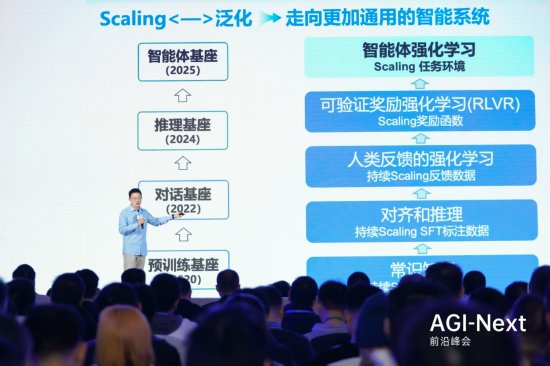
Group 1 - The core viewpoint of the article highlights the rapid improvement of AI large models in human-level testing (HLE) starting from 2025, as stated by Professor Tang Jie from Tsinghua University and founder of Zhipu AI [2] - In 2020, AI large models were only capable of solving basic problems such as MMU and QA. By 2021-2022, they began to develop mathematical reasoning abilities through post-training, addressing foundational reasoning gaps [2] - From 2023-2024, large models evolved from knowledge retention to complex reasoning, enabling them to tackle graduate-level problems and real programming tasks, reflecting a growth process similar to human development from elementary school to the workplace [2] Group 2 - By 2025, models are expected to significantly enhance their capabilities in human-level testing, which includes extremely niche questions that Google cannot retrieve, necessitating strong generalization abilities [2] - The industry has been focusing on improving AI's generalization capabilities through various methods, despite the current limitations in this area [2] - Around 2020, the industry leveraged the Transformer architecture to enhance long-term knowledge retention and direct knowledge retrieval, such as answering basic questions [3] - By 2022, the focus shifted to optimizing alignment and reasoning, enhancing complex reasoning abilities and intent understanding through instruction fine-tuning and reinforcement learning, utilizing extensive human feedback data to improve model accuracy [3] - By 2025, efforts will be made to create verifiable environments for machines to explore autonomously, gather feedback, and achieve self-improvement, addressing the issues of noise in traditional human feedback data and limited scenarios [3]
智谱创始人唐杰谈DeepSeek:很震撼,开启了“AI做事”新范式
Xin Lang Cai Jing· 2026-01-10 13:54
Core Viewpoint - The emergence of DeepSeek in early 2025 is expected to be a significant and surprising development in the AI field, prompting a reevaluation of the direction of AI advancements [2][5]. Group 1: AI Development Paradigms - The current paradigm of AI, focused on chat capabilities, may be nearing its limits, with future advancements likely to be more about engineering and technical challenges [2][5]. - A new paradigm is proposed where AI enables individuals to accomplish specific tasks, moving beyond mere conversational capabilities to practical applications [2][5]. Group 2: Company Innovations - The company, under the leadership of founder Tang Jie, has chosen to integrate AI capabilities in Coding, Agentic, and Reasoning, aiming for a balanced development rather than isolating these abilities [2][5]. - Following the release of GLM-4.5 on July 28, 2025, the company achieved leadership in 12 domestic benchmarks, with the recent GLM-4.7 showing significant improvements in Agent and Coding capabilities compared to its predecessors GLM-4.6 and GLM-4.5 [3][6].
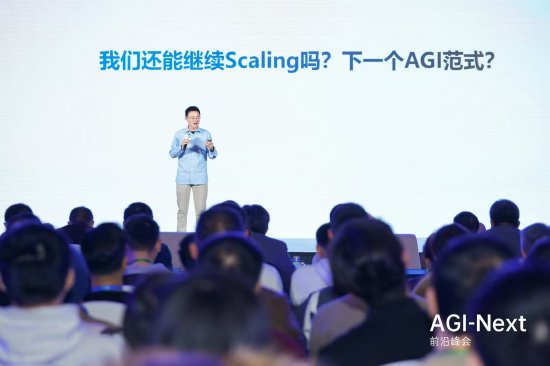
智谱首席科学家唐杰:将推进多模态感统技术,助力AI具身智能落地物理场景
Xin Lang Cai Jing· 2026-01-10 11:13
Core Insights - The future development direction and planning of AGI (Artificial General Intelligence) includes achieving bidirectional scaling, continuously exploring the upper limits of known domains while uncovering new paradigms [1] - In terms of practical applications, the focus is on advancing multimodal sensory technology to support AI's integration into the physical world and work scenarios, thereby realizing embodied intelligence [1] - The initiative aims to facilitate a breakthrough in AI for Science [1]
智谱唐杰:2025年可能是多模态模型的适应年
Xin Lang Cai Jing· 2026-01-10 09:08
Core Viewpoint - The year 2025 may be a disappointing year for multimodal models, as many of them have not garnered significant attention and are still focused on enhancing text intelligence limits [1] Group 1: Multimodal Models - Many multimodal models are currently not receiving much attention and are primarily working on improving text intelligence [1] - The challenge for large models is to collect and unify multimodal information, which remains a shortcoming [1] Group 2: Human Sensory Integration - The concept of native multimodal models is compared to human sensory integration, which involves collecting visual, auditory, and tactile information [1] - The next functionality for models is to advance in the area of sensory integration, similar to how humans sometimes experience sensory coordination issues [1]
光伏退税退场,沪指站稳4100点丨一周热点回顾
Di Yi Cai Jing· 2026-01-10 07:51
其他热点还有:外卖平台迎来反垄断调查,一周之内三家AI企业港交所上市。 光伏产品增值税出口退税取消 继2024年底中国将光伏、电池出口退税率由13%下调至9%后,1月9日财政部、税务总局发布公告,决 定自2026年4月1日起,取消光伏等产品增值税出口退税;自2026年4月1日起至2026年12月31日,将电池 产品的增值税出口退税率由9%下调至6%;2027年1月1日起,取消电池产品增值税出口退税。 当前,光伏产业存在供需错配和无序低价竞争等问题。去年7月初,工业和信息化部召开光伏行业制造 业企业座谈会,提出依法依规、综合治理光伏行业低价无序竞争,引导企业提升产品品质,推动落后产 能有序退出,实现健康、可持续发展。 根据中国光伏行业协会数据,光伏主产业链31家企业2025年前三季度营业收入同比下降16.9%,合计亏 损310.39亿元。受全球光伏产业链价格整体下行影响,我国光伏产品出口额已连续两年同比下降。 【点评】经过多年出口退税支持,我国光伏和电池产业在国际上已经具备竞争优势,但也出现了无序低 价竞争以及其他一些国家反补贴调查等问题。业内人士认为,取消出口退税可看作"反内卷"的另一举 措,意在逼迫企业放弃 ...
“AI双雄”相聚港交所,中国大模型进入上市分水岭
Di Yi Cai Jing Zi Xun· 2026-01-10 03:37
Core Insights - Two major AI model companies, MiniMax and Zhipu, recently listed on the Hong Kong Stock Exchange, with valuations of approximately HKD 700 billion and over HKD 1 trillion respectively, reflecting high market sentiment [2] - MiniMax's stock surged nearly 110% on its first trading day, closing at HKD 345 per share, while Zhipu's stock rose over 20% to HKD 158.6 per share, indicating a significant market differentiation between the two [2][3] - The differing market responses to the two companies are attributed to their distinct commercialization paths, with MiniMax focusing on consumer (C-end) products and Zhipu targeting business (B-end) clients [4] Company Performance - MiniMax's IPO valuation was around HKD 500 billion, with a share price of HKD 165, raising approximately HKD 55.4 billion, while Zhipu's share price was HKD 116.2, raising about HKD 43.5 billion [3] - MiniMax's revenue for the first nine months of 2025 was USD 53.4 million (approximately RMB 380 million), showing a year-on-year growth of 174.7%, while Zhipu's revenue for the same period was RMB 190 million, with a growth of 325% [4] - MiniMax's revenue is expected to be primarily driven by its Talkie application, which is projected to account for nearly 64% of its income in 2024 [4] Market Dynamics - The market is witnessing a shift from the previously discussed "six small dragons" of AI models to a focus on "AI dual heroes," indicating a consolidation of market leadership [8] - MiniMax's diverse revenue structure and significant international capital backing, including investments from sovereign wealth funds, contrast with Zhipu's reliance on local government support [5] - Both companies are currently operating at a loss, with MiniMax's cumulative loss estimated at approximately RMB 9.2 billion and Zhipu's at over RMB 6.2 billion from 2022 to mid-2025 [5] Future Outlook - Industry experts predict that MiniMax needs to enhance its user monetization and cost control to maintain its valuation lead, while Zhipu must overcome scalability limitations in its B-end projects [6] - The listings of MiniMax and Zhipu are seen as a pivotal moment for the Chinese AI industry, marking a transition from pure technology competition to a focus on capital recognition and commercial value [7] - The competitive landscape may evolve further with the emergence of specialized model developers and hardware solution providers, alongside regulatory impacts on data security and cross-border operations [8]