KNOWLEDGE ATLAS(02513)

Search documents
光伏退税退场,沪指站稳4100点丨一周热点回顾
Di Yi Cai Jing· 2026-01-10 07:51
其他热点还有:外卖平台迎来反垄断调查,一周之内三家AI企业港交所上市。 光伏产品增值税出口退税取消 继2024年底中国将光伏、电池出口退税率由13%下调至9%后,1月9日财政部、税务总局发布公告,决 定自2026年4月1日起,取消光伏等产品增值税出口退税;自2026年4月1日起至2026年12月31日,将电池 产品的增值税出口退税率由9%下调至6%;2027年1月1日起,取消电池产品增值税出口退税。 当前,光伏产业存在供需错配和无序低价竞争等问题。去年7月初,工业和信息化部召开光伏行业制造 业企业座谈会,提出依法依规、综合治理光伏行业低价无序竞争,引导企业提升产品品质,推动落后产 能有序退出,实现健康、可持续发展。 根据中国光伏行业协会数据,光伏主产业链31家企业2025年前三季度营业收入同比下降16.9%,合计亏 损310.39亿元。受全球光伏产业链价格整体下行影响,我国光伏产品出口额已连续两年同比下降。 【点评】经过多年出口退税支持,我国光伏和电池产业在国际上已经具备竞争优势,但也出现了无序低 价竞争以及其他一些国家反补贴调查等问题。业内人士认为,取消出口退税可看作"反内卷"的另一举 措,意在逼迫企业放弃 ...
“AI双雄”相聚港交所,中国大模型进入上市分水岭
Di Yi Cai Jing Zi Xun· 2026-01-10 03:37
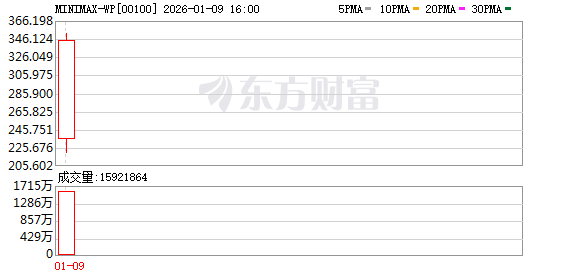
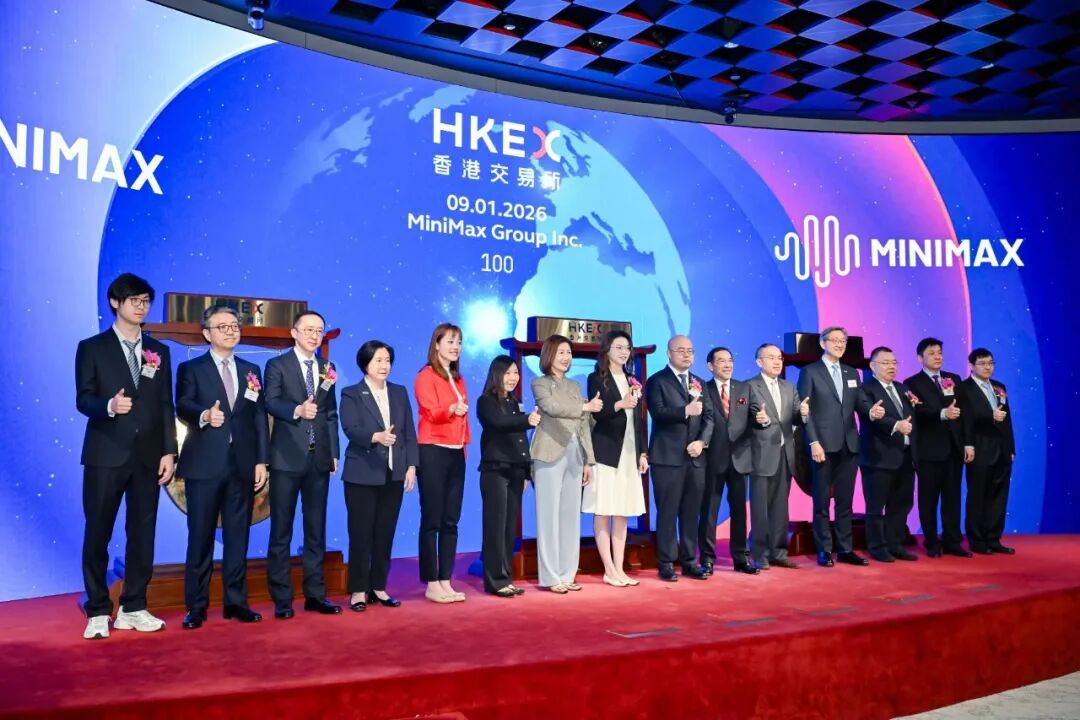
Core Insights - Two major AI model companies, MiniMax and Zhipu, recently listed on the Hong Kong Stock Exchange, with valuations of approximately HKD 700 billion and over HKD 1 trillion respectively, reflecting high market sentiment [2] - MiniMax's stock surged nearly 110% on its first trading day, closing at HKD 345 per share, while Zhipu's stock rose over 20% to HKD 158.6 per share, indicating a significant market differentiation between the two [2][3] - The differing market responses to the two companies are attributed to their distinct commercialization paths, with MiniMax focusing on consumer (C-end) products and Zhipu targeting business (B-end) clients [4] Company Performance - MiniMax's IPO valuation was around HKD 500 billion, with a share price of HKD 165, raising approximately HKD 55.4 billion, while Zhipu's share price was HKD 116.2, raising about HKD 43.5 billion [3] - MiniMax's revenue for the first nine months of 2025 was USD 53.4 million (approximately RMB 380 million), showing a year-on-year growth of 174.7%, while Zhipu's revenue for the same period was RMB 190 million, with a growth of 325% [4] - MiniMax's revenue is expected to be primarily driven by its Talkie application, which is projected to account for nearly 64% of its income in 2024 [4] Market Dynamics - The market is witnessing a shift from the previously discussed "six small dragons" of AI models to a focus on "AI dual heroes," indicating a consolidation of market leadership [8] - MiniMax's diverse revenue structure and significant international capital backing, including investments from sovereign wealth funds, contrast with Zhipu's reliance on local government support [5] - Both companies are currently operating at a loss, with MiniMax's cumulative loss estimated at approximately RMB 9.2 billion and Zhipu's at over RMB 6.2 billion from 2022 to mid-2025 [5] Future Outlook - Industry experts predict that MiniMax needs to enhance its user monetization and cost control to maintain its valuation lead, while Zhipu must overcome scalability limitations in its B-end projects [6] - The listings of MiniMax and Zhipu are seen as a pivotal moment for the Chinese AI industry, marking a transition from pure technology competition to a focus on capital recognition and commercial value [7] - The competitive landscape may evolve further with the emergence of specialized model developers and hardware solution providers, alongside regulatory impacts on data security and cross-border operations [8]

假如智谱上了科创板
Sou Hu Cai Jing· 2026-01-10 03:30
图片由AI生成 顶着"大模型第一股"的名号,智谱AI成功登陆港交所,首日经历了一天跌宕起伏走势之后,以收盘上涨13.17%,报131.5港元/股,市值突破570亿港元收 尾。 事实上,智谱上市后的第二天,也取得了20%的涨幅,市值来到698亿港元,一个相当不错的次日成绩。但这被一些财经博主们归因于是MiniMax的暴力拉 升点燃了港股的"大模型"热情。 一个值得思考的问题是:有着强大国资股东背景,手握众多地方政府与龙头企业订单的智谱,如果坚持在大A上市,有可能走出更好的行情吗? 问题的答案,或许与大多数人的预期的不太一样。 就在次日,MiniMax以收盘上涨109%,报345港元/股,市值突破1000亿港元,成为港交所"大模型第一股"。 智谱之前并非没有尝试过A股。 2025年4月14日,智谱在北京证监局正式办理科创板辅导备案,辅导机构为中金公司。根据辅导计划,智谱将于2025年10月完成全部辅导工作,并提交上市 申请文件,最快将在2025年底前提交IPO上市招股说明书。 但这之后,智谱未收到中国证监会有关建议A股上市的任何意见或查询,这一"沉默的拒绝"是智谱直接投向港股的重要原因。 而复盘这个问题,并非简单 ...

“AI双雄”相聚港交所,中国大模型进入上市分水岭
第一财经· 2026-01-10 03:24
Core Viewpoint - The recent IPOs of MiniMax and Zhipu mark a significant milestone in the Chinese AI industry, showcasing different successful paths and pushing the industry towards capital recognition and commercial value validation [3][10]. Group 1: Company Performance and Market Reaction - MiniMax's stock surged nearly 110% on its first trading day, closing at 345 HKD per share, with a market capitalization exceeding 1050 billion HKD [3][5]. - Zhipu's stock rose over 13% on its debut, continuing to climb over 20% the next day, reaching 158.6 HKD per share and a market cap of 698 billion HKD [3][5]. - Both companies received significant pre-IPO interest, with MiniMax's public offering being oversubscribed by over 1837 times and Zhipu by 1159 times [5]. Group 2: Business Models and Revenue Streams - MiniMax focuses on a consumer-oriented (C-end) global product matrix, with applications like Talkie and Hai Luo AI, accumulating over 200 million users, which attracts higher market premiums [5][6]. - Zhipu targets the government (ToG) and large enterprise (ToB) sectors, with 84.5% of its revenue coming from localized deployment services, leading to stable but slower growth [6][8]. - MiniMax's revenue for the first nine months of 2025 was approximately 53.4 million USD (about 380 million RMB), showing a year-on-year growth of 174.7% [6][8]. Group 3: Investment and Financial Backing - MiniMax attracted more international capital, including investments from sovereign wealth funds, while Zhipu received support from local government capital [7][8]. - MiniMax has raised a total of 1.56 billion USD (approximately 11.1 billion RMB) through seven funding rounds, while Zhipu has raised close to 8.4 billion RMB over eight rounds [8]. Group 4: Future Outlook and Industry Implications - The listings of MiniMax and Zhipu may reshape the competitive landscape of the AI industry, transitioning from a fragmented market to a more concentrated one with a focus on profitability [10][11]. - Industry experts predict that MiniMax's diverse revenue structure could lead to a quicker path to profitability, while Zhipu needs to overcome scalability limitations in its B-end projects [8][10]. - The success of these companies could influence the overall sentiment in the AI industry and impact investment strategies in both domestic and international markets [10][11].

成立仅4年、“人均95后”,这家公司上市大涨109%,创始人:只是刚刚开始!专家:还不能高兴得太早
Mei Ri Jing Ji Xin Wen· 2026-01-10 02:11
Core Insights - Two Chinese AI model companies, MiniMax and Zhizhu, have recently gone public on the Hong Kong Stock Exchange, reflecting strong market interest in AI technology [1][2] - Both companies aim to leverage the current high valuation window in the market to secure funding for their growth and development [2][3] Group 1: Company Listings and Market Response - MiniMax was listed on January 9, 2026, with a closing price increase of 109.09%, reaching a market capitalization of 106.7 billion HKD [1] - Zhizhu listed on January 8, 2026, with a closing price of 158.6 HKD, resulting in a market capitalization of 69.82 billion HKD [1] - MiniMax's IPO attracted significant interest, with a 1,837 times oversubscription in the public offering and 37 times in the international offering, surpassing previous records [2] - Zhizhu's IPO also saw high demand, with a 1,159.46 times oversubscription in the public offering and 15.28 times in the international offering [2] Group 2: Business Models and Strategies - MiniMax focuses on multi-modal AI applications targeting consumer products, while Zhizhu emphasizes a model-as-a-service (MaaS) approach for B2B services [4][5] - MiniMax has launched several AI-native products and aims to serve a global user base, with a significant increase in paid users projected from approximately 119,700 in 2023 to 1,771,600 by 2025 [5][6] - Zhizhu has empowered over 12,000 enterprise clients and 45 million developers through its MaaS platform [5] Group 3: Financial Performance and Challenges - Both companies are currently operating at a loss, with Zhizhu's net losses increasing significantly from 1.44 billion CNY in 2022 to 23.58 billion CNY in the first half of 2025 [9] - MiniMax's losses also grew, with figures reaching 512 million USD for the nine months ending September 2025, attributed to substantial R&D investments [9] - The future market performance of both companies will depend on their ability to balance R&D spending with revenue generation and to transition from technology validation to sustainable profitability [10][11] Group 4: Industry Implications and Future Outlook - The successful listings of MiniMax and Zhizhu may encourage other companies in the AI sector to pursue IPOs, potentially leading to increased market differentiation and consolidation [8][11] - The AI industry is shifting from a "technology race" to "efficiency competition," where the ability to monetize technology effectively will be crucial for long-term success [10][11] - The ongoing competition will likely favor companies that can establish strong technological barriers and effective business models, marking a significant transition in the AI landscape [11]
从“六小龙”到“AI双雄” 中国大模型进入上市分水岭
Di Yi Cai Jing· 2026-01-10 02:06
两家公司在上市前都获得了超千倍的认购,但从开盘来看,MiniMax获得了更多的市场投票。对于 MiniMax的涨幅行业人士多少也有点惊讶,"一开始预测市场看好这家公司,但也不觉得能涨一倍。" 天使投资人、资深人工智能专家郭涛认为,智谱与MiniMax的市值差距或许源于商业化路径的差异,C 端相较B端能获得更多的溢价。 从整个行业来看,两家公司的上市或许也会改写格局,最明显的是,曾经热议的"大模型六小龙"逐渐淡 出,"AI双雄"的说法出现了。一位押注了大模型的投资人认为,两家公司的上市不仅为赛道"定了价", 另一方面"市场地位会完全不一样"。 市值分化背后:商业路径之差 在上市前,两家公司的IPO估值均在500亿港元附近。MiniMax以165港元的定价上限发行,募集资金总 额约 55.4亿港元;智谱的发行价为每股116.2港元,对应募资总额约43.5亿港元。 行业认为,市场对国内大模型公司整体价值认定是相似的,两家公司在市场也都受到了追捧:MiniMax 公开发售部分超额认购倍数超过1837倍,智谱公开发售获得1159倍超额认购。 这两天,两家大模型公司齐聚港交所,估值一个接近700亿港元,一个已经破了千亿港 ...
从“六小龙”到“AI双雄”,中国大模型进入上市分水岭
Di Yi Cai Jing· 2026-01-10 01:54
两家公司的上市不仅为赛道"定了价",市场地位也会"完全不一样"。 这两天,两家大模型公司齐聚港交所,估值一个接近700亿港元,一个已经破了千亿港元,市场情绪高 涨。 1月9日,MiniMax(00100.HK)上市首日大涨近110%,收报345港元/股,总市值超过1050亿港元。此 前一日,智谱(02513.HK)先一步挂牌上市,当天上涨超13%,9日股价继续大涨超20%至158.6港元/ 股,总市值来到698亿港元。 两家公司在上市前都获得了超千倍的认购,但从开盘来看,MiniMax获得了更多的市场投票。对于 MiniMax的涨幅行业人士多少也有点惊讶,"一开始预测市场看好这家公司,但也不觉得能涨一倍。" 天使投资人、资深人工智能专家郭涛认为,智谱与MiniMax的市值差距或许源于商业化路径的差异,C 端相较B端能获得更多的溢价。 从整个行业来看,两家公司的上市或许也会改写格局,最明显的是,曾经热议的"大模型六小龙"逐渐淡 出,"AI双雄"的说法出现了。一位押注了大模型的投资人认为,两家公司的上市不仅为赛道"定了价", 另一方面"市场地位会完全不一样"。 市值分化背后:商业路径之差 在上市前,两家公司的IP ...
成立仅4年,这家公司上市大涨109%!专家:还不能高兴得太早
Mei Ri Jing Ji Xin Wen· 2026-01-09 23:05
Core Insights - Two Chinese AI model companies, MiniMax and Zhizhu, have recently gone public on the Hong Kong Stock Exchange, reflecting a strong market interest in AI companies despite challenges in the A-share market [1][2] - MiniMax's stock surged by 109.09% on its first trading day, closing at HKD 345 per share, with a market capitalization of HKD 106.7 billion, while Zhizhu's stock closed at HKD 158.6, giving it a market cap of HKD 69.8 billion [1][2] - Both companies aim to leverage the current high valuation window in the market to secure funding for their growth and development [2][3] Company Summaries MiniMax - MiniMax focuses on multi-modal AI applications and has launched several AI-native products, including MiniMax Agent and MiniMax Audio, targeting consumer markets [4][5] - The company has seen significant growth in its paid user base, increasing from approximately 119,700 in 2023 to an estimated 1.77 million by September 2025 [5] - MiniMax emphasizes its commitment to AGI (Artificial General Intelligence) and aims to accelerate technological iteration rather than just focusing on revenue growth [6][9] Zhizhu - Zhizhu operates on a MaaS (Model as a Service) model, providing services to B-end clients and developers, and has empowered over 12,000 enterprise clients and 45 million developers globally [5] - The company has also experienced substantial user engagement, with its IPO being oversubscribed by 1,159.46 times in the public offering segment [2][5] - Despite its growth, Zhizhu has faced increasing losses, with net losses expanding from CNY 144 million in 2022 to CNY 2.36 billion in the first half of 2025 [9] Market Dynamics - The capital market has shown strong enthusiasm for AI companies, with MiniMax attracting HKD 27.23 billion in subscriptions from 14 cornerstone investors, including major institutions like Alibaba [2] - Both companies are navigating a competitive landscape characterized by the risk of homogenization, as they strive to differentiate their offerings in a crowded market [7][9] - The industry is transitioning from a "technology race" to "efficiency competition," where the ability to balance R&D investment with commercial returns will be crucial for long-term success [10][11]
MiniMax对决智谱,谁才算“六小虎”领军者?
3 6 Ke· 2026-01-09 12:27
Core Insights - The large model market is experiencing significant activity with the IPOs of Zhipu and MiniMax, highlighting a shift in market dynamics towards consumer-oriented models [1][3] - MiniMax's stock surged by 109.09% on its first trading day, outperforming Zhipu, which indicates a market preference for consumer-facing applications [1][3] - The current competitive landscape shows a divergence from previous AI companies focused on B2B, with MiniMax representing a new wave of consumer engagement [1][3] Company Performance - MiniMax's revenue for the first nine months of the previous year exceeded $50 million, indicating a willingness among overseas consumers to pay for its services [10] - The company has a small team of over 400 employees, with only about 20 working overseas, yet it has managed to innovate and reach international markets [6][7] - MiniMax's business model includes enterprise services and consumer applications, with a focus on balancing profitability across its offerings [20] Market Trends - The shift towards consumer applications is evident as MiniMax embraces new market opportunities, contrasting with previous AI companies that primarily targeted B2B [5][15] - The competitive environment is intensifying, with rising costs leading to potential price increases for AI services, as seen with ChatGPT's Pro version pricing [13] - The market is witnessing a bifurcation where companies are either focusing on B2B or C2D models, with MiniMax preparing to target Southeast Asian enterprise clients [15][19] Legal and Regulatory Challenges - MiniMax faces legal challenges, including lawsuits from major entertainment companies over copyright issues, which could impact its financial stability [23][25] - The company must navigate a complex landscape of content regulation and copyright enforcement, which poses risks to its business model [25] Financial Outlook - The financial performance of MiniMax and Zhipu is under scrutiny, with concerns about their ability to sustain growth amidst rising operational costs and competitive pressures [19][27] - The IPOs of both companies have attracted significant investment, but there are questions about whether their stock performance will mirror that of previous AI companies like SenseTime [27]
智谱、MiniMax港股上市狂飙,谁在IPO中收割红利?
Sou Hu Cai Jing· 2026-01-09 12:08
Core Insights - The recent IPOs of Zhipu AI and MiniMax mark a significant milestone for the Hong Kong stock market, highlighting the entry of major AI players into the capital market [1] - Zhipu AI, as the first global large model company to go public, raised HKD 4.348 billion with a market capitalization of HKD 57.89 billion at IPO, while MiniMax saw a 109% increase in its stock price on the first day of trading [1] - Despite the excitement surrounding these IPOs, Zhipu AI faces challenges such as an imbalanced revenue structure, high computing costs, and a debt exceeding HKD 10 billion, raising questions about its future sustainability [1] IPO Performance - Zhipu AI's IPO was characterized by a strong demand, with a subscription rate of 910 times, indicating intense investor interest [6] - The stock opened at HKD 131.5, a 13.17% increase from its IPO price, and closed at HKD 158.6, with a market cap of HKD 698 billion [6] - Early investors in Zhipu AI, including major firms like Meituan and Ant Group, have seen substantial returns, with valuations skyrocketing from HKD 800 million in Series A to HKD 26 billion before the IPO [7][8] Financial Performance - Zhipu AI's revenue is projected to grow from HKD 57.41 million in 2022 to HKD 312 million in 2024, reflecting a compound annual growth rate of 130% [11] - However, the company is experiencing increasing adjusted net losses, projected to reach HKD 2.466 billion by 2024, primarily due to high R&D expenditures [11][12] - The company's gross margins are fluctuating, with 2022 at 54.6%, 2023 at 64.6%, and a drop to 56.3% in 2024, indicating potential profitability concerns [11] Revenue Structure - The majority of Zhipu AI's revenue comes from localized deployment, which accounted for 84.8% of total revenue in the first half of 2025, maintaining a gross margin of 59% [12] - In contrast, the cloud deployment segment is struggling with negative margins, attributed to aggressive pricing strategies to capture market share [13] - High customer concentration poses a risk, with the top five clients contributing 45.5% of revenue, indicating a need for diversification [13] Debt and Financial Health - Zhipu AI's debt has surged from HKD 542 million in 2022 to HKD 11.252 billion by mid-2025, resulting in a negative net asset position of HKD 6.151 billion [14] - The recent IPO proceeds of HKD 4.3 billion may alleviate short-term debt pressures, but long-term sustainability hinges on effective commercialization strategies [14] Industry Context - The IPO of Zhipu AI serves as a valuation benchmark for the large model industry, with a price-to-sales ratio of approximately 147 times based on 2024 revenue projections [15] - The Chinese large language model market is expected to grow significantly, from HKD 5.3 billion in 2024 to HKD 101.1 billion by 2030, with increasing market concentration favoring established players [15] - The future of Zhipu AI will be closely watched as it navigates the competitive landscape against global giants like OpenAI, emphasizing the importance of technological advancement and sustainable business models [16]