JD LOGISTICS(02618)

Search documents
港股开盘丨恒指涨0.15% 京东物流涨逾6%



Xin Lang Cai Jing· 2026-03-06 05:13
Group 1 - The Hang Seng Index opened up by 0.15% [1] - The Hang Seng Tech Index increased by 0.47% [1] - JD Logistics rose by over 6% [1] - JD Health and Trip.com Group both increased by over 3% [1] - NetEase, JD Group, and Xiaomi Group showed significant gains [1]
A股电网股掀涨停潮,恒生科技涨超3%,京东物流涨超20%,黄金白银拉升
21世纪经济报道· 2026-03-06 04:13
Market Overview - A-shares opened lower but rose during the morning session, with the Shanghai Composite Index slightly up, surpassing 4100 points, and the Shenzhen Component Index up by 0.8% [1] - The overall market saw over 4400 stocks rising [1] Index Performance - Shanghai Composite Index: 4118.68 (+10.12, +0.25%) [2] - Shenzhen Component Index: 14201.73 (+112.89, +0.80%) [2] - ChiNext Index: 1771.07 (+22.53, +1.29%) [2] - All A-shares Index: 6786.73 (+51.79, +0.77%) [2] - Growth in various indices indicates a positive market sentiment [2] Sector Performance - The electric grid sector remained active, with smart grid concepts seeing a surge, leading to multiple stocks hitting the daily limit [2] - Agricultural stocks rebounded, with significant gains in pork and chicken concepts, including stocks like Xiangjia Co. and Juxing Agriculture [3] - The tungsten sector saw rapid growth, with Zhangyuan Tungsten nearing the daily limit, driven by rising procurement prices [3] - The medical sector experienced a breakout, particularly in medical services, with stocks like International Medicine hitting the daily limit [3] International Market Influence - Major tech companies, including Microsoft and Google, signed a commitment for self-supply of electricity, indicating a growing demand for energy in data centers, projected to double by 2030 [3] - The State Grid Corporation of China plans to implement ten initiatives to support high-quality development of new energy, enhancing cross-province transmission capacity by 35% [3] Downward Trends - Oil and gas stocks led the decline, with companies like China Merchants Energy dropping over 8% [4] - International oil prices fell, with WTI and ICE Brent crude down by over 1% [4] Hong Kong Market Performance - Hong Kong's major indices opened higher, with the Hang Seng Technology Index up over 3% and the Hang Seng Biotechnology Index nearly 4% [4] - JD Group reported a 1.5% year-on-year increase in Q4 net revenue, while JD Logistics projected an 18.8% revenue growth by 2025 [4]


港股大涨!恒生科技指数涨超3%,京东大涨7%,腾讯、阿里涨超3%,京东物流暴涨20%|盘中速报
Mei Ri Jing Ji Xin Wen· 2026-03-06 03:31
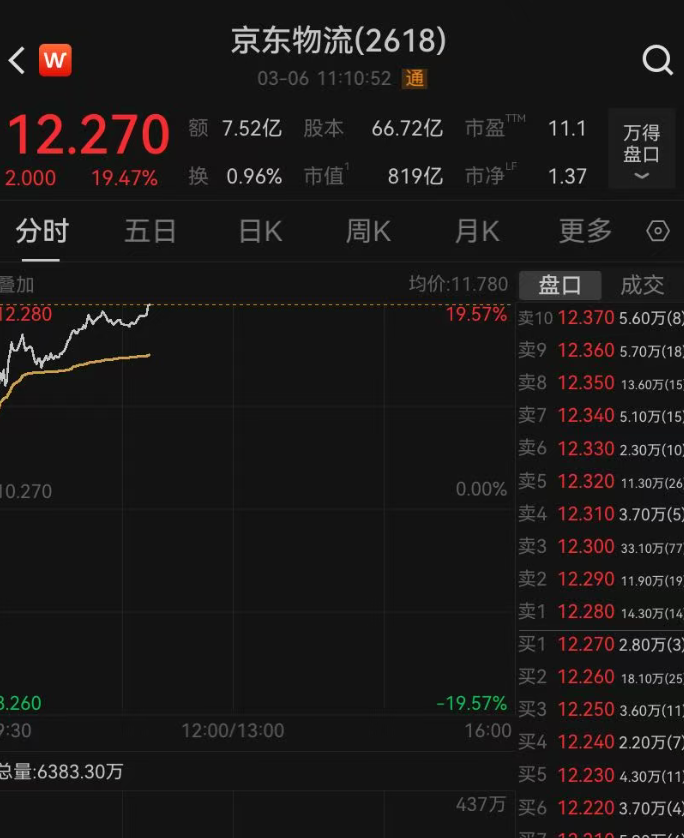
Group 1 - The Hong Kong stock market experienced a significant rise on March 6, with the Hang Seng Technology Index increasing by over 3% [1] - Major companies such as JD Group and Trip.com saw their stock prices rise by over 7%, while NetEase increased by over 5% [1] - The Hang Seng Index rose by 1.5%, and JD Logistics experienced a notable surge of 20% [1] Group 2 - JD Logistics' stock price reached 12.270, with a market capitalization of 819 billion [2] - The stock showed a 19.57% increase, indicating strong market performance [2] - The trading volume for JD Logistics was reported at 63.83 million shares [2]
恒生科技指数,涨超3%
财联社· 2026-03-06 03:18
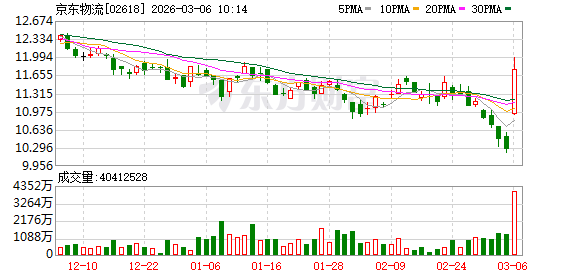
Group 1 - The Hong Kong stock market opened high and continued to rise, with the Hang Seng Technology Index increasing by over 3% and the Hang Seng Index rising by 1.5% [2] - JD Logistics saw a significant increase of over 18%, while JD Group rose by over 7% and NetEase increased by over 5% [2]

大行评级丨美银:京东物流去年第四季业绩胜预期,重申“买入”评级
Ge Long Hui· 2026-03-06 03:05
Core Viewpoint - Bank of America Securities reports that JD Logistics exceeded expectations in Q4 of last year, driven by a decrease in operating expenses [1] Group 1: Financial Performance - Management is optimistic about the outlook for fiscal year 2026, guiding for revenue growth of 20% to 25% and non-IFRS net profit growth of 25% to 30% [1] - If these targets are met, it implies an upside potential of 15% to 20% on current profit forecasts, exceeding the most optimistic investor assumptions by approximately 10% to 15% [1] Group 2: Valuation and Rating - The projected price-to-earnings ratio for fiscal year 2026 is expected to be below 7 times [1] - The firm maintains a "Buy" rating on the stock with a target price of HKD 15 [1]
港股京东物流盘中涨超16%
Mei Ri Jing Ji Xin Wen· 2026-03-06 02:13
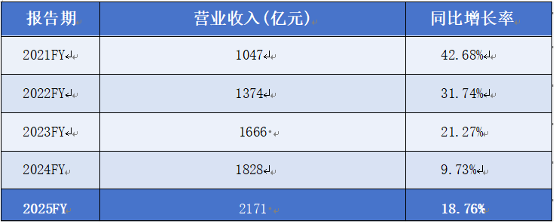
Core Viewpoint - JD Logistics (02618.HK) experienced a significant stock price increase, rising over 16% during trading, and closing with a gain of 14.3% following the release of its 2025 annual performance report [2] Financial Performance - The company reported total revenue of 217.1 billion yuan for the year, reflecting a year-on-year growth of 18.8% [2] - Adjusted net profit for the year reached 7.71 billion yuan [2]
海外仓面积翻倍,京东物流2025年营收突破2000亿元大关
Bei Ke Cai Jing· 2026-03-06 02:00
Core Insights - JD Logistics achieved a total revenue of 217.1 billion yuan in 2025, marking an 18.8% year-on-year growth and a net profit of 7.71 billion yuan [1] Group 1: Integrated Supply Chain Business - The integrated supply chain business generated 116.2 billion yuan in revenue, a 33.0% increase year-on-year, and accounted for 53.5% of total revenue, up from 47.8% the previous year [2] - Revenue from external integrated supply chain clients reached 35.9 billion yuan, growing by 11.2%, with the number of clients exceeding 91,000, a 13.0% increase [2] - The average revenue per client was 394,000 yuan, and the fourth quarter saw a remarkable 44.5% year-on-year growth in client revenue, indicating accelerated business growth [3] Group 2: Global Expansion and Operational Efficiency - JD Logistics successfully doubled its self-operated overseas warehouse area, with nearly 200 warehouses globally, covering 25 countries and regions [4] - The company launched its self-operated express brand "JoyExpress" in key European and Middle Eastern markets, achieving full coverage of "211 time-limited delivery" services [4] - The first overseas "Smart Wolf Warehouse" in the UK has been put into operation, demonstrating the global replicability of its automated solutions [4] Group 3: Cost Management and Future Investments - The gross profit margin for JD Logistics decreased to 9.1% from 10.2% the previous year, with operating costs rising by 20.3% to 197.4 billion yuan, outpacing revenue growth [4] - Employee compensation and benefits reached 79.9 billion yuan, a 29.8% increase, reflecting the growth in the number of full-time delivery personnel [4] - The company plans to invest 22 billion yuan over the next five years to provide 150,000 "Little Brother Homes" to improve living conditions for delivery personnel [4][5] - JD Logistics aims to procure 3 million robots, 1 million unmanned vehicles, and 100,000 drones over the next five years to enhance its logistics supply chain [5]
京东物流早盘涨超15% 全年收入同比增长18.80%
Xin Lang Cai Jing· 2026-03-06 01:54
Core Viewpoint - JD Logistics reported strong annual performance with total revenue reaching 217.1 billion yuan, a year-on-year increase of 18.8%, and an adjusted net profit of 7.71 billion yuan, indicating robust growth in the logistics sector [6]. Group 1: Financial Performance - Total revenue for the year was 217.1 billion yuan, reflecting an 18.8% year-on-year growth [6]. - Adjusted net profit reached 7.71 billion yuan, showcasing significant profitability [6]. Group 2: Industry Position - JD Logistics has maintained its leading position in the integrated supply chain sector, focusing on core areas of development [6]. - In the fourth quarter, revenue from the integrated supply chain segment grew by 44.5% year-on-year, further solidifying its industry leadership [6]. Group 3: Market Reaction - The stock price of JD Logistics rose by 15.39% in early trading, reaching 11.85 HKD, with a trading volume of 375 million HKD [1][4].
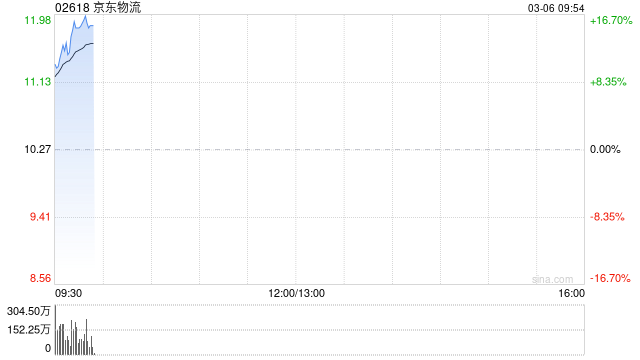
京东物流高开逾6% 全年收入同比增长18.8% 首次突破2000亿元大关
Zhi Tong Cai Jing· 2026-03-06 01:33
Core Viewpoint - JD Logistics reported strong annual performance with total revenue reaching 217.1 billion yuan, a year-on-year increase of 18.8%, and adjusted net profit of 7.71 billion yuan, indicating robust growth in the logistics sector [1] Financial Performance - Total revenue for the year was 217.1 billion yuan, reflecting an 18.8% year-on-year growth [1] - Adjusted net profit reached 7.71 billion yuan, showcasing significant profitability [1] - In the fourth quarter, integrated supply chain revenue grew by 44.5% year-on-year, leading the industry [1] Strategic Developments - By December 31, 2025, JD Logistics plans to operate over 1,600 warehouses with a total managed storage area exceeding 34 million square meters [1] - The company successfully achieved its strategic goal of doubling self-operated overseas warehouse area, with new warehouses opened in multiple countries including the USA, UK, France, Poland, South Korea, Vietnam, and Saudi Arabia [1] - As of the end of 2025, JD Logistics aims to cover 25 countries and regions globally [1] - The company launched its self-operated express brand "JoyExpress" in key countries such as Saudi Arabia, the UK, France, Germany, and the Netherlands [1]
观点直击 | 京东物流:消化德邦、全球出击以及利润通道(实录)
Xin Lang Cai Jing· 2026-03-05 17:23
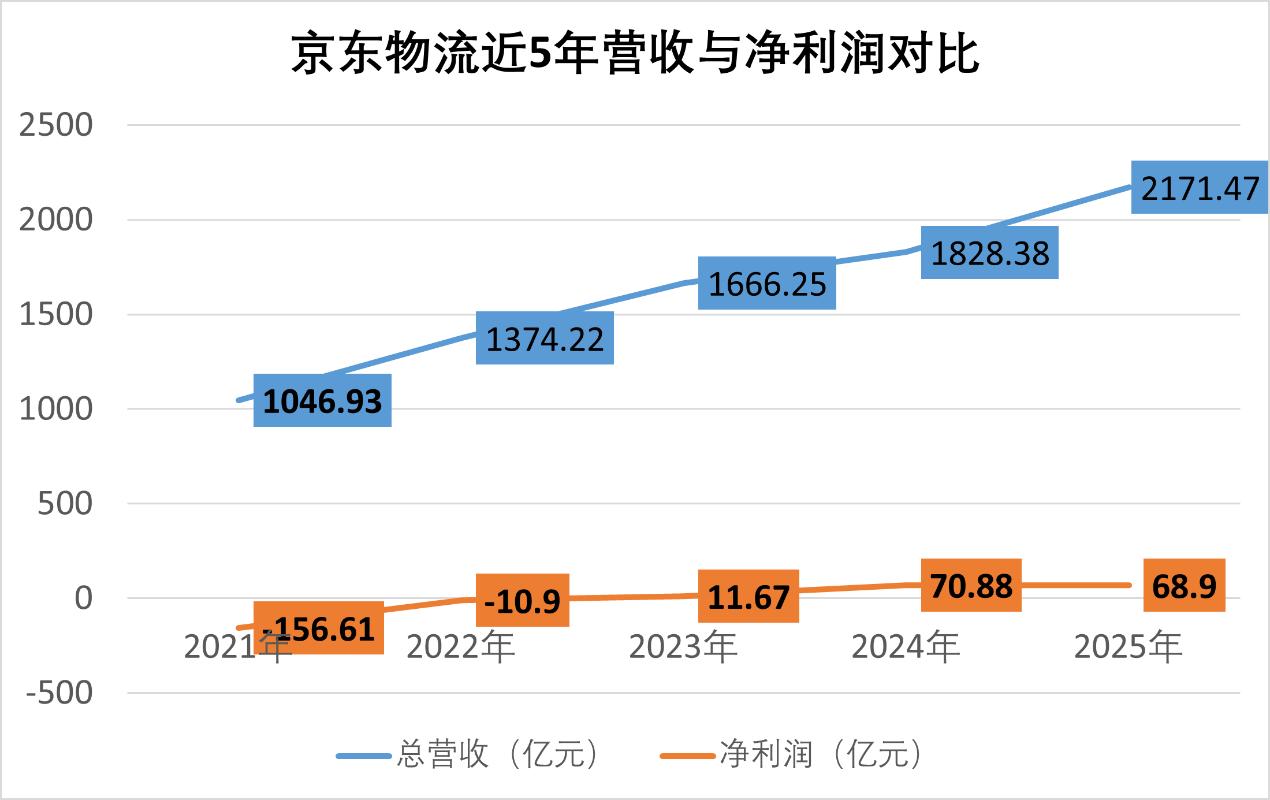
Core Viewpoint - JD Logistics is experiencing fluctuating profits despite a steady increase in revenue, raising questions about when it will overcome its profitability bottleneck [1] Financial Performance - In 2025, JD Logistics reported total revenue of 217.15 billion yuan, an 18.8% increase year-on-year; net profit attributable to shareholders was 6.65 billion yuan, up 7.2%; gross profit was 19.77 billion yuan, a 5.7% increase from 18.7 billion yuan the previous year; annual profit was 6.89 billion yuan, down 2.8% from 7.09 billion yuan [1] - Adjusted net profit for 2025 was 7.71 billion yuan, a 2.6% decrease; adjusted EBITDA was 20.60 billion yuan, a 1.3% increase from 20.34 billion yuan; adjusted EBITDA margin was 9.5%, down 1.6 percentage points from the previous year [1] Cost Reduction and Efficiency Improvement - JD Logistics management acknowledged a decline in profit margins for 2025 but expressed confidence in overall growth for 2026, attributing this to ongoing investments in cost reduction and efficiency improvements [3] - The integrated supply chain business, a key focus for JD Logistics, generated revenue of 116.2 billion yuan in 2025, a 33.0% increase; external integrated supply chain customer revenue was 35.9 billion yuan, up 11.2% [4] Customer Base and Market Expansion - The number of external integrated supply chain customers grew to 91,161, a 13% increase year-on-year; in Q4 2025, revenue from integrated supply chain logistics services was 35.6 billion yuan, accounting for 56.6% of total revenue, up nearly 10 percentage points from the previous year [5] - In 2025, revenue from JD Group was 80.3 billion yuan, accounting for 37% of total revenue, while revenue from external customers reached 136.8 billion yuan, making up 63% of total revenue, reflecting a 7.1% year-on-year increase [9][10] Strategic Acquisitions - JD Logistics completed the acquisition of the remaining 36.43% equity in Kuaixun Express in March 2025, achieving 100% ownership; in February 2026, it gained approximately 99.7% ownership of Debon Logistics, which is expected to stabilize profit levels [5][6] Global Expansion and Partnerships - JD Logistics is focusing on strengthening its presence in Europe, particularly in the UK, Germany, the Netherlands, and France, aiming for same-day and next-day delivery services [13] - A strategic cooperation memorandum was signed with DHL to enhance logistics capabilities in Europe, leveraging DHL's extensive end-network and cross-border advantages [14] Technology and Automation - JD Logistics is investing in AI technology across various logistics processes, including warehousing, sorting, and transportation, to optimize efficiency and reduce costs [21] - Capital expenditure is expected to be slightly higher than the 3%-4% range in 2025, with increased investments in warehouse automation and unmanned vehicles anticipated for 2026 [22]