
EVERGRANDE(03333)

Search documents
被强制执行15.58亿境外资产!许家印前妻丁玉梅更多资产曝光:加拿大、新加坡两家银行各5亿元、瑞士银行4亿
Sou Hu Cai Jing· 2025-11-27 03:55
【免责声明】本文仅代表作者本人观点,与和讯网无关。和讯网站对文中陈述、观点判断保持中立,不 对所包含内容的准确性、可靠性或完整性提供任何明示或暗示的保证。请读者仅作参考,并请自行承担 全部责任。邮箱:news_center@staff.hexun.com 格隆汇11月27日|11月26日,香港高等法院批准处于清算状态的中国恒大集团变更禁制令申请,允许其 在泽西岛、直布罗陀、加拿大及新加坡四地,对许家印前妻丁玉梅提起司法程序,强制执行价值超2.2 亿美元(约合人民币15.58亿元)的境外资产。 香港高等法院审理查明,丁玉梅在指定司法管辖区的资产分布集中且规模庞大:加拿大皇家银行账户存 有1亿加元(约合人民币5.03亿元),嘉盛莱宝银行新加坡有限公司银行账户存有7100万美元(约合人 民币5.03亿元),瑞士银行(直布罗陀)有限公司银行账户资产达5760万美元(约合人民币4.08亿 元),泽西岛巴克莱银行账户亦有67.5万英镑存款(约合人民币629.8万元)。 ...
香港法院批准恒大追讨丁玉梅2.2亿美元海外资产
Sou Hu Cai Jing· 2025-11-27 03:28
Core Viewpoint - The Hong Kong High Court has approved Evergrande Group's application to expand the injunction, allowing the liquidators to initiate legal proceedings against Ding Yumei, the ex-wife of Xu Jiayin, in multiple jurisdictions to enforce claims on her assets valued over $220 million (approximately 1.558 billion RMB) [1] Group 1: Legal Developments - The court's decision marks a significant judicial progress for Evergrande, which is currently in liquidation [1] - Ding Yumei's assets are distributed across various jurisdictions, including Gibraltar, Canada, Singapore, and Jersey, with substantial amounts held in different banks [1] - The Hong Kong court has issued a global asset freeze order, permitting Ding Yumei to withdraw only £20,000 monthly for living expenses and £350,000 for legal fees [4] Group 2: Asset Details - Ding Yumei's assets include $57.6 million in a Swiss bank account in Gibraltar, CAD 100 million in the Royal Bank of Canada, $71 million in a Singapore bank, and £675,000 in a Barclays account in Jersey [1] - Additional reported assets include three luxury homes in Vancouver valued at approximately CAD 280 million (about 1.426 billion RMB), $570 million in a Swiss bank, and a trust holding HKD 12 billion in Liechtenstein [9] Group 3: Personal Background and Lifestyle - Ding Yumei, born in January 1957, has been living a lavish lifestyle abroad, reportedly owning a £500 million mansion in London and engaging in high-end activities [3] - Following her "technical divorce" from Xu Jiayin, she moved overseas with her children and grandchildren, acquiring Canadian citizenship [3] Group 4: Legal Challenges and Responses - Ding Yumei has been characterized as uncooperative in legal proceedings, complicating the verification of her compliance with the injunction [4] - Despite the court's restrictions, she reportedly spent $4 million (approximately 28.9 million RMB) in a short period, exceeding the allowed monthly expenses [4] - Her legal team has argued against the claims, stating that the actions taken by Evergrande constitute undue pressure [4]


许家印前妻 突发!
Zhong Guo Ji Jin Bao· 2025-11-26 14:00
Core Points - The Hong Kong court has expanded the asset freeze against Ding Yumei, the ex-wife of Evergrande founder Xu Jiayin, to include approximately $220 million in assets across Canada, Gibraltar, Jersey, and Singapore [1][3] - This ruling is seen as a procedural victory for the liquidators of Evergrande, who are pursuing around $6 billion in debts [3] - The court's decision allows Evergrande to seek local court orders in the mentioned jurisdictions to enforce the asset freeze, as many banks have stated that the existing court orders from Hong Kong and the UK are insufficient for them to act [4][5] Summary by Jurisdiction - **Canada**: Ding Yumei holds approximately 137 million CAD in three accounts across various banks, including 10 million CAD at Bank of Montreal, 28 million CAD at Canadian Imperial Bank of Commerce, and 100 million CAD at Royal Bank of Canada [4] - **Gibraltar**: Assets include approximately $57.6 million at Bank J. Safra Sarasin [4] - **Jersey**: Assets include approximately £675,593.61 at Barclays Bank Plc [4] - **Singapore**: Assets include approximately $71 million at Bank J. Sarasin Limited Singapore [4] Legal Proceedings - Evergrande has been granted permission by the Hong Kong High Court to initiate proceedings in Jersey, Gibraltar, Canada, and Singapore to seek local recognition and enforcement of the asset freeze [5] - The court emphasized that the scope of these actions is limited to asset preservation and does not allow for new claims or broader litigation in other jurisdictions [5]
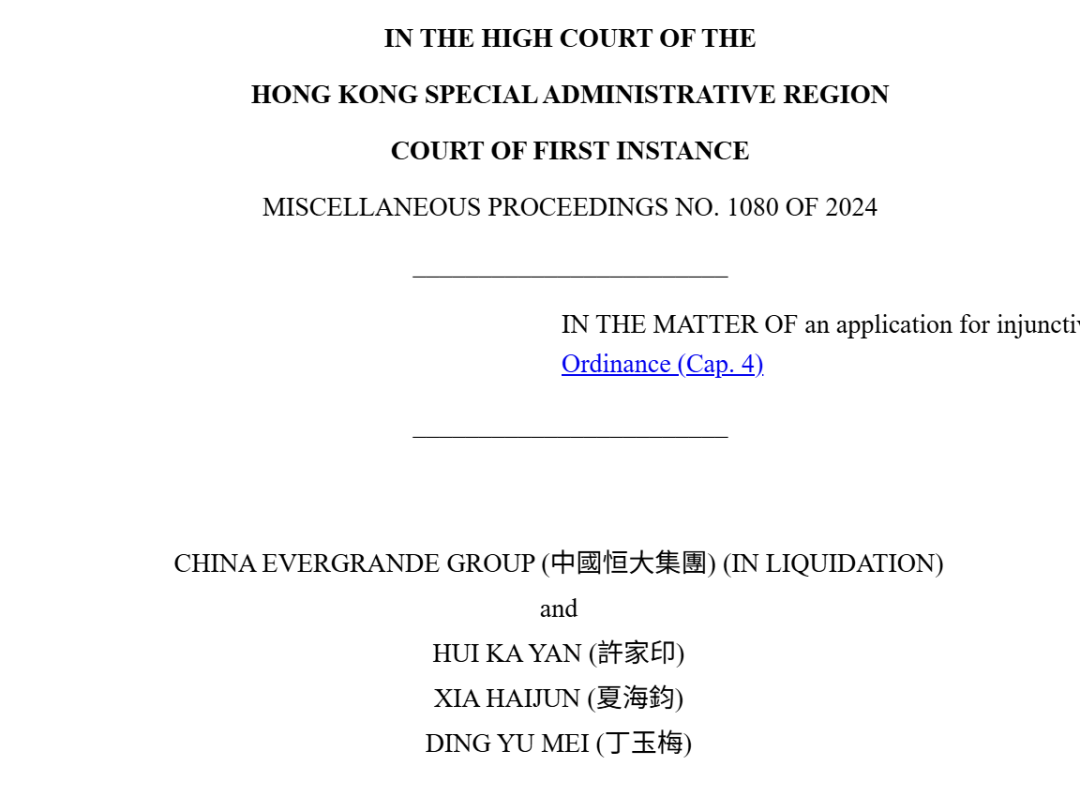
许家印前妻,突发
Zhong Guo Ji Jin Bao· 2025-11-26 13:41
Core Viewpoint - The Hong Kong court has expanded the asset freeze on Ding Yumei, the ex-wife of Evergrande founder Xu Jiayin, encompassing approximately $220 million in assets across Canada, Gibraltar, Jersey, and Singapore, as part of efforts to recover around $6 billion in debts owed by the troubled real estate company [1][3]. Group 1: Asset Details - Ding Yumei holds approximately 137 million CAD in three Canadian bank accounts, with total assets exceeding $220 million across various jurisdictions [1]. - The assets include approximately 9 million CAD at Bank of Montreal, 28 million CAD at Canadian Imperial Bank of Commerce, and 100 million CAD at Royal Bank of Canada [4]. - In Gibraltar, she has assets valued at approximately $57.6 million at Bank J. Safra Sarasin, and in Singapore, about $71 million at Bank J. Sarasin Limited [4]. Group 2: Legal Proceedings - The Hong Kong High Court's ruling is seen as a procedural victory for the liquidators of Evergrande, allowing them greater scope to pursue asset recovery [3]. - Evergrande has previously obtained a global asset freeze order against Ding Yumei in Hong Kong, which was mirrored by a similar order in the UK [3]. - The court has permitted Evergrande to seek local court orders in Jersey, Gibraltar, Canada, and Singapore to enforce the asset freeze, while limiting the scope of these actions to asset preservation only [5].
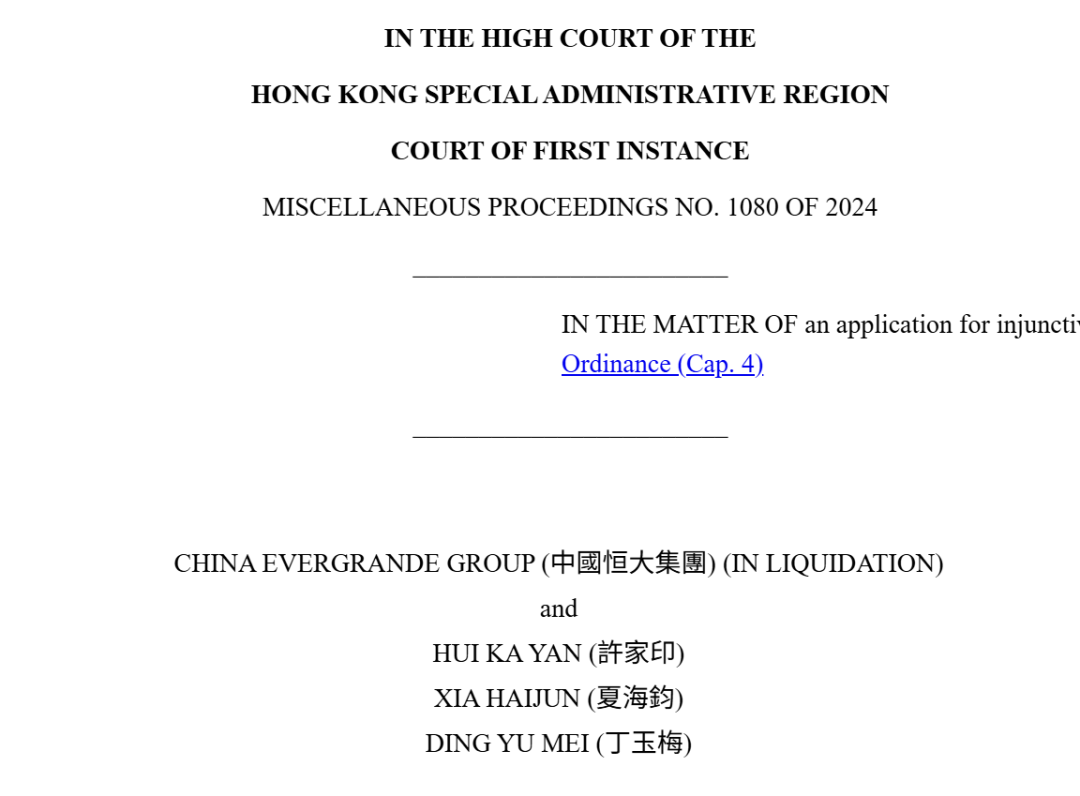
15.58亿元!许家印前妻丁玉梅更多资产曝光
Sou Hu Cai Jing· 2025-11-26 12:42
Core Viewpoint - The Hong Kong High Court has approved China Evergrande Group's application to change the injunction, allowing it to initiate legal proceedings against Ding Yumei, the ex-wife of Xu Jiayin, in Jersey, Gibraltar, Canada, and Singapore to enforce overseas assets valued at over $220 million (approximately RMB 1.558 billion) [1]. Group 1 - The court found that Ding Yumei has significant assets in specified jurisdictions, including CAD 100 million (approximately RMB 503 million) in a Royal Bank of Canada account, $71 million (approximately RMB 503 million) in a bank account with Jardine Matheson in Singapore, $57.6 million (approximately RMB 408 million) in a Gibraltar-based Swiss bank account, and £675,000 (approximately RMB 6.298 million) in a Barclays Bank account in Jersey, totaling over $220 million [3][5]. - Evergrande's lawyers indicated that Ding Yumei has taken a "generally uncooperative attitude" towards legal proceedings in Hong Kong and the UK, evidenced by her sudden change in stance regarding the disposal of a property in Hong Kong and refusal to provide details on the redemption of funds from the Jardine Matheson bank account [5]. - Ding Yumei's defense argues that there is no intention to dissipate assets, claiming that Evergrande's application would impose significant cross-border legal fees on her, constituting undue pressure, and that the court should await the outcome of her prior application to lift the injunction [5].
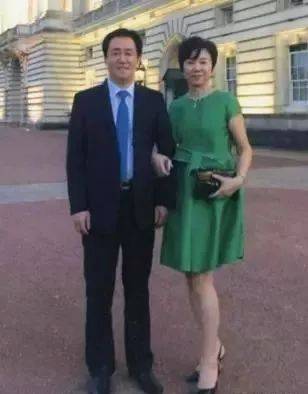
许家印前妻,突发!
中国基金报· 2025-11-26 12:13
Group 1 - The Hong Kong court has expanded the asset freeze against Ding Yumei, the ex-wife of Evergrande founder Xu Jiayin, to include approximately $220 million in assets across Canada, Gibraltar, Jersey, and Singapore [2][5][6] - This ruling is seen as a procedural victory for the liquidators of Evergrande, who are pursuing around $6 billion in debts, although actual asset recovery and repayment to creditors remain slow [5][6] - Ding Yumei is required to disclose her asset situation, which includes significant holdings in various jurisdictions, with a total exceeding $220 million [6][8] Group 2 - The assets frozen include approximately 137 million Canadian dollars in three Canadian bank accounts, along with assets in Gibraltar, Jersey, and Singapore [2][7] - The Hong Kong High Court has previously issued a global asset freeze order against Ding Yumei, which was followed by a similar order from the UK court [6][8] - Evergrande has been authorized to seek local court orders in Jersey, Gibraltar, Canada, and Singapore to enforce the asset freeze, while Ding Yumei argues that facing multiple legal proceedings would impose significant pressure [8]

许家印前妻丁玉梅更多资产曝光:加拿大、新加坡两家银行各5亿,瑞士银行4亿元
Mei Ri Jing Ji Xin Wen· 2025-11-26 10:56
Core Viewpoint - The Hong Kong High Court has approved China Evergrande Group's application to change the injunction, allowing it to initiate legal proceedings against Ding Yumei, the ex-wife of Xu Jiayin, in multiple jurisdictions to enforce claims on over $220 million in overseas assets [1][3]. Group 1: Legal Proceedings and Asset Recovery - The court's decision stems from Evergrande's jurisdiction variation summons submitted on September 27, 2024, which sought to expand the legal reach beyond Hong Kong, the UK, the Cayman Islands, and the British Virgin Islands [1]. - Ding Yumei has acknowledged holding multiple assets valued at no less than £150,000 in jurisdictions including the UK, Jersey, Gibraltar, Canada, Singapore, Hong Kong, and mainland China [3]. - Evergrande's lawyers have notified banks in Hong Kong and the UK regarding the injunctions to facilitate the freezing of Ding Yumei's accounts [3]. Group 2: Asset Details and Financial Implications - The assets identified include CAD 100 million (approximately RMB 503 million) in the Royal Bank of Canada, USD 71 million (approximately RMB 503 million) in a Singapore bank, USD 57.6 million (approximately RMB 408 million) in a Gibraltar bank, and £675,000 (approximately RMB 6.3 million) in a Jersey bank, totaling over $220 million [3]. - The High Court noted Ding Yumei's non-cooperative stance towards legal proceedings, complicating Evergrande's ability to verify compliance with the injunctions [4]. Group 3: Court's Rationale and Previous Judgments - The court referenced the Dadourian guidelines, emphasizing that Ding Yumei's non-cooperation reinforced the risk of asset dissipation, justifying the need for the injunction [8]. - The High Court had previously issued a global injunction against Xu Jiayin, prohibiting the disposal of assets valued up to $7.7 billion (approximately RMB 55 billion) [8]. - Xu Jiayin was ordered to disclose all assets valued at no less than HKD 50,000, but he failed to comply, leading to the appointment of a liquidator for his assets [8].
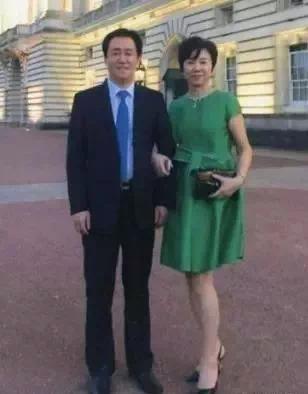
恒大清盘追资再获突破,全球冻结许家印前妻超15亿元资产
Mei Ri Jing Ji Xin Wen· 2025-11-26 10:50
丁玉梅一方抗辩称,其无资产耗散意图,恒大的申请将导致其承担巨额跨国律师费,构成不当压迫,且 应等待其此前提出的"解除禁制令申请"判决结果。 对此,香港高等法院援引"达杜里安指引(the Dadourian guidelines)"核心原则作出回应:首先,原中国 香港及英国禁制令已认定丁玉梅存在"切实耗散风险",其不合作行为进一步强化了这一判断;其次,被 告过往遵守禁制令不能成为拒绝未来执行保障的理由,缺乏本地法院命令的临时冻结不具备稳定性;再 者,恒大的申请具有严格限制性,仅允许针对禁制令执行提起诉讼,不涉及其他民事或刑事诉求,且限 定于有明确资产分布的司法管辖区,符合"公正且便利"原则。 据《每日经济新闻》报道,今年10月,香港高等法院判决恒大清盘人为许家印家族相关资产的接管人。 此前,香港高等法院已针对许家印名下资产作出全球禁制令,明确禁止其处置全球范围内价值上限为77 亿美元(约合人民币550亿元)的资产。 每日经济新闻消息,11月26日,香港高等法院批准处于清算状态的中国恒大集团变更禁制令申请,允许 其在泽西岛、直布罗陀、加拿大及新加坡四地,对许家印前妻丁玉梅提起司法程序,强制执行价值超 2.2亿美元 ...
查清了!许家印前妻丁玉梅更多资产曝光:加拿大、新加坡两家银行各5亿,瑞士银行4亿元……香港高院批准:恒大可以采取行动
Mei Ri Jing Ji Xin Wen· 2025-11-26 10:44
Core Viewpoint - The Hong Kong High Court has approved China Evergrande Group's application to change the injunction, allowing it to initiate legal proceedings against Ding Yumei, the ex-wife of Xu Jiayin, in multiple jurisdictions to enforce claims on over $220 million in overseas assets [1][2]. Group 1 - The court ruling allows Evergrande to pursue legal action in Jersey, Gibraltar, Canada, and Singapore, expanding its reach beyond the original jurisdictions of Hong Kong, the UK, the Cayman Islands, and the British Virgin Islands [1]. - Ding Yumei has acknowledged holding multiple assets valued at no less than £150,000 in various jurisdictions, prompting Evergrande's legal team to notify banks about the injunctions to freeze her accounts [2]. - The assets identified include CAD 100 million in the Royal Bank of Canada, USD 71 million in a Singapore bank, USD 57.6 million in a Gibraltar bank, and £675,000 in a Jersey bank, totaling over $220 million [2]. Group 2 - Evergrande's legal representatives have claimed that Ding Yumei has adopted a "general non-cooperative attitude" towards legal proceedings in Hong Kong and the UK, complicating compliance verification [3]. - Ding Yumei's defense argues that there is no intent to dissipate assets and that the application by Evergrande imposes undue pressure due to potential high cross-border legal fees [4]. - The court referenced the Dadourian guidelines, affirming that Ding Yumei's non-cooperation and the identified risk of asset dissipation justified the approval of Evergrande's application [9]. Group 3 - The Hong Kong High Court previously ruled that Evergrande's liquidator could take control of assets related to Xu Jiayin's family, with a global injunction preventing him from disposing of assets valued up to $7.7 billion [9]. - Xu Jiayin has failed to comply with asset disclosure orders, leading to further legal actions by Evergrande's liquidator to take control of all related assets [10].

香港法院扩大冻结许家印前妻丁玉梅2.2亿美元海外资产
Cai Jing Wang· 2025-11-26 10:32
#许家印前妻丁玉梅资产冻结范围扩大#【恒大清盘人获批扩大对许家印前妻丁玉梅的资产冻结范围】香 港高等法院26日公布当天作出的一项新裁决,采纳恒大清盘人的主张,扩大对恒大创始人许家印前妻丁 玉梅的资产禁制令,新增其在加拿大、直布罗陀、泽西和新加坡的2.2亿美元资产。(智通财经) ...
