
MICROSOFT(04338)

Search documents
微软取得三维环境中内容库投影专利
Jin Rong Jie· 2025-08-05 02:28
金融界2025年8月5日消息,国家知识产权局信息显示,微软技术许可有限责任公司取得一项名为"在三 维环境中的内容库的投影"的专利,授权公告号CN112106117B,申请日期为2019年04月。 本文源自:金融界 作者:情报员 ...

马斯克注册Macrohard商标 或成微软戏仿版?网友:Macrohard VS Microsoft有点创意
Sou Hu Cai Jing· 2025-08-04 14:11
8月4日消息,据外媒报道,当埃隆·马斯克暗示他正在考虑创办一家名为 Macrohard 的新公司时,他并不是在开玩笑。近日,xAI 已为"Marcrohard"申请了 商标,并为该商标的两个类别支付了 2300 美元。 外媒称,"Macrohard"这个名字显然是在戏仿微软"Microsoft",马斯克与比尔·盖茨的关系一直不太好。而马斯克现在正在考虑创办一家名为"Macrohard"的 新公司,看来他确实认真地想要打造一个以人工智能为先、可能与微软竞争的软件公司。 马斯克的帖子暗示,该公司大部分代码将由人工智能编写,然后由人工智能代理进行迭代改进,这些代理会对代码进行评判,并不断进行改进。 今年7月,马斯克发帖称:"我们正在xAI创建一家多智能体AI软件公司。这是一个宏观挑战,也是一个竞争激烈的难题!你能猜出这家公司的名字吗?" 马斯克的措辞——称其为"宏观(macro)"挑战和"难题(hard)"——让用户以为该公司会被称为"Macrohard"。当一位用户在评论中回复"Macrohard"时, 马斯克只是用一个眨眼的表情符号回复。 ...


微软为何豪掷17亿美金“埋粪”?
Hu Xiu· 2025-08-04 13:55
Core Viewpoint - The rapid development of AI technology is leading to significant environmental costs, including increased carbon emissions and resource consumption, prompting companies like Microsoft to invest heavily in carbon offset initiatives [3][5][10]. Group 1: Microsoft's Investment in Carbon Offsetting - Microsoft has signed a deal with Vaulted Deep to achieve a carbon removal target of 4.9 million tons by 2038, with the total value of the deal reportedly exceeding $1 billion, potentially costing Microsoft up to $1.7 billion [6][7]. - Vaulted Deep specializes in converting organic waste into a "bio-slurry" that is injected deep underground to permanently remove carbon and reduce methane emissions [8]. - This expenditure is essentially a purchase of "emission rights" for Microsoft, as the company faces increasing carbon emissions due to its expanding cloud computing and AI operations [9][10]. Group 2: Environmental Impact of AI - The environmental costs of AI are often overlooked, with current carbon accounting mechanisms being criticized for their inadequacies [11][12]. - Major tech companies, including Amazon, Microsoft, Alphabet, and Meta, have seen their indirect carbon emissions increase by an average of 150% from 2020 to 2023 due to the high energy demands of data centers [13]. - Specific data shows that Microsoft's operational carbon emissions increased by 155% in 2023 compared to three years prior [14]. Group 3: Water and Resource Consumption - AI models, such as Mistral Large 2, have significant water consumption, using 281,000 cubic meters of water over 18 months, equivalent to filling 112 Olympic swimming pools [16]. - The lifecycle of AI models shows that training and inference phases account for 85.5% of greenhouse gas emissions and 91% of water consumption [17]. Group 4: Future Projections and Industry Response - By 2027, AI is projected to consume up to 6.6 billion cubic meters of water, double Switzerland's annual consumption, and data center energy consumption may double by 2030 [20]. - The tech industry is under pressure to reduce emissions, with companies like Google, Microsoft, and Meta committing to net-zero emissions by 2030, while Amazon aims for 2040 [23]. - Experts emphasize the need for companies to prioritize renewable energy and transparency in environmental impact disclosures, with government intervention being crucial for effective regulation [27][28].
恶心微软?马斯克xAI注册“Macrohard”商标
Sou Hu Cai Jing· 2025-08-04 13:41
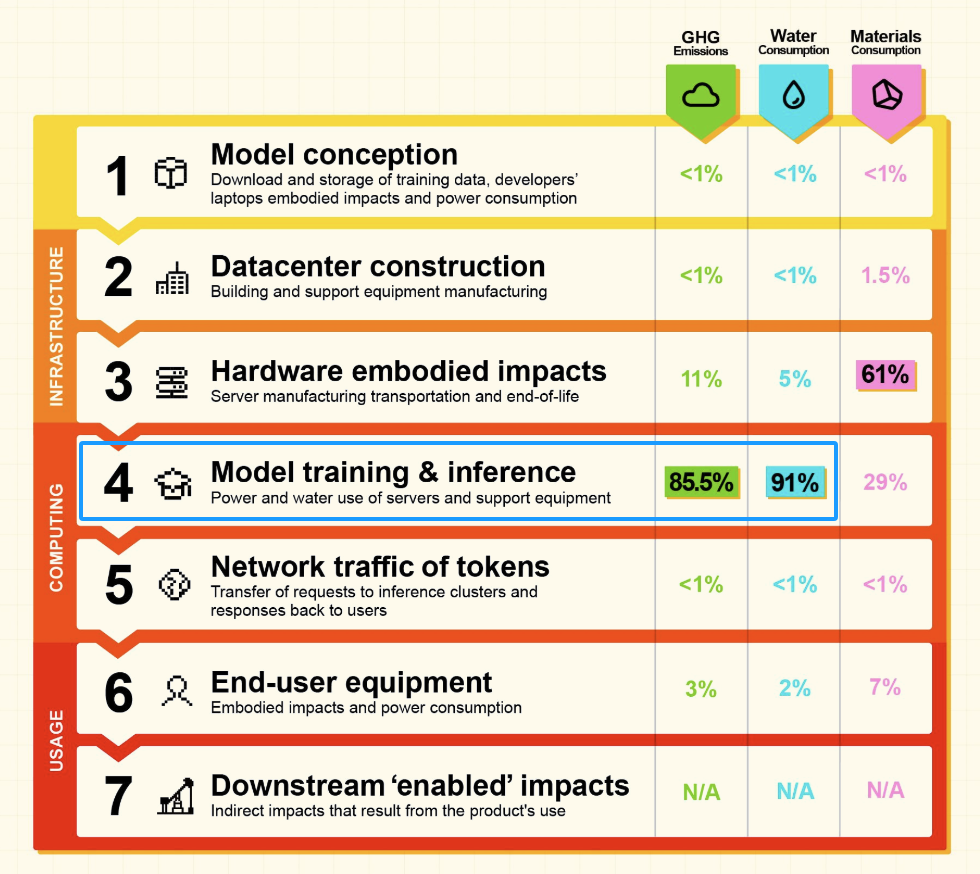
据美国专利商标局公开信息显示,马斯克旗下人工智能公司xAI于2025年8月1日正式提交"Macrohard"商标注册申请(序列号99314877),申请费用为2300 美元(约合人民币16569元),涵盖两个核心商标类别。 早在7月14日,马斯克便在X平台暗示xAI正在筹备一家专注于编程与图像/视频生成的AI Agent子公司,并以"这是一项宏大的挑战,你能猜出这家公司叫 什么吗?"引发公众猜测,当用户在评论区提及"Macrohard"时,马斯克以眨眼表情回应。 从命名逻辑看,"Macrohard"显然是对微软(Microsoft)的精准戏仿——用"Macro(宏观)"替代"Micro(微观)",在读音和拼写高度相似的基础上形成 强烈反差。 值得注意的是,此次商标申请采用标准字符格式,不涉及特定字体或颜色,为未来在多领域的品牌扩展预留了空间。 2022年,据马斯克传记披露,盖茨曾持有价值数十亿美元的特斯拉空头仓位,这一行为被马斯克视为"在特斯拉最虚弱时刻押注其倒闭"; 根据之前马斯克披露的规划,这家以"Macrohard"命名的子公司将聚焦"运营数百个专注于编程与图像/视频生成的AI Agent",而这恰好是 ...
微软花17亿美元“埋粪”!把人类粪便和污水转化成“生物泥浆” 注入地壳1500米深处
Mei Ri Jing Ji Xin Wen· 2025-08-04 13:31
Core Insights - The article discusses the environmental costs associated with the rapid development of artificial intelligence (AI), highlighting Microsoft's significant investment in carbon removal initiatives as a response to its increasing carbon footprint [3][4][6]. Group 1: Microsoft's Investment in Carbon Removal - Microsoft has signed a deal with Vaulted Deep to achieve a carbon removal target of 4.9 million tons by 2038, with the total value of the contract reportedly exceeding $1 billion, potentially costing Microsoft up to $1.7 billion [4][6]. - The method employed by Vaulted Deep involves converting organic waste into a "bio-sludge" and injecting it deep underground to permanently remove carbon and prevent pollution [5][6]. Group 2: AI's Environmental Impact - The carbon emissions from AI operations are substantial, with a report indicating that the training and operation of Mistral AI's flagship model generated CO2 emissions equivalent to that of 5,000 cars over 18 months [3][8]. - Major tech companies, including Microsoft, have seen significant increases in their carbon emissions, with Microsoft's emissions rising by 23.4% since 2020 due to the expansion of its cloud and AI businesses [6][8]. Group 3: Criticism of Carbon Offset Strategies - Experts criticize Microsoft's approach of purchasing carbon credits as a means to offset emissions, arguing that it does not address the root cause of emissions and can mislead the public regarding actual reductions [6][12]. - The current carbon accounting mechanisms are seen as flawed, allowing companies to claim zero emissions through market-based accounting without making substantial changes to their energy consumption practices [7][12]. Group 4: Future Projections and Industry Actions - By 2027, AI is projected to consume up to 6.6 billion cubic meters of water annually, and data center energy consumption could double by 2030, surpassing the total energy consumption of countries like Japan [12][13]. - Major tech companies are taking steps towards sustainability, with commitments to achieve net-zero emissions by 2030 or 2040, but there is a call for more transparency and government regulation to ensure accountability [13][14].
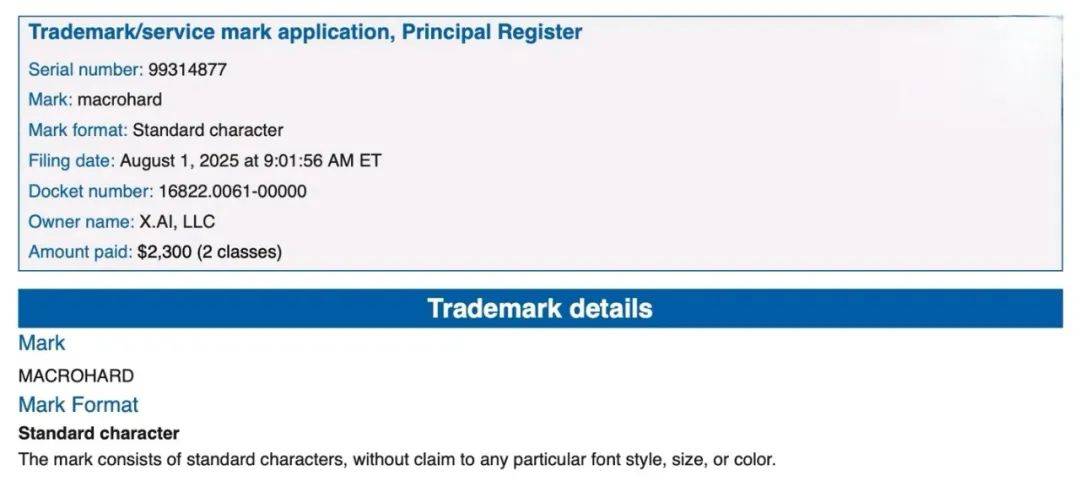
马斯克申请注册“巨硬”商标,被认为暗讽“微软”
Zhong Guo Xin Wen Wang· 2025-08-04 13:31
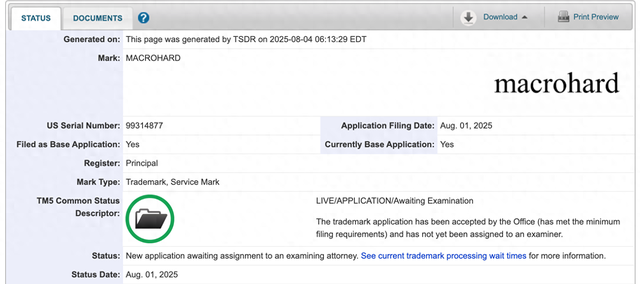
Group 1 - The core point of the news is that Elon Musk's AI company xAI has submitted a trademark application for "Macrohard," which is currently accepted by the U.S. Patent and Trademark Office but not yet assigned to an examiner [1] - In July, Musk hinted at the name of his new company on the X platform, responding with a wink emoji when a user suggested "Macrohard" [2] - The name "Macrohard" is perceived as a playful jab at "Microsoft," reflecting Musk's past disagreements with Microsoft founder Bill Gates [3]
微软花17亿美元“埋粪”!把人类粪便和污水转化成“生物泥浆”,注入地壳1500米深处,一科技初创公司靠这项业务接到微软大单
Mei Ri Jing Ji Xin Wen· 2025-08-04 13:19
Core Insights - The article discusses the environmental costs associated with the rapid development of artificial intelligence (AI), highlighting Microsoft's significant investment in carbon removal initiatives as a response to its increasing carbon footprint [2][7]. Group 1: Microsoft's Investment in Carbon Removal - Microsoft has signed a deal with Vaulted Deep to achieve a carbon removal target of 4.9 million tons by 2038, with the total value of the contract reportedly exceeding $1 billion, potentially costing Microsoft up to $1.7 billion based on a fee of $350 per ton [3][5]. - The investment is part of Microsoft's strategy to purchase "emission rights" as its carbon emissions have increased by 23.4% since 2020 due to the expansion of its cloud computing and AI businesses [7]. Group 2: Environmental Impact of AI - The AI industry is facing growing scrutiny over its environmental impact, with reports indicating that the indirect carbon emissions from major tech companies like Amazon, Microsoft, Alphabet, and Meta have increased by an average of 150% from 2020 to 2023 [9][10]. - A specific AI model, Mistral Large 2, produced 20.4 tons of CO2 over 18 months, equivalent to the annual emissions of 5,000 average cars, and consumed 281,000 cubic meters of water [10]. Group 3: Criticism of Carbon Offset Strategies - Experts criticize Microsoft's approach of "buying offsets," arguing that it distracts from the need for genuine emission reductions at the source [8][14]. - The current carbon accounting mechanisms are seen as flawed, allowing companies to claim zero emissions through market-based accounting, which may not reflect actual environmental impacts [9][10]. Group 4: Future Projections and Industry Actions - By 2027, AI is projected to consume up to 6.6 billion cubic meters of water annually, and data center energy consumption could double by 2030, surpassing the total energy consumption of countries like Japan [13][14]. - Major tech companies are making commitments to achieve net-zero emissions by 2030 or 2040, but experts emphasize the need for a focus on renewable energy and reducing emissions at the source rather than relying solely on carbon credits [14][15].

微软斥资17亿美元“埋粪”,揭开AI的能源黑洞
Mei Ri Jing Ji Xin Wen· 2025-08-04 08:13
Core Viewpoint - The rapid development of AI technology is leading to significant environmental costs, including increased carbon emissions and resource consumption, which companies like Microsoft are attempting to offset through carbon removal projects [1][4][10]. Group 1: Environmental Impact of AI - AI's infrastructure expansion is associated with substantial electricity, water consumption, and rising carbon emissions, with Microsoft reporting a 23.4% increase in carbon emissions since 2020 due to its cloud computing and AI business growth [1][4]. - The training and operation of AI models, such as Mistral Large 2, have been shown to produce significant carbon footprints, equivalent to the emissions of 5,000 cars over a year, and consume vast amounts of water [7][9]. - Major tech companies, including Amazon and Microsoft, have seen their operational carbon emissions increase dramatically, with Microsoft experiencing a 155% rise from three years ago [6][7]. Group 2: Carbon Removal Initiatives - Microsoft has signed a significant deal with Vaulted Deep to achieve a carbon removal target of 4.9 million tons by 2038, with the deal potentially costing up to $1.7 billion [3][4]. - The carbon removal method employed by Vaulted Deep involves injecting organic waste into deep underground layers, effectively sealing it to prevent environmental contamination [3][4]. Group 3: Criticism of Carbon Offset Strategies - Experts criticize the practice of purchasing carbon credits as a means of offsetting emissions, arguing that it does not equate to actual emission reductions and can mislead the public regarding a company's environmental impact [4][10]. - The current carbon accounting mechanisms used by tech companies are seen as flawed, allowing them to claim zero emissions through market-based accounting without addressing the root causes of emissions [6][10]. Group 4: Future Projections and Recommendations - The AI sector is projected to consume vast amounts of resources, with estimates suggesting it could use up to 66 billion cubic meters of water annually by 2027, and data center energy consumption could double by 2030 [9][10]. - Experts advocate for a shift towards renewable energy and improved transparency in environmental impact reporting, emphasizing the need for government regulation to enforce accountability in carbon neutrality commitments [11].
针对微软?马斯克申请“巨硬”商标
Sou Hu Cai Jing· 2025-08-04 07:48
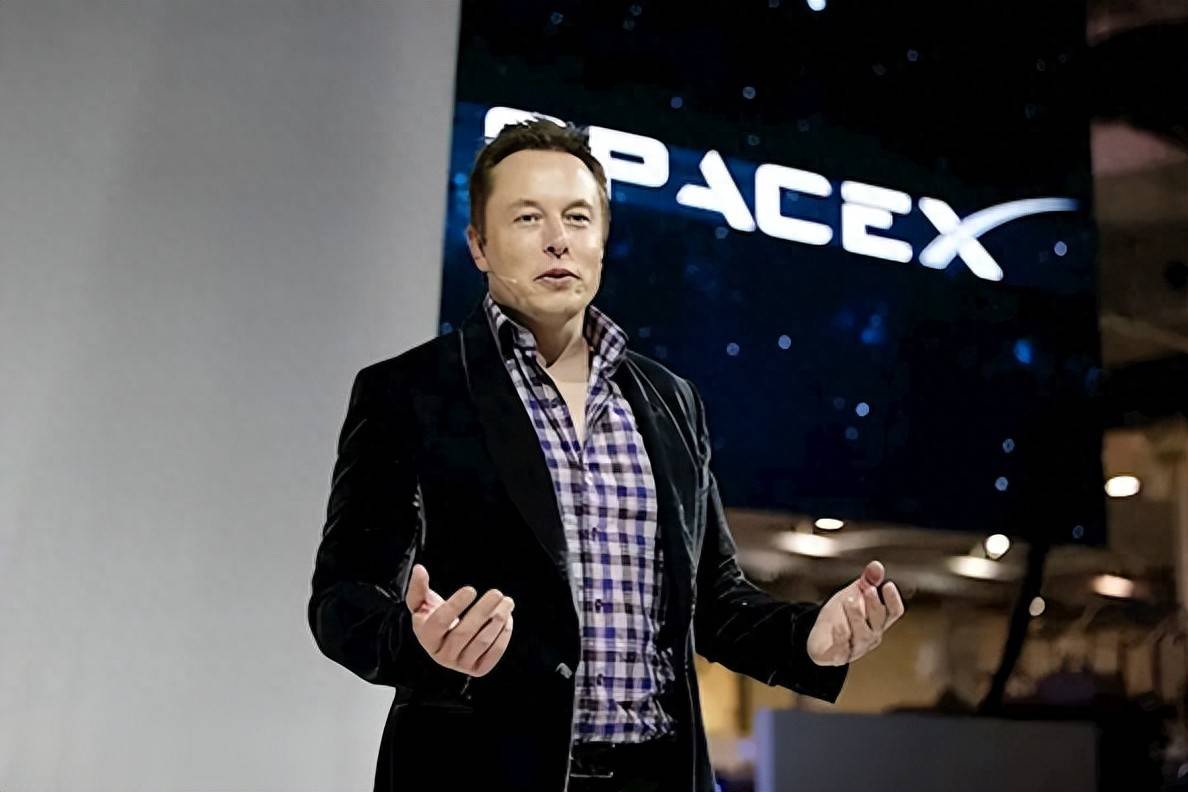
Core Perspective - The registration of the "Macrohard" trademark by Musk is not merely a joke but a strategic move indicating a direct confrontation with Microsoft in the AI sector [1][3][4] Group 1: Symbolism and Competition - "Macrohard" is a direct play on "Microsoft," symbolizing Musk's rivalry with Bill Gates and highlighting their differing views on AI development [3][4] - Musk's ongoing provocations against OpenAI and Microsoft suggest that "Macrohard" represents the initial skirmish in a broader AI conflict [3][4] Group 2: Ambitions and Industry Disruption - Musk aims to establish "Macrohard" as a "multi-agent AI software company," intending to revolutionize software development rather than just create AI applications [4][6] - The potential for an AI-driven ecosystem that could challenge traditional software development methods poses a significant threat to Microsoft's core business [4][6] Group 3: Global AI Arms Race - The registration of "Macrohard" signifies a shift in the global AI competition, moving from model-centric battles to redefining AI's role in software ecosystems [6][8] - Musk's strategy not only targets Microsoft but also seeks to re-establish his relevance in the AI industry after feeling sidelined by major players [6][8] Group 4: Future Potential - The "Macrohard" brand could signify a new phase in the software industry, potentially leading to a reshuffling of the competitive landscape [8] - The name "Macrohard" may serve as a disruptive entry point into the next generation of development logic and AI paradigms, challenging established giants like Microsoft [8]
大行评级|招银国际:上调微软目标价至601.5美元 维持“买入”评级
Ge Long Hui· 2025-08-04 07:21
Core Viewpoint - The report from CMB International highlights Microsoft's strong performance in Q4, with revenue and net profit exceeding expectations, driven by growth in cloud services and operational efficiency [1] Financial Performance - Microsoft's Q4 revenue reached $76.4 billion, representing an 18.1% year-on-year growth, surpassing both CMB International's and market consensus estimates by 3.6% and 3.5% respectively [1] - Net profit increased by 23.6% year-on-year to $27.2 billion, exceeding CMB International's and market consensus estimates by 9% and 8% respectively [1] Business Segments - All three major business segments outperformed expectations, with the core infrastructure business experiencing accelerated growth driven by large clients [1] - Azure and other cloud services revenue grew by 39% year-on-year in Q4, outperforming the previous guidance of 34% to 35% [1] Future Projections - CMB International has raised its revenue and operating profit forecasts for Microsoft for 2026 to 2027 by 2% to 4% and 3% respectively, reflecting the stronger-than-expected growth in cloud services and productivity and business processes (PBP) [1] - The discounted cash flow (DCF) target price has been increased by 18%, from $510.3 to $601.5, corresponding to projected P/E ratios of 38.8 and 33.6 for the fiscal years 2026 and 2027 [1] - The rating remains "Buy" based on the potential for profit growth and improved cash flow generation capabilities [1]