
HAIER SMART HOME(06690)

Search documents
海尔智家孙丹凤:AI元年引领数智化跃迁 构建产业链协同新生态
Sou Hu Cai Jing· 2025-12-31 05:32
Core Insights - The event "Qihang·2025 Financial Annual Conference" highlighted Haier Smart Home's strategic focus on "AI Year" in 2025, emphasizing the clear path for digital transformation in the home appliance industry [1][2] Digital Transformation Strategy - Haier Smart Home's digital transformation is driven by the integration of AI and digital technologies, aiming to maximize user value while serving customer, employee, and corporate values [4][5] - The company has iterated its core methodology of "Four Reconstructions Creating Four Values," reinforcing the importance of user-centric value creation in the AI era [4] AI Implementation Progress - Haier Smart Home has achieved significant milestones in AI implementation, currently positioned at L3 (Intelligent Agent) in the AI application maturity model, with the development of "Zhi Xiao Neng," a super intelligent agent [5][6] - The transition from L3 to L5 is projected to take approximately five years, with the goal of AI assisting in 40% of work tasks [6] Integration with Green and Low-Carbon Initiatives - The home appliance industry is transitioning from digitalization to intelligentization, with a focus on ecological collaboration and the integration of AI with green and low-carbon initiatives [7] - Haier Smart Home has committed to achieving global carbon neutrality by 2050 and plans to utilize 100% renewable energy, showcasing the synergy between digital transformation and sustainability [7] Industry Collaboration and Efficiency - The company emphasizes the need for collaborative data integration across the supply chain to enhance industry efficiency by 10%-20% [8] - Haier Smart Home aims to leverage its supply chain advantages to retain high-value efficiency work in China, enhancing the global competitiveness of Chinese home appliance enterprises [8]


海尔智家取得空调器室内机智能加湿控制方法专利
Sou Hu Cai Jing· 2025-12-30 12:54
国家知识产权局信息显示,海尔智家股份有限公司取得一项名为"空调器室内机的控制方法、空调器室 内机及空调器"的专利,授权公告号CN119063213B,申请日期为2023年6月。 声明:市场有风险,投资需谨慎。本文为AI基于第三方数据生成,仅供参考,不构成个人投资建议。 青岛海尔智能技术研发有限公司,成立于2014年,位于青岛市,是一家以从事研究和试验发展为主的企 业。企业注册资本13000万人民币。通过天眼查大数据分析,青岛海尔智能技术研发有限公司共对外投 资了9家企业,参与招投标项目7次,财产线索方面有商标信息22条,专利信息5000条,此外企业还拥有 行政许可4个。 海尔智家股份有限公司,成立于1994年,位于青岛市,是一家以从事电气机械和器材制造业为主的企 业。企业注册资本943811.4893万人民币。通过天眼查大数据分析,海尔智家股份有限公司共对外投资 了59家企业,参与招投标项目1887次,财产线索方面有商标信息285条,专利信息5000条,此外企业还 拥有行政许可10个。 青岛国创智能家电研究院有限公司,成立于2019年,位于青岛市,是一家以从事计算机、通信和其他电 子设备制造业为主的企业。企业 ...
海尔智家取得路由表查询方法和装置专利
Sou Hu Cai Jing· 2025-12-30 12:48
Group 1 - Haier U+ Smart Technology (Beijing) Co., Ltd., Qingdao Haier Technology Co., Ltd., and Haier Smart Home Co., Ltd. have obtained a patent for "Method and Device for Querying Routing Tables, Storage Medium, and Electronic Device," with authorization announcement number CN115767668B, applied for on October 2022 [1] - Haier U+ Smart Technology (Beijing) Co., Ltd. was established in 2015, located in Beijing, with a registered capital of 143 million RMB. The company has participated in 16 bidding projects and holds 2 administrative licenses, along with 2038 patent information [1] - Qingdao Haier Technology Co., Ltd. was established in 2000, located in Qingdao, with a registered capital of 80 million RMB. The company has participated in 80 bidding projects and holds 7 administrative licenses, along with 3883 patent information [1] Group 2 - Haier Smart Home Co., Ltd. was established in 1994, located in Qingdao, with a registered capital of approximately 9438 million RMB. The company has invested in 59 enterprises and participated in 1887 bidding projects, holding 10 administrative licenses and 5000 patent information [2]
2025年A股十大最惨板块,跌麻了
Ge Long Hui· 2025-12-30 11:30
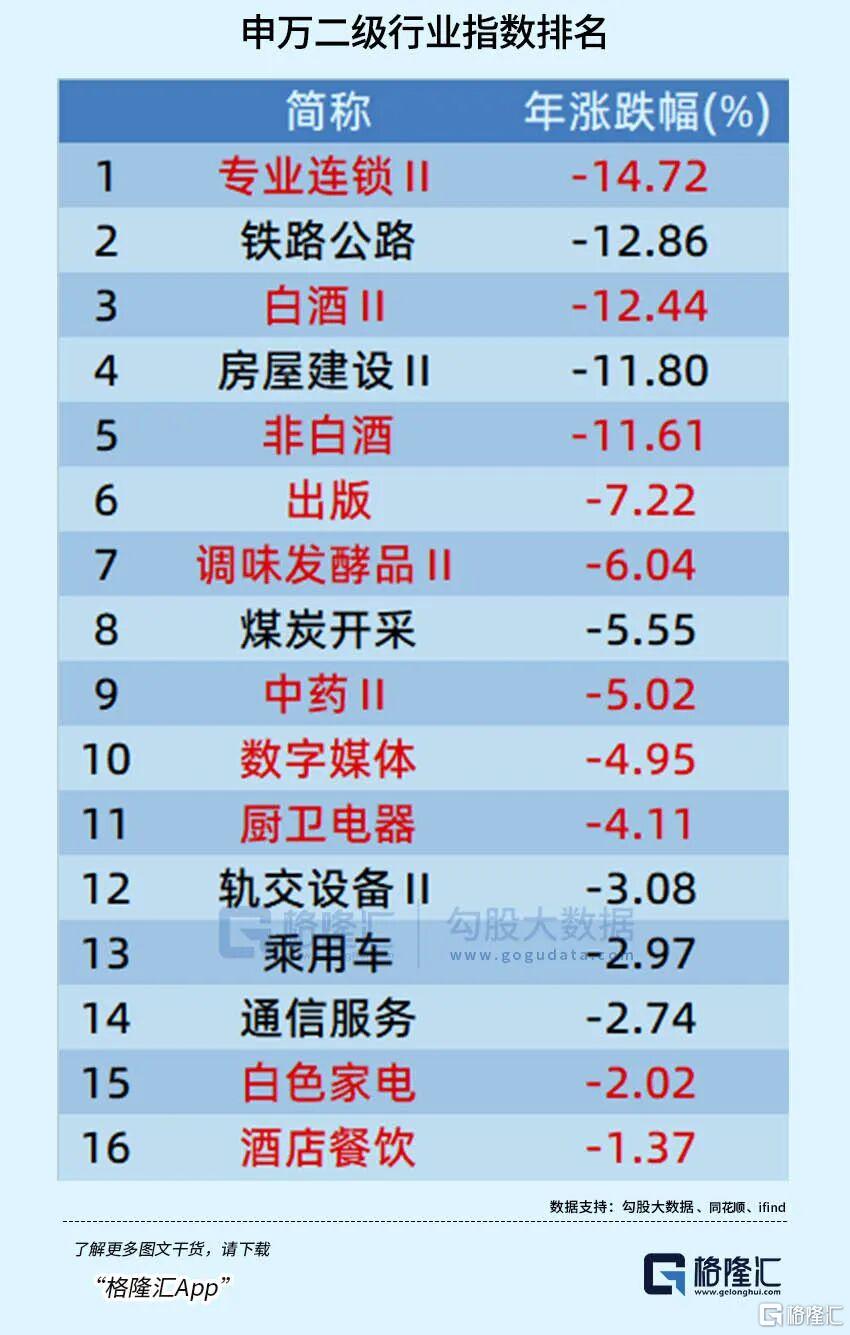
Core Viewpoint - The consumer sector has faced significant challenges in the past year, with many sub-sectors experiencing declines despite overall market growth. The focus on domestic demand and consumption has not translated into positive performance for many consumer-related industries [1][5]. Consumer Sector Performance - In the first half of the year, 10 out of 16 declining industries were from the consumer sector, indicating a broader trend of underperformance [1]. - The white liquor sector, a key component of the consumer market, has seen a year-to-date decline of 12.44%, with major brands like Wuliangye experiencing significant drops in revenue and profit [6][9]. - The professional chain sector has been particularly hard-hit, with a year-to-date decline of 14.72%, exemplified by the struggles of companies like Renrenle [16][20]. White Liquor Sector - The white liquor industry is facing its eighth consecutive year of production decline, with both volume and price dropping simultaneously [10]. - Wuliangye reported a 10.26% decline in revenue and a 13.72% drop in net profit for the first three quarters, marking its first negative growth in a decade [9]. - The industry is shifting from a growth-driven model to one focused on consumer choice, with a need for companies to adapt to changing consumer preferences [15]. Professional Chain Sector - The professional chain sector is experiencing a crisis, with many physical stores closing and traditional business models failing [16][20]. - Renrenle, once a leading private supermarket, has seen its market value plummet and is now facing delisting due to ongoing financial struggles [21][24]. - The shift towards online shopping and personalized consumer demands has further exacerbated the challenges faced by traditional retail chains [24][25]. Non-White Liquor Sector - The non-white liquor sector, including beer and wine, has also faced declines, with the beer segment seeing a notable drop in sales and profits [27][32]. - Budweiser APAC reported an 8.2% decline in domestic sales and a 24.4% drop in net profit, reflecting broader industry challenges [32][33]. - The market is witnessing a trend of cross-industry competition, with liquor companies diversifying into new beverage categories [34]. Publishing Sector - The publishing industry has shown resilience despite a 10.4% decline in the overall market for printed books, with listed companies managing to increase net profits by 14.65% [43][44]. - However, leading companies like Zhongwen Media are struggling, with significant revenue and profit declines due to changes in educational material procurement policies [45][48]. Seasoning Sector - The seasoning industry has faced a 6.04% decline, with companies like Qianhe Flavor struggling due to falling revenues and a loss of consumer trust [51][55]. - The industry is experiencing a shift in consumer preferences and increased competition, necessitating a reevaluation of business strategies [60]. Traditional Chinese Medicine Sector - The traditional Chinese medicine sector is facing challenges, with companies like Pian Zai Huang reporting significant declines in revenue and profit due to rising costs and regulatory pressures [61][66]. - The industry is undergoing a transformation as companies seek to innovate and diversify their product offerings [70]. Digital Media Sector - The digital media industry has seen a 4.95% decline, with companies like Mango TV reporting significant drops in revenue and profit due to changing consumer behaviors and market dynamics [71][74]. - The sector is grappling with the need to adapt to new content consumption trends while facing pressure from traditional advertising models [75]. Kitchen and Bathroom Appliances Sector - The kitchen and bathroom appliance sector has experienced a 4.11% decline, largely due to reduced demand from the real estate market [78][79]. - Companies like Boss Electric are facing revenue declines for the first time in years, highlighting the challenges of adapting to a changing market landscape [79][80]. White Goods Sector - The white goods sector has seen a 2.02% decline, with major players like Gree Electric facing significant revenue and profit pressures due to increased competition and market saturation [83][84]. - The industry is shifting towards a focus on product quality and brand strength as external stimuli diminish [88]. Hotel and Restaurant Sector - The hotel and restaurant sector has faced a 1.37% decline, with revenue pressures stemming from changing consumer spending habits and increased competition from online platforms [89][92]. - Companies are beginning to adopt more refined operational strategies to navigate the challenging market environment [96].




海尔智家取得室内机智能控制方法专利
Sou Hu Cai Jing· 2025-12-30 10:58
海尔智家股份有限公司,成立于1994年,位于青岛市,是一家以从事电气机械和器材制造业为主的企 业。企业注册资本943811.4893万人民币。通过天眼查大数据分析,海尔智家股份有限公司共对外投资 了59家企业,参与招投标项目1887次,财产线索方面有商标信息285条,专利信息5000条,此外企业还 拥有行政许可10个。 声明:市场有风险,投资需谨慎。本文为AI基于第三方数据生成,仅供参考,不构成个人投资建议。 青岛海尔空调器有限总公司,成立于1996年,位于青岛市,是一家以从事电气机械和器材制造业为主的 企业。企业注册资本93638.162532万人民币。通过天眼查大数据分析,青岛海尔空调器有限总公司共对 外投资了20家企业,参与招投标项目4866次,财产线索方面有商标信息259条,专利信息5000条,此外 企业还拥有行政许可19个。 青岛海尔智能技术研发有限公司,成立于2014年,位于青岛市,是一家以从事研究和试验发展为主的企 业。企业注册资本13000万人民币。通过天眼查大数据分析,青岛海尔智能技术研发有限公司共对外投 资了9家企业,参与招投标项目7次,财产线索方面有商标信息22条,专利信息5000条,此 ...
海尔智家(06690.HK)12月30日耗资145.43万元回购5.5万股A股
Ge Long Hui· 2025-12-30 10:27
Core Viewpoint - Haier Smart Home (06690.HK) announced a share buyback on December 30, 2025, spending RMB 1.4543 million to repurchase 55,000 A-shares at a price range of RMB 26.44 to 26.46 per share [1] Related Events - On December 30, 2025, Haier Smart Home repurchased 55,000 A-shares for a total cost of RMB 1.4543 million [1] - On December 29, 2025, the company spent RMB 1.788 million to buy back 67,000 A-shares [1]
海尔智家(06690)12月30日斥资145.43万元回购5.5万股A股
Zhi Tong Cai Jing· 2025-12-30 09:58
(原标题:海尔智家(06690)12月30日斥资145.43万元回购5.5万股A股) 智通财经APP讯,海尔智家(06690)发布公告,于2025年12月30日,该公司斥资人民币145.43万元回购5.5 万股A股,每股回购价格为26.44-26.46元。 ...
海尔智家(06690) - 翌日披露报表
2025-12-30 09:29
FF305 翌日披露報表 (股份發行人 ── 已發行股份或庫存股份變動、股份購回及/或在場内出售庫存股份) FF305 確認 根據《主板上市規則》第13.25C條 / 《GEM上市規則》第17.27C條,我們在此確認,據我們所知所信,第一章節所述的每項股份發行或庫存股份出售或轉讓已獲發行人董事會正式授權批准,並遵 照所有適用上市規則、法律及其他監管規定進行,並在適用的情況下: 表格類別: 股票 狀態: 新提交 公司名稱: 海爾智家股份有限公司 呈交日期: 2025年12月30日 如上市發行人的已發行股份或庫存股份出現變動而須根據《香港聯合交易所有限公司(「香港聯交所」)證券上市規則》(「《主板上市規則》」)第13.25A條 / 《香港聯合交易所有限公司GEM證券 上市規則》(「《GEM上市規則》」)第17.27A條作出披露,必須填妥第一章節 。 | 第一章節 | | | | | | | | --- | --- | --- | --- | --- | --- | --- | | 1. 股份分類 | 普通股 | A 股份類別 | | 於香港聯交所上市 | 否 | | | 證券代號 (如上市) | 600690 | ...
华平投资战略入股海尔印度 中国家电巨头的本土化破局之路
Xin Lang Cai Jing· 2025-12-30 03:43
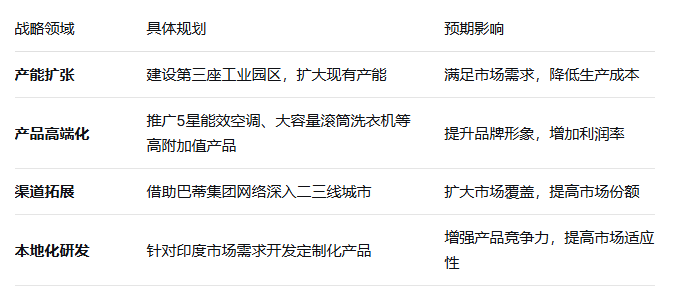
Core Insights - Haier Smart Home has transferred a total of 49% equity in Haier India to India's Bharti Group and US-based Warburg Pincus, while retaining 49% for itself and allocating 2% to the local management team's long-term incentive plan, reflecting a strategic move in a complex international environment [1][10][11] Transaction Structure and Strategic Alliance - The equity restructuring marks a strategic adjustment for Chinese home appliance companies in the Indian market, forming a tripartite equity structure among Haier, Bharti Group, and Warburg Pincus, with a focus on resource integration [2][12] - Haier India has been operating in the Indian market for over 20 years, achieving sales of ₹89 billion (approximately $1.03 billion) in 2023, a 33% year-on-year increase, prompting the decision to introduce external capital during a growth phase [2][12] - A significant valuation discrepancy exists between the rumored $2 billion and the actual transaction valuation of $720 million (approximately ₹60 billion), influenced by high brand usage fees paid to the parent company and cautious expectations from international investors regarding the Indian appliance market [2][12] Strategic Motivations: Localization and Capital Synergy - The introduction of local strategic investors and international capital is a strategic response to the complex market environment, particularly following India's 2020 foreign investment policy changes requiring government approval for investments from neighboring countries [4][14] - The partnership with Bharti Group alleviates regulatory pressures and facilitates future capacity expansion and new industrial park construction, addressing significant constraints on Haier India's growth [4][14] - The competitive landscape in the Indian appliance market includes international brands like LG and Samsung dominating the high-end market, local brands like Lloyd and Godrej in the mid-to-low end, and Chinese brands like Haier and Midea competing through cost-effectiveness and product innovation [4][14] Capital Synergy and Future Outlook - Haier India aims to achieve sales of ₹115 billion by 2025, necessitating substantial funding for product development, channel expansion, and brand building, with Warburg Pincus providing not only capital but also global management experience [5][15] - The equity restructuring is expected to pave the way for Haier India's potential IPO within the next two years, enhancing its attractiveness in the capital market [6][18] - The restructuring may serve as a reference for other Chinese appliance companies looking to invest in India, suggesting that establishing closer local ties through local strategic investors could be an effective strategy for globalization [6][18] Broader Implications - The equity restructuring of Haier India reflects the common challenges faced by global enterprises in adapting to diverse market policies and competitive dynamics while protecting core technologies and management control [8][19] - The collaboration with Warburg Pincus and Bharti Group represents a strategic innovation for global enterprises to navigate local markets, highlighting the importance of balancing globalization and localization for sustainable growth [8][19]
出售印度子公司49%股权 海尔方面回应:依然是最大单一股东
Zhong Guo Jing Ying Bao· 2025-12-29 13:56
Core Viewpoint - Haier Group has sold 49% of its subsidiary Haier India to Bharti Group and Warburg Pincus, marking a significant strategic move to enhance local business development while retaining control as the largest single shareholder [1][2]. Group 1: Transaction Details - The transaction involves a total investment of $2 billion, with Haier retaining 49% ownership and allocating an additional 2% for local team incentives [2]. - Haier India is projected to exceed $1 billion in revenue for the first time in 2024, reflecting a growth rate of over 30% [5]. - The partnership aims to strengthen Haier India's position in the market through local procurement, expanded manufacturing capabilities, and product innovation [3]. Group 2: Market Context - Haier has been operating in India for over 20 years, establishing a strong brand presence and becoming one of the top three durable consumer goods companies in the country [5]. - The Indian home appliance market is characterized by a large population of 1.4 billion and a low penetration rate, indicating significant growth potential compared to other markets [6]. - Despite the growth potential, the Indian market faces challenges such as policy and regulatory risks that could impact foreign investment [6]. Group 3: Future Outlook - Haier aims to achieve a revenue target of $2 billion by 2027, indicating plans for substantial growth in the coming years [5]. - The collaboration with Bharti Group and Warburg Pincus is expected to leverage synergies among shareholders to enhance Haier's competitive position in the local market [5].