BIDU(09888)

Search documents
百度集团-SW(09888):集中资源专注AI发展和变现,萝卜快跑价值将释放
Haitong Securities International· 2025-11-30 13:46
Investment Rating - The report initiates coverage on Baidu with an "OUTPERFORM" rating, indicating an expectation of performance exceeding the market average [1]. Core Insights - Baidu is focusing resources on the development and monetization of AI technologies, with AI-driven new business revenues growing by over 50% year-on-year, contributing 39% to core revenues [2][21]. - The Apollo Go business is expanding rapidly, with weekly fully driverless orders exceeding 250,000 and cumulative orders surpassing 17 million, indicating significant growth potential [3][22]. - Traditional advertising is under pressure, while cloud services continue to show strong growth, with expectations of a 14% decline in core advertising revenue and a 14% increase in cloud revenue in Q4 [3][24]. Financial Summary - Baidu's revenue for Dec-24 is projected at RMB 133,125 million, with a slight decline expected in subsequent years [17]. - Net profit is forecasted to decrease significantly in Dec-25 to RMB 18,707 million, before recovering in the following years [17]. - The gross profit margin is expected to decline from 50.3% in Dec-24 to 43.1% in Dec-25, with a gradual recovery anticipated thereafter [17]. Valuation and Price Target - The report employs a Sum-of-the-Parts (SoTP) valuation method, estimating a target price of HK$171 per share, corresponding to an 18x PE ratio for FY25 [4][25]. - Key components of the valuation include traditional search ads valued at US$2.2 billion, AI cloud services at US$3.5 billion, and Robotaxi at US$57.3 billion [4][25]. Business Segment Outlook - The traditional advertising segment is facing challenges, but the cloud business is expected to maintain high growth rates, driven by demand for large language models [10][24]. - AI-related businesses are being prioritized, with significant revenue growth reported in AI cloud infrastructure and AI-native marketing services [2][21][22].

百度开启最大规模裁员? 所涉部门裁员比例15%到30%不等
Sou Hu Cai Jing· 2025-11-30 07:55
Group 1 - The core point of the article highlights that Baidu is undergoing its largest workforce reduction in recent years, with layoffs affecting various business lines and departments, with ratios ranging from 10% to 30% [2] - The layoffs are described as a normal year-end adjustment, with no specific target for the number of layoffs, and compensation packages include year-end bonuses, which are considered generous [2] - Employees report that the scale of this layoff exceeds previous year-end adjustments, and the severance pay can reach N+3.5, which includes years of service plus an additional 3.5 months of salary [2] Group 2 - Despite the large-scale layoffs, many employees do not feel personally targeted, and the continuation of year-end bonuses has led to a general lack of resentment among staff [2] - However, there are concerns that the ongoing layoffs may impact morale within the company [2]

Securities Fraud Investigation Into Baidu, Inc. (BIDU) Announced – Shareholders Who Lost Money Urged to Contact Glancy Prongay & Murray LLP, a Leading Securities Fraud Law Firm
Businesswire· 2025-11-28 17:00
Core Viewpoint - Glancy Prongay & Murray LLP has initiated an investigation into Baidu, Inc. regarding potential violations of federal securities laws affecting investors [1] Group 1 - The investigation is on behalf of Baidu, Inc. investors who may have incurred financial losses [1] - The law firm is encouraging affected investors to inquire about pursuing claims to recover their losses [1]

香港不哭!大火无情,这些企业豪掷数亿紧急驰援
凤凰网财经· 2025-11-28 12:54
Core Viewpoint - The article highlights the rapid and generous response of various companies and organizations in Hong Kong to the recent fire disaster in Tai Po, showcasing their social responsibility and commitment to aiding affected individuals and communities [3][14]. Group 1: Donations and Contributions - Total donations from various entities have reached several hundred million Hong Kong dollars, demonstrating a strong collective effort to support disaster relief [5]. - Alibaba Group contributed a total of 60 million HKD, including 30 million from the Ma Yun Public Welfare Foundation, 20 million from Alibaba Group, and 10 million from Ant Group [5]. - The Li Ka Shing Foundation pledged an immediate 30 million HKD, with an additional 50 million HKD planned for future support, totaling 80 million HKD [6]. - The Zijing Cultural Group donated 10 million HKD and provided educational materials worth 2 million HKD for nearly 700 affected students [7]. - Other notable contributions include 30 million HKD from the Ho Ying Tung family, 20 million HKD from Chow Tai Fook Group, and various donations from other companies totaling millions [8][9][10]. Group 2: Direct Services and Support - Companies like Baidu Maps and Gaode Maps provided real-time updates on road conditions, helping to facilitate safe navigation around the disaster area [11]. - SF Express opened 146 locations in Hong Kong for free transportation of relief supplies, effectively enhancing the logistics of aid delivery [11]. - Anta Group supplied 20 million HKD worth of cold-weather gear, addressing immediate needs for warmth among the affected population [12]. Group 3: Social Responsibility and Community Impact - The article emphasizes that while financial contributions are significant, the direct services provided by companies during the disaster are equally crucial, reflecting a strong sense of social responsibility [11][14]. - The collective actions of these companies during the crisis highlight their commitment to community welfare, transcending their usual business operations [14].





产学研融合助力科技自强,一批京企无人车进高校
Bei Jing Ri Bao Ke Hu Duan· 2025-11-28 12:52
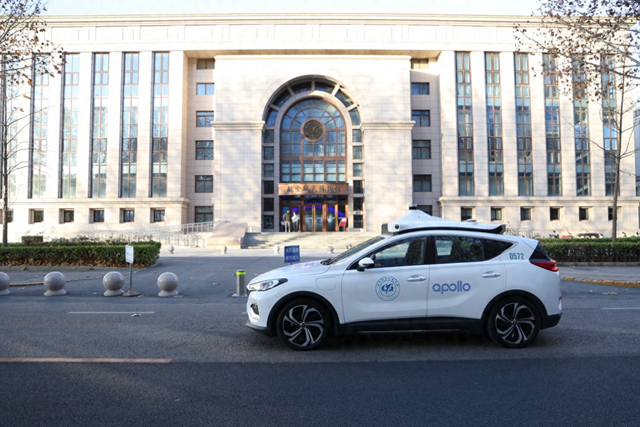
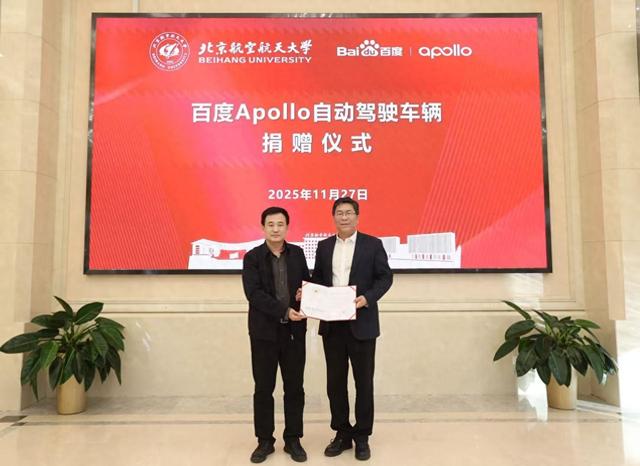
Core Insights - The collaboration between Baidu Apollo and Beihang University aims to enhance research, education, and talent development in the field of autonomous driving [1][3] - Baidu Apollo is recognized as a leader in the domestic autonomous driving sector, while Beihang University is one of the first institutions to offer a specialized program in this area [3] Group 1: Collaboration and Contributions - Baidu Apollo has donated autonomous vehicles to Beihang University to support research and education in autonomous driving [1] - The partnership has led to the establishment of China's first "autonomous driving" major and has been recognized as a typical project in the Ministry of Education's collaborative education initiative [3] Group 2: Future Plans and Initiatives - Baidu Apollo plans to launch the "Spark Program" in early 2025, which will involve donating autonomous vehicles and experimental platforms to multiple universities, including Wuhan University and Fudan University [3] - This initiative aims to foster the development of autonomous driving technology and cultivate more skilled professionals in the industry [3]
Baidu launches major layoffs as ad revenue falls and AI competition intensifies: report
Invezz· 2025-11-28 09:19
Core Insights - Baidu has initiated large-scale layoffs to restructure its workforce in response to increasing competition in the artificial intelligence sector and declining advertising revenue [1] Company Summary - The layoffs are part of a broader strategy to adapt to the challenges posed by competitors in the AI market [1] - The company is experiencing a significant drop in advertising revenue, which is prompting these workforce changes [1] Industry Summary - The artificial intelligence industry is becoming increasingly competitive, which is affecting companies like Baidu [1] - The decline in advertising revenue is a common challenge faced by firms in the tech sector, impacting their operational strategies [1]

Baidu pushes deeper into AI chips as China races to replace Nvidia
Invezz· 2025-11-28 08:52
Core Viewpoint - Baidu is intensifying its focus on artificial intelligence (AI) chips as China aims to reduce its dependence on Nvidia technology amid global chip shortages and export restrictions [4][5][6]. Group 1: Baidu's AI Chip Strategy - Baidu's semiconductor division, Kunlunxin, is central to China's strategy for enhancing its AI infrastructure and is increasing investments and product plans [6][7]. - The company has outlined a five-year roadmap for Kunlunxin, introducing the M100 chip expected in 2026 and the M300 in 2027, aimed at supporting Baidu's ERNIE models [8][9]. - Baidu is positioning itself as a full-stack AI technology provider, integrating chips, servers, data centers, models, and applications [9]. Group 2: Market Dynamics and Demand - The demand for domestic AI hardware is projected to rise as Chinese hyperscalers shift towards local suppliers, reflecting a broader trend in the technology sector [10]. - China's AI sector is currently facing significant shortages in advanced chips, with major companies like Alibaba and Tencent reporting supply constraints impacting their capital spending [11][12]. - The combination of restricted imports and strong domestic demand is creating a larger market for companies capable of producing competitive AI chips [16]. Group 3: Competitive Landscape - Baidu is not the only company developing in-house semiconductors; Alibaba and other firms are also adapting their infrastructure to manage supply constraints [15]. - Analyst estimates suggest that Kunlunxin could see substantial valuation growth, supported by optimistic revenue forecasts for the upcoming years [15].

China's Baidu starts layoffs after reporting third-quarter loss - sources
Reuters· 2025-11-28 07:15
Core Insights - Baidu has initiated layoffs across multiple business units as it faces increasing competition in the artificial intelligence sector [1] Group 1: Company Actions - The layoffs are part of a broader strategy to streamline operations amid challenging market conditions [1] - Multiple sources indicate that the layoffs will affect various departments within the company [1] Group 2: Industry Context - The artificial intelligence industry is experiencing intensified competition, which is impacting companies like Baidu [1] - The current market dynamics are forcing companies to reassess their workforce and operational strategies to remain competitive [1]

百度Apollo向北航捐赠自动驾驶车辆 深化产学研融合助力科技自强
Huan Qiu Wang· 2025-11-28 06:50
Core Viewpoint - Baidu Apollo donated a batch of autonomous driving vehicles to Beihang University to support research, education, and talent cultivation in the field of autonomous driving, enhancing the integration of industry and academia in China [1][3]. Group 1: Donation and Collaboration - The donation aims to deepen the collaboration between Baidu Apollo and Beihang University, promoting the development of the autonomous driving ecosystem and talent cultivation in China [1][3]. - Beihang University is recognized for its prestigious programs in transportation engineering and computer science, making it a key partner for Baidu Apollo in advancing autonomous driving technology [1][3]. Group 2: Statements from Representatives - Professor Tian Daxin from Beihang University expressed gratitude for the donation, highlighting the importance of the autonomous driving industry in building a strong transportation nation and the historical opportunity it presents for technological revolution and industrial transformation [3][5]. - Baidu Group Vice President Wang Yunpeng emphasized the university's role in nurturing high-level innovative talents and the significance of the "Spark Program" initiated by Baidu Apollo to support educational and research initiatives [3][5]. Group 3: Historical Context and Future Plans - The collaboration between Beihang University and Baidu Apollo has a long history, including joint publications and the establishment of the first "autonomous driving" major in China [5]. - Baidu Apollo's "Spark Program" aims to donate autonomous driving vehicles and experimental platforms to multiple universities, symbolizing the mission of passing on autonomous driving technology and continuously cultivating talent for the industry [5].
Baidu is emerging as a major AI chip player in China to fill the Nvidia gap
CNBC· 2025-11-28 06:20
Core Viewpoint - Baidu is positioning itself as a significant player in China's AI chip market, aiming to challenge Huawei and fill the gap left by Nvidia's absence in the country [1][7]. Company Strategy - Baidu has shifted its focus from being primarily a search engine to developing driverless cars and AI technologies, including its majority-owned subsidiary Kunlunxin, which specializes in chip design [2][4]. - The company has outlined a five-year roadmap for its Kunlun AI chips, starting with the M100 in 2026 and the M300 in 2027, and is already utilizing its self-developed chips in data centers for its ERNIE AI models [3][4]. Market Position - Baidu generates revenue by selling chips to third parties for data centers and renting out computing capacity through its cloud services, aiming to create a comprehensive AI infrastructure [4]. - Analysts have noted that Kunlunxin has become a leading domestic AI chip developer, focusing on high-performance chips for various applications, including large language model training [5]. Competitive Landscape - With Nvidia's advanced GPUs being restricted from sale in China, Baidu is expected to capitalize on the growing domestic demand for AI computing, especially as Huawei is currently out of the market [6][7]. - Analysts from JPMorgan predict that Baidu's chip sales could increase six-fold, reaching 8 billion Chinese yuan (approximately $1.1 billion) by 2026, indicating strong growth potential [7]. Valuation Insights - Analysts at Macquarie estimate that Baidu's Kunlun chip unit could be valued at around $28 billion, highlighting the significant market potential for the company in the semiconductor space [8].