ILUVATAR COREX(09903)

Search documents
瞄准英伟达!国产算力产业走向“闭环”
经济观察报· 2026-01-09 10:28
Core Viewpoint - The rapid advancement of China's computing power industry is highlighted by significant capital market activities, including the successful IPOs of domestic semiconductor companies, while challenges remain in practical applications and system integration [2][4]. Group 1: Capital Market Activities - Shanghai Tensu Zhixin Semiconductor Co., Ltd. went public on January 8, 2026, with over 400 times subscription, indicating strong market enthusiasm [2]. - Other domestic GPU companies, such as Moer Thread and Muxi Co., saw their stock prices surge by 468.78% and 692.95% respectively on their debut, with market capitalizations exceeding 305.5 billion and 330 billion yuan [2]. - Changxin Technology submitted its IPO application on December 30, 2025, reporting revenue of 32.084 billion yuan for the first three quarters of 2025, showcasing the scale of domestic DRAM production [2][10]. Group 2: Technological Advancements - The focus of competition in the computing power sector is shifting from hardware specifications to system stability, software ecosystem usability, and cost-effectiveness in commercial applications [6]. - The introduction of the scaleX super cluster by Zhongke Shuguang, featuring 10,240 AI accelerator cards, emphasizes the need for high reliability in large-scale systems [6][7]. - The development of a native 400G RDMA network by Zhongke Shuguang aims to enhance data transmission quality and reduce latency, crucial for supercomputing applications [7][8]. Group 3: Software Ecosystem Development - Moer Thread is addressing the challenge of transitioning developers to domestic computing platforms by launching the MTT AIBOOK, which includes essential development tools [13]. - The company also introduced a code migration model, MUSACode, to facilitate the transition from CUDA to its own platform, aiming for a 93% compilation rate [13]. - Cloud service providers are playing a critical role in integrating various hardware brands, thereby mitigating compatibility issues and enhancing resource management [15][16]. Group 4: Supply Chain and Market Dynamics - The supply chain for DRAM and NAND flash is under pressure, prompting cloud vendors to adjust procurement strategies to ensure resource availability [17]. - The adoption of domestic computing facilities by institutions like the Chinese Academy of Sciences indicates growing confidence in local technology, despite some performance gaps compared to international counterparts [19]. - The emergence of customized products from companies like Haiguang reflects a shift towards meeting specific client needs, enhancing market competitiveness [20]. Group 5: Industry Ecosystem and Future Outlook - The domestic computing power industry is forming a closed-loop ecosystem, integrating various components from storage to computing and application layers [21][22]. - The rise of domestic large models, such as DeepSeek, is redefining hardware competition standards, necessitating support for mixed-precision computing [21]. - Concerns about potential disruptions from international competitors, such as NVIDIA's H200 chip, are countered by the established supply chain and ecosystem resilience of domestic firms [21][22].



会员动态 | 四川产业基金旗下四川兴川已投项目天数智芯正式在香港联交所挂牌上市
Xin Lang Cai Jing· 2026-01-09 08:18
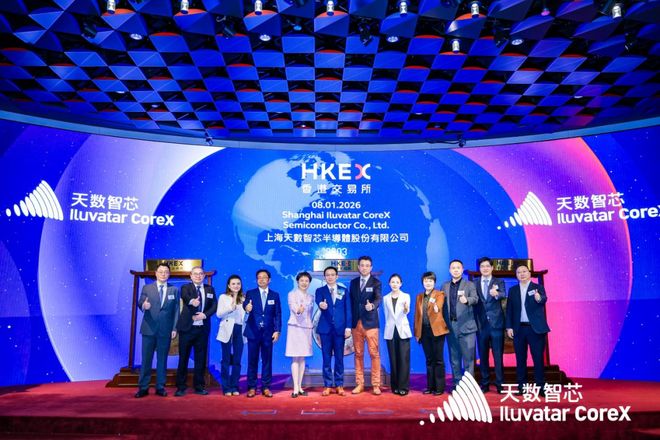
来源:市场资讯 新年传捷报,征程启新篇。天数智芯的成功上市,是四川产业基金与绵阳市深化合作、前瞻布局战略性 新兴产业的重要成果,也为全省新一年产业发展迎来"开门红"。未来,四川产业基金将继续聚焦主责主 业,围绕我省现代化产业体系建设目标,持续加大对科技创新及地方优势产业的支持力度,积极引导金 融活水赋能实体经济,为谱写中国式现代化四川新篇章贡献更大力量。 协会 (来源:四川省投资基金业协会) 2026年1月8日,四川产业基金旗下四川兴川投资的上海天数智芯半导体股份有限公司(以下简称"天数 智芯",股票代码:9903.HK)正式在香港联合交易所主板挂牌上市,开启全球化发展新篇章。作为国 内首家实现通用GPU量产企业,天数智芯此次成功登陆港交所,不仅是公司发展历程中的里程碑,更标 志着我国通用GPU芯片在自主发展道路上迈出关键一步。四川兴川党支部书记、董事长郑晏华作为股东 代表,出席了天数智芯在香港联交所的挂牌仪式。 自2018年正式启动通用GPU设计以来,天数智芯始终坚持服务国家战略,秉持长期主义的战略耐心和自 主研发的战略定力,以"成为智能社会的赋能者"为使命,在通用GPU领域深耕细作,专注技术攻坚与产 品落 ...
天数智芯午前涨近4% 公司将于本月发布未来三代产品路线图
Zhi Tong Cai Jing· 2026-01-09 04:08
Core Viewpoint - TianShu ZhiXin (09903) has officially listed on the Hong Kong Stock Exchange, with a notable increase in stock price and significant fundraising plans for future development [1] Group 1: Company Overview - TianShu ZhiXin's stock price rose by 3.89% to HKD 162.9, with a trading volume of HKD 187 million [1] - The company aims to allocate approximately 80% of the raised funds for the research and commercialization of general-purpose GPU chips and AI computing solutions over the next five years [1] Group 2: Fund Allocation - About 10% of the funds will be used for sales and market expansion [1] - The remaining 10% will be allocated for working capital and general corporate purposes [1] Group 3: Future Product Roadmap - TianShu ZhiXin is set to release a product roadmap on January 26, detailing innovations in GPGPU architecture, high-quality computing infrastructure, and cloud AI training and inference products for the internet sector [1] - Industry predictions suggest that products from this roadmap will compete directly with NVIDIA's H200 and B200 from 2026 to 2028 [1]
上市即赚57亿,“瑞幸操盘手” 黎辉重仓天数智芯,回报率超340%
3 6 Ke· 2026-01-09 03:13
Core Viewpoint - Tensent Intelligent Chip (天数智芯) successfully listed on the Hong Kong Stock Exchange, achieving a closing price of HKD 156.8 per share, an increase of 8.44%, with a total market capitalization of approximately HKD 40 billion [1]. Group 1: Company Overview - Tensent Intelligent Chip is a major player in the domestic AI chip industry, issuing 25.43 million H-shares at an initial price of HKD 144.6 per share, raising approximately HKD 3.7 billion for R&D and market expansion [1]. - It is the fourth domestic GPU company to go public, following Moer Thread, Muxi Co., and Birran Technology [1]. - Despite being one of the earliest companies to launch general-purpose GPUs, Tensent's price-to-sales ratio is significantly lower at around 56 times compared to its peers [1]. Group 2: Shareholder Structure - The largest shareholder group consists of employee and passive financial investors holding 21.25% of shares, while the largest external shareholder group, led by Dazhong Capital, holds 20.62% [2]. - Dazhong Capital, founded by investor Li Hui, has invested approximately CNY 1.67 billion in Tensent, resulting in a floating profit of over CNY 5.7 billion based on the first-day closing price [3]. Group 3: Management Dynamics - The company has experienced management turbulence, with founder Li Yunpeng resigning in 2021, followed by the appointment and subsequent resignation of CEO Diao Shijing in 2022 [5]. - The current chairman and CEO, Gai Lujian, lacks a GPU background and comes from a financial institution, with operational decisions made by a management committee [6]. Group 4: Product and Financial Performance - Tensent's product lineup includes training and inference GPUs, with significant revenue growth expected from the Tianhuai series, projected to increase from CNY 189 million in 2022 to CNY 370 million in 2024 [7]. - The company has not yet turned a profit, with cumulative losses reaching CNY 2.5 billion over three and a half years, despite raising over CNY 5.6 billion through 10 financing rounds [8].
解码上海GPU四小龙上市加速度
财联社· 2026-01-09 02:23
Core Viewpoint - The rapid listing of five AI industry chain companies in Shanghai, particularly the "GPU Four Little Dragons," highlights the city's accelerating pace in capital markets and reflects the strength of its innovation environment [1]. Group 1: Capital Support and Investment - The "GPU Four Little Dragons" (Moxi Co., Biran Technology, Tianshu Zhixin, and Suiyuan Technology) have received significant capital support at various stages, demonstrating a trend of early, small, and long-term investments in hard technology [2]. - Local state-owned funds and investment institutions play a crucial role in supporting these companies, as seen with Biran Technology's financing rounds involving Shanghai's local capital [5]. - The investment ecosystem in Shanghai is designed to support the entire lifecycle of tech companies, with a focus on early-stage funding and overcoming challenges during critical growth phases [7]. Group 2: Listing Acceleration Mechanisms - The Shanghai Securities Regulatory Bureau has implemented effective mechanisms to facilitate the listing process for quality tech companies, ensuring a streamlined path from IPO application to listing [10][11]. - The regulatory body collaborates with various local government departments to enhance the nurturing of high-quality companies, resulting in a significant number of companies receiving listing approvals [11]. - As of the end of 2025, there are 122 companies in the listing guidance and review stages in Shanghai, indicating a robust pipeline for future listings [11]. Group 3: Industry Growth and Economic Impact - The listing of these companies is not just a financial milestone but also a means to enhance their operational capabilities and support technological innovation, with Shanghai's tech firms raising over 230 billion yuan through IPOs since the launch of the Sci-Tech Innovation Board [14]. - The integrated circuit industry in Shanghai has shown remarkable growth, with revenues reaching 391.2 billion yuan in the first 11 months of 2025, reflecting a year-on-year increase of 23.72% [15]. - The AI industry in Shanghai is also thriving, with an expected revenue of over 550 billion yuan in 2025, marking a growth rate exceeding 30% [15]. Group 4: Strategic Alignment with National Goals - The focus on technology development and capital circulation aligns with national strategies, aiming to cultivate globally influential enterprises and enhance the overall innovation ecosystem in Shanghai [14][17]. - The local government is actively promoting financial support for strategic industries, including AI, integrated circuits, and biomedicine, to ensure sustainable growth and innovation [12].

上海一个月5家AI企业上市
Xin Lang Cai Jing· 2026-01-09 00:59
Core Insights - Shanghai has achieved a record of "five AI companies listed in one month," indicating that the AI industry in Shanghai is entering a "harvest period" [1] - The five listed AI companies possess high technological content, reflecting Shanghai's comprehensive industrial chain from algorithms to applications, unlike other cities that focus on single breakthroughs [1][2] - Shanghai is home to a significant concentration of AI talent, with 250,000 AI professionals, accounting for one-third of the national total [2] AI Industry Growth - By 2025, Shanghai's AI industry is expected to exceed 550 billion yuan in scale, with a growth rate of over 30% [2] - In the first three quarters of 2025, 394 large-scale enterprises in Shanghai reported revenues of 435.49 billion yuan, a year-on-year increase of 39.6% [2] - MiniMax, a local AI company, has achieved rapid growth, with 2.12 billion personal users and a monthly active user count of 27.6 million by September 2025 [4] Technological Advancements - Shanghai has established a development pattern of "1 open-source base model + 3 commercial base models + N innovative models" in model algorithm innovation [4] - The city is focusing on the development of large models, with significant advancements in multi-modal scientific models that outperform leading closed-source models [4] - Companies like MiniMax and SenseTime are leading in the development of advanced models, with MiniMax's model achieving code generation speeds twice that of competitors at a fraction of the cost [4] GPU and Semiconductor Industry - Shanghai is recognized as China's "GPU capital," with four major GPU companies successfully listed, contributing to the city's robust semiconductor industry [5][7] - The city has a well-established integrated circuit industry, ranking fourth globally and first in mainland China, supporting the AI industry's growth [7][8] - The local government provides substantial financial support for the semiconductor sector, enhancing the overall ecosystem [7] Robotics and Physical AI - Shanghai is making strides in humanoid robotics, with companies like Zhiyuan Robotics achieving significant production milestones [9][11] - The city is leveraging its strong supply chain in the Yangtze River Delta to support the rapid scaling of humanoid robot production [11][12] - Recent technological breakthroughs in humanoid robots and related components are driving the industry forward, with a focus on enhancing training facilities and data collection standards [12]
上海一个月5家AI企业上市
第一财经· 2026-01-09 00:54
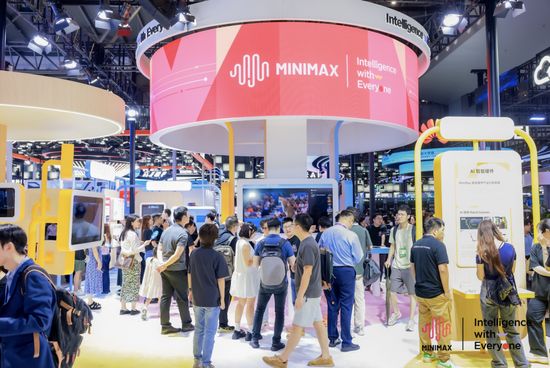
Core Viewpoint - Shanghai's AI industry is entering a "harvest period" with five AI companies listed in one month, indicating a robust ecosystem that integrates hardware, software, and applications, unlike other cities that focus on singular breakthroughs [3][4]. Group 1: AI Industry Growth - In the past 30 days, five AI companies from Shanghai have gone public, showcasing a unique "listing wave" that reflects the city's comprehensive AI industry chain [3]. - Shanghai is building a complete ecosystem from "brain" (computational algorithms) to "blood" (data) and "limbs" (embodied intelligence), which is not seen in other cities [3][4]. - The AI industry in Shanghai is projected to exceed 550 billion yuan in scale by 2025, with a growth rate of over 30% [5]. Group 2: Major AI Companies - MiniMax, established in early 2022, is a representative of Shanghai's local AI model companies, achieving the fastest IPO globally with a workforce where 73.8% are R&D personnel [5][6]. - MiniMax's model, MiniMax-M2, has a code generation speed twice that of its U.S. counterpart Claude, at only 8% of the cost, demonstrating significant efficiency [5][6]. - By September 2025, MiniMax had 212 million personal users, with 73.1% of its revenue coming from overseas, highlighting its global expansion [6][8]. Group 3: GPU and Computational Power - Shanghai is recognized as China's "GPU capital," with four major GPU companies successfully listed, indicating a strong foundation for AI technology [10][12]. - The local integrated circuit industry has been developing for decades, positioning Shanghai as a leader in the global semiconductor landscape [12][13]. - The city has established a complete integrated circuit industry chain, fostering numerous leading enterprises across various segments [13]. Group 4: Embodied Intelligence and Robotics - Human-shaped robots are seen as the ideal carriers for embodied intelligence, with significant milestones achieved in mass production [15][17]. - Shanghai's local robotics companies are rapidly scaling up production, with plans for substantial increases in output capacity [17][18]. - The city is enhancing its embodied intelligence training facilities and supporting the establishment of unified training standards across regions [18][19].

又一家国产通用GPU公司来了!天数智芯上市首日涨8.44%,总市值接近400亿港元
Zheng Quan Shi Bao Wang· 2026-01-08 14:16
Core Viewpoint - TianShu ZhiXin, a domestic general-purpose GPU company, officially listed on the Hong Kong Stock Exchange on January 8, 2025, marking its entry into the capital market with a market capitalization close to HKD 400 billion on its first trading day [1] Group 1: Company Overview - TianShu ZhiXin is the fourth general-purpose GPU company to go public since December 2025, following MoEr Thread, MuXi Co., and BiRan Technology, with another company, SuiYuan Technology, also in the process of listing [1] - The company focuses on providing high-performance general-purpose GPU products and full-stack AI computing solutions across various industries, including finance, healthcare, transportation, manufacturing, and retail [2] Group 2: Technological Achievements - TianShu ZhiXin is the first domestic chip design company to achieve mass production of inference and training general-purpose GPU chips, utilizing advanced 7nm process technology [2] - The company has delivered over 52,000 general-purpose GPU products to more than 290 customers, playing a significant role in the digital and intelligent transformation of various industries [2] Group 3: IPO and Funding - The IPO attracted a prestigious lineup of cornerstone investors, including ZTE Corporation, UBS AM Singapore, and several well-known investment institutions, raising a total of HKD 15.83 billion [3] - The company has raised over RMB 5.5 billion prior to the IPO, with 80% of the funds allocated for product and solution R&D, 10% for sales and marketing, and the remaining 10% for operational expenses [3] Group 4: Financial Performance - From 2022 to 2024, the company achieved revenues of RMB 189 million, RMB 289 million, and RMB 540 million, with a compound annual growth rate of 68.8% [4] - In the first half of 2025, the company reported revenue of RMB 324 million, a significant increase of 64.2% year-on-year, although it remains in a loss position due to high R&D costs [4] - The company's gross margin improved from 45.1% in the first half of 2024 to 50.1% in the first half of 2025, indicating signs of improvement in its profitability fundamentals [4]
天数智芯将于1月26日揭晓未来三代GPGPU路线图
Zheng Quan Ri Bao Wang· 2026-01-08 10:12
Core Insights - The company TianShu ZhiXin Semiconductor Co., Ltd. is set to unveil its product roadmap for the next three generations on January 26 [1] - The upcoming roadmap will focus on innovative GPGPU architecture design, high-quality computing infrastructure, and cloud AI training and inference products aimed at the internet sector [1] Group 1 - The announcement highlights the company's commitment to advancing its technology offerings in the semiconductor industry [1] - The emphasis on GPGPU architecture indicates a strategic move towards enhancing computational capabilities [1] - The focus on cloud AI products suggests a targeted approach to meet the growing demand for AI solutions in the internet domain [1]
近百家中国半导体企业涌入A股港股,10家已IPO
2 1 Shi Ji Jing Ji Bao Dao· 2026-01-08 10:01
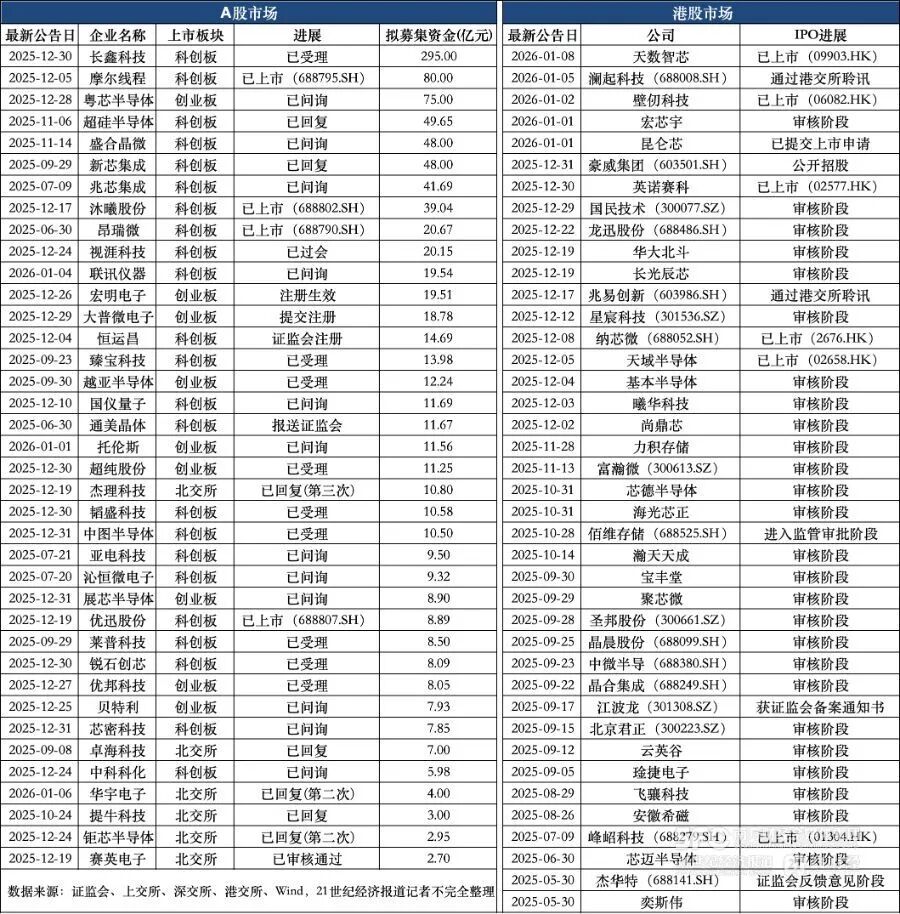
Core Insights - The Chinese semiconductor industry is experiencing an unprecedented IPO boom, with nearly all domestic chip companies vying for entry into the capital market [1][5][19] - A total of 95 semiconductor companies have initiated or accelerated their IPO processes, with 10 already listed and 85 preparing for listing [4][19] - The current IPO wave reflects strong capital interest in the domestic chip sector and indicates that key companies are poised for significant growth through capital market support [5][19] IPO Activity - Since 2025, 38 semiconductor companies have started the IPO process in the A-share market, aiming to raise nearly 100 billion yuan, averaging 26.23 million yuan per company [6] - In the Hong Kong market, 40 semiconductor companies have initiated IPO plans, covering key areas such as GPU, power semiconductors, sensors, and packaging [9][10] - Notable companies like Changxin Technology and Yuanchip Semiconductor are among those seeking substantial funding through IPOs, with Changxin aiming to raise 295 billion yuan [17][19] Market Trends - The IPO frenzy is driven by ongoing self-innovation, coupled with favorable policies and market conditions, marking a new phase of capital and technology-driven growth in the semiconductor industry [5][19] - The demand for AI computing power is surging, with projections indicating that China's smart computing demand will reach 486 EFLOPS by 2025, over ten times that of 2023 [15] - The storage chip sector is also entering an upward cycle, with companies like Changxin Technology and Zhaoyi Innovation seeking to capitalize on this trend through IPOs [17][18] Company Highlights - Companies such as Moer Technology and Muxi Co. have seen significant market interest, with their IPOs receiving oversubscription rates of 4126 times and 4498 times, respectively [15] - Wall Street's response to the IPOs has been enthusiastic, with Moer Technology's stock price soaring over 500% on its first day of trading [16] - The capital market is increasingly focusing on high-performance AI chips and storage solutions, indicating a shift in investment strategies within the semiconductor sector [13][19] Future Outlook - The collective IPO efforts signal a maturation of the domestic semiconductor industry, moving towards a critical turning point in deep self-innovation [20] - The ongoing capital influx is expected to provide essential support for the development of the domestic semiconductor landscape, especially in light of increasing global competition and supply chain uncertainties [19][20]