
INNOCARE(09969)

Search documents
诺诚健华与Zenas签署授权许可协议
Bei Jing Shang Bao· 2025-10-08 08:58
公告显示,Zenas将向公司支付1亿美元的首付款和近期里程碑付款,包括预计在2026年实现里程碑时支 付的现金,以及授予公司700万普通股股票,包括预计在2026年初实现里程碑时发行的股票。本次交易 首付款及近期里程碑付款,潜在的研发及注册里程碑付款,以及潜在的商业化里程碑付款总额合计超过 20亿美元。此外,公司有权按许可产品年度净销售额收取最高达高百分之十几的分层特许权使用费。 北京商报讯(记者 丁宁)10月8日晚间,诺诚健华(688428)发布公告称,公司的全资子公司InnoCare Pharma Inc.与Zenas BioPharma, Inc.(以下简称"Zenas")签署授权许可协议,将具有自主知识产权的产 品奥布替尼及2项临床前资产有偿许可给Zenas,使其可以开发、生产、商业化或以其他方式利用该等产 品。 ...
诺诚健华(09969) - 内幕消息公告 - 与ZENAS BIOPHARMA达成全球战略合作及许可...
2025-10-08 08:53
香港交易及結算所有限公司及香港聯合交易所有限公司對本公告的內容概不負責,對其準確 性或完整性亦不發表任何聲明,並明確表示,概不對因本公告全部或任何部分內容而產生或 因依賴該等內容而引致的任何損失承擔任何責任。 (股份代號:9969) 內幕消息公告 與ZENAS BIOPHARMA達成全球戰略合作及許可協議 本公告乃由諾誠健華醫藥有限公司(「本公司」)根據香港聯合交易所有限公司 證券上市規則(「上市規則」)第13.09(2)(a)條及證券及期貨條例(香港法例第571章) 第XIVA部項下之內幕消息條文(定義見上市規則)而作出。 本公司董事會(「董事會」)欣然宣佈,本公司於美國註冊成立的全資附屬公司 InnoCare Pharma Inc. (「InnoCare」)已就奧布替尼及另外兩項臨床前資產(統稱「許 可產品」)的開發、生產及商業化與Zenas BioPharma, Inc.(「Zenas」;納斯達克代 碼:ZBIO)訂立獨佔許可協議及認購協議(單獨稱為「許可協議」及「認購協議」, 合稱為「協議」)。 – 1 – 根據許可協議條款,本公司已授予Zenas獨佔許可,用以開發、生產及商業化: InnoCare ...
诺诚健华子公司与Zenas签超20亿美元授权许可协议
Xin Lang Cai Jing· 2025-10-08 08:48
Core Insights - InnoCare Pharma Inc., a wholly-owned subsidiary of Innovent Biologics, signed a licensing agreement with Zenas BioPharma, granting Zenas rights to multiple products including Orelabrutinib, with a total deal value exceeding $2 billion [1] Group 1: Financial Terms - Zenas will pay an upfront fee of $100 million and make milestone payments, along with granting 7 million shares of common stock [1] - The agreement includes royalties based on net sales, which could provide additional revenue for the company [1] Group 2: Strategic Implications - The licensing agreement is expected to accelerate the global development and commercialization of the products involved [1] - The deal is anticipated to positively impact future performance, enhancing the company's market position [1] Group 3: Risks and Considerations - The high risk and long cycle associated with new drug development remain a concern [1] - Payment amounts are conditional, introducing uncertainty into the financial projections for the company [1]
诺诚健华(09969) - 截至二零二五年九月三十日止月份之股份发行人的证券变动月报表
2025-10-06 08:53
致:香港交易及結算所有限公司 公司名稱: 諾誠健華醫藥有限公司(於開曼群島註冊成立的有限公司) 呈交日期: 2025年10月6日 I. 法定/註冊股本變動 | 1. 股份分類 | 普通股 | 股份類別 | 不適用 | | 於香港聯交所上市 (註1) | | 是 | | | --- | --- | --- | --- | --- | --- | --- | --- | --- | | 證券代號 (如上市) | 09969 | 說明 | | | | | | | | | | 法定/註冊股份數目 | | 面值 | | | 法定/註冊股本 | | | 上月底結存 | | | 25,000,000,000 | USD | 0.000002 | USD | | 50,000 | | 增加 / 減少 (-) | | | | | | USD | | | | 本月底結存 | | | 25,000,000,000 | USD | 0.000002 | USD | | 50,000 | 本月底法定/註冊股本總額: USD 50,000 股份發行人及根據《上市規則》第十九B章上市的香港預託證券發行人的證券變動月報表 截至月份: 202 ...
药企谈创新药研发:每一款创新药的诞生,都极不容易
Xin Jing Bao· 2025-09-30 14:10
"每一款创新药的诞生,都极其不容易。"诺诚健华企业传播执行总监陆春华一语道破创新医药行业 的"残酷"。近日,新京报贝壳财经记者走进北京诺诚健华医药科技有限公司,了解创新药的研发情况。 陆春华表示,创新药从靶点发现到上市销售,平均耗时10年、烧掉10亿美元,成功率却不足10%。陆春 华告诉记者:"这几年,中国的创新药已经成为世界创新的名片,创新药是新质生产力的典型代表。" ...
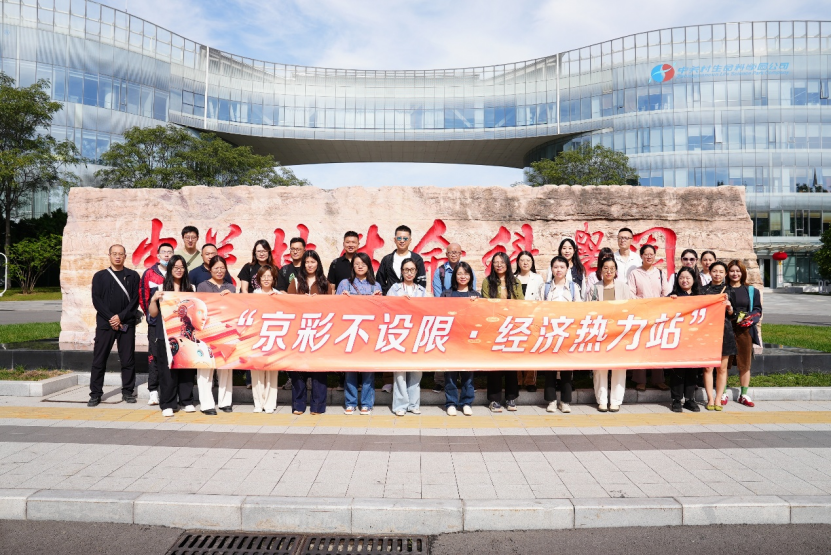
经济热力站丨走进北京医药健康产业区,解码首都医药创新策源力
Bei Ke Cai Jing· 2025-09-30 08:37
Core Viewpoint - The event "Innovation Source, Health Navigation" highlights Beijing's strategic focus on the pharmaceutical and health sectors, showcasing the city's efforts to drive high-quality economic development through innovation and clinical needs [1][3][19]. Group 1: Event Overview - The event was organized by the Beijing Municipal Cyberspace Administration and featured a visit to various innovative pharmaceutical companies and research centers [1][2]. - The media delegation explored the complete path of innovative drugs from target discovery to clinical approval, emphasizing the importance of clinical needs and policy support in driving pharmaceutical innovation [2][3]. Group 2: Industry Development - The Zhongguancun Life Science Park has become a hub for innovation in China's life sciences, housing over 1,000 innovative pharmaceutical companies and several national-level research institutions [3][4]. - The park includes significant medical facilities with over 3,000 beds, supporting clinical research and the development of innovative drugs and medical devices [3]. Group 3: Company Highlights - Wantaibio invests over 1 billion yuan annually in R&D, with over 30% of its workforce dedicated to research, resulting in hundreds of innovative products, including six global firsts [12]. - Huahui Anjian focuses on developing competitive innovative drugs in virology and oncology, with several drugs in different clinical development stages, including a breakthrough therapy for hepatitis B [14]. - Nuo Cheng Jian Hua has over ten innovative drugs in clinical stages, with significant trials ongoing in China and globally, including a BTK inhibitor and a humanized monoclonal antibody [16][18]. Group 4: Innovation Ecosystem - The event emphasized the importance of a supportive research policy and industrial ecosystem in Beijing, which provides fertile ground for the growth of innovative pharmaceutical companies [19]. - The ongoing monthly thematic visits aim to promote the achievements of high-quality economic development in Beijing, focusing on key sectors such as advanced manufacturing and biomedicine [19].


异动盘点0930|优必选涨超5%,脑动极光-B涨超16%;阿里巴巴美股涨超4%,美光科技涨超4%
贝塔投资智库· 2025-09-30 04:00
Group 1: Hong Kong Stocks - China Metallurgical Group (01618) rose nearly 7%, with institutions stating that the value of this resource-rich construction company needs urgent reassessment [1] - Rongchang Bio (09995) increased over 5%, as its innovative ophthalmic drug RC28 has been submitted for listing, following a partnership with Santen China [1] - Laikang Pharmaceutical-B (02105) surged nearly 6%, with a cumulative increase of 36% over the last three trading days, driven by positive preliminary results from the Phase I clinical MAD study of LAE102 [1] - UBTECH Robotics (09880) rose over 5%, with a report from CMB International recommending UBTECH as the top pick in the humanoid robot sector and raising its target price [1] - Innovent Biologics (09969) increased over 6%, as the company announced the first prescriptions for Tanshitumomab in several provinces [1] - BrainCo-B (06681) surged over 16%, benefiting from policy catalysts in the brain-computer interface industry, with its cognitive impairment digital therapy product having a first-mover advantage [1] - Yaoshi Bang (09885) rose over 10%, with high-margin business accelerating growth and POCT devices expected to see increased deployment in the second half of the year [1] - DCH Holdings (00179) fell over 7%, as Citigroup downgraded its investment rating from "Buy" to "Neutral," citing limited upside potential for the stock [1] - Minmetals Resources (01208) rose over 2%, planning to issue $500 million zero-coupon convertible bonds maturing in 2030 for overseas debt refinancing [1][2] Group 2: US Stocks - Alibaba (BABA.US) rose 4.65%, with Morgan Stanley reiterating an "Overweight" rating and raising the ADR target price from $165 to $200 [3] - Li Auto (LI.US) increased 3.57%, as the Li One officially commenced delivery at the Changzhou smart manufacturing base, with a report indicating that the i6 model's sales performance is expected to outperform the i8 [3] - JD.com (JD.US) rose 0.15%, announcing that the 2025 Double 11 shopping festival will start on October 9 at 8 PM, two days earlier than last year [3] - Xpeng Motors (XPEV.US) increased 1.76%, with the company announcing that the Xpeng MONA M03 has delivered a total of 180,000 units [3] - New Oriental (EDU.US) rose 4.38%, with a report indicating that the overall business development of the group is stabilizing [3] - Merus (MRUS.US) surged 35.97%, following an agreement with Danish biotech company Genmab for a cash acquisition at $97 per share [3] - Novo Nordisk (NVO.US) fell 0.20%, as Morgan Stanley downgraded its rating to "Sell" and reduced the target price from $99 to $47 [4] - MoonLake (MLTX.US) plummeted 89.93%, with trial results for its therapeutic drug falling far below expectations, leading to a significant target price cut by RBC [4] - TSMC (TSM.US) fell 0.05%, reaffirming that it has not engaged in discussions regarding potential investments or collaborations with any companies [4] - Micron Technology (MU.US) rose 4.22%, with Morgan Stanley predicting that the storage industry price increase cycle may continue into next year [4]



医药股表现强势 机构称药品关税对产业链影响有限 后续关注ESMO大会等催化剂
Zhi Tong Cai Jing· 2025-09-30 03:56
Core Viewpoint - The recent announcement by Trump regarding a 100% tariff on all brand/patent drugs starting in October has led to a strong performance in the pharmaceutical sector, particularly among Chinese innovative drug companies, which are not expected to be significantly impacted by this policy [1][1]. Group 1: Stock Performance - Chinese pharmaceutical stocks have shown strong gains, with Heptares Therapeutics (02142) up 8.2% to HKD 15.71, Zai Lab (09688) up 6.83% to HKD 26.6, Innovent Biologics (09969) up 6.61% to HKD 18.87, and WuXi AppTec (603259) (02359) up 5.37% to HKD 115.7 [1][1]. Group 2: Tariff Impact Analysis - Trump's tariff policy applies only to brand/patent drugs and excludes generic drugs, biosimilars, and active pharmaceutical ingredients (APIs) [1][1]. - According to CMB International, the impact on China's innovative drug industry chain is limited, and there is no need for excessive concern [1][1]. - Most Chinese companies have either established production capacity in the U.S. or outsourced production to local Contract Manufacturing Organizations (CMOs), which mitigates the immediate impact of the tariffs [1][1]. Group 3: Export Dynamics - The majority of Chinese innovative drugs exported are in the form of APIs or raw herbal extracts, which are not affected by the new tariff policy, while the proportion of finished drug exports remains low [1][1]. - The investment timeline for multinational corporations (MNCs) to build factories in the U.S. will take time, leading to limited direct impact on CXO orders in the short term [1][1]. Group 4: Future Catalysts - Upcoming catalysts include the ESMO conference scheduled for mid to late October and the results of the medical insurance negotiations along with the first version of the commercial insurance innovative drug catalog expected to be announced in October to November [1][1].

港股异动 | 医药股表现强势 机构称药品关税对产业链影响有限 后续关注ESMO大会等催化剂
智通财经网· 2025-09-30 03:43
Core Viewpoint - The pharmaceutical sector is experiencing strong performance, with notable stock increases for several companies following Trump's announcement of a 100% tariff on all brand/patent drugs starting in October, which is not applicable to generic drugs, biosimilars, and active pharmaceutical ingredients (APIs) [1] Group 1: Stock Performance - Companies such as HAPO (02142) saw an 8.2% increase, trading at HKD 15.71; Zai Lab (09688) rose by 6.83% to HKD 26.6; Innovent Biologics (09969) increased by 6.61% to HKD 18.87; WuXi AppTec (02359) gained 5.37%, reaching HKD 115.7 [1] Group 2: Tariff Impact Analysis - The new tariff policy is expected to have a limited impact on China's innovative drug industry, as most companies have either established production capacity in the U.S. or outsourced manufacturing to local Contract Manufacturing Organizations (CMOs) [1] - The majority of Chinese innovative drugs exported are in the form of APIs or raw biological extracts, which are not affected by the new tariffs, while the export ratio of finished dosage forms is relatively low [1] Group 3: Future Catalysts - Upcoming catalysts include the ESMO conference scheduled for mid to late October, and the results of medical insurance negotiations along with the first version of the commercial insurance innovative drug catalog expected to be released between October and November [1]

港股诺诚健华涨超6%
Mei Ri Jing Ji Xin Wen· 2025-09-30 02:57
每经AI快讯,9月30日,港股诺诚健华(09969.HK)涨超6%,截至发稿,涨6.55%,报18.87港元,成交额 1.15亿港元。 ...