SMIC(688981)

Search documents
就要闪耀(9131)!全市场首只聚焦“港股芯片”产业链的港股信息技术ETF(159131)11月13日开创上市
Xin Lang Ji Jin· 2025-11-11 02:03
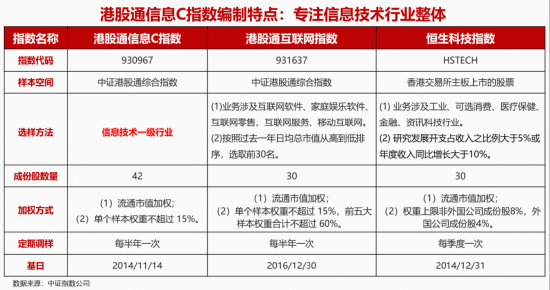
Group 1: Semiconductor Industry Performance - The semiconductor industry in China has shown strong performance in Q3, with total revenue reaching 439.2 billion yuan and net profit of 39.8 billion yuan, representing year-on-year growth of nearly 14% and approximately 53% respectively [1] - The "14th Five-Year Plan" emphasizes extraordinary measures to promote breakthroughs in key technologies across various sectors, including integrated circuits and advanced materials, which significantly enhances the growth potential of China's chip industry [1] Group 2: ETF Launch and Market Position - Hua Bao Fund is set to launch the first ETF focused on the Hong Kong chip industry, tracking the CSI Hong Kong Stock Connect Information Technology Composite Index, which consists of 42 hard tech companies [1][3] - As of October 31, 2025, Hua Bao Fund's equity ETFs have reached an asset management scale of 131.49 billion yuan, ranking among the top ten in the industry [2] Group 3: Index Composition and Characteristics - The CSI Hong Kong Stock Connect Information Technology Composite Index is composed of 70% hardware and 30% software, focusing on semiconductor, electronics, and computer software sectors, which allows for better capture of AI hard tech trends [3][6] - The index has a high concentration of leading companies, with the top five stocks accounting for 50.03% of the total weight, indicating a strong alignment with the growth of industry leaders [6] Group 4: Company Developments - Semiconductor Manufacturing International Corporation (SMIC) plans to acquire a 49% stake in SMIC North Integrated Circuit Manufacturing, enhancing its control over a significant 12-inch wafer manufacturing base [7] - The acquisition will increase SMIC's ownership from 51% to 100%, allowing for full control over production capabilities, which include advanced technology processes [7]


306只科创板股融资余额环比增加
Zheng Quan Shi Bao Wang· 2025-11-11 01:45
Core Insights - The total margin financing balance on the STAR Market decreased by 0.33 billion yuan, while the margin short selling balance increased by 11.064 million yuan as of November 10 [1][2] Financing Balance Summary - The total margin financing balance reached 260.063 billion yuan, with a decrease of 0.327 billion yuan from the previous trading day [1] - The highest margin financing balance was held by Cambrian (寒武纪) at 15.133 billion yuan, followed by SMIC (中芯国际) and Haiguang Information (海光信息) with balances of 13.768 billion yuan and 8.585 billion yuan respectively [1] - A total of 306 stocks saw an increase in margin financing balance, while 280 stocks experienced a decrease [1] - Notable increases in margin financing balance were observed in Fumiao Technology (富淼科技), Huasheng Lithium (华盛锂电), and Zhuoyue New Energy (卓越新能) with increases of 30.85%, 30.08%, and 29.26% respectively [1] - Significant decreases were noted in Zhongke Feimiao (中科飞测), Pinming Technology (品茗科技), and Hanghua Co. (杭华股份) with declines of 15.48%, 14.70%, and 13.69% respectively [1] Short Selling Balance Summary - The highest margin short selling balance was recorded for Haiguang Information at 4.3 million yuan, followed by Cambrian and SMIC with balances of 3.7 million yuan and 3.1 million yuan respectively [2] - A total of 147 stocks saw an increase in margin short selling balance, while 130 stocks experienced a decrease [2] - The largest increases in margin short selling balance were seen in Zhenlei Technology (臻镭科技), Kewell (科威尔), and Sitwei (思特威) with increases of 350.02%, 237.39%, and 212.93% respectively [2] - The most significant decreases were observed in Youkede (优刻得), Liyuanheng (利元亨), and Lante Optics (蓝特光学) with declines of 74.90%, 67.59%, and 64.52% respectively [2]


科创ETF(588050)开盘涨0.35%,重仓股中芯国际涨0.49%,海光信息涨0.50%
Xin Lang Cai Jing· 2025-11-11 01:38
Group 1 - The core point of the article highlights the performance of the Science and Technology Innovation ETF (588050), which opened with a slight increase of 0.35% at 1.451 yuan [1] - The major holdings of the ETF include companies such as SMIC, Haiguang Information, and Cambrian, with respective opening increases of 0.49%, 0.50%, and 0.47% [1] - The ETF's performance benchmark is the Shanghai Stock Exchange Science and Technology Innovation Board 50 Index, managed by ICBC Credit Suisse Asset Management Company, with a return of 0.65% since its inception on September 28, 2020, and a return of -3.07% over the past month [1] Group 2 - The article provides specific stock performance data for the ETF's holdings, including a 1.17% increase for Lattice Semiconductor and a 1.13% increase for Zhongwei Company, while Unisound and Kingsoft Office experienced declines of 0.47% and 0.45%, respectively [1] - The article emphasizes the importance of monitoring market conditions, as the ETF's recent performance reflects broader market trends [1]


研判2025!中国电子束光刻系统行业产业链、市场规模及重点企业分析:技术突破与挑战并存,展望高质量发展未来[图]
Chan Ye Xin Xi Wang· 2025-11-11 01:16
Core Insights - The Chinese electron beam lithography (EBL) system industry is transitioning from "catching up" to "keeping pace" with international standards, achieving breakthroughs in technology such as 0.6 nm resolution and a production capacity of 60 wafers per hour, nearing global advanced levels [1][7][11] - The market size of the Chinese EBL system industry is projected to reach approximately 294 million yuan in 2024, representing a year-on-year growth of 59.78% [1][8] - Despite advancements, the industry faces challenges such as insufficient domestic production of EUV photoresists (less than 1%) and technical hurdles in processes below 2 nm [1][5][14] Industry Overview - EBL systems utilize high-energy electron beams for nanoscale structure fabrication, offering advantages like ultra-high resolution (less than 10 nm) and flexibility without masks, widely applied in semiconductor manufacturing and quantum device preparation [2][3] - The upstream supply chain includes materials like high-purity quartz glass and photoresists, while the downstream applications focus on semiconductor manufacturing and research [3][4] Market Size - The Chinese EBL system market is expected to grow significantly, with a forecasted market size of 294 million yuan in 2024, marking a 59.78% increase from the previous year [1][8] - The domestic demand for semiconductor chips continues to rise, driven by emerging technologies such as 5G and AI, which further supports the growth of the EBL system market [7][12] Key Companies and Institutions - Notable advancements have been made by companies like Zeyou Technology and Zhejiang University, with the "Xizhi" EBL machine achieving 0.6 nm precision and 8 nm linewidth technology, marking significant progress in domestic capabilities [8][11][9] - Zeyou Technology's EBL system has achieved over 95% localization rate and is being applied in various high-tech fields, breaking the monopoly of foreign companies [9][10] Industry Development Trends 1. **Technological Breakthroughs**: The focus will be on achieving resolutions below 0.6 nm and enhancing multi-beam parallel technology, with the aim of increasing production capacity to 120 wafers per hour [11][12] 2. **Expanding Market Demand**: The demand for high-precision chips in sectors like quantum computing and advanced packaging is expected to surge, driven by government support and industry collaboration [12][14] 3. **Complete Supply Chain Development**: The industry aims to achieve self-sufficiency across the entire supply chain, enhancing the localization of critical materials and addressing challenges in EUV photoresist production [14]

【好文重读】全球热潮!投资港股半导体芯片,终于有了高纯的ETF新品...
Xin Lang Ji Jin· 2025-11-11 00:00
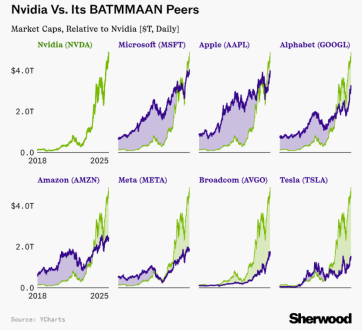
Group 1 - The core strength of NVIDIA is attributed to the significant increase in capital expenditures by global tech giants, driven by AI, which has been a key driver of the recent bull market in US stocks and has spurred growth in the global semiconductor industry [2] Group 2 - Major tech companies are ramping up capital expenditures, with Alphabet raising its 2025 capital expenditure guidance from $85 billion to $91-93 billion, and predicting a "significant increase" in 2026 [5] - Microsoft reported a capital expenditure of $34.9 billion for the recent quarter, a 74% year-over-year increase, exceeding market expectations, and guiding for over $30 billion in the next quarter [6] - Meta has adjusted its 2025 capital expenditure guidance from $66-72 billion to $70-72 billion, forecasting that growth in 2026 will be "significantly greater" than in 2025 [6] Group 3 - The demand for AI is igniting a "super cycle" in storage chips, with Samsung and SK Hynix signing a preliminary chip supply agreement for the "Stargate" AI data center project, which requires 900,000 DRAM wafers per month, more than double the current global HBM capacity [7] - Global storage chip prices have surged, with server DRAM prices increasing by 171.8% year-over-year in Q3 2025, and DDR5 memory prices rising over 50% in the past month [7] - Major storage manufacturers are reducing traditional DDR4 production to below 20% to focus on higher-margin HBM and DDR5, leading to supply tightness and price increases [7] Group 4 - The Hong Kong stock market is witnessing a significant investment boom in the semiconductor sector, supported by strong domestic policies aimed at achieving breakthroughs in key technologies [9] - The newly launched Hong Kong Information Technology ETF (159131) tracks the CSI Hong Kong Information Technology Composite Index, consisting of 42 hard tech companies, with a structure of 70% hardware and 30% software [9] - The index's constituent stocks are expected to show high growth in earnings, with major companies like Xiaomi, SMIC, and Kingdee International projected to see substantial profit increases [9] Group 5 - The Hong Kong semiconductor sector has shown impressive performance, with leading companies like Hua Hong Semiconductor, Shanghai Fudan, and InnoPhase achieving significant stock price increases this year [12] - The top constituent stock, SMIC, has seen a year-to-date increase of over 143% [12] Group 6 - Goldman Sachs has expressed optimism about Hua Hong Semiconductor's prospects, raising its target price by 13% to 87 HKD, reflecting a forecasted P/E ratio of 51.5 times for 2028 [14] - The influx of southbound capital into Hong Kong stocks has exceeded 1.25 trillion HKD this year, indicating a growing demand for domestic capital allocation in Hong Kong stocks [15] Group 7 - The recent US-China meeting has reduced trade friction uncertainties in the semiconductor industry, supporting product exports and supply chain stability [16] - The meeting's outcomes, combined with the Fed's interest rate cuts and domestic tech policies, are expected to enhance the activity in the semiconductor sector, positioning it as a core growth area in the A-share market [16] Group 8 - The Hong Kong Information Technology ETF (159131) is set to launch on November 13, coinciding with a pivotal moment for the domestic semiconductor industry [17][18]
中芯国际大宗交易成交201.62万元
Zheng Quan Shi Bao Wang· 2025-11-10 13:58
Core Viewpoint - Semiconductor Manufacturing International Corporation (SMIC) experienced a block trade on November 10, with a transaction volume of 16,800 shares and a transaction value of 2.0162 million yuan, at a price of 120.01 yuan per share [1] Group 1: Trading Activity - The buyer of the block trade was CITIC Securities Co., Ltd. Shanghai Branch, while the seller was CITIC Securities South China Co., Ltd. Foshan Branch [1] - In the last three months, SMIC has recorded a total of 7 block trades, with a cumulative transaction value of 40.951 million yuan [1] Group 2: Stock Performance - On the same day, SMIC's closing price was 120.01 yuan, reflecting a decrease of 1.72%, with a daily turnover rate of 1.98% and a total transaction amount of 4.749 billion yuan [1] - Throughout the day, there was a net outflow of 699 million yuan in main capital, and over the past five days, the stock has seen a cumulative decline of 0.17% with a total net outflow of 718 million yuan [1] Group 3: Margin Trading Data - The latest margin financing balance for SMIC is 13.938 billion yuan, which has decreased by 555 million yuan over the past five days, representing a decline of 3.81% [1]
中芯国际重磅收购!
是说芯语· 2025-11-10 13:21
Core Viewpoint - Semiconductor Manufacturing International Corporation (SMIC) plans to acquire 49% of the shares of SMIC North Integrated Circuit Manufacturing (Beijing) Co., Ltd. through a share issuance, aiming for full ownership and control of the company [4][7]. Group 1: Transaction Details - The transaction involves issuing A-shares to existing shareholders of SMIC North, with a share price set at 74.2 yuan, representing a 35% discount compared to the pre-suspension price of approximately 114.76 yuan [7]. - The acquisition will increase SMIC's ownership in SMIC North from 51% to 100%, reflecting strong confidence in the future development of SMIC North [7]. Group 2: Background of SMIC North - SMIC North was established in July 2013 as a joint investment between SMIC and the Beijing government, focusing on a 12-inch wafer manufacturing base [5]. - The company has become a crucial part of SMIC's capacity layout in Beijing, operating two 300mm production lines with a total monthly capacity of 70,000 wafers [5]. - SMIC North covers 40nm and 28nm process technologies, including Polysion and high-k metal gate (HKMG) processes, serving various applications such as general logic circuits, low-power logic circuits, mixed circuits, and RF chips [5].

中芯国际11月10日现1笔大宗交易 总成交金额201.62万元 溢价率为0.00%
Xin Lang Cai Jing· 2025-11-10 10:10
Core Viewpoint - Semiconductor Manufacturing International Corporation (SMIC) experienced a decline of 1.72% in stock price, closing at 120.01 yuan, with a notable block trade occurring on November 10 [1] Group 1: Stock Performance - SMIC's stock closed at 120.01 yuan after a drop of 1.72% [1] - In the last five trading days, the stock has seen a cumulative decline of 0.17% [1] Group 2: Block Trade Details - A block trade was executed involving 16,800 shares, amounting to 2.0162 million yuan, with a premium rate of 0.00% [1] - The buyer was CITIC Securities Co., Ltd. Shanghai Branch, while the seller was CITIC Securities South China Co., Ltd. Foshan Branch [1] Group 3: Recent Trading Activity - Over the past three months, SMIC has recorded a total of seven block trades, with a cumulative transaction value of 40.951 million yuan [1] - There has been a net outflow of 659 million yuan from the main capital [1]
科创板百元股达69只,寒武纪-U股价最高
Zheng Quan Shi Bao Wang· 2025-11-10 09:21
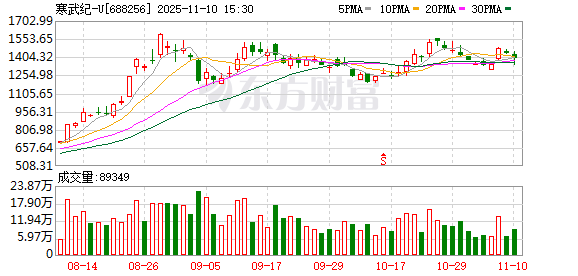
Group 1 - The average stock price of the Sci-Tech Innovation Board is 40.80 yuan, with 69 stocks priced over 100 yuan, and the highest priced stock is Cambrian-U at 1391.50 yuan [2][3] - Among the stocks priced over 100 yuan, 37 stocks increased in price today, with an average increase of 0.56%, while 32 stocks decreased [2][3] - The average premium of the latest closing price relative to the issue price for stocks over 100 yuan is 502.60%, with the highest premiums seen in companies like Shunwei New Materials and Cambrian-U [2][3] Group 2 - The net outflow of main funds for stocks over 100 yuan today totaled 3.607 billion yuan, with the highest net inflows seen in companies like Purun Co. and Tengjing Technology [3] - The total margin balance for stocks over 100 yuan is 94.857 billion yuan, with Cambrian-U and SMIC having the highest margin balances [3][4] - The stock list of companies over 100 yuan includes various sectors, with a concentration in electronics, pharmaceuticals, and computers [2][3]
科创板资金动向:8股主力资金净流入超亿元
Zheng Quan Shi Bao Wang· 2025-11-10 09:19
Market Overview - The main funds in the Shanghai and Shenzhen markets experienced a net outflow of 31.427 billion yuan, with the Sci-Tech Innovation Board seeing a net outflow of 5.743 billion yuan [1] - A total of 248 stocks saw net inflows, while 343 stocks experienced net outflows [1] Sci-Tech Innovation Board Performance - On the Sci-Tech Innovation Board, 332 stocks rose, with four stocks hitting the daily limit up, including Fangyuan Co. and Jindike [1] - The top three stocks with the highest net inflows were: - Purun Co. with a net inflow of 214 million yuan - Shengkong Co. with 171 million yuan - Trina Solar with 150 million yuan [1] Continuous Fund Flow Analysis - There are 60 stocks that have seen continuous net inflows for more than three trading days, with Zhonggang Luoni leading at 13 consecutive days of inflow [2] - Conversely, 125 stocks have experienced continuous net outflows, with Bayi Space leading at 14 consecutive days of outflow [2] Top Net Inflow Stocks - The top stocks by net inflow include: - Purun Co. with 21.363 million yuan and a 13.47% increase - Shengkong Co. with 17.116 million yuan and a 20% increase - Trina Solar with 15.042 million yuan and a 0.09% increase [2][3] Top Net Outflow Stocks - The stocks with the highest net outflows include: - SMIC with a net outflow of 699 million yuan and a 1.72% decrease - Guodun Quantum with 543 million yuan outflow - Lanqi Technology with 499 million yuan outflow [1]