
SPD BANK(600000)

Search documents
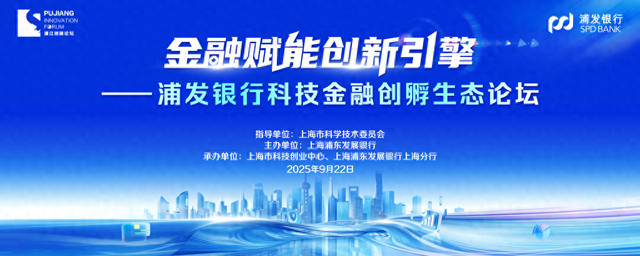
浦发银行上海分行连续六年全程参与浦江创新论坛,举办科技金融创孵生态论坛并发布多项方案成果
Xin Lang Cai Jing· 2025-09-29 09:34
Core Viewpoint - The 2025 Pujiang Innovation Forum emphasizes the integration of technology finance and innovation incubation, aiming to enhance the synergy between technology, finance, and industry for high-quality development in Shanghai [1][3]. Group 1: Forum Overview - The forum gathered representatives from government, regulatory bodies, financial institutions, venture capital, academic research, technology companies, and incubators to discuss core issues related to technology finance policy innovation and ecosystem building [3]. - The event featured a speech by the Deputy Director of the Shanghai Science and Technology Commission, highlighting the need to optimize the technology finance ecosystem and strengthen financial support for the entire chain of technological innovation [5]. Group 2: Financial Services Initiatives - Shanghai Pudong Development Bank (SPDB) launched the "PuKe eXiang" comprehensive financial service plan, which integrates credit, investment, and guarantee resources through digital means to provide efficient financial services for technology enterprises [7][8]. - The bank introduced the "Post-Investment Steward" smart platform for venture capital institutions, aimed at enhancing the connection between technological innovation and capital markets [10]. Group 3: Collaborative Ecosystem Development - The "Technology Finance Innovation and Incubation Ecosystem Alliance" was launched, involving multiple stakeholders to foster closer cooperation in resource matching, project incubation, and investment services [13]. - The "SPDB Scientist Support Program" was initiated to assist scientists in commercializing their research, providing comprehensive support from technology transfer to market entry [14]. Group 4: Insights and Trends - During the forum, industry leaders discussed new trends in technology investment and how capital can better empower technological innovation for high-quality development [17]. - SPDB shared insights on cross-border incubation and inter-domain collaboration, addressing barriers and pathways for resource integration [20]. Group 5: Future Directions - SPDB plans to continue deepening cooperation with various stakeholders in the technology innovation ecosystem to build a more vibrant and sustainable technology finance ecosystem, injecting new momentum into technological innovation in Shanghai and nationwide [25].


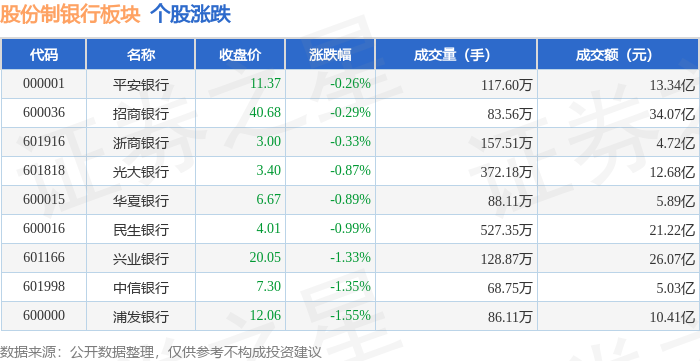
股份制银行板块9月29日跌0.86%,浦发银行领跌,主力资金净流出4.45亿元
Zheng Xing Xing Ye Ri Bao· 2025-09-29 08:45
证券之星消息,9月29日股份制银行板块较上一交易日下跌0.86%,浦发银行领跌。当日上证指数报收 于3862.53,上涨0.9%。深证成指报收于13479.43,上涨2.05%。股份制银行板块个股涨跌见下表: 从资金流向上来看,当日股份制银行板块主力资金净流出4.45亿元,游资资金净流入2.36亿元,散户资 金净流入2.09亿元。股份制银行板块个股资金流向见下表: | 代码 | 名称 | 收盘价 | 涨跌幅 | 成交量(手) | 成交额(元) | | --- | --- | --- | --- | --- | --- | | 000001 | 平安银行 | 11.37 | -0.26% | 117.60万 | 13.34亿 | | 600036 | 招商银行 | 40.68 | -0.29% | 83.56万 | 34.07亿 | | 601916 | 浙商银行 | 3.00 | -0.33% | 157.51万 | 4.72亿 | | 601818 | 光大银行 | 3.40 | -0.87% | 372.18万 | 12.68亿 | | 600015 | 华夏银行 | 6.67 | -0.89% | 88 ...
浦发银行长沙分行2026校招宣讲会走进中南大学湘潭大学
Chang Sha Wan Bao· 2025-09-29 07:52
Core Insights - The core focus of the news is the successful campus recruitment events held by SPD Bank's Changsha branch at Xiangtan University and Central South University, aimed at attracting high-quality talent from universities [1][2] Group 1: Event Overview - SPD Bank organized two recruitment presentations featuring a "company introduction + deep interaction" format, showcasing the bank's development blueprint through promotional videos and comprehensive staff presentations [1] - The events attracted approximately 220 university students, creating a lively atmosphere with students showing interest in various aspects of the bank's operations, including its development history and compensation benefits [1] Group 2: Student Engagement - The presentations included personal career experience sharing from alumni, which resonated with students and provided insights into career advancement pathways [1] - A Q&A session allowed students to inquire about recruitment details and career growth, reflecting their recognition of the bank's brand influence and development prospects [1] Group 3: Future Plans - SPD Bank's Changsha branch received high praise from the participating universities for its role in bridging the gap between the financial industry and higher education institutions [2] - The bank plans to continue collaborating with more universities to fulfill its social responsibility and assist more young graduates in their job search, thereby nurturing future talent for the financial sector [2]
浦发银行推出系列惠民举措助力国庆消费季
Zheng Quan Ri Bao Zhi Sheng· 2025-09-29 06:08
Core Insights - The article discusses the initiatives taken by Shanghai Pudong Development Bank (SPDB) Beijing Branch to promote consumer spending during the upcoming National Day and Mid-Autumn Festival by leveraging its product "Pu Flash Loan" [1] Group 1: Product Features - "Pu Flash Loan" is a pure credit consumer loan product that allows for a fully online application process from application to disbursement [1] - Customers can apply through the SPDB app using personal credit, housing fund, and social security information, with new users averaging 10 minutes for credit approval [1] - The loan disbursement is facilitated through a big data model for rapid assessment and real-time approval [1] Group 2: Consumer Benefits - The core benefit of "Pu Flash Loan" is its affordability, featuring a dual discount system of "fiscal interest subsidies + bank concessions" for eligible customers [1] - Customers can enjoy exclusive preferential interest rates on top of the fiscal subsidies, effectively reducing financing costs [1] Group 3: Market Integration - SPDB is enhancing cooperation with offline merchants and online platforms in sectors such as education, home appliance upgrades, and digital consumption [1] - The bank aims to seamlessly integrate financial services into everyday life, ensuring that services are available wherever consumption occurs [1] Group 4: Future Plans - The bank plans to continue improving the service chain of "finance + scenarios + livelihood" to ensure financial resources are effectively directed to every corner of the consumer market [1]
浦发银行跌2.04%,成交额2.24亿元,主力资金净流出503.28万元
Xin Lang Zheng Quan· 2025-09-29 02:18
Core Viewpoint - Shanghai Pudong Development Bank (SPDB) has experienced a decline in stock price recently, with a year-to-date increase of 21.46% but a notable drop in the last few trading days [1] Group 1: Stock Performance - On September 29, SPDB's stock price fell by 2.04%, reaching 12.00 CNY per share, with a trading volume of 224 million CNY and a turnover rate of 0.06% [1] - The total market capitalization of SPDB is 365.964 billion CNY [1] - Year-to-date, SPDB's stock has increased by 21.46%, but it has decreased by 4.31% over the last five trading days, 11.05% over the last twenty days, and 15.43% over the last sixty days [1] Group 2: Financial Data - As of June 30, SPDB had 116,100 shareholders, a decrease of 6.69% from the previous period, with an average of 260,655 circulating shares per shareholder, an increase of 10.50% [3] - For the first half of 2025, SPDB reported a net profit attributable to shareholders of 29.737 billion CNY, representing a year-on-year growth of 10.19% [3] Group 3: Dividends and Shareholding - Since its A-share listing, SPDB has distributed a total of 153.817 billion CNY in dividends, with 31.224 billion CNY distributed in the last three years [4] - As of June 30, 2025, Hong Kong Central Clearing Limited is the tenth largest circulating shareholder, holding 888.9 million shares, a decrease of 9.848 million shares from the previous period [4]
A股银行股多数下跌,邮储银行跌超1%
Ge Long Hui· 2025-09-29 02:13
格隆汇9月29日|A股市场银行股多数下跌,其中,邮储银行、西安银行、浦发银行、中信银行跌超 1%。 ...


乐游上海 金融赋能,浦发银行信用卡让实惠融入申城好风景
2 1 Shi Ji Jing Ji Bao Dao· 2025-09-29 01:08
Core Insights - The 36th Shanghai Tourism Festival showcases a vibrant celebration in the city, with SPDB (Shanghai Pudong Development Bank) actively participating through a themed float and various consumer benefits [1][2] - SPDB is redefining its role in the festive economy by integrating financial services with cultural and tourism experiences, moving beyond being just a payment tool [2][3] - The bank's credit card offerings are designed to enhance consumer experiences, providing diverse discounts and incentives that cater to the preferences of younger consumers [2][3][4] Group 1: Event Participation and Branding - SPDB's float, inspired by the iconic "Bund No. 12," emphasizes the bank's commitment to understanding and serving its customers [1] - The bank's theme, "Meet SPDB, meet a bank that understands you better," reflects its focus on customer-centric financial services [1] - The integration of financial services with tourism experiences is highlighted through various promotional activities during the festival [1][2] Group 2: Consumer Engagement and Benefits - SPDB's credit card initiatives include the distribution of "Summer Night Consumption Coupons," which cover a wide range of categories beyond traditional dining, such as music and arts [2] - The bank offers low-threshold, high-frequency usage scenarios for consumers, enhancing the appeal of its financial products [2][3] - Special promotions, such as "1 Yuan Purchase" for popular beverage brands, have become a weekly expectation for many young consumers [3][4] Group 3: Membership and Loyalty Programs - The "Super 6 Membership" program provides exclusive benefits, including consumption coupons and discounts, enhancing customer loyalty and engagement [6] - Higher-tier members can access substantial rewards, such as up to 6666 Yuan in cashback, incentivizing increased spending [6] - The program aims to create a sustainable value proposition for consumers, making every expenditure more rewarding [6] Group 4: International and Local Market Integration - SPDB is positioned as a key financial service provider for international tourists, facilitating seamless payment experiences at major airports [6][7] - The bank's initiatives support Shanghai's goal of becoming a global travel destination, enhancing the overall tourism experience for both domestic and international visitors [6][7] - The integration of financial services with urban tourism reflects a broader trend in consumer preferences towards experiential spending [2][7]
十二年竭诚耕耘,十二年创新先行 ——浦发银行上海分行为上海自贸区建设贡献金融力量
Guo Ji Jin Rong Bao· 2025-09-29 00:44
打造自贸平台,积极投身创新实践 自贸区金改的任务是深化金融领域的开放创新。浦发银行上海分行在人民币资本项目兑换、扩大人民币 跨境使用等领域都积极开展先行先试,参与并推动了逾70单的首单及首批创新的落地。自自贸区设立以 来,首批启动FT境外融资、首批启动FT外币服务、首家为上海清算所开立中央对手清算FTE账户、开 立首张大宗商品FT跨境电票、发行首单FT跨境理财产品、首批区外科创企业FTE账户服务、首批FTF海 在跨境融资服务方面,浦发银行上海分行利用境内外两个市场、两种资源,服务区域内重点区域、重大 项目、重点企业的融资,既有向国资集团提供项目建设的信贷支持,也有为科技型企业成长发展提供日 常运营资金支持,帮助知名投资机构完成基于产业链整合的海外并购,还为大型集团客户走出去提供海 外融资。2025年,分行落地了全市场首单临港新片区新政下非居民并购贷款试点业务,为某科技企业境 外子公司提供了、融资比例80%、融资期限10年的FTN跨境并购贷款,助力企业高效完成境外传感器业 务收购,实现"走出去"产业链整合。 在跨境汇兑服务方面,通过自由贸易账户连接境外外汇市场、自由可兑换的特点,浦发银行设计了自贸 汇兑的产品系 ...
上市银行“十四五回望”之资负结构与息差变迁
CMS· 2025-09-28 15:09
Investment Rating - The report maintains a recommendation for the banking industry [3] Core Insights - The report provides a comprehensive analysis of the asset-liability structure and interest margin changes of 42 A-share listed banks during the "14th Five-Year Plan" period, highlighting a shift towards corporate loans on the asset side and a stronger retail focus on the liability side [12][14] - The asset-liability structure indicates a significant increase in the proportion of corporate loans, rising from 57.02% to 63.22% from the end of 2020 to mid-2025, while the proportion of demand deposits decreased from 41.94% to 30% [12][14] - The report notes a decline in both asset yield and interest margin, with the yield on interest-earning assets dropping from 4.43% to 3.32% and the net interest margin decreasing from 2.23% to 1.53% during the same period [14][15] Summary by Sections Overall Asset-Liability Structure and Interest Margin Changes - The asset-liability structure shows an increase in loan-to-earning asset ratio from 54.19% to 56.49%, with corporate loans making up a larger share of total loans [14][15] - The average yield on interest-earning assets decreased significantly, with the loan yield falling from 5.34% to 3.82% [15] - The net interest margin for listed banks remains higher than that of commercial banks, despite a decline [14][15] Changes in Each Banking Sector's Asset-Liability Structure and Interest Margin - City commercial banks experienced a more significant increase in the proportion of corporate loans, with their interest margin narrowing less compared to other banks [18] - The report highlights that the proportion of deposits in interest-bearing liabilities for state-owned banks decreased, while it increased for rural commercial banks [18] - The decline in interest-bearing liabilities' cost rate was most pronounced in city commercial banks, leading to a smaller reduction in their interest margin [18]





固收深度报告20250927:从42家上市银行半年报解读银行债券投资“攻守道”





Soochow Securities· 2025-09-27 14:32
1. Report Industry Investment Rating No information about the report industry investment rating is provided in the given content. 2. Core Viewpoints of the Report - External environment factors such as interest rate fluctuations, bond supply - demand, and policy orientation jointly impact bond investment returns. In H1 2025, the bond investment of 42 listed banks showed certain characteristics in scale, structure, and profit and loss, but there are still challenges in maintaining stable returns in the future [1]. - The overall bond investment scale of 42 listed banks expanded steadily in H1 2025. There were differences in the investment structure among different types of banks, with state - owned banks and city commercial banks having stable growth in the bond allocation portfolio, while joint - stock banks and rural commercial banks increased their efforts in the bond trading portfolio. The bond investment portfolio generally presented a pattern of "stable foundation and flexible gain" [1]. - The coupon income of 42 listed banks was generally stable in H1 2025 but showed a slight year - on - year decline. The fair value change loss was significant, and the investment income increased. However, the bond investment of the banking industry still faces pressure to maintain stable returns [1]. 3. Summary According to the Table of Contents 3.1 42 Listed Banks' Bond Investment Volume - **Overall Bond Investment Scale: Steady Expansion**: In H1 2025, the total scale of the three types of bond - type financial assets of 42 listed banks showed a steady expansion trend. The growth of debt investment - type financial assets measured at amortized cost was relatively slow, while the growth of trading financial assets measured at fair value and included in current profits and losses was relatively large, indicating that banks increased the proportion of trading positions [9]. - **Differentiated Bond Investment Distribution Structures among Different Bank Types**: In H1 2025, state - owned banks and city commercial banks showed stable growth in the bond allocation portfolio, which may be related to their participation in the primary - market issuance of important national and regional bond varieties. Joint - stock banks and rural commercial banks slightly weakened their bond allocation power but significantly increased their efforts in the bond trading portfolio, showing a differentiated feature of "stable allocation by large banks and prominent trading flexibility by small and medium - sized banks" [13]. - **Bond Investment Allocation Tilted towards Government - Related Bonds**: In H1 2025, commercial banks increased their allocation of government - related bonds, with an average month - on - month increase of about 10% for state - owned banks, joint - stock banks, and city commercial banks, and a slightly smaller increase for rural commercial banks. The allocation of financial bonds and other bonds was differentiated. All banks held a relatively large scale of government - related bonds, followed by financial bonds and credit - related bonds [18]. - **Correlation between Financial Asset Types and Bond Variety Structures**: The banking industry maintained a stable growth of interest - rate bonds in the bond allocation portfolio and increased the allocation of credit bonds, while the allocation of financial bonds was relatively weak. In the bond trading portfolio, interest - rate bonds and financial bonds were the core varieties, with a more significant increase than credit bonds, showing a "stable foundation and flexible gain" pattern [22]. 3.2 42 Listed Banks' Bond Investment Profit and Loss - **Coupon Income: Generally Stable and Still the Main Source of Income**: In H1 2025, the total coupon income of 42 listed banks decreased slightly year - on - year. Although the scale of held - to - maturity bonds increased, the decline in the coupon rate of newly issued bonds led to a decrease in coupon income. In the future, coupon income is still expected to be the main source of bond investment income for commercial banks [26]. - **Fair Value Change Loss: Losses in the Trading Level**: In H1 2025, the total fair value change loss of 42 listed banks decreased significantly year - on - year, indicating that it was difficult to obtain capital gains through short - term trading in the volatile bond market, and there were floating losses in bond trading [28]. - **Investment Income: Growth in All Bank Types**: In H1 2025, the actual investment income of 42 listed banks in the bond field increased significantly year - on - year. Although the book value appreciation of bond - type trading financial assets and other debt investment - type financial assets was not as good as that of the previous year, banks could still increase their investment income by selling floating - profit old bonds and waiting for the maturity of high - coupon bonds [31]. 3.3 Attribution and Summary - **External Environment Driving Factors: Interest Rate Fluctuations, Bond Supply - Demand, and Policy Orientation Jointly Impact Bond Investment Returns**: In H1 2025, the "more adjustments and fewer opportunities" bond market environment led to a general decline in the prices of existing bonds, resulting in a significant year - on - year decline in the fair value change loss of listed banks' bond investment. The supply of national bonds, local government bonds, and policy - based financial bonds increased, but the coupon rate of newly issued bonds decreased, leading to a decline in coupon income. Regulatory policies indirectly affected bond investment performance [35]. - **Banking Industry's Bond Investment Pressure and Future Outlook** - Overall Income Shows a Positive Trend but There Are Still Hidden Concerns: In H1 2025, the actual bond investment income of 42 listed banks increased slightly year - on - year, but the coupon income faced downward pressure in the interest - rate downward cycle, and it was more difficult to obtain spread income through band trading. Since H2 2025, the "stock - strong and bond - weak" pattern has emerged, and the loss caused by fair value change will be more obvious [3]. - Different Bank Types Show Differentiated Performance, and State - owned Banks' Pressure Is Relatively Controllable: State - owned banks can maintain a certain profit - making ability in the low - interest - rate volatile bond market due to their advantages in bond allocation and trading portfolios. Joint - stock banks, city commercial banks, and rural commercial banks are more vulnerable, and they may increase their capital allocation in the equity market, commodity market, and related structured fixed - income products in the future [3].