HUA XIA BANK(600015)

Search documents
股东拟增持青岛银行2.33亿股 年内已有9家银行发布增持报告
2 1 Shi Ji Jing Ji Bao Dao· 2025-09-03 05:39
Group 1 - Qingdao Bank announced that its shareholder Guoxin Chanquan Holdings plans to increase its stake through secondary market transactions, aiming for a total holding of 19.00% to 19.99% after the increase, with a minimum of 233 million shares and a maximum of 291 million shares to be acquired within six months [1] - Nanjing Bank's major shareholder, Nanjing Gaoke, increased its stake by 7.51 million shares, raising its holding from 8.94% to 9.00%, reflecting confidence in the bank's future development [2] - Shanghai Bank reported that ten directors and senior management purchased a total of 440,000 shares, with a total investment estimated between 4.60 million to 4.70 million yuan, indicating strong internal confidence in the bank's value [3] Group 2 - Suzhou Bank's major shareholder, Guofazhong Group, completed its share increase plan, acquiring 118 million shares for a total investment of 856 million yuan, based on confidence in the bank's long-term value [4] - Chengdu Bank adjusted its share increase plan due to rising stock prices, with a new plan to invest between 700 million to 1.4 billion yuan without a price cap, reflecting ongoing confidence in the bank's future [5] - Huaxia Bank announced a plan for its directors and senior management to voluntarily increase their holdings by at least 30 million yuan, demonstrating confidence in the bank's long-term investment value [6] Group 3 - The trend of share increases among banks is concentrated when valuations are at historical lows, indicating a strong internal belief in long-term value [4] - Analysts noted that the banking sector's profitability is stabilizing, with expectations for continued growth in earnings, suggesting a favorable investment environment for bank stocks [6]



信用卡失速消费贷补位,上市银行零售信贷的“跷跷板”能稳吗
Nan Fang Du Shi Bao· 2025-09-03 04:01
Core Viewpoint - The retail credit market is experiencing a significant divergence between traditional credit card business contraction and the expansion of personal loans, driven by consumer demand and policy support [2][11]. Credit Card Business - The total number of credit cards and credit card loans has declined for 11 consecutive quarters, with a reduction of 12 million cards compared to the end of last year [2]. - Among 15 listed banks, 11 reported a decrease in credit card loan balances compared to the end of last year, highlighting a pronounced industry-wide contraction [3]. - The most significant decline in credit card loan balances was observed at Bank of China, with a drop of 13.89%, followed by Postal Savings Bank at 5.67% [4]. - Credit card transaction volumes have also decreased, leading to a decline in non-interest income, with some banks reporting drops exceeding 15% [2][6]. Personal Loans - In contrast to the credit card sector, personal loans, particularly consumer loans, have seen robust growth, with several banks reporting increases exceeding 10% [11]. - Among state-owned banks, personal loans and consumer loans have both shown positive growth, with Agricultural Bank leading at 5.60% [12]. - The consumer loan segment has become a key growth driver for banks, with many institutions launching tailored products to stimulate demand [2][11]. Asset Quality - The asset quality of retail credit is under pressure, with rising non-performing loan (NPL) ratios for personal loans and credit cards across many banks [16]. - State-owned banks generally exhibit higher NPL ratios, with notable increases in personal loan NPLs for several institutions [17]. - Credit card NPL ratios have also risen, particularly at Industrial and Commercial Bank of China, which reported a rate of 3.75% [18][20]. Market Dynamics - The decline in credit card usage reflects a broader shift in consumer spending patterns, with an increase in smaller, more frequent transactions [6][8]. - The overall market for credit cards is facing significant challenges, with many banks reporting double-digit declines in credit card income [9][10].






股份行零售排位“争夺赛”:亮眼增速下,座次有何变化?
Nan Fang Du Shi Bao· 2025-09-02 11:26
Core Viewpoint - The retail banking sector is experiencing intensified competition, with significant growth in retail assets under management (AUM) and private banking clients among major banks, despite previous challenges in the market [2][4][7]. Retail AUM - The top three banks in retail AUM are China Merchants Bank (CMB) with 16.03 trillion yuan, Industrial Bank with 5.52 trillion yuan, and CITIC Bank with 4.99 trillion yuan [6][5]. - CMB's AUM growth is 7.39%, while Industrial Bank and CITIC Bank have growth rates of 8.00% and 6.52%, respectively [6]. - Notably, the AUM of several banks has increased significantly, with Zhejiang Commercial Bank and Pudong Development Bank showing growth rates of 12.48% and 10.55% [4][6]. - CMB's AUM surpasses that of its competitors by over 10 trillion yuan, establishing a substantial lead in the retail banking sector [4][5]. Private Banking Clients - The number of private banking clients has also seen substantial growth, with Zhejiang Commercial Bank leading at 15.52% growth, followed by Huaxia Bank, Minsheng Bank, and Pudong Development Bank with growth rates of 13.79%, 12.84%, and 10.15%, respectively [7]. - CMB, CITIC Bank, and Industrial Bank also reported increases in private banking clients, all exceeding 8% growth [7]. Wealth Management Revenue - Wealth management income has shown significant increases, with CMB reporting an 11.89% growth in fees and commissions, marking the first positive growth in three years [8]. - CITIC Bank's wealth management income growth reached a four-year high at 10.3%, while Industrial Bank's retail wealth income grew by 13.45% [8]. Retail Loan Quality - Retail loan non-performing ratios vary significantly among banks, with Bohai Bank having the highest at 4.43%, while CMB and Industrial Bank maintain the lowest at 1.03% and 1.22%, respectively [11][9]. - Despite CMB's strong performance, its non-performing ratio increased by 0.07 percentage points compared to the previous year [11]. Retail Strategy - The introduction of consumer loan interest subsidies is expected to enhance the competitive landscape, shifting focus from price wars to technology, service, and quality differentiation [12][13]. - Banks are emphasizing asset allocation and the application of AI models in their retail strategies, with CMB planning to integrate AI assistants to improve efficiency and workflow [14][15].




贴息政策落地 华夏银行发放新政后首笔个人消费贷款
Sou Hu Cai Jing· 2025-09-02 03:15
Core Viewpoint - The implementation of the personal consumption loan interest subsidy policy by the Ministry of Finance, the People's Bank of China, and the financial regulatory authority aims to stimulate consumer spending by reducing credit costs for residents [1][2]. Group 1: Policy Implementation - The personal consumption loan interest subsidy policy officially took effect on September 1, with Huaxia Bank issuing the first subsidized loan of 50,000 yuan [1]. - The policy allows residents to enjoy a 1% annual interest subsidy on personal consumption loans used for specific categories, including home decoration, education, and healthcare, from September 1, 2025, to August 31, 2026 [2][5]. - Huaxia Bank has launched the subsidy service across its 952 branches and mobile banking platforms, ensuring immediate access for customers [1][2]. Group 2: Loan Details and Benefits - The subsidy applies to personal consumption loans, excluding credit card transactions, with a maximum subsidy of 3,000 yuan for eligible borrowers, based on a cumulative consumption amount of 300,000 yuan [5][6]. - For single transactions below 50,000 yuan, the maximum subsidy is capped at 1,000 yuan, corresponding to a consumption amount of 100,000 yuan [5][6]. - Huaxia Bank's loan products, such as Long E Loan and Elite Loan, qualify for the subsidy, and customers can benefit from automatic subsidy recognition through their transaction accounts [5][6]. Group 3: Economic Impact - The policy is designed to effectively lower credit costs for residents with consumption needs, thereby stimulating demand and supporting economic growth [6]. - Huaxia Bank plays a crucial role in connecting the market and consumers, facilitating the implementation of this financial subsidy to enhance the quality of financial services and contribute to high-quality economic development [6].

羊毛太少!信用卡正被年轻人抛弃?有卡民7张信用卡销掉6张
Di Yi Cai Jing· 2025-09-01 22:50
Core Viewpoint - The credit card sector in China is experiencing a significant decline, with various metrics such as credit card loan balances, transaction volumes, and the number of active cards showing downward trends, indicating a shift in consumer behavior and market dynamics [1][2][3]. Credit Card Loan Balances - The total credit card loan balance of 14 major banks reached 7.52 trillion yuan, a decrease of 197.57 billion yuan or 2.56% compared to the beginning of the year, with 11 banks reporting a decline [1][2]. - China Bank reported the largest decrease in credit card loans, down 13.88% to 522.50 billion yuan, while other banks like Ping An Bank and Industrial Bank saw reductions of 9.23% and 8.07%, respectively [2]. Credit Card Transaction Volumes - The total credit card transaction amount for 12 banks was 11.47 trillion yuan, reflecting a year-on-year decline of 11.05%, equivalent to a drop of 1.42 trillion yuan [2]. - The highest decline in transaction volumes was observed in China Bank and Everbright Bank, both exceeding 18%, while Construction Bank and Agricultural Bank experienced declines of around 5% [2]. Credit Card Circulation - The total number of circulating credit cards among 10 banks was 890 million, a decrease of 3.91 million cards compared to the previous year [3]. - Ping An Bank saw a net reduction of 6.26 million cards, a decline of 12%, while other banks like Industrial and Traffic Banks also reported significant reductions [3]. Credit Card Business Revenue - Credit card business revenue for several banks is in decline, with only four banks disclosing figures. For instance, China Merchants Bank reported a 4.96% drop in interest income and a 16.23% decrease in non-interest income [4][5]. - Other banks like Citic Bank and Everbright Bank experienced double-digit declines in credit card business revenue, with reductions of 14.61% and 21.3%, respectively [5]. Credit Card Non-Performing Loans - The non-performing loan (NPL) ratio for credit cards is on the rise for most banks, with Traffic Bank's NPL ratio increasing by 0.63 percentage points [6]. - As of mid-2025, China Merchants Bank maintained a stable NPL ratio of 1.75%, while Postal Savings Bank and Agricultural Bank reported lower ratios around 1.5% [6]. Changing Consumer Behavior - There is a noticeable shift in consumer attitudes towards credit cards, with many individuals opting to cancel excess cards, reflecting a trend towards minimalism in card ownership [7]. - Users are expressing dissatisfaction with the reduced benefits of credit cards, leading to a more selective approach in maintaining only essential cards [7]. Industry Outlook - Despite the overall contraction in the credit card market, there is potential for quality improvement and differentiation among banks, focusing on high-end customer needs and basic customer demands [8]. - Banks are actively pursuing differentiated strategies, such as promotional activities and product innovations aimed at enhancing customer engagement and satisfaction [8].
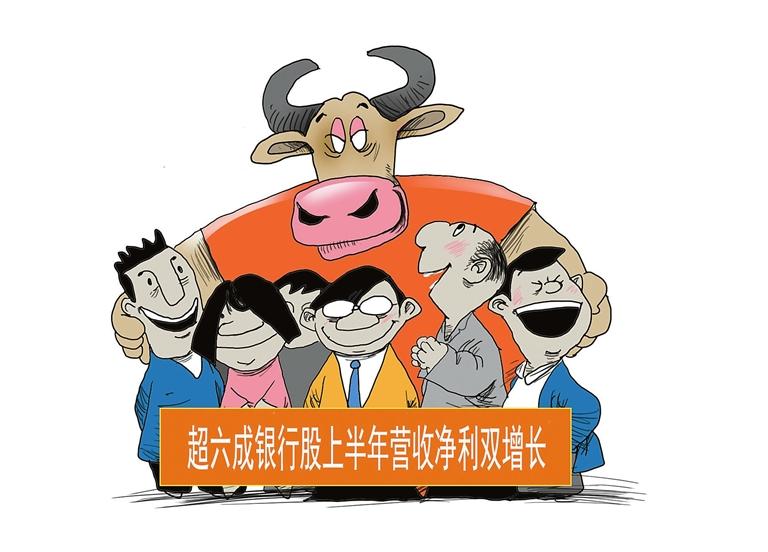
2375亿!17家上市银行中期分红大手笔
Shen Zhen Shang Bao· 2025-09-01 16:41
Core Viewpoint - The listed banks in China have shown strong performance in the first half of the year and are preparing to reward investors with significant mid-term dividends, reflecting their profitability and commitment to shareholder returns [2][4]. Group 1: Dividend Distribution - Among the 42 listed banks in A-shares, nearly half will implement mid-term dividends for 2025, with 17 banks already disclosing their plans, totaling 237.54 billion yuan [2]. - The six major state-owned banks lead in dividend distribution, with Industrial and Commercial Bank of China (ICBC) at the forefront, distributing 50.396 billion yuan, followed by China Construction Bank and Agricultural Bank of China with 48.605 billion yuan and 41.823 billion yuan respectively [2]. - The total dividends from the six major state-owned banks account for 86% of the total dividends announced by the 17 banks [2]. Group 2: Specific Bank Plans - Among joint-stock banks, CITIC Bank, Minsheng Bank, Ping An Bank, and Huaxia Bank have announced their mid-term dividend plans, with CITIC Bank proposing a total of 10.461 billion yuan [3]. - In the city and rural commercial banks, seven banks have announced mid-term dividends, including Ningbo Bank and Shanghai Bank, with Shanghai Bank proposing a cash dividend of 3 yuan per 10 shares [3]. - Four banks have a dividend payout ratio exceeding 30%, including Shanghai Bank and Postal Savings Bank, indicating a strong commitment to returning value to shareholders [3]. Group 3: Market Implications - The expansion of banks implementing mid-term dividends and their willingness to distribute reflects the resilience of the banking sector's profitability and a positive response to shareholder return demands [4]. - This trend indicates improved cash flow and capital management capabilities among certain banks, which may help boost market confidence and attract long-term value investors [4].



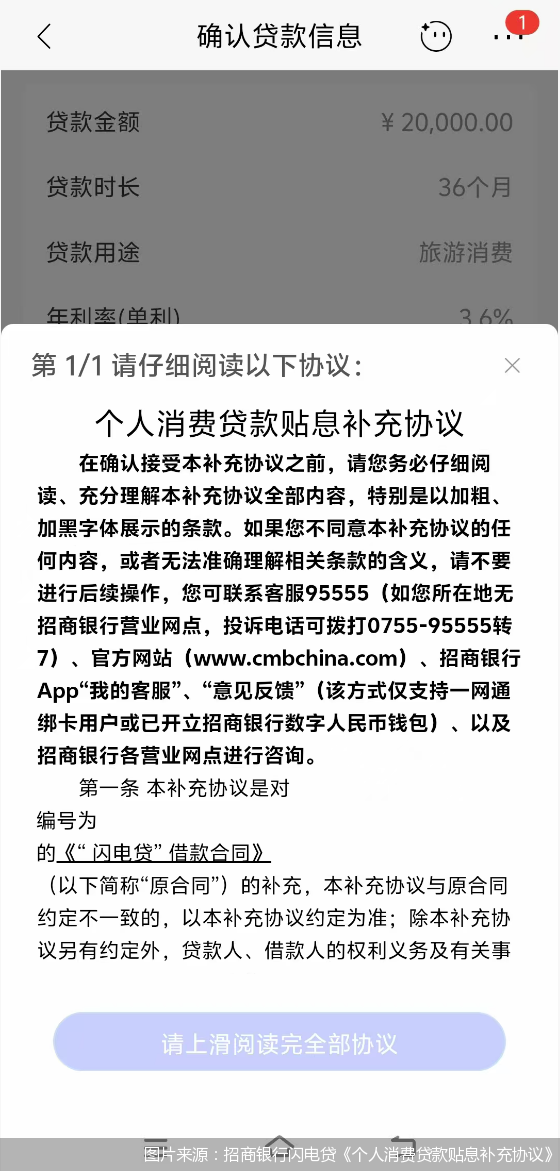
个人消费贷“国补”贴息首日:多银行晒操作“指南”,有客户已可签署补充协议
Bei Jing Shang Bao· 2025-09-01 13:55
Core Viewpoint - The implementation of the personal consumption loan interest subsidy policy marks a significant step in promoting consumption through direct financial support from the government [1][6]. Group 1: Policy Implementation - The personal consumption loan interest subsidy policy officially took effect on September 1, with multiple banks, including Huaxia Bank, Zhejiang Commercial Bank, and Everbright Bank, releasing guidelines for the subsidy [1][4]. - The subsidy covers consumption loans for amounts below 50,000 yuan and for specific categories such as home appliances, automotive purchases, and education [4][10]. - For loans below 50,000 yuan, the subsidy is calculated based on the actual amount, with a maximum subsidy of 1,000 yuan per borrower at the same institution [4][10]. Group 2: Operational Procedures - Banks have established specific operational processes to facilitate the subsidy, including automatic identification of eligible transactions and manual review for unrecognized transactions [5][6]. - Customers must authorize banks to access their transaction information to enable automatic subsidy processing, and they may need to provide proof of consumption for manual review [5][8]. - The subsidy is applied as a deduction from the monthly repayment amount rather than a direct cash transfer [6][10]. Group 3: Customer Obligations and Restrictions - Customers are required to sign agreements or confirmations to authorize banks to verify their consumption transactions [5][9]. - The subsidy is not applicable for transactions that do not meet specific criteria, such as cash withdrawals or transfers to personal accounts [9][10]. - Banks are mandated to ensure that the funds are used for legitimate consumption purposes, and any fraudulent activities will result in the revocation of the subsidy [9][10].

银行行长纷纷表态“反内卷”
21世纪经济报道· 2025-09-01 13:31
Core Viewpoint - The banking industry is undergoing a transformation focused on "anti-involution," emphasizing high-quality development and structural adjustments rather than mere scale expansion [1][10][18]. Group 1: Industry Trends - The term "anti-involution" was officially introduced in the banking sector by the People's Bank of China in its 2024 Q3 monetary policy report, highlighting the need to address the significant deviation in loan-to-deposit ratios affecting monetary efficiency [1][2]. - Recent earnings reports from banks indicate a shift in market focus from external shocks to internal structural adjustments, with many bank executives explicitly mentioning "anti-involution" in their statements [1][5][10]. Group 2: High-Quality Development - Many banks are now prioritizing high-quality development over scale, with key phrases like "stability," "solid," and "high quality" frequently appearing in their mid-year earnings calls [11][12]. - The consensus among banks is to abandon the scale obsession and focus on efficiency and quality, as articulated by various bank leaders [10][12][18]. Group 3: Pricing Mechanisms - Pricing strategies are being refined as a key approach to combat involution, with banks like Huaxia Bank and ICBC implementing rational pricing and risk-based pricing to maintain market order and support the real economy [5][6][12]. - The importance of synchronizing asset and liability sides in the anti-involution strategy is emphasized, as failure to do so could negate the benefits of reduced deposit costs [6][12]. Group 4: Non-Interest Income - Non-interest income is becoming a critical focus for banks to diversify revenue streams and reduce reliance on traditional credit, with many banks expanding into wealth management, investment banking, and pension finance [14][18]. - For instance, ICBC reported a non-interest income of 95.5 billion yuan, while Agricultural Bank of China highlighted a 94.6% increase in its pension finance loans [14][16]. Group 5: Policy Guidance - The need for policy guidance to establish a correct value system in the banking industry is recognized, with a focus on genuine credit demand and risk prevention [2][7]. - The government's emphasis on supply-side reforms and market order is seen as a positive signal for achieving sustainable development in the banking sector [7][18].


十家股份行7家营收“踩刹车”,净息差承压下挑战几何?
Nan Fang Du Shi Bao· 2025-09-01 12:11
Core Viewpoint - The mid-year performance report for 2025 reveals that the ten listed joint-stock banks have shown a stable overall operational trend, with total assets reaching 73.38 trillion yuan and net profits totaling 278.125 billion yuan, while also exhibiting diverse development characteristics across the industry [2] Group 1: Asset Performance - Total assets of the joint-stock banks have generally increased, with the leading banks being China Merchants Bank and Industrial Bank, with total assets of 12.657 trillion yuan and 10.614 trillion yuan respectively, marking growth rates of 4.16% and 1.01% compared to the end of the previous year [3][4] - Among the ten banks, except for China Minsheng Bank and Bohai Bank, all other banks achieved positive growth in total assets [4] Group 2: Revenue and Profitability - Seven out of ten banks reported a year-on-year decline in operating income, with only Shanghai Pudong Development Bank, China Minsheng Bank, and Bohai Bank achieving revenue growth [5][7] - China Merchants Bank led in net profit with 74.930 billion yuan, showing a slight increase of 0.25% year-on-year, while four banks experienced a decline in net profit [8][9] Group 3: Net Interest Margin - The net interest margin has shown a significant downward trend, with eight out of ten banks continuing to decline, influenced by factors such as the reduction in the Loan Prime Rate (LPR) and adjustments in mortgage rates [9][10] - China Merchants Bank reported the highest net interest margin at 1.88%, although it decreased by 0.12 percentage points year-on-year [10][11] Group 4: Asset Quality - The non-performing loan (NPL) balances of all ten banks have increased compared to the end of the previous year, with Bohai Bank experiencing the fastest growth in NPLs, reaching 17.269 billion yuan, a 4.79% increase [12][13] - The highest NPL ratios were recorded by Bohai Bank (1.81%), Huaxia Bank (1.60%), and China Minsheng Bank (1.48%), while China Merchants Bank had the lowest at 0.93% [14] Group 5: Provision Coverage Ratio - The provision coverage ratio has decreased for seven banks compared to the end of the previous year, with Ping An Bank experiencing the largest decline of 12.23 percentage points [15] - China Merchants Bank has the highest provision coverage ratio at 410.93%, while China Minsheng Bank has the lowest at 145.06% [15]
不再“规模至上”,银行行长纷纷表态“反内卷”
2 1 Shi Ji Jing Ji Bao Dao· 2025-09-01 11:04
Core Viewpoint - The banking industry is undergoing a transformation focused on "anti-involution," emphasizing high-quality development and avoiding excessive competition, as highlighted by recent statements from bank executives and regulatory bodies [1][2][6]. Group 1: Industry Trends - The term "anti-involution" has been officially recognized in the banking sector, with the People's Bank of China addressing it in their monetary policy report, indicating a shift in focus from external shocks to internal structural adjustments [1][2]. - Bank executives are increasingly using terms like "high-quality development," "stability," and "reasonable scale control," reflecting a consensus on moving away from scale-driven growth [1][6]. Group 2: Strategic Responses - Banks are adopting differentiated strategies to combat involution, such as optimizing asset structures and implementing rational pricing mechanisms. For instance, Minsheng Bank emphasizes deepening customer relationships and sustainable development [3][4]. - Industrial and Commercial Bank of China (ICBC) has implemented a "balanced pricing" strategy to stabilize net interest margins while supporting market operations [4]. Group 3: Non-Interest Income Focus - Non-interest income is becoming a critical area for banks to enhance revenue structures and reduce reliance on traditional lending. For example, ICBC reported a non-interest income of 95.5 billion yuan, with significant contributions from wealth management and other services [9][10]. - Agricultural Bank of China is innovating in the non-interest sector by developing comprehensive services for the elderly, showcasing a shift towards diversified revenue streams [11][12]. Group 4: Quality Over Quantity - The consensus among banks is shifting from a focus on scale to prioritizing quality and efficiency in growth. This is evident in the performance metrics shared by various banks, indicating a commitment to sustainable and quality-driven growth [6][7]. - The concept of "uniform speed balance" proposed by ICBC's president highlights the importance of stable growth over aggressive expansion, aiming to enhance the efficiency of capital allocation [8].