China Unicom(600050)

Search documents
当手机用上eSIM,会带来哪些连锁反应?
Xin Jing Bao· 2025-10-16 08:42
Core Insights - The three major telecom operators in China, China Telecom, China Mobile, and China Unicom, have received approval from the Ministry of Industry and Information Technology for the commercial trial of eSIM mobile services, marking the official launch of eSIM services across 31 provinces and regions in China [1][3] - The introduction of eSIM technology signifies a shift towards a "cardless era," where the functionality of physical SIM cards is integrated into the phone's internal chip, enhancing user convenience and potentially transforming the mobile industry [1][2] Impact on Mobile Industry - The removal of physical SIM card slots allows for more streamlined and compact phone designs, aligning with trends pursued by manufacturers like Apple and Huawei towards fully sealed devices [2] - eSIM technology will simplify the manufacturing process by eliminating the need for SIM card slots and related components, potentially affecting hundreds of small suppliers in the industry [2] - The integration of eSIM will lead to a redesign of mobile phone motherboards, enhancing the dominance of chip manufacturers like Qualcomm and MediaTek in communication control [2] Changes in Operator Dynamics - The activation and management of eSIMs through cloud services may diminish the traditional advantages held by telecom operators, as consumers will no longer need to visit physical stores [3] - Mobile manufacturers could gain more influence over the customer experience, potentially sharing user data with operators and altering the competitive landscape [3] - The transition to eSIM technology may facilitate easier number portability for users, prompting operators to focus more on service quality and transparency rather than customer retention through binding contracts [3] Regulatory Considerations - The cautious rollout of eSIM services in China highlights the need for a new regulatory framework to address data security and identity management, given the unique context of mobile numbers in China [4] - The transition from physical SIM cards to eSIMs poses significant challenges in terms of data security, necessitating robust mechanisms to prevent identity theft and data breaches [4] - The eSIM initiative is not just a technological advancement but also a critical step in the evolution of China's digital identity system, requiring a balance between convenience and security [4]



通信服务板块10月16日跌0.25%,三维通信领跌,主力资金净流出6.29亿元
Zheng Xing Xing Ye Ri Bao· 2025-10-16 08:27
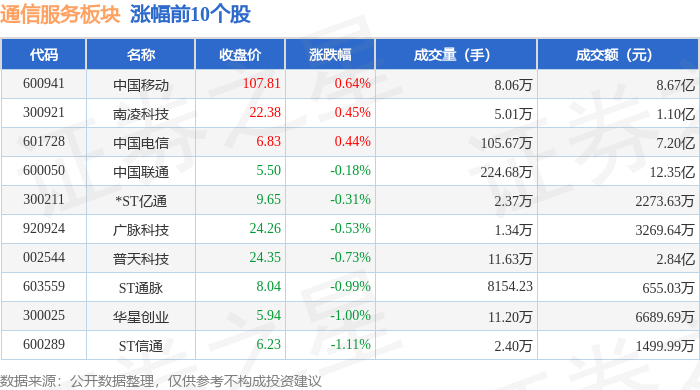
Market Overview - On October 16, the communication services sector declined by 0.25%, with Sanwei Communication leading the drop [1] - The Shanghai Composite Index closed at 3916.23, up 0.1%, while the Shenzhen Component Index closed at 13086.41, down 0.25% [1] Stock Performance - Key stocks in the communication services sector showed varied performance: - China Mobile (600941) closed at 107.81, up 0.64% with a trading volume of 80,600 shares and a turnover of 867 million yuan [1] - Sanwei Communication (002115) closed at 11.38, down 4.53% with a trading volume of 1,035,100 shares and a turnover of 1.192 billion yuan [2] - China Telecom (601728) closed at 6.83, up 0.44% with a trading volume of 1,056,700 shares and a turnover of 720 million yuan [1] - China Unicom (600050) closed at 5.50, down 0.18% with a trading volume of 2,246,800 shares and a turnover of 1.235 billion yuan [1] Capital Flow - The communication services sector experienced a net outflow of 629 million yuan from institutional investors, while retail investors saw a net inflow of 537 million yuan [2][3] - Notable capital flows included: - China Mobile saw a net inflow of 22.97 million yuan from institutional investors [3] - Puhua Technology (002544) had a net inflow of 20.09 million yuan from institutional investors [3] - Sanwei Communication experienced a significant net outflow of 11.92 billion yuan [2]


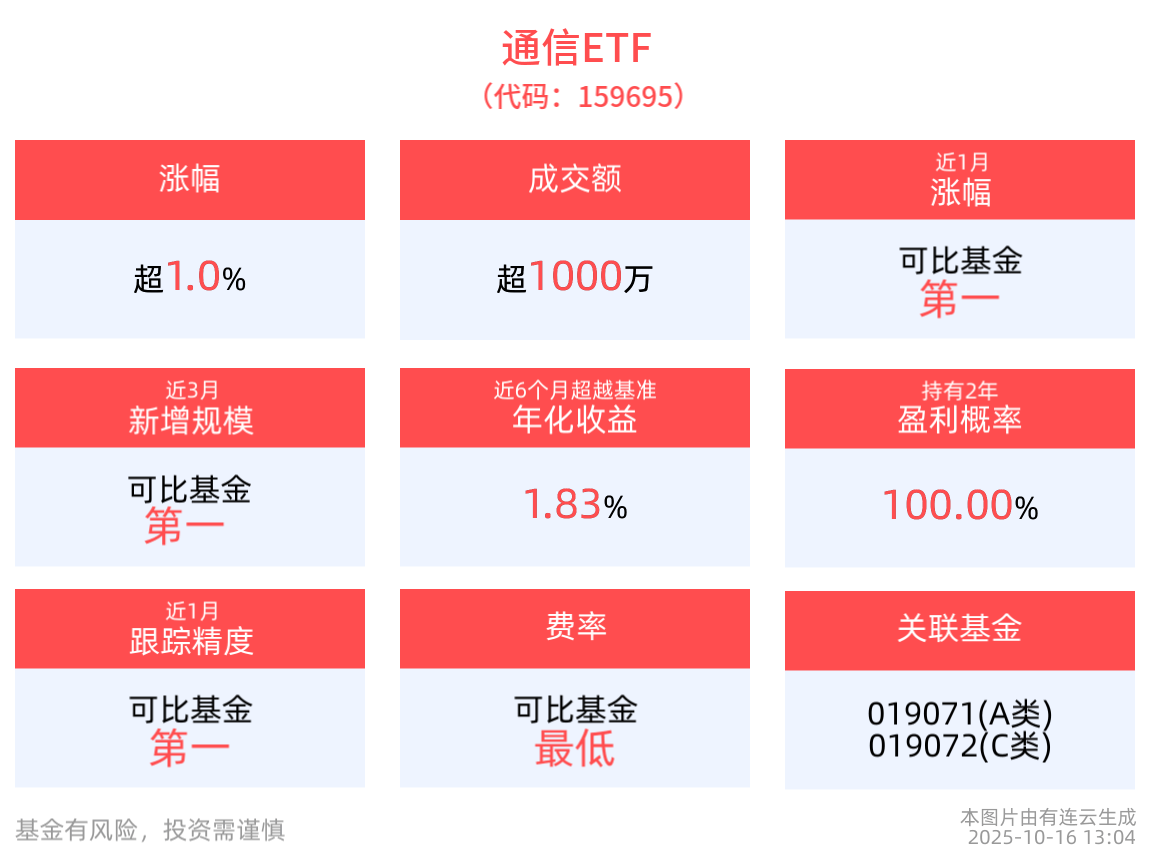
5G基站建成总量显著增加,通信ETF(159695)盘中涨超1%,成分股中兴通讯领涨
Sou Hu Cai Jing· 2025-10-16 05:25
Group 1: Market Performance - The communication ETF had a turnover rate of 4.55% during trading, with a transaction volume of 12.1969 million yuan. The average daily transaction volume over the past month reached 35.6798 million yuan as of October 15 [3] - Over the past three months, the communication ETF's scale increased by 155 million yuan, ranking first among comparable funds [3] - As of October 15, the communication ETF's net value rose by 79.80% over the past two years, placing it in the top 3.91% among 2,351 index equity funds [3] Group 2: Industry Developments - The Ministry of Industry and Information Technology reported significant progress in new infrastructure construction, with 4.598 million 5G base stations built, an increase of 395,000 from the end of the previous year. The number of gigabit broadband access ports exceeded 30.532 million, and the intelligent computing power scale reached 788 EFLOPS [3] - There are over 20,000 projects integrating 5G and industrial internet applications, positioning China's computing infrastructure as the second largest globally [3] Group 3: Future Outlook - Industry analysts predict that the communication sector will experience a dual opportunity period due to technological upgrades and policy support by 2025. Emerging fields such as artificial intelligence, quantum communication, and low-altitude economy will create new growth spaces [4] - The demand for AI is expected to dominate the Ethernet optical module market, with anticipated demand growth exceeding expectations from 2026 to 2030 [4] - Despite increasing international tariff disputes, suppliers in the computing power industry have mitigated impacts through capacity reserves and raw material switches, indicating limited fundamental disruption from policy shocks [4] Group 4: Key Stocks - The top ten weighted stocks in the communication index as of September 30, 2025, include Zhongji Xuchuang, Xinyi Sheng, ZTE Corporation, China Telecom, China Mobile, China Unicom, Tianfu Communication, Zhongtian Technology, Transsion Holdings, and Hengtong Optic-Electric, collectively accounting for 66.02% of the index [4]


苹果华为OPPO将推出eSIM手机,怎么办理?如何收费?
Qi Lu Wan Bao· 2025-10-16 02:44
Core Insights - eSIM technology is gaining traction as it allows users to activate mobile services without a physical SIM card, making devices lighter and providing more internal space [4] Group 1: eSIM Overview - eSIM replaces physical SIM cards with electronic data files, enabling mobile network services without the need for a physical card slot [4] - The approval of eSIM for mobile phones marks a new commercial phase in the industry, following its previous applications in IoT and smart wearables [4] Group 2: Activation Process - Users can activate eSIM services by visiting the physical stores of major telecom operators like China Telecom and China Mobile with their ID and eSIM-compatible devices [5] - China Mobile will start processing eSIM activations from the release date of the iPhone Air, while China Unicom requires online reservations for eSIM activation [5] Group 3: Supported Devices - Current eSIM-compatible devices include models from Apple, Huawei, and OPPO, which will be available for sale soon [6] Group 4: Usage of Original SIM Cards - Once eSIM is activated on devices like the iPhone Air, the original physical SIM card will no longer be usable unless a new number is written into the eSIM [7] Group 5: Pricing Structure - As of now, there are no clear fee structures for eSIM services, but initial activations are reported to be free at the stores [8] - China Unicom offers two types of eSIM services: a dual-terminal service for smart devices at a monthly fee of 10 yuan, and an independent eSIM number service with varying costs based on device type [9]

eSIM将给日常通信带来哪些新变化?
Xin Lang Cai Jing· 2025-10-16 02:44
Core Insights - The launch of eSIM mobile services in China marks a significant shift from traditional SIM cards, allowing users to download their phone numbers directly to a built-in chip without needing a physical SIM card [1][2][3] Group 1: eSIM Technology Overview - eSIM technology integrates the functionality of a physical SIM card into a chip within the device, enabling users to access communication services such as voice calls, data, and messaging without a physical card [1] - The adoption of eSIM is expected to lead to thinner and lighter smartphone designs, as the eSIM chip can be directly soldered onto the motherboard, enhancing durability against dust, water, and shocks [1] Group 2: Consumer Benefits - Users will benefit from simplified processes for activating and changing phone numbers without the need for a physical card, reducing the inconvenience of lost SIM cards and the hassle of swapping cards during international travel [1][2] - The eSIM rollout is anticipated to enhance the overall consumer experience and satisfaction, making connectivity more seamless and user-friendly [3] Group 3: Industry Impact - The introduction of eSIM services is expected to stimulate investment across the entire supply chain, driving demand for eSIM-enabled devices such as smartphones, tablets, wearables, and connected vehicles [2] - eSIM technology is projected to extend into various smart applications, including the Internet of Things (IoT), smart cities, and consumer electronics, facilitating digital and intelligent upgrades across industries [2] Group 4: Operator Initiatives - Chinese telecom operators are actively innovating and enhancing eSIM-related technologies and services, with China Unicom having launched eSIM for wearables and China Mobile focusing on domestic chip and operating system development [3] - China Telecom aims to provide a seamless experience for users with features like card-free activation, cross-device collaboration, and global roaming capabilities [3]


新华每日电讯:eSIM来了!手机“无卡时代”已近
Xin Lang Cai Jing· 2025-10-15 23:29
Core Viewpoint - The launch of eSIM mobile services by major Chinese telecom operators marks a significant shift towards eliminating physical SIM cards, enhancing user convenience and driving industry upgrades [1][2]. Group 1: eSIM Technology Overview - eSIM technology integrates the functionality of a physical SIM card into a built-in chip within the phone, allowing users to download their phone numbers over the air without needing a physical card [2]. - The introduction of eSIM will lead to lighter and thinner smartphone designs, as the eSIM chip can be directly soldered onto the motherboard, improving durability against dust, water, and shocks [2]. Group 2: User Benefits - Users will experience simplified processes for activating and changing phone numbers without the need for a physical SIM card, reducing the hassle of lost cards and the need for card eject tools [2]. - Frequent travelers will benefit from not having to change SIM cards when moving between countries, enhancing the overall user experience [2]. Group 3: Industry Impact - The rollout of eSIM services is expected to stimulate investment across the entire industry chain, leading to increased demand for eSIM-enabled devices such as smartphones, tablets, wearables, and connected vehicles [2][3]. - Telecom operators are actively innovating and upgrading eSIM-related technologies and services, with China Unicom already having adapted 75 devices for eSIM wearables and serving millions of users [4]. Group 4: Future Prospects - eSIM technology is anticipated to extend into various smart scenarios, including vehicle networking, smart cities, and consumer electronics, driving digital and intelligent upgrades across industries [3]. - The ongoing development of eSIM services aims to provide seamless experiences for users, such as card-free activation and global roaming capabilities [4].
新华鲜报|eSIM来了!手机“无卡时代”已近
Xin Hua She· 2025-10-15 14:12
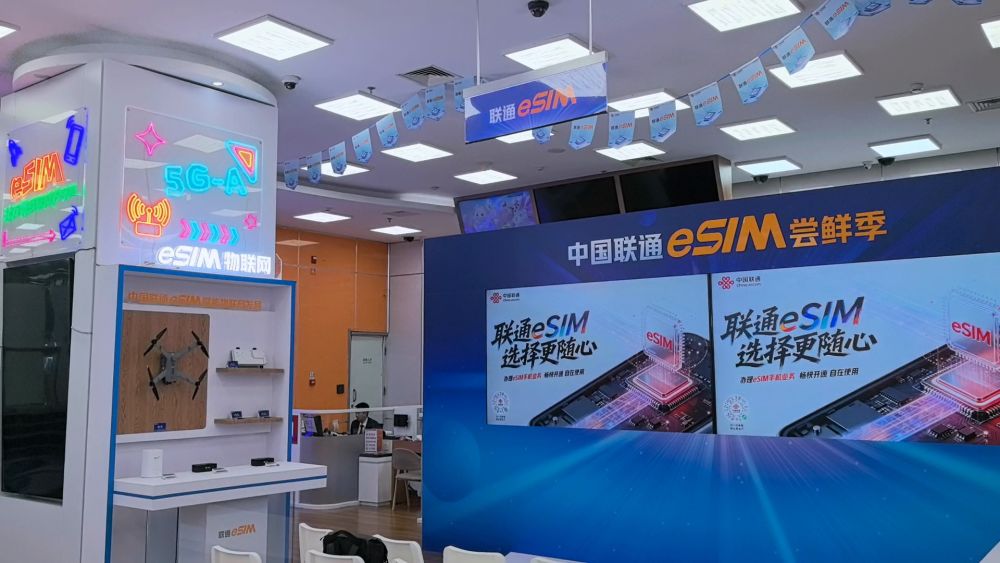
Core Insights - The launch of eSIM mobile services by major Chinese telecom operators marks a significant shift towards eliminating physical SIM cards, enhancing user convenience and device design [1][3][4] Group 1: eSIM Technology Overview - eSIM technology integrates the functionality of a physical SIM card into a chip embedded within the phone, allowing users to download their phone number over the air without needing a physical card [3] - eSIM-enabled devices will maintain traditional communication services such as voice calls, data usage, and SMS [3] Group 2: Impact on Consumer Experience - The introduction of eSIM will simplify processes such as activating new lines and changing numbers, eliminating the need for physical SIM cards and reducing the risk of loss [3][4] - Users who travel frequently will benefit from not having to swap SIM cards, enhancing their overall experience [3][4] Group 3: Industry Implications - The rollout of eSIM services is expected to stimulate investment across the entire supply chain, leading to increased demand for eSIM-compatible devices like smartphones, tablets, wearables, and connected vehicles [4] - eSIM technology is anticipated to extend into various sectors, including vehicle networking, smart cities, and consumer electronics, driving digital and intelligent upgrades across industries [4] Group 4: Operator Initiatives - Chinese telecom operators are actively innovating and enhancing eSIM-related technologies and services, with China Unicom having launched eSIM for wearables in 2018, supporting 75 devices and millions of users [4] - China Mobile is focusing on domestic technology development for eSIM chips and operating systems, while China Telecom aims to provide seamless activation and global roaming experiences [4]
新华鲜报 | eSIM来了!手机“无卡时代”已近
Xin Hua She· 2025-10-15 13:59
Core Points - The launch of eSIM mobile services by China's three major telecom operators marks a significant shift towards eliminating physical SIM cards [1][2] - eSIM technology integrates SIM card functionality into the device's built-in chip, allowing users to download their phone numbers over the air [2] - The introduction of eSIM is expected to enhance user convenience, streamline operations, and drive upgrades across the entire industry chain [2][4] Group 1: eSIM Technology Overview - eSIM technology allows for the integration of SIM card functions into the device, eliminating the need for physical SIM cards [2] - Users can expect to perform operations such as activating and changing numbers without needing a physical card, simplifying the process significantly [2] - The technology is anticipated to enhance device design by reducing space occupied by SIM card slots, leading to thinner and more robust devices [2] Group 2: Industry Impact - The rollout of eSIM services is expected to stimulate investment across the industry chain, including smartphones, tablets, wearables, and connected vehicles [2][3] - Telecom operators are actively innovating and upgrading eSIM-related technologies and services, with China Unicom already having adapted 75 devices for eSIM wearables [4] - The shift from physical SIM cards to eSIM technology is projected to improve consumer experience and satisfaction [4]
eSIM来了!手机“无卡时代”已近
Xin Hua She· 2025-10-15 13:56
Core Viewpoint - The launch of eSIM technology in China marks a significant shift from traditional SIM cards, enhancing convenience and driving industry upgrades [1][2]. Group 1: eSIM Technology Overview - eSIM technology integrates the functionality of a physical SIM card into a built-in chip within smartphones, allowing users to download their phone numbers over the air [2]. - eSIM-enabled devices will maintain the same communication services as traditional phones, including voice calls, data, and SMS [2]. Group 2: Benefits of eSIM - The adoption of eSIM technology will lead to slimmer smartphone designs by reducing the space required for SIM card slots, enhancing durability against dust, water, and shocks [2]. - Users will benefit from simplified processes for activating and changing phone numbers without the need for physical SIM cards, addressing issues like lost cards and the hassle of swapping cards during international travel [2]. Group 3: Industry Impact - The trial launch of eSIM services is expected to stimulate investment across the entire supply chain, potentially increasing the demand for eSIM-compatible devices such as smartphones, tablets, wearables, and connected vehicles [2][3]. - eSIM technology is anticipated to extend into various smart applications, including vehicle networking and smart cities, facilitating digital and intelligent upgrades across industries [3]. Group 4: Operator Initiatives - Chinese telecom operators are actively innovating and enhancing eSIM-related technologies and services, with China Unicom already offering eSIM services for wearables since 2018, supporting 75 device models and millions of users [4]. - China Mobile is focusing on domestic technology development for eSIM chips and operating systems, while China Telecom aims to provide seamless activation and global roaming experiences for users [4].
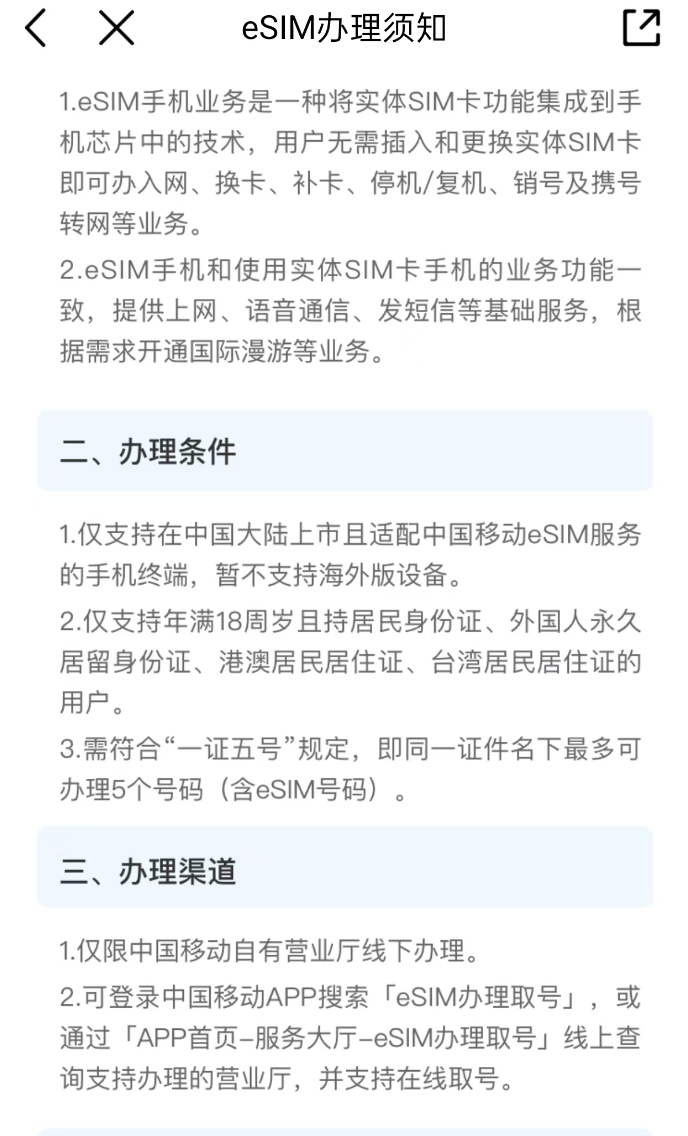
手机“无卡化”来了:三大运营商可线下办,eSIM手机赛道鸣枪
Bei Ke Cai Jing· 2025-10-15 11:34
Core Points - The launch of iPhone Air in China is set for October 17, following the approval of eSIM services by major telecom operators [2][9] - The domestic smartphone market is rapidly adapting to the eSIM technology, with companies like Huawei and OPPO planning to release eSIM-enabled devices [3][14] - The transition to eSIM technology is seen as a significant step towards a "no-card" era in mobile communications [4][12] Group 1: eSIM Launch and Adoption - Major telecom operators in China, including China Mobile, China Unicom, and China Telecom, have received approval to conduct eSIM mobile service trials [4][9] - China Telecom has confirmed that eSIM services are officially available in all 31 provinces and municipalities in China [9] - As of October 15, over 185,000 users have already registered for eSIM services through China Unicom [8] Group 2: Market Dynamics and Competition - The introduction of eSIM technology is expected to reduce the physical space required for SIM cards in devices, making them smaller and lighter [9] - The competitive landscape may shift as eSIM technology allows users to switch carriers more easily, potentially decreasing customer loyalty to specific operators [10][11] - By 2025, global eSIM smartphone connections are projected to reach 1 billion, with significant growth expected by 2030 [15] Group 3: Industry Implications - The eSIM technology is anticipated to streamline the production process for manufacturers, allowing for a unified hardware version across global markets [17] - The domestic eSIM market is still in its early stages, with many manufacturers observing consumer acceptance before fully committing to large-scale production [16][17] - The transition to eSIM is viewed as an irreversible trend, with the iPhone Air launch acting as a catalyst for further adoption [12]