China Unicom(600050)

Search documents
中国联通旗下公司等成立数智科技公司,含智能机器人的研发业务
3 6 Ke· 2026-02-11 09:08
Group 1 - A new company, Zhejiang Yipu Smart Technology Co., Ltd., has been established with a registered capital of 10 million RMB [1] - The legal representative of the company is Jin Peng, indicating a leadership structure [1] - The company's business scope includes research and development of intelligent robots, new material technology, and artificial intelligence application software [1] Group 2 - The shareholders of the company include Beijing Yipuhua Technology Co., Ltd. and China United Network Communications Group Co., Ltd. through its subsidiary Unicom Smart Network Technology Co., Ltd. [1]

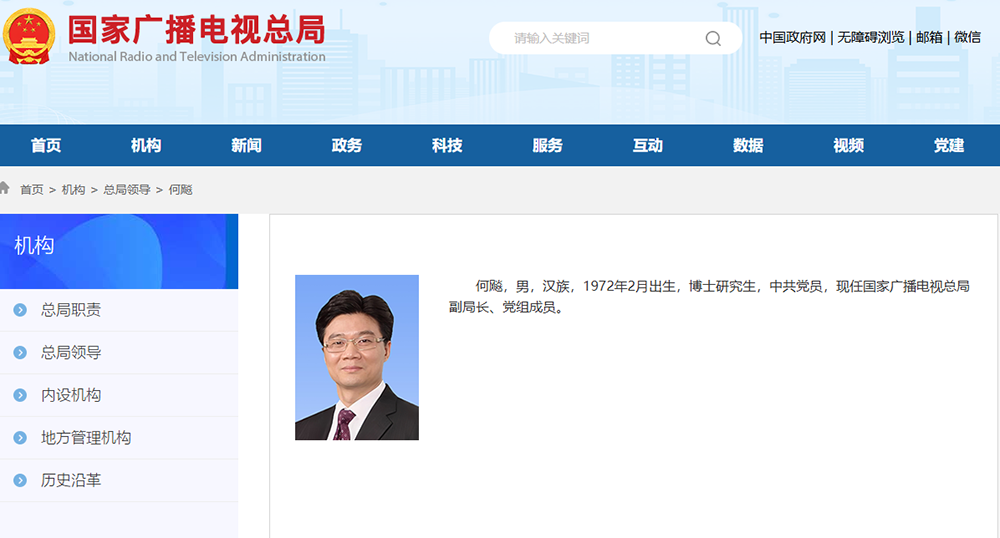
中国移动总经理何飚,履新国家广电总局副局长

Hua Xia Shi Bao· 2026-02-11 04:58
Group 1 - He Biao has been appointed as the Deputy Director and Party Member of the National Radio and Television Administration [1] - Prior to this role, He Biao served as the General Manager and Deputy Secretary of the Party Committee of China Mobile Communications Group Co., Ltd. [1] - He Biao has a background in various leadership positions within the telecommunications industry, including roles at China Unicom [1][3] Group 2 - He Biao was born in February 1972 and holds a doctorate in business administration [3] - His previous positions include Vice General Manager and Party Member of China United Network Communications Group Co., Ltd. [3] - He has also held significant roles in Guangdong Province, including General Manager and Party Secretary of China Unicom's subsidiaries [3]

越秀证券每日晨报-20260211
越秀证券· 2026-02-11 02:59
每日晨报│2026 年 2 月 11 日 -主要市场指数表现 | | 收市价 | 上个交易日升 | YTD 升跌 | | --- | --- | --- | --- | | 恒生指数 | 27,027 | +1.76% | +5.45% | | 恒生科技指数 | 5,417 | +1.34% | -1.78% | | 国企指数 | 9,168 | +1.52% | +2.86% | | 沪深 300 | 4,719 | +1.63% | +1.92% | | 上证综合指数 | 4,123 | +1.41% | +3.89% | | 深证成份指数 | 14,208 | +2.17% | +5.05% | | 中小板指 | 8,594 | +1.74% | +4.01% | | 道琼斯指数 | 50,135 | +0.04% | +4.31% | | 标普 500 指数 | 6,964 | +0.47% | +1.74% | | 纳斯达克指数 | 23,238 | +0.90% | -0.01% | | 伦敦富时指数 | 10,386 | +0.16% | +4.58% | | CAC40 指数 | 8,323 ...




中国联通取得云平台租户建模测试专利
Sou Hu Cai Jing· 2026-02-10 13:22
Group 1 - China United Network Communications Group Co., Ltd. has obtained a patent for "Method, Device, Equipment, and Storage Medium for Cloud Platform Tenant Modeling Testing," with authorization announcement number CN116599881B, applied on May 2023 [1] - China United Network Communications Group Co., Ltd. was established in 1994, located in Beijing, primarily engaged in telecommunications, broadcasting, television, and satellite transmission services, with a registered capital of approximately 10.57 billion RMB [1] - The company has invested in 35 enterprises, participated in 3,363 bidding projects, holds 3,725 trademark records, and has 5,000 patent records, along with 11 administrative licenses [1] Group 2 - Unicom Digital Technology Co., Ltd., established in 2006 and located in Beijing, focuses on software and information technology services, with a registered capital of approximately 988.98 million RMB [1] - This subsidiary has invested in 54 enterprises, participated in 5,000 bidding projects, holds 24 trademark records, and has 2,009 patent records, along with 44 administrative licenses [1] Group 3 - Unicom Data Intelligence Co., Ltd., established in 2024 and located in Hangzhou, is engaged in internet and related services, with a registered capital of 150 million RMB [2] - The company has invested in 1 enterprise, participated in 296 bidding projects, and holds 643 patent records [2]
研判2026!中国宽带网络行业发展历程、产业链、固定宽带接入端口数、重点企业及未来前景:宽带网络建设持续推进,光纤接入(FTTH/O)端口占比达96.8%[图]
Chan Ye Xin Xi Wang· 2026-02-10 01:10
Core Viewpoint - The article highlights the significant growth and transformation of China's broadband network, emphasizing the shift from copper cable to fiber optic connections, and the increasing number of broadband access ports and users, reflecting a trend towards higher speed and full fiber networks [1][9]. Broadband Industry Overview - Broadband networks are defined as communication networks with bandwidth exceeding 155kbps, consisting of backbone and access networks that support various multimedia services [3]. - The industry has evolved from narrowband and dial-up internet to support high-definition video and immersive applications, with typical bandwidth increasing from 64Kbps to current levels of 1Gbps and beyond [3]. Broadband Industry Development History - The transition to fiber-to-the-home (FTTH) has been a key development, with significant upgrades in network infrastructure to meet growing user demands for high-quality digital services [3]. Current State of the Broadband Industry - The broadband network infrastructure in China is rapidly advancing, with a focus on broadband, intelligence, and integration to support diverse new business applications [5]. - As of the end of 2024, the number of fixed internet broadband access ports reached 1.202 billion, with a net increase of 66.12 million from the end of 2023 [1][9]. Key Companies in the Broadband Industry - Major players include China Telecom, China Unicom, and China Mobile, which dominate the market due to their extensive user bases and network coverage [2][10]. - Emerging companies like ZTE, FiberHome, and others are gaining traction in broadband network equipment manufacturing and services [10]. Industry Challenges - The broadband industry faces challenges such as unclear public infrastructure positioning, regional and urban-rural development imbalances, and insufficient service application diversity [12][13]. Future Trends in the Broadband Industry - The industry is expected to evolve towards "full-fiber" access and "cloud-network integration," enhancing speed and network architecture [14]. - The focus will shift from merely providing connectivity to offering comprehensive, intelligent digital service platforms, integrating various applications for enhanced user experience [15]. - There will be an emphasis on ensuring "deterministic experience" and "green low-carbon" development in network planning and operations [16].




推进全省重点产业强链补链延链促进高质量发展座谈会召开
Xin Lang Cai Jing· 2026-02-09 18:13
会上,中国盐湖工业集团有限公司、青海泰丰先行锂能科技有限公司、青海明阳新能源有限公司、中国 广核集团有限公司青海分公司、中国联通青海省分公司、宁德时代新能源科技股份有限公司、青海南玻 新能源科技有限公司等企业负责人作交流发言。 本报讯(记者 田得乾 石成砚)2月9日,推进全省重点产业强链补链延链促进高质量发展座谈会召开。 会议深入学习贯彻党的二十届四中全会、中央经济工作会议和习近平总书记考察青海重要讲话精神,认 真落实省委十四届十次全会、省委经济工作会议和省两会部署,聚焦做强做优做大链主企业,推进全省 重点产业强链补链延链,培育塑强"十五五"时期高质量发展新动能新优势,听取意见建议。省委副书 记、省长罗东川主持会议并讲话。 罗东川要求,各地各部门要始终与广大企业站在一起、想在一起、干在一起,围绕产业链的堵点卡点和 企业发展的痛点难点,加强政策支持,强化要素保障,持续打造市场化、法治化、国际化一流营商环 境,让企业放心投资、安心创业、顺心发展。 张锦刚、刘超参加。 罗东川认真倾听,不时与企业家交流互动。他指出,链主企业是构建具有青海特色现代化产业体系 的"核心引擎",是培育新质生产力、创新驱动发展的"策源地", ...

电信ETF汇添富(560300)开盘涨1.29%,重仓股中国移动涨0.06%,中国联通涨0.41%
Xin Lang Cai Jing· 2026-02-09 13:06
Group 1 - The core viewpoint of the article highlights the performance of the Telecom ETF Huatai (560300), which opened with a gain of 1.29% at 2.040 yuan [1] - Major holdings in the ETF showed varied performance, with China Mobile up 0.06%, China Unicom up 0.41%, China Telecom up 0.35%, and China Satcom up 2.09% [1] - Notable gainers included Zhongji Xuchuang up 3.89%, Yinzhijie up 0.59%, Xinyi Sheng up 4.37%, ZTE up 1.35%, Tianfu Communication up 9.50%, and Zhongtian Technology up 4.75% [1] Group 2 - The performance benchmark for the Telecom ETF Huatai is the CSI Telecom Theme Index return [1] - The fund is managed by Huatai Fund Management Co., Ltd., with manager Wei Lizhu [1] - Since its establishment on December 5, 2023, the fund has achieved a return of 101.53%, while the return over the past month has been -5.46% [1]


通信行业周报:北美云厂商业绩超预期,关注CPO及产业链公司投资机会
GUOTAI HAITONG SECURITIES· 2026-02-08 02:45
Investment Rating - The report maintains a positive outlook on the communication equipment and services industry, particularly focusing on investment opportunities in CPO and related supply chain companies [3][11]. Core Insights - North American cloud vendors have reported better-than-expected earnings, with significant capital expenditure guidance increases from major players like Google and Amazon, indicating strong growth in the AI computing industry chain [3][11]. - The report highlights the rapid growth of the optical communication industry driven by AI applications, with leading companies achieving record highs in stock performance [6][9]. - The transition from Scale-OUT to Scale-UP in optical applications is emphasized, suggesting a broadening of application scenarios and increased demand for optical modules and components [6][9]. Summary by Sections Weekly Viewpoint - The optical communication sector is experiencing unprecedented growth, with major cloud companies significantly increasing capital expenditures, leading to a strong performance in the optical communication supply chain [9]. - The report notes that while the market is currently experiencing fluctuations, long-term investment opportunities are becoming more apparent, particularly in the context of rising prices for optical fibers and components [9]. Industry News - Major cloud service providers like Google and Amazon have substantially raised their capital expenditure forecasts for 2026, with Google estimating between $175 billion and $185 billion, nearly double that of 2025, and Amazon projecting around $200 billion, a 50% increase from the previous year [11][24][25]. - The report discusses the implications of a recent tax increase on value-added services in China, which may impact the revenue and profit margins of major telecom operators [12]. Investment Highlights - The report indicates that the proportion of holdings in the optical communication sector has increased, reflecting a positive market sentiment driven by AI-related infrastructure investments [11][41]. - The domestic new generation computing infrastructure is set to enter a new cycle, with significant opportunities arising from the ongoing global infrastructure wave [11][41]. - The report suggests that the AI-driven network upgrades will enhance communication capabilities, leading to rapid advancements in network innovation and technology applications [11][41].


每周股票复盘:中国联通(600050)税目调整致税率升至9%
Sou Hu Cai Jing· 2026-02-07 17:20
以上内容为证券之星据公开信息整理,由AI算法生成(网信算备310104345710301240019号),不构成 投资建议。 财政部、国家税务总局发布《关于增值税征税具体范围有关事项的公告》(2026年第9号),自2026年1 月1日起,提供手机流量、短信彩信、互联网宽带接入等业务的税目由增值电信服务调整为基础电信服 务,增值税税率由6%调整为9%。此项调整将对公司收入及利润产生影响。 中国国有企业结构调整基金股份有限公司此前持有公司股份1,899,764,201股,占总股本6.08%。自2025 年10月11日披露减持计划后,截至2026年2月3日,已通过集中竞价减持312,644,232股,通过大宗交易减 持23,898,702股,合计减持336,542,934股,占总股本1.0764%。减持完成后,持股比例降至5.00%。本次 减持为正常股权安排,不导致公司控制权变更。 截至2026年2月6日收盘,中国联通(600050)报收于4.84元,较上周的5.11元下跌5.28%。本周,中国 联通2月2日盘中最高价报5.0元。2月3日盘中最低价报4.78元,股价触及近一年最低点。中国联通当前最 新总市值1513 ...
工信部撑腰,降套餐不用跑了
猿大侠· 2026-02-07 04:09
Core Viewpoint - The article discusses the implementation of the Ministry of Industry and Information Technology's (MIIT) initiative "Clear Handling, Safe Use" for telecom services, which aims to simplify package changes and enhance transparency in pricing starting from January 1, 2026 [1]. Group 1: Implementation of New Regulations - Telecom operators are required to provide equal convenience for online and offline package changes, allowing users to downgrade their plans through mobile apps without needing to visit physical stores [1][2]. - Users can easily navigate the official app to find options for changing their packages, including low-cost basic plans [2]. Group 2: Customer Service Improvements - If users cannot find the option to downgrade in the app, they can contact online customer service and reference the new regulations to expedite the process [4][5]. - Mentioning the possibility of filing a complaint with the MIIT often leads to immediate resolution of issues with customer service [5]. Group 3: Transparency in Pricing - The new regulations mandate telecom operators to clearly display pricing information, including monthly fees, data limits, and contract terms, in a dedicated section of their apps [5]. - Following the MIIT's initiative, complaints in the telecom sector decreased by 21.74% in the second half of 2025, indicating improved customer satisfaction [5][6]. Group 4: Consumer Empowerment - Users have reported successfully downgrading their plans to significantly lower prices, demonstrating increased consumer autonomy in managing telecom services [6].