
Hundsun(600570)

Search documents
2025全球资管深研报告:全球智能投顾全景图
Sou Hu Cai Jing· 2026-01-04 13:39
Core Insights - The rise of robo-advisors is driven by the integration of financial technology and traditional wealth management, offering low-cost, accessible, and user-friendly investment services, thereby democratizing finance [1][7] - The global robo-advisory market is expected to grow significantly, reaching over $100 billion by 2033, with the U.S. holding a dominant position [2][18] - The business model of robo-advisors has evolved from serving individual clients to a platform-based and ecosystem-oriented approach, diversifying revenue streams [3][4] Market Overview - The global robo-advisory market is projected to grow from $7.7 billion in 2023 to approximately $116.4 billion by 2033, with a compound annual growth rate (CAGR) of 31.2% from 2024 to 2033 [18] - The U.S. accounts for 81% of the global robo-advisory assets under management (AUM), with major players including Vanguard, Schwab, and Betterment [23][24] - The European market is smaller but shows potential, particularly in Germany, which has over 2 million robo-advisory users due to its unique ETF savings plan culture [25][28] Business Model Evolution - Robo-advisors have transitioned from a simple individual client model to a multi-faceted platform approach, including B2B services and diverse revenue models [3][4] - Revenue models have diversified from asset management fees to tiered subscription fees and technology-enabled service fees, reflecting a shift from scale expansion to value extraction [3][4] - Key competitive advantages for leading platforms include strong overall performance, superior digital experiences, and user-friendly interfaces [3][4] Investment Strategies - The industry is witnessing a nuanced debate between "active" and "passive" investment philosophies, with different platforms adopting varied strategies based on market understanding and client needs [3][4] - Some platforms adhere strictly to modern portfolio theory, while others incorporate active management elements or innovative techniques like smart beta to achieve excess returns [3][4] Future Outlook - The robo-advisory industry is moving away from rapid growth towards deeper integration and iteration, with ongoing consolidation expected [4] - The application of artificial intelligence, particularly large language models, is anticipated to enhance the personalization of robo-advisory services, transforming them into intelligent financial partners [4][7] - The industry is likely to see a shift from mere algorithmic recommendations to more human-like, personalized financial advisory interactions [4][7]


中国将成为首个为央行数字货币计息的经济体,金融科技ETF指数(563670)涨近1%
Sou Hu Cai Jing· 2025-12-31 05:59
Group 1 - The core viewpoint of the news is the strong performance of the China Securities Financial Technology Theme Index and its constituent stocks, driven by the People's Bank of China's new action plan for digital currency management and infrastructure [1][2] - The China Securities Financial Technology Theme Index (930986) rose by 1.40%, with notable increases in constituent stocks such as Xinghuan Technology (688031) up 14.55%, Zhongke Jiangnan (301153) up 12.28%, and Lakala (300773) up 8.80% [1] - The Financial Technology ETF Index (563670) also saw an increase of 0.76%, marking its sixth consecutive rise, with the latest price reported at 0.92 yuan [1] Group 2 - The People's Bank of China's action plan for digital currency will officially start on January 1, 2026, introducing a new measurement framework, management system, operational mechanism, and ecosystem for the digital renminbi [1][2] - Key highlights of the action plan include interest payments on digital renminbi wallet balances, integration of digital renminbi into the reserve requirement framework for banking institutions, and a 100% reserve requirement for non-bank payment institutions [1][2] - The upgrade from M0 to M1 for digital currency is expected to significantly enhance its attractiveness, providing users with cash-like convenience and banks with asset-liability management capabilities [2] Group 3 - As of November 28, 2025, the top ten weighted stocks in the China Securities Financial Technology Theme Index accounted for 53.31% of the index, including companies like Tonghuashun (300033) and Dongfang Caifu (300059) [3]



【微头条】青岛数字金融创新大赛破解行业共性难题
Xin Lang Cai Jing· 2025-12-30 11:04
Core Insights - The fourth Qingdao Digital Financial Innovation Competition successfully concluded, focusing on the theme "Leading the Financial Wave with Data, Wisdom Gathering Wealth in Qingdao" and achieving a strategic shift from "single-point breakthroughs" to "systematic tackling" [1][6] Group 1: Competition Overview - The competition featured two main units: "Outstanding Financial Technology Projects" and "Financial Technology Challenge," selecting a range of forward-looking, practical, and replicable industry-level solutions to support high-quality regional digital financial development [1][6] - A total of 28 outstanding projects were recognized, showcasing the hard power and diversified layout of local financial institutions in their digital transformation [7] Group 2: Award-Winning Projects - The first prize projects included Qingdao Rural Commercial Bank's "Technology Financial Empowerment Project based on Big Data Analysis and Privacy Computing," China Merchants Bank Qingdao Branch's "Qing Chain Pass," and Qingdao Bank's "Smart Credit Assistant System Construction Project," representing the highest level in data value release, supply chain financial ecosystem construction, and credit intelligence transformation [7] - Other notable projects included Industrial and Commercial Bank of China Qingdao Branch's "General Plug-and-Play Large Model Empowerment System," Rizhao Bank Qingdao Branch's "New Paradigm for Agricultural Product Pledge Business," and Bank of Communications Qingdao Branch's "Smart Anti-Fraud Risk Control Ecosystem," reflecting a comprehensive digital innovation landscape in Qingdao's financial sector [2][7] Group 3: Technology Companies Participation - Top technology companies such as 360 Digital Security, iFLYTEK, Ant Blockchain, and Hang Seng Electronics participated in the "Financial Technology Challenge," submitting high-scoring solutions that matched the core pain points identified by financial institutions [3][8] - A total of 21 benchmark solutions were selected, including 360 Digital Security's "Host Protection System Thinking," which won the "Network Security Protection and Micro-Isolation Technology" category, and iFLYTEK's AI digital human application that supports over 130 languages and enhances financial services [8][9] Group 4: Collaborative Mechanism - The competition introduced a collaborative mechanism involving three organizing bodies and four financial institutions, addressing the challenges of resource fragmentation and demand diversification in financial innovation [4][10] - Joint lists focused on key aspects of digital financial scene implementation, elevating the goals from individual institutional needs to addressing systemic challenges affecting regional financial development [10] Group 5: Ecosystem Development - The Qingdao Digital Financial Innovation Competition has evolved into a significant platform for deepening financial supply-side structural reform and building a regional financial technology innovation ecosystem [11] - The competition has successfully established a fusion system of "government guidance, enterprise leadership, and market operation," facilitating the transition of innovative results from the laboratory to practical applications [11][12]




恒生电子股价涨1.09%,华泰柏瑞基金旗下1只基金位居十大流通股东,持有2572.74万股浮盈赚取849万元
Xin Lang Cai Jing· 2025-12-30 02:04
Group 1 - The core point of the news is that Hengsheng Electronics has seen a stock price increase of 1.09%, reaching 30.53 yuan per share, with a total market capitalization of 57.828 billion yuan as of the report date [1] - Hengsheng Electronics, established on December 13, 2000, and listed on December 16, 2003, primarily develops application software for industries such as securities, banking, and funds, with software revenue accounting for 99.45% of its total revenue [1] - The company reported a trading volume of 2.57 billion yuan and a turnover rate of 0.45% [1] Group 2 - Huatai-PB Fund's Huatai-PB CSI 300 ETF (510300) reduced its holdings in Hengsheng Electronics by 1.2189 million shares in the third quarter, now holding 25.7274 million shares, which is 1.36% of the circulating shares [2] - The Huatai-PB CSI 300 ETF has a total scale of 425.581 billion yuan and has achieved a year-to-date return of 21.06%, ranking 2631 out of 4195 in its category [2] - The fund manager, Liu Jun, has a tenure of 16 years and 214 days, with the best fund return during his tenure being 148.64% [2] Group 3 - The Huatai-PB Cloud Computing ETF (159738) also reduced its holdings in Hengsheng Electronics by 232,700 shares in the third quarter, now holding 327,900 shares, which represents 2.23% of the fund's net value [3] - The Cloud Computing ETF has a total scale of 5.07 billion yuan and has achieved a year-to-date return of 79.86%, ranking 139 out of 4195 in its category [3] - The fund manager, Li Qian, has a tenure of 6 years and 58 days, with the best fund return during her tenure being 95.7% [4]
恒生电子刘曙峰:2025年大模型的产业应用取得实质性突破
Jing Ji Guan Cha Wang· 2025-12-29 04:24
Core Insights - The co-founder of Hengsheng Electronics, Liu Shufeng, stated that substantial breakthroughs in the industrial application of large models are expected by 2025, particularly in the financial sector [1] - Key applications include interactive entry points, document information processing, and customer service, with effective production in code generation also being validated [1] - The development of intelligent agents is anticipated to make significant progress within the next year [1] Group 1 - The hybrid use of large and small models is suggested as an effective approach, as traditional small models still hold value in processing structured data [1] - The issue of "hallucination" in large models cannot be fundamentally eliminated, necessitating the exploration of effective boundaries and acceptance of coexistence with this phenomenon [1] - In finance, this implies effective utilization of AI in high-value areas such as risk management and investment decision-making [1] Group 2 - Liu noted that the financial application of large models is still in its early stages, with key limiting factors including the effectiveness of private deployment, compliance risks, and budget constraints [1] - For many institutions, a wait-and-see approach may be a prudent strategy, alleviating anxiety about immediate implementation [1] - From a long-term strategic perspective, advancements in underlying technology are expected to transform business models and the foundational infrastructure of industries [1] Group 3 - Recent observations highlight the integration of data platforms and AI platforms, with the "ontology" business logic model being crucial [1] - The depth of industry know-how and abstraction capabilities remain the source of core competitiveness [1]
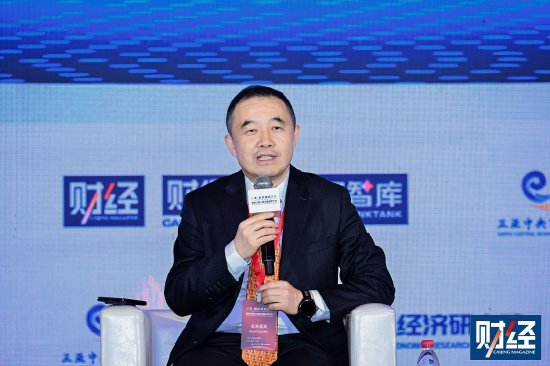
恒生电子执行总裁官晓岚:金融科技与AI将成为海南财富管理转型升级的核心驱动力
Sou Hu Cai Jing· 2025-12-28 16:20
Core Insights - The Sanya International Forum and the Fifth Sanya Wealth Management Conference highlighted the theme of "Future Positioning of Hainan Free Trade Port and New Opportunities in Sanya" [1] - Financial technology and artificial intelligence are identified as core drivers for the transformation and upgrading of the wealth management industry post-Hainan's customs closure [3] Financial Technology and AI Applications - Financial institutions are expected to gather in Hainan, leading to demands for innovation in financial markets and infrastructure [3] - AI can significantly enhance investment research efficiency, reducing report writing discrepancies from over 25% to around 15% [8] - AI systems can generate personalized asset allocation suggestions based on client profiles, covering various financial products [10] - AI plays a crucial role in risk management and intelligent customer service, enhancing operational efficiency [10] Future Outlook for Sanya - Sanya is projected to become a hub for the globalization of the Renminbi, financial technology applications, and financial data services [3][13] - The wealth management sector is shifting from yield-driven to risk-driven models, increasing the demand for financial technology and data services [6] Infrastructure and Market Development - The influx of investors will lead to the establishment of new financial institutions and innovative market infrastructure [5] - The development of trading systems, including potential 24/5 trading models, is being explored to enhance transaction efficiency [5] Data Utilization and AI Integration - Data is becoming increasingly vital in Sanya, with a focus on providing global data related to the Renminbi [11] - The introduction of AI-friendly databases aims to facilitate easier access to relevant data for wealth management institutions [11] - AI's capabilities are being integrated into customer service processes, enhancing client interactions and satisfaction [10][13]

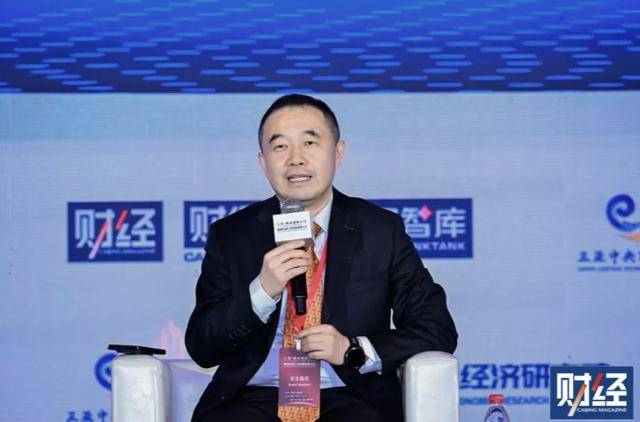
恒生电子执行总裁官晓岚:海南封关为金融科技与财富管理带来重要机遇
Zheng Quan Shi Bao Wang· 2025-12-27 13:29
Group 1 - The core viewpoint is that Hainan's customs closure presents significant opportunities for financial technology and wealth management [1] - The company plans to provide financial technology services that include asset management, wealth management, trading systems, and risk control to meet the needs of financial institutions settling in Hainan [1] - The rapid implementation of artificial intelligence in the financial sector is highlighted, particularly in areas such as investment research support, intelligent advisory, risk identification, and customer service [1] Group 2 - The use of AI is noted to significantly enhance information processing efficiency and the reliability of decision-making [1] - Data is emphasized as a key factor in the development of AI within the financial industry [1]
恒生电子官晓岚:财富管理的核心是将居民资金投向创新企业
Xin Lang Cai Jing· 2025-12-27 09:07
Group 1 - The Sanya Financial International Forum and the 5th Sanya Wealth Management Conference will be held on December 27 in Sanya, Hainan, with the presence of the Executive President of Hengsheng Electronics, Guan Xiaolan [1][3] - Guan Xiaolan indicated that after the closure of the Hainan Free Trade Port, a significant influx of investors is expected, leading to a follow-up from financial institutions, which may drive the development of the entire financial market and infrastructure [3][5] - The company aims to provide services to financial institutions, investors, and regulators, emphasizing the importance of financial technology services as financial institutions establish their presence [5] Group 2 - Guan Xiaolan views wealth management as a broad concept, focusing on channeling residents' funds into innovative enterprises, and aims to facilitate this pathway through financial services [5] - Hengsheng Electronics plans to offer asset management, wealth management services, as well as trading, exchanges, and risk management services [5]
全球资管深研系列(四):全球智能投顾全景图
Guoxin Securities· 2025-12-25 15:25
Core Insights - The rise of robo-advisors is driven by the integration of financial technology and traditional wealth management, offering low costs, high accessibility, and convenience. Post-global financial crisis, stricter regulations and technological advancements have facilitated the emergence of non-bank fintech companies, with robo-advisors serving as a cost-effective alternative to human advisors. They utilize algorithms to automatically construct investment portfolios, significantly reducing advisory fees and breaking geographical barriers, allowing investors to access professional services anytime and anywhere. Robo-advisors particularly attract low-income groups and younger users by minimizing trading costs through passive investment strategies, enhancing capital market participation for long-term goals like retirement and emergency savings. The evolution of robo-advisors has progressed through four stages: early online questionnaires and static advice, full automation and passive management, establishment of hybrid models, and AI-driven hyper-personalization and intelligent agents [2][9][10]. - The global robo-advisory market is experiencing rapid expansion, with the U.S. maintaining a dominant position while emerging markets like China show significant potential for growth. The market size is projected to increase from $7.7 billion in 2023 to approximately $116.4 billion by 2033, with the U.S. accounting for 81% of global assets under management (AUM). The competitive landscape in the U.S. has formed a "three giants and many strong" scenario, with Vanguard, Schwab, and Fidelity as the major players, while independent unicorns like Betterment and Wealthfront continue to thrive. In Europe, the market share remains relatively small, with key players categorized into pan-European super platforms, market consolidators, and regional champions. China's robo-advisory market is expected to exceed $2 billion by 2028 and $4 billion by 2030, contributing to the development of passive investment strategies and long-term capital market participation [2][15][21][25][30]. - The business model of robo-advisors is evolving towards platformization and ecosystem integration, with revenue models shifting from single asset management fees to layered charging and technology empowerment. Robo-advisors have expanded from B2C to B2B and ecosystem models, exemplified by Ant Wealth's scenario collaboration for traffic conversion. Revenue diversification includes pure digital models relying on AUM management fees, tiered subscription models offering premium services, B2B tool empowerment models generating profits through technology output, and ecosystem platform models depending on product distribution commissions. This evolution highlights the industry's transition from scale expansion to value extraction [2][35][39]. - The core competitive advantages of leading robo-advisors include comprehensive strength, digital experience, and user-friendliness for beginners. Platforms with strong comprehensive capabilities often excel in long-term performance and service quality, while the best digital planning platforms possess robust personal asset aggregation tools that create automated financial management loops. User-friendly platforms may excel in brand trust or community ecosystem development. In the competitive landscape, Betterment and Wealthfront not only survive but thrive, embodying the pure fintech spirit by creating value through technological innovation and exceptional user experience [2][39][50]. - The development trend of robo-advisors is characterized by a philosophical debate between "active" and "passive" investment strategies. Analyzing the portfolio data of various robo-advisors reveals a shift in the industry towards this philosophical contention, categorized into MPT believers (Vanguard & Betterment), potential active managers (SoFi & Axos), and tech-driven alpha harvesters (Wealthfront) [2][11]. - Looking ahead, the industry is poised for significant restructuring and a new journey. By 2025, the robo-advisory sector will have transitioned from rapid growth to a phase of integration and iteration. Three major trends are expected to continue: industry consolidation, a shift from scale to sustainable profitability, and AI reshaping robo-advisory services. The complete withdrawal of bank-affiliated robo-advisors reflects ongoing industry consolidation, as the mismatch between customer acquisition costs and lifetime value necessitates substantial new scale to cover technology and compliance costs. Independent platforms are now focusing on sustainable profitability rather than blind scale expansion, as exemplified by Robinhood's acquisition of AI financial planning company Pluto and the launch of its own robo-advisory service, which aims to provide genuinely personalized financial consulting through large language models [2][15][30].
计算机ETF南方(159586.SZ)涨0.78%,恒生电子涨1.49%
Jin Rong Jie· 2025-12-25 04:18
Core Viewpoint - The A-share market experienced fluctuations on December 25, with the domestic software sector rising by 0.77%, indicating a mixed performance in the market [1] Group 1: Market Performance - As of 11:15 AM, the Southern Computer ETF (159586.SZ) increased by 0.78%, and Hengsheng Electronics rose by 1.49% [1] Group 2: Industry Outlook - Longjiang Securities predicts a weak recovery in the computer sector's fundamentals by 2025, with AI entering its second phase in 2026, emphasizing the importance of system capabilities and application implementation [1] - The revenue recovery in the sector by 2025 is expected to be driven by profit growth through cost reduction, supported by continuous growth in contract liabilities [1] Group 3: AI and Computing Trends - The current narrative focuses on application implementation, with early constraints on the sector's beta due to AI applications; however, the transition between the first and second phases of AI is anticipated to boost demand for reasoning computing power [1] - The arms race in technology is favorable for basic resources, with a focus on cloud computing and domestic computing power, which is expected to enhance gross margins through improved value pricing [1] - The supply-demand landscape for domestic computing power is optimistic, with quantum computing emerging as a new paradigm [1] Group 4: Investment Opportunities - The Southern Computer ETF (159586.SZ) is positioned to capture opportunities driven by AI, covering core areas such as cloud computing, computing power, and applications [1]