Wangfujing(600859)

Search documents
王府井(600859) - 王府井关于授权使用闲置自有资金购买结构性存款的公告
2025-06-26 10:45
王府井集团股份有限公司 关于授权使用闲置自有资金购买结构性存款的公告 本公司董事会及全体董事保证本公告内容不存在任何虚假记载、误导性陈述或者重大遗 漏,并对其内容的真实性、准确性和完整性承担法律责任。 重要内容提示: 授权金额:单日结构性存款余额不超过 15 亿元人民币,在总额上限中进 行滚动使用。 授权有效期:自董事会审议通过之日起 12 个月。 履行的审议程序:本事项已经公司第十一届董事会第二十一次会议审议通 过,无需提交股东大会审议。 证券代码:600859 证券简称:王府井 编号:临 2025-049 公司拟购买的结构性存款以中短期产品为主,最长期限不超过 12 个月。 一、本次授权购买结构性存款概况 (一)购买结构性存款的目的 为提高资金使用效率,本着股东利益最大化的原则,在确保公司资金安全性、 流动性的基础上实现保值增值,公司拟购买银行发行有保本约定的结构性存款产 品。 (二)投资金额 董事会授权管理层使用不超过15亿元人民币的闲置自有资金购买银行结构性 存款产品,即单日结构性存款余额不超过 15 亿元人民币,该授权金额是在总额上 限中进行滚动使用。授权期限自董事会审议通过之日起 12 个月。 截 ...

王府井(600859) - 王府井关于调整2024年度利润分配现金分红总额的公告
2025-06-26 10:45
证券代码:600859 证券简称:王府井 编号:临 2025-050 王府井集团股份有限公司 关于调整 2024 年度利润分配现金分红总额的公告 本公司董事会及全体董事保证本公告内容不存在任何虚假记载、误导性陈述或者重大 遗漏,并对其内容的真实性、准确性和完整性承担法律责任。 重要内容提示: 王府井集团股份有限公司(以下简称"公司")2024 年年度利润分配拟 派发现金分红的总额由 90,058,625.92 元调整为 89,914,513.92 元(含税)。 本次调整原因:截至 2025 年 5 月 15 日,公司回购股份事项已完成。回 购实施期限内,公司已实际回购股份 11,118,027 股。上述股份已于 2025 年 5 月 16 日在中国证券登记结算有限责任公司完成注销。截至本公告出具之日,公 司总股本已由 1,135,049,451 股变更为 1,123,931,424 股。公司将按照维持每股 分配比例不变的原则,对 2024 年年度利润分配现金分红总额进行相应调整。 一、调整前利润分配方案 公司于 2025 年 4 月 24 日召开第十一届董事会第十九次会议、第十一届监事 会第十五次会议,于 2 ...
王府井(600859) - 王府井第十一届董事会第二十一次会议决议公告
2025-06-26 10:30
证券代码:600859 证券简称:王府井 编号:临 2025-048 王府井集团股份有限公司 第十一届董事会第二十一次会议决议公告 本公司董事会及全体董事保证本公告内容不存在任何虚假记载、误导性陈述或者重大 遗漏,并对其内容的真实性、准确性和完整性承担法律责任。 一、董事会会议召开情况 王府井集团股份有限公司第十一届董事会第二十一次会议于 2025 年 6 月 16 日以电子邮件和书面送达方式发出通知,2025 年 6 月 26 日在本公司会议室以现 场结合视频会议方式举行,应出席董事 9 人,实际出席 9 人。公司监事列席会议。 会议符合有关法律、法规、部门规章和《公司章程》的规定。会议由董事长白凡 先生主持。 二、董事会会议审议情况 1.通过关于授权使用闲置自有资金购买结构性存款的议案 2025 年 6 月 27 日 董事会授权管理层使用不超过 15 亿元人民币的闲置自有资金购买银行结构 性存款产品,即单日结构性存款余额不超过 15 亿元人民币,授权金额在总额上 限中滚动使用。授权期限自董事会审议通过之日起 12 个月。 表决情况:同意 9 票,反对 0 票,弃权 0 票。 2.通过关于修订《合规管理制度 ...
押注市内免税店
Sou Hu Cai Jing· 2025-06-25 05:43
Core Viewpoint - The recent policy changes have led to the establishment of new city duty-free shops in several Chinese cities, aiming to boost domestic consumption and attract foreign tourists [1][4][9]. Group 1: Policy and Market Developments - The Ministry of Finance and other departments issued a notice on improving city duty-free shop policies, resulting in the opening of new shops in cities like Guangzhou, Chengdu, and Shenzhen [1][4]. - The city duty-free shops are positioned to facilitate the return of domestic residents' overseas consumption and promote tourism spending by foreign visitors [1][9]. - The new shops emphasize a mixed business model combining duty-free and taxable goods, as well as online and offline sales [4][10]. Group 2: Company Involvement and Operations - China Duty Free Group (CDFG) has secured contracts for several city duty-free shops, including locations in Chengdu and Tianjin, with a focus on high-traffic areas [3][4]. - The operational model allows for partnerships, as seen with the collaboration between Wangfujing and Wushang Group for the Wuhan duty-free shop [3][8]. - As of now, there are 27 city duty-free shops across 22 cities, with CDFG operating 12 of them [8][9]. Group 3: Market Potential and Consumer Base - The city duty-free shop market is projected to grow significantly, with short-term estimates below 4 billion yuan and long-term forecasts exceeding 30 billion yuan [9][10]. - The primary customer base consists of outbound travelers from airports and cruise ships, with a notable increase in foreign tourist spending encouraged by relaxed visa policies [9][10]. - The competition landscape is becoming increasingly diverse, with various stakeholders including local department stores and tourism companies entering the market [10].




国泰海通:首五月免税销售规模降幅收窄 关注行业节奏修复中的配置价值
智通财经网· 2025-06-23 09:05
Group 1: Industry Overview - The sales decline of Hainan's offshore duty-free shopping has narrowed, indicating marginal improvement in the market [1] - The average transaction value has reversed its two-year downward trend, with February's average price per item reaching a recent high [1] - The duty-free shopping visitor numbers still require time to recover due to a temporary decline in conversion rates [1] Group 2: Policy Impact - The implementation of the "simplified tax system" may weaken the advantages of duty-free channels, but its successful execution depends on mature supporting systems and regulatory capabilities [2] - The closure policy is expected to enhance Hainan's overall attractiveness in consumption, business, and logistics, thereby strengthening the core competitiveness of leading companies [2] Group 3: Taxation and Market Dynamics - The "immediate buy and refund" service for departure tax refunds is being promoted nationwide, which is expected to increase the shopping conversion rate for foreign consumers in China [3] - Duty-free channels have significant price advantages over taxed channels, allowing for substantial market share expansion [4] - The price of duty-free products can be significantly lower than taxed prices, with examples including cosmetics at 70-80% of taxed prices and tobacco at 45% [4] Group 4: Investment Recommendations - The duty-free industry is entering a new configuration window due to the narrowing sales decline and strong rebound in average transaction value [5] - Recommended stocks include China Duty Free Group (601888.SH, 01880) and Wangfujing (600859.SH) [5] - Attention is also drawn to China Duty Free Group's H-shares, which are currently at a discount compared to A-shares [5]

中证全指食品与主要用品零售指数报9515.51点,前十大权重包含王府井等
Jin Rong Jie· 2025-06-19 08:55
Group 1 - The core index of the China Securities Index for Food and Major Consumer Goods Retail has shown a decline of 2.40% over the past month, 6.58% over the past three months, and 6.48% year-to-date [1] - The index is composed of listed companies in the food and drug retail sector, reflecting the overall performance of these companies, with a base date of December 31, 2004, set at 1000.0 points [1] - The top ten weighted companies in the index include Yonghui Supermarket (6.61%), Digital China (6.21%), Wancheng Group (4.68%), Shanghai Pharmaceuticals (4.41%), Yifeng Pharmacy (4.32%), Jiuzhoutong (3.86%), Kidswant (3.41%), Sinopharm (3.25%), Wangfujing (3.17%), and TianKang (3.09%) [1] Group 2 - The market segments represented in the index include 43.94% in pharmaceutical commerce, 21.32% in supermarkets and convenience stores, 20.29% in specialty retail, and 14.46% in department stores [2] - The index samples are adjusted biannually, with adjustments occurring on the next trading day after the second Friday of June and December each year [2] - In special circumstances, the index may undergo temporary adjustments, such as when a sample company is delisted or undergoes mergers, acquisitions, or splits [2]



掘金市内免税店
经济观察报· 2025-06-15 09:12
Core Viewpoint - The establishment of the first city duty-free shop in Guangzhou marks a significant expansion of the duty-free retail sector in China, with potential implications for consumer behavior and market dynamics in the region [3][4][6]. Group 1: Establishment of Duty-Free Shops - The first city duty-free shop in Guangzhou is located on the first floor of the Friendship Store in Zhujiang New Town, with plans to open around mid-August [3][8]. - A total of eight new city duty-free shops are set to open in cities including Wuhan and Guangzhou, as part of a broader initiative to enhance the duty-free shopping experience [2][4]. - The establishment of these shops is supported by a collaboration between Guangzhou Friendship Group, China Duty Free Group, and other local enterprises [3][4]. Group 2: Regulatory Framework - The "Interim Measures for the Management of City Duty-Free Shops" issued in August 2024 outlines the establishment of one duty-free shop in each of eight designated cities, promoting the sale of easily transportable consumer goods [6][14]. - The measures encourage the sale of domestic products, aiming to enhance the appeal of city duty-free shops to both domestic and international travelers [6][14]. Group 3: Market Dynamics and Consumer Behavior - The Guangzhou Friendship Store has a history of serving foreign guests and has been a pilot for the "buy and refund" tax refund policy, which has attracted international travelers [9][19]. - The store's offerings include a variety of high-end products, with electronics and cosmetics being particularly popular among foreign consumers due to competitive pricing and tax refund benefits [9][19]. - The growth of inbound tourism is expected to create new opportunities for city duty-free shops, as evidenced by a significant increase in foreign visitors during recent holidays [20][21]. Group 4: Industry Trends and Future Outlook - The duty-free market in China is evolving, with a shift from traditional duty-free formats to city-based retail, which offers more convenient shopping options [14][19]. - Despite the initial excitement surrounding new duty-free shops, experts caution that sustained success will depend on broader economic conditions and consumer preferences [19][20]. - The performance of existing duty-free operators, such as China Duty Free Group, reflects the challenges and opportunities within the market, with recent reports indicating a decline in revenue but a recovery in airport duty-free sales [16][17].



掘金市内免税店
Jing Ji Guan Cha Wang· 2025-06-14 12:21
Core Insights - A new batch of eight city duty-free shops is being established in cities like Wuhan and Guangzhou, with the first shop in Guangzhou set to open in mid-August 2024 [2][4] - The establishment of these shops marks a significant expansion of the duty-free business for companies like Wangfujing and Guangzhou Friendship, transitioning from offshore and airport duty-free to city-based operations [3][7] Company Developments - Guangzhou Friendship Group, in collaboration with China Duty Free Group and others, is launching a city duty-free store in Guangzhou, enhancing its retail offerings [2][4] - Wangfujing's first city duty-free store in Wuhan is currently in trial operation, representing a key step in its overall duty-free strategy [3][6] Market Context - The Ministry of Finance and other departments have issued guidelines for city duty-free shops, allowing one store each in eight major cities, focusing on easily transportable consumer goods and promoting domestic products [4][7] - The city duty-free market in China is expected to grow, with the potential for increased sales as it currently represents only 2% of the overall duty-free market, compared to over 50% in South Korea [7][8] Consumer Trends - The demand for duty-free shopping is anticipated to rise with the recovery of inbound tourism, as evidenced by a 43.1% increase in foreign visitors during the recent holiday period [11] - The Guangzhou Friendship store has already seen interest from international travelers, particularly in electronics and cosmetics, benefiting from a "buy and refund" policy [5][6] Financial Performance - China Duty Free Group reported a decline in revenue and net profit in 2024, with a notable drop in Hainan's revenue, but airport duty-free sales have shown recovery, with significant growth in Beijing and Shanghai [8][9] - The overall duty-free market is expected to see sustained growth due to the new city duty-free policies, although challenges remain in the broader retail environment [10]

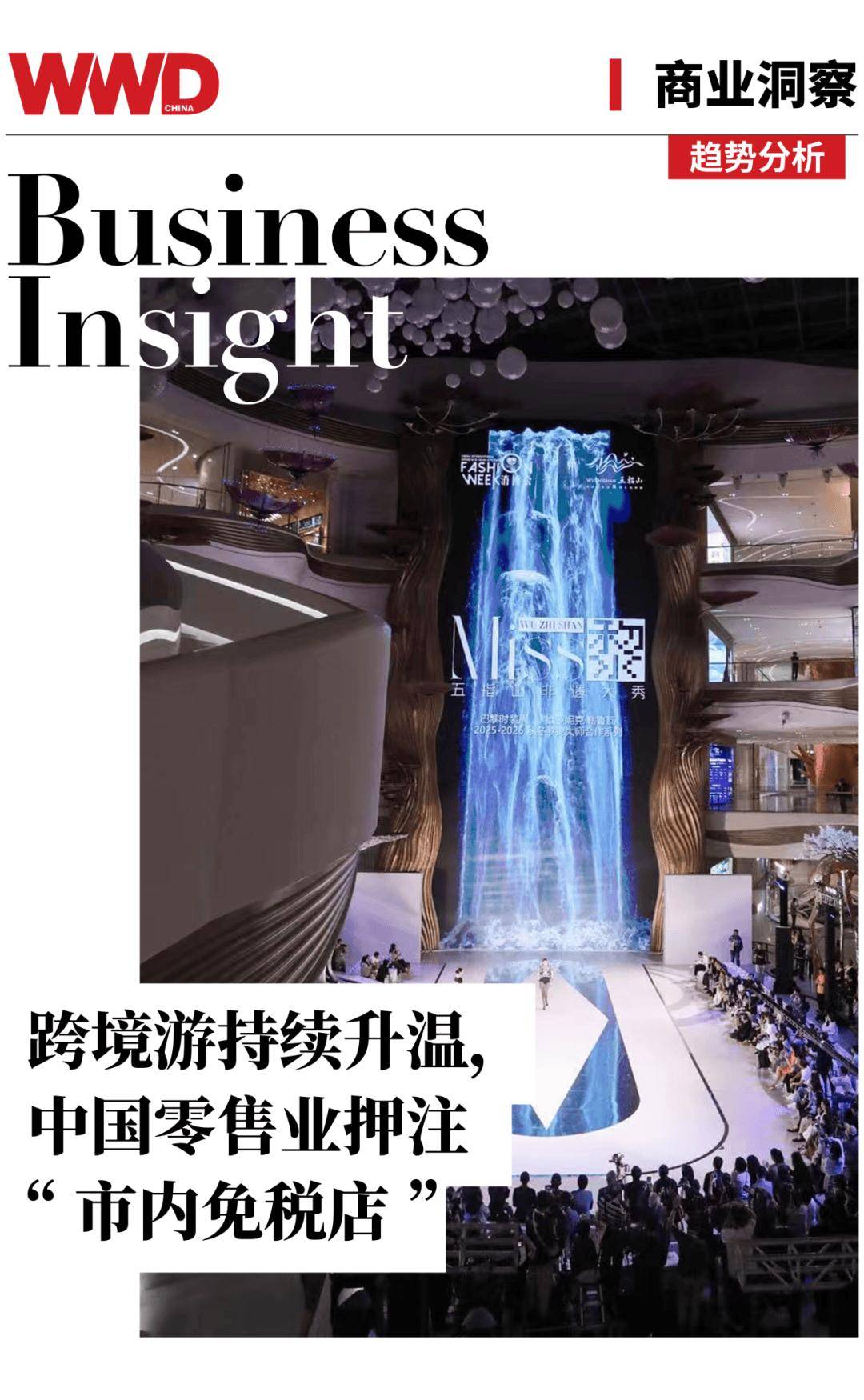
商业洞察|中国零售业押注“市内免税店”
Sou Hu Cai Jing· 2025-06-09 03:22
Core Insights - The article discusses the rapid growth of domestic duty-free shops in China's first and second-tier cities, driven by increasing cross-border travel and supportive government policies [6][7][8] - The Ministry of Commerce has issued measures to support the establishment of international consumption centers, emphasizing the importance of domestic duty-free shops in attracting both outbound travelers and foreign tourists [7][11] - The duty-free sector is expected to play a crucial role in the retail landscape, providing new growth opportunities for local businesses and enhancing the shopping experience for consumers [11][19] Industry Trends - The cross-border travel market has seen a significant increase, with a reported 621.2 million entries and exits during the recent Qingming Festival, marking a 19.7% year-on-year growth [14] - Duty-free shopping in Hainan province has also surged, with tourism revenue reaching 1.661 billion yuan, a staggering 464.7% increase compared to the previous year [14] - Analysts predict that the ongoing tariff disputes between China and the U.S. may shift consumer spending towards duty-free channels, particularly for mid-to-high-end imported goods [13] Company Developments - Several companies, including China Duty Free Group and Wushang Group, are actively expanding their presence in the domestic duty-free market, with new stores set to open in cities like Wuhan and Chengdu [8][19] - The strategic locations of these duty-free shops, often near popular tourist attractions and in central urban areas, are designed to enhance consumer accessibility and shopping experience [20][22] - Local brands are expected to leverage this opportunity to increase their visibility and market share, with a focus on integrating cultural elements into their product offerings [19][22]


多地打出提振消费“组合拳” 上市公司积极探索新增长空间
Zheng Quan Ri Bao· 2025-06-08 17:15
Group 1 - The central government has issued a "Special Action Plan to Boost Consumption," which aims to enhance domestic demand and strengthen the domestic circulation of the economy [1] - Local governments are actively implementing various measures to stimulate consumption, with Shenzhen proposing 39 specific actions and Shanghai focusing on international consumption center development [1] - The impact of digital economy and AI innovations on the consumption industry chain is becoming evident, with local plans incorporating initiatives to promote AI and digital consumption [1] Group 2 - The combination of local policies to boost consumption is significant for expanding domestic demand, providing new growth opportunities for related industries [2] - Companies are encouraged to leverage these policies through technological innovation and upgrading business models to create new consumption scenarios [2] - Retail companies like Wangfujing are adapting to market changes by developing shopping center formats and enhancing consumer experiences [2] Group 3 - Companies in the consumer electronics sector, such as Suzhou Qingyue Optoelectronics, are focusing on market policy and demand changes to capitalize on policy benefits and technological innovations [3] - The support from policies allows companies to contribute to the growth of the consumer market through smart manufacturing upgrades and exploring new market segments [3] - The emergence of new consumption formats and models is expected to solidify and enhance the expansion of the consumer market [3]