
Bank Of Jiangsu(600919)

Search documents
我国系统重要性银行扩容,名单新增1家,分组有调整
2 1 Shi Ji Jing Ji Bao Dao· 2026-02-13 12:01
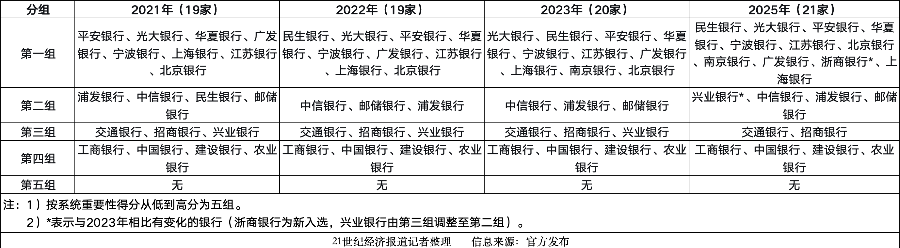
Core Viewpoint - The People's Bank of China and the National Financial Regulatory Administration announced the list of systemically important banks for 2025, identifying 21 banks, an increase of one from the previous assessment, indicating a slight expansion trend in the number of recognized banks [1][4]. Group Structure - The list of systemically important banks has shown a gradual increase over the years, with 19 banks recognized in both 2021 and 2022, 20 in 2023, and 21 in 2025, reflecting a consistent expansion [1][4]. - The fourth group remains stable, consistently comprising the four major banks: Industrial and Commercial Bank of China, Bank of China, China Construction Bank, and Agricultural Bank of China [2][4]. Group Classification - The 21 banks are categorized into five groups based on their systemic importance scores, with the fifth group remaining vacant. The first group increased from 10 to 11 banks, the second group rose from 3 to 4 banks, the third group decreased from 3 to 2 banks, and the fourth group maintained its count at 4 banks [4]. - The first group now includes 11 banks: China Minsheng Bank, China Everbright Bank, Ping An Bank, Huaxia Bank, Ningbo Bank, Jiangsu Bank, Beijing Bank, Nanjing Bank, Guangfa Bank, Zhejiang Commercial Bank, and Shanghai Bank. The second group consists of 4 banks: Industrial Bank, China CITIC Bank, Shanghai Pudong Development Bank, and China Postal Savings Bank. The third group has 2 banks: Bank of Communications and China Merchants Bank. The fourth group includes 4 banks: Industrial and Commercial Bank of China, Bank of China, China Construction Bank, and Agricultural Bank of China [4]. Key Changes - A significant change in this announcement is the inclusion of Zhejiang Commercial Bank in the first group, marking its first entry as a systemically important bank. Additionally, Industrial Bank has been moved from the third group to the second group [4]. Regulatory Framework - The assessment and publication of the list are part of the regulatory authorities' efforts to establish a comprehensive macro-prudential management system and strengthen the supervision of systemically important financial institutions [4][5]. - The People's Bank of China and the National Financial Regulatory Administration will continue to enhance the additional supervision of systemically important banks to promote their safe and sound operation, thereby better serving the high-quality development of the real economy [5].





我国系统重要性银行名单发布,新增浙商银行
证券时报· 2026-02-13 11:31
Core Viewpoint - The People's Bank of China and the National Financial Regulatory Administration released the list of systemically important banks for 2025, identifying 21 domestic banks, including 6 state-owned commercial banks, 10 joint-stock commercial banks, and 5 city commercial banks [1]. Group 1: List of Systemically Important Banks - The 2025 list includes Zhejiang Commercial Bank, which is newly added and placed in the first group, making it the 10th joint-stock commercial bank on the list [2]. - The list is categorized into five groups based on systemic importance scores, with the first group containing 11 banks, the second group 4 banks, the third group 2 banks, the fourth group 4 banks, and no banks in the fifth group [3]. Group 2: Regulatory Framework - Systemically important banks are characterized by their large scale, high complexity, and strong interconnections with the financial system, which significantly impacts economic and financial operations [4]. - The regulatory framework requires additional capital requirements for banks in different groups, ranging from 0.25% for the first group to 1.5% for the fourth group, with specific leverage ratio requirements also in place [4]. - The regulatory bodies aim to enhance macro-prudential management and micro-prudential supervision to ensure the safe and sound operation of systemically important banks, thereby supporting the high-quality development of the real economy [4].



乐购新春享贴息,发票有奖惠民生,江苏银行助力节庆消费更划算!
Zhong Jin Zai Xian· 2026-02-13 11:30
"我早就看上了这款摩托车,趁着财政贴息补贴终于舍得下手了!"机车爱好者张先生难掩兴奋地说道。 他通过江苏银行办理个人消费贷并签署贴息协议后,在线下门店消费2万元购置摩托车,次日便通过手 机银行查询到了贴息信息。 近日,不少市民和张先生一样,切实感受到贴息政策带来的红利:消费后由银行系统自动识别交易、核 算贴息,还款时无需额外操作直接抵扣利息,真正做到省心又省钱。 三重惠民:财政贴息遇上乐购新春,叠加发票抽奖 为进一步提振居民消费、降低消费信贷成本,2026年个人消费贷款财政贴息政策正式落地。各地财政部 门持续加大惠民力度,通过贴息方式减轻市民贷款利息压力,让更多人在日常消费场景中享受到实实在 在的好处。按照政策标准,符合条件的借款人可享受年化1%的贴息支持,最高不超过贷款合同利率的 50%,单人在一家经办机构可享受的累计消费贴息上限为3000元。 便捷体验:指尖服务直达民生红利 目前,江苏银行APP已正式上线个人消费贷款和信用卡账单分期贴息服务,消费者只需线上一键签约, 即可享受政策优惠。在使用贷款发放账户消费时,无论是线上支付还是线下刷卡,银行系统均可自动识 别并核算贴息金额,并在还款时直接抵扣利息。少数无 ...


最新21家系统重要性银行名单出炉
Di Yi Cai Jing Zi Xun· 2026-02-13 10:53
2026.02.13 本文字数:734,阅读时长大约2分钟 作者 | 第一财经 杜川 我国系统重要性银行新增一家。 2月13日,2025年我国系统重要性银行名单公布。中国人民银行、国家金融监督管理总局开展了2025年 度我国系统重要性银行评估,认定21家国内系统重要性银行,其中国有商业银行6家、股份制商业银行 10家、城市商业银行5家。 在此次公布的名单中,按系统重要性得分从低到高分为五组:第一组11家,包括中国民生银行、中国光 大银行、平安银行、华夏银行、宁波银行、江苏银行、北京银行、南京银行、广发银行、浙商银行、上 海银行;第二组4家,包括兴业银行、中信银行、浦发银行、中国邮政储蓄银行;第三组2家,包括交通 银行、招商银行;第四组4家,包括中国工商银行、中国银行、中国建设银行、中国农业银行;第五组 暂无银行进入。 系统重要性银行是指银行中规模较大、地位重要的少数银行。因为其结构和业务复杂、与其他金融机构 关联性强,在金融体系中具有举足轻重的地位,往往对其采取更严格的监管措施,以保障其更加稳健持 续发展,解决"大而不能倒"问题,防范化解金融风险,确保金融稳定和金融安全。 下一步,中国人民银行、国家金融监督管 ...
人民银行、国家金融监管总局发布我国系统重要性银行名单,共计21家
Bei Jing Shang Bao· 2026-02-13 10:39
下一步,中国人民银行、国家金融监督管理总局将按照《系统重要性银行附加监管规定(试行)》要 求,发挥好宏观审慎管理与微观审慎监管合力,持续夯实系统重要性银行附加监管,促进系统重要性银 行安全稳健经营和健康发展,更好服务实体经济高质量发展。 北京商报讯(记者 廖蒙)2月13日,据中国人民银行官网,为构建覆盖全面的宏观审慎管理体系,强化 系统重要性金融机构监管,根据《系统重要性银行评估办法》,近期中国人民银行、国家金融监督管理 总局开展了2025年度我国系统重要性银行评估,认定21家国内系统重要性银行,其中国有商业银行6 家,股份制商业银行10家,城市商业银行5家。 按系统重要性得分从低到高分为五组:第一组11家,包括中国民生银行、中国光大银行、平安银行、华 夏银行、宁波银行、江苏银行、北京银行、南京银行、广发银行、浙商银行、上海银行;第二组4家, 包括兴业银行、中信银行、浦发银行、中国邮政储蓄银行;第三组2家,包括交通银行、招商银行;第 四组4家,包括中国工商银行、中国银行、中国建设银行、中国农业银行;第五组暂无银行进入。 ...
单人成军:江苏银行构建AI时代 OPC综合金融服务方案
Jin Rong Jie· 2026-02-13 10:26
AI正在重新定义组织,一人即一家公司,成为新质生产力最敏捷的单元。面对OPC(一人公司)崛起的 时代浪潮,江苏银行跳出传统信贷思维,构建起一套适配数字经济、服务超级个体、赋能灵活就业的全 新金融服务体系。从人工智能生态中的南京梦当然到苏州度风,越来越多轻资产、高成长的OPC主体, 正在这套方案的支撑下实现"单人成军"。这不仅是一次金融服务的升级,更是一场面向AI组织形态的银 行级服务实验。 OPC生态崛起 金融服务需要一次底层重构 随着数字平台、AI工具与灵活就业生态快速发展,以人工智能为代表的新型就业载体不断涌现,大量 知识型、技术型、创意型个体以OPC形式开展经营活动。他们轻资产、无抵押、高频结算、快速周转, 在AI智能体的支撑下一人身兼创始人、运营、财务、销售多重角色。 传统金融服务往往重视资产、轻视数据应用,擅长大额、低频、重抵押的传统授信模式,却难以适配小 额、高频、轻资产的新型经营需求,在面对OPC"一站式、轻量化、综合化"的真实需求,风控逻辑与服 务流程显得尤为滞后。 以综合金融服务搭建OPC金融新底座 江苏银行OPC金融服务方案的核心逻辑,是从"做一笔贷款"转向"服务一家公司"。该方案以综合结 ...
我国21家系统重要性银行名单公布
2 1 Shi Ji Jing Ji Bao Dao· 2026-02-13 10:23
第五组暂无银行进入。 按系统重要性得分从低到高分为五组: 第一组11家,包括中国民生银行、中国光大银行、平安银行、华夏银行、宁波银行、江苏银行、北京银 行、南京银行、广发银行、浙商银行、上海银行; 第二组4家,包括兴业银行、中信银行、浦发银行、中国邮政储蓄银行; 第三组2家,包括交通银行、招商银行; 第四组4家,包括中国工商银行、中国银行、中国建设银行、中国农业银行; 2月13日,据央行网站,为构建覆盖全面的宏观审慎管理体系,强化系统重要性金融机构监管,根据 《系统重要性银行评估办法》,近期中国人民银行、国家金融监督管理总局开展了2025年度我国系统重 要性银行评估,认定21家国内系统重要性银行,其中国有商业银行6家,股份制商业银行10家,城市商 业银行5家。 下一步,中国人民银行、国家金融监督管理总局将按照《系统重要性银行附加监管规定(试行)》要 求,发挥好宏观审慎管理与微观审慎监管合力,持续夯实系统重要性银行附加监管,促进系统重要性银 行安全稳健经营和健康发展,更好服务实体经济高质量发展。 SFC 出品丨21财经客户端 21世纪经济报道 编辑丨黎雨桐 ...
我国21家系统重要性银行名单公布
21世纪经济报道· 2026-02-13 10:14
按系统重要性得分从低到高分为五组: 第一组11家,包括中国民生银行、中国光大银行、平安银行、华夏银行、宁波银行、江苏银 行、北京银行、南京银行、广发银行、浙商银行、上海银行; 2月13日,据央行网站,为构建覆盖全面的宏观审慎管理体系,强化系统重要性金融机构监 管,根据《系统重要性银行评估办法》,近期中国人民银行、国家金融监督管理总局开展了 2025年度我国系统重要性银行评估, 认定21家国内系统重要性银行,其中国有商业银行6家, 股份制商业银行10家,城市商业银行5家。 第四组4家,包括中国工商银行、中国银行、中国建设银行、中国农业银行; 第五组暂无银行进入。 下一步,中国人民银行、国家金融监督管理总局将按照《系统重要性银行附加监管规定(试 行)》要求,发挥好宏观审慎管理与微观审慎监管合力,持续夯实系统重要性银行附加监管, 促进系统重要性银行安全稳健经营和健康发展,更好服务实体经济高质量发展。 出品丨21财经客户端 21世纪经济报道 编辑丨黎雨桐 蛇年A股第一牛股,狂飙1836% 一线城市二手房价降幅明显收窄 深圳对黄金市场划定十条红线 SFC 21君荐读 第二组4家,包括兴业银行、中信银行、浦发银行、中国邮 ...

两部门发布我国系统重要性银行名单
Xin Lang Cai Jing· 2026-02-13 10:06
Core Viewpoint - The People's Bank of China and the National Financial Regulatory Administration have released the list of systemically important banks in China for 2025, identifying 21 banks that will be subject to enhanced regulatory scrutiny to ensure their stability and support the high-quality development of the real economy [1]. Group 1: Identification of Systemically Important Banks - A total of 21 domestic banks have been recognized as systemically important, including 6 state-owned commercial banks, 10 joint-stock commercial banks, and 5 city commercial banks [1]. - The banks are categorized into five groups based on their systemic importance scores, with the first group consisting of 11 banks, the second group having 4 banks, the third group with 2 banks, the fourth group containing 4 banks, and no banks in the fifth group [1]. Group 2: Breakdown of Banks by Group - **First Group (11 banks)**: China Minsheng Bank, China Everbright Bank, Ping An Bank, Huaxia Bank, Ningbo Bank, Jiangsu Bank, Beijing Bank, Nanjing Bank, Guangfa Bank, Zheshang Bank, Shanghai Bank [1]. - **Second Group (4 banks)**: Industrial Bank, China CITIC Bank, Shanghai Pudong Development Bank, China Postal Savings Bank [1]. - **Third Group (2 banks)**: Bank of Communications, China Merchants Bank [1]. - **Fourth Group (4 banks)**: Industrial and Commercial Bank of China, Bank of China, China Construction Bank, Agricultural Bank of China [1]. - **Fifth Group**: No banks are included [1]. Group 3: Regulatory Framework and Future Actions - The People's Bank of China and the National Financial Regulatory Administration will implement additional regulatory measures as per the "Regulations on Additional Supervision of Systemically Important Banks (Trial)" to enhance macro-prudential management and micro-prudential supervision [1]. - The aim is to ensure the safe and sound operation of systemically important banks and to better serve the high-quality development of the real economy [1].
我国系统重要性银行名单发布 共计21家
Xin Lang Cai Jing· 2026-02-13 10:05
Core Viewpoint - The People's Bank of China and the National Financial Regulatory Administration have conducted an assessment of systemically important banks for 2025, identifying 21 domestic banks that play a crucial role in the financial system [1] Group 1: Identification of Systemically Important Banks - A total of 21 domestic banks have been recognized as systemically important, including 6 state-owned commercial banks, 10 joint-stock commercial banks, and 5 city commercial banks [1] - The banks are categorized into five groups based on their systemic importance scores, with the first group containing 11 banks, the second group 4 banks, the third group 2 banks, the fourth group 4 banks, and the fifth group having no banks [1] Group 2: Breakdown of Banks by Group - **First Group (11 banks)**: Includes China Minsheng Bank, China Everbright Bank, Ping An Bank, Huaxia Bank, Ningbo Bank, Jiangsu Bank, Beijing Bank, Nanjing Bank, Guangfa Bank, Zheshang Bank, and Shanghai Bank [1] - **Second Group (4 banks)**: Includes Industrial Bank, China CITIC Bank, Shanghai Pudong Development Bank, and China Postal Savings Bank [1] - **Third Group (2 banks)**: Includes Bank of Communications and China Merchants Bank [1] - **Fourth Group (4 banks)**: Includes Industrial and Commercial Bank of China, Bank of China, China Construction Bank, and Agricultural Bank of China [1] - **Fifth Group**: No banks are included in this group [1] Group 3: Future Regulatory Actions - The People's Bank of China and the National Financial Regulatory Administration will implement additional regulatory measures as per the "Regulations on Additional Supervision of Systemically Important Banks (Trial)" to enhance macro-prudential management and micro-prudential supervision [1] - The aim is to ensure the safe and sound operation of systemically important banks and to better serve the high-quality development of the real economy [1]