
Changshu Bank(601128)

Search documents
丈量地方性银行(1):江苏127家区域性银行全梳理-20260123
GF SECURITIES· 2026-01-23 11:08
Investment Rating - The industry investment rating is "Buy" [2] Core Insights - The report provides a comprehensive analysis of 127 regional banks in Jiangsu Province, highlighting their asset and liability structures, profitability, and asset quality [6][18] - Jiangsu's regional banks have shown a significant increase in asset growth, with major city commercial banks growing at 19.4%, surpassing the growth of listed city commercial banks at 14.2% [24][26] - The report indicates that the loan-to-asset ratio for city commercial banks is projected to reach 48.4% in 2024, reflecting a gradual increase in lending activities [30] - Jiangsu's regional banks exhibit better return on assets (ROA) compared to listed banks, with city commercial banks outperforming by 16 basis points and rural commercial banks by 9 basis points [6][42] - The asset quality of Jiangsu's regional banks is superior to that of listed banks, with lower non-performing loan ratios and higher provision coverage ratios [6][42] Summary by Sections 1. Economic Structure of Jiangsu Province - Jiangsu Province is focusing on new industrialization and strategic emerging industries, with significant contributions from cities like Nanjing and Suzhou [13][14] 2. Overview of 127 Regional Banks in Jiangsu - The report categorizes the banks into city commercial banks, rural commercial banks, and others, with a total of 127 banks established between 2006 and 2015 [18][20] 3. Asset/Liability Structure - The asset growth of major city commercial banks is accelerating, while rural commercial banks are experiencing a decline in growth rates [24][26] - The loan-to-asset ratio for city commercial banks is expected to increase to 48.4% by 2024, indicating a shift towards more lending [30] 4. Profitability - Jiangsu's regional banks have a higher ROA compared to listed banks, with city commercial banks showing a 16 basis point advantage [6][42] 5. Asset Quality/Capital Levels - Jiangsu's regional banks maintain a lower non-performing loan ratio compared to listed banks, with city commercial banks having a 30 basis point lower ratio [6][42]



利率降至“1”字头!中小银行大额存单密集上新
Guo Ji Jin Rong Bao· 2026-01-23 09:29
Core Viewpoint - A significant surge in the issuance of large-denomination certificates of deposit (CDs) by small and medium-sized banks has been observed, reflecting a shift towards short-term products in response to a challenging interest margin environment [1][4]. Group 1: Issuance Trends - As of January 22, at least 234 new large-denomination CDs from small and medium-sized banks have been launched, indicating a robust issuance trend [2]. - On January 22 alone, five banks issued a total of 12 new CD products, with Changshu Bank notably offering multiple series of CDs [2]. Group 2: Characteristics of New Products - The newly issued CDs exhibit a clear trend towards shorter maturities, with half of the products from Changshu Bank having a duration of only six months, and the longest being two years [3]. - Personal large-denomination CDs are increasingly difficult to find in five-year terms, with one- to two-year products dominating the market [3]. Group 3: Interest Rates - The annualized interest rates for personal large-denomination CDs from small and medium-sized banks have generally fallen to the "1" range, yet remain competitive compared to state-owned banks [3]. - For three-year CDs, interest rates are typically in the range of 1.75% to 1.85%, while one- and two-year products generally offer rates between 1.35% and 1.5% [3]. Group 4: Market Dynamics - The trend towards short-term products reflects banks' proactive measures to adapt to a low net interest margin environment, as they seek to stabilize profits by reducing or halting high-cost long-term deposits [4]. - The upcoming maturity of approximately 32 trillion yuan in long-term deposits by 2026, with a significant portion maturing in the first quarter, indicates a shift in deposit re-pricing dynamics [4]. Group 5: Deposit Migration - The ongoing decline in deposit rates and the phenomenon of "deposit migration" are critical market concerns, with a projected 6 trillion yuan in excess savings formed by residents from 2022 to 2025 [5]. - Despite a recovering capital market, residents' investment and consumption tendencies have not significantly improved, suggesting that deposit migration is more about asset allocation adjustments rather than a fundamental change in risk appetite [5][6].

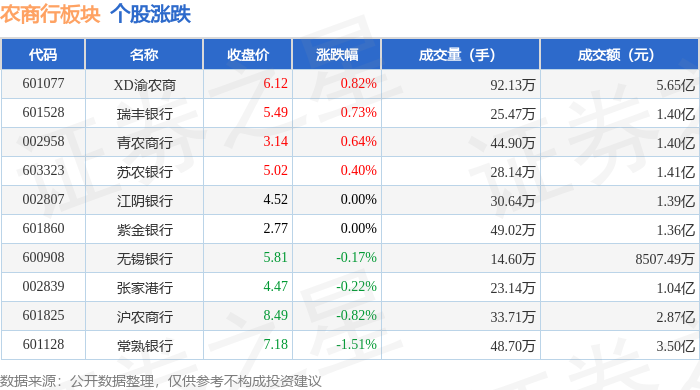
农商行板块1月23日跌0.91%,常熟银行领跌,主力资金净流入977.76万元
Zheng Xing Xing Ye Ri Bao· 2026-01-23 09:04
Core Viewpoint - The agricultural commercial bank sector experienced a decline of 0.91% on January 23, with Changshu Bank leading the drop, while the Shanghai Composite Index rose by 0.33% and the Shenzhen Component Index increased by 0.79% [1] Group 1: Market Performance - The closing price of Changshu Bank was 7.18, reflecting a decrease of 1.51% [1] - The sector's main stocks showed mixed performance, with XD Yunnong Bank increasing by 0.82% to 6.12, and Wuxi Bank decreasing by 0.17% to 5.81 [1] - The total trading volume for the agricultural commercial bank sector was significant, with XD Yunnong Bank recording a volume of 921,300 shares and a transaction value of 565 million [1] Group 2: Capital Flow - The agricultural commercial bank sector saw a net inflow of 9.78 million from main funds, while retail investors experienced a net outflow of 76.56 million [1] - Among individual banks, Shanghai Agricultural Commercial Bank had the highest net inflow from main funds at 26.90 million, while Changshu Bank faced a net outflow of 22.49 million [2] - Retail investors showed a significant net inflow into Qingnong Bank at 24.98 million, despite the bank experiencing a net outflow from main and speculative funds [2]





A股银行股普跌
Ge Long Hui A P P· 2026-01-23 07:20
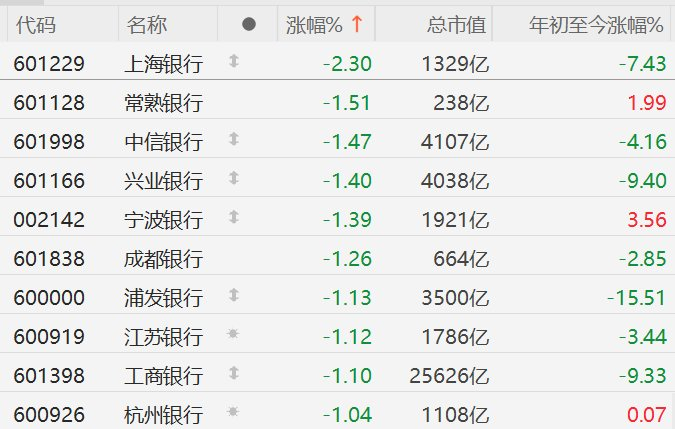
| 代码 | 名称 | | 涨幅%↑ | 总市值 | 年初至今涨幅% | | --- | --- | --- | --- | --- | --- | | 601229 | 上海银行 | 1 | -2.30 | 1329亿 | -7.43 | | 601128 | 常熟銀行 | | -1.51 | 238亿 | 1.99 | | 601998 | 中信銀行 | 1 | -1.47 | 4107亿 | -4.16 | | 601166 | 兴业银行 | 1 | -1.40 | 4038亿 | -9.40 | | 002142 | 宁波银行 | 1 | -1.39 | 1921亿 | 3.56 | | 601838 | 成都银行 | | -1.26 | 664亿 | -2.85 | | 600000 | 浦发银行 | 1 | -1.13 | 3500亿 | -15.51 | | 600919 | 江苏银行 | 兼 | -1.12 | 1786亿 | -3.44 | | 601398 | 工商银行 | 1 | -1.10 | 25626亿 | -9.33 | | 600926 | 杭州银行 | 张 | -1.04 | ...




常熟挺起硬脊梁
Xin Lang Cai Jing· 2026-01-22 22:14
Group 1 - The core viewpoint of the articles highlights the economic growth and industrial development of Changshu, with a projected GDP exceeding 320 billion yuan and a growth rate of 5.8% for the past year [1][2] - Changshu's industrial output value reached 513.2 billion yuan, marking a significant milestone by surpassing 500 billion yuan, with a 6% increase in industrial added value [2][3] - The city aims to build a "three main and six new" industrial system to foster new development momentum and advantages, focusing on automotive, equipment manufacturing, and textile industries as the main sectors [2][4] Group 2 - The government emphasizes the importance of innovation and strategic planning to enhance the quality and efficiency of economic growth, aiming for a modern industrial system [3][4] - Changshu is actively attracting major projects and investments, particularly in high-tech and innovative sectors, to strengthen its economic foundation [3][5] - The establishment of the "Intelligent Computing Future City" aims to position Changshu as a hub for AI and smart technology, with significant investments in related projects [6][7] Group 3 - The textile and apparel industry in Changshu is undergoing a transformation driven by AI technology, with companies like Bosideng leading innovations in product development and manufacturing processes [7][8] - The city is focused on nurturing a tiered cultivation mechanism for technology-driven SMEs, high-tech enterprises, and innovative leading companies to enhance the resilience of the industrial supply chain [8][9] - Changshu's financial institutions, such as Changshu Rural Commercial Bank, are committed to supporting local enterprises and projects, ensuring robust financial backing for economic growth [10] Group 4 - The city is dedicated to creating a friendly environment for talent, aiming to increase the total talent pool to 500,000 by 2026, with a focus on attracting skilled professionals in key industries [9][10] - Changshu plans to enhance cultural and recreational offerings for its residents, celebrating its 40th anniversary as a national historical and cultural city through various community engagement activities [11][12] - The recent snowfall symbolizes a prosperous year ahead, reflecting the city's commitment to modernization and innovation in its development practices [1][11]
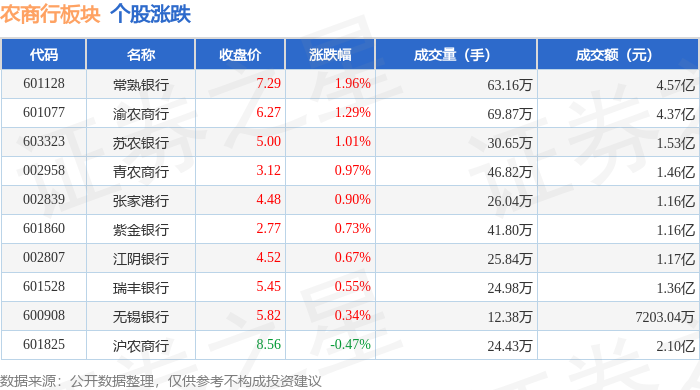
农商行板块1月22日涨0.58%,常熟银行领涨,主力资金净流入9380.13万元
Zheng Xing Xing Ye Ri Bao· 2026-01-22 09:01
Core Viewpoint - The rural commercial bank sector experienced a rise of 0.58% on January 22, with Changshu Bank leading the gains, while the Shanghai Composite Index and Shenzhen Component Index also saw slight increases [1] Group 1: Market Performance - The Shanghai Composite Index closed at 4122.58, up 0.14% [1] - The Shenzhen Component Index closed at 14327.05, up 0.5% [1] - Changshu Bank's stock price increased by 1.96% to 7.29, with a trading volume of 631,600 shares and a transaction value of 457 million yuan [1] Group 2: Individual Stock Performance - Yunnan Rural Commercial Bank's stock rose by 1.29% to 6.27, with a trading volume of 698,700 shares and a transaction value of 437 million yuan [1] - Jiangyin Bank's stock price increased by 0.67% to 4.52, with a trading volume of 258,400 shares and a transaction value of 117 million yuan [1] - Wuxi Bank's stock price rose by 0.34% to 5.82, with a trading volume of 123,800 shares and a transaction value of 72 million yuan [1] Group 3: Fund Flow Analysis - The rural commercial bank sector saw a net inflow of 93.8 million yuan from main funds, while retail investors experienced a net outflow of 80.29 million yuan [1] - Yunnan Rural Commercial Bank had a main fund net inflow of 37.2 million yuan, but retail investors had a net outflow of 26.99 million yuan [2] - Changshu Bank experienced a main fund net inflow of 15.36 million yuan, with retail investors seeing a net inflow of 33.52 million yuan [2]



数字人民币2.0:从M0到M1的质变
GF SECURITIES· 2026-01-22 05:07
Investment Rating - The report provides a "Buy" rating for all major banks analyzed, indicating a positive outlook for the banking sector [7]. Core Insights - The digital renminbi has entered its 2.0 era, transitioning from a central bank liability (M0) to a commercial bank liability (M1), allowing it to earn interest and be included in deposit insurance and reserve requirements [6][14]. - This transformation positions China as the first economy to offer interest on its central bank digital currency (CBDC), fundamentally altering its monetary attributes and creating a new financial paradigm in the digital economy [27]. - The digital renminbi's interest-bearing feature enhances user motivation to hold it, shifting its perception from a mere payment tool to a viable store of value, thus promoting its integration into everyday financial activities [27][28]. Summary by Sections 1. Digital Renminbi 2.0 Era - The digital renminbi (e-CNY) is now classified as a digital deposit currency, which can earn interest and is managed under a new regulatory framework [14]. - Major state-owned banks have begun offering interest on digital renminbi wallet balances, marking a significant shift in its utility and appeal [14][27]. 2. Development Progress and Application Status - The development of the digital renminbi began in 2014, with significant milestones including pilot tests in various cities and the establishment of a comprehensive operational framework by 2025 [32][33]. - As of November 2025, the digital renminbi has processed 34.8 billion transactions amounting to 16.7 trillion yuan, with extensive coverage across multiple provinces and cities [37]. 3. Global CBDC Development Trends - The report identifies three main trends in global CBDC development: active retail CBDC initiatives, innovation in payment systems, and cautious approaches in some countries like the U.S. [6]. - China's proactive stance in developing its CBDC positions it favorably in the global digital economy landscape, particularly in cross-border trade applications [30].

常熟农商银行1月22日起发售2026年个人大额存单
Jin Tou Wang· 2026-01-22 03:10
个人大额存单是由常熟农商银行发行,面向个人客户的记账式大额存款凭证,是存款类金融产品,属一 般性存款。本次个人大额存单最小起存金额为20万元,额度有限。 2026年1月21日,常熟农商银行发布公告称,常熟农商银行将于2026年1月22日起发售常农2026年个人大 额存单。 ...
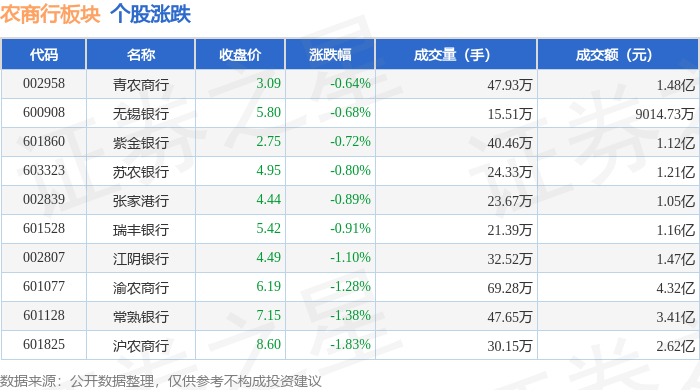
农商行板块1月21日跌1.32%,沪农商行领跌,主力资金净流入1.07亿元
Zheng Xing Xing Ye Ri Bao· 2026-01-21 08:55
Core Viewpoint - The rural commercial bank sector experienced a decline of 1.32% on January 21, with the Shanghai Rural Commercial Bank leading the drop, while the overall Shanghai Composite Index rose by 0.08% [1] Group 1: Market Performance - The Shanghai Composite Index closed at 4116.94, up 0.08%, and the Shenzhen Component Index closed at 14255.12, up 0.7% [1] - The rural commercial bank sector saw various individual stock performances, with the following notable declines: - Shanghai Rural Commercial Bank: -1.83% - Changshu Bank: -1.38% - Chongqing Rural Commercial Bank: -1.28% [1] Group 2: Trading Volume and Capital Flow - The total trading volume for the rural commercial bank sector was significant, with the following notable figures: - Jiangyin Bank: 32.52 million shares traded - Yunnan Bank: 69.28 million shares traded [1] - The net capital flow for the rural commercial bank sector showed a net inflow of 107 million yuan from institutional investors and a net inflow of 109 million yuan from retail investors, while retail investors had a net outflow of 217 million yuan [1] Group 3: Individual Stock Capital Flow - The following stocks had notable capital flows: - Shanghai Rural Commercial Bank: 34.33 million yuan net inflow from institutional investors, but a net outflow of 62.48 million yuan from retail investors [2] - Chongqing Rural Commercial Bank: 29.51 million yuan net inflow from institutional investors, with a net outflow of 38.80 million yuan from retail investors [2] - Zhangjiagang Bank: 18.05 million yuan net inflow from institutional investors, but a net outflow of 24.22 million yuan from retail investors [2]
2025年9家农商行因交易违规被处分,新型违规惩戒案例引关注
Di Yi Cai Jing· 2026-01-20 14:00
Group 1 - The core viewpoint of the articles highlights the ongoing strict regulation in China's bond market, with an increase in self-discipline measures and a focus on new types of violations [1][4][6] - In 2023, the Trading Association imposed self-discipline penalties on 143 instances involving 108 institutions, while in 2024, the number decreased to 88 instances involving 47 institutions and 41 individuals [1] - The penalties in 2023 included a significant focus on structured issuance violations and new types of misconduct, including trading violations [1][4] Group 2 - The Trading Association reported several "firsts" in 2023, including the first penalties for low-price underwriting of financial bonds and violations related to the independence of rating agencies [2][3] - A notable case involved Guangfa Bank's issuance of a 350 billion yuan bond, where the average underwriting fee was only 0.02 basis points, raising concerns about market practices [3] - The association also took action against nine rural commercial banks for various violations, including price manipulation and failure to establish effective internal control systems [4][5] Group 3 - In 2023, the Trading Association conducted a special investigation into the misuse of raised funds and irregular asset transfers by platform enterprises, resulting in penalties for 20 involved institutions [6] - The association is continuously improving self-discipline rules, focusing on issues like distorted pricing and non-market-based issuance, and has issued specific notifications to regulate these practices [6] - Future efforts will concentrate on addressing prominent issues in the interbank bond market and maintaining a stable market environment through strict enforcement of regulations [6]