AGRICULTURAL BANK OF CHINA(601288)

Search documents
农业银行发布2025年底和2026年债市宝业务节假日休市安排通知
Jin Tou Wang· 2025-12-25 03:59
Summary of Key Points Core Viewpoint - The announcement by Agricultural Bank of China outlines the holiday market closure schedule for the bond market in 2026, as per the State Council's notification regarding holiday arrangements. Group 1: New Year Holiday - The bond market will be closed for four days from December 31, 2025, to January 3, 2026, and will resume normal operations on January 4, 2026 [1] Group 2: Spring Festival - The market will be closed for ten days from February 14 to February 23, 2026, with normal operations resuming on February 28, 2026 [2] Group 3: Qingming Festival - The bond market will be closed for four days from April 3 to April 6, 2026 [3] Group 4: Labor Day - The market will be closed for six days from April 30 to May 5, 2026, and will resume normal operations on May 9, 2026 [4] Group 5: Dragon Boat Festival - The bond market will be closed for four days from June 18 to June 21, 2026 [5] Group 6: Mid-Autumn Festival - The market will be closed for four days from September 24 to September 27, 2026 [6] Group 7: National Day - The bond market will be closed for eight days from September 30 to October 7, 2026, with normal operations on September 20 and October 10, 2026 [7]

银行业助力谱写中国式现代化海南篇章
Jin Rong Shi Bao· 2025-12-25 03:09
Core Viewpoint - The official launch of the Hainan Free Trade Port's full island closure on December 18 marks a significant step in China's commitment to high-level opening-up and the construction of an open world economy, presenting new development opportunities across various industries [1] Group 1: Support for Hainan's Full Island Closure - The full island closure operation is a foundational project for the Hainan Free Trade Port, with the National Development Bank's Hainan branch actively supporting infrastructure and logistics projects to ensure smooth implementation [2] - The bank has facilitated financing for major infrastructure projects, including upgrades to key ports and logistics hubs, ensuring that all ten "second-tier ports" pass national acceptance [2] - The Hainan branch of the National Development Bank prioritizes infrastructure service as its primary business initiative, engaging in significant projects aligned with national and provincial planning [2] Group 2: Growth of Cross-Border Financial Services - Post-closure, the convenience of cross-border capital flow is expected to significantly increase, with banks exploring new opportunities in cross-border trade settlement and offshore financial services [3] - Agricultural Bank of China has launched multifunctional free trade accounts to facilitate cross-border capital flow for quality enterprises in Hainan, establishing a comprehensive financial account service system [3] - The bank aims to enhance services for domestic and foreign enterprises investing in Hainan through collaborative mechanisms across various regions [3] Group 3: Financial Innovations and Support for Key Industries - Minsheng Bank's Haikou branch is actively engaging with cross-border financial reform policies, implementing innovative services such as cross-border asset transfers and QDLP pilot programs [4] - The financial sector is focusing on supporting Hainan's four leading industries and key areas to drive high-quality economic development [5] - Citic Bank's Haikou branch is committed to enhancing financial services for local enterprises, including innovative financing solutions for agricultural research and technology sectors [6]

银行业积极响应信用修复政策 支持个人和家庭重塑信用
Jin Rong Shi Bao· 2025-12-25 02:58
Core Viewpoint - The People's Bank of China has announced a one-time credit repair policy aimed at supporting individuals with damaged credit who actively repay their debts, in response to the ongoing impacts of the COVID-19 pandemic [1][3]. Group 1: Policy Implementation - The policy applies to personal overdue information for amounts not exceeding 10,000 RMB from January 1, 2020, to December 31, 2025, where individuals can have their overdue debts removed from the credit system if repaid by March 31, 2026 [2]. - Financial institutions have quickly responded to the policy, emphasizing the importance of promoting and implementing the credit repair measures [1][3]. Group 2: Benefits for Individuals and Financial Institutions - The policy is expected to provide a corrective opportunity for individuals with past credit issues, improving their credit status and stimulating economic activity [3]. - It will help financial institutions better identify individual credit situations, enhancing the quality and effectiveness of inclusive financial services [3][4]. - The policy is anticipated to activate a significant number of potential credit customers, positively impacting consumer credit growth [4]. Group 3: Relationship Between Banks and Customers - The implementation of the policy is likely to foster a better relationship between banks and customers, encouraging individuals to value and maintain their credit [5]. - Banks are expected to provide improved financial services based on the enhanced credit environment created by the policy [5]. Group 4: Challenges for Financial Institutions - Banks face the challenge of optimizing risk control capabilities while implementing the credit repair policy [6]. - There is pressure on banks to quickly adjust risk control models to incorporate the new repair rules and prevent secondary risks from historical record changes [7]. - Financial institutions need to ensure accurate reporting of repayment information to the credit system and may need to develop new assessment models for the repaired customer group [7][8].





如何申请一次性信用修复?国有大行权威解答
Xin Lang Cai Jing· 2025-12-25 00:38
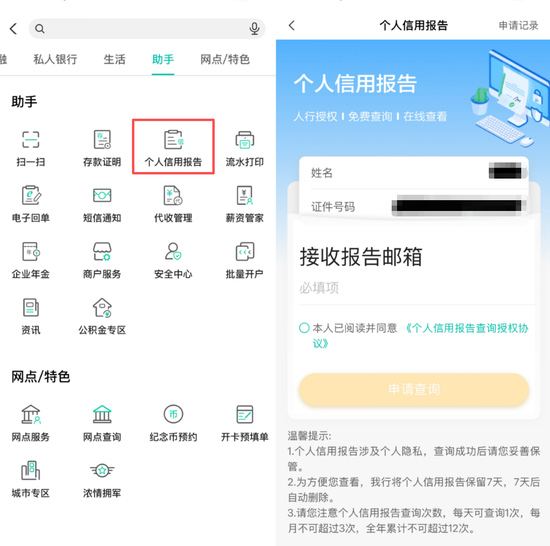
Core Viewpoint - The People's Bank of China has announced a one-time credit repair policy effective from January 1, which will not display certain overdue information in personal credit reports for eligible individuals [1][7]. Group 1: Policy Implementation - Major state-owned banks quickly responded to the announcement by providing answers to frequently asked questions regarding the policy [2][4]. - Agricultural Bank of China stated that overdue information meeting the criteria will be automatically identified and processed without requiring public applications [2][7]. - The policy is completely free, and individuals do not need to apply or engage third parties for assistance [1][10]. Group 2: Eligibility Criteria - The policy applies to overdue information in the financial credit information database from January 1, 2020, to December 31, 2025, with a single overdue amount not exceeding 10,000 yuan [7]. - Individuals must fully repay their overdue debts by March 31, 2026, for the information to be excluded from their credit report [7]. Group 3: Bank Responses and Services - Banks have enhanced their online and offline services to facilitate customer inquiries about their credit reports [2][4][5]. - Various banks, including China Construction Bank and Bank of Communications, have provided multiple channels for customers to check their credit reports, including mobile apps and self-service machines [4][5]. Group 4: Impact on Financial Institutions - The policy is expected to encourage overdue borrowers to repay their debts, aiding banks in recovering non-performing assets and improving asset quality [8]. - The one-time nature of the policy is designed to prevent moral hazard while potentially increasing demand for personal loans [8].

寒冬送温暖 服务暖人心
Xin Lang Cai Jing· 2025-12-24 17:47
农行呼和浩分行充分发挥"农情暖域"工会户外劳动者服务站点服务作用,将营业网点打造成有温度的便 民港湾,以专业力量传递金融温情。立冬已至,寒意渐深,总有身影在街头奔波,鼓楼成吉思汗大街支 行工作人员引导环卫工人、快递员、外卖骑手等户外劳动者前往网点休息驱寒、手机充电、餐食加热。 休息间隙,劳动者们围坐一堂,网点厅堂人员化身"金融知识宣传员",手持金融知识宣传折页,用通俗 易懂的方言,耐心细致地讲解日常生活中必备的金融知识和常见的诈骗陷阱,并耐心解答了大家关于储 蓄、转账、养老金支取等方面的具体问题。 农行呼和浩特分行将始终践行服务初心,继续将金融知识普及与人文关怀紧密结合,把这份"金融温 度"延伸至更多群体、覆盖至更多角落。作者:李佳 转自:内蒙古晨网 (来源:内蒙古晨网) ...
国有大行火速响应信用修复新政
21世纪经济报道· 2025-12-24 14:10
Core Viewpoint - The article discusses the implementation of a new credit repair policy by the People's Bank of China, which allows for automatic credit repair for individuals with overdue debts, significantly lowering the barriers and costs associated with credit repair [1][3]. Group 1: Policy Overview - The new policy, effective from December 22, 2025, allows for the automatic removal of certain overdue information from credit reports without the need for individual applications, marking a shift towards a dual focus on both punishment and repair in the credit system [1][3]. - The policy covers various types of personal loans, including mortgages, consumer loans, and credit cards, and applies to all financial institutions connected to the central bank's credit system [6][3]. Group 2: Eligibility and Conditions - To qualify for the credit repair, overdue information must meet three criteria: it must have occurred between January 1, 2020, and December 31, 2025; the overdue amount must not exceed 10,000 RMB; and the debt must be fully repaid by March 31, 2026 [6][3]. - The automatic repair process is designed to be seamless, with the central bank's credit system identifying eligible overdue information without requiring any action from the individual [3][7]. Group 3: Implementation by Financial Institutions - Major banks, including Industrial and Commercial Bank of China, Agricultural Bank of China, and others, have quickly adapted to the new policy by enhancing their service channels and ensuring accurate data management to facilitate the policy's implementation [9][10]. - Banks have established various channels for customers to inquire about their credit status and have emphasized the importance of confirming repayment amounts to ensure eligibility for the credit repair [11][10]. Group 4: Balancing Rights and Risk Management - The new policy aims to balance individual rights protection with financial risk management, encouraging overdue borrowers to repay their debts while helping banks recover non-performing assets [14][15]. - The policy is expected to stimulate demand for personal loans, including consumer and mortgage loans, by releasing previously constrained financing needs, thus revitalizing the credit market [15][16].

广东召开推进“百千万工程”促进城乡区域协调发展现场会
Zhong Guo Jing Ji Wang· 2025-12-24 13:32
会议以"现场调研+集中开会"的形式进行。在调研环节,广东省领导同志与定点联系的有关地市及下辖 县(市、区)负责同志、省有关单位负责同志以及高校、企业、机构代表,前往位于广州、惠州的环南 昆山—罗浮山县镇村高质量发展引领区开展实地调研,深入考察"百千万工程"实施3年来当地经济社会 发展的新变化、新成绩,在学习借鉴中进一步打开工作思路,优化工作举措。 12月22日至23日,广东召开全省推进"百县千镇万村高质量发展工程"促进城乡区域协调发展现场会,在 3年初见成效基础上,总结工作、交流经验、完善打法,更好实现强县促镇带村,推动城乡区域协调发 展取得更大进步。 惠州市委书记刘吉介绍,为发展特色产业壮大县域经济,惠州市县联合打造了7个县区千亿级产业园, 成为县区高质量发展主引擎,贡献全市规上工业产值超70%。通过做强特色农业,惠州现有国家级产业 集群2个、现代农业产业园16个,全产业链推动现代化海洋牧场建设,率先突破黄唇鱼、大黄鱼规模化 人工繁育技术。 在"百千万工程"推进中,广东健全了新型帮扶协作机制。广东省发展改革委负责人龚桢梽介绍,近3年 来,珠三角6市累计拨付帮扶资金超166亿元,布局建设了12个市级产业转移合 ...
32.5岁的深圳“未老先备”,农行深圳分行作答养老金融大文章
2 1 Shi Ji Jing Ji Bao Dao· 2025-12-24 12:43
Core Insights - Shenzhen, a young city with an average resident age of 32.5, is proactively preparing for an aging population by implementing a comprehensive pension finance strategy [1] - The Agricultural Bank of China Shenzhen Branch has made significant strides in pension finance, with a focus on pension financial services, pension service finance, and pension industry finance [1][6] Pension Financial Services - The Agricultural Bank of China Shenzhen Branch has opened 4.34 million personal pension accounts with a total deposit of 4.136 billion yuan as of September [1] - The bank has established 12 "social security and banking special windows" in collaboration with the Shenzhen Human Resources and Social Security Bureau to facilitate social security card applications [3] - The bank's enterprise annuity services have gained recognition due to their experience, scale, performance, risk control, and service quality [3] Pension Service Finance - The bank aims to provide high-quality financial services by diversifying product offerings and enhancing customer experience [4] - New products include the "Nongqing Yiyangbao," which combines monthly dividend financial products, redeemable funds, and insurance to meet the daily consumption needs of elderly clients [4] - The bank is also enhancing its service channels by renovating physical branches for elderly accessibility and improving online services [5] Pension Industry Finance - The Agricultural Bank of China Shenzhen Branch reported a pension industry loan balance of approximately 390 million yuan, with a year-on-year growth rate of 468%, leading among major banks [6] - The bank focuses on providing tailored financial services to key sectors within the pension industry, including social elderly care and medical enterprises [7] - The bank is expanding its financing channels by collaborating with various financial institutions and government funds to support quality enterprises in the pension industry [8] Collaborative Ecosystem - The bank is building a pension finance ecosystem by enhancing internal collaboration across various departments to provide integrated services [9] - The bank positions itself as a "financial partner" and "resource connector" for the pension industry, offering not only financial support but also strategic advisory services [10]
从“有保障”到“有品质” 农行湖北分行智慧养老实践让幸福升级
Zhong Guo Jin Rong Xin Xi Wang· 2025-12-24 12:38
场景嵌入民生 智慧助老"零距离" 寒冬时节,湖北潜江棉原社区老年食堂饭菜飘香,陈奶奶刷脸完成就餐,3元就餐补贴自动抵扣,两荤 一素的餐食实惠又省心。"不用带卡、不用现金,还经济实惠,太方便了!"陈奶奶点赞的"便捷服务", 得益于农行潜江分行提供技术支持的智能就餐管理系统。 这套系统实现全市助餐点数据互通,老人信息录入后可跨点享受补贴就餐;储值卡与补贴资金互通的设 计,既让老人享受储值优惠,又能便捷抵扣补贴。针对高龄、独居老人"出门难"问题,农行掌上银行同 步开通线上订餐功能,让暖心餐食精准送上门。 "老年人就餐难是民生关键实事。"农行潜江分行相关负责人表示,当地出台65周岁以上户籍老人每日3 元就餐补贴政策,农行通过大数据支撑与系统搭建,确保补贴精准发放、助餐服务高效运转。目前,该 系统已覆盖潜江18个社区助餐点,未来还将进一步扩大覆盖范围,让更多老人就近享受热乎饭。 近年来,农行湖北分行聚焦社区养老民生场景,将金融科技深度嵌入助餐、助医等日常服务,通过场景 化创新,让智慧养老服务真正贴近老人生活。 转自:新华财经 从社区食堂的"刷脸就餐",到智慧养老App的一站式服务,再到养老设施的智慧化改造升级……近年 ...
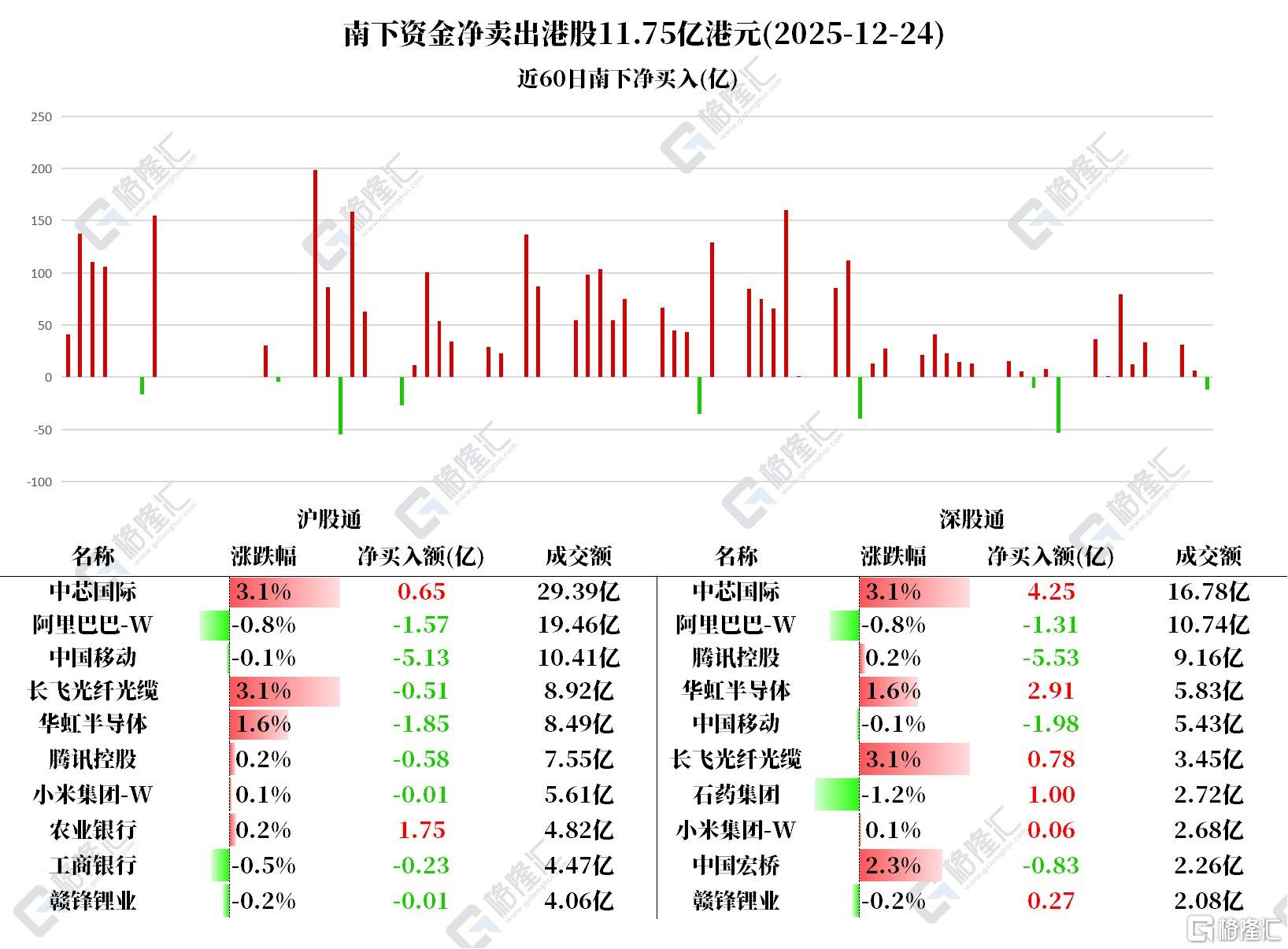
资金动向 | 北水抛售港股近12亿港元,加仓中芯国际、农业银行
Ge Long Hui· 2025-12-24 11:49
Group 1 - Semiconductor company SMIC has implemented a price increase of approximately 10% on certain production capacities due to rising demand from mobile applications and AI, as well as increased raw material costs [4] - Agricultural Bank is expected to see a narrowing of net interest margin to around 4 basis points by 2026, marking the first annual decline in single digits since 2022, which may lead to improved revenue and net profit growth for listed banks [4] - Pharmaceutical company Stone Pharmaceutical has received approval from the National Medical Products Administration of China to conduct clinical trials for its drug Daratumumab injection [4] Group 2 - Tencent Holdings will hold a board meeting on March 18, 2026, to approve the annual performance for the year ending December 31, 2025, and consider the distribution of a final dividend, if any [5] Group 3 - Recent trading data shows net buying of SMIC at 490 million, Agricultural Bank at 174 million, and Stone Pharmaceutical at 100 million, while net selling of China Mobile reached 710 million, Tencent Holdings at 611 million, and Alibaba-W at 288 million [1][3]