
AGRICULTURAL BANK OF CHINA(601288)

Search documents
国有大型银行板块12月16日跌0.84%,农业银行领跌,主力资金净流出3.01亿元
Zheng Xing Xing Ye Ri Bao· 2025-12-16 09:06
Group 1 - The core viewpoint of the news is that the state-owned large bank sector experienced a decline, with the Agricultural Bank leading the drop [1] - On December 16, the Shanghai Composite Index closed at 3824.81, down 1.11%, while the Shenzhen Component Index closed at 12914.67, down 1.51% [1] - The state-owned large bank sector saw a net outflow of 301 million yuan from main funds, with retail investors contributing a net inflow of 428 million yuan [2]



中国农业银行与国机集团签署战略合作协议
Xin Lang Cai Jing· 2025-12-16 06:40
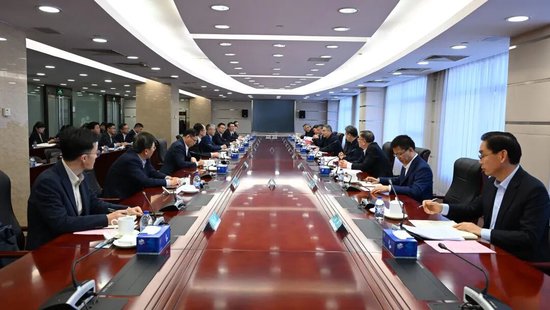
Core Points - On December 15, Agricultural Bank of China signed a strategic cooperation agreement with China National Machinery Group, focusing on rural revitalization and manufacturing strength [1][6] - The agreement was signed by key executives from both organizations, including the chairman and president of Agricultural Bank of China and the chairman and general manager of China National Machinery Group [1][6] Group 1 - Agricultural Bank of China views China National Machinery Group as an important strategic partner and aims to deepen cooperation across various fields to contribute to high-quality economic and social development [3][8] - China National Machinery Group expressed gratitude for the support from Agricultural Bank of China and highlighted the potential for collaboration in national strategies such as rural revitalization and technological advancement [3][8] - Both parties aim to expand their cooperation during the "14th Five-Year Plan" period, enhancing the partnership to new levels [3][8]
26家银行密集分红!总额超2600亿,工商银行居首,多家首次推出中期方案
Sou Hu Cai Jing· 2025-12-16 05:23
Core Viewpoint - As of December 15, 2025, 26 A-share listed banks have announced mid-term or quarterly dividend plans, with a total expected payout exceeding 260 billion yuan [1]. Group 1: Major Contributors - The six major state-owned banks are the main contributors to this dividend distribution, with Industrial and Commercial Bank of China leading at 50.396 billion yuan, followed by China Construction Bank at 48.605 billion yuan, Agricultural Bank of China at 41.823 billion yuan, Bank of China at 35.250 billion yuan, Postal Savings Bank of China at 14.771 billion yuan, and Bank of Communications at 13.811 billion yuan [3]. - The total cash dividend from these six major banks exceeds 200 billion yuan [3]. Group 2: Other Banks - Among joint-stock banks, both Industrial Bank and CITIC Bank are expected to distribute over 10 billion yuan in dividends, specifically 11.957 billion yuan and 10.461 billion yuan respectively [3]. - Everbright Bank and Minsheng Bank are also projected to exceed 5 billion yuan in dividends [3]. - Several regional small and medium-sized banks are actively participating in mid-term dividends, with Shanghai Bank, Nanjing Bank, Hangzhou Bank, Shanghai Rural Commercial Bank, and Ningbo Bank leading in dividend amounts [3]. - Notably, banks like Industrial Bank and Ningbo Bank are introducing mid-term dividend plans for the first time [3]. Group 3: Dividend Implementation - Several banks have specified the dates for dividend distribution, with Industrial and Agricultural Banks set to distribute cash dividends on December 15, 2025 [3]. - Bank of Communications has announced that it expects to distribute mid-term cash dividends to A-share shareholders on December 25, 2025 [3].




甘肃田野调研:从温室大棚到绿电基地 农业银行的“下沉”与“上升”
Mei Ri Jing Ji Xin Wen· 2025-12-16 05:17
Core Viewpoint - Agricultural Bank of China has become the world's largest commercial bank by market capitalization, reaching approximately 2.74 trillion RMB (about 386.9 billion USD) as of October 30, 2025, reflecting its strategic positioning in serving rural revitalization and the real economy [2]. Financial Performance - For the first three quarters of 2025, Agricultural Bank reported operating income of 550.8 billion RMB and net profit of 222.3 billion RMB, representing year-on-year growth of 1.97% and 3.28% respectively [2]. - The total asset scale of the bank exceeded 48 trillion RMB by the end of the reporting period [2]. County-Level Business Growth - As of September 2025, the bank's county-level loan balance reached 10.90 trillion RMB, growing by 10.57% since the beginning of the year, maintaining over 40% of the bank's total loan proportion [3][18]. - The bank's non-performing loan ratio improved to 1.27%, a decrease of 3 basis points from the beginning of the year [3]. Rural Financing Initiatives - The "Fumin Loan" program has disbursed 273.29 billion RMB, benefiting 321,600 rural households across 14 cities in Gansu province [5]. - The "Huinong e-loan" program has provided 930.92 billion RMB in loans, serving 1,168,700 rural households [5]. Innovative Financial Products - The "Electricity Bill e-loan" product allows small enterprises to secure loans based on their electricity usage data, addressing financing challenges for new businesses [11]. - The "Live Asset Mortgage Loan" has evolved into the "Smart Livestock Loan," utilizing AI technology for monitoring livestock, enhancing efficiency in the lending process [13]. Strategic Partnerships and Projects - Agricultural Bank has established a strategic partnership with China Green Development Group, facilitating financing for multiple renewable energy projects, with a total approval amount of 25.84 billion RMB since 2021 [18]. - The bank's rapid loan approval process has been highlighted in projects like the 300 MW compressed air energy storage project, where it completed a 9 billion RMB loan approval swiftly [14][16]. Conclusion - Agricultural Bank's focus on county-level business and innovative financial products positions it as a leader in rural finance, contributing to its competitive advantage and potential for revenue growth in the future [18].
久其软件中标:江西中医药大学与中国农业银行股份有限公司南昌湾里支行2025年合作项目—资产管理系统基于财政预算一体化平台升级改造采购项目结果公告
Sou Hu Cai Jing· 2025-12-16 04:42
标题:江西中医药大学与中国农业银行股份有限公司南昌湾里支行2025年合作项目—资产管理系统基于 财政预算一体化平台升级改造采购项目结果公告 采购方:中国农业银行股份有限公司南昌湾里支行 供应商:北京久其软件股份有限公司 中标金额:595000.0 地区:江西省 发布日期:2025-12-14 通过天眼查大数据分析,北京久其软件股份有限公司共对外投资了21家企业,参与招投标项目7368次; 财产线索方面有商标信息170条,专利信息36条,著作权信息604条;此外企业还拥有行政许可5个。 证券之星消息,根据天眼查APP-财产线索数据整理,根据中国农业银行股份有限公司南昌湾里支行12 月14日发布的《江西中医药大学与中国农业银行股份有限公司南昌湾里支行2025年合作项目—资产管理 系统基于财政预算一体化平台升级改造采购项目结果公告》内容显示,北京久其软件股份有限公司中 标,详情如下: 以上内容为证券之星据公开信息整理,由AI算法生成(网信算备310104345710301240019号),不构成 投资建议。 数据来源:天眼查APP ...

从“禾下梦”到“夕阳红”,农业银行金融向善的为民答卷
Zhong Guo Zheng Quan Bao· 2025-12-16 04:31
Core Viewpoint - Agricultural Bank is actively promoting the integration of finance and charity, focusing on rural revitalization and social responsibility through various charitable trusts and financial services [1][2][3]. Group 1: Charitable Trusts and Financial Services - The Yuan Longping Charity Trust, established in 2022, aims to reward contributions in modern agricultural technology and support young agricultural scientists, with a current fund size of 10.8 million yuan [2]. - Agricultural Bank has launched the "Nongyin Yi Private Bank Charity Financial Laboratory" and has established partnerships with 8 national and 25 regional charitable organizations to enhance the coverage and effectiveness of charitable trust services [2][3]. - The bank has facilitated 23 charitable trusts focused on rural revitalization, with a total scale of 300 million yuan [3]. Group 2: Rural Revitalization Initiatives - The Yongzhuo Holding Yonglian Village Charity Trust, launched with a scale of 100 million yuan, is the largest charity trust for rural revitalization established by a private enterprise since the implementation of the Charity Law in China [3][4]. - The Yonglian Village has transformed from a poverty-stricken area to a prosperous community, with the trust providing financial support for public services such as elderly care and health monitoring, benefiting over 20,000 villagers [4]. Group 3: "1+N" Public Welfare Financial Service Network - Agricultural Bank is establishing regional public welfare financial laboratories across the country to provide localized financial services, creating a "1+N" public welfare financial service network [5][6]. - The bank's initiatives in different provinces, such as Zhejiang and Hunan, focus on integrating charity organizations and enhancing services for agricultural clients [5][6].
黔南金融监管分局核准汪国华农业银行黔南分行行长任职资格
Jin Tou Wang· 2025-12-16 03:35
一、核准汪国华中国农业银行股份有限公司黔南分行行长的任职资格。 二、中国农业银行应要求上述核准任职资格人员严格遵守金融监管总局有关监管规定,自中国农业银行 政许可决定作出之日起3个月内到任,并按要求及时报告到任情况。未在上述规定期限内到任的,本批 复文件失效,由决定机关办理行政许可注销手续。 2025年12月9日,黔南金融监管分局发布批复称,《中国农业银行贵州省分行关于核准汪国华同志高级 管理人员任职资格的请示》(农银黔发〔2025〕55号)收悉。经审核,现批复如下: 三、中国农业银行应督促上述核准任职资格人员持续学习和掌握经济金融相关法律法规,牢固树立风险 合规意识,熟悉任职岗位职责,忠实勤勉履职。 ...
将贴息红利转化为消费活力
Jin Rong Shi Bao· 2025-12-16 03:32
Core Viewpoint - Agricultural Bank of China Gansu Branch is actively implementing the central government's policies to boost domestic demand and promote consumption through personal consumption loan interest subsidy policies, injecting strong financial momentum into the consumer market [1] Group 1: Loan Disbursement and Impact - In the first ten months of this year, the bank has disbursed personal consumption loans amounting to 9.833 billion yuan, with 1.683 billion yuan disbursed since the implementation of the interest subsidy policy on September 1 [1] - The interest subsidy policy has translated into increased consumer spending, with the bank signing supplementary agreements for interest subsidies with 31,800 customers, amounting to 123,400 yuan in subsidies [2] Group 2: Customer Experience and Service Efficiency - Customers have expressed satisfaction with the straightforward application process and the tangible benefits of the interest subsidy policy, as demonstrated by a customer who successfully obtained a loan of 283,000 yuan for furniture purchase [2] - The bank has established a special task force to ensure the effective implementation of the policy, including training and communication of key points to grassroots branches [2] Group 3: Promotion and Awareness - The bank has employed multiple strategies for policy promotion, including on-site advertising, direct engagement by customer managers, and online channels to ensure widespread awareness of the interest subsidy policy [3] - Campaigns such as "Double Festival Interest Subsidy Warm Week" and "Heartwarming Season" have been launched to further promote the benefits of the policy to a broader audience [3] Group 4: Support for Diverse Consumer Needs - The bank supports various consumer groups, including urban residents and service industry operators, by providing tailored financial solutions and efficient loan processing through mobile and remote services [4] - The recent selection of Lanzhou as a pilot city for new consumption models presents an opportunity for the bank to enhance its services and contribute to the high-quality development of the economy [4]
工行、农行、中行、建行、交行、邮储银行齐表态!
Jin Rong Shi Bao· 2025-12-16 03:09
Group 1 - The Central Economic Work Conference was held in Beijing on December 10-11, summarizing the economic work for 2025 and analyzing the current economic situation while deploying tasks for 2026 [1] - Major state-owned banks, including Industrial and Commercial Bank of China, Agricultural Bank of China, Bank of China, China Construction Bank, Bank of Communications, and Postal Savings Bank, held expanded party meetings to convey the spirit of the Central Economic Work Conference and discuss implementation measures [1] Group 2 - Industrial and Commercial Bank of China emphasized the importance of adhering to the centralized leadership of the Party on financial work and supporting high-quality development while focusing on risk prevention and compliance [2] - Agricultural Bank of China highlighted the need to align its work with the eight key tasks outlined in the conference, focusing on rural financing and supporting domestic demand and consumption [3] - Bank of China stressed the importance of supporting consumption and income growth initiatives, enhancing financial services for various sectors, and promoting green and low-carbon transitions [4] - China Construction Bank focused on improving financial services for the real economy, enhancing support for key areas such as domestic demand and technological innovation [5][6] - Bank of Communications aimed to serve the real economy and maintain financial stability by supporting domestic market development and addressing risks in key areas [7] - Postal Savings Bank committed to maintaining its retail business advantages while supporting consumption and enhancing financial services for new industries and projects [8]



锚定使命担当 赋能高质量发展
Jin Rong Shi Bao· 2025-12-16 02:35
Core Insights - The Central Economic Work Conference emphasizes the importance of aligning financial services with the high-quality development of the real economy, encouraging banks to contribute to the "14th Five-Year Plan" and the upcoming "15th Five-Year Plan" [1][2]. Group 1: Financial Institutions' Responses - Bank employees express a commitment to implementing the conference's spirit, focusing on enhancing service efficiency for small and micro enterprises and technology companies [2]. - Agricultural Bank's focus on rural development and urban-rural integration is reinforced, aiming to inject financial resources into key areas such as industry and rural construction [2]. - Postal Savings Bank plans to leverage its extensive rural network to innovate in property mortgage and digital inclusive finance, aligning with the conference's call for expanding domestic demand [3]. Group 2: Strategic Directions for Banking - The conference highlights the need for innovation-driven growth, guiding banks to deepen their involvement in technology finance and support regional industrial upgrades [4]. - Emphasis on green finance is noted, with banks encouraged to focus on sustainable development and the dual carbon goals, particularly in new energy and green industry sectors [4]. - Construction Bank aims to optimize housing finance policies to meet the needs of new citizens and families, enhancing service efficiency through financial technology [4]. Group 3: Community and Regional Development - Traffic Bank plans to collaborate with government departments to support new economy workers, utilizing its wealth management expertise [5]. - Banks are encouraged to actively participate in local economic development, with a focus on supporting unique regional industries and enhancing financial services [6]. - Postal Savings Bank aims to transform potential consumer demand into a driving force for domestic circulation, focusing on local consumption growth [7].
