
BANK COMM(601328)

Search documents
年终奖发放倒计时!多家银行已推出专属理财
Xin Lang Cai Jing· 2025-12-25 10:46
Core Insights - The article discusses the upcoming year-end bonus distribution and the competitive marketing strategies employed by various banks to attract customers for investment products [1][6]. Group 1: Year-End Bonus Investment Strategies - Several banks, including Bank of Communications, Postal Savings Bank, and Guangfa Bank, have launched exclusive financial products aimed at year-end bonuses, utilizing online activities and personalized asset allocation strategies [1][6]. - Bank of Communications has introduced a special financial product called "Lingdong Tianli No. 6 New Salary Treasure," which offers an annualized yield of 4.76% over the past three months [1][6]. - Postal Savings Bank has featured three exclusive products in its mobile banking app, with one product, "Yousheng·Hongjin," also achieving an annualized yield of 4.76% since its inception [2][7]. Group 2: Changes in Marketing Strategies - Compared to previous years, banks are now focusing on providing comprehensive asset allocation solutions that integrate various financial products, including deposits, investments, funds, and insurance [3][8]. - The marketing approach has shifted from merely listing products to offering tailored asset allocation strategies based on customer risk preferences and funding purposes [3][8]. - The industry is transitioning towards a customer-centric model, emphasizing professional financial planning and advisory services rather than just product sales [3][8]. Group 3: Investor Guidance - Experts recommend that investors assess their financial situation and clarify the intended use and timing of their year-end bonus before making investment decisions [4][9]. - Investors should objectively evaluate their risk tolerance, typically favoring lower-risk products for conservative investors [4][9]. - It is advised that investors maintain independent judgment and critically evaluate marketing claims, understanding that performance benchmarks are not guarantees of principal or returns [4][9].


交通银行个金板块架构调整 四川省分行迎新行长
Xin Lang Cai Jing· 2025-12-25 09:17
来源:金融人事mini 近日,在交通银行"沃德财富万里行"启动仪式上,副行长周万阜介绍,近期在总行层面成立财富管理 部,以进一步强化财富金融特色,提升客户服务能力。他强调,交行致力于通过做优做强财富管理业 务,助力居民增加财产性收入。 杜俊任个金/数经部副总;历任交通银行广西区分行副行长、海南省分行副行长,湖北省分行副行长, 总行个人金融部副总经理。 银行人事了解到,交行财富管理部负责人,目前由私人银行部总经理金旗兼任。 金旗,毕业于复旦大学,长期从事商业银行、投资银行、资产管理、财富管理业务,具备丰富的金融理 论和实践经验。历任交通银行公司机构业务部副总经理、票据业务中心总裁、资产管理业务中心总裁等 职,2019年5月出任交银理财首任总裁,2023年3月任交行私人银行部总经理。 此外,交行总行个金部架构也出现调整。据悉,交行数字化经营中心已并入个人金融业务部,成立个人 金融业务部/消费者权益保护部/数智化经营中心,以下该部门简称"个金/数经部",新部门相关负责人也 已确定。 李肇宁任个金/数经部总经理;原个金部总经理王冠拟任北京分行行长。 李肇宁,西南财经大学中国金融研究中心博士,2017年4月任交通银行河 ...

国有大型银行板块12月25日跌0.63%,农业银行领跌,主力资金净流出7.75亿元
Zheng Xing Xing Ye Ri Bao· 2025-12-25 09:03
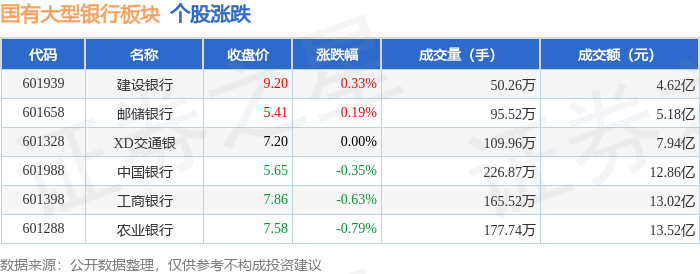
Group 1 - The core viewpoint of the news is that the state-owned large bank sector experienced a decline of 0.63% on December 25, with Agricultural Bank leading the drop [1] - The Shanghai Composite Index closed at 3959.62, up 0.47%, while the Shenzhen Component Index closed at 13531.41, up 0.33% [1] - The trading performance of individual stocks in the state-owned large bank sector showed mixed results, with Agricultural Bank down 0.79% and Industrial and Commercial Bank down 0.63% [1] Group 2 - The net outflow of main funds from the state-owned large bank sector was 775 million yuan, while retail investors saw a net inflow of 515 million yuan [1] - The detailed fund flow data indicates that Construction Bank had a net inflow of 49.54 million yuan from main funds, while Agricultural Bank had a net outflow of 289.7 million yuan [2] - The overall trend shows that retail investors are more active in the state-owned large bank sector, with significant net inflows compared to the outflows from main and speculative funds [2]



深度丨商业银行“出海”验成色:中行领跑,谁在悄然发力?
2 1 Shi Ji Jing Ji Bao Dao· 2025-12-25 08:32
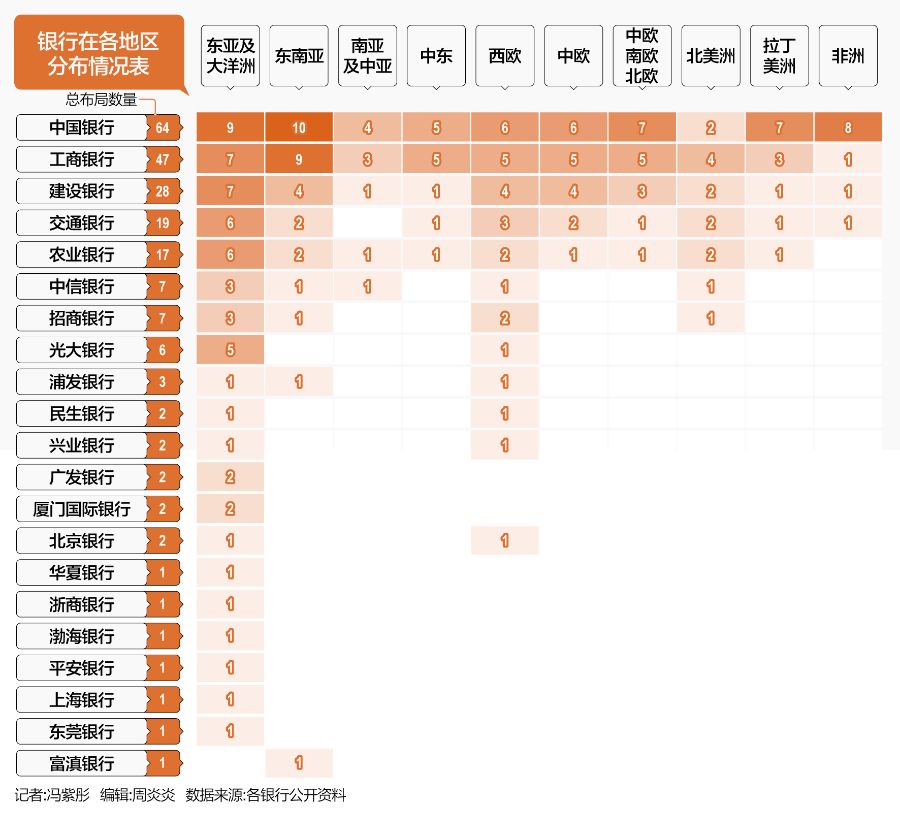
Core Insights - Chinese banks are expanding their overseas presence, establishing a comprehensive service network that covers major financial centers globally and key regions along the Belt and Road Initiative [1][2] - The internationalization strategy of Chinese banks has shifted from traditional markets in Europe and the US to emerging markets in Southeast Asia, the Middle East, Latin America, and countries involved in the Belt and Road Initiative [1][2] Group 1: Global Expansion Strategy - Chinese banks are utilizing representative offices, branches, and subsidiaries for overseas expansion, with larger banks often establishing branches in mature markets and starting with representative offices in emerging markets [2] - The distribution of overseas institutions shows that major state-owned banks are leading the expansion, with a focus on both traditional and emerging markets [2][4] Group 2: Performance Metrics - As of June 2025, Bank of China leads with 539 overseas branches in 64 countries, including 45 Belt and Road countries, showcasing its extensive global network [4] - Industrial and Commercial Bank of China follows with 413 overseas institutions in 49 countries, including 250 in Belt and Road countries, demonstrating a flexible international strategy [4] - Agricultural Bank of China has established 13 branches and 4 representative offices, focusing on supporting high-quality Belt and Road initiatives [4] Group 3: Revenue Growth and Market Dynamics - In the first half of 2025, Bank of China reported overseas revenue of 783.13 billion yuan, a 14.4% increase from the previous year, with overseas revenue accounting for 23.77% of total revenue [12] - Industrial and Commercial Bank of China's overseas revenue was 562.52 billion yuan, showing a slight decline of 1.88%, while Agricultural Bank of China experienced a 21.03% increase [12][11] - The growth of overseas revenue among joint-stock banks, such as Shanghai Pudong Development Bank, which saw a 119.37% increase, highlights the varying performance across banks [14] Group 4: Challenges and Future Directions - Chinese banks face regulatory challenges in overseas markets, including compliance with both domestic and foreign regulations, which can lead to significant penalties [15] - The demand for diversified financial services is evolving, with a shift from traditional trade financing to more complex needs such as global treasury management and cross-border mergers [16] - Future competitiveness will depend on enhancing global collaboration, local operational capabilities, compliance risk management, and financial technology innovation [18][19]

今年以来定增累计募资8576.86亿元
Zheng Quan Shi Bao Wang· 2025-12-25 03:39
Summary of Key Points Core Viewpoint - In 2023, a total of 144 companies have conducted private placements, raising a cumulative amount of 857.686 billion yuan, with significant participation from various sectors, particularly banking and electronics [1][2]. Group 1: Fundraising Overview - 144 companies have implemented private placements this year, with a total of 159 records and 1,077.79 million shares issued, raising 857.686 billion yuan [1]. - The distribution of fundraising by market shows that 31 companies in the Shenzhen Main Board raised 50.206 billion yuan, 58 companies in the Shanghai Main Board raised 715.004 billion yuan, 26 companies in the ChiNext raised 36.824 billion yuan, and 29 companies in the Sci-Tech Innovation Board raised 55.651 billion yuan [1]. - The industries with the highest number of placements include electronics (24 companies), power equipment (16 companies), and basic chemicals (16 companies), while the highest fundraising amounts were seen in banking (520 billion yuan), electronics (59.224 billion yuan), and non-bank financials (56.684 billion yuan) [1]. Group 2: Top Fundraising Companies - The company that raised the most funds is Bank of China, with 165 billion yuan, followed by Postal Savings Bank (130 billion yuan) and Bank of Communications (120 billion yuan) [2]. - Other notable companies include China Construction Bank (105 billion yuan), Guolian Minsheng (31.492 billion yuan), and Yuan Da Environmental Protection (23.576 billion yuan) [2]. Group 3: Premium and Discount Analysis - Among the private placements, 143 records show a premium of the latest closing price over the placement price, with the highest premiums recorded by AVIC Fei (820.23%), *ST Songfa (736.71%), and Dongshan Precision (652.91%) [2][3]. - Conversely, 15 records show a discount, with the largest discounts seen in Shen High-Speed (30.69%), Aibo Medical (21.45%), and Bank of Communications (13.51%) [2][4].

为海南自贸港持续注入“金动能”
Jin Rong Shi Bao· 2025-12-25 03:35
Core Viewpoint - The official launch of the Hainan Free Trade Port's full island closure on December 18 marks a significant milestone, with the Bank of Communications releasing a cross-border financial service plan to support the development of the free trade port [1] Group 1: Financial Support for Infrastructure - The Bank of Communications has directed credit resources towards key sectors of the real economy, providing a financial foundation for the construction of the Hainan Free Trade Port [2] - The bank has approved 700 million yuan in fixed asset loans for critical infrastructure projects, ensuring the smooth progress of key projects essential for the port's operations [2] - The investment in local bonds by the bank has increased from 2.67 billion yuan in 2020 to 6.5 billion yuan in 2024, contributing to local economic development [2] Group 2: Cross-Border Financial Services - The Bank of Communications is a pilot bank for the multi-functional free trade account (EF account), with the EF business scale exceeding 46 billion yuan by the end of October 2025 [2] - The bank has assisted the Hainan provincial government in issuing offshore RMB local bonds in Hong Kong for four consecutive years, expanding its cross-border financial services [2][3] Group 3: Support for Key Industries - The implementation of "zero tariffs and low tax rates" will enhance Hainan's attractiveness in consumption and commerce, with the bank approving a 500 million yuan loan for a duty-free project [4] - The bank has provided a total of 2.9 billion yuan in loans to the cultural and tourism sectors, aligning with the development needs of the free trade port [4] - The bank is the only institution involved in the credit medical project in Hainan, enhancing healthcare services and supporting the welfare of residents [4] Group 4: Comprehensive Financial Services - The Bank of Communications has developed a comprehensive financial service model covering the entire lifecycle of enterprises, integrating equity, debt, loans, leasing, and custody services [5] - The bank has successfully launched various first-time custody businesses, including the first qualified foreign limited partner (QFLP) fund in Hainan [5] - In the financing leasing sector, the bank has provided over 6.2 billion yuan to key clients such as Hainan Railway and Meilan Airport [5]
交通银行:为海南自贸港持续注入“金动能”
Jin Rong Shi Bao· 2025-12-25 03:09
Core Viewpoint - The official launch of the Hainan Free Trade Port's full island closure on December 18 marks a significant milestone, with the Bank of Communications releasing a cross-border financial service plan to support the development of the free trade port [1] Financial Support for Hainan Free Trade Port - The Bank of Communications has been providing targeted financial support for the Hainan Free Trade Port since 2020, aligning its services with the core tasks of the port's construction [1] - The bank has allocated 7 billion yuan in fixed asset loans and provided nearly 80 million yuan in timely funding for key infrastructure projects, enhancing the operational capacity and efficiency of the port [2] - The investment in local bonds by the bank has increased from 2.67 billion yuan in 2020 to 6.5 billion yuan in 2024, with a total underwriting of credit bonds exceeding 3.4 billion yuan [2] Cross-Border Financial Services - The Bank of Communications is a pilot bank for the multi-functional free trade account (EF account), with its EF business scale surpassing 46 billion yuan by the end of October 2025 [2] - The bank has assisted the Hainan provincial government in issuing offshore RMB local bonds in Hong Kong for four consecutive years, expanding its cross-border financial services [2][3] Support for Key Industries - The implementation of "zero tariffs and low tax rates" will enhance Hainan's attractiveness in consumption and commerce, with the bank approving a 500 million yuan loan for the China Duty Free Group's project [4] - The bank has provided a total of 2.9 billion yuan in loans to the cultural tourism and hospitality sectors, supporting the development of an international tourism consumption center [4] - The bank is the only institution involved in the credit medical project in Hainan, enhancing healthcare accessibility and supporting the welfare of residents in the free trade port [4] Comprehensive Financial Service Ecosystem - The Bank of Communications has developed a comprehensive financial service model covering the entire lifecycle of enterprises, integrating equity, debt, loans, leasing, and custody services [5] - The bank has successfully launched various first-time custody businesses, including the first qualified foreign limited partner (QFLP) fund in Hainan and a gaming overseas fund [5] - In the financing leasing sector, the bank has provided over 6.2 billion yuan in funding to key clients such as Hainan Railway and Meilan Airport [5]
银行业积极响应信用修复政策 支持个人和家庭重塑信用
Jin Rong Shi Bao· 2025-12-25 02:58
Core Viewpoint - The People's Bank of China has announced a one-time credit repair policy aimed at supporting individuals with damaged credit who actively repay their debts, in response to the ongoing impacts of the COVID-19 pandemic [1][3]. Group 1: Policy Implementation - The policy applies to personal overdue information for amounts not exceeding 10,000 RMB from January 1, 2020, to December 31, 2025, where individuals can have their overdue debts removed from the credit system if repaid by March 31, 2026 [2]. - Financial institutions have quickly responded to the policy, emphasizing the importance of promoting and implementing the credit repair measures [1][3]. Group 2: Benefits for Individuals and Financial Institutions - The policy is expected to provide a corrective opportunity for individuals with past credit issues, improving their credit status and stimulating economic activity [3]. - It will help financial institutions better identify individual credit situations, enhancing the quality and effectiveness of inclusive financial services [3][4]. - The policy is anticipated to activate a significant number of potential credit customers, positively impacting consumer credit growth [4]. Group 3: Relationship Between Banks and Customers - The implementation of the policy is likely to foster a better relationship between banks and customers, encouraging individuals to value and maintain their credit [5]. - Banks are expected to provide improved financial services based on the enhanced credit environment created by the policy [5]. Group 4: Challenges for Financial Institutions - Banks face the challenge of optimizing risk control capabilities while implementing the credit repair policy [6]. - There is pressure on banks to quickly adjust risk control models to incorporate the new repair rules and prevent secondary risks from historical record changes [7]. - Financial institutions need to ensure accurate reporting of repayment information to the credit system and may need to develop new assessment models for the repaired customer group [7][8].

国有大行火速响应信用修复新政
21世纪经济报道· 2025-12-24 14:10
Core Viewpoint - The article discusses the implementation of a new credit repair policy by the People's Bank of China, which allows for automatic credit repair for individuals with overdue debts, significantly lowering the barriers and costs associated with credit repair [1][3]. Group 1: Policy Overview - The new policy, effective from December 22, 2025, allows for the automatic removal of certain overdue information from credit reports without the need for individual applications, marking a shift towards a dual focus on both punishment and repair in the credit system [1][3]. - The policy covers various types of personal loans, including mortgages, consumer loans, and credit cards, and applies to all financial institutions connected to the central bank's credit system [6][3]. Group 2: Eligibility and Conditions - To qualify for the credit repair, overdue information must meet three criteria: it must have occurred between January 1, 2020, and December 31, 2025; the overdue amount must not exceed 10,000 RMB; and the debt must be fully repaid by March 31, 2026 [6][3]. - The automatic repair process is designed to be seamless, with the central bank's credit system identifying eligible overdue information without requiring any action from the individual [3][7]. Group 3: Implementation by Financial Institutions - Major banks, including Industrial and Commercial Bank of China, Agricultural Bank of China, and others, have quickly adapted to the new policy by enhancing their service channels and ensuring accurate data management to facilitate the policy's implementation [9][10]. - Banks have established various channels for customers to inquire about their credit status and have emphasized the importance of confirming repayment amounts to ensure eligibility for the credit repair [11][10]. Group 4: Balancing Rights and Risk Management - The new policy aims to balance individual rights protection with financial risk management, encouraging overdue borrowers to repay their debts while helping banks recover non-performing assets [14][15]. - The policy is expected to stimulate demand for personal loans, including consumer and mortgage loans, by releasing previously constrained financing needs, thus revitalizing the credit market [15][16].

交通银行跌1.08%领跌银行板块
Zhong Guo Jing Ji Wang· 2025-12-24 09:20
中国经济网北京12月24日讯 交通银行(601328.SH)今日股价收报7.36元,跌幅1.08%。 (责任编辑:徐自立) 今日,银行板块跌幅为0.14%,交通银行涨幅垫底银行板块。 ...