
CPIC(601601)

Search documents
银保渠道锁定26年新单增长主阵地
Ge Long Hui· 2026-01-13 00:08
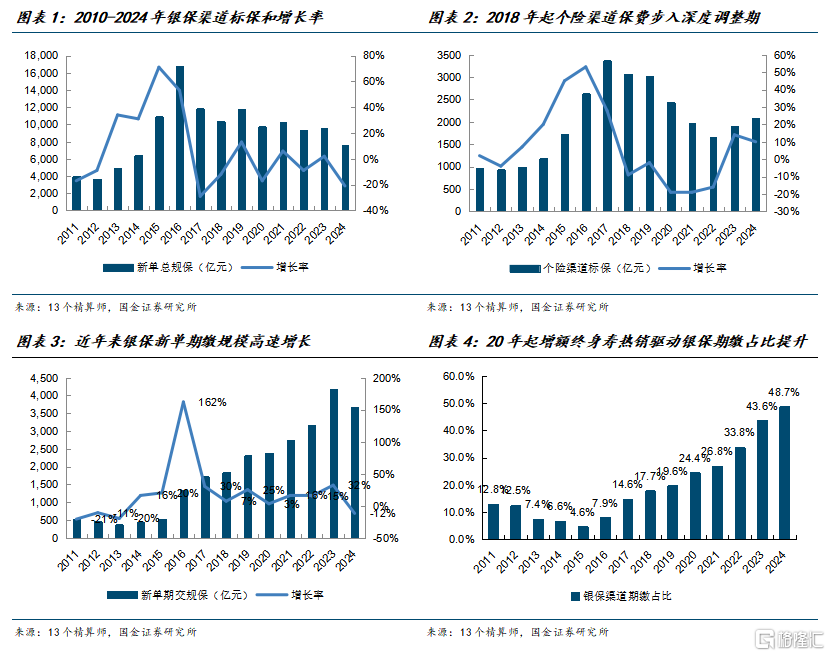
Investment Logic - The core view is that new individual insurance premiums for listed insurance companies are expected to achieve double-digit growth by 2026, primarily driven by the bancassurance channel [1][18] - The individual insurance channel is anticipated to maintain steady growth, while the bancassurance channel will benefit from the migration of deposits, leading to an increase in market share for large insurance companies [1][18] - The growth in the bancassurance channel is expected to dilute fixed costs, significantly enhancing overall profitability [1][18] Bancassurance Channel - Since 2020, leading insurance companies have refocused on the bancassurance channel, transitioning from scale compensation to value pursuit, resulting in a rise in market share [2][8] - The bancassurance channel has seen a compound annual growth rate (CAGR) of 16.2% from 2019 to 2023, while individual insurance premiums have declined [9] - The "reporting and banking integration" policy implemented in August 2023 has significantly reduced costs, enhancing the value rate of the bancassurance channel [14][9] Customer Deposit Analysis - A survey of 88 frontline bank wealth managers indicates that a significant portion of residents' deposits will mature in 2026, with expectations of low renewal rates due to the withdrawal of high-yield time deposits [3][25] - The majority of maturing depositors are aged 45 and above, indicating a lower risk appetite, with insurance products being the second choice for reallocating maturing deposits [4][30] - Wealth managers believe that bank wealth management products will be the most accepted option for maturing deposits, followed by insurance products [30][27] Sales Logic for Insurance Products - Wealth managers prioritize customer returns and the brand of insurance companies when recommending insurance products [5][33] - The core advantages of participating in dividend insurance sales include stable returns, capital safety, and alignment with long-term financial planning [36][40] - Challenges in selling dividend insurance include uncertainty in returns and the long duration of products, which may deter potential customers [40][36] Market Forecast - The insurance industry is projected to see new single premium growth exceeding 25% in 2026, driven by the bancassurance channel [42][44] - The expected influx of maturing deposits into insurance products will be significant, with estimates of new funds in the bancassurance channel reaching 11,150 billion by the end of 2026 [44][44] - The concentration trend among leading insurance companies is expected to continue, with larger firms benefiting from improved profitability in the bancassurance channel [47][48]




上海国际机场股份有限公司关于股东权益变动的提示性公告
Shang Hai Zheng Quan Bao· 2026-01-12 18:14
Core Viewpoint - The announcement details a significant equity change involving Shanghai International Airport Co., Ltd., where Taibao Asset increased its shareholding from 2.09% to 5.00% through a block trade, without altering the controlling shareholder or actual controller of the company [2][5]. Group 1: Equity Change Details - On January 9, 2026, Taibao Asset completed the acquisition of 72,424,000 A-shares, raising its total holdings from 51,991,684 shares to 124,415,684 shares [2][3]. - The increase in shareholding was funded by insurance funds managed by Taibao Asset on behalf of Taibao Life Insurance [3]. Group 2: Stakeholder Information - Taibao Asset and Taibao Life Insurance are subsidiaries controlled by China Pacific Insurance (Group) Co., Ltd., and they have a concerted action relationship as per the regulations of the China Securities Regulatory Commission [2][3]. Group 3: Regulatory Compliance - The equity change does not lead to a change in the company's controlling shareholder or actual controller [5]. - The equity change is in compliance with relevant regulations, including the Securities Law and the Measures for the Administration of the Acquisition of Listed Companies [5].

2025上半年财险公司“13精”综合竞争力排名榜:平安、人保、太保均为AAA!(2026年第一期 总第六十六期)
13个精算师· 2026-01-12 14:21
Core Viewpoint - Analyzing an insurance company requires a comprehensive approach that considers multiple indicators such as risk, profitability, development, and scale, rather than focusing solely on premiums or profits [1]. Group 1: Comprehensive Strength of Insurance Companies - The "13精" comprehensive competitiveness ranking has been published for six consecutive years, evaluating companies based on six key indicators [1][4]. - The ranking aims to guide insurance companies to prioritize consumer rights protection by adjusting the evaluation system to include service capability [1]. Group 2: Top Competitors in 2025 - In the first half of 2025, the top 30 companies in the "13精" comprehensive competitiveness ranking included five AAA-rated companies: Ping An Property & Casualty, PICC Property & Casualty, Taiping Property & Casualty, China Life Property, and Yingda Property [5][6][14]. - The ranking reflects the ongoing "Matthew Effect" in the insurance industry, where leading companies maintain their competitive edge [14]. Group 3: Financial Performance and Trends - In the first half of 2025, the net profit of 84 property insurance companies reached 52.5 billion, marking a continuous growth for five years and nearing the total net profit of 60.5 billion for 2024 [11]. - The profitability of property insurance companies has improved due to better underwriting capabilities and a favorable investment environment, with many companies experiencing significant year-on-year profit increases [12][19]. Group 4: Individual Company Analysis - Ping An Property & Casualty demonstrated strong growth in both scale and profitability, with a double-digit growth rate in non-auto insurance premiums [16][19]. - PICC Property & Casualty achieved a comprehensive cost ratio of 94.72%, down 0.81 percentage points from the previous year, with a return on equity (ROE) exceeding 9% [20][22]. - Taiping Property & Casualty improved its net asset return to 8.9%, benefiting from a reduction in comprehensive cost ratios [24]. Group 5: Industry Dynamics and Challenges - The transition towards non-auto insurance has led to increased differentiation among insurance companies, with some small and medium-sized firms improving profitability while others struggle [12][28]. - The industry continues to experience a "Matthew Effect," where larger firms outperform smaller ones in both scale and profitability, despite overall improvements in cost ratios across the sector [25][28]. Group 6: Industry Metrics and Comparisons - The average premium growth rate in the industry was 4.04%, with an average ROE of 6.86% and a comprehensive solvency adequacy ratio of 239.30% [30]. - The ranking system has been refined over time to better reflect the industry's focus on high-quality development, including adjustments to the scoring of premium growth and the introduction of service capability metrics [52][54].


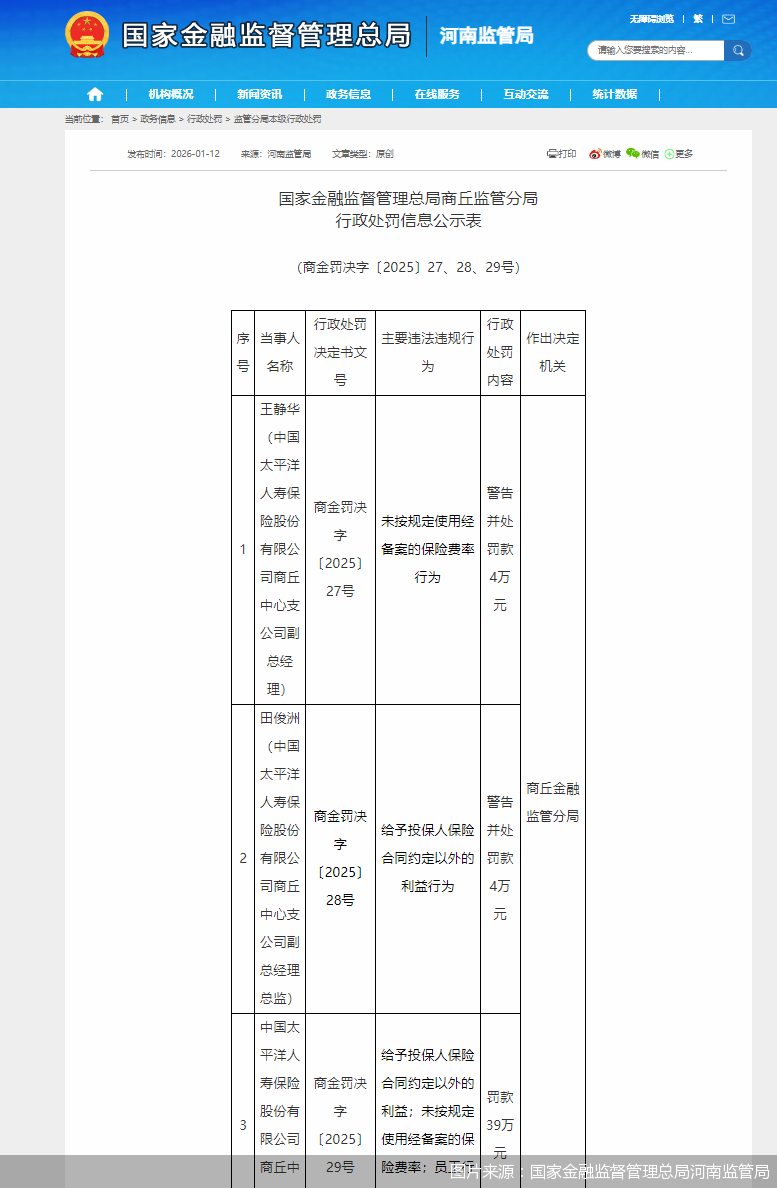
因给予投保人合同约定外利益等,太保寿险商丘中支合计被罚47万元
Bei Jing Shang Bao· 2026-01-12 13:17
Group 1 - The China Pacific Life Insurance Company, Shangqiu Branch, was fined 390,000 yuan for providing benefits outside of the insurance contract terms, failing to use approved insurance rates, and inadequate employee behavior management [1] - The deputy general manager and supervisor of the Shangqiu Branch, Tian Junzhou, and the deputy general manager, Wang Jinghua, received warnings and fines of 40,000 yuan each [1]
ETF主力榜 | 科创债ETF嘉实(159600)主力资金净流入13.28亿元,居可比基金前3-20260112
Xin Lang Cai Jing· 2026-01-12 12:27
Group 1 - The core viewpoint of the article highlights that the Jiashi Science and Technology Bond ETF (159600.SZ) experienced a slight increase, with a net inflow of 1.328 billion yuan from major funds (transactions over 1 million yuan) [1] - The latest trading volume of the Jiashi Science and Technology Bond ETF reached 68.9645 million units, with a total transaction amount of 6.887 billion yuan, ranking it among the top three comparable funds [1] - The fund's performance indicates strong investor interest and liquidity, as evidenced by its significant net inflow and trading volume [1]
ETF主力榜 | 传媒ETF华夏(516190)主力资金净流入3451.92万元,居全市场第一梯队-20260112
Xin Lang Cai Jing· 2026-01-12 12:27
Group 1 - The core viewpoint of the article highlights that the Media ETF Huaxia (516190.SH) experienced a significant increase of 9.64% on January 12, 2026, indicating strong market performance [1] - The fund attracted a net inflow of 34.5192 million yuan from major investors (transactions over 1 million yuan), ranking it at the top tier of the market [1] - The latest trading volume for the fund reached 361 million shares, with a total transaction value exceeding 552 million yuan, also placing it in the top tier of the market [1]
ETF主力榜 | 人工智能ETF基金(159248)主力资金净流出538.75万元,居可比基金前2-20260112
Xin Lang Cai Jing· 2026-01-12 12:27
Core Insights - The Artificial Intelligence ETF (159248.SZ) experienced a price increase of 4.48% on January 12, 2026 [1] - The fund saw a net outflow of 538.75 thousand yuan from major investors (transactions over 1 million yuan), ranking it among the top two in comparable funds [1] - The latest trading volume for the fund was 50.17 million units, with a total transaction value of 81.83 million yuan, placing it at the bottom of comparable funds [1]
“报行合一”重塑财险半壁江山 五千亿非车险告别“野蛮生长”
2 1 Shi Ji Jing Ji Bao Dao· 2026-01-12 11:57
Core Insights - The non-auto insurance sector in China has experienced an average annual growth rate exceeding 10% over the past decade, with premiums now accounting for over 50% of total insurance premiums, but this growth has been driven by high costs rather than sustainable practices [1][2] - The National Financial Regulatory Administration has issued several guidelines to address irrational competition and high costs in the non-auto insurance sector, aiming to shift the focus from price wars to risk pricing and service capabilities [1][4][9] Industry Growth and Trends - Non-auto insurance premiums have grown at an average annual rate of 14.4% from 2014 to 2024, significantly outpacing the 5.2% growth rate of auto insurance [2] - By mid-2025, the total insurance premium income in the property insurance industry is projected to reach 965.4 billion yuan, with non-auto insurance contributing 514.9 billion yuan, surpassing 50% of the total [2] Regulatory Changes - The recent regulatory measures include the "reporting and operation unity" policy, which mandates that insurance companies adhere strictly to approved insurance terms and rates, aiming to eliminate high fees that do not correspond to services provided [3][4][6] - The new regulations are expected to compress some business operations in the short term but will ultimately reshape the competitive landscape by emphasizing risk assessment and service quality [9][10] Company Responses - Major insurance companies like PICC, Ping An, and Taikang have begun to implement changes in response to the new regulations, focusing on compliance and optimizing their cost structures [5][7][8] - Companies are restructuring their business models to transition from fee-based competition to risk pricing and service capability enhancement [7][10] Market Dynamics - The regulatory changes are anticipated to accelerate industry differentiation, with larger firms solidifying their competitive advantages while smaller firms may struggle to adapt [15][16] - The new policies may lead to a concentration of market power among larger firms, but they also provide a buffer for smaller companies to transition and innovate within niche markets [16][17] Future Outlook - The shift towards a more regulated and quality-focused market is expected to enhance the sustainability of the non-auto insurance sector, fostering a competitive environment based on risk management and service excellence [10][12] - Smaller companies are encouraged to focus on specialized markets and innovative products to establish competitive advantages, rather than competing directly with larger firms [17][18]
保险板块1月12日跌0.47%,中国太保领跌,主力资金净流出26.61亿元
Zheng Xing Xing Ye Ri Bao· 2026-01-12 09:04
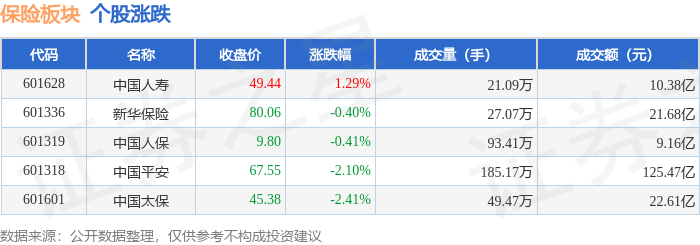
Group 1 - The insurance sector experienced a decline of 0.47% on January 12, with China Pacific Insurance leading the drop [1] - The Shanghai Composite Index closed at 4165.29, up 1.09%, while the Shenzhen Component Index closed at 14366.91, up 1.75% [1] - Key individual stock performances included China Life Insurance up 1.29% to 49.44, while China Pacific Insurance fell 2.41% to 45.38 [1] Group 2 - The insurance sector saw a net outflow of 2.661 billion yuan from institutional investors, while retail investors had a net inflow of 1.387 billion yuan [1] - Specific stock fund flows indicated that China Life Insurance had a net outflow of 89.416 million yuan from institutional investors [2] - China Pacific Insurance experienced a net outflow of 114 million yuan from institutional investors, with a retail net inflow of 107 million yuan [2]


ETF主力榜 | 科创人工智能ETF 广发(588760)主力资金净流入2715.24万元,居可比基金前3-20260112
Xin Lang Cai Jing· 2026-01-12 08:50
Group 1 - The core viewpoint of the news is that the Sci-Tech Innovation Artificial Intelligence ETF (Guangfa, 588760.SH) experienced a significant increase in its share price, rising by 7.96% on January 12, 2026 [1] - The fund saw a net inflow of main capital (transactions over 1 million yuan) amounting to 27.15 million yuan, ranking it among the top three comparable funds [1] - Over the past three days, the fund has had a continuous inflow of main capital totaling 114 million yuan, placing it in the top two among comparable funds [1] Group 2 - The latest trading volume for the fund reached 437 million shares, with a total transaction value of 379 million yuan, also ranking it in the top two among comparable funds [1] - The fund has both onshore and offshore connection classes, specifically Class A (024245) and Class C (024246) [2]