
CEB BANK(601818)

Search documents
光大银行发布2025年半年度报告:营收下降5.57%,但净利润增长0.55%
Guan Cha Zhe Wang· 2025-08-30 01:41
8月29日晚,光大银行公布2025年上半年业绩报告。报告显示,该行实现营业收入659.18亿元,同比下 降5.57%;归属股东净利润246.22亿元,同比增长0.55%。利息净收入454.32亿元,同比下降5.57%;手 续费及佣金净收入104.43亿元,同比下降0.85%;其他收入100.43亿元,同比下降10.04%。 截至6月末,光大银行资产总额72385.91亿元,比上年末增加2795.70亿元,增长4.02%。贷款和垫款本 金总额40840.70亿元,比上年末增加1501.68亿元,增长3.82%。存款余额42531.82亿元,比上年末增加 2174.95亿元,增长5.39%。基础贷款(不含贴现)39911亿元,比上年末增长5.6%,在资产中占比提升 0.8个百分点至55.1%。负债总额66414亿元,比上年末增长4.3%,其中存款占比提升0.7个百分点至 64.0%。 资产质量方面,不良贷款余额509.15亿元,比上年末增加16.63亿元;不良贷款率1.25%,与上年末持 平;拨备覆盖率172.47%,比上年末下降8.12个百分点;贷款拨备率2.15%,比上年末下降0.11个百分 点。关注率1.8 ...

中国光大银行:2025年上半年实现营业收入659.2亿元
Ren Min Wang· 2025-08-30 01:16
Core Insights - China Everbright Bank reported a net profit of 24.74 billion yuan for the first half of 2025, reflecting a year-on-year growth of 0.5% despite challenges such as declining asset yields and rising market interest rates [1] - The bank's total assets reached 7,238.6 billion yuan, marking a 4.0% increase from the end of the previous year, with total loans growing by 3.8% to 4,084.1 billion yuan [2] - The bank emphasized its commitment to serving the real economy, with significant growth in technology finance, green finance, inclusive finance, and pension finance [3][4] Financial Performance - Operating income for the first half of 2025 was 65.92 billion yuan, with a net interest margin of 1.40%, unchanged from the first quarter [1] - The bank's non-performing loan ratio stood at 1.25%, consistent with the end of the previous year, while the provision coverage ratio was 172.47% [1] - Total liabilities increased by 4.3% to 66,414 billion yuan, with deposits growing by 5.4% to 42,532 billion yuan [2] Business Development - The bank established 16 "Science and Technology Financial Centers" and created 64 specialized institutions for technology finance, with loans to tech enterprises reaching 417 billion yuan, a 9.9% increase [3] - Green loans amounted to 464.1 billion yuan, up 12.4%, while inclusive loans for small and micro enterprises grew by 4.0% to 452.7 billion yuan [3] - The bank launched various initiatives to support small and micro enterprises, including a credit issuance of 282.9 billion yuan to 33,000 enterprises [4] Strategic Initiatives - The bank issued seven national first batch of technology innovation bonds and supported real estate financing with 1,134 billion yuan disbursed across 343 projects [4] - The bank's wealth management segment saw the launch of new products, achieving a management scale of 1.80 trillion yuan [5] - The bank is focused on enhancing its digital financial services, with significant engagement in supply chain finance and international settlement solutions [5] Future Outlook - The bank aims to leverage its unique operational characteristics and comparative advantages to drive high-quality development while serving the real economy and social welfare [6]
中国光大银行:2025年上半年实现营业收入659.2亿元
Ren Min Wang· 2025-08-30 01:12
Core Viewpoint - China Everbright Bank reported a stable performance in the first half of 2025, with a slight increase in net profit despite challenges in asset yield and market interest rates [1][2]. Financial Performance - The bank achieved an operating income of 65.92 billion yuan and a net profit of 24.74 billion yuan, reflecting a year-on-year growth of 0.5% [1]. - The net interest margin remained stable at 1.40%, with a year-on-year improvement in deposit costs by 34 basis points [1]. - As of June 30, the bank's total assets reached 7.2386 trillion yuan, a 4.0% increase from the end of the previous year [2]. Asset and Liability Management - Total loans amounted to 4.0841 trillion yuan, growing by 3.8%, while deposits increased by 5.4% to 4.2532 trillion yuan [2]. - The non-performing loan ratio stood at 1.25%, unchanged from the end of the previous year, with a provision coverage ratio of 172.47% [1][2]. Sector-Specific Initiatives - The bank established 16 "Science and Technology Financial Centers" and created 64 specialized institutions for technology finance, with loans to tech enterprises reaching 417 billion yuan, up 9.9% [3]. - Green loans totaled 464.1 billion yuan, marking a 12.4% increase, while inclusive finance loans reached 452.7 billion yuan, growing by 4.0% [3]. Support for Economic Development - The bank actively implemented financial policies to support the economy, including issuing technology innovation bonds and enhancing financing for small and micro enterprises [4]. - It approved 343 real estate projects, providing 113.4 billion yuan to support a stable real estate market [4]. Development of Specialized Services - The bank launched various financial products, including "Technology R&D Loans" and a comprehensive product system for wealth management, achieving a management scale of 1.8 trillion yuan in wealth management products [5]. - The bank's comprehensive financing scale reached 5.41 trillion yuan, with retail asset management at 3.10 trillion yuan [5]. Future Outlook - The bank aims to leverage its comparative advantages to enhance service to the real economy and social welfare, driving high-quality development [6].
沪上银行集体调整房贷利率 9月1日起可进行线上查询
Huan Qiu Wang· 2025-08-30 00:49
Core Viewpoint - The new housing loan policy in Shanghai aims to optimize the pricing mechanism for commercial personal housing loans, impacting both new and existing loans [1][3] Group 1: Policy Adjustments - The first major adjustment is the elimination of the interest rate difference between first and second home loans, with future rates determined by the market rate pricing self-discipline mechanism in Shanghai [3] - The second adjustment expands the scope for interest rate adjustments on existing housing loans, allowing borrowers to apply for a reduction in the additional interest rate if it exceeds the average new loan rate by 30 basis points [3] Group 2: Implementation Details - The new policy will take effect from September 1, allowing borrowers to check their loan eligibility for interest rate reductions through online banking channels [3] - The People's Bank of China has set a reference benchmark, with the weighted average interest rate for new commercial personal housing loans at 3.09% for the second quarter of 2025 [3]






光大银行(601818.SH)上半年归母净利润246.22亿元,同比增长0.55%
Ge Long Hui A P P· 2025-08-30 00:34
资产质量方面,报告期末,光大银行不良贷款余额509.15亿元,比上年末增加16.63亿元;不良贷款率 1.25%,与上年末持平;拨备覆盖率172.47%,比上年末下降8.12个百分点。贷款拨备率2.15%,比上年 末下降0.11个百分点。资本净额6910.79亿元,比上年末增加40.02亿元;资本充足率13.53%,一级资本 充足率11.55%,核心一级资本充足率9.49%,均符合监管要求。 业务规模方面,截至报告期末,光大银行资产总额达72385.91亿元,比上年末增加2795.70亿元,增长 4.02%;贷款和垫款本金总额40840.70亿元,比上年末增加1501.68亿元,增长3.82%;存款余额42531.82 亿元,比上年末增加2174.95亿元,增长5.39%。 格隆汇8月29日丨光大银行(601818.SH)发布中报,2025上半年实现营业总收入659.18亿元,同比下降 5.57%;归属母公司股东净利润246.22亿元,同比增长0.55%;基本每股收益为0.38元。其中,利息净收 入454.32亿元,同比下降5.57%;手续费及佣金净收入104.43亿元,同比下降0.85%;其他收入100.4 ...
上海房贷新政,多家银行公告
Guan Cha Zhe Wang· 2025-08-30 00:14
Group 1 - The core viewpoint of the news is the recent adjustments in housing loan policies by several banks in Shanghai following the city's new real estate policy announcement on August 25 [1] - Major banks including China Construction Bank, Bank of Communications, Industrial and Commercial Bank of China, Bank of China, China Merchants Bank, Agricultural Bank of China, Ping An Bank, China Everbright Bank, Beijing Bank, and Jiangsu Bank have released announcements regarding the optimization of commercial personal housing loan interest rate pricing mechanisms [1][2] - The new policies indicate that there will no longer be a distinction between first and second home loan interest rates, with rates determined based on the Shanghai market interest rate pricing self-discipline mechanism and other factors [2] Group 2 - Some existing housing loan rates may also be adjusted for eligible borrowers, with specific rules for adjustments based on the average interest rates of newly issued loans [2] - According to the People's Bank of China, the weighted average interest rate for newly issued commercial personal housing loans in the second quarter of 2025 is 3.09% [2] - Starting September 1, borrowers can check their eligibility for interest rate reductions through the banks' mobile banking channels, and applications can be made online without additional fees [3]


货币市场日报:8月29日
Xin Hua Cai Jing· 2025-08-29 15:34
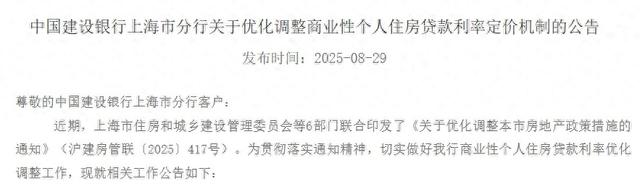
Monetary Policy and Market Operations - The People's Bank of China conducted a 7-day reverse repurchase operation of 782.9 billion yuan at an interest rate of 1.40%, maintaining the previous rate; with 361.2 billion yuan of reverse repos maturing, the net injection was 421.7 billion yuan [1] - This week, the central bank performed a total of 2.2731 trillion yuan in reverse repos and 600 billion yuan in one-year Medium-term Lending Facility (MLF) operations, resulting in a total net injection of 496.1 billion yuan after accounting for maturing operations [1] Interbank Market Rates - The Shanghai Interbank Offered Rate (Shibor) for short-term products remained stable, with the 7-day Shibor slightly declining; specifically, the overnight Shibor rose by 1.50 basis points to 1.3310%, while the 7-day Shibor fell by 1.60 basis points to 1.5100% [2][3] - The weighted average rates for various repo products showed mixed movements, with DR001 and R001 increasing by 1.6 basis points and 5.4 basis points respectively, while DR007 and R007 decreased by 2.4 basis points and 4.7 basis points [4] Funding Conditions - The funding environment on August 29 was characterized by a balanced and slightly loose stance; overnight rates for non-bank institutions were around 1.65%, while 7-day rates were approximately 1.55% [9] - Following the central bank's operations, the funding market became more relaxed, with overnight rates stabilizing around 1.45% and 7-day rates between 1.48% and 1.50% [9] Banking Sector Performance - Industrial and Commercial Bank of China reported a revenue of 409.08 billion yuan for the first half of 2025, a year-on-year increase of 1.8%, with a net profit of 168.80 billion yuan and a non-performing loan ratio of 1.33% [12] - Postal Savings Bank achieved a revenue of 179.45 billion yuan, up 1.5%, with a net profit of 49.23 billion yuan, reflecting a growth of 0.85% [12] - Bank of China reported a revenue of 329.4 billion yuan, a 3.61% increase, with a net profit of 126.1 billion yuan, showing stable performance [12] - Agricultural Bank of China posted a revenue of 369.8 billion yuan, up 0.7%, and a net profit of 139.9 billion yuan, reflecting a 2.5% increase [12] - China Merchants Bank's revenue decreased by 1.73% to 169.92 billion yuan, while its net profit increased by 0.25% to 74.93 billion yuan [13] - Everbright Bank reported a revenue of 65.92 billion yuan and a net profit of 24.74 billion yuan, marking a 0.5% increase [14]


上海多家银行房贷细则落地,新增二套房利率最低3.09%
2 1 Shi Ji Jing Ji Bao Dao· 2025-08-29 13:27
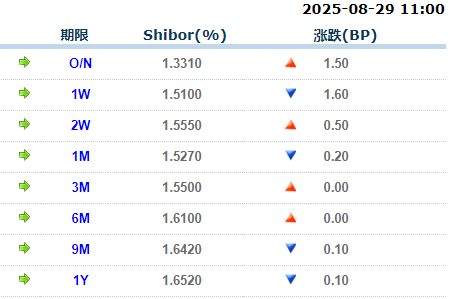
Core Viewpoint - Shanghai's housing market has introduced new mortgage interest rate pricing mechanisms, eliminating the distinction between first and second home loans, aiming to optimize the real estate policy and stimulate market activity [2][3]. Group 1: New Mortgage Policies - Multiple banks in Shanghai have released announcements regarding the optimization of commercial personal housing loan interest rate pricing mechanisms, aligning with the recent government notification [2]. - The new policy states that the specific interest rate for each customer's commercial personal housing loan will be determined based on the Shanghai market interest rate pricing self-discipline mechanism, along with the bank's operational status and customer risk profile [2][4]. Group 2: Existing Loan Adjustments - For existing loans, banks will continue to follow the previous year's guidelines, allowing adjustments for certain second home loans that exceed the average interest rate of newly issued loans by more than 30 basis points [3]. - The weighted average interest rate for newly issued commercial personal housing loans in China was reported at 3.09% for Q2 2025, a decrease of 2 basis points from Q1, indicating potential for lower rates for second home loans in Shanghai [3][4]. Group 3: Regulatory Framework - The central bank's adjustments include four main points, notably the removal of the distinction between first and second home loan interest rates and the emphasis on banks to adhere to market conditions and government regulations [3][4]. - Banks are required to ensure compliance with the new policies, providing adequate communication and support to borrowers regarding their rights and the implications of the new interest rate structures [4].

上海多家银行房贷细则落地,新增二套房利率最低3.09%
21世纪经济报道· 2025-08-29 12:42
Core Viewpoint - The article discusses the recent adjustments to the housing loan interest rate pricing mechanism in Shanghai, which aims to optimize the real estate policy and enhance market stability [2][4]. Group 1: New Housing Loan Policies - The new pricing mechanism for commercial personal housing loans no longer distinguishes between first and second homes, allowing for a more unified approach to interest rates [3][4]. - The specific interest rate for each customer's loan will be determined based on the Shanghai market interest rate pricing self-discipline mechanism, along with the bank's operational conditions and customer risk profiles [3][4]. Group 2: Existing Housing Loan Adjustments - Existing housing loans will continue to follow the guidelines established in October of the previous year, allowing for adjustments in the interest rates of certain second-home loans based on market conditions [3][4]. - If the interest rate increase for existing loans exceeds 30 basis points above the average rate of newly issued loans, borrowers can apply for a rate adjustment [3][4]. Group 3: Market Context and Implications - As of July, the weighted average interest rate for newly issued commercial personal housing loans in China was 3.09%, a slight decrease from the previous quarter, while the 5-year LPR was 3.5% [3]. - For second-home owners in Shanghai, applying for a loan after September 1 could result in a minimum interest rate of 3.09%, aligning with first-home rates, while existing loans at 3.45% could potentially be reduced to 3.36% [3].

中国光大银行(06818) - 海外监管公告
2025-08-29 12:28
香港交易及結算所有限公司及香港聯合交易所有限公司對本公告的內容概不負責,對其 準確性或完整性亦不發表任何聲明,並明確表示,概不對因本公告全部或任何部份內容 而產生或因倚賴該等內容而引致之任何損失承擔任何責任。 中國光大銀行股份有限公司 中國光大銀行股份有限公司 China Everbright Bank Company Limited China Everbright Bank Company Limited (於中華人民共和國註冊成立的股份有限公司) (於中華人民共和國註冊成立的股份有限公司) (股份代號:6818) (股份代號:6818) 海外監管公告 本公告乃根據《香港聯合交易所有限公司證券上市規則》第13.10B條而作出。 茲載列中國光大銀行股份有限公司在上海證券交易所網站刊登的《中國光大銀行股份有限 公司2025年半年度報告(A股)》,僅供參閱。 中國光大銀行股份有限公司 董事會 中國 • 北京 2025年8月29日 於本公告日期,本公司執行董事為郝成先生、齊曄女士及楊兵兵先生;非執行董事為 吳利軍先生、崔勇先生、曲亮先生、朱文輝先生、姚威先生、張銘文先生及李巍先生; 以及獨立非執行董事為邵瑞慶先生 ...