CCB(601939)

Search documents
金融行业周报(2026、03、29):投资驱动保险券商利润高增,息差企稳助推银行业绩改善-20260329
Western Securities· 2026-03-29 12:57
Investment Rating - The report does not explicitly state an overall investment rating for the financial industry but provides specific recommendations for various sectors and companies within the industry [4]. Core Insights - The financial industry experienced a decline this week, with the non-bank financial index down by 3.98%, underperforming the CSI 300 index by 2.57 percentage points. The banking sector, however, showed resilience with a decline of only 0.71%, outperforming the CSI 300 index by 0.7 percentage points [10][1]. - The insurance sector reported significant profit growth driven by investments, although Q4 results were impacted by stock market volatility. The long-term fundamentals of the insurance industry remain intact, suggesting potential for valuation and performance recovery [1][17]. - The brokerage sector saw a 3.61% decline, with 14 listed brokerages reporting a combined revenue of 271.68 billion yuan and a net profit of 109.02 billion yuan, reflecting year-on-year increases of 37.7% and 54.8%, respectively [2][18]. - The banking sector's performance showed marginal improvement, with 13 listed banks reporting revenue and net profit growth of 0.85% and 1.08%, respectively. The net interest income is expected to stabilize, contributing to a more favorable outlook for 2026 [3][21]. Summary by Sections Insurance Sector - The insurance sector index fell by 5.52%, underperforming the CSI 300 index by 4.11 percentage points. The annual reports of listed insurance companies showed significant profit growth driven by investments, with notable Q4 declines due to market fluctuations [1][14]. - The net profit growth for major insurers was led by China Taiping (+221%), followed by China Life (+44%) and New China Life (+38%). The new business value (NBV) also saw substantial increases across the board [14][17]. - Recommendations include China Ping An, China Taiping, and New China Life, with a focus on long-term value recovery in the sector [4][17]. Brokerage Sector - The brokerage sector index decreased by 3.61%, with a reported combined revenue of 271.68 billion yuan and a net profit of 109.02 billion yuan from 14 listed brokerages, indicating strong recovery driven by market conditions [2][18]. - The return on equity (ROE) for these brokerages improved by 1.56 percentage points to 7.5%. The report suggests that the brokerage sector is experiencing a significant recovery in profitability [18][19]. - Recommended stocks include Guotai Junan, Huatai Securities, and Xingye Securities, focusing on firms with strong fundamentals and potential for mergers and acquisitions [4][19]. Banking Sector - The banking sector index fell by 0.71%, with 13 listed banks reporting revenue and net profit growth of 0.85% and 1.08%, respectively. The net interest margin is expected to stabilize, contributing to a positive outlook for 2026 [3][21]. - The report highlights that the asset quality remains stable, with a slight decrease in the non-performing loan ratio to 1.21% and an average provision coverage ratio of 232% [22][24]. - Recommended banks include Hangzhou Bank and Bank of China (H), with a focus on banks with high dividend yields and strong earnings potential [4][24].




从2025年报看建行:凭什么建,向哪里行?
市值风云· 2026-03-29 10:46
Core Viewpoint - The article discusses the transformation of China Construction Bank (CCB) from a traditional lending institution to a comprehensive service platform that emphasizes value creation and long-term partnerships with clients, aligning with the evolving definition of "construction" in the context of China's economic development [5][24]. Financial Performance - In 2025, CCB reported revenue of 761.05 billion yuan, a year-on-year increase of 1.9%, and a net profit of 339.79 billion yuan, up 1.04% year-on-year [3]. - Key financial metrics include a net interest margin of 1.34%, return on assets (ROA) of 0.79%, return on equity (ROE) of 10.04%, and a capital adequacy ratio of 19.69% [3]. Historical Context and Evolution - Established in 1954, CCB's original mission was to oversee funding for national infrastructure projects, which were primarily physical constructions [7]. - The bank's role has evolved to encompass not just physical infrastructure but also technological innovation and digital empowerment, reflecting a shift from "physical construction" to "system construction" [8]. Strategic Transformation - CCB aims to integrate its services across various sectors, including commercial and investment banking, to better meet the complex needs of clients [10]. - The bank's management emphasizes a shift from a product-centric approach to a customer-centric model, focusing on solving client problems rather than merely selling products [12][13]. Service Model and Client Engagement - CCB's integrated service model aims to break down departmental silos, allowing for a more cohesive client experience [10]. - In 2025, CCB's non-interest income increased by 5.13%, indicating a shift towards diversified revenue streams [11]. Long-term Value Creation - CCB is committed to supporting clients throughout their entire lifecycle, offering a range of financial products tailored to different stages of business development [15]. - The bank has introduced innovative financing models, such as "equity-debt linkage," to support early-stage companies [16]. Digital Transformation - CCB is focusing on digital transformation as a core strategy, investing in advanced technologies to enhance service delivery and operational efficiency [20]. - The bank's digital infrastructure has seen significant improvements, with a 12.10% increase in computing power and the establishment of a new risk evaluation system based on technological capabilities [21][22]. Commitment to Sustainable Development - CCB's approach emphasizes long-term partnerships and shared growth with clients, aligning with its commitment to sustainable development [23]. - The bank's dividend policy reflects its focus on sustainable value creation, with a cash dividend of approximately 101.68 billion yuan in 2025 [23]. Conclusion - CCB is redefining its role in the financial sector by transitioning from a traditional lending institution to a value-creating partner, aligning its services with the evolving needs of the economy and society [24][25].


建设银行(601939):2025年年报点评:业绩增长稳中有进,资产质量稳中向好
EBSCN· 2026-03-29 10:13
Investment Rating - The report maintains a "Buy" rating for the company [1] Core Views - The company achieved a revenue of 761 billion, with a year-on-year growth rate of 1.9%, and a net profit attributable to shareholders of 338.9 billion, reflecting a growth rate of 1% [4] - The annualized weighted average return on equity (ROAE) stands at 10.04%, a decrease of 0.65 percentage points year-on-year [4] - Revenue and profit growth have accelerated, with year-on-year growth rates for revenue, pre-provision profit, and net profit increasing by 1.1, 0.7, and 0.4 percentage points respectively compared to the first three quarters [5] - Non-interest income maintained a double-digit growth rate of 19.9%, contributing positively to overall revenue [5][10] - The bank's credit assets and loans grew by 12% and 7.5% year-on-year respectively, indicating steady credit growth [6] - The bank's non-performing loan ratio decreased to 1.31%, reaching a historical low, while the provision coverage ratio remains robust at 233% [11] Financial Performance Summary - The company reported a total revenue of 761,049 million for 2025, with a growth rate of 1.9% [13] - The net profit for 2025 is projected at 338,906 million, with a growth rate of 1% [13] - The earnings per share (EPS) for 2026-2028 are forecasted to be 1.32, 1.35, and 1.36 respectively, with corresponding price-to-earnings (P/E) ratios of 7.13, 7.00, and 6.90 [12][13] - The bank's total assets are expected to grow from 45,631,818 million in 2025 to 58,342,474 million by 2028 [29] Asset Quality and Capital Adequacy - The non-performing loan ratio is projected to remain stable at 1.31% for 2025, with a provision coverage ratio of 233% [11][27] - The core tier one capital adequacy ratio is expected to be 14.63% in 2025, indicating a strong capital position [27] - Risk-weighted assets (RWA) are projected to grow at a rate of 8.4% in 2025, reflecting stable expansion [27]
建设银行(601939):盈利增速改善带动资本实力夯实
HTSC· 2026-03-29 10:07
Investment Rating - The report maintains a "Buy" rating for both A and H shares of the company [7] Core Insights - The company's net profit for 2025 increased by 1.0% year-on-year, with revenue and PPOP also growing by 1.9% each, indicating an improvement in profit growth rates compared to the first nine months of 2025 [1] - The company is expected to continue supporting domestic demand and optimizing retail credit supply in 2026, focusing on consumption finance initiatives [2] - The overall asset quality remains stable, with a non-performing loan ratio of 1.31% and a provision coverage ratio of 233% as of the end of 2025 [4] - The company plans to distribute a cash dividend of 0.3887 RMB per share, maintaining a dividend payout ratio of 30% [4] Summary by Sections Financial Performance - For 2025, the company reported a net profit of 338.91 billion RMB, with a revenue of 761.05 billion RMB, reflecting a growth rate of 1.02% and 1.45% respectively [10] - The net interest margin for 2025 was 1.34%, slightly down from earlier in the year, while the loan yield decreased to 2.84% [2] Asset Quality - The non-performing loan ratio was stable at 1.31%, with a slight decrease in the coverage ratio by 2 percentage points compared to the previous quarter [4] - The company anticipates a credit cost of 0.5% for the year, which is an increase of 1 basis point from 2024 [4] Capital Adequacy - As of the end of 2025, the core Tier 1 capital adequacy ratio was 14.63%, indicating a solid capital position [4] - The report projects a target price of 12.19 RMB for A shares and 10.64 HKD for H shares, with a price-to-book ratio of 0.86 for A shares and 0.66 for H shares in 2026 [5]
建设银行(601939):——建设银行601939.SH2025年年报点评:业绩增长稳中有进,资产质量稳中向好
EBSCN· 2026-03-29 07:08
Investment Rating - The report maintains a "Buy" rating for China Construction Bank (601939.SH) with a current price of 9.42 CNY [1]. Core Insights - The bank achieved a revenue of 761 billion CNY in 2025, with a year-on-year growth rate of 1.9%, and a net profit attributable to shareholders of 338.9 billion CNY, also reflecting a growth of 1% [4]. - The annualized weighted average return on equity (ROAE) stands at 10.04%, a decrease of 0.65 percentage points compared to the previous year [4]. - Revenue and profit growth have accelerated, with net interest income and non-interest income growth rates of -2.9% and 19.9%, respectively, indicating a strong performance in non-interest income [5]. - The bank's credit assets and loans grew by 12% and 7.5% year-on-year, respectively, with a steady increase in lending to key sectors [6]. - Deposit growth remains stable, with interest-bearing liabilities and deposits increasing by 13.3% and 7.6% year-on-year, respectively [7]. - The net interest margin (NIM) is reported at 1.34%, showing a gradual narrowing trend [8]. - Non-interest income reached 188.3 billion CNY, growing by 20% year-on-year, contributing to 25% of total revenue [10]. - The non-performing loan (NPL) ratio decreased to 1.31%, indicating improved asset quality [11]. - The capital adequacy ratio has strengthened, with the core tier 1 capital ratio at 14.63% [11]. Summary by Sections Financial Performance - In 2025, the bank's total revenue was 761 billion CNY, with a net profit of 338.9 billion CNY, reflecting a year-on-year growth of 1.9% and 1%, respectively [4][5]. - The bank's cost-to-income ratio was 28.3%, and credit impairment losses as a percentage of revenue were 17.5% [5]. Credit and Asset Quality - The bank's credit assets and loans grew by 12% and 7.5% year-on-year, with significant lending to strategic sectors such as technology and green finance [6]. - The non-performing loan ratio improved to 1.31%, with a coverage ratio of 233% [11][24]. Capital Adequacy - The core tier 1 capital ratio is reported at 14.63%, indicating a solid capital position [11][27]. - The bank issued 40 billion CNY in perpetual bonds to support its capital adequacy [11]. Earnings Forecast and Valuation - The report forecasts earnings per share (EPS) of 1.32, 1.35, and 1.36 CNY for 2026, 2027, and 2028, respectively, with corresponding price-to-earnings (P/E) ratios of 7.13, 7.00, and 6.90 [12][28].
二级资本债周度数据跟踪-20260328
Soochow Securities· 2026-03-28 15:00
1. Report Industry Investment Rating - No industry investment rating is provided in the report. 2. Core Viewpoints - This week (20260323 - 20260327), there were no new issuances of secondary capital bonds in the inter - bank and exchange markets [1]. - The weekly trading volume of secondary capital bonds this week was approximately 177.9 billion yuan, a decrease of 10.5 billion yuan compared to last week. The top three most - traded bonds were 25 Bank of China Secondary Capital Bond 02BC, 25 Bank of China Secondary Capital Bond 03A(BC), and 25 China Construction Bank Secondary Capital Bond 03BC [2]. - In terms of the regions of issuers, the top three regions in terms of trading volume were Guangdong Province, Guizhou Province, and Heilongjiang Province, with trading volumes of approximately 131.6 billion yuan, 13 billion yuan, and 8.1 billion yuan respectively [2]. - As of March 27, the changes in the yields to maturity of 5Y secondary capital bonds with ratings of AAA -, AA +, and AA compared to last week were - 3.21BP, - 3.87BP, and - 3.87BP respectively; for 7Y secondary capital bonds, the changes were - 6.06BP for all three ratings; for 10Y secondary capital bonds, the changes for ratings of AAA -, AA +, and AA were - 4.25BP, - 4.24BP, and - 4.24BP respectively [2]. - This week, the overall deviation of the weekly average trading price valuation of secondary capital bonds was not large. The proportion of discount transactions was greater than that of premium transactions, and the discount amplitude was larger than the premium amplitude [3]. 3. Summary by Directory 3.1 Primary Market Issuance - This week (20260323 - 20260327), there were no new issuances of secondary capital bonds in the inter - bank and exchange markets [1]. 3.2 Secondary Market Trading - **Trading Volume**: The weekly trading volume of secondary capital bonds this week was approximately 177.9 billion yuan, a decrease of 10.5 billion yuan compared to last week. The top three most - traded bonds were 25 Bank of China Secondary Capital Bond 02BC (13.259 billion yuan), 25 Bank of China Secondary Capital Bond 03A(BC) (10.928 billion yuan), and 25 China Construction Bank Secondary Capital Bond 03BC (7.651 billion yuan) [2]. - **Regional Trading Volume**: In terms of the regions of issuers, the top three regions in terms of trading volume were Guangdong Province, Guizhou Province, and Heilongjiang Province, with trading volumes of approximately 131.6 billion yuan, 13 billion yuan, and 8.1 billion yuan respectively [2]. - **Yield to Maturity**: As of March 27, the changes in the yields to maturity of 5Y secondary capital bonds with ratings of AAA -, AA +, and AA compared to last week were - 3.21BP, - 3.87BP, and - 3.87BP respectively; for 7Y secondary capital bonds, the changes were - 6.06BP for all three ratings; for 10Y secondary capital bonds, the changes for ratings of AAA -, AA +, and AA were - 4.25BP, - 4.24BP, and - 4.24BP respectively [2]. 3.3 Valuation Deviation of the Top 30 Individual Bonds - **Discount Bonds**: The top two bonds with the highest discount rates were 24 Mintai Commercial Bank Secondary Capital Bond 01 (- 0.6931%) and 25 Mintai Commercial Bank Secondary Capital Bond 01 (- 0.6400%), and the discount rates of the rest were within - 0.50%. The ChinaBond implicit ratings were mainly AAA -, AA +, and AA -, and the bonds were mainly distributed in Beijing, Shanghai, and Guangdong [3]. - **Premium Bonds**: The top three bonds with the highest premium rates were 23 Mintai Commercial Bank Secondary Capital Bond 01 (0.2287%), 22 Xiamen Rural Commercial Secondary 01 (0.0991%), and 22 Ningbo Bank Secondary Capital Bond 01 (0.0701%), and the premium rates of the rest were within 0.07%. The ChinaBond implicit ratings were mainly AAA -, AA +, and AA, and the bonds were mainly distributed in Beijing, Shanghai, and Zhejiang [3].



建设银行息差降幅收窄,财富管理、私人银行客户增速超10%|直击业绩发布会
Hua Xia Shi Bao· 2026-03-28 10:33
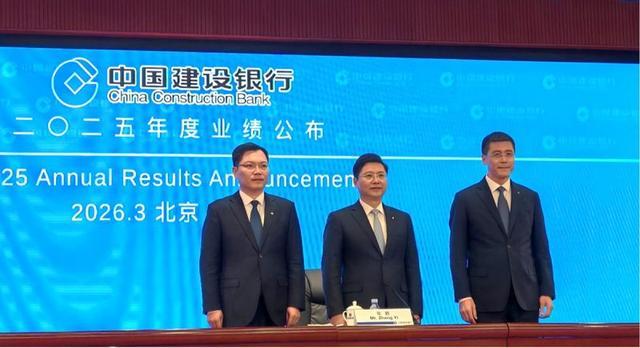
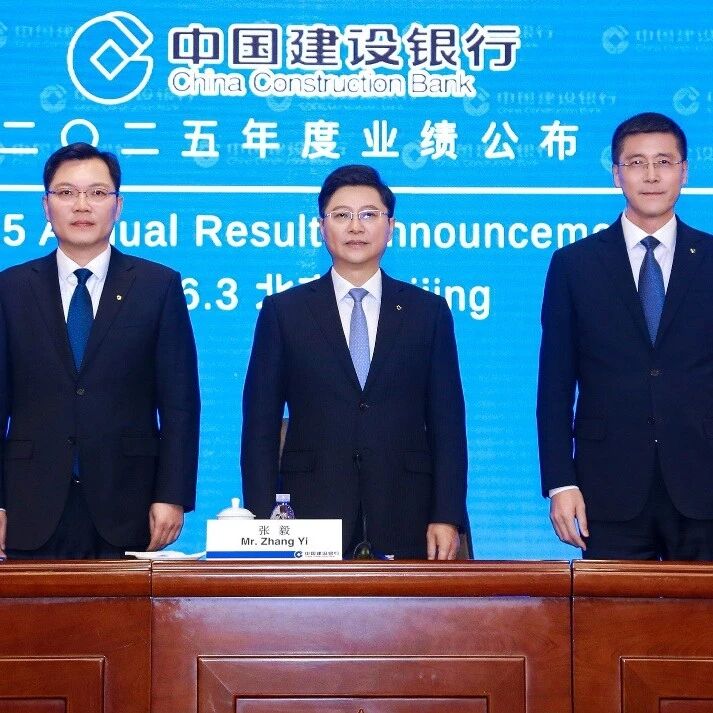
本报(chinatimes.net.cn)记者张萌 卢梦雪 北京摄影报道 3月27日下午,中国建设银行(601939.SH/00939.HK)在北京与香港两地同步举行2025年度业绩发布 会。该行当日披露业绩显示,截至2025年末,建设银行资产总额突破45万亿元,达45.63万亿元,同比 增长12.47%;全年实现营业收入7610.49亿元,同比增长1.88%;净利润3397.9亿元,同比增长1.04%。 建设银行行长张毅在发布会上表示,该行统筹推动各项业务,实现质的有效提升和量的合理增长,整体 经营业绩稳中有进,核心经营指标保持行业领先。 "基于全年的经营业绩,2025年,我行已派发现金股息1016.84亿元,其中中期已分红486.05亿元。在履 行公司治理程序后,将派发年度末期现金股息530.79亿元,以持续稳定的分红回馈广大投资者。"张毅 表示。 息差降幅边际收窄,存款付息率创历史新低 在银行业普遍面临净息差收窄压力的背景下,建设银行2025年的息差表现备受市场关注。年报显示,该 行全年净息差为1.34%,同比下降17个基点,但从边际变化看,降幅较2024年有所收窄。 具体来看,2025年建设银行实现利 ...
建设银行,连续三年分红超千亿元|读财报“品财味”
Shang Hai Zheng Quan Bao· 2026-03-28 10:18
Core Viewpoint - Construction Bank has reported a year of stable growth in both revenue and net profit for 2025, despite a complex external environment, demonstrating resilience and commitment to supporting the real economy [2][3]. Financial Performance - In 2025, Construction Bank's net profit attributable to shareholders reached 338.906 billion yuan, a year-on-year increase of 0.99%, while operating revenue was 761.049 billion yuan, up 1.88% year-on-year [5]. - The bank's net interest income was 572.774 billion yuan, reflecting a decline of 2.90% year-on-year, with a net interest margin of 1.34%, down 17 basis points from the previous year [7]. - Non-interest income showed a positive trend, with net fee and commission income increasing by 5.13%, and asset management revenue soaring by 78.78% [9]. Credit Strategy - Construction Bank aims to maintain stable total credit while optimizing its structure, focusing on supporting the modern industrial system and expanding domestic demand through retail credit [3][14]. - The bank's retail credit, particularly in personal housing loans, remains strong, with personal loans and advances reaching 9.05 trillion yuan, a growth of 2.01% year-on-year [13]. Dividend Policy - The bank plans to distribute a cash dividend of 2.029 yuan per share for the 2025 fiscal year, totaling approximately 53.079 billion yuan, maintaining a cash dividend payout ratio of 30% [16].
营收净利“双增”!建行2025年成绩单出炉,“新”引擎强劲带动
券商中国· 2026-03-28 07:05
Core Viewpoint - China Construction Bank (CCB) achieved significant growth in 2025, with total assets exceeding 45 trillion yuan, and reported a resilient performance with both operating income and net profit increasing, reflecting a strong operational foundation and effective risk management [1][6][10]. Financial Performance - Total assets reached 45.63 trillion yuan, an increase of 12.47%, while total liabilities rose to 41.95 trillion yuan, up 12.68% [7]. - Operating income was 740.87 billion yuan, growing by 1.69%, and net profit was 339.79 billion yuan, with a growth of 1.04% [7]. - Key financial ratios included a net interest margin of 1.34%, return on assets (ROA) of 0.79%, return on equity (ROE) of 10.04%, and a capital adequacy ratio of 19.69% [7]. - The non-performing loan (NPL) ratio was 1.31%, down by 0.03 percentage points from the previous year, indicating improved asset quality [8]. Dividend Policy - CCB plans to distribute a total cash dividend of 101.68 billion yuan for 2025, continuing a trend of over 100 billion yuan in dividends for three consecutive years [6]. Revenue Composition - Net interest income showed a narrowing decline, while non-interest income increased, with a 5.13% rise in net fee and commission income [7][12]. - Non-interest income accounted for 22.69% of total income, up 3.65 percentage points, highlighting a shift towards diversified revenue streams [11][12]. Risk Management - CCB's risk management framework has been enhanced, with a focus on maintaining asset quality amid complex external conditions [14]. - The bank's provision coverage ratio stood at 233.15%, indicating strong risk mitigation capabilities [15]. Business Strategy - CCB is focusing on integrated services and enhancing its technology-driven financial solutions, aiming to become a leader in technology finance [19][20]. - The bank's customer base has expanded significantly, with over 127.3 million corporate clients and more than 785 million personal clients, reflecting robust growth in customer engagement [18]. Future Outlook - CCB plans to strengthen its asset structure and continue promoting integrated services across various business segments, aiming for improved operational efficiency and customer satisfaction [18].
净息差拐点来了?工行建行这样预测
第一财经· 2026-03-28 06:49
Core Viewpoint - The article discusses the ongoing downward trend in net interest margins (NIM) for major Chinese banks, highlighting the financial performance and outlook for 2025 and 2026, with a focus on the factors influencing NIM and interest income [3][4][5]. Group 1: Net Interest Margin Trends - Major banks such as Industrial and Commercial Bank of China (ICBC), China Construction Bank (CCB), Bank of Communications (BoCom), and Postal Savings Bank of China (PSBC) reported a decline in NIM for 2025, with ICBC at 1.28% (down 14 basis points), CCB at 1.34% (down 17 basis points), BoCom at 1.2% (down 7 basis points), and PSBC at 1.66% (down 21 basis points) [3]. - Interest income for these banks faced pressure, with only BoCom showing a slight increase of 1.91% year-on-year, while ICBC, CCB, and PSBC saw declines of 0.4%, 2.9%, and 1.57% respectively [3]. Group 2: Factors Influencing NIM - CCB's CFO attributed the narrowing decline in NIM to three main factors: completion of repricing of existing loans, a decrease in interest rates on general deposits, and proactive asset-liability management to optimize structure [4]. - The bank's strategy includes increasing the proportion of higher-yield financial investments and reducing high-interest deposits, aided by a self-regulatory mechanism for interbank deposit rates [4]. Group 3: Outlook for 2026 - CCB's CFO expressed confidence in further narrowing the decline in NIM due to macroeconomic policies focusing on reasonable control of bank funding costs and improved asset-liability management [5]. - ICBC's Vice President predicted an "L-shaped" trend for NIM in 2026, with expectations of a positive turnaround in interest income and a reduced decline in NIM compared to 2025 [6]. - Factors contributing to this outlook include diversified funding strategies, effective cost management, and a stable loan pricing environment, with new loan rates showing signs of stabilization [7][8].