
CCB(601939)

Search documents
避险情绪升温,百亿银行ETF华宝(512800)向上突破,营收净利双增,工商银行涨超2%
Sou Hu Cai Jing· 2026-03-30 11:25
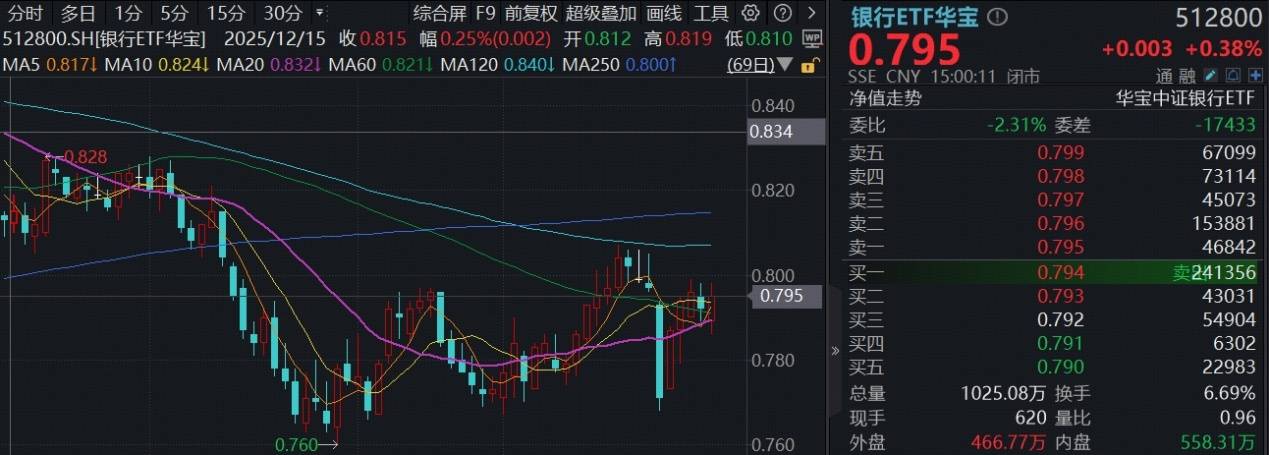
Core Viewpoint - The banking sector shows resilience amid geopolitical tensions, with a focus on high-dividend defensive assets attracting investor interest [3] Group 1: Market Performance - On March 30, the Shanghai Composite Index rose by 0.24% after initially dropping over 1%, while the ChiNext and Shenzhen Composite Indices fell [1] - The banking sector demonstrated defensive characteristics, with most individual stocks closing higher; Xiamen Bank led with a nearly 4% increase, and major banks like ICBC and Bank of China also saw gains [1] Group 2: Banking Sector Insights - Major state-owned banks, including ICBC, CCB, BOC, and PSBC, reported annual results showing steady asset growth and increases in both revenue and net profit [3] - Despite challenges such as narrowing net interest margins, bank management expressed optimism about stabilizing margins, which received positive market feedback [3] - According to CITIC Securities, the disclosed bank performance aligns with expectations, and future disclosures are likely to show minimal deviations from forecasts [3] Group 3: Investment Opportunities - With rising risk aversion, the banking sector is expected to benefit from increased allocation due to its defensive characteristics and potential for fundamental improvements [3] - The banking ETF (512800) has a significant scale of over 12 billion, making it the largest and most liquid among A-share banking ETFs, with an average daily trading volume exceeding 800 million since 2025 [4]



【看年报】稳中有进提质效:中国建设银行交出2025年高质量发展答卷
Huan Qiu Wang· 2026-03-30 09:17
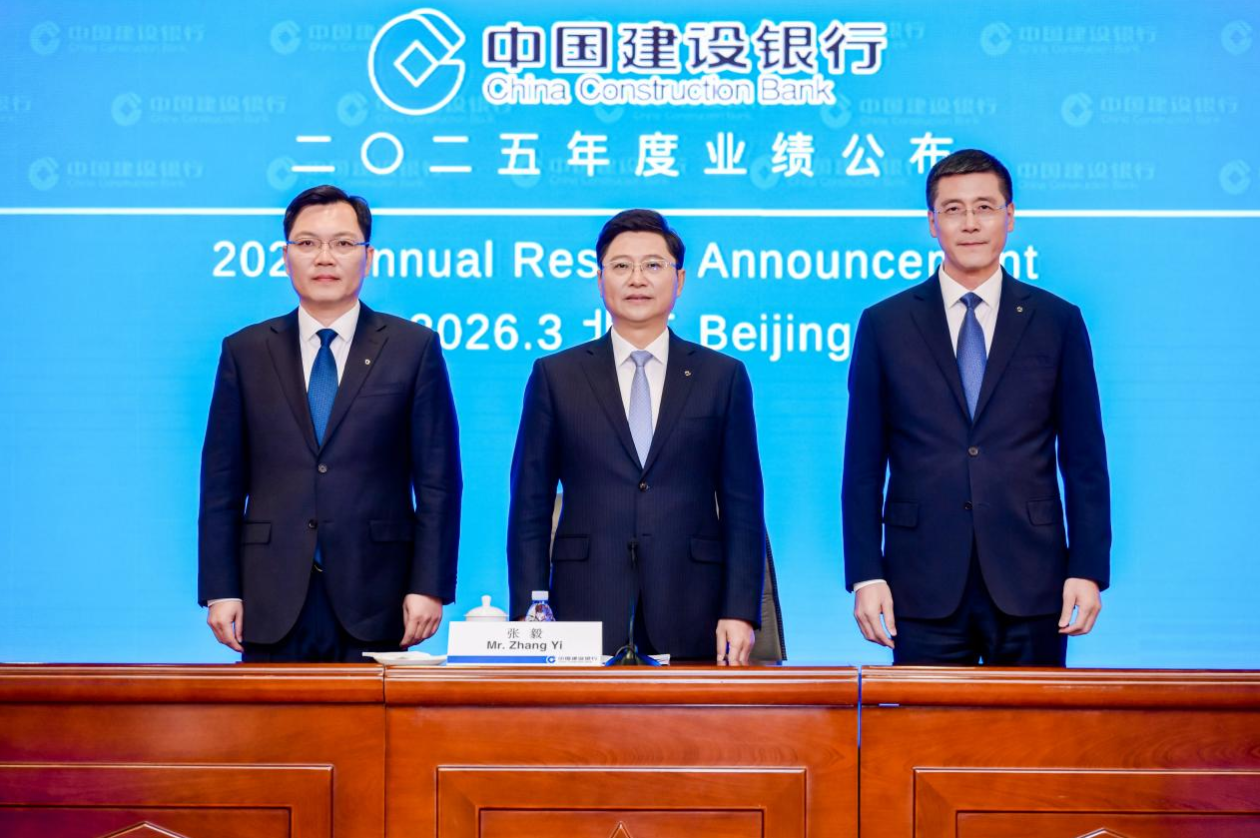
Core Viewpoint - China Construction Bank (CCB) reported steady growth in its financial performance, with total assets reaching 45.63 trillion yuan, a 12.47% increase, and net profit of 339.79 billion yuan, a 1.04% increase, reflecting a commitment to high-quality development and alignment with national strategies [1][3]. Financial Performance - Total assets amounted to 45.63 trillion yuan, with a growth rate of 12.47% [1] - Total liabilities reached 41.95 trillion yuan, increasing by 12.68% [1] - Core Tier 1 capital net amount was 3.46 trillion yuan, up by 9.46% [1] - Operating income was 740.87 billion yuan, with a growth of 1.69% [1] - Net profit stood at 339.79 billion yuan, reflecting a 1.04% increase [1] - Non-performing loan ratio was 1.31%, with a provision coverage ratio of 233.15% [1] Asset and Liability Management - Loan issuance net amount was 26.93 trillion yuan, growing by 7.53% [3] - Bond investments reached 12.43 trillion yuan, increasing by 20.51% [3] - Deposits totaled 30.84 trillion yuan, with a growth of 7.39% [3] - The interest rate on deposits decreased by 33 basis points to 1.32% [3] Customer Base and Service - CCB served 12.73 million corporate clients and 785 million individual customers [1] - Personal consumption loans reached approximately 683.2 billion yuan, with a year-on-year increase of 155.2 billion yuan [8] Strategic Focus Areas - CCB emphasized support for the real economy, with corporate loans growing by 8.70% to 15.69 trillion yuan [5] - In the green finance sector, green loan balance reached 6 trillion yuan, with over 720 billion yuan in green bonds issued [6] - The bank's digital finance initiatives included 546 million users and 30.05 million active digital RMB wallets [8] Risk Management - The non-performing loan ratio decreased by 0.03 percentage points year-on-year, indicating stable asset quality [9] - CCB implemented comprehensive risk management strategies, enhancing its ability to manage various risks [9][10] Future Outlook - CCB aims to enhance its service capabilities and risk management while continuing to support national development strategies [10]

A股银行股逆势上涨,工商银行涨超2%
Ge Long Hui· 2026-03-30 06:08
Group 1 - A-shares of bank stocks are rising against the trend, with Xiamen Bank increasing nearly 4% [1] - Industrial and Commercial Bank of China (ICBC) has risen over 2% [1] - Other banks such as Bank of China, Chongqing Bank, Bank of Communications, China Construction Bank, and Shanghai Bank have all increased by more than 1% [1]
中国建设银行:2025年实现经营收入7408.71亿元
Sou Hu Cai Jing· 2026-03-30 05:54
Core Viewpoint - China Construction Bank (CCB) reported its 2025 financial performance, showing steady growth in assets, liabilities, and net profit, while maintaining a strong capital position and a commitment to shareholder returns through dividends [1] Financial Performance - Total assets reached 45.63 trillion yuan, an increase of 12.47% - Total liabilities amounted to 41.95 trillion yuan, up by 12.68% - Core Tier 1 capital net amount was 3.46 trillion yuan, growing by 9.46% - Operating income was 740.87 billion yuan, with a growth of 1.69% - Net profit stood at 339.79 billion yuan, reflecting a 1.04% increase - Non-performing loan ratio was 1.31%, with a provision coverage ratio of 233.15% [1] Customer Service and Loan Growth - Corporate loans in domestic markets reached 15.69 trillion yuan, increasing by 8.70% - Loans to the manufacturing sector grew by 15.83%, while loans to strategic emerging industries rose by 23.46% - Personal consumption loans surged by 29.41%, and loans to the private economy increased by 12.17% - Personal housing loans and credit card loans amounted to 5.99 trillion yuan and 1.01 trillion yuan, respectively [2] Financial Innovations and Green Finance - The bank emphasized the implementation of financial innovations, with technology loans totaling 5.25 trillion yuan and the issuance of green financial bonds exceeding 72 billion yuan - Green loan balances reached 6 trillion yuan, supporting sustainable development initiatives - Inclusive finance saw small and micro-enterprise loans at 3.83 trillion yuan, serving 3.69 million clients [3] Business Integration and Risk Management - CCB focused on integrating corporate finance, personal finance, and asset management to enhance service efficiency - The bank's asset management business reached 6.94 trillion yuan, with a significant increase in client accounts - Non-performing loan ratio decreased by 0.03 percentage points, indicating improved risk management practices [4] Digital Transformation and Cost Efficiency - CCB is advancing its digital transformation, with a 12.10% increase in computing power for its cloud services - The bank is committed to reducing costs and improving operational efficiency across various sectors, including capital and credit management - The bank aims to provide comprehensive and efficient services to clients through enhanced digital infrastructure [5]
深耕实体数智赋能,建设银行2025年交出“质效双升”答卷
Sou Hu Cai Jing· 2026-03-30 03:45
Core Viewpoint - China Construction Bank (CCB) demonstrated resilience and quality in its 2025 performance, achieving significant growth in assets, revenue, and net profit while maintaining a stable asset quality and enhancing customer service capabilities [1][6]. Financial Performance - As of the end of 2025, CCB's total assets reached 45.63 trillion yuan, an increase of 12.47% - Operating income was 740.87 billion yuan, up by 1.69% - Net profit stood at 339.79 billion yuan, with a growth of 1.04% - The non-performing loan (NPL) ratio was 1.31%, a decrease of 0.03 percentage points year-on-year [1][6]. Customer and Deposit Growth - CCB's deposit balance exceeded 30 trillion yuan, increasing by 2.12 trillion yuan, with a growth rate of 7.39% - The number of personal customers surpassed 785 million, indicating a strong customer base [8][9]. Credit and Loan Strategy - CCB focused on supporting the real economy, with significant growth in loans to key sectors: - Technology loans exceeded 5 trillion yuan, growing by 18.91% - Green loans reached 6 trillion yuan, with a growth of 20.54% - Inclusive loans amounted to 3.83 trillion yuan, increasing by 12.37% [8][9]. - The bank's retail loan balance reached 9 trillion yuan, maintaining a competitive edge in the market [9][15]. Digital Transformation and AI Integration - CCB advanced its digital transformation, with a 12.10% increase in total computing power of "CCB Cloud" - The bank implemented AI across 398 scenarios, enhancing customer service and operational efficiency [11][12]. - AI applications in risk management led to a double-digit growth in approval business volume and a reduction in processing time by over 30% [13]. Consumer Finance and Economic Support - CCB's personal consumer loan balance was approximately 683.2 billion yuan, with a year-on-year increase of 155.2 billion yuan - The bank actively participated in national consumption promotion activities, significantly boosting consumer spending [15][16]. - CCB plans to continue supporting consumption growth through targeted financial products and services [17]. Risk Management - CCB implemented effective risk management strategies, resulting in a controlled increase in the NPL ratio to 1.19%, with a year-on-year rise of only 0.11 percentage points [18]. - The bank aims to maintain stable asset quality while enhancing its risk management mechanisms [18].
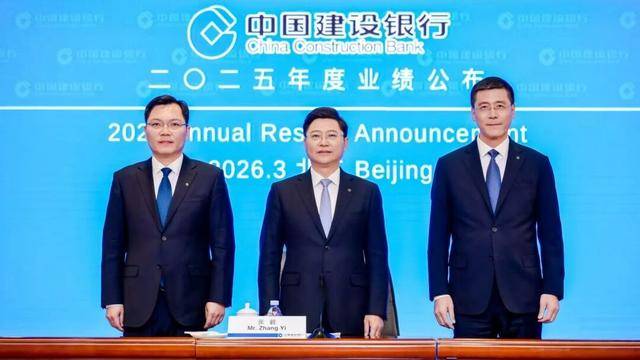
建设银行息差降幅收窄,财富管理、私人银行客户增速超10%
Hua Xia Shi Bao· 2026-03-30 02:54
Core Viewpoint - China Construction Bank (CCB) reported a stable growth in its financial performance for the year 2025, with total assets exceeding 45 trillion yuan and a focus on optimizing its business structure and enhancing profitability through effective management strategies [2][3]. Financial Performance - As of the end of 2025, CCB's total assets reached 45.63 trillion yuan, a year-on-year increase of 12.47% [2]. - The bank achieved an operating income of 7610.49 billion yuan, reflecting a growth of 1.88% year-on-year, and a net profit of 3397.9 billion yuan, up by 1.04% [2]. - CCB distributed a total cash dividend of 1016.84 billion yuan for the year, with 486.05 billion yuan already paid as an interim dividend [2]. Net Interest Margin - CCB's net interest margin for 2025 was reported at 1.34%, a decrease of 17 basis points year-on-year, but the rate of decline has slowed compared to 2024 [3]. - Interest income totaled 1.15 trillion yuan, down by 882.95 billion yuan, a decline of 7.11% [3]. - The bank's interest expenses were 5804.88 billion yuan, a reduction of 711.87 billion yuan, or 10.92% year-on-year [3]. Asset and Liability Management - CCB increased the proportion of higher-yield financial investments in its earning assets by 1.66 percentage points in 2025 [4]. - The bank effectively managed its liabilities by reducing high-interest deposits and expanding lower-cost interbank deposits, which contributed to the narrowing of the net interest margin decline [5]. Non-Interest Income - CCB's non-interest income reached 1882.75 billion yuan, a year-on-year increase of 19.85%, accounting for 24.74% of total operating income [6]. - The net income from fees and commissions was 1103.07 billion yuan, up by 5.13% from the previous year [6]. - The asset management business saw significant growth, with revenues increasing by 78.78% to 153.41 billion yuan [6][7]. Loan Growth and Risk Management - The total amount of loans and advances issued by CCB was 27.77 trillion yuan, an increase of 1.93 trillion yuan, or 7.47% year-on-year [8]. - The bank maintained a non-performing loan ratio of 1.31%, a decrease of 0.03 percentage points from the previous year, with a provision coverage ratio of 233.15% [8][9]. - CCB emphasized its commitment to risk management, particularly in the retail sector, to maintain asset quality stability [9]. Technological Advancements - CCB has implemented an "Artificial Intelligence+" initiative, integrating AI technologies into 398 application scenarios across key areas such as wealth management and risk management [9]. - The bank aims to enhance its operational capabilities through digitalization and intelligent solutions to support high-quality financial development [9]. Future Outlook - CCB is optimistic about its ability to achieve stable and resilient performance in 2026, focusing on high-quality development as part of its strategic planning [9].
银行投资观察20260329:石油冲击对流动性的影响再解析
GF SECURITIES· 2026-03-29 14:48
Core Insights - The report emphasizes the impact of oil price shocks on liquidity, suggesting that the ability to transmit cost shocks downstream will be stronger than previous oil price impacts, with expectations of nominal price increases in Q2 2026 [19][20][21] - It highlights that while medium-term demand remains optimistic, caution is advised regarding the contraction of broad liquidity in Q2 2026, particularly due to cross-border liquidity constraints and rising long-term interest rates affecting investment returns [19][21] Section Summaries 1. Current Observation - The banking sector overall declined by 0.8% during the observation period from March 23 to March 27, 2026, underperforming the Wind All A index, which fell by 0.7% [17] - State-owned banks, joint-stock banks, city commercial banks, and rural commercial banks experienced declines of -1.29%, -0.42%, -0.85%, and -0.47% respectively [17] - In contrast, H-shares of banks outperformed, with the Hang Seng Index down 1.2% while H-share banks gained 0.5% [17] 2. Investment Recommendations - The report suggests that the market's concerns regarding the demand side of the Chinese economy and cost transmission are overly pessimistic, given the supportive fiscal policies and stabilization in the real estate cycle [19] - It recommends caution regarding the contraction of liquidity in Q2 2026, emphasizing the importance of cross-border liquidity as a key variable for supporting Chinese asset liquidity [19][20] 3. Sector Performance - The banking sector's average price for convertible bonds fell by 0.67%, underperforming the convertible bond index by 1.95 percentage points [18] - The report notes that the profitability growth expectations for 2025 remain largely unchanged for seven banks, indicating stability in earnings forecasts [18] 4. Individual Stock Performance - Among A-share banks, Ping An Bank and Shanghai Rural Commercial Bank saw increases of 2.32% and 1.25% respectively, while Chongqing Bank experienced a decline of 6.55% [17] - In H-shares, Chongqing Rural Commercial Bank and Bank of China rose by 4.68% and 3.40%, while Bohai Bank and Jiangxi Bank fell by 3.45% and 1.49% respectively [17] 5. Valuation and Financial Analysis - As of March 27, 2026, the banking sector's latest price-to-earnings ratio (TTM) is 6.84X, and the price-to-book ratio is 0.67X, indicating that valuations are at historical average levels [45] - The report provides detailed financial metrics for key banks, including expected earnings per share and return on equity for 2026 and 2027, supporting the investment recommendations [9]

银行“火拼”消费贷、经营贷
第一财经· 2026-03-29 14:43
Core Viewpoint - The article highlights the rising trend of non-performing loan (NPL) ratios in personal loans across major banks, attributing this to macroeconomic changes and the ongoing adjustment in the real estate sector, while emphasizing the importance of risk management in consumer and business loans [3][10]. Group 1: Personal Loan Quality Trends - As of March 27, 2026, major banks like ICBC, CCB, and others have reported an increase in personal loan NPL ratios, with many attributing this to external macroeconomic factors [3][10]. - The personal loan NPL ratio for state-owned banks has approached 1.6%, with ICBC and CCB both reporting NPL ratios of 1.58%, marking an increase from the previous year [10][11]. - The shift in consumer demand due to the real estate market's downturn has led to a contraction in housing loans, while consumer and business loans have become focal points for banks [6][10]. Group 2: Loan Composition and Performance - By the end of 2025, CCB and ICBC's personal loan balances exceeded 9 trillion yuan, with CCB leading in housing, consumer, and credit card loans, while ICBC led in business loans by over 600 billion yuan [6][8]. - The consumer loan and business loan segments have seen significant growth, with CCB reporting nearly 30% growth in both areas, contrasting with the decline in housing loans [6][10]. - Credit card business has faced challenges, with all eight banks reporting a decline in credit card balances, particularly ICBC and Postal Savings Bank, which saw declines exceeding 10% [7][10]. Group 3: Risk Management and Future Outlook - CCB's management has emphasized the importance of optimizing credit risk management mechanisms in response to rising risks in the retail sector, indicating a focus on risk control moving forward [11][12]. - ICBC's leadership has acknowledged the short-term rise in personal loan NPL ratios but remains optimistic about long-term stability, citing strong economic fundamentals and the potential for improved asset quality through policy support [11][12]. - The article notes that while consumer and business loans are growing rapidly, the associated risks are also increasing, necessitating careful monitoring and management [10][13].


19.17万家企业,1.32万亿融资:建设银行年报里的产业金融革命
Xin Lang Cai Jing· 2026-03-29 14:39
Core Insights - The article emphasizes the transformation of credit distribution mechanisms through digital platforms, as demonstrated by China Construction Bank's (CCB) financing of 1.32 trillion yuan for 19.17 million enterprises across 6,594 digital supply chains, marking a significant shift in credit assessment methods [1][2][11]. Group 1: Credit Transformation - CCB's "Circle Chain Group" service model addresses the challenges of traditional credit assessment by utilizing real-time transaction and data flows along the supply chain, moving away from static evaluations based on collateral and credit ratings [1][2]. - The shift in risk assessment is illustrated by the case of Shenzhen Huacai Seafood Platform, where the entire supply chain information of frozen squid is converted into dynamic credit data, allowing for continuous value growth with each transaction [3][11]. Group 2: Digital Infrastructure - The digital platform serves as a foundational infrastructure for reconstructing supply chain governance, enabling credit penetration across industry barriers [4][5]. - CCB's strategy involves collaborating with industry leaders to integrate funding, information, logistics, and commerce, exemplified by the creation of an immutable "data mirror" for coffee trade, which enhances trust and verification through blockchain technology [5][6]. Group 3: Decoupling Credit from Core Enterprises - The "de-nuclear" lending model allows CCB to operate independently of core enterprise guarantees, focusing on actual transaction data rather than traditional collateral, thus optimizing financial structures and enhancing credit distribution [7][8]. - In the case of Sichuan Quanxing Liquor, CCB's independent data risk control system allows financing based on real transaction orders, reducing reliance on guarantees and improving cash flow [8][9]. Group 4: Precision in Financial Services - The ultimate goal of the "Circle Chain Group" model is to achieve precise financial support within the industrial ecosystem by transforming multidimensional data into accurate customer profiles and risk control models [9][10]. - CCB's collaboration with Zhengda Group in Hunan demonstrates the ability to convert real-time IoT data from pig farming into credit assets, significantly improving risk prediction capabilities and reducing approval times [10][11]. Group 5: Industry Challenges and Future Directions - The scalability of the model faces challenges due to the heterogeneity of key credit variables across different industries, necessitating collaboration between banks and industry leaders to identify and standardize these variables [11][12]. - The exploration by CCB indicates that the ultimate competition in industrial finance may shift from financial products to the ability to govern and generate critical industry data [12][13].

银行资负跟踪20260329:大行转贴净买入有限
GF SECURITIES· 2026-03-29 13:08
Investment Rating - The industry investment rating is "Buy" [3] Core Insights - The report indicates that large banks have limited net buying activity, with a monthly cumulative net purchase of 46.8 billion yuan as of March 26, which is a decrease of approximately 200 billion yuan month-on-month but an increase of about 50 billion yuan year-on-year. It is expected that credit issuance may slightly decline compared to March 2025, but the initial performance remains strong [7][20] - The central bank's operations included a net injection of 281.9 billion yuan through various monetary policy tools, with a focus on maintaining liquidity stability as the quarter-end approaches [16] - The report highlights that the liquidity environment is expected to tighten in April due to tax payments and annual settlement pressures, with potential increases in funding rates towards the end of the month [16][17] Summary by Sections Section 1: March Credit Performance - The data shows that the funding environment remains stable as the quarter-end approaches, with large banks gradually reducing their lending from 4.37 trillion yuan to 3.78 trillion yuan [16] - The report emphasizes the importance of monitoring the upcoming PMI data and bank annual reports for insights into future liquidity trends [23] Section 2: Central Bank Dynamics and Market Rates - The central bank conducted 4.742 trillion yuan in 7-day reverse repos, with a net injection of 281.9 billion yuan after accounting for maturing operations [16] - Market rates for various instruments, including treasury bonds and NCDs, have shown slight fluctuations, with the 1-year treasury yield at 1.25% and the average NCD issuance rate at 1.52% [17][18] Section 3: Bank Financing Tracking - The total outstanding amount of interbank certificates of deposit (NCDs) is 18.19 trillion yuan, with a weighted average issuance rate of 1.65% [21] - The report notes that there were no new issuances of commercial bank bonds during the period, and the total outstanding amount of commercial bank bonds is 3.32 trillion yuan [22]
