WANTAI BIOLOGICAL(603392)

Search documents
万泰生物(603392) - 万泰生物关于使用部分闲置募集资金进行现金管理的进展公告
2025-08-13 12:00
本公司董事会及全体董事保证本公告内容不存在任何虚假记载、误导性陈述 或者重大遗漏,并对其内容的真实性、准确性和完整性承担法律责任。 重要内容提示: 证券代码:603392 证券简称:万泰生物 公告编号:2025-039 北京万泰生物药业股份有限公司 关于使用部分闲置募集资金 进行现金管理的进展公告 基本情况 | 投资金额 | 55,000.00 万元 | | --- | --- | | 投资种类 | 结构性存款 | | 资金来源 | 募集资金 | 已履行的审议程序 北京万泰生物药业股份有限公司(以下简称"公司")于2025年1月14日召 开第六届董事会第六次会议、第六届监事会第六次会议,审议通过了《关于使用 部分闲置募集资金进行现金管理的议案》,同意公司使用最高额度不超过人民币 15亿元(含)的暂时闲置非公开发行股票募集资金适时投资安全性高、流动性好 的保本型产品,单项产品期限最长不超过12个月。该额度自公司董事会审议通过 之日起12个月内有效,可由公司及全资子公司共同循环滚动使用。具体内容详见 公司于指定信息披露媒体披露的《北京万泰生物药业股份有限公司关于使用部分 闲置募集资金进行现金管理的公告》(公告编号 ...

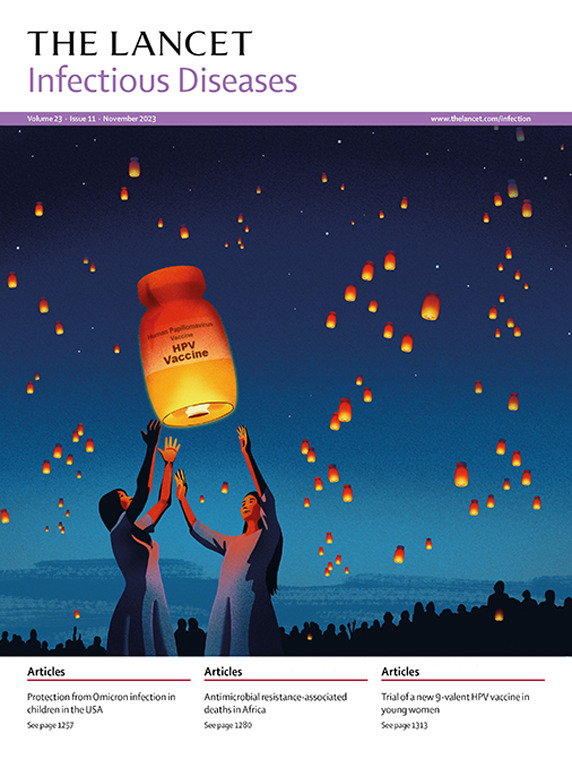
《柳叶刀》:国产九价HPV疫苗与进口等效 专家预估国产定价700-800元 进口目前定价1300元
Xin Hua Wang· 2025-08-12 05:52
Group 1 - The first domestically produced nine-valent HPV vaccine in China has been approved, marking it as the second in the world [1] - A head-to-head study published in The Lancet Infectious Diseases indicates that the domestic nine-valent HPV vaccine has comparable efficacy and safety to the imported version [1][16] - The anticipated price for the domestic vaccine is around 700-800 yuan per dose, significantly lower than the imported vaccine priced at approximately 1300 yuan per dose [1] Group 2 - The study involved 488 healthy women aged 18-26, who were randomly assigned to receive either the domestic or imported vaccine, with a 100% seroconversion rate observed in both groups [16][17] - The domestic vaccine, developed using a novel E. coli expression system, offers advantages such as shorter production cycles and lower costs, making it more accessible for eligible women in China [17]

HPV疫苗上半年批签发大增 相关上市公司正发力海外市场
Xin Hua Wang· 2025-08-12 05:48
Core Insights - The HPV vaccine market in China is experiencing significant growth, with a total of 322 batches approved in the first half of 2023, representing a year-on-year increase of 79.20% [1] - Watson Bio's 2-valent HPV vaccine achieved 414.39 million doses approved, marking a staggering year-on-year growth of 368.42% [1] - The sales of HPV vaccines are contributing positively to the financial performance of related companies, with Watson Bio reporting a net profit of 455 million yuan, an increase of 8.13% year-on-year [1] Group 1: Market Performance - Watson Bio's 2-valent HPV vaccine had a successful first half of 2023, winning government procurement projects for 1.686 million doses [3] - WanTai Bio reported sales of over 10 million doses of its 2-valent HPV vaccine during the same period [3] - The penetration rate of the 2-valent HPV vaccine among eligible women is estimated to be less than 10%, indicating substantial growth potential as health awareness increases [3] Group 2: Competitive Landscape - The market for 2-valent HPV vaccines is primarily driven by women aged 9 to 45, but competition from imported 9-valent vaccines is increasing, particularly in the market for women over 30 [3][4] - Five Chinese manufacturers have entered the clinical phase III trials for 9-valent HPV vaccines, indicating a potential surge in domestic competition [4] Group 3: International Expansion - Domestic vaccine companies are accelerating their international market expansion, with WanTai Bio successfully exporting its 2-valent HPV vaccine to Thailand and obtaining licenses in Cambodia and Ethiopia [5] - Watson Bio is collaborating with Indonesian partners for local production of 2-valent HPV vaccines, laying the groundwork for future cooperation [5] - The expansion into international markets is expected to enhance brand value and increase revenue streams for these companies [6]


国产九价HPV疫苗与进口效果相当,最终定价仅499元,不到进口一半
Xin Hua Wang· 2025-08-12 05:44
Core Points - The first domestically produced nine-valent HPV vaccine "Xinkening®9" is priced at 499 yuan per dose, approximately 40% of the price of imported nine-valent HPV vaccines, marking the end of the "high-price era" for HPV vaccines [1] - The vaccine was developed by a team led by Academician Xia Ning Shao from Xiamen University and Wantai Biological Pharmacy, utilizing a novel prokaryotic expression system [2] - The development process took 18 years and involved over 1 million independent trials, showcasing a significant increase in complexity compared to the two-valent HPV vaccine [2][3] - Clinical trial results published in The Lancet Infectious Diseases indicate that "Xinkening®9" has similar immune response and safety profiles to imported vaccines, effectively preventing high-risk HPV infections [3] - The vaccine is the only one approved for a two-dose regimen for ages 9-17, which may significantly improve vaccination compliance among young girls in China [4] Industry Insights - The nine-valent HPV vaccine not only retains the protective effects against HPV16 and HPV18 but also covers additional high-risk types, achieving over 98% protection against related persistent infections [5] - The collaboration between Wantai Biological and Xiamen University represents a successful model of industry-academia integration, having completed numerous national-level research projects [6] - Wantai Biological has invested approximately 1 billion yuan in the development of the nine-valent HPV vaccine, reflecting a strong commitment to research and innovation [6][7] - The introduction of a cost-effective HPV vaccine is expected to enhance vaccination rates among eligible women in China, contributing to the global goal of cervical cancer elimination [7]
万泰生物(603392)8月8日主力资金净流出1639.26万元
Sou Hu Cai Jing· 2025-08-08 11:27
Group 1 - The core viewpoint of the news is that Wantai Biological Pharmacy Company Limited has experienced a significant decline in its financial performance, with a notable drop in revenue and net profit in the latest quarterly report [1] - As of August 8, 2025, Wantai Biological's stock closed at 56.35 yuan, down 0.27%, with a trading volume of 41,600 lots and a transaction amount of 235 million yuan [1] - The company's latest quarterly report shows total operating revenue of 401 million yuan, a year-on-year decrease of 46.76%, and a net profit attributable to shareholders of 52.78 million yuan, a year-on-year decrease of 141.98% [1] Group 2 - Wantai Biological has made investments in 11 companies and participated in 3,898 bidding projects, indicating active engagement in business expansion [2] - The company holds 63 trademark registrations and 113 patents, reflecting its focus on intellectual property development [2] - Additionally, Wantai Biological has obtained 361 administrative licenses, showcasing its compliance and operational capabilities in the pharmaceutical industry [2]
万泰生物连跌10天,易方达基金旗下1只基金位列前十大股东
Sou Hu Cai Jing· 2025-08-07 13:07
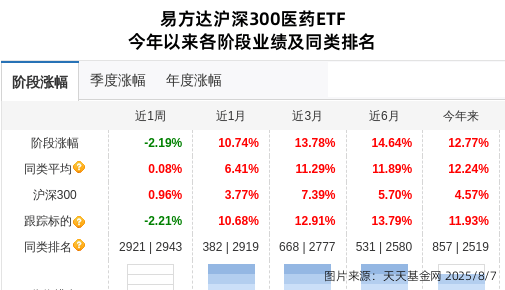
Core Insights - Wantai Biological Pharmacy Company has experienced a continuous decline in stock price for 10 consecutive trading days, with a cumulative drop of -7.01% [1] - The company specializes in the research and production of biological diagnostic reagents and vaccines, established in 1991 [1] - E Fund's HuShen 300 Pharmaceutical ETF, one of Wantai's top ten shareholders, reduced its holdings in the second quarter of this year [1] Financial Performance - The year-to-date return for the E Fund HuShen 300 Pharmaceutical ETF is 12.77%, ranking 857 out of 2519 in its category [1][2] - The ETF has shown varying performance over different time frames, with a near-term decline of -2.19% over the past week, but a positive return of 10.74% over the past month [2] - Compared to the average of its peers, the ETF's performance is slightly above average for the year, with a return of 12.24% [2] Management Information - The fund manager of E Fund HuShen 300 Pharmaceutical ETF is Yu Haiyan, who has extensive experience in investment management [4][5] - Yu Haiyan holds a master's degree in economics and has previously worked in various roles within the financial sector, including credit risk analysis and fund management [5]
迎战基孔肯雅热:IVD企业24小时研发出检测盒,中药巨头紧急调配古方
Hua Xia Shi Bao· 2025-08-07 10:44
Group 1: Epidemic Overview - The recent outbreak of Chikungunya fever in southern China has led to nearly 3,000 new cases reported in just one week, primarily in Guangdong province, affecting over ten cities [1][3] - The majority of cases are concentrated in Foshan, accounting for 95% of the total cases in Guangdong, with no severe cases or deaths reported so far [3] Group 2: Government Response and Guidelines - The National Health Commission has released the "Chikungunya Fever Diagnosis and Treatment Plan (2025 Edition)," emphasizing that the disease is preventable, controllable, and treatable [3][6] - The plan incorporates traditional Chinese medicine (TCM) approaches, highlighting the role of TCM in alleviating symptoms and promoting recovery [6] Group 3: Company Initiatives in Diagnostics and Treatment - Several listed companies in the IVD (in vitro diagnostics) sector are actively developing testing products and treatment solutions for Chikungunya fever [4][5] - Shenzhen BGI Technology Co., Ltd. has introduced the T1+ gene sequencer, which can provide comprehensive genomic analysis within 6-8 hours, aiding in rapid response to the outbreak [4] - Wanfu Biology has developed multiple Chikungunya virus detection products, creating a closed-loop system for monitoring and diagnosis [4] Group 4: Traditional Chinese Medicine Applications - TCM is being utilized for symptomatic treatment of Chikungunya fever, with specific formulations recommended for managing symptoms like fever and joint pain [6][7] - Companies such as Guangdong Yifang Pharmaceutical and Step Long Pharmaceutical are producing traditional Chinese medicines that may assist in treating Chikungunya fever [7]


万泰生物扣非连亏一年半 2020年上市两募资共38.8亿元
Zhong Guo Jing Ji Wang· 2025-08-06 06:23
Core Viewpoint - WanTai Bio's preliminary announcement indicates a significant expected loss for the first half of 2025, with net profit projected to be between -160 million and -130 million CNY, contrasting sharply with a profit of 26.05 million CNY in the same period last year [1] Financial Performance Summary - For the first half of 2025, the expected net profit attributable to shareholders is projected to be between -160 million and -130 million CNY, with a non-GAAP net profit forecasted between -260 million and -230 million CNY [1] - In 2024, WanTai Bio reported revenue of 2.245 billion CNY, a year-on-year decline of 59.25%, and a net profit attributable to shareholders of 106 million CNY, down 91.49% [1] - The net cash flow from operating activities for 2024 was 355 million CNY, reflecting a decrease of 76.91% compared to the previous year [1] Fundraising and Use of Proceeds - WanTai Bio raised a total of 382 million CNY in its initial public offering, with a net amount of 318 million CNY after expenses [2] - The funds were allocated for various projects, including 150 million CNY for automated technology upgrades in chemiluminescent reagent manufacturing and 150 million CNY for enhancing the quality system of cervical cancer vaccines [2] - The company also conducted a non-public offering in 2022, raising approximately 3.5 billion CNY, with net proceeds of about 3.46 billion CNY after deducting issuance costs [3]
万泰生物(603392)8月5日主力资金净流出3200.49万元
Sou Hu Cai Jing· 2025-08-05 13:11
金融界消息 截至2025年8月5日收盘,万泰生物(603392)报收于57.67元,下跌0.03%,换手率0.34%, 成交量4.32万手,成交金额2.50亿元。 资金流向方面,今日主力资金净流出3200.49万元,占比成交额12.82%。其中,超大单净流出4507.72万 元、占成交额18.06%,大单净流入1307.23万元、占成交额5.24%,中单净流出流入1713.95万元、占成 交额6.87%,小单净流入1486.53万元、占成交额5.96%。 万泰生物最新一期业绩显示,截至2025一季报,公司营业总收入4.01亿元、同比减少46.76%,归属净利 润5277.69万元,同比减少141.98%,扣非净利润10503.22万元,同比减少313.18%,流动比率4.137、速 动比率3.615、资产负债率14.35%。 通过天眼查大数据分析,北京万泰生物药业股份有限公司共对外投资了11家企业,参与招投标项目3893 次,知识产权方面有商标信息63条,专利信息113条,此外企业还拥有行政许可361个。 来源:金融界 天眼查商业履历信息显示,北京万泰生物药业股份有限公司,成立于1991年,位于北京市,是一家 ...
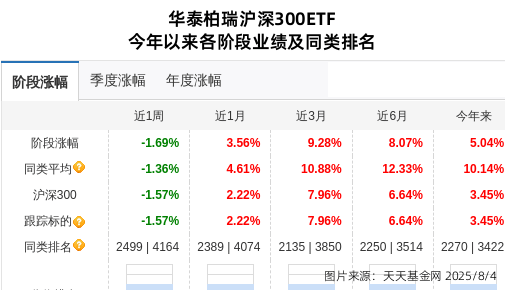
万泰生物连跌7天,华泰柏瑞基金旗下1只基金位列前十大股东
Sou Hu Cai Jing· 2025-08-04 13:20
华泰柏瑞沪深300ETF基金经理为柳军。 简历显示,柳军先生:中国国籍。监事,复旦大学财务管理硕士,2000-2001年任上海汽车集团财务有限公司财务,2001-2004年任华安基金管理有限公司高级基金 核算员,2004年7月加入华泰柏瑞基金管理有限公司,历任基金事务部总监、上证红利ETF基金经理助理。2009年6月起任上证红利交易型开放式指数证券投资 基金的基金经理。2010年10月起担任指数投资部副总监。2011年1月至2020年2月任华泰柏瑞上证中小盘ETF基金、华泰柏瑞上证中小盘ETF联接基金基金经 理。2012年5月起任华泰柏瑞沪深300交易型开放式指数证券投资基金、华泰柏瑞沪深300交易型开放式指数证券投资基金联接基金的基金经理。2015年2月起 任指数投资部总监。2015年5月至2025年1月任华泰柏瑞中证500交易型开放式指数证券投资基金及华泰柏瑞中证500交易型开放式指数证券投资基金联接基金 的基金经理。2018年3月至2018年11月任华泰柏瑞锦利灵活配置混合型证券投资基金和华泰柏瑞裕利灵活配置混合型证券投资基金的基金经理。2018年3月至 2018年10月任华泰柏瑞泰利灵活配置混合型证券 ...