
Anlogic(688107)

Search documents
安路科技:2025年净利润亏损2.72亿元
Xin Lang Cai Jing· 2026-02-27 08:49
Core Insights - The company announced a total operating revenue of 520 million for the fiscal year 2025, representing a year-on-year decrease of 20.22% [1] - The net profit attributable to the parent company's owners was -272 million, indicating a loss [1] - The net profit attributable to the parent company's owners, excluding non-recurring gains and losses, was -304 million [1] Financial Performance - Total assets at the end of the reporting period were 1.132 billion, a decrease of 18.48% compared to the beginning of the period [1] - The equity attributable to the parent company's owners was 944 million, down 22.36% from the beginning of the period [1]

半导体产业链午后爆发,科创芯片设计ETF广发、科创芯片ETF广发、科创人工智能ETF广发盘中最高涨超2%,一键投资芯片产业链
Sou Hu Cai Jing· 2026-02-26 07:15
Group 1 - The core viewpoint of the articles highlights the significant growth in the AI and computing chip sectors, driven by the increasing demand for AI capabilities and the release of new domestic AI models [1][2][3] - The recent surge in stock prices for companies like Cambricon, CloudWalk, and others indicates a bullish sentiment in the computing chip market, with Cambricon rising nearly 10% [1] - Nvidia's fourth-quarter earnings report shows record revenue of $68.1 billion, a 20% quarter-over-quarter increase and a 73% year-over-year increase, with net profit reaching $42.96 billion, reflecting over 90% growth [1][2] Group 2 - Nvidia plans to unveil a revolutionary new AI chip at the GTC 2026 conference, indicating advancements in technology nearing physical limits [2] - SK Hynix announced a plan to invest 21.6 trillion KRW (approximately $15.07 billion) in a new chip production line in South Korea by 2030 to meet rising semiconductor demand [2] - The AI infrastructure is triggering a "super cycle" in upstream materials, with price increases in electronic fabrics and a significant rise in HBM demand affecting DRAM wafer capacity [2][3] Group 3 - The global storage market is expected to experience price increases throughout 2026, driven by rising raw material costs and increased manufacturing expenses [3] - The digital chip design industry is projected to grow due to strong order demand, with AI servers and high-performance computing driving long-term growth [3] - The release of new storage chip capacities in late 2026 to early 2027 is anticipated to alleviate global supply constraints and stabilize storage prices [3] Group 4 - The Sci-Tech Chip Design ETF (589210) and the Sci-Tech AI ETF (588760) have seen significant inflows and price increases, reflecting investor confidence in the semiconductor and AI sectors [4] - The Sci-Tech Chip Design ETF has experienced a share increase of 18 million since the beginning of February 2026, with a net inflow of 5.77 million CNY [4] - The Sci-Tech AI ETF has also seen a substantial increase in scale, with a growth of 45.83 million CNY in the past two weeks [4]


半导体板块午后持续走高,欧莱新材涨近19%
Mei Ri Jing Ji Xin Wen· 2026-02-26 05:45
Group 1 - The semiconductor sector experienced a significant rise in the afternoon, with notable gains in various companies [1] - Olin New Materials surged nearly 19%, while Anlu Technology increased by over 14% [1] - Cambrian Intelligence saw an increase of over 8%, with Xinxiang Micro and Changchuan Technology also following the upward trend [1]


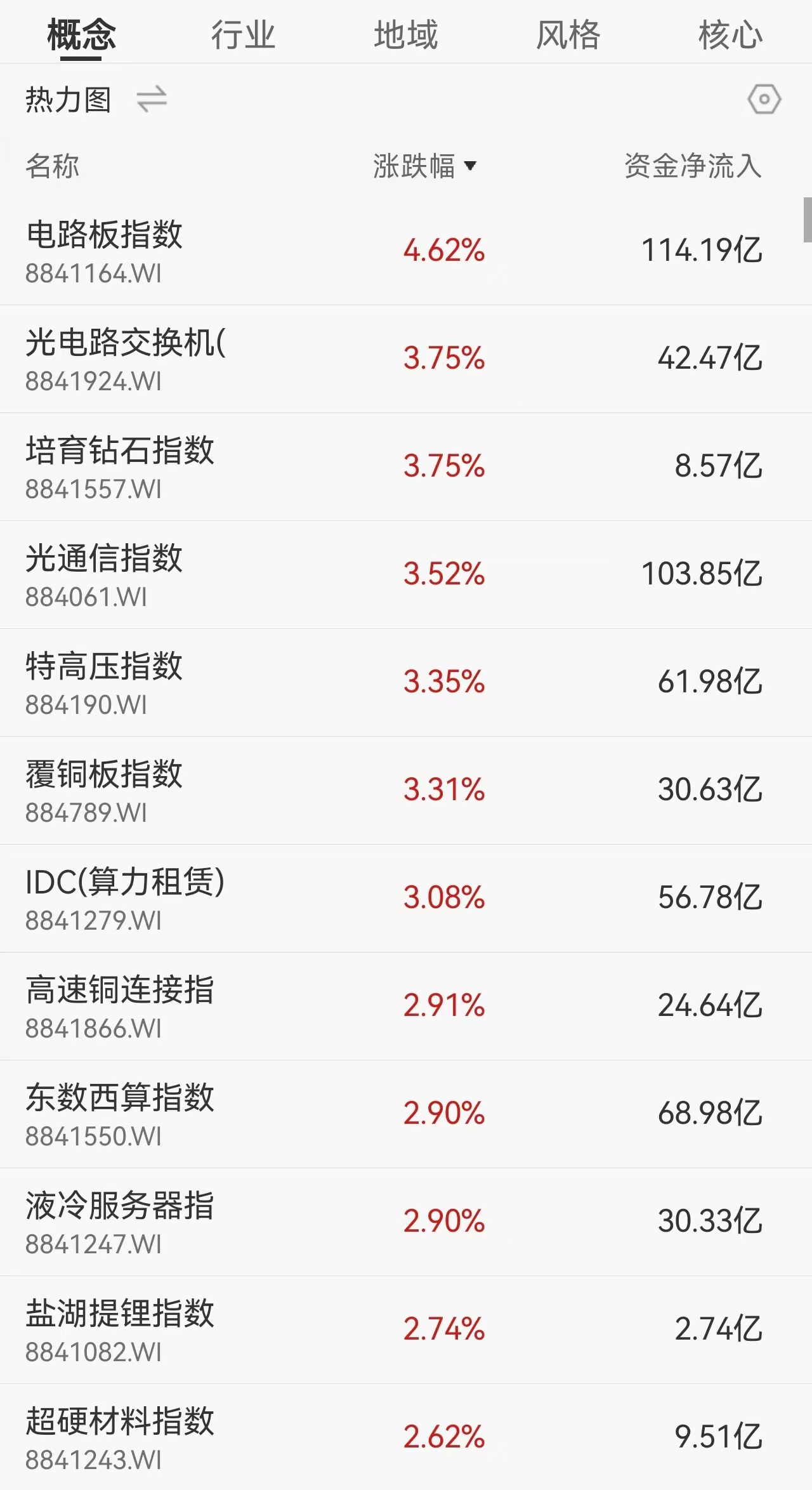
算力硬件概念全线走强,PCB、CPO、液冷服务器概念均表现强势,英伟达新品催化,存储芯片仅剩4周库存
Jin Rong Jie· 2026-02-26 03:58
Industry Overview - The current market focus is on the surge in demand for computing power driven by the large-scale application of AI, with computing hardware becoming a critical infrastructure for the AI industry [2][3] - Green computing policies are accelerating the penetration of liquid cooling technology, while overseas giants' iterations in computing technology further catalyze the sector's heat [2] - The tight inventory of storage chips highlights the supply-demand gap, increasing market attention on the computing hardware sector [2] Computing Hardware Sector - NVIDIA showcased the next-generation VeraRubin computing system, which integrates 72 Rubin GPUs and 36 Vera CPUs, demonstrating the technological upgrade direction of computing hardware products [3] - The State-owned Assets Supervision and Administration Commission of the State Council emphasized the need to strengthen investment traction and expand effective investment in computing power [3] - SK Hynix reported that DRAM and NAND inventory is only sufficient for about four weeks, indicating a tight supply chain in computing hardware [3] Related Industries - **Computing Chips**: The explosive growth in demand for AI model training and inference is leading to a shortage of high-performance GPUs and HBM memory products, with prices and order volumes rising [4] - **PCB**: High-performance servers are increasing the demand for PCBs with higher layer counts and better thermal management, benefiting manufacturers with advanced PCB production capabilities [4] - **CPO**: Co-packaged optics technology is effectively addressing power consumption and bandwidth bottlenecks in high-speed data transmission, with companies mastering CPO core packaging processes set to benefit [4] - **Liquid Cooling Servers**: Stricter energy consumption policies for data centers are making traditional air cooling solutions inadequate, with liquid cooling solutions expected to expand significantly [4] Key Companies - **HuiDian Co., Ltd.**: A leading PCB manufacturer in China, specializing in high-end communication and server boards, benefiting from the demand for computing infrastructure [5] - **Anlu Technology**: A leading FPGA chip supplier in China, whose products are widely used in AI inference acceleration and data center computing power scheduling [5] - **Tianfu Communication**: Focused on the R&D and manufacturing of core optical communication devices, with a strong technical foundation in the CPO field [5] - **Xin'an Co., Ltd.**: A leading organic silicon company in China, which has launched silicon-based liquid cooling products and is collaborating on commercial immersion cooling projects [5]


安路科技股东减持后股价上涨,行业景气与资金流入成关键
Jing Ji Guan Cha Wang· 2026-02-12 10:18
Group 1: Stock Price Movement Reasons - Seven major shareholders, including the National Big Fund and Silan Microelectronics, plan to reduce their holdings by up to 4%, with the Big Fund intending to reduce 2% [1] - The reduction plan is within market expectations due to historical reduction patterns, as these shareholders had previously disclosed and completed a reduction plan in August 2025 [1] - The maximum reduction of 16.03 million shares is estimated to be worth approximately 460 million yuan based on the closing price on the announcement date, while the company's trading volume on that day reached 2.068 billion yuan, indicating limited reduction pressure [1] Group 2: Industry Sector Situation - On February 12, 2026, the semiconductor sector rose by 2.43%, with Anlu Technology benefiting from increased AI computing power demand and domestic substitution logic [2] - The company's stock price increased by 3.85% on the same day, with a turnover rate of 1.69% and a volume ratio of 1.14, indicating active buying interest [2] - The semiconductor index (H30184) rose by 2.34%, supported by capital inflow into the sector [2] Group 3: Financial and Technical Aspects - On February 11, 2026, the main capital net inflow was 2.5933 million yuan, with net financing purchases of 6.9711 million yuan, indicating leveraged funds entering the market to offset reduction pressure [3] - Despite an expected loss of 230 million to 280 million yuan in 2025, the company anticipates sequential revenue growth starting from the second quarter of 2025 due to the introduction of new products [3] Group 4: Future Development - Analysts believe that the reduction by major shareholders is a normal exit behavior under the fund's lifecycle, rather than a negative judgment on the company's fundamentals [4] - The National Big Fund's first phase has entered a recovery period, and the funds from the reduction may rotate into more advanced fields, continuing to support industry development [4] - The company has only been profitable in one of the last four years (2022), with a projected revenue decline of 15.62% to 21.76% in 2025, which may pressure the stock price if future product commercialization does not meet expectations [4]
阿里推出Qwen-Image-2.0!科创芯片设计ETF天弘(589070)规模再创上市以来新高
Mei Ri Jing Ji Xin Wen· 2026-02-11 01:20
Group 1 - The core viewpoint of the news highlights the strong performance of the semiconductor design sector, particularly the Tianhong ETF, which focuses on chip design companies in the Sci-Tech Innovation Board, showing a 1.25% increase in its index and a transaction volume of 48.5467 million yuan on February 10 [1] - The Tianhong Sci-Tech Chip Design ETF has seen a cumulative net inflow of 69.3491 million yuan since its launch, with its latest scale reaching 654 million yuan as of February 9, 2026, marking a new high since its inception [1] - The ETF covers three major sub-sectors within chip design, allowing it to capture explosive growth in individual sectors while diversifying risks associated with individual stocks, especially as the semiconductor industry enters a recovery phase supported by favorable policies and demand [1] Group 2 - Alibaba has launched its next-generation image generation model, Qwen-Image-2.0, which excels in precise rendering, complex instruction support, and Chinese typesetting, achieving a score of 1029 in the AIArena evaluation, surpassing several international competitors [2] - The model is based on a lightweight 7B architecture, enabling efficient handling of complex image and text generation tasks, and is the first to integrate generation and editing functionalities [2] - The recent strong trend in the Sci-Tech chip sector is viewed positively by Guangfa Securities, which suggests it offers a good entry point for investors seeking stable returns in the current market environment [2]


ETF复盘资讯|创新药反弹还看港股!520880放量摸高近4%!字节Seedance2.0爆火出圈,科创AI、科创芯片连续上攻
Sou Hu Cai Jing· 2026-02-10 12:19
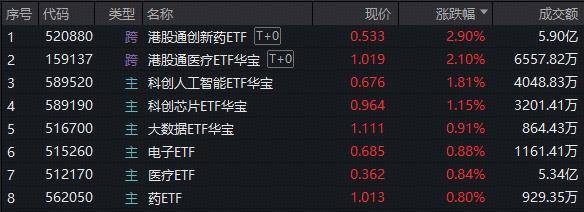
Market Overview - A-shares experienced narrow fluctuations, with the Sci-Tech Innovation Board showing strong performance, particularly in AI applications and computing chips [1] - The Hong Kong stock market saw a significant rebound in the pharmaceutical sector, with the Hong Kong Innovation Drug ETF (520880) reaching a peak increase of 3.86% and closing up 2.9% [3][5] ETF Performance - The Hong Kong Innovation Drug ETF (520880) recorded a trading volume of 5.9 billion, while the Hong Kong Medical ETF (159137) rose by 2.1%, marking its sixth consecutive day of gains [2][3] - The Sci-Tech Artificial Intelligence ETF (589520) increased by 1.81%, with a peak rise of over 2.4% during the trading session [8] Industry Insights - The Chinese innovative drug sector is experiencing a dual breakthrough in internationalization and commercialization, with over 70% of innovative drug companies reporting positive revenue growth [6][7] - Significant collaborations in the innovative drug space include a strategic partnership between Innovent Biologics and Eli Lilly, valued at up to $8.85 billion, and a $18.5 billion collaboration between CSPC Pharmaceutical and AstraZeneca [6] AI and Technology Developments - ByteDance's recent launches, including the Seedance 2.0 video generation model and Seedream 5.0 image generation model, have generated significant interest in the AI sector [11] - The Sci-Tech Artificial Intelligence ETF (589520) has a substantial exposure to ByteDance, with a weight of 29.42% in its index [11][13] Semiconductor and Chip Industry - The semiconductor equipment industry is experiencing an upward trend, with projected sales growth of 26% in 2026, reaching $791.7 billion [17] - The Sci-Tech Chip ETF (589190) is positioned to benefit from the ongoing "super cycle" in the semiconductor industry, with a focus on domestic production and expansion [15][17] Investment Strategy - Analysts suggest that the current market conditions present a favorable opportunity for investment in innovative drugs and AI sectors, with a recommendation to focus on ETFs that track these industries [7][19] - The Sci-Tech Chip ETF has shown a strong annualized return of 17.93%, outperforming other semiconductor indices [19][20]


半导体产业发展势头正盛 国家大基金有序退出
Jin Rong Shi Bao· 2026-02-10 01:25
Core Insights - The recent announcements from the Shanghai Stock Exchange highlight significant movements in the semiconductor industry, particularly regarding the National Integrated Circuit Industry Investment Fund (National Big Fund) and its plans to reduce holdings in various companies, including Anlu Technology [1][2][3] Group 1: National Big Fund's Actions - Anlu Technology announced that shareholders, including the National Big Fund, plan to reduce their holdings by up to 4% of the total shares, with the National Big Fund specifically reducing up to 8.02 million shares, representing no more than 2% of total shares [1][2] - Other semiconductor companies, such as Hushi Industry and Huizhiwei, have also disclosed similar reduction plans, indicating a broader trend of the National Big Fund's divestment across the semiconductor sector [2][3] - The National Big Fund's recent actions are interpreted not merely as negative signals but as indicators of the maturation and confidence of China's semiconductor industry under national strategic capital [1][2] Group 2: Financial Performance and Future Outlook - Anlu Technology's 2025 performance forecast indicates a year-on-year revenue decline and continued net losses, although a recovery trend is noted from the second quarter onward [2] - Hushi Industry's announcement revealed a planned reduction of up to 3% of its total shares by the National Big Fund, following a previous reduction that raised approximately 1.26 billion yuan [2] - The National Big Fund's first phase, established in 2014, is now in a phase of investment recovery, having supported key companies in the semiconductor sector, which are now becoming self-sustaining and competitive [4][5] Group 3: Investment Strategy and Future Funds - The National Big Fund operates with a market-oriented approach, with its first phase focusing on chip manufacturing and the second phase targeting semiconductor equipment and materials [4][5] - The second and third phases of the National Big Fund are actively investing in strategic areas of the semiconductor industry, with the second phase entering a "dual investment and exit" phase while the third phase accelerates investments in core technologies [5][6]


大基金一期减持多家半导体公司 业内称大基金是正常投资退出
Xin Lang Cai Jing· 2026-02-09 12:02
Core Viewpoint - The National Integrated Circuit Industry Investment Fund (referred to as "National Big Fund") has been actively reducing its holdings in the semiconductor sector since the beginning of the year, which has drawn significant market attention [1] Group 1: Fund Reduction Activities - On February 8, Anlu Technology (688107.SH) announced that the Big Fund Phase I plans to reduce its holdings by no more than 2% of the company's total share capital within the next three months [1] - This marks the third time since 2025 that Anlu Technology has faced a reduction plan from the Big Fund [1] - Other semiconductor companies such as Hu Silicon Industry (688126.SH), Tailin Micro (688591.SH), and Huizhi Micro (688512.SH) have also recently disclosed the latest reduction progress or plans from the Big Fund [1] Group 2: Long-term Strategy - Despite the frequent short-term reduction activities, the industry generally views this as a normal exit behavior for an investment fund, indicating that the strategic direction of supporting domestic growth and facilitating domestic substitution remains unchanged [1]
大基金一期减持多家半导体公司 业内称正常投资推出
Di Yi Cai Jing· 2026-02-09 12:01
Core Viewpoint - The National Integrated Circuit Industry Investment Fund (referred to as "National Big Fund") has been actively reducing its holdings in semiconductor companies, which has drawn market attention. This is seen as a normal investment exit behavior rather than a shift in the long-term strategy to support domestic industry growth and replacement [1][7]. Group 1: National Big Fund's Reduction Actions - The National Big Fund plans to reduce its stake in Anlu Technology (688107.SH) by up to 2% of the total share capital within three months, marking the third reduction since 2025 [1][2]. - Other semiconductor companies such as Hu Silicon Industry (688126.SH) and Tailin Micro (688591.SH) have also disclosed similar reduction plans, indicating a broader trend across the sector [1][2]. - The first phase of the National Big Fund holds 22.95 million shares of Anlu Technology, representing 5.73% of the total share capital, with a planned reduction of approximately 8.017 million shares, estimated to be worth around 226 million yuan [2][3]. Group 2: Performance and Financials of Hu Silicon Industry - Hu Silicon Industry's stock price has been underperforming, with a cumulative increase of only 14.98% in 2025, significantly lagging behind the semiconductor chip index's 44% increase [4]. - The company is expected to report a net loss of 1.28 billion to 1.53 billion yuan for 2025, with a projected loss of 1.5 billion to 1.8 billion yuan after excluding non-recurring items, indicating a worsening financial situation [4][5]. - The decline in performance is attributed to structural changes in semiconductor demand, underperformance of acquired subsidiaries, and ongoing capacity expansion projects [5]. Group 3: Market Implications and Future Outlook - Analysts view the National Big Fund's reduction actions as part of a market-oriented and routine operation strategy, which facilitates a healthy cycle of investment, exit, and reinvestment [7]. - The first phase of the National Big Fund is entering the latter half of its investment recovery period, while the larger second and third phases will focus on supporting critical areas in the semiconductor supply chain [7].