Junshi Biosciences(688180)

Search documents
生物医药企业集体大涨,中国生物药原创时代来了吗?
Di Yi Cai Jing· 2025-06-09 06:53
Core Viewpoint - The innovation speed and cost-effectiveness of Chinese biopharmaceutical companies have surpassed that of American companies, leading to a surge in stock prices for several Chinese biopharma firms [1][2]. Group 1: Market Performance - On June 9, 2023, Chinese biopharmaceutical companies saw a collective stock price increase, with Kelun-Botai (6990.HK) rising nearly 6% to a market cap exceeding HKD 80 billion, BeiGene (688235.SH) up over 8%, and Junshi Biosciences (688180.SH) up over 5% [1]. - The optimism surrounding original drug licensing contributed to the stock price increases, particularly following data presentations from Chinese companies at the recent ASCO annual meeting [1]. Group 2: International Interest - In recent months, American and European pharmaceutical companies have invested billions in acquiring Chinese-developed drugs, yielding returns for these companies [2]. - During the ASCO conference, BioNTech's resale of a tumor dual-antibody drug acquired from China's Pumice Biotech for over USD 10 billion to Bristol-Myers Squibb (BMS) highlighted the market's excitement [2]. - BMS is betting on a dual-antibody drug targeting PD-L1 and VEGF for treating various solid tumors, which shows potential to replace Merck's leading cancer drug, Keytruda [2]. Group 3: Competitive Landscape - The valuation of Chinese innovative drugs is considered reasonable by multinational companies, as they seek products with patent protection for lifecycle management [4]. - China has surpassed the U.S. in the number of clinical trials and has seen a significant increase in patent filings, attracting multinational pharmaceutical companies [4]. - AstraZeneca announced a USD 2.5 billion investment to establish a research center in Beijing, reflecting the growing interest in China's biopharmaceutical sector [4]. Group 4: Innovation and Development - Chinese biopharmaceutical companies have made rapid advancements in innovation over the past decade, although they still have a long way to go in achieving "original innovation" [4]. - The PD-L1/VEGF dual-antibody drug represents a significant innovation compared to traditional combination therapies, offering easier administration and potential cost reductions [4]. - Local companies like Kelun-Botai and InnoCare Pharma are actively investing in the development of antibody-drug conjugates (ADCs) in the competitive oncology market [4]. Group 5: Clinical Achievements - On June 6, 2023, Kelun-Botai's ADC drug, SKB264, received approval from the National Medical Products Administration (NMPA) and became the first TROP2 ADC drug approved for lung cancer indications globally [5]. - InnoCare Pharma presented data at ASCO indicating that its HER3-targeting ADC drug has potential comparable to Kelun-Botai's SKB264 for treating EGFR-resistant non-small cell lung cancer [5].

港股生物医药股盘中震荡上升,金斯瑞生物(01548.HK)涨超10.5%,诺诚健华(09969.HK)涨超9.5%,泰格医药(03347.HK)涨超6.5%,君实生物(01877.HK)涨超5.5%,药明生物(02269.HK)涨超4%。
news flash· 2025-06-09 02:08
港股生物医药股盘中震荡上升,金斯瑞生物(01548.HK)涨超10.5%,诺诚健华(09969.HK)涨超9.5%,泰 格医药(03347.HK)涨超6.5%,君实生物(01877.HK)涨超5.5%,药明生物(02269.HK)涨超4%。 ...

君实生物: 君实生物关于持股5%以上股东权益变动触及1%刻度的提示性公告
Zheng Quan Zhi Xing· 2025-06-05 13:47
Core Viewpoint - The announcement details a change in the equity holdings of major shareholders in Junshi Biosciences, with a decrease in their combined shareholding from 9.73% to 8.96% due to various factors, including liquidity arrangements [1][3]. Group 1: Shareholder Information - The major shareholder, Shanghai Tanying Investment Partnership, along with its concerted parties, has reduced its shareholding [1]. - The total number of shares held by these shareholders decreased from 95,907,223 shares to 88,338,379 shares [3]. - The change in shareholding does not trigger mandatory tender offer obligations [1]. Group 2: Shareholding Breakdown - Shanghai Tanying's shares decreased from 75,076,239 shares (7.62%) to 71,459,326 shares (7.25%) [3]. - Shanghai Tanzheng's shares decreased from 1,591,971 shares (0.16%) to 0 shares [3]. - LVC Fund II's shares decreased from 1,132,301 shares (1.15%) to 896,305 shares (0.91%) [3]. Group 3: Additional Notes - The equity change does not affect the control of the company or its major shareholders [3]. - The change does not require the disclosure of an equity change report [3].
君实生物(688180) - 君实生物关于持股5%以上股东权益变动触及1%刻度的提示性公告
2025-06-05 13:18
证券代码:688180 证券简称:君实生物 公告编号:临 2025-032 上海君实生物医药科技股份有限公司 关于持股 5%以上股东权益变动 触及 1%刻度的提示性公告 重要内容提示: 权益变动方向 比例增加□ 比例减少√ 权益变动前合计比例 9.73% 权益变动后合计比例 8.96% 本次变动是否违反已作出的承 诺、意向、计划 是□ 否√ 是否触发强制要约收购义务 是□ 否√ | | | □控股股东/实控人的一致行动人 √其他直接持股股东 | □不适用 | | --- | --- | --- | --- | | 上海檀正 | | □控股股东/实控人 □控股股东/实控人的一致行动人 | √91310118MA1JMB2763 | | | | √其他直接持股股东 | □ 不适用 | | LVC Fund | II | □控股股东/实控人 □控股股东/实控人的一致行动人 | □_____________ | | | | √其他直接持股股东 | √不适用 | (三) 一致行动人信息 | 一致行动 人名称 | 投资者身份 | 统一社会信用代码 | | --- | --- | --- | | LVC | □控股股东/实 ...
君实生物(688180) - 君实生物H股公告
2025-06-04 09:45
股份發行人及根據《上市規則》第十九B章上市的香港預託證券發行人的證券變動月報表 截至月份: 2025年5月31日 狀態: 新提交 致:香港交易及結算所有限公司 公司名稱: 上海君實生物醫藥科技股份有限公司 FF301 呈交日期: 2025年6月4日 I. 法定/註冊股本變動 | 1. 股份分類 | 普通股 | 股份類別 | H | | | 於香港聯交所上市 (註1) | | 是 | | | --- | --- | --- | --- | --- | --- | --- | --- | --- | --- | | 證券代號 (如上市) | 01877 | 說明 | | | | | | | | | | | 法定/註冊股份數目 | | | 面值 | | | 法定/註冊股本 | | | 上月底結存 | | | 219,295,700 | RMB | | 1 | RMB | | 219,295,700 | | 增加 / 減少 (-) | | | 0 | | | | RMB | | 0 | | 本月底結存 | | | 219,295,700 | RMB | | 1 | RMB | | 219,295,700 | | 2. ...
BMS与BNT达成90亿交易 狂赚普米斯“筹码”差价 中国创新药价值重塑进行时
Xin Lang Cai Jing· 2025-06-03 11:05
Core Insights - Bristol-Myers Squibb (BMS) acquired BioNTech's PD-L1/VEGF dual antibody BNT327 for $9 billion, highlighting the increasing interest in Chinese biotech firms and their innovative drug pipelines [1][2] - The rapid financial success of BioNTech, which earned over $8 billion from the initial $55 million licensing deal with Chinese firm Pumice Biologics, raises questions about the pricing strategies of Chinese pharmaceutical companies in the global market [1][2][3] - The trend of multinational corporations (MNCs) aggressively acquiring Chinese dual antibodies is reshaping the global landscape of innovative drugs, with significant deals such as the $6.05 billion agreement between 3SBio and Pfizer [1][4] Group 1: Major Transactions - BMS's deal with BioNTech includes a $1.5 billion upfront payment, a record for oncology licensing agreements, along with additional milestone payments totaling $76 billion [2] - 3SBio's licensing of its PD-1/VEGF dual antibody SSGJ-707 to Pfizer for $6.05 billion, with an upfront payment of $1.25 billion, sets a new record for domestic innovative drug licensing [4][5] - Other notable transactions include Merck's $3.3 billion investment in LianBio and the anticipated $5 billion deal involving Shijiazhuang Yiling Pharmaceutical [5][6] Group 2: Market Dynamics - The surge in MNCs acquiring Chinese dual antibodies is driven by the expiration of patents for existing blockbuster drugs and the need for new products [6][7] - Chinese innovative drug companies benefit from lower development costs and a large patient pool, making them attractive targets for MNCs seeking to enhance their product pipelines [6][7] - The total value of outbound licensing deals for Chinese innovative drugs reached $45.5 billion since early 2025, with 42% of high-value projects coming from China [5][6] Group 3: Future Outlook - The ongoing trend of MNCs partnering with Chinese biotech firms is expected to bolster the confidence of domestic companies in pursuing research and development [7][8] - The ability of Chinese innovative drug companies to negotiate higher prices in licensing deals will depend on their negotiation skills and market positioning [8] - The need for a "pricing power revolution" in the Chinese pharmaceutical industry is emphasized, as companies face challenges from rising R&D costs and stringent domestic pricing policies [9]


君实生物收盘上涨1.69%,最新市净率5.80,总市值325.87亿元
Jin Rong Jie· 2025-06-03 10:54
Core Viewpoint - Junshi Bioscience's stock closed at 33.06 yuan, up 1.69%, with a market-to-book ratio of 5.80, marking a new low in 157 days, and a total market capitalization of 32.587 billion yuan [1] Company Overview - Junshi Bioscience focuses on the research and development of new drugs, as well as the transfer and service of related technologies, including the production and sales of new drugs [1] - The company has 175 authorized patents, with 129 domestic and 46 international patents, covering various aspects of new drug protein structures, preparation processes, uses, and formulation recipes [1] Financial Performance - For Q1 2025, the company reported revenue of 501 million yuan, a year-on-year increase of 31.46%, while net profit was -234.88 million yuan, a year-on-year decrease of 17.01%, with a gross profit margin of 81.24% [2] Market Comparison - Junshi Bioscience's PE (TTM) is -26.43, with a static PE of -25.44 and a market-to-book ratio of 5.80, compared to the industry average PE of 64.63 and a market-to-book ratio of 10.39 [3] - The total market capitalization of Junshi Bioscience is 32.587 billion yuan, which is significantly lower than the industry median market capitalization of 80.24 billion yuan [3]
长江医药:药品产业链周度系列(二)再论细胞因子IL-2/12/15
Changjiang Securities· 2025-06-03 00:25
Investment Rating - The report maintains a "Positive" investment rating for the healthcare industry [10] Core Insights - Recent strategies in cancer immunotherapy focus on selectively delivering cytokines to tumor sites to extend their half-life and reduce systemic toxicity. This has led to the development of antibody-cytokine fusion proteins known as "immunocytokines," with significant potential in drug development. The most notable immunocytokines currently under development are IL-2, IL-12, and IL-15, with several domestic companies actively pursuing these therapies [2][6][24] Summary by Sections Immunocytokines and Their Development - Cytokine-based cancer immunotherapy aims to activate immune cells and enhance anti-tumor responses by modulating internal immune signaling. Commonly used cytokines include IL-2, IL-15, IL-12, and IFN-α, which can activate T cells and NK cells to improve tumor cell recognition and elimination [6][17] - The report highlights the emergence of a new strategy that selectively delivers cytokines to tumor sites, which has garnered clinical interest. This approach aims to enhance therapeutic efficacy while minimizing side effects [6][24] Domestic Company Developments - Several domestic pharmaceutical companies, including Innovent Biologics, Ascentage Pharma, and Junshi Biosciences, are making significant strides in the development of immunocytokine therapies. For instance, Innovent's IBI363, a novel PD-1/IL-2α-bias fusion protein, has shown promising clinical results in melanoma, colorectal cancer, and non-small cell lung cancer [7][44][48] - The report notes that IBI363 has demonstrated an overall response rate (ORR) of 26.4% in melanoma patients who previously failed immunotherapy, indicating its potential in treating resistant tumors [48] Market Outlook and Investment Opportunities - The macroeconomic environment has shifted, and by 2025, the report anticipates significant opportunities in the pharmaceutical sector driven by innovation and domestic demand recovery. Key investment themes include the international expansion of innovative drugs and the recovery of domestic healthcare services [8][67] - The report emphasizes the importance of selecting companies with strong cash flows, innovative capabilities, and established research platforms, particularly in the context of breakthrough therapies and technological advancements in the industry [67]

长江医药:药品产业链周度系列(二)再论细胞因子IL-2、12、15-20250603
Changjiang Securities· 2025-06-02 23:30
Investment Rating - The report maintains a "Positive" investment rating for the healthcare industry [10] Core Insights - The report highlights the increasing clinical interest in selectively delivering cytokines to tumor sites to extend their half-life and reduce systemic toxicity, with a focus on immune cytokines such as IL-2, IL-12, and IL-15 [2][6][24] - Domestic pharmaceutical companies are proactively positioning themselves in the immune cytokine therapy space, with notable advancements from companies like Innovent Biologics, Ascentage Pharma, and Junshi Biosciences [7][51][60] - The macroeconomic environment is shifting, with expectations for significant growth in the pharmaceutical sector by 2025, driven by innovation and domestic demand recovery [8][66] Summary by Sections Immune Cytokines and Their Development - Immune cytokines are emerging as a promising treatment strategy in tumor immunotherapy, enhancing the immune response against cancer cells [6][18] - The report discusses the engineering of immune cytokines to improve their therapeutic efficacy while minimizing side effects, with a focus on IL-2, IL-12, and IL-15 [20][24] Domestic Company Strategies - Innovent Biologics has reported promising clinical data for its PD-1/IL-2α-bias fusion protein IBI363, showing significant efficacy in melanoma and colorectal cancer [7][48] - Ascentage Pharma's SmartKine® platform is highlighted for its potential in developing selective immune therapies, with two IL-15 products entering clinical trials [51][58] - Junshi Biosciences has received clinical approval for its PD-1/IL-2 fusion protein, indicating a strong pipeline in immune-oncology [60][66] Market Outlook - The report anticipates a robust market for innovative drugs, particularly those that can leverage international opportunities and domestic policy support [8][66] - The recovery of domestic demand and the introduction of new healthcare policies are expected to drive growth in the medical device sector, particularly in areas like electrophysiology and orthopedics [66]
ASCO见证:中国创新药冲击全球第一梯队
3 6 Ke· 2025-06-01 07:31
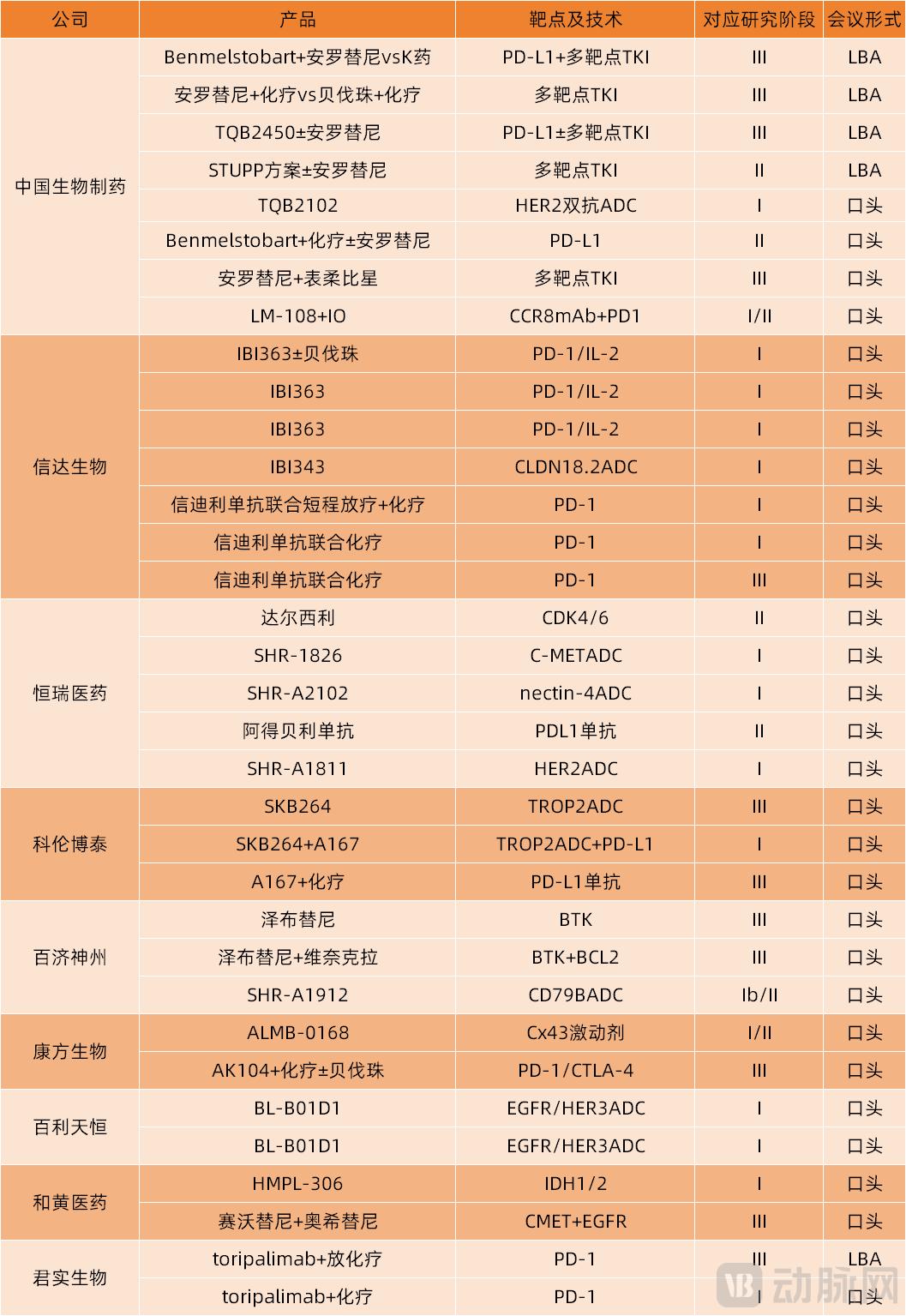
Core Insights - The ASCO conference has witnessed the rise of Chinese innovative drugs, with a significant increase in the number of oral presentations and Late-Breaking Abstracts from Chinese researchers over the past decade [1][2][4] - Chinese biopharmaceutical companies are now recognized for their quality research, with many studies presenting groundbreaking results that have global implications [4][5] - The "ASCO effect" has begun to influence stock prices of Chinese pharmaceutical companies, reflecting the growing importance of their research in the global market [5][6] Company Highlights - China Biologic Products set a record with 12 oral presentations at ASCO 2025, including 4 Late-Breaking Abstracts, totaling over 40 studies presented [4] - Innovative studies such as the DIAMOND trial by Junshi Biosciences have demonstrated significant advancements in treatment protocols, marking a shift from merely participating to leading in global research [4] - Companies like Innovent Biologics and Hengrui Medicine are at the forefront of ADC and bispecific antibody development, with numerous studies presented at ASCO [8][12] Industry Trends - The ADC sector is dominated by Chinese companies, with 89 out of 184 ADC-related studies presented at ASCO coming from China, representing approximately 48.4% of the total [8][10] - The bispecific antibody (bispecific) pipeline from China accounts for nearly 50% of the global total, with significant clinical advancements reported at ASCO [12][14] - The trend of increasing license-out transactions and upfront payments for Chinese innovative drugs indicates a shift in the global pharmaceutical landscape, with a notable rise in the use of the NewCo model for collaborations [18][24] Market Impact - The stock prices of companies like China Biologic Products and Innovent Biologics have seen significant increases following the ASCO conference, indicating a positive market response to their research presentations [6] - The total value of license-out transactions for Chinese pharmaceutical companies has surged, with a notable increase in upfront payments, reflecting enhanced negotiation power [20][24] - The emergence of new treatment modalities and innovative drug pipelines positions Chinese companies as key players in the global biopharmaceutical market [16][18]