
Jinko Solar(688223)

Search documents
晶科能源与德国分销商再签37.11MW飞虎3组件订单
Zheng Quan Shi Bao Wang· 2026-01-16 12:16
Core Insights - JinkoSolar has signed a supply agreement for 37.11 MW of its Tiger 3 series high-efficiency photovoltaic modules with a local distributor in Germany [1] Company Summary - JinkoSolar continues to expand its market presence in Germany through strategic partnerships, as evidenced by the recent agreement [1] Industry Summary - The photovoltaic module market is experiencing growth, with companies like JinkoSolar actively engaging in supply agreements to enhance their market share [1]
光伏企业抢滩太空赛道!光伏ETF华夏(515370)上涨1.21%,晶盛机电涨超9%
Mei Ri Jing Ji Xin Wen· 2026-01-16 06:09
Group 1 - The core viewpoint of the news is that the photovoltaic industry is expanding into the space sector, with companies like Junda Co. making strategic investments to capitalize on opportunities in low-orbit satellite networking and space computing [1] - Junda Co. announced a cash investment of 30 million yuan to acquire a 16.67% stake in Shanghai Xingyi Chip Energy Technology Co., which aims to leverage both companies' strengths in photovoltaic industrialization and space applications [1] - Other companies in the industry, such as Trina Solar and JinkoSolar, are also advancing in the development of perovskite/silicon tandem cells, which are expected to meet the demands of space photovoltaic applications [1] Group 2 - The Huaxia Photovoltaic ETF (515370) tracks the CSI Photovoltaic Industry Index, which includes upstream, midstream, and downstream companies in the photovoltaic supply chain, reflecting the overall performance of the photovoltaic industry [2] - The index has a photovoltaic content of 83.64%, ranking first in the entire market dimension [2]




白银暴涨,光伏流泪
Hua Er Jie Jian Wen· 2026-01-16 04:59
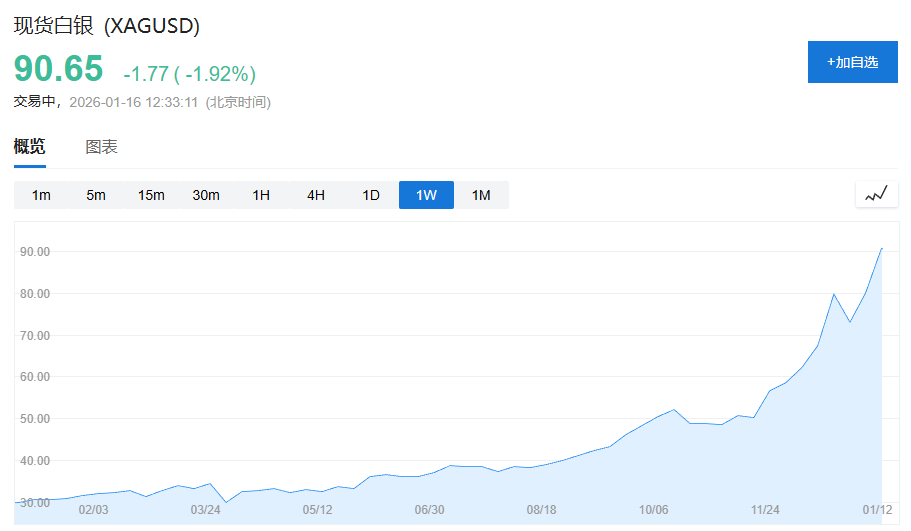
Core Viewpoint - The surge in silver prices, which has increased over 200% since early last year, poses significant challenges for the photovoltaic (PV) industry, leading to increased production costs and potential operational disruptions [1][2][5]. Group 1: Silver Price Impact on PV Industry - Silver paste has become the largest cost component in solar modules, rising from 3.4% of total costs in 2023 to 29% currently [2]. - The cost pressure from rising silver prices is forcing some PV companies to halt production or raise prices, with major manufacturers accelerating efforts to reduce silver usage [2][3]. - A 1000 yuan/kg increase in silver price raises the cost of solar cells by 0.01 yuan per watt, which can significantly impact the operational rates of factories in the low-margin PV sector [3]. Group 2: Company Responses and Market Dynamics - Leading companies like Longi Green Energy and Aiko Solar have raised their product prices due to rising raw material costs, with prices for mainstream 500W modules increasing to around 400 yuan (approximately 57 USD) [3]. - Mid-tier companies are facing severe financial strain, leading to extreme measures such as production halts, as seen with a 2GW battery manufacturer in Hunan and the established firm Yijing Photovoltaic [4]. - Despite efforts to clear excess capacity, companies like Trina Solar and JinkoSolar are issuing profit warnings, indicating potential net losses in 2025 due to the ongoing challenges in the market [5]. Group 3: Efforts to Reduce Silver Usage - The PV industry is adopting "de-silvering" strategies to mitigate the impact of high silver prices, with Longi Green Energy announcing plans to accelerate the use of alternative metals [6]. - Analysts predict that the industry could reduce silver usage by 17% this year through technologies like copper plating and silver-coated copper [6]. - However, the aggressive shift to alternative materials carries risks, including potential long-term reliability issues, as copper is less stable than silver and may not meet warranty requirements [7].



晶科能源1月15日获融资买入9071.08万元,融资余额11.00亿元
Xin Lang Cai Jing· 2026-01-16 02:15
Group 1 - The core viewpoint of the news is that JinkoSolar's stock has experienced a decline, with significant changes in financing and shareholder structure, indicating potential challenges in its financial performance and market position [1][2][3] Group 2 - On January 15, JinkoSolar's stock fell by 2.27%, with a trading volume of 869 million yuan. The financing buy-in amount for the day was 90.71 million yuan, while the financing repayment was 71.81 million yuan, resulting in a net financing buy of 18.89 million yuan. The total financing and securities balance reached 1.102 billion yuan [1] - As of January 15, the financing balance of JinkoSolar was 1.1 billion yuan, accounting for 1.83% of its market capitalization, which is above the 90th percentile level over the past year, indicating a high level of financing [1] - In terms of securities lending, JinkoSolar repaid 293,200 shares and sold 115,000 shares on January 15, with a selling amount of 692,500 yuan. The remaining securities lending volume was 379,900 shares, with a balance of 2.287 million yuan, which is below the 20th percentile level over the past year, indicating a low level of securities lending [1] - As of September 30, JinkoSolar had 77,300 shareholders, an increase of 4.14% from the previous period, while the average circulating shares per person decreased by 3.97% to 129,456 shares [2] - For the period from January to September 2025, JinkoSolar reported operating revenue of 47.986 billion yuan, a year-on-year decrease of 33.14%, and a net profit attributable to shareholders of -3.92 billion yuan, a year-on-year decrease of 422.67% [2] - JinkoSolar has distributed a total of 3.355 billion yuan in dividends since its A-share listing, with 3.125 billion yuan distributed over the past three years [3] - As of September 30, 2025, the second-largest circulating shareholder of JinkoSolar was Hong Kong Central Clearing Limited, holding 306 million shares, a decrease of 132 million shares from the previous period. Other significant shareholders also saw reductions in their holdings [3]
太空光伏概念热度飙升,企业抢滩布局正酣!钙钛矿成潜力方向
Shang Hai Zheng Quan Bao· 2026-01-16 00:46
Core Insights - The space photovoltaic concept has gained significant attention in 2026, with brokerages predicting a "trillion-level market" and companies like JinkoSolar, Trina Solar, and Junda Co. actively disclosing their plans and progress in this field [1][2] - Industry experts highlight the potential of space photovoltaics amid the maturation of commercial space technology and the growing energy demands of AI computing centers, while also acknowledging the challenges of commercialization [1][4] Company Developments - Elon Musk discussed the future of space photovoltaics, emphasizing solar energy as the key to human energy freedom, with plans for 8,000 launches per year to deploy AI satellites that maximize sunlight utilization [2] - JinkoSolar signed a strategic cooperation agreement with Jingtai Technology to establish a joint venture focused on AI-based high-throughput perovskite tandem solar cells [2] - Junda Co. announced an investment of 30 million yuan to acquire a stake in Xingyi Chip Energy, aiming to expand into the space photovoltaic sector [2] Technological Advancements - GCL-Poly's chairman stated plans to collaborate with aerospace research institutions to test perovskite components in thin atmosphere regions, exploring commercial applications [3] - Lightyear Technology has been conducting ground simulations and space environment tests, having already sent perovskite components into orbit for testing [3] - Mingyang Smart Energy, a wind power leader, plans to acquire Dehua Chip, which focuses on space solar cells, indicating a cross-industry move into space photovoltaics [3] Market Potential - The interest in space photovoltaics is driven by the maturation of commercial space technology and the increasing value of the "space economy," which provides a solid foundation for development [4] - The main battery technologies for space photovoltaics include gallium arsenide, crystalline silicon, and perovskite, with perovskite being favored for its high efficiency and potential for lightweight and flexible applications [5][6] Commercialization Challenges - Despite the promising future, the commercialization of space photovoltaics faces significant challenges, including high launch costs and the stability of equipment in extreme space environments [7] - Analysts predict that large-scale commercial power supply from space photovoltaics may not be realized until after 2040, emphasizing the need for phased development and testing [8]

储能行业跟踪报告:渠道与场景加持,光伏组件企业大举进入储能领域
EBSCN· 2026-01-16 00:12
Investment Rating - The report indicates a positive outlook for the solar component companies entering the energy storage sector, suggesting a new growth space for these companies [4]. Core Insights - Leading solar component companies are accelerating their entry into the energy storage market, with notable players like Canadian Solar, Trina Solar, Jinko Solar, JA Solar, and LONGi Green Energy making significant moves [3][9]. - The entry of these companies into the energy storage sector is supported by two main advantages: strong customer channels and the ability to leverage existing global networks [3][13]. - The energy storage market is characterized by a strong binding trend between solar and storage projects, particularly in regions with rapidly growing electricity demand [21]. Summary by Sections 1. Accelerated Layout of Leading Component Companies in Energy Storage - Major solar component companies are focusing on large-scale energy storage, with significant market potential and a trend towards joint development of solar-storage projects [9][11]. 2. Competitive Advantages: Reusing Global Networks in Customer and Channel - Solar and energy storage customers overlap significantly, providing solar companies with inherent customer acquisition advantages [13][17]. - Leading solar companies have established global sales and service systems, enhancing their ability to develop energy storage businesses [17][20]. 3. Competitive Advantages: Strong Binding of Scenarios and Applications - The trend of integrating solar and energy storage projects is becoming mainstream, especially in countries with less developed electricity markets [21]. 4. Investment Recommendations - The report emphasizes that the entry of solar component companies into the energy storage sector is expected to open new growth opportunities, with a focus on three key indicators for assessing growth potential: commitment to energy storage, overseas market expansion in the next 1-2 years, and profitability contributions [4][24]. - Specific companies to watch include Canadian Solar, which has already seen significant profit contributions from its energy storage business, and Trina Solar, which is rapidly expanding its overseas energy storage operations [24].


后退税时代,组件龙头谁在“裸泳”?
Xin Lang Cai Jing· 2026-01-15 14:09
Core Viewpoint - The photovoltaic industry is facing a critical turning point in 2026, with major companies like JA Solar, JinkoSolar, and Trina Solar forecasting significant losses for 2025, compounded by the cancellation of export tax rebates that previously supported their profits and operational cash flow [1][11]. Group 1: Financial Impact - The cancellation of export tax rebates is expected to severely impact cash flow for photovoltaic companies, which had relied on these rebates as a stable source of income [2][12]. - In the first three quarters of 2025, the total tax refunds for the four leading module manufacturers approached 10 billion yuan, while the top ten companies received over 20 billion yuan in tax refunds for the 2024 fiscal year [1][12]. - The sudden loss of this crucial cash flow source is likened to cutting off an external lifeline during a time of industry "blood loss," forcing companies to rely more on their operational cash generation capabilities [2][12]. Group 2: Cash Flow Analysis - A clear differentiation in cash flow status among photovoltaic companies has emerged, with some companies struggling significantly as the industry faces a downturn [3][13]. - The cash flow rankings of listed photovoltaic companies over the past five years show that Tongwei Co. leads with a total cash generation of 860 million yuan, while companies like LONGi Green Energy and Aiko Solar are also notable [4][14]. - The abrupt policy change regarding export tax rebates has had the most severe impact on companies with already thin profit margins, necessitating a restructuring of financial management strategies [4][14]. Group 3: Market Dynamics - In an effort to capitalize on the last window of opportunity, major module manufacturers are stockpiling inventory while also clearing existing stock, leading to market chaos with contract breaches and price hikes becoming common [5][15]. - Current market prices for photovoltaic modules show fluctuations, with companies like JinkoSolar and Trina Solar adjusting their prices upward, indicating a volatile market environment [7][17]. - Companies are urged to maintain their reputations while seizing opportunities for recovery, emphasizing the importance of balancing profit-seeking with brand integrity [7][17]. Group 4: Strategic Responses - Leading companies are adopting various strategies to survive the cash flow challenges, such as technological innovation and product differentiation [9][19]. - LONGi and Aiko are promoting BC battery technology to achieve higher premiums in overseas markets, while JA Solar is implementing a "three-pole management system" to reduce production costs [9][19]. - Trina Solar is collaborating with financial institutions to utilize accounts receivable for cash flow supplementation, and JinkoSolar is launching new TOPCon products to enhance market competitiveness [9][19].

光伏行业预亏警报大响,这些龙头连亏两年成定局
第一财经· 2026-01-15 13:23
Core Viewpoint - The photovoltaic industry is currently in a downward cycle, with major listed companies facing significant losses in their 2025 performance forecasts due to overcapacity, intense price competition, and a complex overseas trade environment [3][4]. Group 1: Industry Performance - Major photovoltaic companies such as Daqo New Energy, JinkoSolar, and Trina Solar have announced expected losses for 2025, indicating ongoing pressure in the industry [4][5]. - Daqo New Energy reported a net profit loss of 1.073 billion yuan for the first three quarters of the previous year, and the forecast indicates consecutive losses for 2024 and 2025 [5]. - JinkoSolar and Trina Solar are also expected to continue facing losses in 2025, with net profit losses of 3.92 billion yuan and 4.2 billion yuan respectively for the first three quarters of 2025 [6]. Group 2: Market Dynamics - The photovoltaic industry is experiencing a dual challenge of overcapacity and aggressive price wars, leading to compressed profit margins [11]. - The market is currently in a state of supply-demand imbalance, with the supply side undergoing significant reductions while demand growth remains uncertain [8][10]. - The recent rebound in polysilicon prices, which increased by over 50% from approximately 34,400 yuan/ton to 53,200 yuan/ton, has helped to narrow losses for Daqo New Energy [5]. Group 3: Future Outlook - Analysts predict that the photovoltaic industry will continue to face overcapacity issues and price wars in 2025, with a potential restructuring of supply and demand expected in 2026 [11]. - The implementation of export tax rebates for photovoltaic products may provide short-term support, but the actual demand impact remains limited [10]. - The rising costs of production due to high silver prices and polysilicon price increases are expected to continue pressuring the profitability of battery and module manufacturers [10][11].


光伏行业预亏警报大响,这些龙头连亏两年成定局
Di Yi Cai Jing· 2026-01-15 12:08
Core Viewpoint - The photovoltaic industry is currently experiencing a downturn, with major companies reporting significant losses due to overcapacity, intense price competition, and a complex overseas trade environment [1][2]. Group 1: Company Performance - Major photovoltaic companies such as Daqo New Energy, JinkoSolar, and Trina Solar have announced expected losses for 2025, indicating a prolonged period of financial strain [1][2]. - Daqo New Energy reported a net profit loss of 1.073 billion yuan for the first three quarters of the previous year, and it is expected to face consecutive losses in 2024 and 2025 [2]. - JinkoSolar and Trina Solar are projected to incur net losses of 3.92 billion yuan and 4.2 billion yuan respectively for the first three quarters of 2025, with no significant recovery expected in their annual performance [3]. Group 2: Market Dynamics - The photovoltaic industry is facing a dual challenge of overcapacity and price wars, leading to a significant decline in stock prices for leading companies [4]. - The market is currently in a state of supply-demand imbalance, with the supply side undergoing significant contraction while demand growth remains uncertain [4][6]. - The recent rebound in polysilicon prices, driven by production cuts, has helped narrow losses for some companies, but the overall demand remains weak [2][6]. Group 3: Future Outlook - Analysts predict that the overcapacity issue will persist into 2025, with ongoing price wars continuing to pressure profit margins [7]. - The implementation of export tax rebates may temporarily boost demand, but the long-term effects on the market remain uncertain [5][6]. - The industry is expected to undergo a transformation in 2026, with potential recovery in pricing and profitability as supply-demand dynamics are reshaped [7].
解密主力资金出逃股 连续5日净流出543股


Zheng Quan Shi Bao Wang· 2026-01-15 09:09
Core Viewpoint - As of January 15, a total of 543 stocks in the Shanghai and Shenzhen markets have experienced net outflows of main funds for five consecutive days or more, indicating a significant trend of capital withdrawal from these stocks [1]. Group 1: Stocks with Longest Net Outflow - Qin'an Co., Ltd. has the longest streak of net outflows, with 17 consecutive days [1]. - Haima Automobile follows with 16 consecutive days of net outflows [1]. Group 2: Stocks with Largest Total Net Outflow - Goldwind Technology has the highest total net outflow, amounting to 12.453 billion yuan over seven days [1]. - Shenghong Technology ranks second with a total net outflow of 5.714 billion yuan over the same period [1]. Group 3: Stocks with Highest Net Outflow Ratio - ST Tongmai has the highest net outflow ratio, with a 19.58% decline over the past 13 days [1]. - Other notable stocks with significant net outflow ratios include China Merchants Bank at 15.85% and Changjiang Power at 16.78% [1]. Group 4: Summary of Key Stocks - Key stocks experiencing net outflows include: - Goldwind Technology: 7 days, 12.453 billion yuan, 9.88% outflow ratio, 25.17% cumulative decline [1]. - Shenghong Technology: 7 days, 5.714 billion yuan, 8.02% outflow ratio, -10.04% cumulative decline [1]. - China Merchants Bank: 7 days, 5.516 billion yuan, 15.85% outflow ratio, -6.13% cumulative decline [1]. - Haima Automobile: 16 days, 1.916 billion yuan, 8.07% outflow ratio, -23.29% cumulative decline [1].