
TINAVI(688277)

Search documents
天智航(688277) - 中信建投证券股份有限公司关于北京天智航医疗科技股份有限公司增加2025年度日常关联交易预计额度的核查意见
2025-08-27 13:33
中信建投证券股份有限公司 关于北京天智航医疗科技股份有限公司 增加 2025 年度日常关联交易预计额度的核查意见 中信建投证券股份有限公司(以下简称"中信建投证券"或"保荐机构") 作为北京天智航医疗科技股份有限公司(以下简称"天智航"或"公司")2021 年度向特定对象发行 A 股股票的保荐机构,根据《证券发行上市保荐业务管理 办法》《上海证券交易所科创板股票上市规则》《上海证券交易所科创板上市公司 自律监管指引第 1 号——规范运作》和《科创板上市公司持续监管办法(试行)》 等有关规定,对天智航增加 2025 年度日常关联交易预计额度事项进行了审慎核 查,核查情况及核查意见如下: 一、增加日常关联交易基本情况 (一)增加日常关联交易履行的审议程序 2025 年 8 月 27 日,天智航召开第六届董事会独立董事专门会议第六次会议 审议通过了《关于增加 2025 年度日常关联交易预计额度的议案》,该议案获得全 体独立董事一致同意,并同意将该议案提交公司董事会审议。 2025 年 8 月 27 日,公司召开了第六届董事会第二十二次会议、第五届监事 会第十次会议,分别审议通过了《关于增加 2025 年度日常关联交 ...

天智航(688277) - 北京德恒律师事务所关于北京天智航医疗科技股份有限公司2023年限制性股票激励计划首次及预留授予部分第二个归属期符合归属条件及作废部分限制性股票的法律意见
2025-08-27 13:33
北京德恒律师事务所 关于 北京天智航医疗科技股份有限公司 2023 年 限制性股票激励计划首次及预留授予部分 第二个归属期符合归属条件及 作废部分限制性股票的 法律意见 北京市西城区金融街 19 号富凯大厦 B 座 12 层 电话:010-52682888 传真:010-52682999 邮编:100033 第二个归属期符合归属条件及作废部分限制性股票的 | | | 北京德恒律师事务所 关于北京天智航医疗科技股份有限公司 2023 年限制性股票激励计划首次及预留授予部分 第二个归属期符合归属条件及作废部分限制性股票的法律意见 北京德恒律师事务所 关于北京天智航医疗科技股份有限公司 2023 年限制性股票激励计划首次及预留授予部分 法律意见 德恒 01F20230486-5 号 致:北京天智航医疗科技股份有限公司 北京德恒律师事务所(以下简称"本所")受北京天智航医疗科技股份有限 公司(以下简称"公司"或"天智航")的委托,担任天智航 2023 年限制性股票 激励计划(以下简称"本次激励计划")事项的专项法律顾问。本所已根据《中 华人民共和国公司法》(以下简称"《公司法》")、《中华人民共和国证券法》(以 下简 ...
天智航(688277) - 2025 Q2 - 季度财报
2025-08-27 13:10
北京天智航医疗科技股份有限公司2025 年半年度报告 公司代码:688277 公司简称:天智航 北京天智航医疗科技股份有限公司 2025 年半年度报告 1 / 186 北京天智航医疗科技股份有限公司2025 年半年度报告 重要提示 一、 本公司董事会、监事会及董事、监事、高级管理人员保证半年度报告内容的真实性、准确 性、完整性,不存在虚假记载、误导性陈述或重大遗漏,并承担个别和连带的法律责任。 二、 重大风险提示 公司已在本报告中详细阐述公司在经营过程中可能面临的各种风险及应对措施,敬请查阅本报告 第三节"管理层讨论与分析"。 三、 公司全体董事出席董事会会议。 四、 本半年度报告未经审计。 五、 公司负责人张送根、主管会计工作负责人齐敏及会计机构负责人(会计主管人员)齐敏声 明:保证半年度报告中财务报告的真实、准确、完整。 六、 董事会决议通过的本报告期利润分配预案或公积金转增股本预案 无 七、 是否存在公司治理特殊安排等重要事项 □适用 √不适用 八、 前瞻性陈述的风险声明 √适用 □不适用 本报告所涉及的公司未来计划、发展战略等前瞻性陈述,不构成公司对投资者的实质承诺,请投 资者注意投资风险。 九、 是 ...
县城医院的未来,正在易主
Hu Xiu· 2025-08-27 10:23
Core Viewpoint - The surgical robotics market is undergoing significant changes, particularly in China, where local companies are breaking through in technology development, clinical application, and business models, leading to a transformation in the industry [6][11]. Group 1: Market Dynamics - The global surgical robotics market has been dominated by Intuitive Surgical's "da Vinci" system, which has created substantial technical and commercial barriers [7][8]. - The high price of the "da Vinci" system, approximately 30 million RMB per unit, has limited access for many medical institutions in China [8][9]. - Local companies are entering the market by offering surgical robots at about one-third the price of the "da Vinci" system, making them more accessible [9]. Group 2: Investment Trends - From 2020 to 2022, the Chinese surgical robotics industry saw nearly 100 financing events, with disclosed total funding exceeding 20 billion RMB [12]. - The market is characterized by high technical barriers, high growth potential, and high profit margins, with projections indicating the market could reach 3.84 billion USD by 2026, growing at a rate of 44.3% [13]. Group 3: Challenges and Adjustments - Despite the growth potential, the industry is facing a cooling trend in capital investment, with only nine financing events reported in 2024 [19]. - The lengthy procurement process in hospitals and limited insurance coverage for robotic surgeries are significant barriers to market penetration [23][24]. - The lack of a clear mechanism for medical accident liability is causing hospitals to be cautious in adopting robotic surgeries [26]. Group 4: Strategic Shifts - Companies are moving away from price competition and focusing on differentiated innovation to build core competitiveness [29]. - Many firms are targeting lower-tier cities for market expansion, with a notable increase in installations in county-level hospitals [32]. - International expansion is becoming a crucial growth strategy, with companies like MicroPort and Jingfeng Medical successfully securing overseas orders [35]. Group 5: Future Outlook - The current cooling of capital is viewed as a new starting point for the industry, indicating a shift towards maturity rather than a downturn [36]. - Companies that focus on long-term value and balance technology, clinical application, and commercialization are likely to succeed in the competitive landscape of high-end medical equipment [37].

下沉、出海、卷技术,国产手术机器人等待价值回归
Tai Mei Ti A P P· 2025-08-27 09:49
Core Viewpoint - The global surgical robot market is undergoing significant changes, particularly in China, where local companies are breaking through in technology development, clinical application, and business models, leading to a transformation in the industry [4][8]. Market Dynamics - The surgical robot market was previously dominated by Intuitive Surgical's "da Vinci" system, which held about 60% of the global market share, creating high barriers to entry and elevated prices for end-users [3][5]. - The price of a single "da Vinci" device is approximately 30 million RMB, with high annual maintenance costs, making it unaffordable for many medical institutions [5]. - Domestic companies are entering the market by offering surgical robots at about one-third the price of "da Vinci," marking a shift from "following" to "running alongside" in the competitive landscape [7][8]. Investment Trends - From 2020 to 2022, the Chinese surgical robot industry saw nearly 100 financing events, with disclosed total financing exceeding 20 billion RMB, indicating strong investor interest [8]. - The market is characterized by high technical barriers, growth potential, and profitability, with a projected market size of 3.84 billion USD by 2026, growing at a rate of 44.3% [9]. Challenges and Adjustments - Despite the growth potential, the industry is experiencing a cooling in capital markets, with fewer financing events in 2024 compared to previous years, attributed to macroeconomic factors and a shift in investor focus towards certainty [10][13]. - The lengthy procurement process in hospitals and limited insurance coverage for robotic surgeries are significant barriers to market penetration [15][16]. Strategic Shifts - Companies are moving away from price competition to focus on differentiated innovation to build core competitiveness, as stability in product performance is prioritized by top hospitals [18]. - Many companies are targeting lower-tier cities for market expansion, supported by government policies that simplify approval processes and promote equipment distribution to grassroots medical institutions [20]. International Expansion - Increasingly, domestic surgical robot companies are looking to international markets for growth, as established markets like Europe and the US have more developed payment systems and procurement decision-making processes [21][22]. - For instance, MicroPort achieved a revenue of 257 million RMB in 2024, with a year-on-year growth of 146%, and significant international orders [23]. Conclusion - The cooling of capital is viewed not as a "winter" but as a new starting point for industry maturation, where companies that focus on long-term value and balance technology, clinical application, and commercialization will succeed in the competitive landscape of high-end medical equipment [24].



腔镜手术机器人:微创精准者:腔镜手术机器人引领外科手术精度革命,头豹词条报告系列
Tou Bao Yan Jiu Yuan· 2025-08-25 12:38
Investment Rating - The report does not explicitly state an investment rating for the laparoscopic surgical robot industry Core Insights - The laparoscopic surgical robot industry is characterized by high technological barriers, long R&D cycles, and strict regulatory oversight, with significant growth driven by domestic breakthroughs and reduced procurement costs. The competitive landscape is expected to evolve towards a "duopoly + niche specialization" model in the long term [4][41][42] Industry Overview - Laparoscopic surgical robots combine endoscopic technology with robotic systems, primarily used in urology, gynecology, and general surgery, offering advantages such as minimal invasiveness and rapid recovery [4][5] - The industry is classified into two main categories based on surgical techniques: multi-port and single-port laparoscopic surgical robots [5] Industry Characteristics - The industry features long R&D cycles and strict regulatory requirements, with the registration process for high-risk medical devices typically taking over five years [6][7] - High levels of industry collaboration are evident, with the integration of precision manufacturing, sensor control, image recognition, and biomaterials [8] - The technological complexity and high patent protection create significant barriers to entry, with a focus on multi-disciplinary collaboration and sustained capital investment [9] Development History - The industry has evolved through three stages: the embryonic phase (1985-2000), the initiation phase (2000-2021), and the rapid development phase (2021-present), with significant advancements in technology and market acceptance [10][11][12][13][15] Market Size and Growth - The market size for laparoscopic surgical robots in China was approximately 3.12 billion RMB in 2022, projected to reach 9.84 billion RMB by 2026, with a CAGR of 33.3% [37][38] - The growth is attributed to domestic production breakthroughs that significantly lower procurement costs, leading to increased hospital purchases [38][39] Competitive Landscape - The market is witnessing an influx of domestic companies, with over 10 models approved for market entry by the end of 2024, leading to intensified competition and potential market consolidation [41] - A high-end competitive landscape is emerging, with established players like Intuitive Surgical's da Vinci system dominating the market, while domestic brands like MicroPort's TiMai are gaining traction [42] Supply Chain Analysis - The supply chain consists of upstream component suppliers, midstream manufacturers, and downstream clinical applications, with the performance of upstream components directly impacting the overall system capabilities [16][17] - The midstream segment is critical, with leading manufacturers focusing on system integration and production, while the downstream segment involves hospital procurement and clinical application [19][30] Conclusion - The laparoscopic surgical robot industry is poised for rapid growth, driven by technological advancements, regulatory support, and increasing acceptance among healthcare providers, with a clear trend towards domestic innovation and market diversification [40][41]
天智航U(688277)8月25日主力资金净流入2235.87万元
Sou Hu Cai Jing· 2025-08-25 08:53
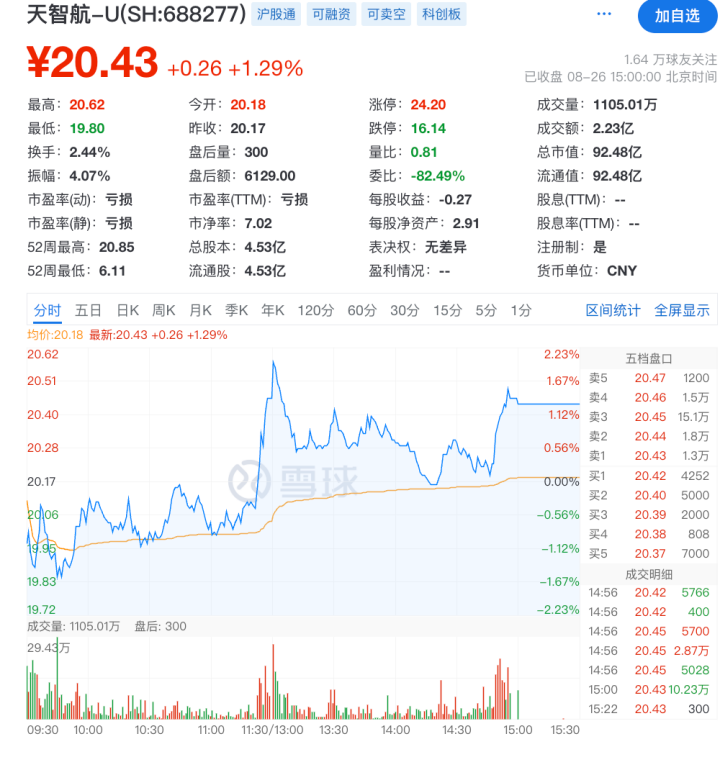
金融界消息 截至2025年8月25日收盘,天智航U(688277)报收于20.17元,上涨1.2%,换手率3.59%, 成交量16.26万手,成交金额3.29亿元。 天眼查商业履历信息显示,北京天智航医疗科技股份有限公司,成立于2010年,位于北京市,是一家以 从事专用设备制造业为主的企业。企业注册资本44939.1939万人民币,实缴资本13181万人民币。公司 法定代表人为张送根。 通过天眼查大数据分析,北京天智航医疗科技股份有限公司共对外投资了16家企业,参与招投标项目 245次,知识产权方面有商标信息55条,专利信息520条,此外企业还拥有行政许可31个。 来源:金融界 资金流向方面,今日主力资金净流入2235.87万元,占比成交额6.79%。其中,超大单净流入1517.35万 元、占成交额4.61%,大单净流入718.52万元、占成交额2.18%,中单净流出流出856.55万元、占成交额 2.6%,小单净流出1379.31万元、占成交额4.19%。 天智航最新一期业绩显示,截至2025一季报,公司营业总收入5858.38万元、同比增长102.40%,归属净 利润1320.49万元,同比减少31.22 ...
机器人售卖医疗器械,深市规模最大的机器人ETF(159770)近5个交易日累计“吸金”近3.9亿元
2 1 Shi Ji Jing Ji Bao Dao· 2025-08-19 02:32
Group 1 - The major indices mostly declined on August 19, with the Robot ETF (159770) dropping by 1.28% and achieving a trading volume exceeding 206 million yuan [1] - The Robot ETF has seen a net inflow of over 22 million yuan yesterday and a cumulative inflow of nearly 390 million yuan over the past five trading days [1] - As of August 18, the Robot ETF ranks first in terms of fund size and shares among similar products in the Shenzhen market [1] Group 2 - The humanoid robot Galbot has been operating in a pharmacy in Beijing's Haidian District for over 150 days, completing tens of thousands of delivery orders [2] - The robot's operation in selling medical devices requires the enterprise to obtain a Medical Device Business License, ensuring product quality through regular inspections [2] - The robotics industry is entering a rapid development phase, with sensor technology driving advancements in humanoid robots, indicating potential investment opportunities in the sensor sector [2]



国产手术机器人终局猜想
3 6 Ke· 2025-08-13 01:20
Core Insights - The domestic surgical robot industry is facing significant challenges, including a crowded market, reduced funding, and regulatory pressures, leading to some companies seeking acquisition or bankruptcy [2][3][11] - Despite these challenges, the Chinese surgical robot market is projected to grow rapidly, with an expected market size of $3.84 billion by 2026, reflecting a growth rate of 44.3% [2][3] - Successful commercialization of surgical robots requires extensive clinical data to demonstrate improved clinical outcomes, which is essential for gaining acceptance from hospitals and healthcare professionals [3][5] Industry Overview - The influx of innovative companies and capital has made the surgical robot sector highly competitive, but many products remain stuck in the commercialization phase due to high investment costs and slow returns [2][3] - The approval of 27 orthopedic surgical robots in 2024 indicates a surge in product registrations, yet many of these products struggle to achieve market penetration [3][4] - The need for clinical validation is emphasized, as companies like Intuitive Surgical and Mako have demonstrated that extensive clinical applications can lead to significant market success [4][5] Commercialization Challenges - The procurement decisions of public hospitals are influenced by the economic value of surgical robots, necessitating a focus on clinical data that proves efficiency and cost-effectiveness [3][5] - The current payment systems in China, particularly under DRG/DIP reforms, create additional pressure on hospitals to justify investments in surgical robots [5][6] Competitive Landscape - The domestic market is experiencing intensified competition due to product homogeneity and pricing pressures, while overseas markets present opportunities for differentiation [6][7] - Companies looking to expand internationally must establish comprehensive clinical training and service systems to support their products, which poses significant challenges [8][9] Future Opportunities - Recent policy changes from the National Medical Products Administration aim to support the development of high-end medical devices, including surgical robots, by streamlining regulations [13] - Companies like Tianzhihang are positioning themselves to compete globally by integrating their robotic systems with related technologies and services, aiming to create a robust product ecosystem [9][10] - The potential for growth remains, as companies that can navigate current challenges and leverage technological advancements may emerge as leaders in the global market [10][13]
天智航U(688277)8月11日主力资金净流出2911.80万元
Sou Hu Cai Jing· 2025-08-11 12:43
天智航最新一期业绩显示,截至2025一季报,公司营业总收入5858.38万元、同比增长102.40%,归属净 利润1320.49万元,同比减少31.22%,扣非净利润3124.68万元,同比增长21.17%,流动比率3.330、速动 比率3.092、资产负债率23.85%。 来源:金融界 金融界消息 截至2025年8月11日收盘,天智航U(688277)报收于19.02元,上涨0.58%,换手率2.26%, 成交量10.23万手,成交金额1.95亿元。 通过天眼查大数据分析,北京天智航医疗科技股份有限公司共对外投资了16家企业,参与招投标项目 245次,知识产权方面有商标信息55条,专利信息519条,此外企业还拥有行政许可31个。 资金流向方面,今日主力资金净流出2911.80万元,占比成交额14.94%。其中,超大单净流出603.81万 元、占成交额3.1%,大单净流出2307.99万元、占成交额11.84%,中单净流出流入716.60万元、占成交 额3.68%,小单净流入2195.19万元、占成交额11.26%。 天眼查商业履历信息显示,北京天智航医疗科技股份有限公司,成立于2010年,位于北京市,是一家 ...