Bloomage Biotech(688363)

Search documents
华熙生物,严正声明!
证券时报· 2025-07-26 09:40
Core Viewpoint - The company has issued a stern statement regarding the dissemination of false information that severely damages its reputation, asserting that it will pursue legal action against the perpetrators [1][3]. Group 1: Incident Overview - On July 26, the company announced that it discovered serious false information about itself being circulated on foreign websites, which it claims is fabricated and maliciously distorts facts [1]. - The individual responsible for the false information, identified as Li, previously served as the marketing director at Huaxi Xinyu Investment Co., Ltd. for 18 months [1]. - In 2018, Li fraudulently obtained 9 million yuan (approximately 1.3 million USD) that was supposed to be paid to a brokerage, leading to his exposure and subsequent legal action [1]. Group 2: Legal Actions - The company has reported the matter to law enforcement and is pursuing legal accountability for defamation against those spreading the false information [1][3]. - The police have initiated an investigation into Li's actions, which fall under the crime of embezzlement as per Article 271 of the Criminal Law of the People's Republic of China [1]. Group 3: Apology and Compensation - Li issued a letter of apology to the company, acknowledging his wrongdoing and expressing regret for the negative impact on the company's reputation [9]. - In his apology, Li promised to return the embezzled 9 million yuan and offered an additional 1.5 million yuan (approximately 220,000 USD) as compensation for his actions [9].



前员工爆料财务造假,华熙生物:已报警
盐财经· 2025-07-26 09:33
Core Viewpoint - A former employee of Huaxi Biological, claiming to be "David," has made serious allegations of financial misconduct against the company, which Huaxi Biological has strongly denied, stating that the claims are false and defamatory [2][4][9]. Group 1: Allegations and Responses - "David" claims to have been a senior assistant to the CEO and has written extensively about the company, although only a table of contents and summaries have been published [2]. - Huaxi Biological responded via its official Weibo, asserting that the allegations are fabricated and have been reported to the authorities [4][9]. - The individual behind the allegations, identified as Li, previously worked at Huaxi and was involved in a financial misconduct case where he embezzled 9 million yuan (approximately 1.3 million USD) [5]. Group 2: Legal Actions and Company Stance - Huaxi Biological has stated that it will pursue legal action against the individual for defamation and has already reported the matter to law enforcement [9]. - The company provided evidence of Li's previous misconduct, including a letter of apology where he admitted to serious violations during a bond issuance process [7][5]. - Huaxi Biological emphasized that the allegations are morally baseless and have severely damaged its reputation [4][9].
华熙生物:已向公安机关报案!
Zhong Guo Ji Jin Bao· 2025-07-26 08:50
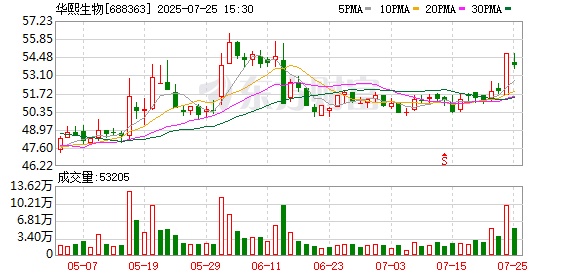
Core Viewpoint - Huaxi Bio has officially responded to false information circulating on social media, claiming it is fabricated and maliciously distorts facts, and has reported the matter to law enforcement [2][3]. Group 1: Company Response - The company stated that the false information was posted by users on foreign websites and severely damages its reputation, with some content involving political rumors [3]. - Huaxi Bio has filed a police report and is pursuing legal action against the individuals responsible for spreading the false information [2][4]. Group 2: Background Information - The individual responsible for the false information, identified as Li, previously served as the marketing director at Huaxi Xinyu Investment Co., Ltd. for 18 months [4]. - Li was involved in a case of embezzlement, having fraudulently obtained 9 million yuan that was supposed to be paid to a brokerage, which was discovered during an annual report review [4]. - Following the incident, Huaxi Xinyu reported the case to law enforcement, leading to Li being prosecuted for embezzlement under Chinese law [4]. Group 3: Financial Impact - On July 25, Huaxi Bio's stock closed at 53.83 yuan per share, with a market capitalization of 25.9 billion yuan [4].
华熙生物:已向公安机关报案!
中国基金报· 2025-07-26 08:31
Core Viewpoint - Huaxi Biological has officially responded to false information circulating on online platforms, claiming that the content is fabricated and maliciously distorts facts, which has severely damaged the company's reputation. The company has reported the matter to the public security authorities and will pursue legal action against the spreaders of rumors [1][2]. Summary by Sections - The company discovered serious false information about itself on online platforms, which was confirmed to be fabricated and published on an overseas website. The nature of the content includes political rumors, which the company deems extremely malicious [2]. - The individual responsible for the false information, identified as Li, previously served as the marketing director at Huaxi Xinyu Investment Co., Ltd. Li had a history of embezzlement, having fraudulently obtained 9 million yuan that was supposed to be paid to a brokerage firm. This incident was uncovered during an annual report review [2]. - Following the discovery of Li's actions, the company reported the case to the public security authorities, which led to a criminal prosecution based on the embezzlement charge. During the investigation, Li attempted to mitigate his punishment by writing an apology letter, but the company refused to entertain any additional compensation demands beyond the return of the embezzled funds [2]. - As of July 25, Huaxi Biological's stock closed at 53.83 yuan per share, with a market capitalization of 25.9 billion yuan [2].

华熙生物发布严正声明
财联社· 2025-07-26 07:38
华熙生物官方微博发布《关于网络不实信息的严正声明》称,昨日晚间发现部分网络平台用户发布关于 公司的严重不实信息。经核实,信息发布于境外网站,内容纯属捏造,恶意歪曲事实,其中部分内容涉 及政治谣言,性质极其恶劣。经查,该信息发布者李某曾任华熙昕宇投资有限公司市场部总监,事发前 曾在华熙工作18个月。 ...

华熙生物发布《关于网络不实信息的严正声明》
news flash· 2025-07-26 07:12
Core Viewpoint - Huaxi Biological issued a statement regarding the dissemination of false information on online platforms, asserting that the content is fabricated and distorts facts, with some involving political rumors [1] Group 1 - The company identified that the false information was published on overseas websites [1] - The nature of the false information is described as extremely malicious [1] - The individual responsible for the misinformation, identified as Li, previously served as the marketing director at Huaxi Xinyu Investment Co., Ltd. for 18 months [1]
2025年颈霜行业词条报告
Tou Bao Yan Jiu Yuan· 2025-07-25 11:53
Investment Rating - The report does not explicitly provide an investment rating for the neck cream industry Core Insights - The neck cream industry focuses on skincare for the neck area, aiming to moisturize, reduce neck lines, enhance firmness, and prevent premature aging. The market is experiencing strong demand due to increased awareness of anti-aging and the rise of niche markets, driven by market education and media influence. Future growth will be propelled by personalized and diversified functional demands, technological innovation, and product iteration [4][10][15]. Industry Definition - Neck cream refers to skincare products specifically designed for the neck area, aimed at moisturizing the skin, reducing neck lines, enhancing firmness, and preventing signs of aging. The products provide rich nutrients and form a protective barrier to maintain moisture and promote metabolism [5]. Industry Classification - Neck creams can be classified based on core functions into basic moisturizing types and functional types [6][7]. Basic Moisturizing Neck Cream - Primarily focuses on moisturizing and hydrating the neck skin, suitable for individuals with light skin or no visible neck lines, used for daily preventive care [8]. Functional Neck Cream - Includes anti-aging and anti-wrinkle types, brightening types, firming types, and sunscreen types, each targeting specific skin concerns [9]. Industry Characteristics - The neck cream industry is characterized by strong consumer demand, active technological innovation, and high research and development barriers [10]. Consumer Demand - The strong consumer demand in the neck cream industry stems from modern individuals' increasing awareness of neck skin care, with many women starting to incorporate neck care into their daily routines from the age of 20 [11]. Technological Innovation - The neck cream industry is continuously launching products with innovative ingredients and new technologies to meet market demands, emphasizing not only basic moisturizing effects but also special ingredients for firming and wrinkle reduction [13]. High R&D Barriers - Developing excellent neck cream products requires deep R&D capabilities and technical accumulation, including expertise in active ingredient selection, formula optimization, and clinical testing [14]. Market Size - The neck cream industry market size is projected to grow from 1.047 billion RMB in 2019 to 2.091 billion RMB in 2024, with a compound annual growth rate (CAGR) of 14.84%. From 2025 to 2029, it is expected to grow from 2.354 billion RMB to 3.319 billion RMB, with a CAGR of 8.97% [31]. Market Growth Drivers - The growth of the neck cream market is driven by enhanced anti-aging awareness, the rise of niche markets, and increased consumer interest in comprehensive skincare solutions [34][36]. Competitive Landscape - Brands like SDX, VSVE, and others dominate the first tier of the market with high cost-performance ratios, while high-end brands like Clarins and Sisley occupy the second tier with relatively lower sales [41][42]. Future Industry Trends - The neck cream industry is expected to see accelerated competition and market consolidation, with larger firms leveraging technological advantages and regulatory compliance becoming key competitive factors [43].


华熙生物董事长、总经理赵燕:透明质酸抗衰功效为前沿科研热点 只是补水分子的误解已打破
news flash· 2025-07-25 08:31
Core Viewpoint - The misunderstanding that hyaluronic acid is merely a hydration molecule has been dispelled, and its comprehensive anti-aging effects have become a scientific research hotspot in recent years [1] Group 1: Company Insights - Zhao Yan, Chairman and General Manager of Huaxi Biological, emphasized the company's commitment to advancing in the field of hyaluronic acid, leveraging its strong capabilities in synthetic biology [1] - Huaxi Biological aims to lead globally in hyaluronic acid and is strategically upgrading to focus on glycomics, cell biology, and regenerative medicine within the anti-aging research domain [1] Group 2: Industry Trends - The international scientific community has produced a significant amount of research and papers on the anti-aging effects of hyaluronic acid, indicating a growing interest and validation of its benefits beyond hydration [1]
【全网最全】2025年中国医疗美容行业上市公司全方位对比(附业务布局汇总、业绩对比、业务规划等)
Qian Zhan Wang· 2025-07-23 06:10
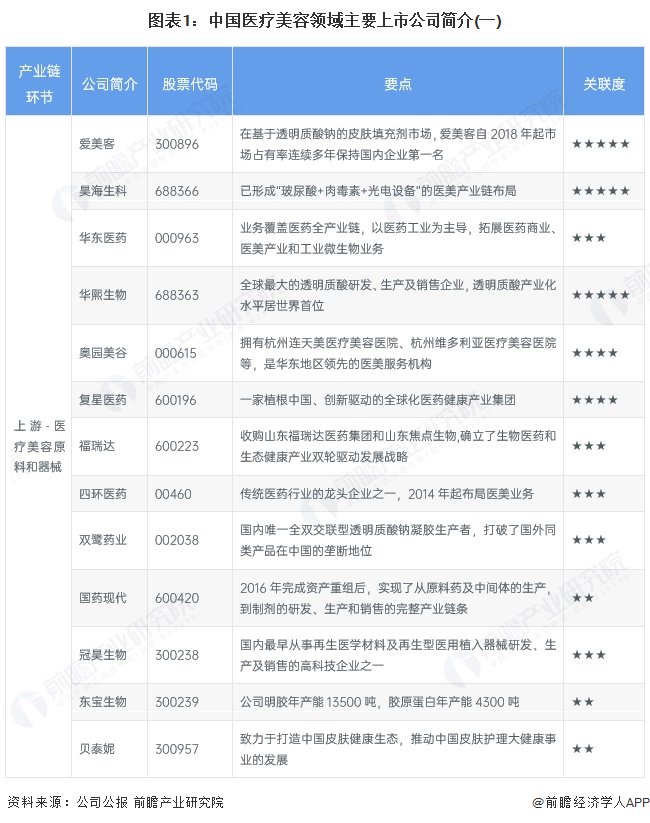
Group 1 - The article provides an overview of the Chinese medical beauty industry, highlighting key listed companies and their performance metrics [1][5][9] - Major players in the industry include Aimeike, Huaxi Biological, and Haohai Biological, with Aimeike maintaining the highest market share in the sodium hyaluronate filler market since 2018 [3][5] - The industry is characterized by a diverse supply chain, with upstream raw material manufacturers, midstream medical institutions, and downstream consumers [1][7] Group 2 - In 2024, Aimeike reported a revenue of 30.26 billion, while Huaxi Biological achieved 53.71 billion, indicating strong performance among leading companies [5][10] - The article notes that Aimeike has a gross profit margin exceeding 90%, outperforming other companies in the sector [9][10] - Companies are focusing on R&D innovation and brand building to enhance market competitiveness and meet evolving consumer demands [11][13] Group 3 - The geographical distribution of companies shows a concentration in coastal regions, particularly in major cities like Beijing, Shanghai, and Guangzhou, which host top research institutions and production companies [7] - Companies like Huadong Pharmaceutical and Huaxi Biological primarily focus on domestic sales, while others like Langzi and Huakan have diversified regional strategies [9][10] - Future plans for companies include enhancing R&D capabilities, expanding production projects, and improving customer service to create a win-win ecosystem [11][13]




美妆高管“大洗牌”,相宜本草CEO入职7个月“闪离”
阿尔法工场研究院· 2025-07-22 11:53
Core Viewpoint - The competition in the cosmetics industry is shifting from "traffic competition" to "technology competition" [3] Group 1: Industry Changes - In the first half of 2025, there will be at least 30 significant personnel changes among leading domestic and international cosmetics companies [4] - International giants are re-employing technical talents and introducing cross-industry talents to strengthen industry barriers, while local companies are restructuring organizational efficiency by leveraging foreign technical experts amidst talent loss [5][6] Group 2: Personnel Restructuring - The phenomenon of management turnover among domestic leading beauty companies is intensifying, with several core positions currently vacant or temporarily filled [8] - Companies like Proya and Shanghai Jahwa have vacant positions for vice presidents [9] Group 3: Talent Acquisition - Proya is actively bringing in foreign technical talents, with its new Chief Scientific Officer having 27 years of experience at Procter & Gamble [13] - Some companies are promoting internal talents to strengthen organizational resilience, such as Huaxi Biological promoting its global supply chain platform executive director and financial director to vice president [15] Group 4: Leadership and Innovation - International beauty giants are promoting technical talents to integrate deeply into brand operations, while also introducing cross-industry talents to stimulate innovation [17] - L'Oréal's recent appointments of executives with R&D backgrounds signify a shift towards "technology defining brands" [18][19] Group 5: Market Dynamics - The demand for cosmetics is shifting from emotional premium to functional essence, compelling companies to build core competitiveness through R&D breakthroughs and technological barriers [22] - The emphasis on technical talents is reshaping the competitive rules of the industry, moving away from reliance on traffic dividends and marketing concepts [22][23] Group 6: Future Outlook - Companies that master core technologies and technical talents will continue to lead, while brands lacking a technical foundation may struggle to survive [23]