
SMIC(688981)

Search documents
国家集成电路产业投资基金股份有限公司减持中芯国际840万股 每股作价74.93港元
Zhi Tong Cai Jing· 2026-01-12 11:33
智通财经APP获悉,香港联交所最新资料显示,1月7日,国家集成电路产业投资基金股份有限公司减持 中芯国际(00981)840万股,每股作价74.93港元,总金额约为6.29亿港元。减持后最新持股数目约为7.17 亿股,最新持股比例为8.96%。 ...

国家集成电路产业投资基金股份有限公司减持中芯国际(00981)840万股 每股作价74.93港元
智通财经网· 2026-01-12 11:28
智通财经APP获悉,香港联交所最新资料显示,1月7日,国家集成电路产业投资基金股份有限公司减持 中芯国际(00981)840万股,每股作价74.93港元,总金额约为6.29亿港元。减持后最新持股数目约为7.17 亿股,最新持股比例为8.96%。 ...
1月12日科创板主力资金净流出69.33亿元
Zheng Quan Shi Bao Wang· 2026-01-12 10:00
Group 1 - The main point of the news is that the net outflow of capital from the Shanghai and Shenzhen markets reached 27.468 billion yuan, with the STAR Market experiencing a net outflow of 6.933 billion yuan [1] - A total of 241 stocks saw net inflows of capital, while 359 stocks experienced net outflows [1] - Among the stocks with net inflows, Guoke Military Industry led with a net inflow of 252.43 million yuan, followed by Zhuoyi Information and Yuntian Lefe-U with net inflows of 177.01 million yuan and 155.75 million yuan respectively [3] Group 2 - There are 65 stocks that have seen continuous net inflows for more than three trading days, with Foxit Software leading at nine consecutive days of inflow [2] - On the other hand, 166 stocks have experienced continuous net outflows, with Transsion Holdings leading at 14 consecutive days of outflow [2] Group 3 - The top stocks by net inflow include Guoke Military Industry (252.43 million yuan), Zhuoyi Information (177.01 million yuan), and Yuntian Lefe-U (155.75 million yuan) [3][4] - The stocks with the highest net outflows include SMIC with 909 million yuan, followed by Shijia Photon and Dongxin Shares with net outflows of 675 million yuan and 658 million yuan respectively [1]


电子行业1月12日资金流向日报
Zheng Quan Shi Bao Wang· 2026-01-12 09:25
Market Overview - The Shanghai Composite Index rose by 1.09% on January 12, with 28 out of the 31 sectors experiencing gains, led by the media and computer sectors, which increased by 7.80% and 7.26% respectively [1] - The electronic sector saw a modest increase of 1.46% [1] - The sectors that faced declines included oil and petrochemicals, coal, and real estate, with decreases of 1.00%, 0.47%, and 0.29% respectively [1] Capital Flow Analysis - The net outflow of capital from the two markets was 27.468 billion yuan, with 11 sectors experiencing net inflows [1] - The computer sector had the highest net inflow of capital, amounting to 15.774 billion yuan, coinciding with its 7.26% increase [1] - The media sector followed with a net inflow of 5.391 billion yuan and a daily increase of 7.80% [1] - The power equipment sector experienced the largest net outflow, totaling 14.093 billion yuan, followed by the electronic sector with a net outflow of 11.193 billion yuan [1] Electronic Sector Performance - Within the electronic sector, 345 out of 476 stocks rose, with 6 hitting the daily limit up [2] - The leading stock in terms of net capital inflow was Lingyi Technology, which saw an inflow of 1.696 billion yuan, followed by Zhaoyi Innovation and Changchuan Technology with inflows of 668 million yuan and 322 million yuan respectively [2] - Conversely, the stocks with the highest net outflows included Industrial Fulian, Qianzhao Optoelectronics, and Shenghong Technology, with outflows of 1.429 billion yuan, 1.373 billion yuan, and 1.303 billion yuan respectively [3] Electronic Sector Capital Inflow and Outflow - The top gainers in the electronic sector included Lingyi Technology (10.02%), Zhaoyi Innovation (4.71%), and Changchuan Technology (4.09%) [2] - The stocks with the highest capital outflows were Industrial Fulian (-0.89%), Qianzhao Optoelectronics (3.90%), and Shenghong Technology (-3.32%) [3]






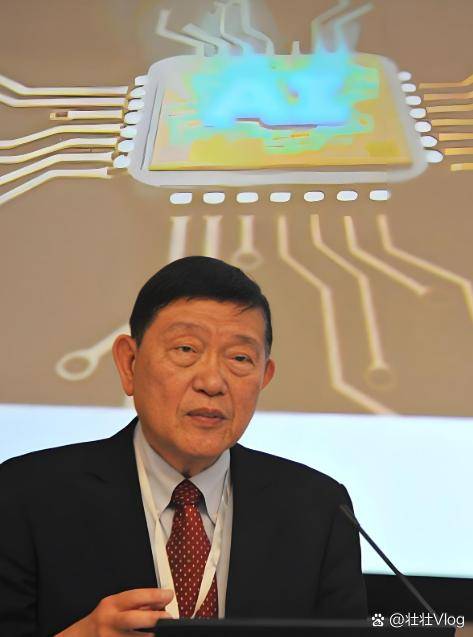
中芯国际创始人张汝京曾说,他在自己离开台积电时,台积电董事长告诉他,你敢去大陆,那在台积电的这么多股票就不能拿了!2025 年,满头华发的张汝京现身讲台,面对台下朝气蓬勃的年轻面庞,他身形瘦削却身姿挺拔,尽显风骨。外界给这位半导体老兵算过一笔账,怎么算,他这辈子都是在做“亏本买卖”...
Sou Hu Cai Jing· 2026-01-12 09:11
中芯国际创始人张汝京曾说,他在自己离开台积电时,台积电董事长告诉他,你敢去大陆,那在台积电 的这么多股票就不能拿了! 2025 年,满头华发的张汝京现身讲台,面对台下朝气蓬勃的年轻面庞,他身形瘦削却身姿挺拔,尽显 风骨。 外界给这位半导体老兵算过一笔账,怎么算,他这辈子都是在做"亏本买卖"。可在他自己心里的那个账 本上,算盘珠子拨弄的逻辑,却与世俗的精明截然不同。 这第一笔"大额亏损",记在世纪之交。 那时候,他在德州仪器风头无两,在台积电也是身居要位。动了北上创业的念头后,老东家给他出了一 道残酷的选择题:要去大陆可以,但属于你的天价股票和期权,必须全部清零。 在当时,那是一笔换算下来几辈子都花不完的巨款。 换做常人,大概率要犹豫,甚至退缩。但张汝京几乎没有停顿,大手一挥就划掉了这笔泼天富贵,哪怕 那是他半辈子的积蓄。 对他来说,父亲张锡纶弥留之际那句 "何时回祖国建厂" 的期盼,以及母亲想在故土安度晚年的心愿, 远比任何金钱财富都更有分量。 既然放弃了荣华富贵,前方等待他的本该是鲜花掌声吧?并没有。 他在上海浦东落地时,迎接他的是一片还要跟蚊虫作战的荒滩,以及一道名为《瓦森纳协定》的严密铁 幕。 手里攥着 ...


资本市场丨跻身市值榜上市企业 须从规模优势转向质量优势
Sou Hu Cai Jing· 2026-01-12 05:45
Core Insights - The latest "Top 500 Listed Companies in China" list for 2025 showcases leading enterprises in finance, energy, technology, consumption, and intelligent manufacturing, with major players like Tencent and ICBC demonstrating their industry leadership through trillion-level market capitalizations [1][10] - The presence of companies like Industrial Fulian, SMIC, and Cambricon in the rankings reflects the deep structural transformation of China's economy, indicating these firms are both stabilizers and pioneers in industrial upgrades [1][10] Group 1: Market Capitalization Rankings - The companies ranked from 21 to 30 include Sinopec (700.7 billion), Zhongji Xuchuang (677.8 billion), Yangtze Power (665.3 billion), Postal Savings Bank (641.7 billion), SMIC (632.9 billion), NetEase (614.0 billion), Midea Group (592.9 billion), Bank of Communications (590.8 billion), Cambricon (571.6 billion), and Meituan (570.2 billion) [3][10] Group 2: Economic Structural Transformation - The success of these companies is attributed to multiple factors, including industry scarcity, technological barriers, and stable business models, which create competitive advantages [4][11] - Companies like Zhongji Xuchuang and SMIC exemplify the dual drivers of technological innovation and market opportunities, with Zhongji Xuchuang capitalizing on the AI infrastructure wave [4][11] Group 3: Challenges and Opportunities - Companies face the challenge of transitioning from scale advantages to quality advantages, with risks related to technological iteration and high valuation sustainability [6][12] - The need for technological independence and improved profitability models is highlighted, particularly for firms like Zhongji Xuchuang and Cambricon, which must navigate rapid technological changes [6][12] Group 4: Future Trends - Future market leaders are expected to emerge from sectors such as high-end manufacturing, green energy, and innovative pharmaceuticals, with a focus on hard technology like semiconductors and AI [8][9] - The anticipated market structure will feature a three-tier system, with traditional giants at the base, tech newcomers leading, and niche champions filling in [8][9] Group 5: Investment Opportunities - The average market capitalization of the top 500 companies reached 185.6 billion, reflecting a significant increase, particularly in information technology, finance, and consumer discretionary sectors [23] - Companies are expected to enhance their value and market capitalization through innovation, digital transformation, and sustainable practices, aligning with national policies and market demands [21][24]




英伟达六大芯片协同升级!芯片ETF(159995)上涨1.68%,龙芯中科涨9.52%
Mei Ri Jing Ji Xin Wen· 2026-01-12 03:30
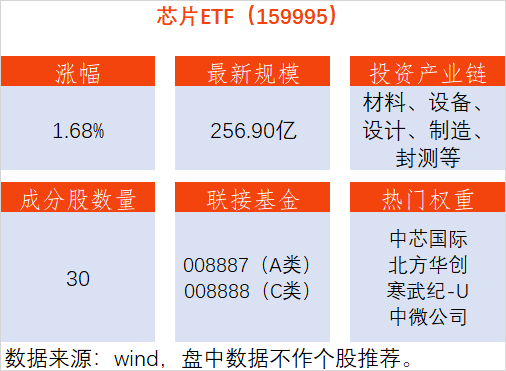
Group 1 - The A-share market showed mixed performance on January 12, with the Shanghai Composite Index rising by 0.25%, driven by gains in sectors such as internet, cultural media, and software, while motorcycle and energy equipment sectors faced declines [1] - The chip technology sector demonstrated strong fluctuations, with the chip ETF (159995) increasing by 1.68%. Notable individual stock performances included Longxin Technology rising by 9.52%, Changdian Technology by 7.09%, and Zhongwei Company by 6.77% [1] Group 2 - NVIDIA's founder and CEO Jensen Huang announced the launch of the Rubin platform at CES 2026, which consists of six new chips designed for building extraordinary AI supercomputers. These include Vera CPU, Rubin GPU, NVLink 6 switch, ConnectX-9 SuperNIC, BlueField-4 DPU, and NVIDIA Spectrum-6 Ethernet switch [3] - The Rubin platform is expected to significantly reduce training time and lower inference token costs, marking a new era in AI computing power. The collaborative design of these chips is anticipated to enhance performance and increase the value across multiple segments of the industry [3] - The chip ETF (159995) tracks the National Chip Index, comprising 30 leading companies in the A-share chip industry, including SMIC, Cambricon, Changdian Technology, and Northern Huachuang, indicating a robust investment landscape in the semiconductor sector [3]


267只科创板股融资余额环比增加
Zheng Quan Shi Bao Wang· 2026-01-12 01:45
Core Viewpoint - The financing balance of the Sci-Tech Innovation Board decreased by 1.06 billion yuan, while the margin trading balance increased by 18.93 million yuan, indicating a mixed sentiment among investors [1]. Financing Balance Summary - As of January 9, the total margin trading balance on the Sci-Tech Innovation Board was 282.61 billion yuan, a decrease of 1.05 billion yuan from the previous trading day [1]. - The highest financing balance was held by Cambrian, with a balance of 15.35 billion yuan, followed by SMIC and Haiguang Information with balances of 13.03 billion yuan and 7.30 billion yuan, respectively [1]. - A total of 267 stocks saw an increase in financing balance, while 327 stocks experienced a decrease [1]. - Notable increases in financing balance were observed in Hotgen Biotech (56.65%), Yuyuan Pharmaceutical (54.61%), and Chipone Technology (39.46%) [1]. Margin Trading Balance Summary - Cambrian also had the highest margin trading balance at 41 million yuan, followed by Haiguang Information and SMIC with balances of 36 million yuan and 32 million yuan, respectively [2]. - A total of 264 stocks saw an increase in margin trading balance, while 148 stocks experienced a decrease [2]. - Significant increases in margin trading balance were noted for Huitong Co. (3360.47%), Yaxin Security (1268.15%), and Jinchengzi (805.25%) [2].



新材料产业周报:英伟达AI超级计算平台Vera Rubin全面投产,AS700取得国产载人飞艇生产许可证-20260111
Guohai Securities· 2026-01-11 14:57
Investment Rating - The industry investment rating is "Recommended" (maintained) [1] Core Insights - The new materials sector is a crucial direction for the chemical industry, currently experiencing rapid growth in downstream demand. With policy support and technological breakthroughs, domestic new materials are expected to accelerate their long-term growth. The report emphasizes that "one generation of materials leads to one generation of industries," highlighting the foundational nature of the new materials industry as the material basis for other industries [5][15]. Summary by Relevant Sections 1. Electronic Information Sector - Focus on semiconductor materials, display materials, and 5G materials [6] - Recent developments include NVIDIA's announcement of its new AI supercomputing platform, Vera Rubin, which has entered full production. The platform features six independent chips, with the Rubin GPU achieving a peak computing power of 50 Petaflops and a training performance 3.5 times that of its predecessor [7][37]. 2. Aerospace Sector - Focus on PI films, precision ceramics, and carbon fiber [8] - The successful acquisition of a production license for the AS700 manned airship marks a significant milestone for China's aerospace industry, indicating a shift towards standardized and commercialized production [9][10]. 3. New Energy Sector - Focus on photovoltaics, lithium-ion batteries, proton exchange membranes, and hydrogen storage materials [10] - A notable development is the introduction of the world's first all-solid-state battery by a Finnish startup, set to enter OEM mass production [11]. 4. Biotechnology Sector - Focus on synthetic biology and scientific services [12] - Beijing's economic development zone has announced measures to support the innovation and development of the synthetic biology manufacturing industry, aiming to establish a globally influential industry cluster by 2028 [13]. 5. Energy Conservation and Environmental Protection Sector - Focus on adsorbent resins, membrane materials, and biodegradable plastics [14] - The Guangxi government has issued a plan for green mine construction, aiming for over 90% of large and medium-sized mines to meet green standards by the end of 2028 [15]. 6. Industry Rating and Investment Strategy - The new materials sector is expected to benefit from the catalytic effects of downstream application sectors, gradually entering a prosperous cycle, thus maintaining a "Recommended" rating for the new materials industry [15].




计算机行业研究:国内算力斜率陡峭
SINOLINK SECURITIES· 2026-01-11 09:14
Investment Rating - The report does not explicitly state an investment rating for the industry Core Insights - The competition in AI entry points is intensifying, with major companies increasing their investments. China's AI presence globally has significantly improved, with domestic large models continuously iterating. Despite GPT-5.2 and Gemini 3 Pro leading, Chinese models have effectively altered the North American dominance in the competitive landscape. In the global Top 10, three positions are held by Chinese models, and in the Top 15, there are six Chinese companies. By 2025, China's open-source AI model usage is expected to account for over 70% of the global market [2][11][19] - The demand for inference has surged, with the emergence of o1 class inference models unlocking approximately 10 times the potential of traditional models in terms of inference-time compute. The demand for computing power has shifted from being solely "training-driven" to a dual focus on "training + inference" [2][5][37] - The battle for entry points has evolved beyond mobile devices to OS-level intelligent agents and super apps. By December 24, 2025, ByteDance's AI application Doubao announced daily active users (DAU) exceeding 100 million, while Qianwen App reached over 30 million monthly active users within 23 days of public testing, becoming the fastest-growing AI application globally. Doubao bypasses traditional interfaces, creating an "AI operating system" that directly interacts with super apps like WeChat and Alipay, challenging the rules of the traditional app era [2][44][45] Summary by Sections AI Entry Point Competition - China's AI global presence has significantly improved, with domestic large models continuously iterating. In the global Top 10, three positions are held by Chinese models, and in the Top 15, there are six Chinese companies. By 2025, China's open-source AI model usage is expected to account for over 70% of the global market [2][11][19] - The competition for entry points has evolved beyond mobile devices to OS-level intelligent agents and super apps, with significant user engagement reported for new AI applications [2][44][45] Domestic Chip Breakthroughs - The smart computing center in China is expanding, with a projected compound annual growth rate (CAGR) of 57% from 2020 to 2028, reaching 2,781.9 EFLOPS by 2028. Domestic chip technology is steadily improving, with local cloud service providers accelerating the construction of heterogeneous environments [5][50] - Domestic general-purpose GPUs are upgrading from "usable" to "good," with performance metrics approaching those of leading international models. The production capacity of domestic chip manufacturers like SMIC is continuously increasing, providing solid support for domestic AI chip production [5][53][54] Supply and Demand Dynamics - The demand side is characterized by a surge in inference demand as AI applications become more prevalent, while the supply side sees continuous improvements in domestic GPU performance and accelerated adaptation by cloud service providers [5][59] - The AI server market is expected to see a shift towards inference servers becoming the mainstream, with a projected market size of approximately $39.3 billion in 2024, reflecting a year-on-year growth of 49.7% [5][64]
