
PAB(000001)

Search documents
观察|去年深圳8家银行密集“换将”,新行长们的角色之变
Nan Fang Du Shi Bao· 2026-01-21 06:03
Core Viewpoint - Shenzhen's "15th Five-Year Plan" aims to establish itself as a global "industrial financial center," raising expectations for local financial institutions, particularly banks, in their roles and responsibilities [22][23]. Group 1: Leadership Changes in Shenzhen Banks - Over the past year, at least eight commercial banks in Shenzhen have changed their leadership, including major state-owned banks and leading joint-stock banks [2]. - The appointment of Xiong Tao as the head of the Industrial and Commercial Bank of China (ICBC) Shenzhen branch reflects a strategic move to enhance the bank's focus on technology and innovation [2][4]. - Similarly, Ma Mingjun has been appointed as the head of the Bank of China Shenzhen branch, indicating a strengthened commitment to the Guangdong-Hong Kong-Macao Greater Bay Area [4][7]. Group 2: Key Appointments and Their Implications - Wang Xinghai, a veteran of China Merchants Bank, has taken over as the head of the Shenzhen branch, showcasing the bank's internal talent development strategy [9]. - Ping An Bank has also seen significant leadership changes, with Zhang Chaohui becoming the head of the Shenzhen branch, emphasizing the importance of this branch within the bank's overall strategy [11]. - New leaders at various banks, such as Shang Wencheng of China Everbright Bank and Yuan Rui of Shanghai Pudong Development Bank, are focusing on technology finance and innovative service models to meet the needs of Shenzhen's tech-driven economy [12][15]. Group 3: Strategic Focus on Technology Finance - The new leaders are expected to align their banks' strategies with Shenzhen's identity as a technology innovation hub, emphasizing the importance of "investment-loan linkage" services [12][23]. - The financial institutions are being urged to develop comprehensive service models that support the entire lifecycle of technology enterprises, particularly in critical sectors like semiconductors and advanced manufacturing [12][15]. - The shift towards a more integrated financial service approach reflects a broader trend in which banks are expected to act as "deep partners" and "comprehensive service providers" rather than just capital providers [23]. Group 4: Challenges and Future Directions - The banks in Shenzhen face challenges in transitioning from traditional financing to more complex service models, requiring enhanced risk management and understanding of emerging technologies [23]. - There is a growing need for collaboration with venture capital, insurance, and other financial institutions to meet the comprehensive needs of enterprises [23]. - The emphasis on long-term investment strategies and the establishment of a long-term assessment mechanism are critical for supporting sustainable growth in the technology sector [23].






摩根大通银行、浙江稠州商业银行获批资格!FT账户密集扩容
2 1 Shi Ji Jing Ji Bao Dao· 2026-01-21 03:49
Group 1 - The Shanghai Free Trade Account (FT Account) has seen significant developments recently, with the approval of new financial institutions and upgrades to existing accounts, indicating a potential increase in foreign participation in China's cross-border financial activities [1][2] - Morgan Stanley Bank (China) Limited's Shanghai branch has been approved as the first new FT account financial institution in over five years, marking a notable opportunity for foreign banks in the region [1] - As of the latest update, there are 62 financial institutions with FT account qualifications in Shanghai, with 49 being banks, reflecting a growing trend in the FT system [1] Group 2 - The implementation of the "Implementation Measures for the Function Upgrade of Free Trade Accounts" by the People's Bank of China on December 5 has introduced significant policy upgrades, allowing for more flexible cross-border fund transfers [2][4] - The new regulations enable trial enterprises to conduct capital account business without the constraints of external debt quotas or prior registration with foreign exchange authorities, enhancing operational efficiency [2][4] - Major banks, including state-owned and foreign banks, have quickly responded to the new policy by facilitating the opening of upgraded FT accounts for clients, indicating strong market interest and potential for increased cross-border trade [3][4] Group 3 - The recent policy changes are expected to create a multiplier effect for cross-border trade and investment, improving the efficiency of capital allocation for enterprises [4] - The expansion of the FT account system is anticipated to continue, with more financial institutions likely to be added to the list of qualified entities in the future [5]





消费贷贴息新政“加速度”!怎么办?5家银行连夜发指引
Nan Fang Du Shi Bao· 2026-01-21 03:40
Core Viewpoint - The Ministry of Finance, the People's Bank of China, and the Financial Regulatory Administration jointly issued a notice to optimize the implementation of personal consumption loan interest subsidy policies, extending the policy duration, expanding the subsidy scope, and adjusting subsidy standards [2][4]. Policy Adjustments - The personal consumption loan interest subsidy policy now covers the period from September 1, 2025, to December 31, 2026, with a new specific implementation period for credit card bill installment subsidies from January 1, 2026, to December 31, 2026 [5]. - The previous restriction on key areas for consumption loans of 50,000 yuan and above has been lifted, allowing consumers to enjoy subsidies for all areas of personal consumption loans [7]. - The subsidy standards have been adjusted to unify the annual subsidy cap for each borrower at 3,000 yuan, with the subsidy shared between personal consumption loans and credit card installment loans [7]. Bank Responses - Major state-owned banks and representative joint-stock banks, including Bank of China, Agricultural Bank of China, Postal Savings Bank, and China Merchants Bank, have quickly responded by issuing detailed implementation guidelines and customer FAQs [2][5]. - Banks have emphasized the convenience of the application process, with various banks providing different channels for customers to apply for subsidies, such as mobile banking and customer service hotlines [8][10]. Implementation and Compliance - Existing customers who have already applied for subsidies will automatically benefit from the new policy without needing to re-sign agreements [9]. - Banks have committed to a "direct deduction" model for subsidy funds, ensuring that no additional fees are charged and that all processes are handled through official channels [10]. - Consumers are warned against fraudulent activities related to subsidy applications, with strict penalties for violations [10].

107股连续5日或5日以上获融资净买入
Zheng Quan Shi Bao Wang· 2026-01-21 03:24
Group 1 - The core point of the article highlights that as of January 20, a total of 107 stocks in the Shanghai and Shenzhen markets have experienced net buying through financing for five consecutive days or more [1] - The stock with the longest consecutive net buying days is Huatian Hotel, which has seen net buying for 12 consecutive trading days [1] - Other notable stocks with significant consecutive net buying days include China Merchants Bank, Ping An Bank, Focus Media, New China Life Insurance, Hongfuhuan, Kaile Shares, New Industry, and China Ping An [1]



中小微企业贷款贴息、民间投资专项担保……财政部连发五项重要政策
Sou Hu Cai Jing· 2026-01-21 03:12
Group 1 - The Ministry of Finance and other departments have released five policy documents aimed at optimizing financial support for personal consumption loans, equipment updates, private investment guarantees, service industry loans, and small and micro enterprise loans [1][9][29] - The personal consumption loan subsidy policy has been extended until December 31, 2026, with adjustments to the subsidy standards and an expanded range of supported financial institutions [4][5][6] - The equipment update loan subsidy policy includes a 1.5% subsidy on fixed asset loans for equipment updates, applicable for up to two years, and has been expanded to include various sectors such as construction, aviation, and digital technology [10][11][12] Group 2 - The private investment guarantee plan has a total quota of 500 billion yuan, to be implemented over two years, focusing on supporting small and micro enterprises in various sectors including technology upgrades and service industry enhancements [17][18] - The plan includes a risk-sharing mechanism where banks will bear at least 20% of the loan risk, while the government guarantee fund will cover up to 80% [19] - The government will also reduce guarantee fees and increase the compensation limit for the guarantee fund to enhance support for private investments [20] Group 3 - The service industry loan subsidy policy has been extended to December 31, 2026, with an increased subsidy cap of 10 million yuan per loan and a 1% annual subsidy rate [23][24] - The policy now includes additional sectors such as digital, green, and retail industries, expanding the scope of financial support [24][25] - The implementation of these policies will involve streamlined processes for fund allocation and enhanced collaboration among financial institutions and regulatory bodies [26][28]



存款集中到期窗口开启 银行留客强化AUM考核
Zhong Guo Zheng Quan Bao· 2026-01-20 21:05
Core Insights - The high-interest deposits are set to mature starting from October 2025, with a significant amount of funds, estimated to be in the tens of trillions, facing a critical decision point in 2026 [1][2] - The current downward trend in deposit rates has led to a shift in investment strategies among different risk-averse customer segments, with over half expected to reinvest in deposits while others may explore wealth management products and capital markets [1][2] Group 1: Market Dynamics - The concentration of high-interest deposit maturities is expected to peak in the first quarter of 2026, aligning with traditional banking practices for attracting new business [1] - The estimated scale of maturing high-interest deposits this year is projected to reach tens of trillions, indicating a substantial liquidity event in the market [2] Group 2: Customer Behavior - There is a notable divergence in product selection among customer groups based on their risk tolerance, with 50%-60% of maturing deposits likely to be reinvested in deposit products [2][3] - Customers prioritizing safety over yield are likely to convert maturing fixed deposits into demand deposits before potentially reinvesting in fixed deposits again [2] Group 3: Industry Response - Banks are undergoing a systemic transformation in response to the pressures of deposit outflows, focusing on product innovation and marketing strategies to retain customers [3][4] - The shift in assessment metrics from solely deposit volume to a broader asset management perspective encourages banks to prioritize comprehensive customer asset management [4] - Financial institutions are developing deposit-replacement products that offer better returns than traditional deposits, catering to clients willing to accept slight fluctuations in net value [4]
平安银行多家分行行长调整
Xin Lang Cai Jing· 2026-01-20 09:44
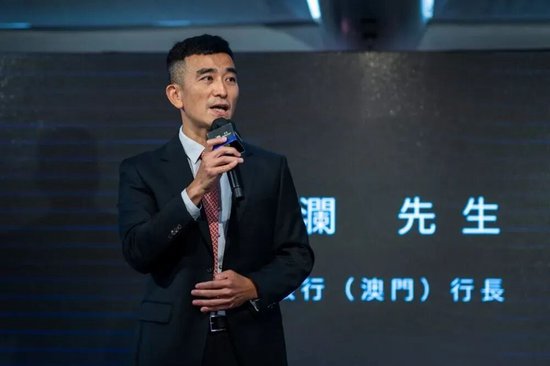
Group 1 - The article summarizes the recent appointments of over ten branch presidents and vice presidents at Ping An Bank as the year comes to a close [1][30] - Wang Lan, previously the president of Ant Bank (Macau), has joined Ping An Bank as the president of the Hong Kong branch, bringing over 20 years of experience in finance and digital banking [3][32] - Wang Jun, the president of the Jinan branch, has retired after serving as the branch president since 2022 [5][34] - Li Zhongwen has been appointed as the president of the Jinan branch, previously serving as the president of the Nanjing branch [7][36] - Wang Jianfei has been appointed as the president of the Nanjing branch, previously serving as the president of the Chengdu branch [9][38] - Zhang Xinqiang has been appointed as the president of the Chengdu branch, previously serving as the president of the Changchun branch [11][40] - Huang Wei, former deputy general manager of the bank's asset custody department, has been appointed as the president of the Changchun branch [13][42] Group 2 - As of June 30, 2025, Ping An Bank has a total of 110 branches (including the Hong Kong branch) and a total of 1,134 operating institutions [28][57] - The bank's total assets amount to RMB 2,203.525 billion, with the Shenzhen branch holding RMB 783.117 billion in assets [28][57] - The bank employs a total of 40,761 staff members, with 32,047 in business roles, 6,454 in technical roles, and 2,260 in management support [29][58] - Ping An Bank has established three development pathways for talent, focusing on management, professional, and frontline roles, and has implemented a talent cultivation strategy [29][58] - The bank emphasizes the development of composite talents and encourages cross-departmental rotations to build a team with diverse expertise [29][58]
财政部连发多份重要文件,事关贷款贴息、民间投资贷款担保等 一揽子政策全文公布
Sou Hu Cai Jing· 2026-01-20 09:03
Group 1 - The core viewpoint of the news is the implementation of a financial subsidy policy for equipment renewal loans to support businesses in reducing financing costs and promoting effective investment [3][4][5] - The policy includes a 1.5% interest subsidy on fixed asset loans for equipment renewal projects, applicable for a maximum of two years, and is effective until December 31, 2026 [3][4] - The scope of support has been expanded to include various sectors such as construction, aviation, digital technology, and green energy, emphasizing high-end, intelligent, and digital equipment updates [4][6] Group 2 - A total of 26 banks are designated as eligible for processing the interest subsidy loans, including major national banks and several regional banks [4][5] - The subsidy process has been optimized to include a "pre-allocation + settlement" method, streamlining the application and approval process for banks and provincial financial departments [5][6] - The policy aims to enhance the experience of businesses by ensuring timely communication regarding subsidy payments through modern technology [6][7] Group 3 - The policy for small and micro enterprises includes a 1.5% interest subsidy on fixed asset loans, with a maximum loan amount of 50 million yuan, effective from January 1, 2026 [8][9] - The targeted sectors for this subsidy include new energy vehicles, medical equipment, and various service industries, aiming to stimulate investment and production [9][10] - The operational mechanism involves a "total-to-total" model for coordination between financial institutions and fiscal departments to ensure efficient processing of subsidy funds [11][12] Group 4 - The service industry loan subsidy policy has been extended until December 31, 2026, with an increased maximum loan amount of 10 million yuan and a 1% interest subsidy for one year [16][17] - New sectors such as digital, green, and retail have been added to the support scope, enhancing the policy's relevance to current economic trends [17][18] - The funding allocation process has been refined to improve efficiency and reduce redundancy in the approval process [18][19] Group 5 - A special guarantee plan for private investment has been introduced with a total quota of 500 billion yuan over two years, aimed at supporting small and micro enterprises [22][24] - The plan includes risk-sharing mechanisms where banks bear at least 20% of the loan risk, while the government guarantee fund covers up to 80% [24][25] - The initiative encourages innovative financing models and aims to enhance the capital strength of the government guarantee fund to support private investments effectively [26][27]
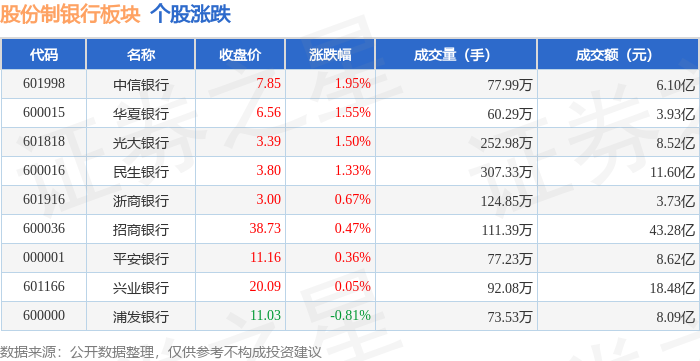
股份制银行板块1月20日涨0.54%,中信银行领涨,主力资金净流入3.9亿元
Zheng Xing Xing Ye Ri Bao· 2026-01-20 08:56
Core Viewpoint - The banking sector saw a slight increase of 0.54% on January 20, with CITIC Bank leading the gains, while the Shanghai Composite Index experienced a minor decline of 0.01% [1] Group 1: Stock Performance - CITIC Bank closed at 7.85, up by 1.95% with a trading volume of 779,900 shares and a transaction value of 610 million yuan [1] - Huaxia Bank closed at 6.56, up by 1.55% with a trading volume of 602,900 shares and a transaction value of 393 million yuan [1] - Everbright Bank closed at 3.39, up by 1.50% with a trading volume of 2,529,800 shares and a transaction value of 852 million yuan [1] - Minsheng Bank closed at 3.80, up by 1.33% with a trading volume of 3,073,300 shares and a transaction value of 1.16 billion yuan [1] - Zhejiang Commercial Bank closed at 3.00, up by 0.67% with a trading volume of 1,248,500 shares and a transaction value of 373 million yuan [1] - China Merchants Bank closed at 38.73, up by 0.47% with a trading volume of 1,113,900 shares and a transaction value of 4.33 billion yuan [1] - Ping An Bank closed at 11.16, up by 0.36% with a trading volume of 772,300 shares and a transaction value of 862 million yuan [1] - Industrial Bank closed at 20.09, up by 0.05% with a trading volume of 920,800 shares and a transaction value of 1.85 billion yuan [1] - Shanghai Pudong Development Bank closed at 11.03, down by 0.81% with a trading volume of 735,300 shares and a transaction value of 809 million yuan [1] Group 2: Capital Flow - The banking sector experienced a net inflow of 390 million yuan from institutional investors, while retail investors contributed a net inflow of 169 million yuan [1] - The sector saw a net outflow of 558 million yuan from speculative funds [1] - Specific capital flows for major banks include: - China Merchants Bank: 14.2 million yuan net inflow from institutional investors, 259 million yuan net inflow from retail investors [2] - Minsheng Bank: 11.2 million yuan net inflow from institutional investors, with net outflows from both speculative and retail investors [2] - Industrial Bank: 68.9 million yuan net inflow from institutional investors, with significant net outflows from speculative investors [2] - Everbright Bank: 38.9 million yuan net inflow from institutional investors, with net outflows from retail investors [2] - Huaxia Bank: 38.3 million yuan net inflow from institutional investors, with net outflows from retail investors [2] - Zhejiang Commercial Bank: 20.2 million yuan net inflow from institutional investors, with net outflows from retail investors [2] - CITIC Bank: 17.7 million yuan net inflow from institutional investors, with net outflows from both speculative and retail investors [2] - Ping An Bank: 4.9 million yuan net inflow from institutional investors, with net outflows from retail investors [2] - Shanghai Pudong Development Bank: 53.2 million yuan net outflow from institutional investors, with a net inflow from speculative investors [2]



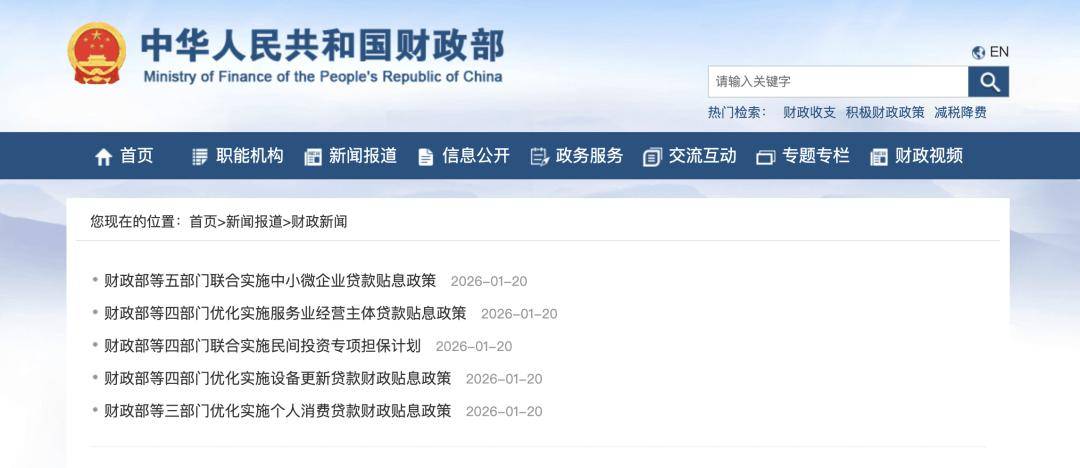
财政部等四部门发布关于优化实施设备更新贷款财政贴息政策的通知
Xin Lang Cai Jing· 2026-01-20 04:32
Core Viewpoint - The Ministry of Finance and other departments have issued a notice to optimize the implementation of the equipment renewal loan interest subsidy policy, aimed at supporting enterprises in equipment updates and technological transformation, reducing financing costs, and promoting effective investment [1] Group 1: Support Scope and Areas - The central government will subsidize 1.5% of the principal on fixed asset loans for equipment renewal projects, applicable for a maximum of 2 years from the loan issuance date [1] - The policy will include new technology innovation loans issued by banks starting in 2026, expanding the support to various sectors including construction, aviation, and artificial intelligence, among others [1] Group 2: Implementation and Management - A total of 26 banks will handle the interest subsidy loans, including major state-owned and commercial banks [2] - The subsidy process will be optimized through a "pre-allocation + settlement" method, with specific timelines for fund requests and approvals [3] - The Ministry of Finance and other regulatory bodies will oversee the implementation, ensuring compliance and monitoring of fund usage [4][5] Group 3: Supervision and Reporting - Joint inspections will be conducted to ensure compliance, with penalties for serious violations by enterprises or banks involved in the subsidy process [5] - Banks are required to report on the execution of the policy, including loan issuance and subsidy usage, within specified timeframes [6]


