PAB(000001)

Search documents
股份制银行板块1月22日跌0.86%,中信银行领跌,主力资金净流出9.6亿元
Zheng Xing Xing Ye Ri Bao· 2026-01-22 09:01
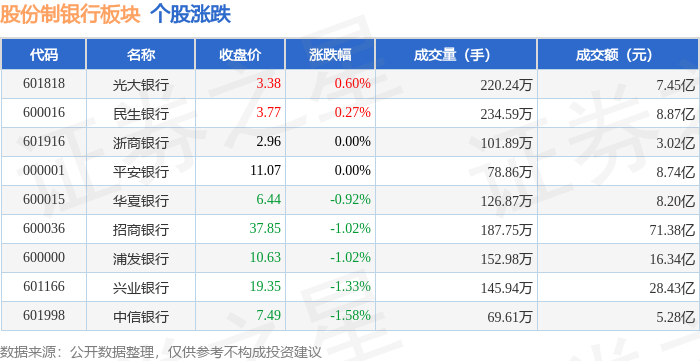
从资金流向上来看,当日股份制银行板块主力资金净流出9.6亿元,游资资金净流出2.76亿元,散户资金 净流入12.36亿元。股份制银行板块个股资金流向见下表: | 代码 | 名称 | 收盘价 | 涨跌幅 | 成交量(手) | 成交额(元) | | --- | --- | --- | --- | --- | --- | | 601818 | 光大银行 | 3.38 | 0.60% | 220.24万 | 7.45 Z | | 600016 | 民生银行 | 3.77 | 0.27% | 234.59万 | 8.87亿 | | 601916 | 浙商银行 | 2.96 | 0.00% | 101.89万 | 3.02亿 | | 000001 | 平安银行 | 11.07 | 0.00% | 78.86万 | 8.74亿 | | 600015 | 华夏银行 | 6.44 | -0.92% | 126.87万 | 8.20亿 | | 600036 | 招商银行 | 37.85 | -1.02% | 187.75万 | 71.38亿 | | 600000 | 浦发银行 | 10.63 | -1.02% | 152.98万 ...






数字人民币2.0:从M0到M1的质变
GF SECURITIES· 2026-01-22 05:07
Investment Rating - The report provides a "Buy" rating for all major banks analyzed, indicating a positive outlook for the banking sector [7]. Core Insights - The digital renminbi has entered its 2.0 era, transitioning from a central bank liability (M0) to a commercial bank liability (M1), allowing it to earn interest and be included in deposit insurance and reserve requirements [6][14]. - This transformation positions China as the first economy to offer interest on its central bank digital currency (CBDC), fundamentally altering its monetary attributes and creating a new financial paradigm in the digital economy [27]. - The digital renminbi's interest-bearing feature enhances user motivation to hold it, shifting its perception from a mere payment tool to a viable store of value, thus promoting its integration into everyday financial activities [27][28]. Summary by Sections 1. Digital Renminbi 2.0 Era - The digital renminbi (e-CNY) is now classified as a digital deposit currency, which can earn interest and is managed under a new regulatory framework [14]. - Major state-owned banks have begun offering interest on digital renminbi wallet balances, marking a significant shift in its utility and appeal [14][27]. 2. Development Progress and Application Status - The development of the digital renminbi began in 2014, with significant milestones including pilot tests in various cities and the establishment of a comprehensive operational framework by 2025 [32][33]. - As of November 2025, the digital renminbi has processed 34.8 billion transactions amounting to 16.7 trillion yuan, with extensive coverage across multiple provinces and cities [37]. 3. Global CBDC Development Trends - The report identifies three main trends in global CBDC development: active retail CBDC initiatives, innovation in payment systems, and cautious approaches in some countries like the U.S. [6]. - China's proactive stance in developing its CBDC positions it favorably in the global digital economy landscape, particularly in cross-border trade applications [30].



平安银行信用卡率先上线!账单分期财政贴息至高3000元
2 1 Shi Ji Jing Ji Bao Dao· 2026-01-22 03:25
Group 1 - The core viewpoint of the news is that Ping An Bank has launched a fiscal interest subsidy program for credit card bill installment services, with a maximum subsidy of 3000 yuan for the year 2026, aimed at enhancing consumer experience and stimulating spending [1][3][4] Group 2 - The fiscal interest subsidy policy includes a 1% annual interest rate for eligible credit card users who opt for bill installments from January 1, 2026, to December 31, 2026, with the subsidy capped at 3000 yuan per user [3] - The application process for the subsidy is designed to be simple and convenient, allowing users to apply through the Ping An Pocket Bank App, with no intermediary fees or hidden charges involved [3][4] - Ping An Bank's credit card services have been continuously innovating to align with national policies, enhancing user experience through various product offerings and services, including new credit card features and partnerships [5]

平安银行将在1月23日晚上进行系统升级维护
Jin Tou Wang· 2026-01-22 03:07
Group 1 - Ping An Bank announced a system upgrade maintenance scheduled for January 23, 2026, from 22:00 to 23:00 [1] - During the maintenance period, functionalities related to various loan products such as Orange E-loan, Orange Business Loan, Home Equity Loan, and Inclusive Finance will be temporarily affected [1] - Customers are advised to make necessary arrangements in advance and can contact customer service for assistance [1]
博敏电子股份有限公司 关于子公司为公司申请银行授信提供担保的公告
Zhong Guo Zheng Quan Bao - Zhong Zheng Wang· 2026-01-21 23:44
Core Viewpoint - The company has applied for a credit limit of RMB 150 million from Ping An Bank, with a 12-month term, and its wholly-owned subsidiaries will provide joint liability guarantees for this credit [1][7]. Group 1: Guarantee Details - The total guarantee amount is RMB 150 million, provided through joint liability guarantees by subsidiaries [1][7]. - The guarantee covers all debts arising from the main contract during the specified debt confirmation period from October 17, 2024, to January 18, 2027, including interest, penalties, and costs related to debt realization [1][5]. - The maximum debt amount includes all principal and interest, penalties, and costs until the debt is fully repaid, with the maximum principal balance equivalent to RMB 50 million [5][6]. Group 2: Necessity and Reasonableness of Guarantee - The guarantee is deemed necessary and reasonable to meet the company's operational funding needs, with the company maintaining a stable operating condition and good credit status [7]. - The guarantee is fair and complies with relevant policies and regulations, ensuring no harm to the interests of the listed company and its shareholders [7]. Group 3: Cumulative Guarantee Situation - As of the announcement date, the total external guarantees provided by the company and its subsidiaries amount to RMB 2,909.41 million, accounting for 68.30% of the latest audited net assets [7]. - The current balance of external guarantees is RMB 1,230.30 million, excluding the new guarantee [7][9]. - There are no overdue external guarantees, and the company has not provided guarantees for controlling shareholders or related parties [9].

平安广州交投广河高速公路封闭式基础设施证券投资基金关于二〇二五年十二月主要运营数据的公告
Shang Hai Zheng Quan Bao· 2026-01-21 19:17
Group 1 - The announcement date for the public REITs is January 22, 2026 [1] - The main objective of the fund is to acquire real estate projects to generate stable cash flows through proactive management [1] - The operational data for the Guanghe Expressway project in December 2025 shows good performance with no safety incidents and diversified toll revenue sources [1] Group 2 - The fund is operating normally with no undisclosed significant information as of the announcement date [2] - The fund manager commits to managing the fund assets with diligence and integrity but does not guarantee profits or minimum returns [2] Group 3 - The fund contract for the Ping An Hang Seng Hong Kong Stock Connect Technology Theme ETF became effective on January 22, 2026 [4] - The fund will be listed on the Shenzhen Stock Exchange under the trading code "159152" [4] Group 4 - The fund manager will announce the specific dates for subscription and redemption after the fund contract becomes effective [5] - Investors can check transaction confirmation through the fund manager's website or customer service [5] Group 5 - New sales institutions, including Huatai Securities, Ping An Bank, and others, have been added for various funds starting January 22, 2026 [12][13][18][23][28][33] - Investors can perform various transactions such as subscription, redemption, and regular investment through these new sales institutions [12][13][18][23][28][33]


多家银行扎堆发卫星上天
2 1 Shi Ji Jing Ji Bao Dao· 2026-01-21 11:25
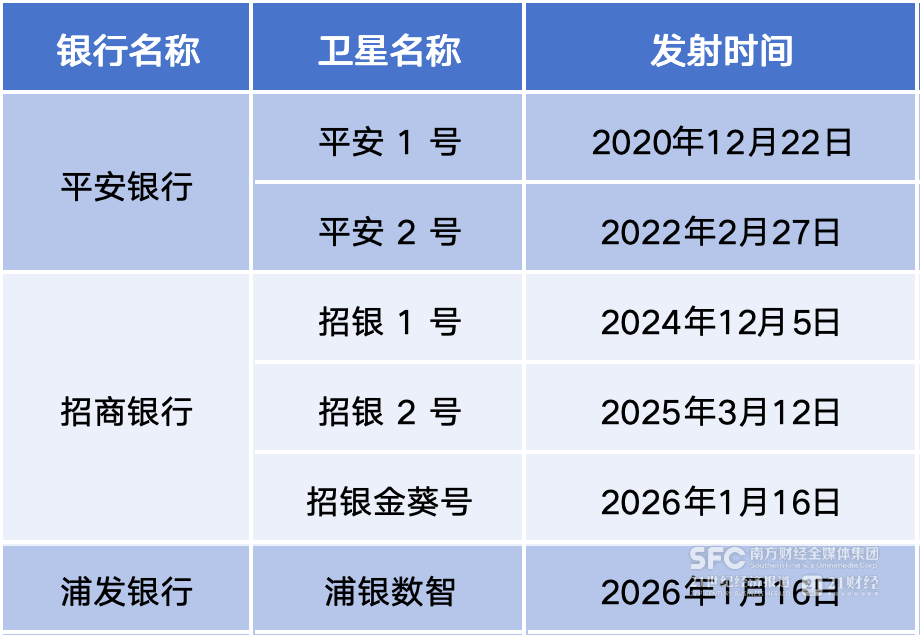
Core Viewpoint - The recent successful launch of satellites by major banks in China, including China Merchants Bank and Shanghai Pudong Development Bank, signifies a strategic shift towards utilizing satellite technology for enhancing financial services and risk management in the banking sector [1][2][5]. Group 1: Satellite Launches and Developments - China Merchants Bank launched the "Zhaoyin Jinkui" satellite on January 16, 2026, as part of the "Tianqi Constellation," which aims to enhance global coverage and communication capabilities [1][5]. - Shanghai Pudong Development Bank's "Puyin Shuzhi" satellite was also launched on the same day, contributing to the "Tianqi Constellation" [5]. - Previous satellite launches by Ping An Bank include "Ping An 1" in December 2020 and "Ping An 2" in February 2022, indicating a growing trend among banks to invest in satellite technology [2][3]. Group 2: Business Logic Behind Satellite Investments - Banks are leveraging satellite technology for remote monitoring of collateral and project progress, significantly improving post-loan management efficiency and reducing credit risk [2][8]. - The ability to maintain business continuity during extreme scenarios, such as natural disasters, is enhanced through satellite communication technology [13]. - By participating in satellite launches, banks are aligning with national strategies and expanding their financial services to support the commercial space industry [14]. Group 3: Applications of Satellite Technology in Banking - Satellite technology allows for real-time monitoring of agricultural and industrial activities, addressing information asymmetry in lending [8][10]. - The integration of satellite data into risk management systems has improved the accuracy of monitoring construction projects, with a reported precision of over 95% in tracking project progress [9][11]. - The use of satellite technology in supply chain finance helps overcome challenges faced by small and medium enterprises, enabling better access to credit [10][12]. Group 4: Future Prospects and Innovations - The ongoing development of satellite technology is expected to further penetrate various banking operations, enhancing risk prevention capabilities in sectors like agriculture and logistics [14][15]. - Innovations such as the "Dashanque" system by WeBank utilize satellite imagery and AI to assess agricultural productivity, providing tailored credit solutions to farmers [15]. - The trend of banks investing in satellite technology reflects a broader commitment to technological innovation and improved service delivery in the financial sector [16].

多家银行扎堆发卫星上天
21世纪经济报道· 2026-01-21 11:06
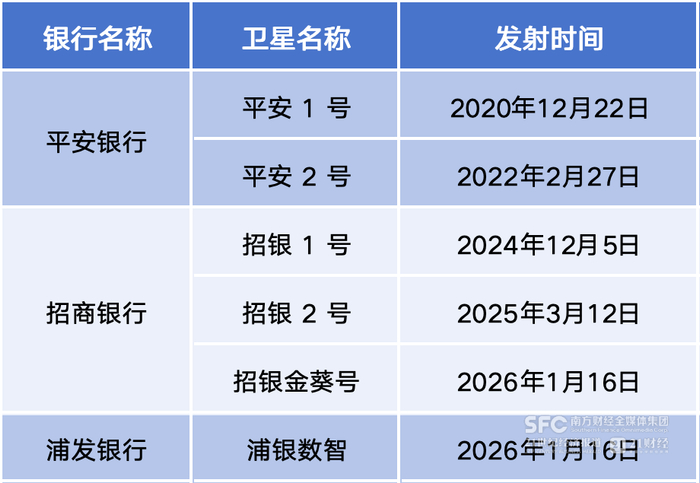
Core Viewpoint - The article discusses the recent satellite launches by major Chinese banks, highlighting their strategic shift towards utilizing satellite technology for enhancing financial services and risk management [1][4]. Group 1: Satellite Launches and Their Purpose - Three major banks, China Merchants Bank, Shanghai Pudong Development Bank, and Ping An Bank, have successfully launched satellites as part of their strategic initiatives to integrate satellite technology into their operations [4][5]. - The "Zhaoyin Jinqi" satellite launched by China Merchants Bank is designed to enhance global communication capabilities and improve data transmission efficiency, forming a comprehensive low-orbit satellite communication matrix [4][6]. - The "Puyin Shuzhi" satellite, launched simultaneously, is part of the "Tianqi Constellation" and aims to improve the performance and revisit time of the satellite network [4][6]. Group 2: Business Logic Behind Satellite Utilization - Banks are leveraging satellite technology for remote monitoring of collateral and project progress, significantly enhancing post-loan management efficiency and reducing credit risk [7][8]. - The use of satellite technology allows banks to gather unique spatial data, which can transform risk control and business models, addressing issues of information asymmetry in lending [7][9]. - For instance, China Merchants Bank has integrated remote sensing technology into its risk management system, achieving over 95% accuracy in monitoring construction progress of mortgage properties [8][9]. Group 3: Applications in Extreme Scenarios - In extreme scenarios such as natural disasters, satellite communication technology provides a solution to maintain business continuity when ground communication networks fail [12][13]. - China Merchants Bank has tested low-orbit satellite links for disaster recovery, establishing a foundation for an integrated emergency communication network [12][13]. Group 4: Supporting National Strategy and Commercial Space Industry - By participating in satellite launches, banks are aligning with national strategies and expanding financial services to support the commercial space industry [13][14]. - The banks are developing various services and products tailored to the needs of the commercial space sector, such as satellite leasing and financing solutions [14]. Group 5: Broader Industry Impact - The trend of banks utilizing satellite technology is expanding beyond a few players, with other banks also exploring applications in agriculture, environmental monitoring, and supply chain finance [14]. - Innovations such as satellite remote sensing applications are being adopted to enhance risk management and service delivery in various sectors, indicating a shift towards integrating advanced technologies in traditional banking practices [14].

股份制银行板块1月21日跌1.78%,中信银行领跌,主力资金净流出1.38亿元
Zheng Xing Xing Ye Ri Bao· 2026-01-21 08:54
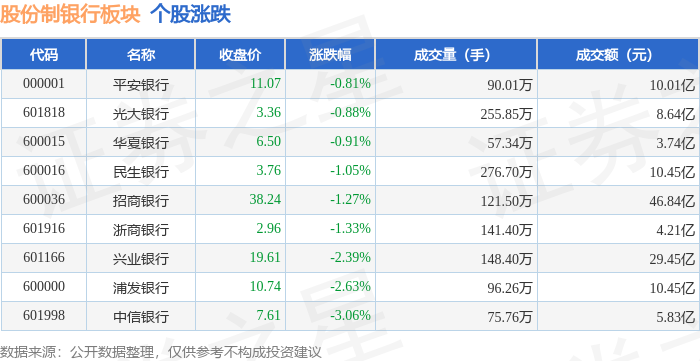
证券之星消息,1月21日股份制银行板块较上一交易日下跌1.78%,中信银行领跌。当日上证指数报收于 4116.94,上涨0.08%。深证成指报收于14255.12,上涨0.7%。股份制银行板块个股涨跌见下表: | 代码 | 名称 | 收盘价 | 涨跌幅 | 成交量(手) | 成交额(元) | | --- | --- | --- | --- | --- | --- | | 000001 | 平安银行 | 11.07 | -0.81% | 90.01万 | 10.01亿 | | 601818 | 光大银行 | 3.36 | -0.88% | 255.85万 | 8.64亿 | | 600015 | 华夏银行 | 6.50 | -0.91% | 57.34万 | 3.74亿 | | 600016 | 民生银行 | 3.76 | -1.05% | 276.70万 | 10.45 Z | | 600036 | 招商银行 | 38.24 | -1.27% | 121.50万 | 46.84亿 | | 601916 | 浙商银行 | 2.96 | -1.33% | 141.40万 | 4.21亿 | | 601166 | ...
尾焰划破夜空 金融机构为何爱上“发卫星”
2 1 Shi Ji Jing Ji Bao Dao· 2026-01-21 08:05
Core Viewpoint - The recent successful launch of satellites by major banks in China, including China Merchants Bank and Shanghai Pudong Development Bank, signifies a strategic shift towards utilizing satellite technology for enhancing financial services and risk management in the banking sector [1][2][3]. Group 1: Satellite Launches and Their Purpose - China Merchants Bank and Shanghai Pudong Development Bank have joined Ping An Bank in launching satellites, indicating a trend among banks to leverage space technology for business needs [2][4]. - The satellites are part of the "Tianqi Constellation," which aims to provide global coverage and enhance communication capabilities, thereby improving data transmission and supporting more devices [4][5]. - The "Zhaoyin Jinkui" satellite launched by China Merchants Bank is designed to enhance the density of the satellite constellation and reduce revisit intervals, which will significantly improve global communication capabilities [4][5]. Group 2: Business and Risk Management Enhancements - Banks are utilizing remote sensing satellite technology for precise monitoring of collateral and project progress, which enhances post-loan management efficiency and reduces credit risk [3][7]. - The integration of satellite technology into financial risk control systems allows banks to monitor real-time data from various sectors, addressing information asymmetry in lending [7][8]. - For instance, China Merchants Bank has implemented a high-precision construction monitoring system for mortgage projects, achieving over 95% accuracy in monitoring construction progress [8]. Group 3: Applications in Supply Chain and Disaster Recovery - Satellite technology is crucial for expanding supply chain finance by providing timely and effective data transmission, especially in remote areas where traditional communication may fail [9][10]. - In extreme scenarios, such as natural disasters, satellite communication ensures business continuity for banks by maintaining service availability when ground networks are disrupted [11][12]. - The banks' involvement in satellite launches also aligns with national strategies, enabling them to support the commercial space industry while enhancing their service offerings [12][13]. Group 4: Broader Industry Implications - The trend of banks launching satellites is not limited to a few institutions; it is gradually permeating various banking operations, enhancing risk management capabilities across sectors like agriculture and logistics [13][14]. - The adoption of satellite remote sensing technology is becoming a standard practice in the banking industry, reflecting a shift towards innovative financial services that integrate advanced technologies [14].