
Midea Group(000333)

Search documents
行业年度策略报告:新兴需求领航,传统消费破局-20251213
Ping An Securities· 2025-12-13 08:08
Group 1 - The core viewpoint of the report emphasizes that emerging demand is leading the way, while traditional consumption is breaking through. The year 2026, as the start of the 14th Five-Year Plan, is expected to see continued implementation of consumption stimulus policies, effectively releasing residents' consumption willingness and promoting a steady recovery in consumption demand [4][11] - The report suggests that the traditional consumption industry is likely to experience a rebound, while new demands such as "new products, new channels, and new business formats" will continue to drive the rapid development of new consumption [4][11] - The report highlights the importance of the 14th Five-Year Plan, which emphasizes the need to stimulate consumption and enhance domestic demand as a key driver of economic growth [11][12] Group 2 - In the textile and media sectors, new demand is leading to new supply, and new supply is creating new demand. The report recommends focusing on investment opportunities in three segments: outdoor sports, gold jewelry, and cultural and trendy IP in 2026 [4][30] - The outdoor sports segment is identified as a growing trend, with social aspects becoming increasingly important for young consumers. The report notes that outdoor activities such as cycling, hiking, and climbing are gaining popularity [32][33] - The gold jewelry market is expected to see continued growth in consumer spending, with a positive outlook for retail sales in 2026. The report suggests focusing on leading gold jewelry brands [32][33] Group 3 - The social services sector is evolving, with a focus on leading companies that actively respond to changes in consumer demand. The report indicates that tourism and beauty industries are experiencing changes, with a shift towards rational consumption and a focus on value for money [4][30] - The food and beverage sector is expected to stabilize, with signs of recovery emerging. The report notes that the industry is closely tied to macroeconomic conditions and consumer income expectations [4][30] - The agricultural, forestry, animal husbandry, and fishery sectors are experiencing a cyclical upturn, particularly in the pig farming segment, which is expected to stabilize due to policy-driven transformations [4][5] Group 4 - The home appliance industry is characterized by resilience in demand, with policies such as "trade-in for new" supporting consumption. The report suggests looking for structural highlights within the home appliance sector, particularly in high-dividend white goods and rapidly growing new consumption categories [4][5] - The report emphasizes the importance of exploring new consumption trends and adapting to changing consumer preferences, particularly in the context of the ongoing economic recovery [4][5]






破解“增长焦虑”,必须要有成长型思维
首席商业评论· 2025-12-13 04:21
Core Insights - The article discusses the "growth anxiety" faced by companies in a rapidly changing market characterized by shifting consumer preferences, emerging technologies, and deep globalization [2][4] - It highlights the importance of innovation, value chain reconstruction, and digitalization in implementing growth strategies [4][5] - The book "Evergreen Tree New Method" by Hua Xiaoliang provides a theoretical and practical framework for growth, emphasizing the necessity of a growth mindset [2][4] Market Environment - The market environment is accelerating changes due to evolving consumer preferences, new technology applications, and globalization [4] - Companies need to focus on innovation, reconstruct value chains, and leverage digital tools to ensure the implementation of growth strategies [5] Growth Framework - Hua Xiaoliang's framework consists of "growth opportunity insight - path planning - execution empowerment," with a strong emphasis on the growth mindset as a key to successful growth [4][5] - The core of the growth mindset includes embracing challenges, maintaining an open attitude, and demonstrating resilience in the face of setbacks [5] Case Study: Midea Group - Midea Group is highlighted as a benchmark for growth in Chinese enterprises, achieving an average annual revenue growth rate of over 10% and a net profit growth rate exceeding 12% over the past decade [6] - The company has successfully transformed from a traditional home appliance manufacturer to a global technology group by embracing digitalization, globalization, and technological innovation [6] - Midea's leadership exemplifies a growth mindset by reconstructing channels and value chains, and actively supporting partners through digital and lean improvements [6] Challenges for Industry Leaders - Some former industry leaders are experiencing stagnation due to their adherence to past successful experiences and neglecting market changes [7] - These companies often fail to adapt to new consumer behaviors and market dynamics, leading to a loss of growth momentum [7] - The article emphasizes the need for continuous adaptation and the importance of a growth mindset in overcoming challenges and driving transformation [7]


积极促消费,京东政企业务搭建优商优品供需匹配 “快车道”
Cai Fu Zai Xian· 2025-12-12 08:56
Core Insights - The total variety of consumer goods in China has reached 230 million, with over 100 categories such as home appliances and clothing leading global production, indicating a new development stage of high-quality supply and pricing [1] - The State Council has issued a plan to enhance the adaptability of consumer goods supply and demand, aiming to establish three trillion-level consumption sectors and ten hundred-billion-level consumption hotspots by 2027 [1] - JD's government and enterprise business has built a "super supply chain" over the past decade, integrating diverse supply, digital platform technology, and nationwide logistics to support rapid growth for brand partners and stimulate domestic demand [1] Company Collaborations - Shandong Luhua Group, a leader in high-end edible oil, has seen a 160% growth in performance on JD's platform since 2021, with its 5L peanut oil achieving a 69% year-on-year increase in 2025 [2] - Midea, a leading home appliance company, has established an efficient collaboration mechanism with JD, resulting in a threefold increase in sales for products like electric steamers and ice makers since 2025 [2] - Bosideng, a global down clothing brand, has become JD's largest single brand in the apparel category, with a 2.5 times growth in the consumer goods sector [3] - Deli, a leader in office supplies, has expanded its product line to over 12,000 items and launched a printer with a domestic chip, achieving a 136% growth in printer sales [3] Strategic Initiatives - JD's government and enterprise business has launched a "billion market partner plan" to help over 300 brand partners achieve annual sales exceeding 100 million yuan within three years [4] - The establishment of the "Ten Billion Brand Alliance Club" includes notable companies like Huawei and Midea, aiming to enhance market reach and consumer engagement [4] - JD's focus on building a high-quality development framework through effective supply-demand interaction is set to contribute significantly to economic growth and consumption upgrades [4]

买空调要趁早? 小米、格力未来都要铝代铜
Xin Lang Cai Jing· 2025-12-12 04:11
Core Viewpoint - The air conditioning industry is moving towards the use of aluminum alloy heat exchangers instead of copper due to rising copper prices and the high dependency on copper imports in China [1][3]. Group 1: Industry Trends - The 2025 China Home Appliance Technology Conference saw major companies like Gree, Xiaomi, and others announce the "Production Line Construction Specifications for Aluminum Tube Fin Heat Exchangers for Room Air Conditioners" [2][3]. - The air conditioning sector consumed approximately 1.723 million tons of copper in 2023, accounting for 10.7% of China's total copper consumption [3]. Group 2: Collaborative Efforts - A collaborative effort involving major air conditioning companies and academic institutions has led to the establishment of standards for aluminum heat exchangers, with further discussions planned for January [2][3]. - Companies including Xiaomi, Haier, and Midea have signed a self-regulatory agreement to promote aluminum heat exchangers and avoid negative competition among peers [4]. Group 3: Market Implications - The shift to aluminum heat exchangers is expected to lower air conditioning prices in the future, although copper heat exchangers may still be marketed as a premium option [4].





2026年国补政策再升级!5000亿红包来袭,这些领域将迎来爆发
Sou Hu Cai Jing· 2025-12-11 15:45
Core Insights - The 2026 "National Subsidy" policy will continue the "old-for-new" consumption initiative with an increased budget of 500 billion yuan, aimed at stimulating consumption and stabilizing economic growth [1][3][16] Group 1: Policy Overview - The "National Subsidy" policy has shown significant results since its launch in 2024, generating over 2.5 trillion yuan in sales and benefiting 360 million people [3] - The policy will focus on three main upgrades: increasing the subsidy amount, expanding coverage to new sectors, and optimizing the distribution process [4][10] Group 2: Sectoral Impacts - Traditional consumption sectors like home appliances and automobiles are expected to see a second wave of growth, with home appliance subsidies potentially increasing from 12.84 million units to 15 million units [6][8] - The service consumption sector, particularly in tourism and health, is anticipated to become a new focal point, with over 100 billion yuan in tourism vouchers expected to be issued [6][10] - Digital and green consumption will be enhanced, with subsidies for smartphones and energy-efficient appliances, benefiting companies like Apple and Huawei [8][10] Group 3: Economic Implications - The policy aims to boost domestic demand and counter economic pressures, with expectations for retail sales growth to rebound to 5%-6% in 2026 [10] - It promotes industrial upgrades by leading consumption upgrades, encouraging innovation in sectors like electric vehicles and smart home appliances [10][14] Group 4: Investment Opportunities - Key investment targets include essential consumer goods like dairy products and condiments, as well as discretionary items like home appliances and new energy vehicles [15] - The policy is seen as a long-term opportunity for investors, with potential for valuation recovery and growth in the consumer sector [16]



家电2026年年度策略报告:品牌出海与新品类发展-20251211
CAITONG SECURITIES· 2025-12-11 12:01
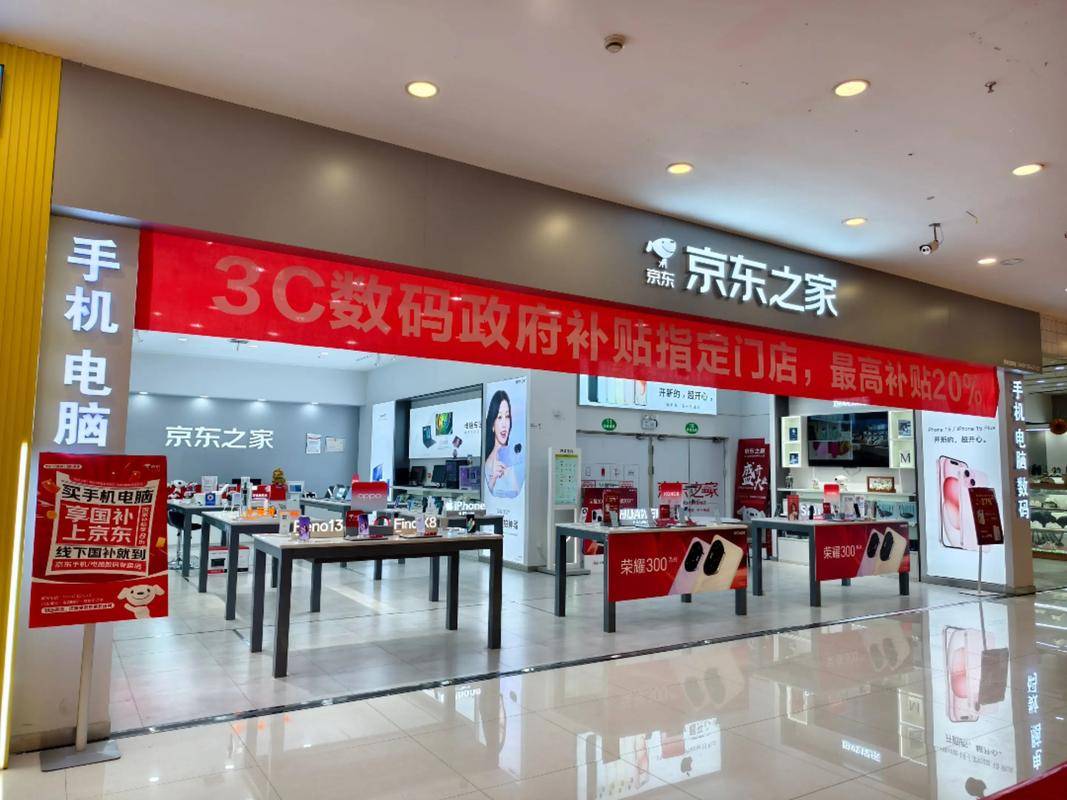
Core Insights - The report maintains a positive outlook on the home appliance sector, emphasizing the potential for growth in both domestic and international markets, particularly in emerging markets and through the development of new product categories [3][5]. Group 1: Market Performance Overview - The home appliance sector has shown varied performance in 2025, with white goods yielding a total return of +1% but underperforming against the CSI 300 by -19% due to high base effects and market competition [11]. - Small appliances have performed well with a +12% return, indicating a shift from scale expansion to value creation, supported by new subsidy policies [11]. - The components sector has excelled with a +70% return, benefiting from investments in emerging technologies such as AI and robotics [11]. Group 2: Domestic and International Sales - Domestic sales have faced pressure due to tightening national subsidies, with expected growth rates for major appliances showing mixed results, while small appliances have fared better [5][38]. - Internationally, emerging markets have outperformed, with a notable recovery in export orders as tariff impacts begin to stabilize [41][42]. Group 3: Product Development and Innovation - The report highlights a continuous upgrade in product structure, with an increasing share of high-end products contributing to profit margins [5][44]. - New product categories such as smart glasses, drones, and UV printers are expected to create new growth opportunities, driven by consumer demand for innovative and personalized experiences [5][10]. Group 4: Investment Recommendations - The report suggests focusing on leading white goods companies as they represent assets with significant growth potential, particularly in the context of favorable U.S. market conditions and anticipated interest rate cuts [5][44]. - Specific companies recommended for investment include Haier Smart Home, Hisense, TCL Electronics, and Ecovacs, among others [5][44].


美的集团12月11日大宗交易成交517.83万元
Zheng Quan Shi Bao Wang· 2025-12-11 11:05
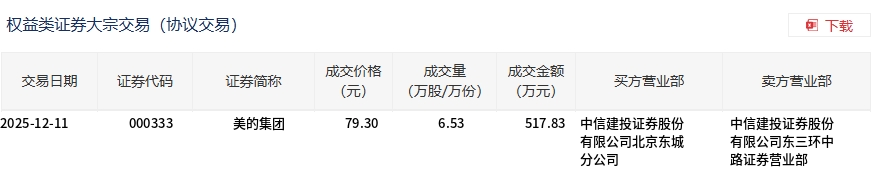
两融数据显示,该股最新融资余额为52.35亿元,近5日减少6108.72万元,降幅为1.15%。(数据宝) 12月11日美的集团大宗交易一览 美的集团12月11日大宗交易平台出现一笔成交,成交量6.53万股,成交金额517.83万元,大宗交易成交 价为79.30元。该笔交易的买方营业部为中信建投证券股份有限公司北京东城分公司,卖方营业部为中 信建投证券股份有限公司东三环中路证券营业部。 进一步统计,近3个月内该股累计发生6笔大宗交易,合计成交金额为4068.19万元。 证券时报·数据宝统计显示,美的集团今日收盘价为79.30元,下跌0.96%,日换手率为0.39%,成交额为 21.79亿元,全天主力资金净流出1.92亿元,近5日该股累计下跌3.16%,近5日资金合计净流出5.09亿 元。 (文章来源:证券时报网) | 成交量 | 成交金额 | 成交价 | 相对当日收盘 | | | | --- | --- | --- | --- | --- | --- | | (万 | (万元) | 格 | 折溢价(%) | 买方营业部 | 卖方营业部 | | 股) | | (元) | | | | | 6.53 | 517.8 ...
美的集团今日大宗交易平价成交6.53万股,成交额517.83万元
Xin Lang Cai Jing· 2025-12-11 08:50
12月11日,美的集团大宗交易成交6.53万股,成交额517.83万元,占当日总成交额的0.24%,成交价79.3元,较市场收盘价 79.3元持平。 | 交易日期 | 证券代码 | 证券简称 | 成交价格 | 成交量 | 成交金额 | 买方营业部 | 卖方营业部 | | --- | --- | --- | --- | --- | --- | --- | --- | | | | | (元) | (万股/万份) | (万元) | | | | 2025-12-11 | 000333 | 美的集团 | 79.30 | 6.53 | 517.83 | 中信建投证券股份 | 中信建投证券股份 | | | | | | | | 有限公司北京东城 | 有限公司东三环中 | | | | | | | | 分公司 | 路证券营业部 | ...
美的、海尔、小米等联手:推动“铝代铜”标准落地、禁止互相恶意攻击
Di Yi Cai Jing· 2025-12-11 07:35
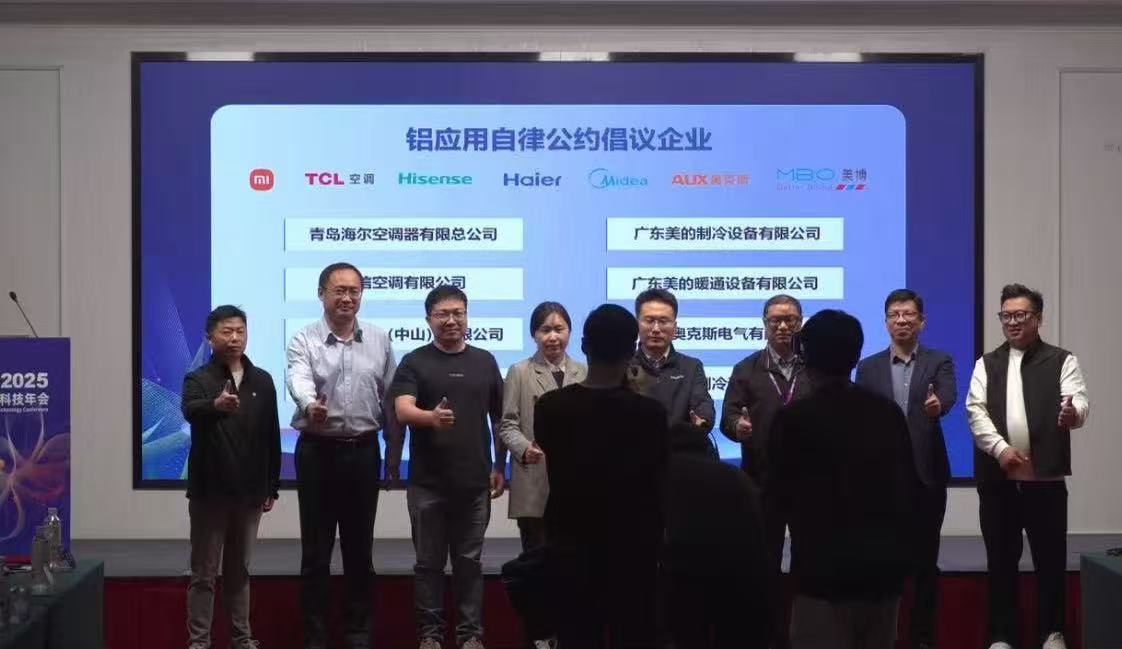
Core Insights - China's air conditioning industry is accelerating the adoption of aluminum instead of copper due to rising copper prices, with a focus on establishing relevant standards to ensure the safety of this billion-dollar industry [2][3] Group 1: Industry Developments - The China Refrigeration Society has released a group standard for the construction of aluminum tube fin heat exchanger production lines for room air conditioners, with additional standards for aluminum heat exchanger raw material requirements and production line construction currently being developed [2] - A national standard related to "aluminum instead of copper" for room air conditioners is under revision, with major companies like Gree, Midea, Haier, and Xiaomi participating in the discussions [2][3] - The China Household Electrical Appliances Research Institute has expanded its research group on aluminum applications in air conditioning to 19 members, including leading air conditioning manufacturers and related material companies [2] Group 2: Technical Challenges and Proposals - The demand for copper in household air conditioning is significant, with 10.7% of China's copper consumption in 2023 attributed to this sector, amounting to approximately 1.723 million tons, with 80% of this copper being imported [3] - There are three main challenges in adopting aluminum heat exchangers: high corrosion resistance technology issues, lack of standardized testing methods, and consumer biases against aluminum [3][4] - The Ministry of Industry and Information Technology has outlined a plan to support the development of aluminum applications in air conditioning and refrigeration, emphasizing the need for high corrosion resistance technology [4] Group 3: Industry Collaboration and Standards - Major air conditioning companies have signed a self-regulation agreement to promote aluminum heat exchangers, ensuring scientific communication about their benefits and preventing misleading claims [4] - The establishment of a standard system for aluminum heat exchangers is a priority, with a focus on addressing corrosion resistance and manufacturing capabilities [4]
恒生指数高开0.66% 恒生科技指数涨0.55%
Xin Lang Cai Jing· 2025-12-11 04:11
Group 1 - The Hang Seng Index opened up by 0.66% on December 11 [1][2] - The Hang Seng Tech Index increased by 0.55% [1][2] - Companies such as Midea Group, Alibaba, NetEase, and Bilibili saw their stock prices rise by over 1% [1][2]

