
Midea Group(000333)

Search documents
不耍花枪,是真干活!美的“六臂超人形机器人”年底上岗
Xin Hua Wang· 2025-12-16 06:36
Core Insights - The article highlights the launch of Midea's humanoid robot "Mei Luo U," which is set to enhance production efficiency by 30% at its Wuxi high-end washing machine factory by the end of the year [1][4][8] - Midea's approach combines technology research and practical application, demonstrating a significant shift from traditional manufacturing to intelligent manufacturing through substantial investments and strategic planning over the past decade [3][9] Group 1: Product and Technology - The "Mei Luo U" robot features six arms and a wheeled base, allowing for complex movements and tasks such as precise part handling and quality inspections, marking a breakthrough in humanoid robot technology for industrial applications [6][10] - Midea's robots have been operational in its Jingzhou factory for over six months, performing tasks like 3D quality inspections and equipment checks, showcasing their integration into the production line [7][8] Group 2: Strategic Development - Midea's investment in robotics began with the acquisition of KUKA for approximately 30 billion RMB in 2017, which has since enabled the company to develop core technologies in robot motion control and mechanical design [9][10] - The establishment of various research institutions, including the Central Research Institute and the Blue Orange Laboratory, has facilitated Midea's advancements in robotics, leading to the rapid development of multiple humanoid robot models [10][14] Group 3: Future Plans and Market Expansion - Midea aims to create fully automated "dark factories" and expand its intelligent manufacturing model to more production bases, indicating a commitment to further automation in industrial settings [13][14] - The company is also preparing to introduce its "Mei La" series of robots for commercial and household applications, with plans for deployment in 2026, reflecting a broader vision for integrating robotics into everyday life [12][14]




沪深300ETF中金(510320)跌1.23%,半日成交额144.57万元
Xin Lang Cai Jing· 2025-12-16 04:42
Core Viewpoint - The performance of the CSI 300 ETF managed by CICC has shown a decline, with notable drops in several key holdings, indicating potential challenges in the current market environment [1] Group 1: ETF Performance - As of the midday close on December 16, the CSI 300 ETF (510320) fell by 1.23%, priced at 1.208 yuan, with a trading volume of 1.4457 million yuan [1] - The performance benchmark for the CSI 300 ETF is the return rate of the CSI 300 Index, with a return of 22.37% since its inception on April 16, 2025, and a recent one-month return of -1.56% [1] Group 2: Key Holdings Performance - Notable declines were observed in major holdings: CATL dropped by 1.87%, Kweichow Moutai decreased by 0.63%, Ping An fell by 0.52%, and China Merchants Bank declined by 0.17% [1] - Other significant drops included Zijin Mining at 3.66%, Xinyi Solar at 4.70%, and Zhongji Xuchuang at 3.83%, indicating a broader trend of underperformance among these stocks [1]





有消费者称:美的燃气热水器本体漏气,同小区10余用户遇同样故障
Nan Fang Du Shi Bao· 2025-12-16 03:07
Core Viewpoint - A batch of gas water heaters manufactured by Midea has been reported to have multiple gas leakage incidents in a residential community in Shenzhen, raising concerns about product safety and quality control [3][4][8]. Group 1: Incident Details - Residents in the Gu Cang Fu community reported gas leaks from Midea gas water heaters, with the issue identified as a leak from the heater body [3]. - The faulty heaters displayed an "E6" error code, indicating an electromagnetic valve failure, which was confirmed by service personnel [2][4]. - A resident described the gas leak as occurring without warning, with the heater releasing gas even when not in use [4]. Group 2: Company and Regulatory Response - Midea has not yet responded to the incidents, and the local market supervision bureau has indicated that they cannot conduct product quality checks on items already in use [3][8]. - The gas company has suspended gas supply to the affected user to eliminate safety hazards, and residents have been advised to contact Midea for repairs or replacements [8]. - The heaters were installed as part of a package by the developer, Guangdong Fangzhi Group, and are under a six-year warranty, with two years of usage already completed [6][8]. Group 3: Community Impact and Safety Concerns - Over ten residents in the same community have reported similar issues with the same model of water heater, indicating a potential systemic problem [6]. - The incident has raised alarms about the need for better quality control and proactive safety measures from manufacturers, emphasizing that safety should not be compromised [8].
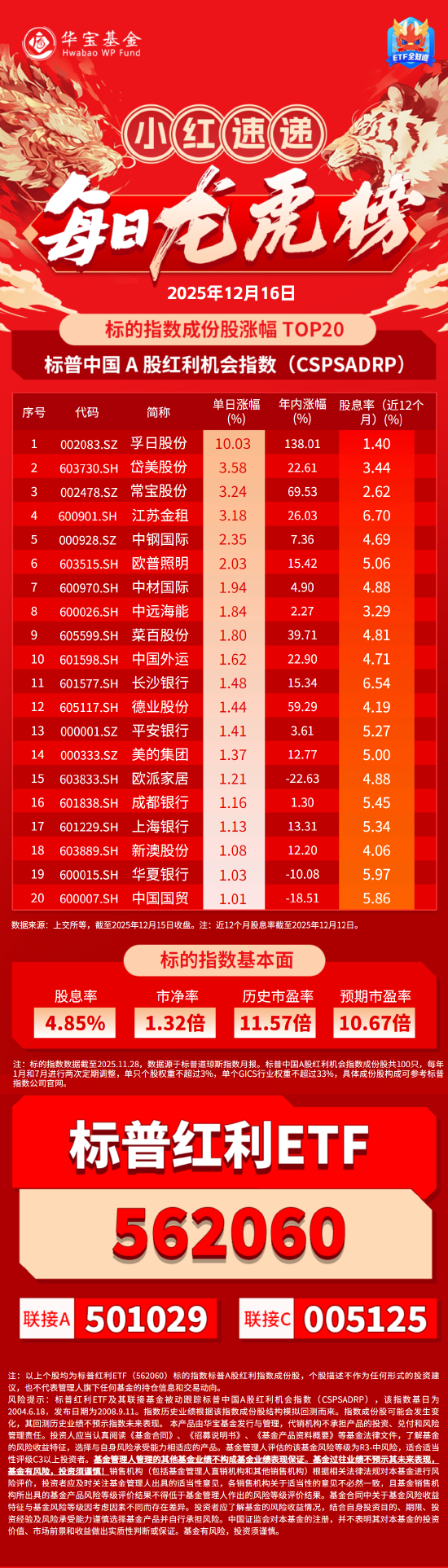
小红日报 | 孚日股份涨停,标普红利ETF(562060)标的指数收涨0.17%
Xin Lang Cai Jing· 2025-12-16 01:04
Core Insights - The article highlights the top 20 stocks in the S&P China A-Share Dividend Opportunity Index (CSPSADRP) based on their performance and dividend yield as of December 15, 2025 [1][4] Group 1: Stock Performance - The top-performing stock is LuRi Co., Ltd. (002083.SZ) with a daily increase of 10.03% and a year-to-date increase of 138.01% [1][4] - Dai Mei Co., Ltd. (603730.SH) ranks second with a daily increase of 3.58% and a year-to-date increase of 22.61% [1][4] - Changbao Co., Ltd. (002478.SZ) follows with a daily increase of 3.24% and a year-to-date increase of 69.53% [1][4] Group 2: Dividend Yields - Jiangsu Jinzhong (600901.SH) offers the highest dividend yield among the top 20 stocks at 6.70% [1][4] - Other notable dividend yields include Changsha Bank (601577.SH) at 6.54% and Huaxia Bank (600015.SH) at 5.97% [1][4] - The average dividend yield for the top 20 stocks varies, with several companies offering yields above 5% [1][4] Group 3: Additional Stock Insights - The performance of stocks like Midea Group (000333.SZ) shows a year-to-date increase of 12.77% despite a daily increase of only 1.37% [1][4] - Some stocks, such as Oppein Home Group (603833.SH), have experienced a year-to-date decline of 22.63% [1][4] - The data reflects a diverse range of performance and dividend strategies among the top stocks in the index [1][4]




空调“铝代铜”再惹争议,董明珠为何不积极?
Xin Lang Cai Jing· 2025-12-15 13:44
Core Viewpoint - The ongoing debate over "aluminum replacing copper" in the air conditioning industry has intensified following comments from Gree Electric's chairman, Dong Mingzhu, emphasizing that aluminum has not yet reached the technical standards necessary to replace copper [1][7]. Group 1: Industry Standards and Developments - The China Refrigeration Society released a group standard for aluminum tube fin heat exchangers on December 11, 2023, with major manufacturers like Gree, Midea, Haier, Xiaomi, Hisense, TCL, and Aux participating in the standardization process [1][8]. - A new round of discussions on national standards for heat exchangers is expected to take place in January 2026 [1][8]. Group 2: Industry Disagreements - Several air conditioning companies, including Haier, Midea, and Xiaomi, have joined a self-regulatory agreement to promote aluminum heat exchangers while avoiding false claims and enhancing consumer trust [2][8]. - Gree has not joined this agreement, with Dong Mingzhu stating that the company will consider aluminum only when it can fully replace copper [2][9]. Group 3: Economic Factors - The debate over "aluminum replacing copper" has persisted for over a decade, often reignited by fluctuations in copper prices, which have recently reached historical highs, with LME copper prices exceeding $11,461 per ton [3][9]. - The copper-aluminum price ratio has remained between 2.5 and 4.5 since the supply-side reforms of 2017-2018, with the current ratio at 3.8 as of November 2025 [3][10]. Group 4: Technical Considerations - Concerns regarding aluminum's inferior thermal conductivity, strength, and corrosion resistance compared to copper have been raised, suggesting that using aluminum could negatively impact the lifespan and reliability of air conditioning units [3][6]. - The application of aluminum in refrigerators has progressed more rapidly, with aluminum accounting for nearly 90% of the cooling systems, while air conditioning remains more complex due to varying operational conditions [5][11]. Group 5: Policy Support - The Chinese government has elevated the "aluminum replacing copper" initiative to a policy level, with a plan issued in March 2025 to promote aluminum consumption in various sectors, including home appliances [4][10].



机构调研、股东增持与公司回购策略周报(20251208-20251212)-20251215
Yuan Da Xin Xi· 2025-12-15 11:09
Group 1: Institutional Research on Popular Companies - The top twenty companies with the highest number of institutional research visits in the past 30 days include Luxshare Precision, Haiguang Information, Zhongke Shuguang, Jereh, and Huichuan Technology [11] - In the last five days, the most popular companies for institutional research were Haiguang Information, Zhongke Shuguang, Weichuang Electric, Superjet, and Shenghong Technology [11] - Among the top twenty companies in the past 30 days, 13 companies had 10 or more rating agencies involved [11] Group 2: Major Shareholder Increase in A-Share Companies - From December 8 to December 12, 2025, two A-share companies announced significant shareholder increases, with Inpai Si planning to increase its holdings by an amount that represents more than 1% of the market value on the announcement date [18] - From January 1 to December 12, 2025, a total of 307 companies announced shareholder increases, with 77 of them having 10 or more rating agencies involved [19] Group 3: A-Share Company Buyback Situation - Between December 8 and December 12, 2025, 50 companies announced buyback progress, with 13 having 10 or more rating agencies involved [22] - Four companies are recommended for attention based on their buyback amounts exceeding 1% of their market value on the announcement date, including Naxin Micro, Midea Group, SF Holding, and China Merchants Jinling [22] - From January 1 to December 12, 2025, a total of 1,830 companies announced buyback progress, with 356 having 10 or more rating agencies involved [24]





AI跨越宏大叙事,多领域拆解应用新图景
2 1 Shi Ji Jing Ji Bao Dao· 2025-12-15 10:51
Group 1: AI Industry Trends - The AI industry is transitioning from cloud-based computing to edge devices, with significant advancements in hardware capabilities being essential for practical applications [2][3] - High costs associated with AI inference and training are major barriers to widespread adoption, prompting a need for cost-effective solutions [3][4] - The demand for printed circuit boards (PCBs) is surging due to the AI boom, with leading companies like Pengding Holdings experiencing increased profitability and market valuation [4][5] Group 2: Company Innovations and Strategies - AMD has introduced solutions that reduce the cost of deploying AI models on edge devices, making advanced AI applications more accessible across various sectors [2] - Midea Group is focusing on the integration of AI and robotics, with a strong emphasis on developing humanoid robots for industrial and commercial applications [5][6] - Companies like Haalo are exploring the Robotaxi market, indicating a growing recognition of the commercial viability of AI-driven transportation solutions [9][10] Group 3: Challenges and Opportunities - The AI sector faces challenges in commercializing applications and controlling costs, with many companies yet to achieve profitability [8][9] - The integration of AI into traditional industries is seen as a strategic necessity for survival and growth, with companies like Liaoning Chengda pivoting towards technology-driven sectors [12] - The need for high-quality data and deep industry understanding is critical for companies to maintain a competitive edge in the evolving AI landscape [11][12]




大消费行业周报(12月第2周):坚持内需主导、提振消费-20251215
Century Securities· 2025-12-15 09:40
Investment Rating - The report maintains a positive outlook on the consumer sector, emphasizing the importance of domestic demand and consumption recovery [1]. Core Insights - The consumer sector experienced a decline across various segments, with notable drops in retail, social services, food and beverage, beauty care, home appliances, and textiles [3]. - High-end liquor, particularly Moutai, is showing signs of bottoming out despite a significant price drop, indicating potential recovery as demand stabilizes [3]. - The central economic work conference highlighted the commitment to boosting domestic consumption, with policies aimed at increasing residents' income and optimizing supply of quality goods and services [3]. - The report suggests focusing on service consumption sectors, which have room for growth compared to developed countries [3]. Summary by Sections Market Weekly Review - The consumer sector saw a broad decline, with specific weekly performance metrics indicating negative trends across various sub-sectors [3][5]. - Notable stock performances included significant gains for certain companies, while others faced substantial losses [3][13][14]. Industry News and Key Company Announcements - Recent regulatory approvals and policy initiatives are expected to impact various sectors, including tourism and electric vehicles, with a focus on enhancing consumer experiences and market growth [15][16][19]. - Companies like Tim Hortons and others reported positive financial results, indicating resilience in the consumer market despite broader sector challenges [19][20].

谁将定义中国智算未来?从系统可用的算力基建,到产业认可的价值闭环丨GAIR 2025
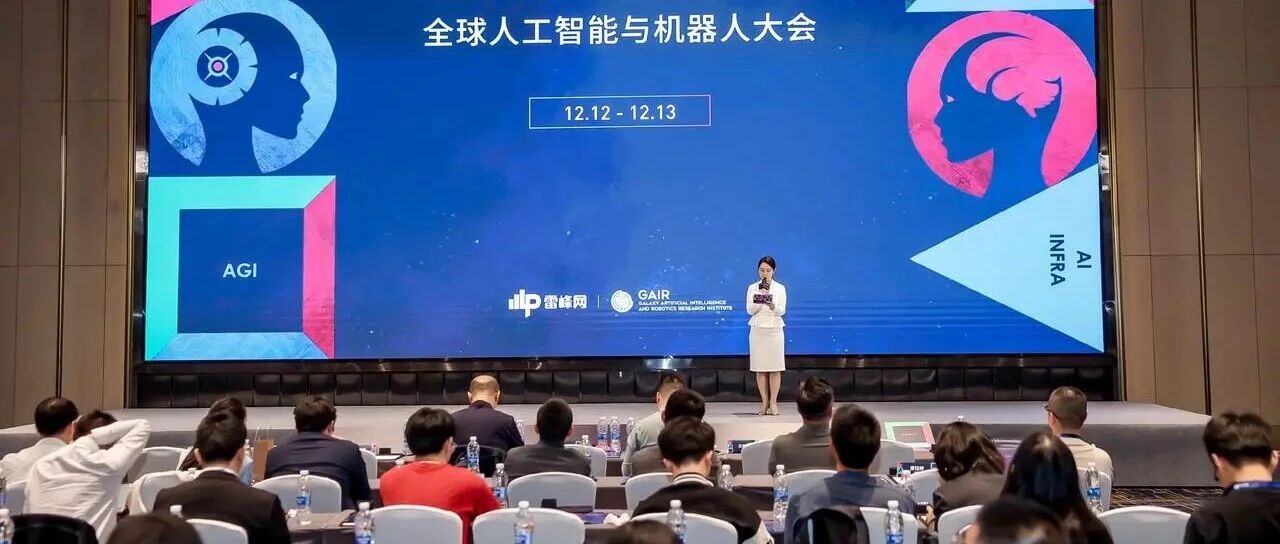
雷峰网· 2025-12-15 07:44
Core Viewpoint - The future of intelligent computing will be defined by those who can establish standards, models, and foundational systems, leading to true dominance in the next generation of intelligent competition [2][3]. Group 1: Conference Overview - The GAIR 2025 conference, focusing on "AI Computing in the New Decade," was held in Shenzhen, aiming to connect technological advancements with industrial practices [2]. - The afternoon forum centered on the theme "Who Will Define the Future of Intelligent Computing," shifting focus from breakthrough innovations to systematic construction and value closure [2][3]. Group 2: Key Presentations - Wang Zhi from Tsinghua University discussed the challenges of industrial large models, emphasizing the need for a new paradigm of "training and inference collaboration" to drive intelligent manufacturing [4][6]. - Liu Xiangyang, an IEEE Fellow, highlighted that a company's AI capabilities are fundamentally determined by its digital foundation, stressing the importance of a robust digital infrastructure [9][11]. - Zhao Hongbing from Beijing Parallel Technology emphasized the need for computing services to transform from mere resources to productive forces, advocating for a user-centric approach in computing service operations [14][16]. - Shi Tianhui from Qingcheng Jizhi pointed out the importance of software in unlocking the value of computing power, advocating for the growth of the MaaS (Model as a Service) market [19][20]. - Lü Haifeng from Dingxi Zhichuang proposed a "wet and dry combined" approach to tackle data bottlenecks in AI and new materials, emphasizing the integration of AI in material design and development [22][24]. Group 3: Industry Insights - The current computing market faces challenges such as low utilization rates of computing resources, with many intelligent computing centers averaging below 40% [28]. - The transition from "building first, using later" to a more efficient model prioritizing cost-effectiveness and user scenarios is underway in the computing industry [28][29]. - The MaaS model is seen as a key to achieving a value closure in computing, allowing users to access computing power at lower costs while suppliers optimize their technology to reduce expenses [29][30]. - The future of AI in China is expected to shift from training to inference by 2025, with a growing emphasis on the MaaS market and the integration of domestic chips and cooling technologies by 2026 [30].
上市公司CFO薪酬白皮书(2025版)-TOP100CFOs
Sou Hu Cai Jing· 2025-12-15 02:35
Group 1 - The average annual salary for CFOs in Hong Kong is 1.602 million RMB, while in mainland China it is 857,600 RMB, indicating that Hong Kong CFOs earn approximately 1.6 to 1.9 times more than their mainland counterparts [1][2] - In Hong Kong, 5.34% of CFOs earn over 5 million RMB annually, while nearly a quarter of mainland CFOs earn over 1 million RMB [1] - The salary structure in both markets shows a "high middle + high salary tail" pattern, with top-tier CFOs in leading companies earning several million or even tens of millions [1] Group 2 - Individual characteristics significantly influence CFO salaries, with male CFOs earning more than female CFOs in both markets, although top female CFOs demonstrate competitive salaries [1][2] - The age group of 40-55 years is the primary demographic for CFOs, with salaries increasing with age and experience; in Hong Kong, CFOs over 60 earn an average of 2.4563 million RMB [1][2] - Educational background and overseas experience are also linked to salary levels, with PhD CFOs in mainland China earning an average of 1.3004 million RMB, and those with overseas experience earning 556,000 RMB more than their counterparts without [1][2] Group 3 - Industry and company characteristics are key factors affecting CFO salaries; in Hong Kong, the "new economy + domestic demand" sectors (TMT, consumer, healthcare) lead in salary levels, with a median of around 1.2 million RMB [2] - In mainland China, the financial and real estate sectors offer the highest average salaries at 1.2241 million RMB, followed by healthcare and high-tech industries [2] - Company size and profitability are directly correlated with CFO salaries; companies with higher ROE see significant salary premiums, with CFOs in firms with ROE over 20% earning an average of 1.605 million RMB [2] Group 4 - The average salary for CFOs in AH-listed companies is 3.05 million RMB, reflecting a 15% increase from 2023, with leading companies showing a "high base + double-digit growth" trend [2] - The overall salary growth is expected to moderate, but the premium for top-tier CFOs and structural differentiation will continue; salary structures are shifting towards long-term incentives linked to ROE and cash flow [2] - The increasing importance of digital and AI capabilities is becoming a significant source of salary premiums, with the CFO role evolving into a strategic leader [2]



