Midea Group(000333)

Search documents
预见未来家:2025年度家电行业十大趋势
Xin Lang Cai Jing· 2025-12-10 14:00
Group 1 - The core viewpoint of the articles highlights the transformative impact of AI and green technology on the home appliance industry, driven by policies such as the "old-for-new" initiative, which has invigorated the market and accelerated technological upgrades [1][25][48] - The integration of AI into home appliances has shifted from optional enhancements to fundamental redefinitions of product forms and user experiences, marking a new phase in the industry [3][27] - The sales growth of smart home products has been significant, with a reported increase of 940.7% in new smart home product barcodes, indicating a robust market trend [4][30] Group 2 - The trend towards personalized and flexible customization in home appliances is emerging, exemplified by the popularity of products like the "three-tub washing machine," which responds to consumer feedback [8][33] - The green upgrade of home appliances is gaining momentum, with a reported sales increase of over 10% for first-level energy-efficient products, reflecting a shift in consumer awareness towards sustainable living [11][36] - The aging population in China is driving the demand for elder-friendly appliances, with new standards and products being developed to cater to this demographic [13][38] Group 3 - The "Good House" initiative is fostering a deep integration of home appliances with home design, pushing for a seamless experience in kitchen and living spaces [14][39] - The trend of collaboration among major appliance brands, such as the strategic partnership between Hisense and Midea, signifies a shift from competition to "co-opetition" in the industry [19][44] - The globalization of the Chinese home appliance industry is accelerating, with companies expanding their presence through mergers and international marketing strategies, including partnerships with global sports events [21][46]








小家电售后困境:刚过质保期就坏,坏了找不到地方修
Xin Lang Cai Jing· 2025-12-10 09:23
Group 1 - The core issue highlighted is the increasing perception of small household appliances as "disposable" items due to their short lifespan and difficulties in repair after warranty expiration [1][3][6] - Consumers are facing challenges in finding repair services for small appliances, with many companies reducing or eliminating physical repair locations, leading to a reliance on costly and inconvenient mail-in repairs [2][4][5] - There is a growing concern among consumers regarding the declining durability of small appliances, with many reporting failures shortly after the warranty period, contrasting with the longevity of older models [3][6] Group 2 - The business logic behind the decline in repair services is that the cost of repairs often exceeds the cost of replacement, prompting companies to adopt mail-in repair or replacement policies instead of maintaining physical repair centers [4][5] - The perception that cheaper small appliances are more prone to failure is prevalent, with some consumers expressing that even moderately priced items should last longer than they currently do [5][6] - Experts suggest that the industry needs to improve product durability and after-sales service, advocating for regulatory oversight to ensure quality standards and protect consumer rights [6]
白色家电板块12月10日跌0.05%,美的集团领跌,主力资金净流出9066.54万元
Zheng Xing Xing Ye Ri Bao· 2025-12-10 09:04
Group 1 - The white goods sector experienced a slight decline of 0.05% on December 10, with Midea Group leading the drop [1] - The Shanghai Composite Index closed at 3900.5, down 0.23%, while the Shenzhen Component Index closed at 13316.42, up 0.29% [1] - A detailed table of individual stock performance in the white goods sector is provided [1] Group 2 - The white goods sector saw a net outflow of main funds amounting to 90.6654 million yuan, with retail funds experiencing a net inflow of 183 million yuan [2] - The net outflow from speculative funds was 91.8769 million yuan [2] - A detailed table of fund flows for individual stocks in the white goods sector is included [2]

梅卡曼德邵天兰:机器人全行业收入不及美的三分之二,但大型制造业需求已是当下百倍
Xin Lang Cai Jing· 2025-12-10 06:57
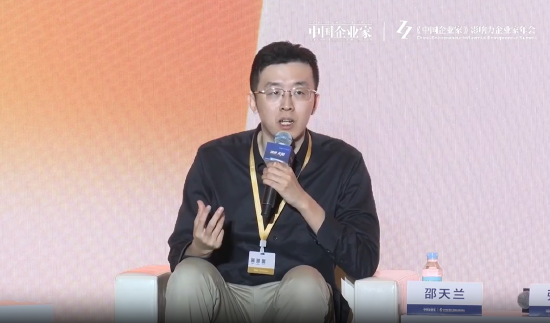
Group 1 - The 2025 China Entrepreneur Influence Entrepreneur Annual Conference is held in Beijing from December 5 to 7, with the theme "Emergence·Infinity - Co-creating New Forms of Intelligent Business" [1][5] - The founder and CEO of Mechaman, Shao Tianlan, attended and delivered a speech at the conference [1][5] Group 2 - The robotics industry is described as very small, with total industrial robot sales reaching 500,000 units last year, and the combined revenue of all component manufacturers, robot body companies, and solution system integrators being less than two-thirds of Midea Group's revenue [3][7] - The demand for robots is not the issue; rather, the challenge lies in the fact that robots are not standalone products but projects that require extensive customization and engineering support [3][7] - Shao Tianlan emphasizes the need to adapt environments to suit robots instead of forcing robots to adapt to existing environments, which presents a significant bottleneck [3][7] - The economic feasibility of deploying numerous customized engineers is questioned, highlighting the importance of generalization in robotics to reduce costs and facilitate project implementation [3][7] - An analogy is made comparing the cost of mass-produced items versus customized products, illustrating that the robotics industry faces similar challenges in terms of cost and customization [3][7] - It is noted that theoretically, robots can perform many tasks, but due to extensive customization, 99.5% of their capabilities remain untapped, with current demand in large manufacturing being 100 times the existing robot supply [3][7]

美的集团完成百亿股份回购 业绩高增托底累派现1382亿
Chang Jiang Shang Bao· 2025-12-09 23:33
Core Viewpoint - Midea Group has successfully completed a significant share buyback program amounting to 10 billion yuan, with plans for further buybacks and a strong commitment to shareholder returns through dividends [1][2][4]. Buyback Program - The buyback program initiated on June 17, 2025, aimed to repurchase shares worth between 5 billion to 10 billion yuan, with a maximum price of 100 yuan per share [2]. - As of December 8, 2025, Midea Group repurchased 135 million shares, representing 1.76% of the total share capital, with a total expenditure of approximately 10 billion yuan, reaching the upper limit of the buyback plan [2][3]. - Over 70% of the repurchased shares will be canceled, reducing the total share capital to approximately 7.596 billion shares [2]. Financial Performance - Midea Group has shown consistent revenue and profit growth since its listing in 2013, with revenue increasing from 121.27 billion yuan in 2013 to 409.08 billion yuan in 2024, and net profit rising from 5.32 billion yuan to 38.54 billion yuan during the same period [4]. - In the first three quarters of 2025, the company reported revenue of 363.06 billion yuan, a year-on-year increase of 13.82%, and a net profit of 37.88 billion yuan, up 19.51% year-on-year [4]. Dividend Policy - Midea Group announced its first interim dividend in 2025, distributing 5 yuan per 10 shares, totaling 3.448 billion yuan, marking a shift from its previous annual dividend model [5]. - Since its listing, the company has distributed a total of 138.195 billion yuan in dividends, with a payout ratio of 46% [5]. Strategic Developments - Midea Group is evolving from a traditional home appliance manufacturer to a global technology group, launching initiatives in energy solutions and robotics [5]. - The company has introduced a comprehensive energy strategy focusing on "energy storage + heat pumps + AI," providing customized energy solutions across various sectors [5]. - Midea's robotics strategy includes AI integration, humanoid robot development, and core component manufacturing [5].
今日新闻丨小米3款新车曝光!鸿蒙智行首款MPV、五菱硬派SUV公布!深蓝汽车累计交付超70万辆!
电动车公社· 2025-12-09 16:04
Group 1 - Deep Blue Automobile has achieved cumulative deliveries exceeding 700,000 units, contributing 2.3% to Changan Automobile's total production of 30 million vehicles, marking a significant role in the group's electrification transformation [3][7] - Xiaomi's upcoming three new car models include the range-extended flagship SUV Xiaomi YU9, high-performance SUV Xiaomi YU7 GT, and the extended executive sedan Xiaomi SU7 L, with expectations of maintaining over 40,000 monthly sales [8][12] - Hongmeng Zhixing has announced its first MPV model, the Zhijie V9, which is set to officially debut next year, enhancing its product lineup in the high-end MPV segment [13][15] - SAIC-GM-Wuling has unveiled its first all-terrain SUV, named Star光560, which will make its global debut at the 2025 ASEAN International Auto Show on December 11, featuring dimensions of 4745/1850/1755mm and a wheelbase of 2810mm [16][19]


A股年内累计回购超1400亿元
Bei Jing Shang Bao· 2025-12-09 15:44
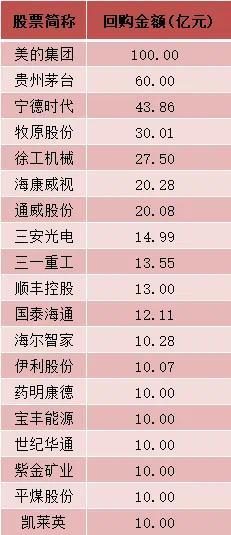
Core Viewpoint - The recent share buyback by Midea Group, amounting to 10 billion yuan, marks a significant event in the A-share market, reflecting a broader trend of companies engaging in buybacks to enhance shareholder value and market confidence [1][2][3]. Group 1: Share Buyback Details - Midea Group completed a share buyback of 1.35 million shares, representing 1.76% of its total share capital, with a total expenditure of approximately 10 billion yuan [2]. - This buyback is the largest single buyback in Midea's history and the second-largest in A-share history, following Gree Electric's buyback of 15 billion yuan in 2021 [2]. - As of now, 1,465 A-share companies have implemented buyback plans, with a cumulative buyback amount exceeding 140 billion yuan [3]. Group 2: Market Response and Performance - Among the 1,465 companies that executed buybacks, 1,172 stocks have seen price increases, accounting for 80% of the total [4]. - The stock with the highest increase is Shenghong Technology, which has risen by 655.64% year-to-date [4]. - The buyback actions are perceived as a signal of management's confidence in the company's value, which can attract investor interest and support stock price increases [5]. Group 3: Financial Performance of Buyback Companies - Over 81% of the companies that conducted buybacks reported profits in the first three quarters of the year, with Kweichow Moutai leading with a profit of 64.63 billion yuan [6]. - Other notable companies with significant profits include Ningde Times and China State Construction, with profits of approximately 49.03 billion yuan and 38.18 billion yuan, respectively [6]. - The pharmaceutical and electronics sectors have the highest number of companies engaging in buybacks, with 158 and 157 companies, respectively [6].
每经热评丨回购100亿元至少注销70亿元 美的集团回报股东的“作业”值得抄
Sou Hu Cai Jing· 2025-12-09 14:45
Group 1 - The core viewpoint of the article highlights Midea Group's successful completion of a share buyback program amounting to 10 billion yuan, which involved repurchasing 135 million shares, with 95 million shares set to be canceled, reducing the registered capital by 1.24% of the total share capital [1] - Midea Group's buyback represents a significant portion of the total buyback amount in the A-share market this year, which has seen over 1,400 companies engage in buybacks totaling 140.6 billion yuan, with Midea accounting for 11.545 billion yuan [1] - The article emphasizes that share buybacks can enhance shareholder returns and improve market liquidity, while also reflecting the company's confidence in its future development [1] Group 2 - The article notes that while share buybacks temporarily reduce the number of freely tradable shares, the intrinsic value per share does not change until shares are canceled, which subsequently increases metrics like net asset value and earnings per share [2] - It points out that most share buybacks are not for cancellation but for purposes like equity incentives or market value management, which may not create long-term value for shareholders [2] - The article advocates for companies to adopt cancellation-style buybacks when financially feasible, rather than engaging in market speculation [2] Group 3 - The article suggests that companies should focus on timely and proactive buybacks rather than waiting for optimal market conditions, as demonstrated by Midea Group's efficient execution of its buyback plan within six months [3] - It highlights that despite 1,465 companies announcing buyback plans this year, many have executed minimal buybacks, indicating potential issues with capital allocation or market timing perceptions [3] - The article stresses that genuine performance and cash flow are essential for companies to engage in cancellation-style buybacks, which can enhance overall operational quality [3]
回购100亿元至少注销70亿元 美的集团回报股东的“作业”值得抄
Mei Ri Jing Ji Xin Wen· 2025-12-09 14:41
Core Viewpoint - Midea Group has successfully completed a share buyback of 10 billion yuan, acquiring 135 million A-shares, with 95 million shares to be canceled, representing 1.24% of the total share capital before cancellation [1] Group 1: Share Buyback Details - The buyback amount of 10 billion yuan corresponds to 135 million shares, with 95 million shares set for cancellation [1] - Midea Group's buyback accounted for 115.45 billion yuan of the total 1,406 billion yuan spent on buybacks by over 1,400 A-share listed companies this year [1] - The company's stock price reached a new high since February 19, 2021, on December 4, indicating the effectiveness of the buyback in enhancing shareholder value [1] Group 2: Characteristics of Share Buybacks - Share buybacks are characterized by companies exchanging cash for shares, reducing the number of circulating shares, which has a direct and rapid impact on stock prices [1] - The funds from buybacks flow from the company to the capital market, improving overall market liquidity and signaling confidence in future growth [1] - The effectiveness of buybacks is maximized by the company's sincerity, with Midea Group's 10 billion yuan buyback serving as a reference for other companies [1] Group 3: Long-term Value Creation - The intrinsic value of shares does not change with buybacks; only after cancellation do metrics like net asset per share and earnings per share increase, enhancing share value [2] - Most buybacks are not for cancellation but for purposes like equity incentives or market management, with some companies later selling repurchased shares at a profit [2] - Companies should focus on cancellation-style buybacks to genuinely create long-term value for shareholders, avoiding short-term speculative strategies [2] Group 4: Implementation of Buyback Plans - Companies should adopt a proactive approach to buybacks, completing them within the committed timeframe, as demonstrated by Midea Group's swift execution of its buyback plan [3] - The buyback price ranged from 69.91 yuan to 80.62 yuan per share, indicating a high-price buyback strategy [3] - A significant number of companies have announced buyback plans, but many have executed minimal buybacks, suggesting a reluctance to act until stock prices reach perceived "buy points" [3]
A股年内回购大数据出炉:超1500亿元,四成以上为注销
Zheng Quan Shi Bao· 2025-12-09 14:12
Core Viewpoint - The article highlights the increasing trend of stock buybacks among A-share listed companies, with over 40% of buyback plans aimed at complete or partial cancellation, indicating a shift towards "cancellation-type buybacks" as a common practice in the market [1][5]. Group 1: Buyback Trends and Amounts - As of December 9, over 1500 billion yuan has been spent on stock buybacks in 2023, with leading companies like Midea Group, Kweichow Moutai, and CATL leading the way [2][5]. - Midea Group's buyback reached 10 billion yuan, making it the only "billion-level" buyback in A-shares this year, with 70% of the repurchased shares intended for cancellation [2][5]. - A total of 1303 companies have announced 1502 stock buyback plans this year, with 637 plans aimed at cancellation, representing 42.41% of the total, an increase from 38.33% in 2024 [5]. Group 2: Motivations Behind Buybacks - Companies are responding to policy incentives and are likely to receive more tax benefits or financial support, which encourages the normalization of cancellation-type buybacks [1][4]. - The buyback activity is seen as a signal of confidence in future operations, especially when stock prices are perceived as undervalued, potentially leading to positive market reactions [4][6]. Group 3: Implications for Market and Company Value - The practice of stock buybacks is aimed at enhancing company value and market competitiveness amidst global economic uncertainties [6]. - Buybacks can improve earnings per share (EPS) and attract long-term capital, providing stable funding for company growth [6][7]. - Companies must balance shareholder returns with maintaining a robust capital structure to avoid excessive cash flow pressure while optimizing financial health [7].