
GREE(000651)

Search documents
家电行业 2026 年 2 月投资策略:原材料价格上涨对白电龙头影响有限,白电 1-2 月排产增速环比改善
Guoxin Securities· 2026-02-02 11:09
Core Views - The report maintains an "Outperform" rating for the home appliance industry, indicating a positive outlook despite challenges from rising raw material prices and market competition [1][5][11]. Raw Material Price Impact - Recent increases in copper and aluminum prices have raised concerns about the profitability of leading white goods manufacturers. However, historical analysis shows that the negative impact of raw material cost increases on gross margins has diminished over time. For instance, during previous cycles from 2008 to 2022, the maximum quarterly gross margin decline for leading white goods companies was 5-7 percentage points in 2009-2011, around 5 percentage points in 2016-2017, and only about 2 percentage points in 2020-2022. The current price increases are expected to have a lesser impact, with an anticipated gross margin decline of less than 2 percentage points [1][17][18]. Production and Demand Trends - In January and February 2026, the total production of white goods in China was 23.79 million units, reflecting a year-on-year decline of 22.1%. However, the cumulative production decline for the first two months is expected to be around 5%. The production performance has shown signs of recovery compared to a more than 10% decline in Q4 2025. The demand is expected to stabilize due to the effects of national subsidy policies [2][24]. Retail Market Performance - The retail market for home appliances in China is projected to decline by 4.3% in 2025, with a total retail scale of 893.1 billion yuan. Specific categories such as air conditioners and refrigerators are expected to see declines of 0.4% and 11.5%, respectively, while small kitchen appliances are expected to grow by 3.8% [2][31]. Investment Recommendations - The report recommends several companies for investment based on their performance and market position. For white goods, companies like Midea Group, Haier Smart Home, TCL Home, and Hisense Home Appliances are highlighted. In the small appliance sector, Stone Technology, Bear Electric, and New Treasure are recommended. For black goods, TCL Electronics and Hisense Visual are suggested [3][12][50]. Company Earnings Forecasts - The report provides earnings forecasts for key companies, indicating that Midea Group is expected to have an EPS of 5.84 yuan in 2025 and 6.43 yuan in 2026, with a PE ratio of 13 for 2025. Haier Smart Home is projected to have an EPS of 2.27 yuan in 2025 and 2.53 yuan in 2026, with a PE ratio of 11 for 2025 [4][50].





解码消费新浪潮,世研指数发布《2025年度消费榜单》趋势报告
3 6 Ke· 2026-02-02 10:44
Core Insights - The report titled "2025 Consumer Rankings: Decoding Consumption Trends" was officially released by the World Research Index on January 27, providing a systematic analysis of hot categories, brands, and consumption hotspots for 2025, aimed at helping businesses accurately grasp consumption trends and identify growth opportunities [1]. Group 1: Key Observations - The report's core observation revolves around two main themes: "Rational Foundation, Value Return" and "Emotional Leap, Scene Integration," utilizing a proprietary consumption index evaluation system developed by the World Research Index [4]. - The report systematically outlines annual hot categories, the top 100 brands, twelve major industry hot brands, a hot consumption map, and key events, presenting an objective and dynamic view of consumption trends in the Chinese market [4]. Group 2: Annual Hot Categories - The top annual hot categories include cooking oils and seasonings (1.82), mobile communications (1.74), major appliances (1.70), and main fermented foods (1.65), indicating a strong consumer focus on essential goods and the continued penetration of technology in daily life [6]. - Categories such as smart devices (1.59) and facial care (1.55) reflect a trend towards intelligent and convenient upgrades in consumer products [6]. Group 3: Annual Brand Rankings - The top brands in the annual brand rankings include Apple (1.93), BYD (1.91), and Huawei (1.82), showcasing strong brand loyalty and consumer interest in technology and lifestyle products [8]. - In the 3C digital and home appliance sectors, brands like Apple, Huawei, and Xiaomi are noted for their innovation in AI smartphones and smart home products, indicating a shift towards integrated smart living solutions [12]. Group 4: Industry Trends - The outdoor trend is reshaping the sportswear and outdoor industries, with domestic brands like Anta and Li Ning leveraging functional technology and aesthetic styles to penetrate everyday fashion, promoting a "national outdoorization" consumption trend [14]. - The pet product market is evolving from basic care to high-quality living, with brands focusing on scientific and premium offerings, driven by trends towards "humanization" in pet care [19]. Group 5: Consumption Hotspots - The report identifies social livelihood and digital technology as the two main engines of annual consumption hotspots, intertwined with seasonal rhythms and cultural tourism emotions, shaping a rich and interconnected consumption pulse [24]. - Key consumption events for 2025 have shifted from traditional holiday promotions to a diverse network of social emotions, technological innovations, and cultural phenomena, marking the entry into an era of omnipresent consumption triggers [26].




白色家电板块2月2日跌0.14%,深康佳A领跌,主力资金净流入4.02亿元
Zheng Xing Xing Ye Ri Bao· 2026-02-02 09:15
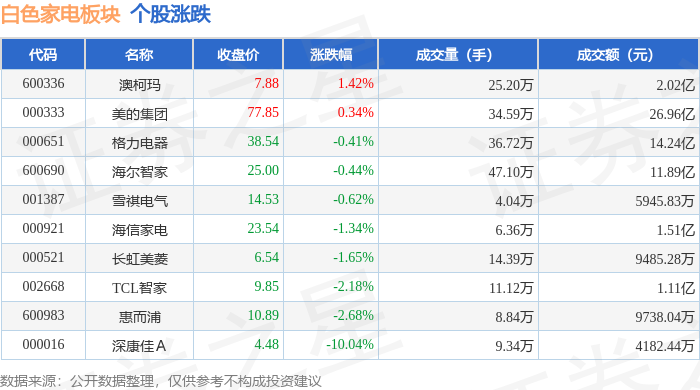
Market Overview - The white goods sector experienced a decline of 0.14% on February 2, with the Shanghai Composite Index closing at 4015.75, down 2.48%, and the Shenzhen Component Index at 13824.35, down 2.69% [1] Individual Stock Performance - Aokema (600336) closed at 7.88, up 1.42% with a trading volume of 252,000 shares and a turnover of 202 million yuan - Midea Group (000333) closed at 77.85, up 0.34% with a trading volume of 345,900 shares and a turnover of 2.696 billion yuan - Gree Electric (000651) closed at 38.54, down 0.41% with a trading volume of 367,200 shares and a turnover of 1.424 billion yuan - Haier Smart Home (600690) closed at 25.00, down 0.44% with a trading volume of 471,000 shares and a turnover of 1.189 billion yuan - Deep Kangjia A (000016) led the decline, closing at 4.48, down 10.04% with a trading volume of 93,400 shares and a turnover of 41.824 million yuan [1] Capital Flow Analysis - The white goods sector saw a net inflow of 402 million yuan from institutional investors, while retail investors experienced a net outflow of 158 million yuan [1] - Midea Group had a net inflow of 508 million yuan from institutional investors, but a net outflow of 328 million yuan from retail investors [2] - Haier Smart Home recorded a net inflow of 29.328 million yuan from institutional investors, with a net outflow of 37.224 million yuan from retail investors [2] - Deep Kangjia A experienced a significant net outflow of 20.7661 million yuan from institutional investors, while retail investors had a net inflow of 15.3664 million yuan [2]


格力碳化硅芯片落地千万家电,驶入新能源汽车赛道
Jing Ji Wang· 2026-02-02 02:46
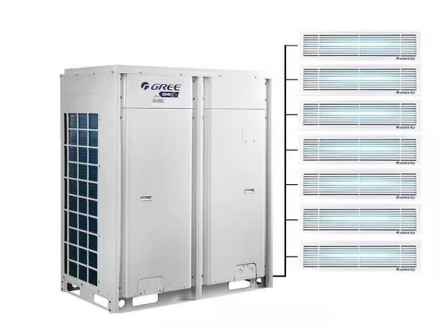
在全球半导体技术加速迭代、绿色低碳转型深入推进的背景下,第三代半导体碳化硅正成为推动产 业升级的关键力量。格力电子元器件有限公司作为格力电器全资子公司,凭借其在碳化硅领域从晶圆制 造到封装测试的全链条自主能力,已实现碳化硅芯片在家电领域的规模化、高质量应用,为我国高端制 造与节能减碳注入强劲动能。 白电领域规模化突破,碳化硅助力能效再定义 格力电子元器件聚焦第三代半导体SiC碳化硅产业发展,截至目前,其碳化硅 SBD 芯片已成功应用 于数百万台套空调,走进万千家庭。为消费者带来实打实的高效节能体验,格力在碳化硅白电应用领域 实现规模化突破。 在冰洗空冷四大家电品类中,碳化硅SBD已广泛应用于前端PFC整流电路。相较硅基FRD, SiCSBD优势显著,不仅反向漏电流更小,且器件结电容更低,能有效降低PFC电路反向恢复损耗与反 向尖峰电流,全面提升产品能效与可靠性。以格力碳化硅基二极管 GCS065W020E 为例,应用于家用3 匹空调,在市电输入电压220V下、较硅基方案能效同比提升0.5%,器件温升同比降低了10℃,精准达 成节能提效目标。 随着用户对续航、充电速度的需求提升,新能源汽车800V高压平台已成为 ...
董明珠说:“就得让有钱人多交点税。你看我年薪500万,扣掉45%的税,手里还能剩200多万呢,这钱够花了。可普通人一个月挣5000块,日子过得紧巴巴的根本不够用,个税起征点真该调到1万块。”聚光灯下的董明珠从来不回避敏感话题,尤其是关于钱。在两会采访区的镜头前,这位格力电器的掌门人并没...
Sou Hu Cai Jing· 2026-02-02 02:44
更残酷的现实摆在工资条之外。5000元这个数字,放在三四线城市或许能勉强维持温饱,但扔进一二线 城市,可能也就刚够付个房租。 董明珠说:"就得让有钱人多交点税。你看我年薪500万,扣掉45%的税,手里还能剩200多万呢,这钱 够花了。可普通人一个月挣5000块,日子过得紧巴巴的根本不够用,个税起征点真该调到1万块。" 聚光灯下的董明珠从来不回避敏感话题,尤其是关于钱。在两会采访区的镜头前,这位格力电器的掌门 人并没有打官腔,而是直接抛出了一组有些刺眼的算式:左手是她五六百万的年薪,扣掉45%的顶格个 税后,到手只剩两百多万。右手是普通打工人在5000元起征点上下的挣扎。 面对镜头,她一脸从容地说那两百多万"够花了",转头却把火力集中在了一个更紧迫的数字上,将个税 起征点拉升至1万元。这不是一场关于仇富的喊话,而是一次跨越阶层的算账。 这位连续9年死磕同一议题的人大代表,试图用自己的工资条,去撬动一个关乎亿万家庭饭碗的政策杠 杆。 作为企业管理者,董明珠的账本里藏着一种微观的无奈。格力内部近一半员工是90后,企业愿意拿出利 润给年轻人涨薪,甚至把月入推到一万元的大关。但员工到手那一刻的喜悦,往往被随之而来的税单 ...

董明珠的言语经常惹争议,但是她做的事为何都做对了?
Sou Hu Cai Jing· 2026-02-01 23:07
近日,格力及其董事长董明珠再度成为社会舆论关注的焦点。 据天眼查公开信息披露,近日,珠海格力电子元器件有限公司近期进行了工商信息变更,董明珠不再担任该公司法定代表人及执行董事职务,改由方祥建 接任法定代表人,并出任执行公司事务的董事。 在中国企业家群体中,格力电器董事长董明珠无疑是最具话题性的人物之一。 她以直言不讳、言辞犀利著称,常常因一句"口无遮拦"的言论登上热搜,引发舆论风暴。从"90后员工不努力就滚蛋"到"我从来不在乎股价",再到"格力 手机要取代苹果"、"海归留学生都是间谍"。她的每一句表态似乎都在挑战公众的认知边界。然而,令人深思的是:尽管董明珠的言论屡屡引发争议,但 她主导的战略决策和企业行动却一次次被时间证明是正确的。 最近两起事件尤为典型,其一是关于空调行业"铝代铜"风波的反转;其二是格力进军芯片领域,尤其是碳化硅(SiC)功率半导体的成功落地。这两件事 不仅印证了董明珠在技术路线和产业判断上的前瞻性,还揭示了一个更深层的问题:为什么一个常被贴上"固执""偏执"标签的企业家,总能在关键时刻做 出正确选择? "固执"的董明珠最终赢了! 2025年,中国空调行业掀起一场关于"铝代铜"的技术讨论。 ...

产业亮点:如何看原材料涨价背景下空调品牌提价效果?
Changjiang Securities· 2026-02-01 13:50
Investment Rating - The report maintains a "Positive" investment rating for the home appliance industry [10] Core Insights - Starting from April 2025, the main raw material for air conditioners, copper, has entered a new price increase cycle, with prices accelerating since mid-November. As of January 14, 2026, the LME copper spot settlement price reached $13,335 per ton, reflecting a 53.5% increase compared to the beginning of 2025. In response to cost pressures, several air conditioning companies, including Aux, Midea, and others, have announced price increases ranging from 3% to 8% [2][4][16] - The report analyzes the impact of rising copper prices on air conditioner gross margins and evaluates the effectiveness of manufacturers' price increase strategies based on a review of the previous raw material price increase cycle [4][16] Summary by Sections Introduction - The report discusses the resumption of the copper price increase cycle starting in April 2025 and its implications for air conditioning manufacturers, highlighting the need for price adjustments in response to rising costs [4][16] Theoretical Impact of Rising Copper Prices on Air Conditioner Profitability - Raw material costs account for approximately 54% of air conditioner production costs, with copper, steel, and plastic comprising 22%, 12%, and 10% respectively. The high proportion of copper makes air conditioners particularly sensitive to copper price fluctuations. The report estimates that if copper prices rise by 15%, 30%, and 50%, air conditioner gross margins would theoretically decline by 2.1, 4.2, and 7.1 percentage points respectively [5][20][25] Effectiveness of Price Increases to Mitigate Cost Pressures - The report suggests that manufacturers would need to raise product factory prices by 3.0%, 5.9%, and 9.8% to effectively counteract the pressure on profitability from copper price increases of 15%, 30%, and 50% respectively. A review of the previous raw material price increase cycle (2020Q2-2022Q1) indicates that while price increases can mitigate cost pressures in the short term, sustained rapid increases in raw material prices may still pose challenges to profitability [6][36][47] Investment Recommendations - In light of the current cost uncertainties, the report recommends focusing on leading white goods companies with significant cost advantages and well-integrated supply chains, specifically highlighting Midea Group, Haier Smart Home, and Gree Electric as key investment opportunities [7][56]
从广东制造到全球智造,硬核广货畅销全球
Nan Fang Du Shi Bao· 2026-01-31 14:50
Core Insights - Guangdong products are transitioning from "Made in China" to "Intelligent Manufacturing Globally," showcasing innovation and quality as key advantages [1] - The "Guangdong Products Go Global" initiative aims to promote smart appliances and new energy vehicles internationally, reflecting Guangdong's commitment to innovation-driven consumption upgrades [1][2] Group 1: Global Market Performance - Guangdong's cross-border e-commerce import and export scale has expanded 66 times over nine years, accounting for over one-third of the national total, maintaining its position as the leading province [2] - By early 2026, Guangdong has established over 5,000 overseas branches, covering major economies across six continents, creating a comprehensive international layout [2][6] - The export value of Guangdong's home appliances reached 480 billion yuan in 2025, with a year-on-year growth of 12.3%, representing 35% of the national total [4][6] Group 2: Automotive Industry Growth - By 2025, Guangdong's new energy vehicle exports are projected to grow by approximately 120%, increasing its share of the national total to about 35% [3] - In 2025, Guangdong's automotive production is expected to exceed 5.7 million units, with new energy vehicles making up over 60% of this total [7] - BYD's ATTO 3 model is anticipated to rank among the top ten best-selling electric vehicles in Germany and France by 2025, highlighting its competitive edge in the European market [3] Group 3: Home Appliance Sector - Guangdong's home appliance industry, represented by brands like Gree, Midea, and TCL, has become a global leader through technological innovation and international expansion [4][6] - Midea has become the first domestic home appliance company to obtain the EU Product Environmental Declaration, marking a significant step towards becoming a global standard setter [9] - Gree's customized dehumidifiers have gained popularity in Southeast Asia, demonstrating the effectiveness of technology output over mere product exports [9] Group 4: Low-altitude Economy - Guangdong's low-altitude economy has surpassed 100 billion yuan, with over 15,000 related enterprises, capturing 70% of the global consumer drone market [5][8] - DJI leads the consumer drone market, while new entrants like Yihang are providing diverse low-altitude experiences [5][8] - The province has established 64 general airports and over 1,400 takeoff and landing points, enhancing its low-altitude infrastructure [8] Group 5: Cultural and Technological Impact - The internationalization of Guangdong products signifies a shift from simple product exports to technology and cultural exchange, enhancing China's global image [9] - Guangdong's products are not only recognized for their quality but also for their cultural significance, as seen in BYD's ATTO 3, which incorporates Chinese cultural elements [9][10] - The province's commitment to innovation and quality is expected to drive high-quality development and strengthen the global presence of "Chinese manufacturing" [10]
家电周报:三大白电 2 月排产数据发布,民爆光电公告收购预案-20260131
Shenwan Hongyuan Securities· 2026-01-31 12:12
Investment Rating - The report indicates a cautious outlook for the home appliance sector, with a recommendation to focus on leading companies that exhibit low valuations, high dividends, and stable growth potential [5][10]. Core Insights - The home appliance sector underperformed compared to the Shanghai and Shenzhen 300 Index, with a decline of 2.4% in the appliance index while the broader index rose by 1.1% [5][6]. - Major companies like Opple Lighting, Boss Electric, and Midea Group showed positive performance, while companies like Ecovacs, Lek Electric, and Huaxiang suffered significant declines [5][8]. - Production data for major appliances in February 2026 revealed substantial year-on-year declines, with air conditioner production down 31.6%, refrigerators down 17%, and washing machines down 3.2% [10][11]. - The report highlights three main investment themes: 1. **Dividend Play**: Leading white and black appliance companies are characterized by low valuations and high dividend yields, providing a safety margin and growth potential [5]. 2. **Technology Transition**: Key component manufacturers are diversifying into emerging tech sectors such as robotics and semiconductor cooling, indicating a shift in business strategy [5]. 3. **Export Opportunities**: Major appliance firms are well-positioned in global markets, with production bases in various regions to mitigate trade risks and capitalize on demand in emerging markets [5]. Industry Dynamics - The report notes a significant drop in production for major appliances in February 2026, with air conditioners at 11.49 million units, refrigerators at 6 million units, and washing machines at 6.3 million units, all showing declines compared to the previous year [10]. - The report also mentions a planned acquisition by Minexplosion Optoelectronics, which aims to purchase a 49% stake in Xiamen Maida and a 51% stake in cash, with a total consideration not exceeding 250 million yuan [11]. Data Observations - Sales data for cleaning appliances in December 2025 showed an increase in volume but a decrease in revenue and average price, with robotic vacuum sales up 29.11% but revenue down 2.14% [34]. - Personal care products like hair dryers saw a decline in sales volume and revenue, while electric shaver sales revenue increased despite a drop in volume [40][41]. Macro Economic Environment - As of January 30, 2026, the USD to RMB exchange rate showed a decrease of 0.87% since the beginning of the year, indicating potential impacts on import costs for raw materials [47]. Company Announcements - Ecovacs announced a bond buyback option, with no investors opting for the buyback during the specified period, indicating confidence in the company's stock performance [63]. - Other companies like Aojiahua and Foshan Lighting provided profit forecasts indicating significant declines in net profits for 2025, reflecting broader industry challenges [60][64].

三大白电2月排产数据发布,民爆光电公告收购预案
Shenwan Hongyuan Securities· 2026-01-31 09:49
Investment Rating - The report maintains a positive outlook on the home appliance sector, particularly recommending leading companies in the white and black goods categories due to their low valuations, high dividends, and stable growth potential [5][11]. Core Insights - The home appliance sector underperformed compared to the Shanghai and Shenzhen 300 Index, with a decline of 2.4% in the home appliance index while the broader index rose by 1.1% [5][6]. - Production data for major home appliances in February 2026 shows significant year-on-year declines: air conditioners down 31.6%, refrigerators down 17%, and washing machines down 3.2% [11][12]. - The report highlights the resilience of leading companies in the face of international trade fluctuations and emphasizes the growth potential in emerging markets [5][11]. Summary by Sections Industry Performance - The home appliance sector index decreased by 2.4%, while the Shanghai and Shenzhen 300 Index increased by 1.1% [5][6]. - Key companies such as Opple Lighting, Boss Electric, and Midea Group showed gains, while companies like Ecovacs and Lek Electric faced significant declines [5][8]. Production Data - February 2026 production figures indicate a total of 11.49 million air conditioners produced, a 31.6% decrease from the previous year; 6 million refrigerators, down 17%; and 6.3 million washing machines, down 3.2% [11][12]. Company Developments - Minexplosion Optoelectronics announced plans to acquire a 49% stake in Xiamen Maida and a cash purchase of 51% stake in Xiamen Precision, with a total cash consideration not exceeding 250 million yuan [12]. Market Trends - The report notes a year-on-year increase in sales of cleaning appliances, with robotic vacuum sales up 29.11% in December 2025, although sales revenue decreased by 2.14% [35][40]. - Personal care products showed mixed results, with hairdryer sales down 26.36% but electric shaver sales revenue up by 1.78% [42][45]. Investment Opportunities - The report identifies three main investment themes: 1. Leading white and black goods companies with low valuations and high dividends [5]. 2. Core component manufacturers expanding into new technology sectors [5]. 3. Companies like Ecovacs and Roborock benefiting from strong demand for cleaning appliances [5][11]. Economic Environment - As of January 30, 2026, the USD to RMB exchange rate has decreased by 0.87% since the beginning of the year [50][51]. - Retail sales in December 2025 showed a slight increase of 0.86% year-on-year, while disposable income for urban residents rose by 4.27% [52][53]. Regulatory Developments - Shenzhen's three-year action plan aims to enhance the consumption environment, promoting smart home products and digital consumption [73][75]. - The plan encourages the integration of artificial intelligence in home appliances and aims to boost home renovation and smart home adoption [75][76].